Remove Vomit Stains and Smell From a Fabric Sofa

Clara Townsend
Clara Townsend is an interior stylist, vintage furniture enthusiast, and the creative voice behind Velvet Abode. With over a decade of experience transforming both cramped city apartments and sprawling fixer-uppers, she believes that a beautiful home is built on personal stories rather than massive budgets. When she isn't hunting for the perfect brass sconce at a local flea market, she can usually be found rearranging her living room for the third time this month.
If you are reading this with a paper towel in one hand and a sinking feeling in your stomach, I see you. Vomit on a fabric sofa is one of those home emergencies that feels unfairly personal, especially when it hits during illness, a toddler meltdown, or a pet who clearly regrets every life choice.
The good news: most vomit stains and smells can be removed at home if you move in the right order. The bad news: the wrong order (rubbing, soaking, hot water, or perfume sprays) can lock the odor into the cushion like it signed a lease.
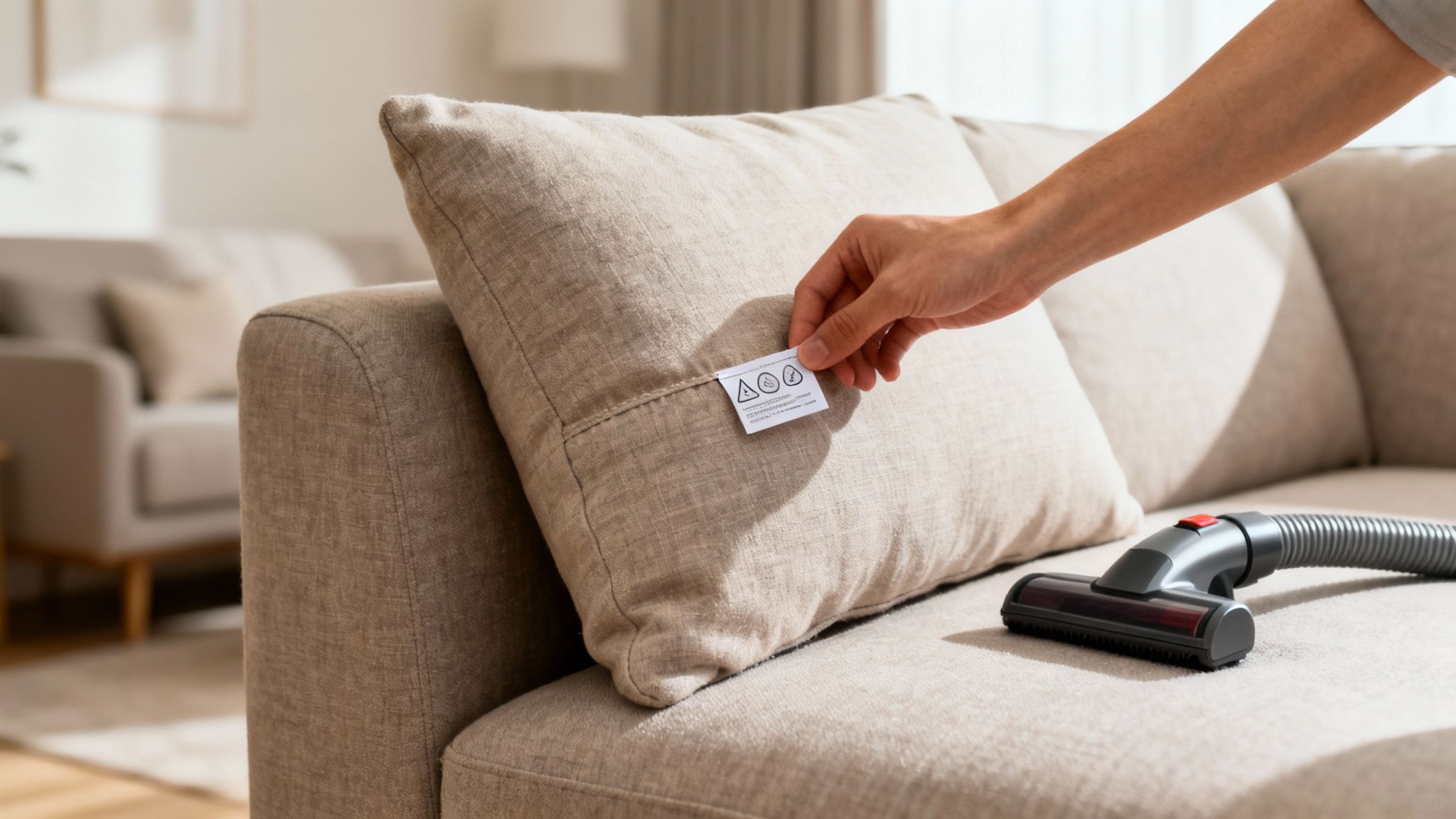
Below is my step-by-step routine for Velvet Abode readers, with notes for different fabrics, what to use when, and how to tell if the smell is actually gone.
First 5 minutes: contain, lift, blot
1) Ventilate and protect yourself
- Open windows, turn on a fan, and keep kids and pets out of the area.
- Wear disposable gloves. If anyone in the household is ill, consider a mask, especially when scraping dried material.
- Grab a small trash bag, paper towels, a dull scraper (old spoon or plastic spatula), and a clean white cloth.
2) Remove solids without grinding them in
Do not wipe. Do not rub. Instead:
- Use paper towels to gently lift any solids.
- Use a spoon or plastic spatula to scoop and scrape from the outer edge toward the center.
- Bag everything immediately and take it outside.
3) Blot the liquid, then blot again
Press a stack of paper towels or a clean white cloth firmly into the spot for 10 to 20 seconds, lift, and repeat. Your goal is to pull moisture up, not push it deeper.
Important: If the mess seeped into the cushion, you may need to blot both the top and the sides. On removable cushions, unzip and blot the foam too if it is wet.
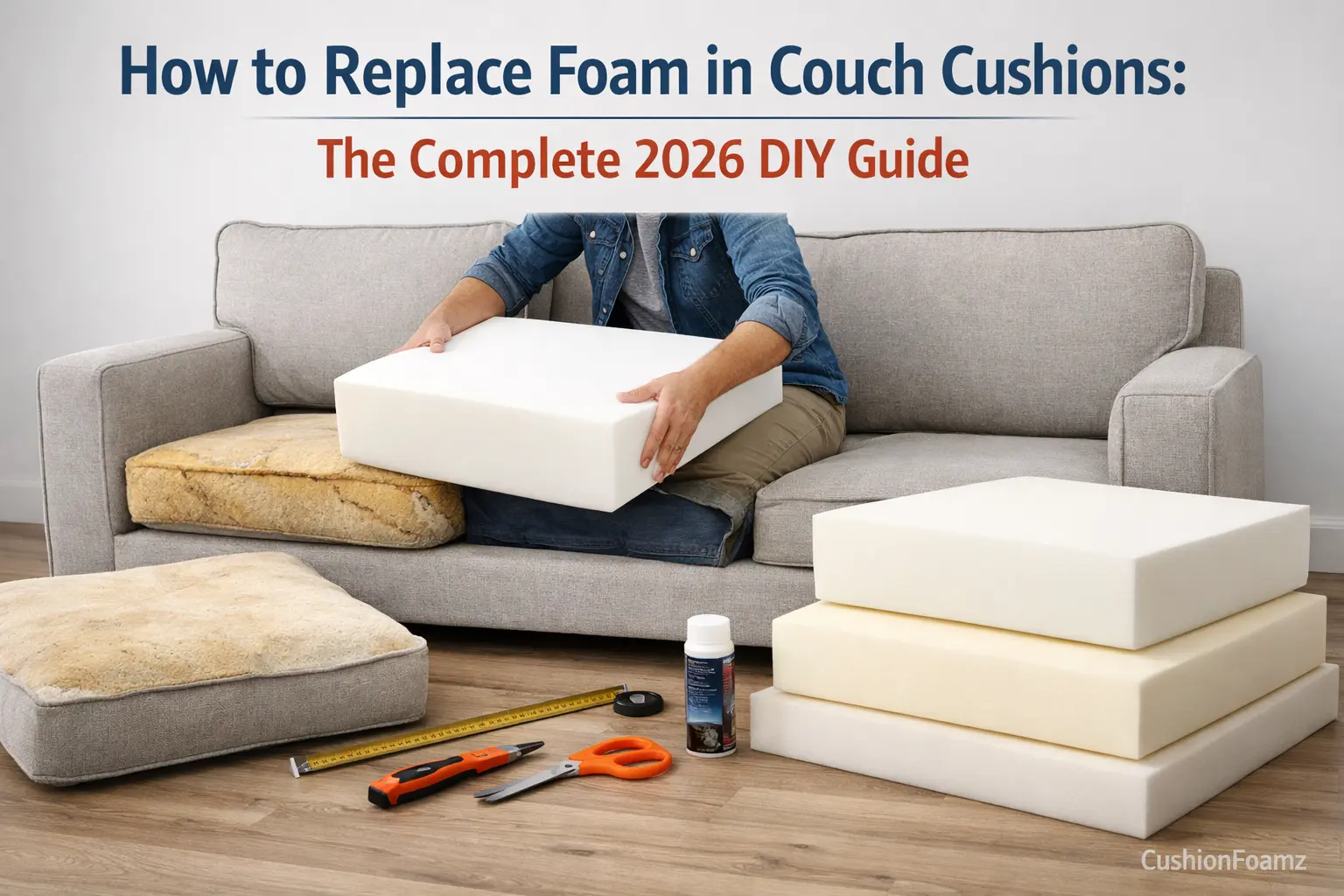
Know your fabric before you pick a cleaner
Before you spray anything, look for the cleaning code tag. It is often under a seat cushion or on the sofa’s underside.
- W: Water-based cleaners are generally safe.
- S: Solvent-based cleaner only. Avoid water saturation.
- WS or SW: Water or solvent based, spot test first.
- X: Vacuum only, professional cleaning recommended.
If you cannot find a tag, assume the sofa is water-sensitive and work gently, with minimal liquid, and a thorough spot test in a hidden area.
Enzyme vs oxygen cleaner: which one to use and when
Vomit is a cocktail of proteins, stomach acids, and partially digested food. That is why it can stain and why the smell likes to linger, especially in warm rooms.
Use an enzyme cleaner for odor and organic residue
Enzyme cleaners are designed to break down organic material. They are especially helpful for:
- Pet vomit
- Milk-heavy or food-heavy vomit (think toddlers and car sickness)
- Any situation where the smell remains after basic cleaning
How to use: Apply enough to reach the depth of the affected area, then let it dwell per the label. Enzymes need time. Then blot thoroughly and allow to dry completely.
Use an oxygen bleach cleaner for discoloration on colorfast fabrics
Oxygen cleaners (often sodium percarbonate based) are great for removing the yellowish or dingy stain that can remain after odor is handled. They are best for:
- Light-colored, colorfast upholstery
- Removable covers that can be washed (more on that below)
How to use: Mix per label, apply lightly, blot, and rinse by blotting with plain cool water. Do not oversaturate.
Avoid chlorine bleach on upholstery. It can weaken fibers, strip color, and sometimes makes organic stains set oddly.
Step-by-step cleaning by situation
If the vomit is fresh
- Blot thoroughly.
- Neutralize acids (optional but helpful). Lightly sprinkle baking soda over the damp area. Let sit 15 to 30 minutes to absorb moisture and odor, then vacuum thoroughly.
- Use an enzyme cleaner. Mist or apply according to the product directions. Let it sit the full dwell time.
- Blot dry. Press with a clean cloth until you are pulling up minimal moisture.
- Rinse by blotting. Use a cloth dampened with cool water, then blot dry again.
If it already dried and left a crusty spot
- Dry lift first. Gently scrape off dried residue with a spoon or soft brush head on a vacuum.
- Rehydrate lightly. Dampen a cloth with cool water and press it onto the area for 30 to 60 seconds to soften what is left. Do not flood the cushion.
- Enzyme cleaner next. Apply and dwell, then blot.
- Address remaining discoloration. If the fabric is colorfast and water-safe, follow with a small amount of oxygen cleaner, then blot-rinse.
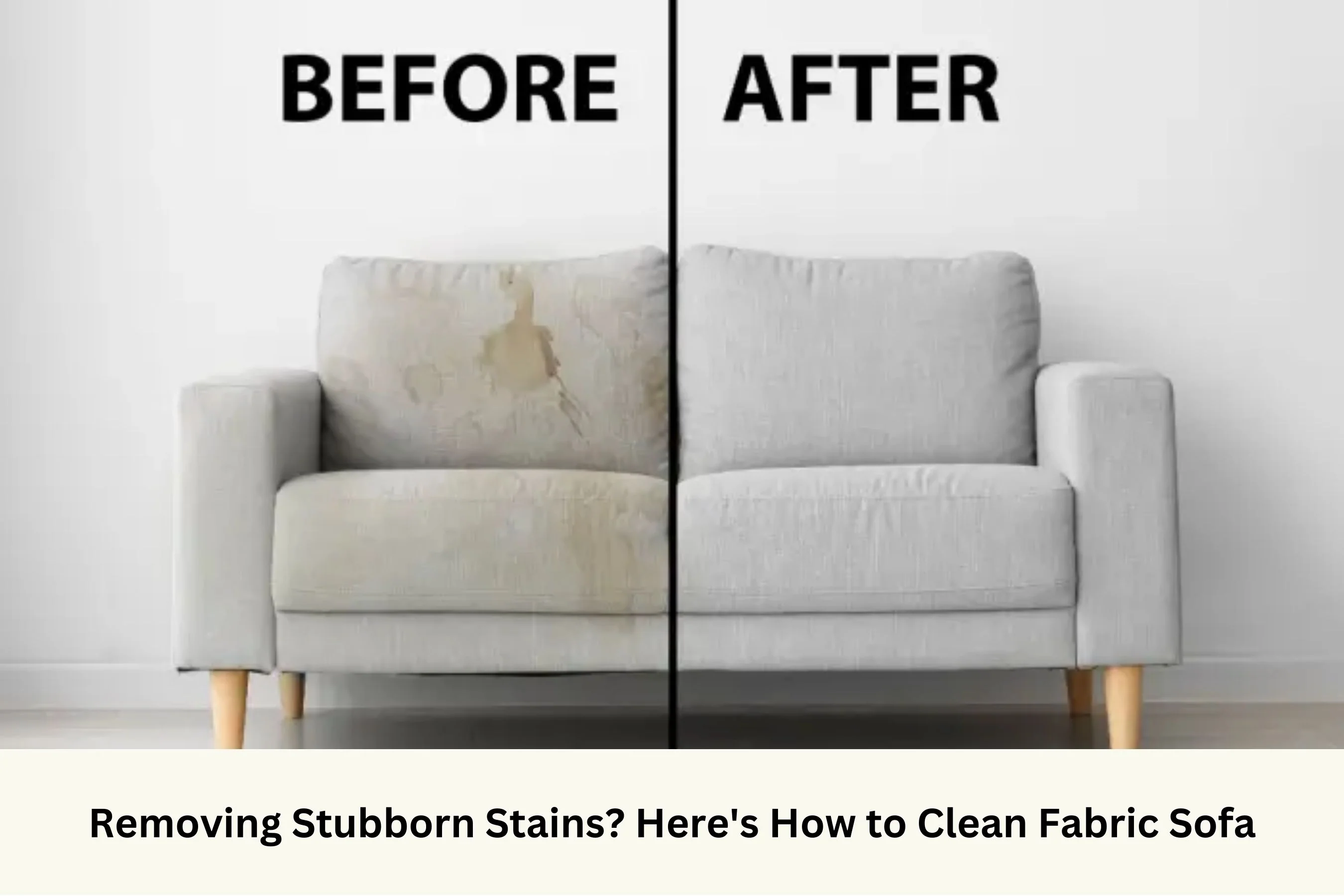
What to do if the smell comes back after drying
This is the most common frustration. Your sofa can smell fine while damp, then the odor returns once everything dries. That usually means one of two things:
- Cleaner did not reach the depth of the mess. Odor source is in the foam or beneath the fabric.
- Drying was too slow. Lingering moisture can hold onto smells and sometimes encourages mildew if the cushion stayed wet for too long.
Odor check after drying (do this on purpose)
- Let the area dry completely, ideally 12 to 24 hours with airflow.
- Smell the spot up close.
- Then press down firmly on the cushion and smell again. If odor appears when compressed, the foam insert likely needs treatment.
Fix it when the foam is the culprit
- Unzip the cushion cover if possible.
- Spray enzyme cleaner onto the foam where it was affected. Use enough to penetrate but not so much it is dripping.
- Blot with towels to remove excess moisture.
- Air-dry the foam completely: stand it on its side, run a fan, and keep it in a well-ventilated room. Sunlight can help, but avoid harsh heat that can damage some foams.
If odor persists after two enzyme treatments and full drying, it may be time for professional upholstery cleaning or replacing the foam insert. Foam is wonderful and forgiving, but it can only hold so many secrets.
Can you machine wash cushion covers safely?
Sometimes yes, and it is glorious when it works. But washing the wrong cover the wrong way can cause shrinking, warping, or a zipper that will never meet its mate again.
Machine wash is usually safest when
- The care label explicitly allows machine washing.
- The cover is removable and has finished seams (not stapled upholstery).
- The fabric is cotton, a cotton blend, or a sturdy performance fabric that is labeled washable.
How to machine wash (gentle, low-drama version)
- Zip the cover closed to protect the zipper teeth.
- Turn it inside out.
- Wash cold on gentle with a small amount of mild detergent.
- Skip fabric softener. It can leave residue that attracts odor.
- Air dry or tumble low for a few minutes only, then air dry. Heat is the biggest shrink risk.
Pro tip: Put the cover back on the cushion when it is barely damp. It helps it keep its shape as it finishes drying.
When to avoid machine washing
- Viscose, rayon, silk, wool blends, or anything that feels “luxury drapey” in a way that makes you nervous.
- Vintage upholstery fabric, especially if colors may bleed.
- Covers with foam-backed fabric or unknown lining.
Fabric-specific notes (so you do not accidentally make it worse)
Performance fabric and microfiber
Often very forgiving. Blot, then enzyme cleaner is typically safe. Avoid overscrubbing microfiber, which can leave a shiny patch. Use a soft brush to reset the nap after drying.
Linen and cotton
These can hold stains if you use too much water and push the mess outward. Blot patiently, use enzyme for odor, then oxygen cleaner for discoloration if the fabric is colorfast. Expect a longer dry time.
Velvet (especially cotton velvet)
This is where I slow down and get extra gentle. Use minimal liquid, blot only, and always work with the nap. Spot test everything. After drying, softly brush with a velvet brush to revive the pile.
Wool blends
Wool is sensitive to harsh alkalines and heat. Use an upholstery-safe enzyme product and minimal moisture. If the tag says S or X, consider calling a pro.
Hygiene and disinfecting without wrecking upholstery
In illness situations, it is normal to want to disinfect everything within a ten-foot radius. Just be careful: many disinfectants are hard on fabric dyes and foam.
- Clean first, disinfect second. Disinfectant does not work well through organic residue.
- Avoid soaking with alcohol or bleach solutions. They can discolor fabric and damage cushion foam.
- If you want a safer middle ground: use a fabric-safe sanitizer spray that is labeled for soft surfaces, follow dwell time, then allow full drying with ventilation.
Wash any throw blankets and removable pillow covers that were nearby on hot if the fabric allows, and wipe hard surfaces (side tables, remotes) with an appropriate disinfectant.
Drying matters more than you think
The fastest way to prevent lingering smell is to dry the area quickly and thoroughly.
- Press dry towels into the spot to remove as much moisture as possible.
- Point a fan directly at the cushion.
- If you can, lift the cushion and stand it on its side to let air reach more surface area.
- A dehumidifier in the room is magic if you have one.
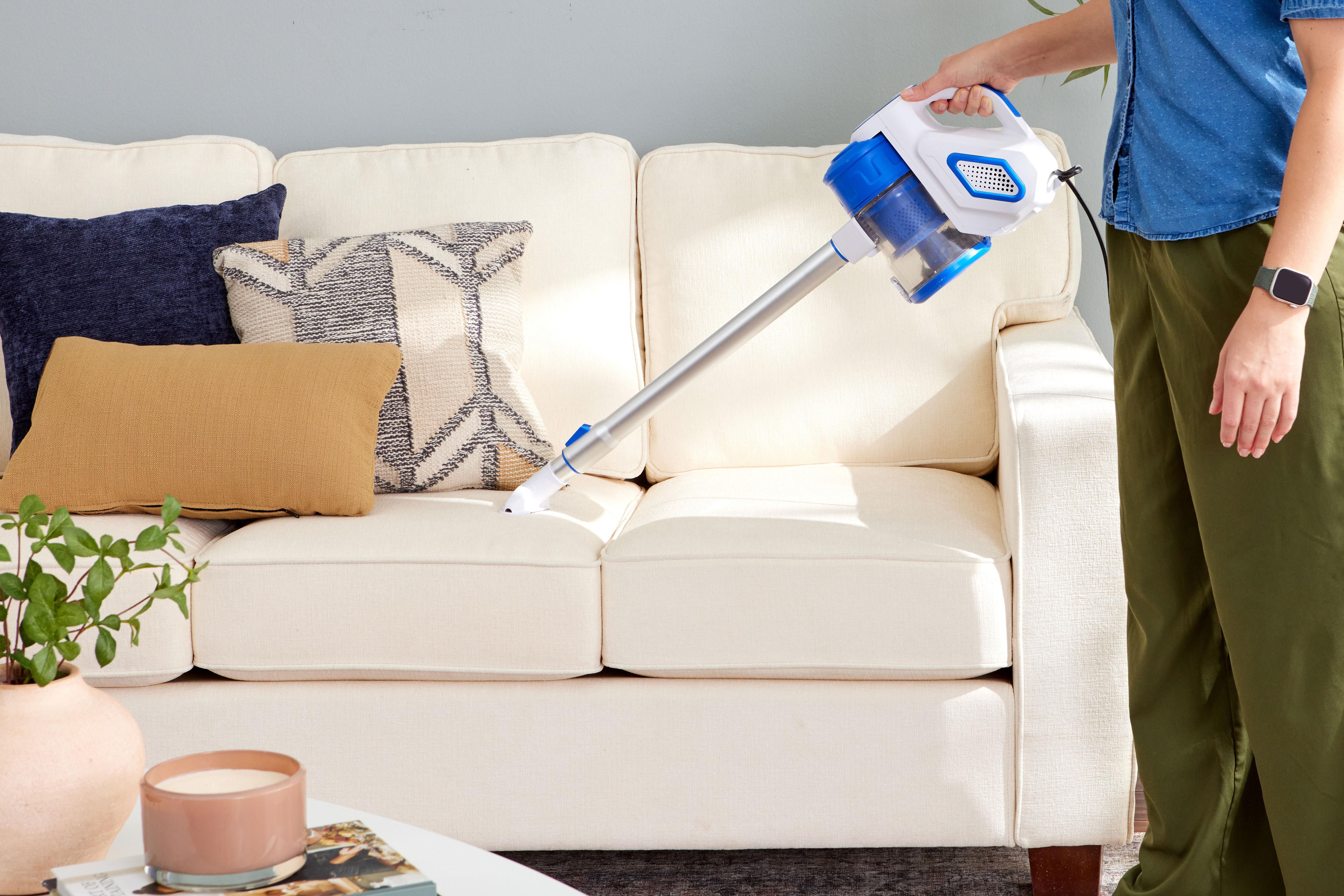
When to call a pro (or consider replacement)
Sometimes the most budget-friendly choice is professional help, especially when you factor in time and stress.
- The sofa is labeled X or S and you cannot safely use water-based cleaners.
- The vomit soaked deep into the seat deck (the upholstered base under cushions).
- The odor returns repeatedly after two careful cleaning cycles and complete drying.
- You see staining that spreads or browns after drying, which can signal wicking from deeper layers.
If the foam insert is old and holding onto odors, replacing foam can be surprisingly affordable compared to replacing a whole sofa. And it feels like giving your couch a fresh start.
Quick checklist: what you need in a real-life emergency
- Disposable gloves
- Paper towels and a clean white cloth
- Spoon or plastic spatula for solids
- Baking soda (for moisture and odor absorption)
- Enzyme cleaner (the hero for smell)
- Oxygen cleaner (for lingering discoloration, when fabric-safe)
- Fan or dehumidifier for fast drying
If I could tape one reminder to every cushion: remove solids, blot like your life depends on it, then choose the right cleaner for the fabric. Most odor issues are not “mystery smells.” They are simply not fully broken down, not fully extracted, or not fully dried.