Remove Rust Rings and Gray Marks From Porcelain Sinks

Clara Townsend
Clara Townsend is an interior stylist, vintage furniture enthusiast, and the creative voice behind Velvet Abode. With over a decade of experience transforming both cramped city apartments and sprawling fixer-uppers, she believes that a beautiful home is built on personal stories rather than massive budgets. When she isn't hunting for the perfect brass sconce at a local flea market, she can usually be found rearranging her living room for the third time this month.
Rust rings in a white sink have a way of making the whole kitchen or bathroom feel a little grimy, even when everything else is spotless. The good news: many porcelain sink marks sit on the surface or lodge in microscopic texture, which means you can lift them out with the right chemistry and a soft touch. The not-so-good news: the wrong tool or cleaner can leave dull patches and hairline scratches that catch even more grime later. Also, if your finish is worn or micro-crazed, discoloration can hang on more stubbornly because it has more places to hide.
This is my no-drama approach for removing orange rust rings and gray metal marks from porcelain sinks without sanding away the shine.
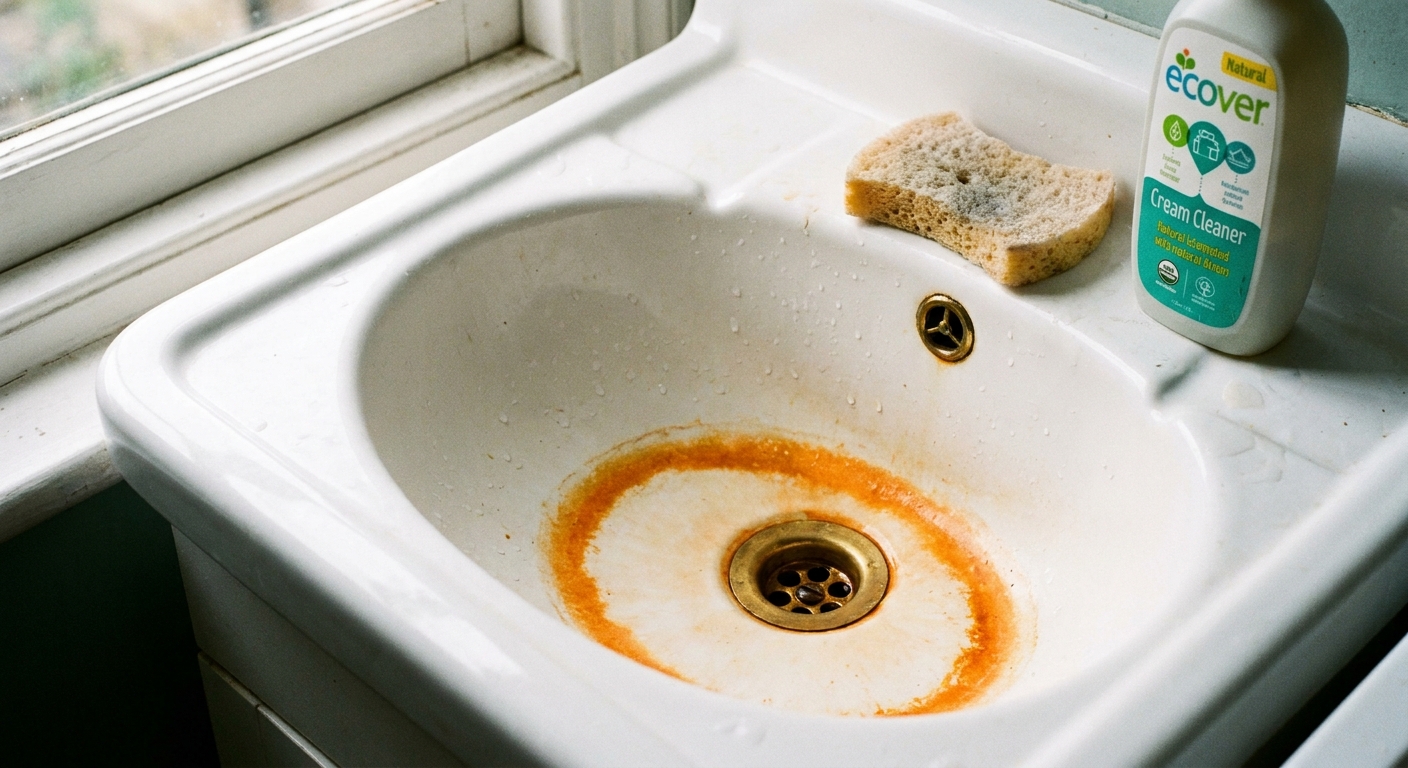
First: What kind of "porcelain" sink do you have?
Before you grab an abrasive powder, it helps to know what is under that glossy white finish. Different bases react differently to impact and aggressive scrubbing.
Enamel-coated cast iron
- Feel: heavy, solid, deadens sound when tapped.
- Common in: older farmhouse and vintage bathroom sinks.
- Why it matters: the enamel surface is hard and glassy, but if it chips, the cast iron underneath can rust fast.
Porcelain-on-steel (enamel-coated steel)
- Feel: lighter than cast iron, can sound a bit "tinny" when tapped.
- Common in: many builder-grade kitchen sinks.
- Why it matters: steel under enamel can also rust if the coating is worn or chipped, especially around the drain and faucet deck.
Fireclay (often confused with porcelain)
- Feel: very rigid and heavy, often a softer, warmer white than bright enamel.
- Common in: high-end farmhouse sinks.
- Why it matters: fireclay is generally very stain-resistant, but the finish can still get metal transfer marks and needs non-scratch methods.
If you are not sure, do a simple check: tap the side with a knuckle. A higher ring can suggest steel. A dull thud can suggest cast iron or fireclay. This is a helpful clue, not a guarantee. Cabinet support, mounting method, and even water in the basin can change the sound. When in doubt, treat it as delicate and start with the gentlest method below.
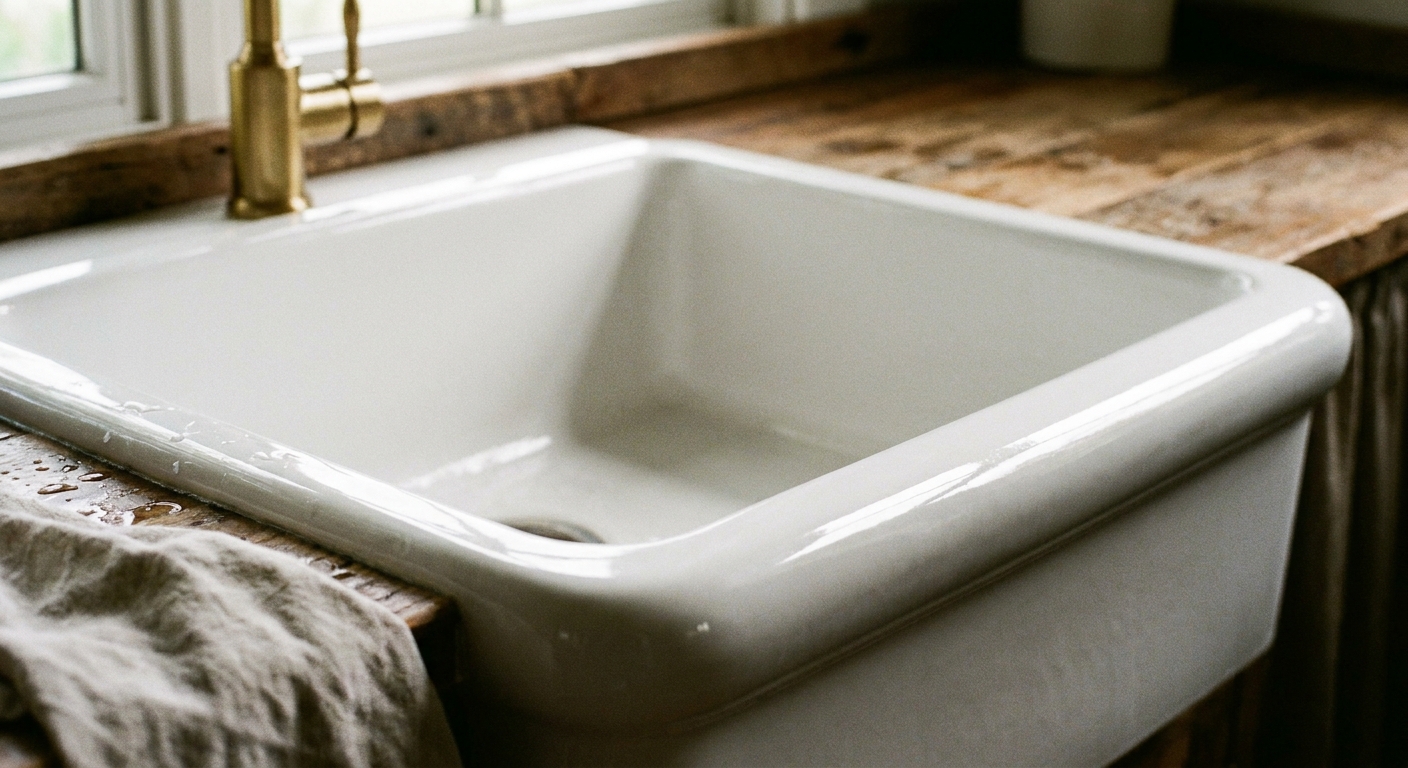
Rust ring vs gray mark: diagnose fast
Orange or brown ring near the drain
This is usually iron oxide from:
- a slow drip from a rusty drain flange or screw
- hard water with iron content
- an old metal can left in the sink
- a chip in the enamel exposing metal underneath
Gray or black streaks, scuffs, or pencil-like marks
These are often metal transfer from:
- cast iron pans
- stainless-steel utensils
- tools, razor caps, metal jar lids
Gray marks look scary but are usually the easiest to remove, and they do not mean your sink is "stained forever."
Gather a no-scratch kit
- Microfiber cloths or soft cotton rags
- Non-scratch sponge (no green scrubby side)
- Baking soda
- Hydrogen peroxide (3%) or white vinegar (choose based on stain type below)
- Bar Keepers Friend (powder or Soft Cleanser) for stubborn marks
- Plastic wrap (for "keep it wet" poultice technique)
- Painter's tape or a thin layer of petroleum jelly to protect chrome finishes
- Nitrile gloves
A quick safety note: Never mix bleach with vinegar or other acids. Also avoid leaving strong acids sitting on metal parts, especially chrome and brushed finishes. If you are using peroxide or Bar Keepers Friend, gloves are a smart idea, and a little ventilation never hurts.
Also: If you have natural stone or specialty countertops around the sink (marble, quartzite, granite), protect them. Acidic cleaners and some powders can etch or dull stone. Keep products on the sink only, wipe drips immediately, and rinse well.
Rust rings: the gentle way
Rust responds best to mild acids or chelating agents, plus time. Think "dissolve and lift," not "grind and scour."
Method 1: Vinegar compress (light to moderate rust)
- Protect the drain: Coat the chrome drain ring with a thin layer of petroleum jelly or cover it with painter's tape. Vinegar can dull some metal finishes if it sits too long.
- Soak a paper towel in white vinegar and lay it directly over the rust ring.
- Cover with plastic wrap to keep it from drying out.
- Wait 20 to 40 minutes. Check at 20.
- Wipe gently with a microfiber cloth or a non-scratch sponge.
- Rinse well and dry.
If the ring lightens but does not disappear, repeat once. Two short rounds are safer than one long aggressive soak.
Method 2: Baking soda paste + peroxide (for lingering discoloration)
This one is more about loosening and lifting discoloration with time (and a little chemistry) than "melting" rust the way an acid can. It is a good option when you want to stay on the gentle side, especially on older or slightly worn finishes.
- Make a paste of baking soda + hydrogen peroxide to a yogurt-like consistency.
- Spread it over the rust ring.
- Cover with plastic wrap and let it sit 30 to 60 minutes.
- Wipe away gently and rinse thoroughly.
This method is surprisingly kind to glossy finishes because the chemistry does more of the work than the scrubbing.
Method 3: Bar Keepers Friend (when vinegar is not enough)
Bar Keepers Friend works because of oxalic acid, which is excellent at loosening iron-based stains. It can also be mildly abrasive depending on how you use it.
- Wet the sink surface.
- Sprinkle a small amount of BKF powder (or use the Soft Cleanser version for a gentler feel).
- Using a damp, non-scratch sponge, lightly work it into the stain.
- Do not let it dry. Keep contact time to 30 to 60 seconds at first.
- Rinse extremely well and dry.
Important: Always spot test in a less-visible area first, especially on older enamel. If you see any dulling, stop and switch back to the poultice methods.
Keep it contained: Do not let BKF sit on nearby stone counters, and do not leave residue on chrome or stainless parts. Rinse hardware right away.
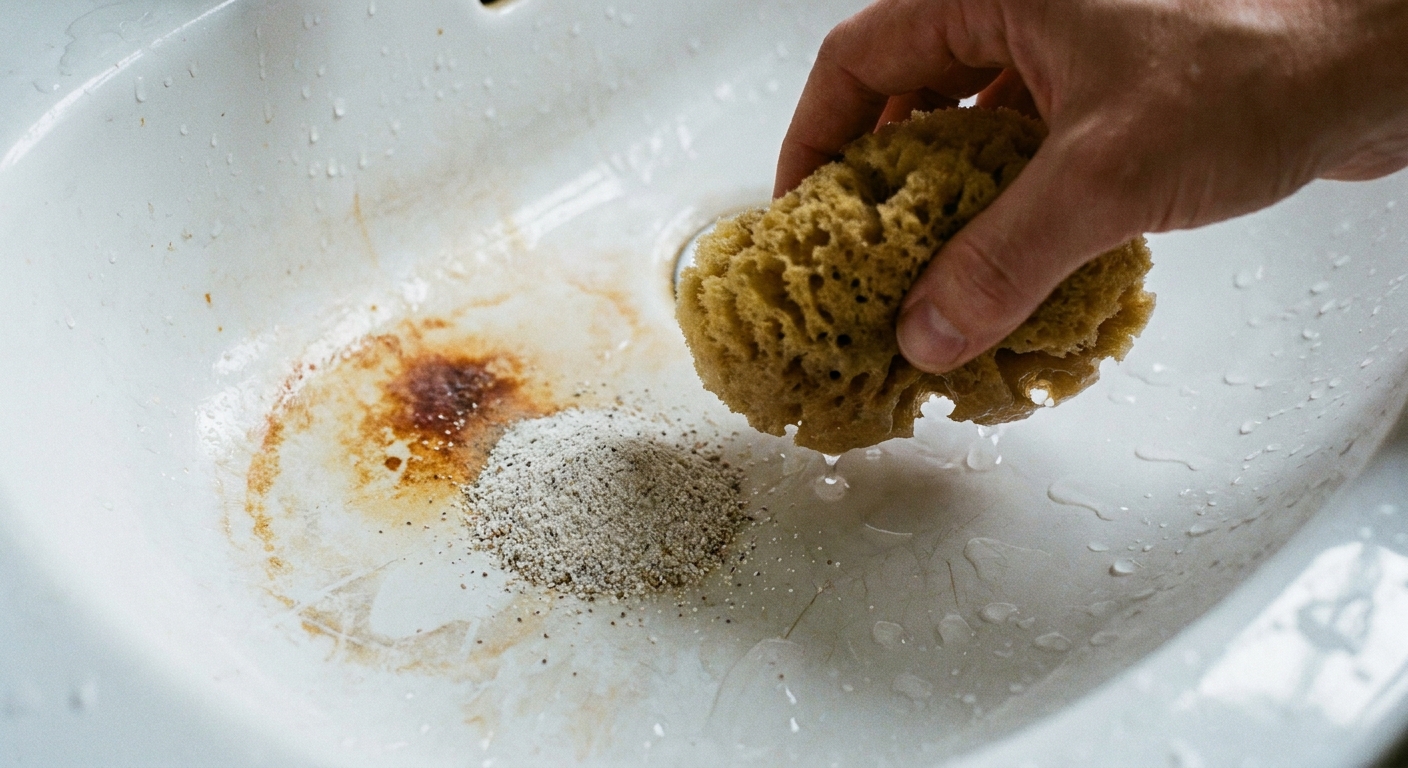
Gray marks: remove without dulling
Gray marks are often metal rubbed onto the surface, not a stain soaked into it. You want something that lifts transfer without scratching the glaze. Keep pressure light. If you feel like you have to bear down, switch methods instead.
Method 1: Baking soda paste (first try)
- Make a paste of baking soda + a few drops of water.
- Apply to the mark.
- Rub gently with a microfiber cloth using small circles.
- Rinse and dry.
Method 2: Bar Keepers Friend Soft Cleanser (stubborn scuffs)
Use the Soft Cleanser if you have it, since it is easier to control and tends to feel less gritty.
- Wet the area.
- Apply a small amount of product.
- Rub lightly with a soft cloth or non-scratch sponge for 15 to 30 seconds.
- Rinse thoroughly and dry.
Method 3: Magic eraser, with caution
Melamine sponges can remove marks fast, but they are micro-abrasive. If your sink is older, already dulled, or you are working on a high-gloss enamel you love, treat this as a last resort.
- Use light pressure.
- Keep it wet.
- Stop as soon as the mark lifts.
Pumice stones: when to skip
Pumice is where a lot of porcelain sinks get that "mysteriously matte" patch that never looks the same again.
When pumice can be okay
- Only on true porcelain or enamel surfaces that are in good condition
- Only with a pumice stick made for toilets or sinks
- Only when both the pumice and sink are fully wet
- Only with feather-light pressure
When to skip pumice
- If the sink finish is already worn, crazed, or dull
- If you have a dark or colored sink where scratches show easily
- If the stain is around a chrome drain or decorative trim
If you are determined to try it, spot test first and keep it away from metal hardware. Personally, I would rather do two rounds of a rust poultice than one round of pumice regret.
Protect chrome drains and fixtures
Most stain removers that tackle rust are either acidic (vinegar, oxalic acid) or contain ingredients that can haze metal finishes if left too long. A little prep keeps your drain ring looking crisp.
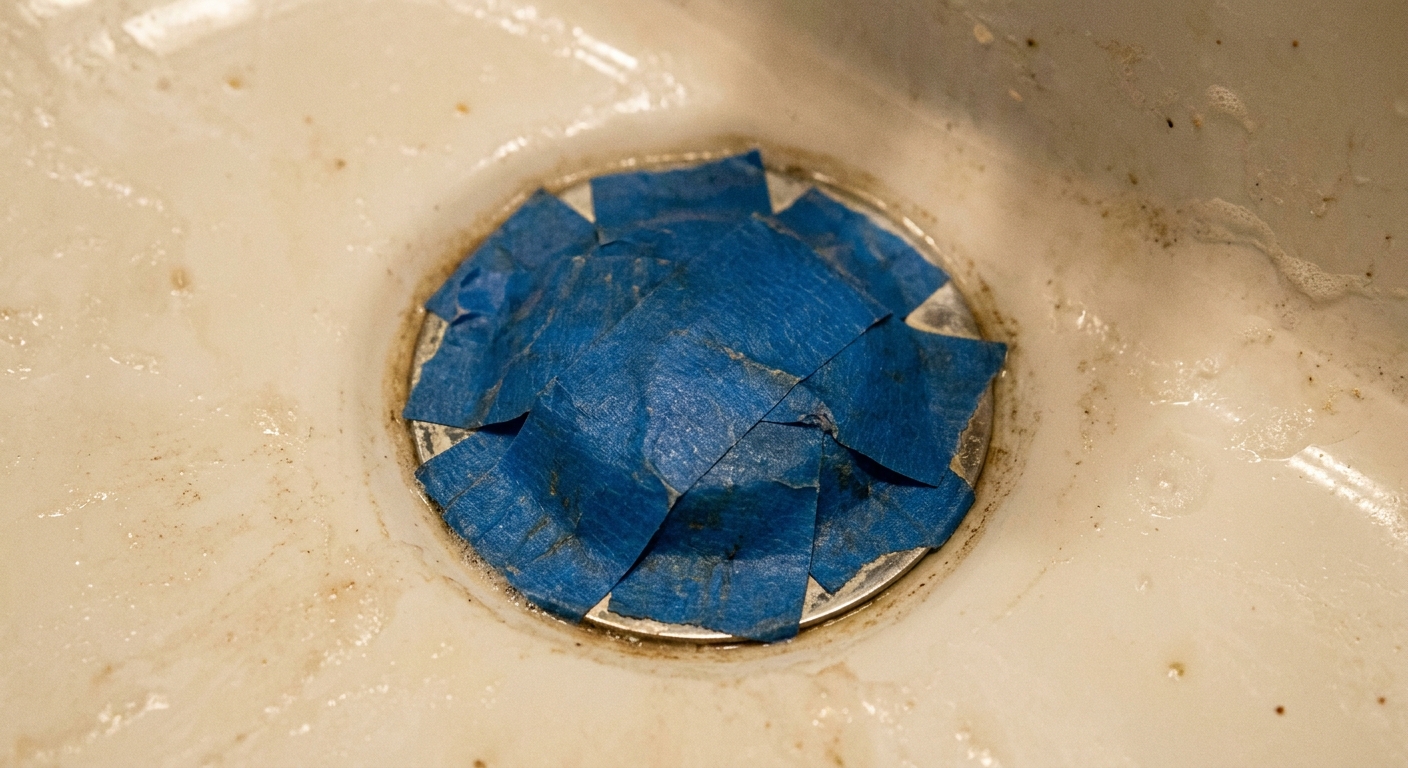
- Mask it: painter's tape around the drain flange is easy and clean.
- Barrier it: a thin coat of petroleum jelly on the chrome creates a temporary shield (wipe fully afterward).
- Rinse early and often: if cleaner creeps onto metal, rinse immediately.
If rust keeps coming back
Recurring rings are usually a clue, not a cleaning failure.
- Worn or chipped enamel near the drain: exposed steel or cast iron can rust under the glaze edge. Consider a drain flange replacement and consult a pro about refinishing if chipping is significant.
- Rusting drain parts: a corroded screw, strainer, or flange can “bleed” rust after every rinse.
- Iron in your water: if you see rust staining in toilets too, a whole-house filter or water test is worth it.
- Metal left in the sink: cans, bobby pins, steel wool, even certain soap dishes.
When to stop and call a pro
Cleaning is great. Chasing your tail is not. Consider getting help if you notice:
- Widespread crazing (a fine crackle pattern) that keeps collecting stains
- Deep chips exposing metal, or rust spreading under the finish
- Rust that returns quickly even after replacing the strainer or drain hardware
- Signs of a leak around the drain flange, faucet deck, or under the sink
What not to do
- Do not use steel wool or metal scrubbers. They scratch and can leave their own metal behind.
- Do not use bleach for rust. It is usually ineffective on iron oxide and can discolor or damage some finishes over time. It is also dangerous when mixed with acids.
- Do not let acidic cleaners sit on chrome. Dulling is real, and it is hard to undo.
- Do not dry-scrub powders. Always add water first and use light pressure.
- Skip toilet bowl rust removers in sinks. Many contain very strong acids (often hydrochloric acid) that are overkill for porcelain sink finishes and can damage metal parts fast.
A simple maintenance routine
- Rinse and wipe dry around the drain after heavy use. Rust loves a damp little moat.
- Weekly: wash with a gentle dish soap and a soft sponge.
- Monthly: quick pass with baking soda paste to lift tiny metal transfers before they become “permanent.”
- Keep metal out of the sink when possible. A small tray for razors or a trivet for pans makes a bigger difference than you would think.
If you want your sink to feel like new, finish by drying it with a clean towel. That final buff brings back the glow that makes white porcelain feel quietly luxurious, even in a very real-life home.
Quick FAQ
Is porcelain the same as enamel?
In sink-land, people often use “porcelain” to mean a glossy enamel coating on cast iron or steel. Fireclay is different, but it can look similar. Cleaning-wise, start gentle either way.
Can I use Bar Keepers Friend on porcelain sinks?
Usually yes, but use it wet, briefly, and with light pressure. Spot test, especially on older enamel. Rinse thoroughly.
Why does my white sink get gray marks so easily?
Most gray marks are metal transfer from cookware or utensils. They are common on bright white finishes because the contrast is high, not because your sink is low quality.
What if I have a chip exposing metal?
Clean gently, then consider a porcelain repair kit for small chips and address rusting hardware. If multiple chips are present or rust is spreading, a professional refinishing may be the best long-term fix.