Remove Pilling and Fuzz From Fabric Sofas

Clara Townsend
Clara Townsend is an interior stylist, vintage furniture enthusiast, and the creative voice behind Velvet Abode. With over a decade of experience transforming both cramped city apartments and sprawling fixer-uppers, she believes that a beautiful home is built on personal stories rather than massive budgets. When she isn't hunting for the perfect brass sconce at a local flea market, she can usually be found rearranging her living room for the third time this month.
Pilling is one of those tiny annoyances that can make a perfectly good sofa look tired. Those little linty bobbles are usually a mix of loose fibers from the upholstery itself, plus whatever your household contributes: sweater fuzz, blanket lint, pet hair, and everyday friction.
The goal is not to scrape your sofa into submission. The goal is to remove pills while keeping the weave intact, so the fabric still looks rich and feels soft after you are done.
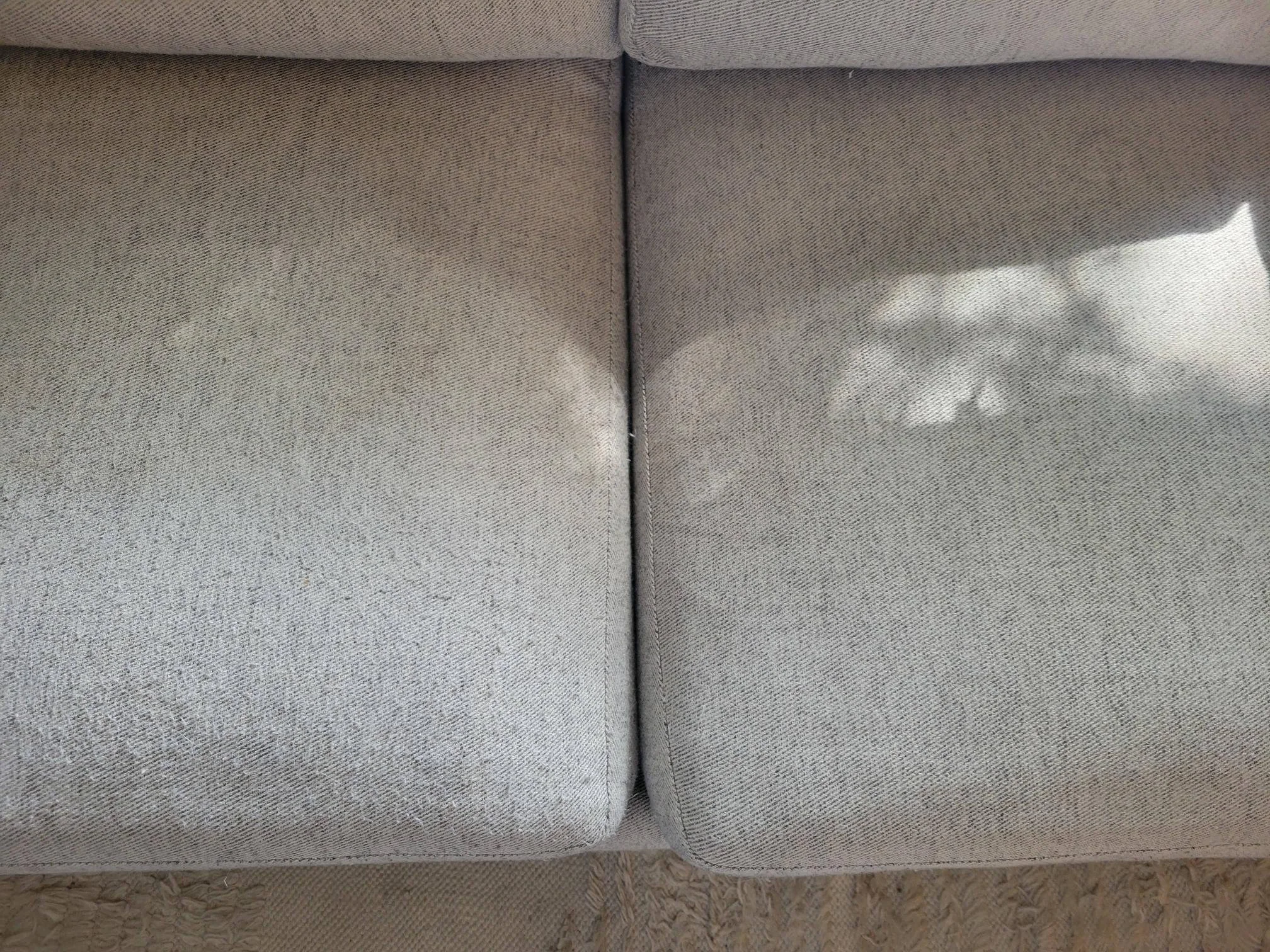
First, identify your fabric
If you are renting or you inherited a mystery couch from a friend, you can still make a smart call without a full fabric lab moment. Look for a tag under the cushions. If you cannot find one, use this quick cheat sheet:
- Tight woven fabrics (many poly blends, performance fabrics, canvas-like weaves): usually safe for a fabric shaver on a gentle setting.
- Nubby weaves (tweeds, heathered textures): can pill heavily, but are also easier to snag. Work slowly and do a test patch first.
- Delicate piles (velvet, velour, chenille, mohair-like fabrics, brushed microfiber): these are the “tread carefully” fabrics. The surface has a raised nap that can be crushed or pulled.
- Looped textures (boucle, looped knits): avoid anything that can catch a loop. Snagging one loop can run like a sweater.
Golden rule: if the fabric has loops, long fuzz, or a visible nap that changes when you brush your hand across it, treat it as delicate and start with the gentlest method.
Quick tag note: you may see codes like W, S, WS, or X. Those are cleaning codes (water vs solvent), not de-pilling instructions, but the tag is still worth reading for any brand-specific warnings about abrasion or tools.
Tool guide: shaver vs stone vs vacuum
All three tools can work, but they shine in different situations. Think of it as matching the tool to the fabric, not forcing one tool to do everything.
Fabric shaver (electric depiller)
Best for: tight weaves and most synthetic blends, especially on seat cushions and arm tops where friction is constant.
Why it works: it trims pills off at the surface so they can be collected, instead of yanking fibers out of the weave.
How to use it without damage:
- Remove cushions and put them on a flat, firm surface.
- Pull the fabric taut with your free hand so the shaver glides over a smooth plane.
- Use the lowest setting first and light pressure. Let the tool do the work.
- Move in short passes. Empty the lint chamber often so blades do not drag.
- Avoid seams, piping, buttons, and trim where catching is more likely.
- Stop the second you feel catching, hopping, or snagging.
Avoid this:
- Avoid fabric shavers on boucle or looped upholstery. It can catch a loop and create a visible pull.
- Generally avoid shavers on velvet, velour, chenille, or mohair-like piles unless the manufacturer explicitly says it is safe. Some modern micro-velours can tolerate very gentle shaving, but treat it as an exception and test first.
- Do not press hard to “speed things up.” That is how blades kiss the weave.
Safety note: turn it off and unplug it (or remove batteries) before clearing jams or cleaning the head.
Sweater stone (pumice-style defuzzer)
Best for: thicker, sturdier woven fabrics with heavy fuzz, especially when pills are more like a surface haze than tight little balls.
Why it works: it gently abrades loose fibers so they release. It is satisfyingly effective, but it has a higher risk ceiling than a shaver because abrasion can thin fabric over time.
How to use it safely:
- Test in an unseen area first (back panel, under a cushion lip).
- Use feather-light strokes in one direction. Think “dusting,” not “scrubbing.”
- Pause often and vacuum up the fuzz so you can see what is happening.
Avoid this:
- Never use a sweater stone on delicate piles like velvet, velour, chenille, brushed microfiber, or anything that looks plush. Abrasion can roughen or flatten the nap permanently.
- Avoid sweater stones on loose, open weaves (often “linen-look” constructions with visible space between yarns). They can fuzz and fray fast.
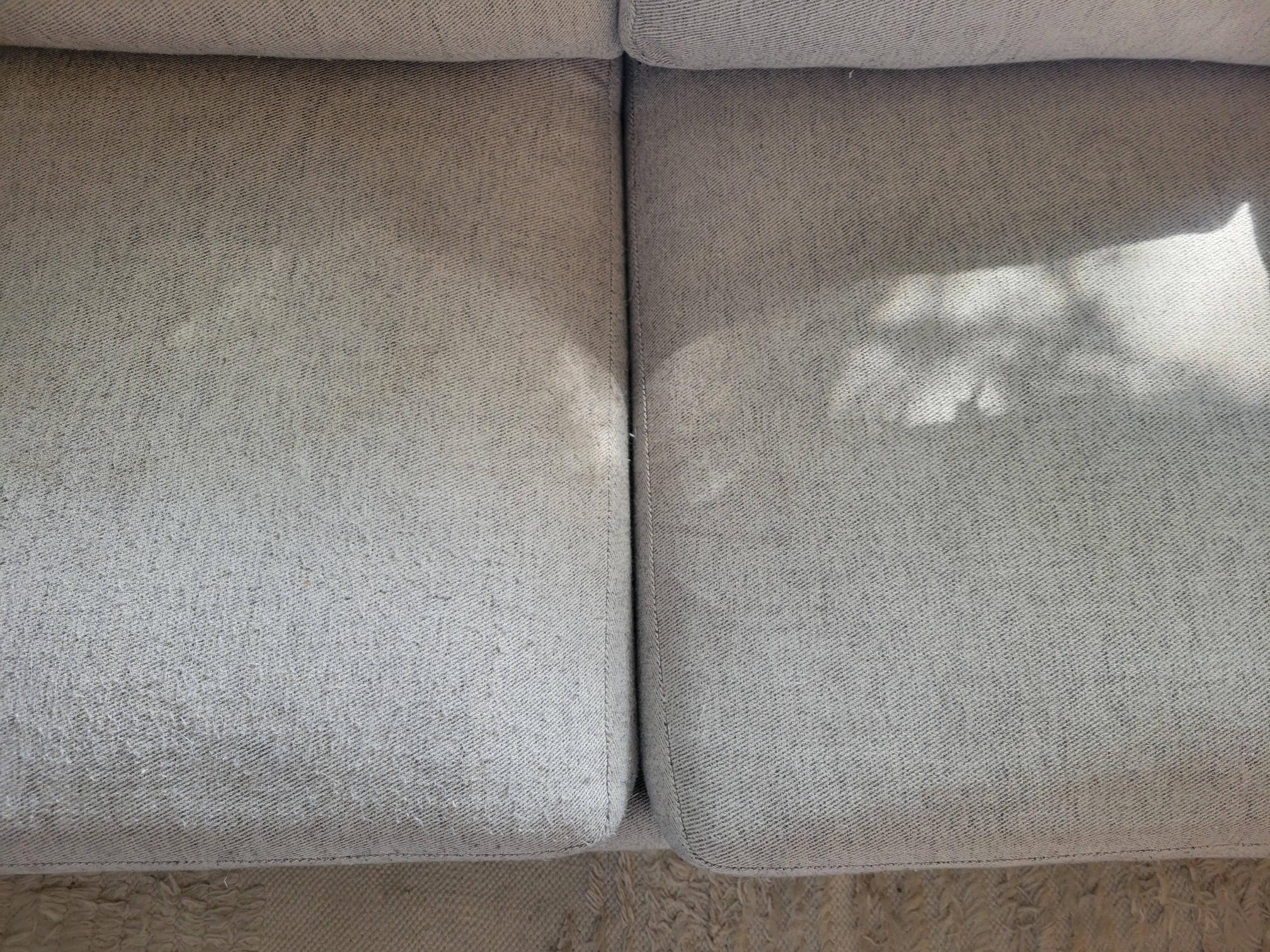
Vacuum attachments (upholstery tool, brush tool, rubber tools)
Best for: maintenance and prevention, plus removing the “cast” of fuzz and pet hair that makes pilling look worse.
Why it works: vacuuming removes loose fibers before they twist into pills, and it lifts the debris that hides the fabric’s true color.
What to use:
- Upholstery tool: smooth, wide head for general passes.
- Soft brush attachment: great for textured weaves that hold lint.
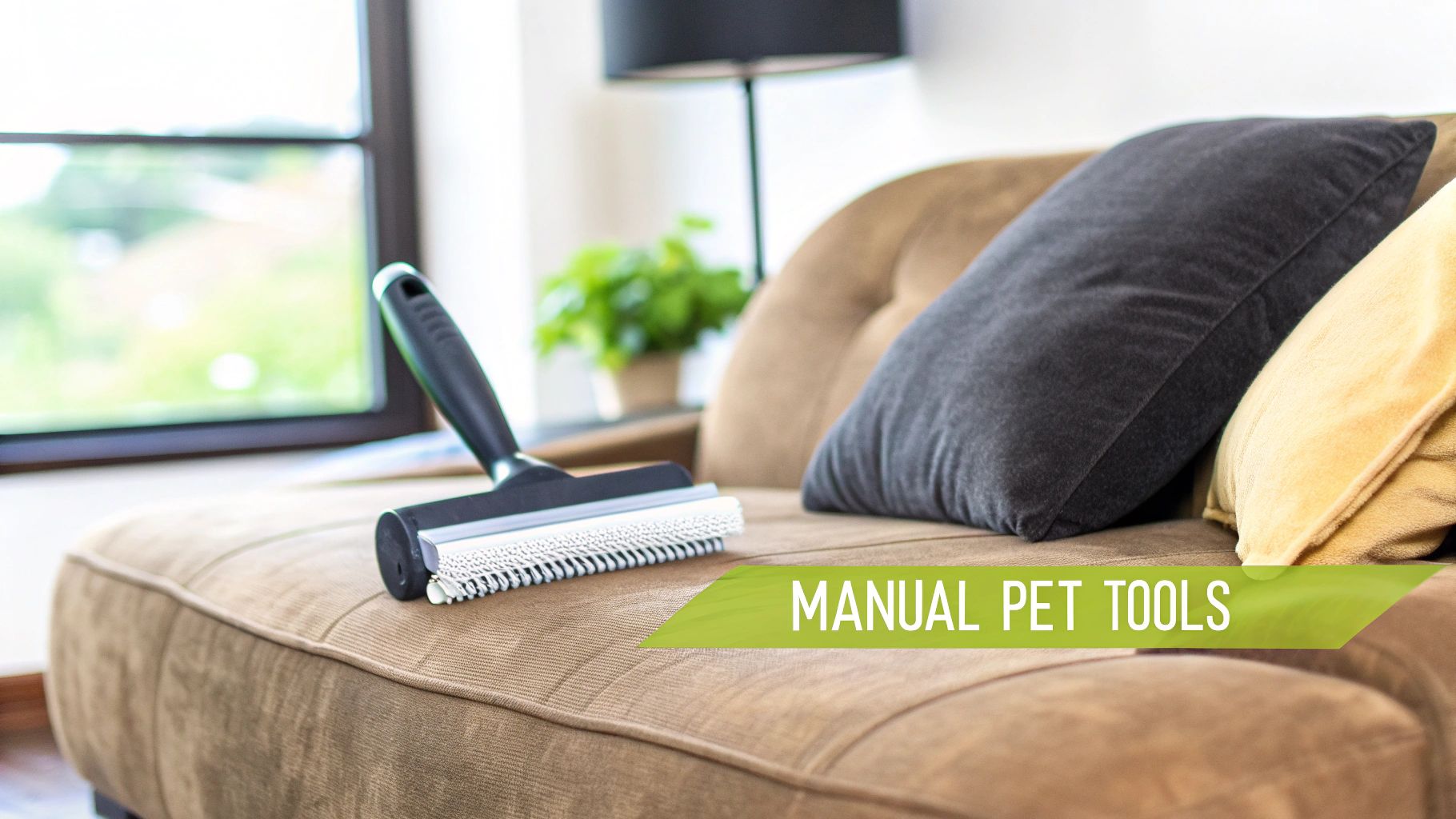
- Rubber pet hair tool or rubber glove: gathers hair and fuzz without pulling the weave.
Avoid this:
- Do not use a stiff bristle brush head on delicate piles. It can roughen the nap.
- Do not use high suction on fringe, loose covers, or skirt details. Hold fabric with one hand and keep the nozzle moving.
The safest step-by-step
If you want the least drama route that still makes a big visual difference, follow this order. It is gentle first, then more targeted.
1) Vacuum first
Vacuuming removes loose fibers that would otherwise get caught in your tool and create drag. Use the upholstery tool, then the soft brush if your fabric is textured. Go with the grain if your sofa has a nap.
2) Spot test
Pick a hidden area and do 10 to 15 seconds. Check for:
- Snagging or pulled threads
- Color change (some piles look lighter when disturbed)
- Flattened nap that does not bounce back after you brush it with your hand
3) Depill in small sections
Work cushion by cushion. Keep the fabric taut. Stop and run your palm over the area frequently. Your hand will tell you more than your eyes.
4) Finish with a final vacuum and a lint pass
Vacuum again to remove clippings. If you still see fuzz clinging, use a lint roller very lightly or a slightly damp microfiber cloth to pick up stragglers.
Common mistakes
- Razor blades are not recommended for most renters and homeowners. Yes, some pros use guarded razor techniques on certain tight weaves, but it is easy to nick a thread at home and create a permanent run.
- Do not use scissors for broad areas. Scissors are for one-off snips of a single fuzz tuft only.
- Do not use sticky tape aggressively on delicate piles. Strong adhesive can lift fibers and make the surface look patchy.
- Do not scrub pills with a rough sponge or abrasive pad. You are basically creating more loose fibers, which makes more pilling later.
- Do not go in circles on nubby weaves. Circular friction can raise more fuzz. Use light, directional passes.
Delicate fabrics: gentler options
If your sofa is velvet, chenille, velour, brushed microfiber, or anything plush with a direction-changing nap, you can still improve pilling, but the approach is different: you are grooming, not shaving.
Velvet and velour
- Vacuum with a soft brush attachment using low suction.
- Use a velvet brush or a clean, soft clothing brush, moving with the nap.
- For a few stubborn pills, try careful hand-picking or a tiny snip with sharp embroidery scissors, only if the pill is clearly sitting on top and not anchored.
Chenille
- Start with vacuuming and a soft brush.
- Do not abrade. If pills are heavy, consider professional upholstery care, especially on light colors where nap disruption shows.
Boucle and looped textures
- Skip shavers and stones.
- Use a rubber pet hair tool and gentle vacuuming.
- If a loop pulls, do not cut it off. Use a needle to gently coax it back to the underside if possible, or consult an upholsterer for a nearly invisible fix.
Habits that slow pilling
Pilling loves friction, loose fibers, and neglect. You do not need a strict schedule, but a few small habits make a renter sofa look wildly more expensive.
Weekly: quick routine (5 minutes)
- Vacuum seat cushions and arm tops with the upholstery tool.
- Use a rubber tool or glove for pet hair, then vacuum again.
- Rotate and flip cushions if your sofa allows it. This spreads wear like rotating a mattress.
Monthly: friction audit
- Swap throw blankets seasonally. Some knits shed like crazy and transfer fibers to upholstery.
- If you always sit in one corner, add a washable throw or a seat cover panel for that spot.
- Check clothing culprits. Rough denim seams and wool sweaters are pilling accelerators on armrests.
Every 2 to 3 months: light depill session
Small, frequent touch-ups are safer than waiting until pills are thick and stubborn. When pills build up, people press harder, and that is when the weave gets stressed.
If you are a renter: protect high-friction zones
- Arm caps or a draped linen throw can take the brunt of friction and skin oils.
- Use felt pads under nearby side tables so you are not rubbing the fabric every time you scoot furniture.
- Keep a small fabric shaver in a drawer like you would keep a lint roller. Five minutes before guests arrive is a very real lifestyle.
Why pilling comes back
Some fabrics are simply more prone to pilling. Short-staple fibers (and blends that include them), plus some acrylic and wool blends, can shed tiny fiber ends that keep working their way to the surface. That does not mean you did anything wrong, it just means you need gentler, more frequent touch-ups and a little friction control.
Troubleshooting
Pills return within days
This usually means the fabric is shedding loose fibers from within the yarn, or friction is constant (think: favorite seat, daily naps, pets). Do smaller, gentler depill sessions and add a washable throw where you sit most.
Area looks lighter or flatter after depilling
That is a sign the nap or surface texture has been disturbed. Stop using abrasive tools. Switch to vacuuming and soft brushing. For velvet-like fabrics, grooming with the nap often improves the look over a few days.
You see snagged threads
Pause immediately. Do not keep shaving. If a thread is pulled, do not cut it flush on the surface. That can create a weak spot. If you can, use a needle to gently pull the snag to the underside. If the snag is severe, an upholsterer can often repair it more cleanly than you would expect.
Quick picks
- Choose a fabric shaver if your sofa is a tight weave and the pills are distinct little balls.
- Choose a vacuum and soft brush if your sofa is plush, nap-heavy, or you are not sure what you are dealing with.
- Choose a sweater stone only for sturdy, thicker weaves and only with a light hand.
When in doubt, start gentle. A sofa can survive a little fuzz. It cannot un-snag a pulled weave.