Remove Pet Hair and Odors from a Fabric Sofa

Clara Townsend
Clara Townsend is an interior stylist, vintage furniture enthusiast, and the creative voice behind Velvet Abode. With over a decade of experience transforming both cramped city apartments and sprawling fixer-uppers, she believes that a beautiful home is built on personal stories rather than massive budgets. When she isn't hunting for the perfect brass sconce at a local flea market, she can usually be found rearranging her living room for the third time this month.
If you live with pets, your fabric sofa is basically a community gathering spot. It holds sleepy afternoon naps, post-walk zoomies, and that one “I swear it did not smell like this yesterday” moment. The good news is you do not have to choose between a cozy couch and a fresh-smelling living room. You just need the right order of operations, because deodorizing a sofa that is still full of hair is like spraying perfume on a gym bag.
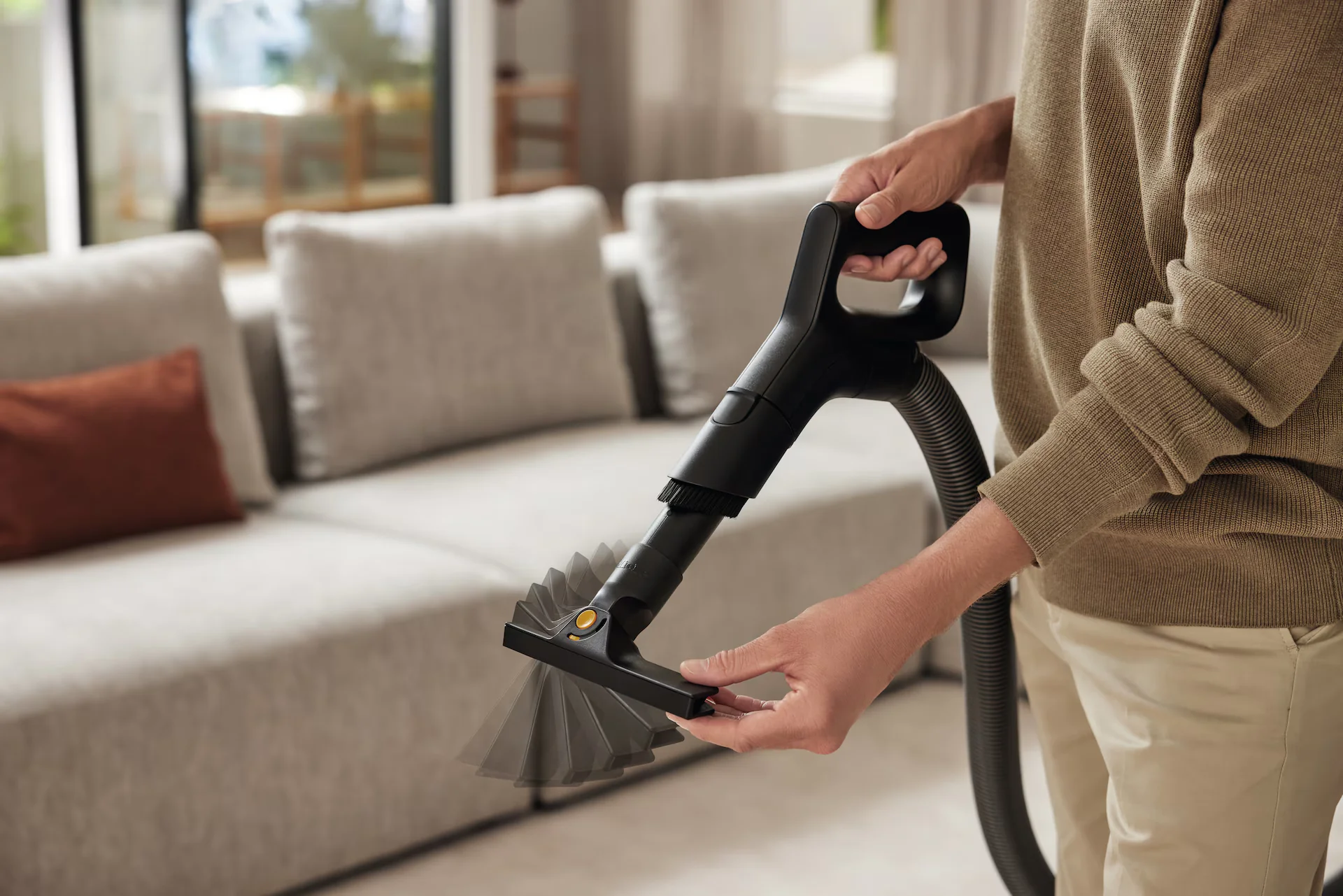
This is my Velvet Abode routine for getting both fur and stubborn odors out of a fabric sofa without turning it into a soaking-wet science experiment.
Before You Start: Check the Tag and Do a Tiny Test
Look for the cleaning code tag, usually under a seat cushion or along the frame:
- W: Water-based cleaner is ok.
- S: Solvent-based cleaner only (no water-based sprays or steam).
- WS or SW: Either water- or solvent-based products are ok.
- X: Vacuum only. Anything wet can stain or distort fibers.
Even if you “know” your sofa can handle it, always spot test in a hidden area. Pet odor products can slightly darken some weaves, especially performance fabrics with a tight, flat texture.
Your Pet Sofa Kit (No Fancy Gadgets Required)
- A vacuum with strong suction plus upholstery brush and crevice tool
- A rubber tool: rubber glove, rubber squeegee, or a rubber pet-hair brush
- Lint roller or wide sticky tape
- Microfiber cloths
- Baking soda or an upholstery-safe deodorizing powder
- Enzyme cleaner made for pet odors (especially for urine or “mystery funk”)
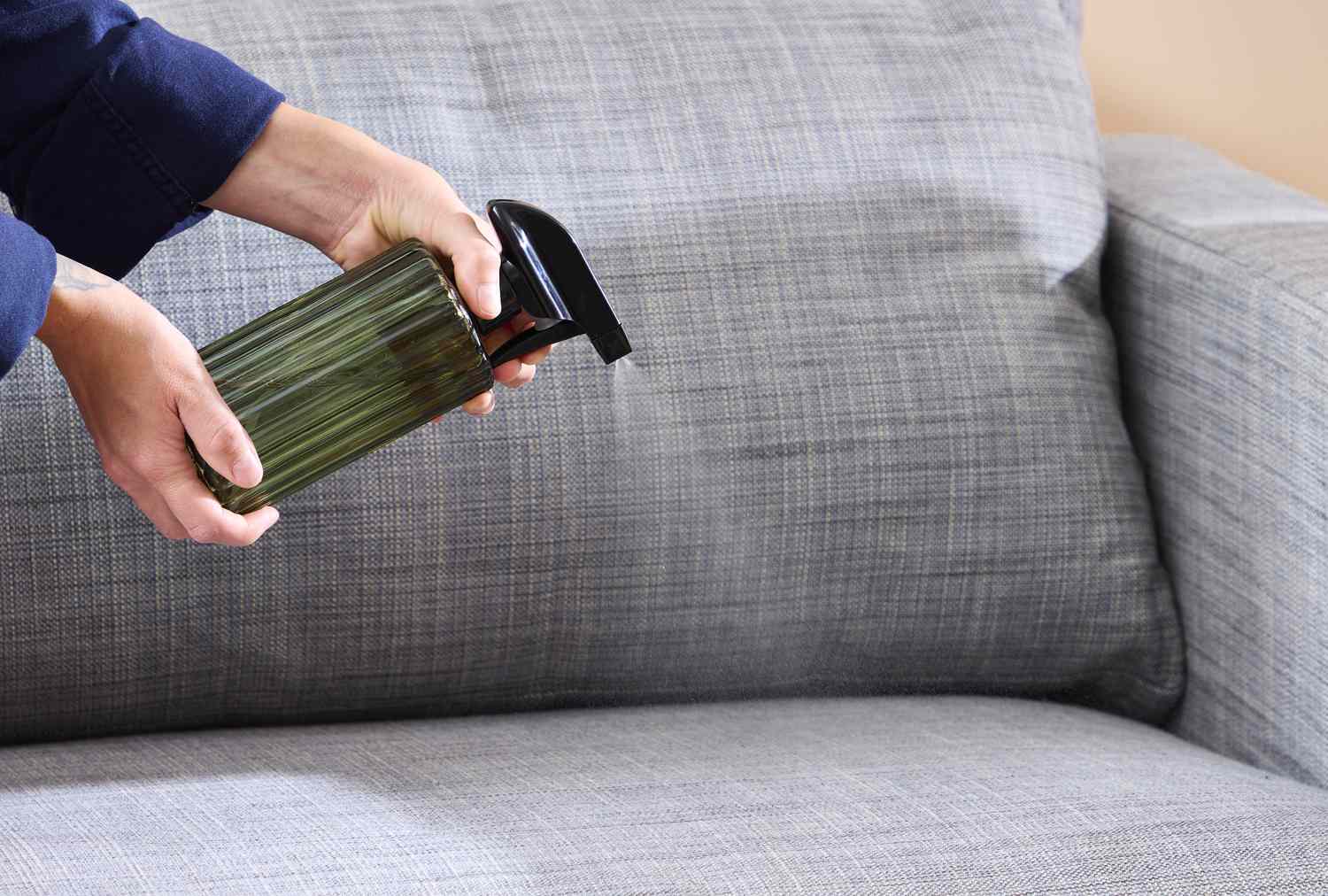
- A spray bottle of plain water (only if your tag allows W or WS)
- A small fan (optional but very helpful)
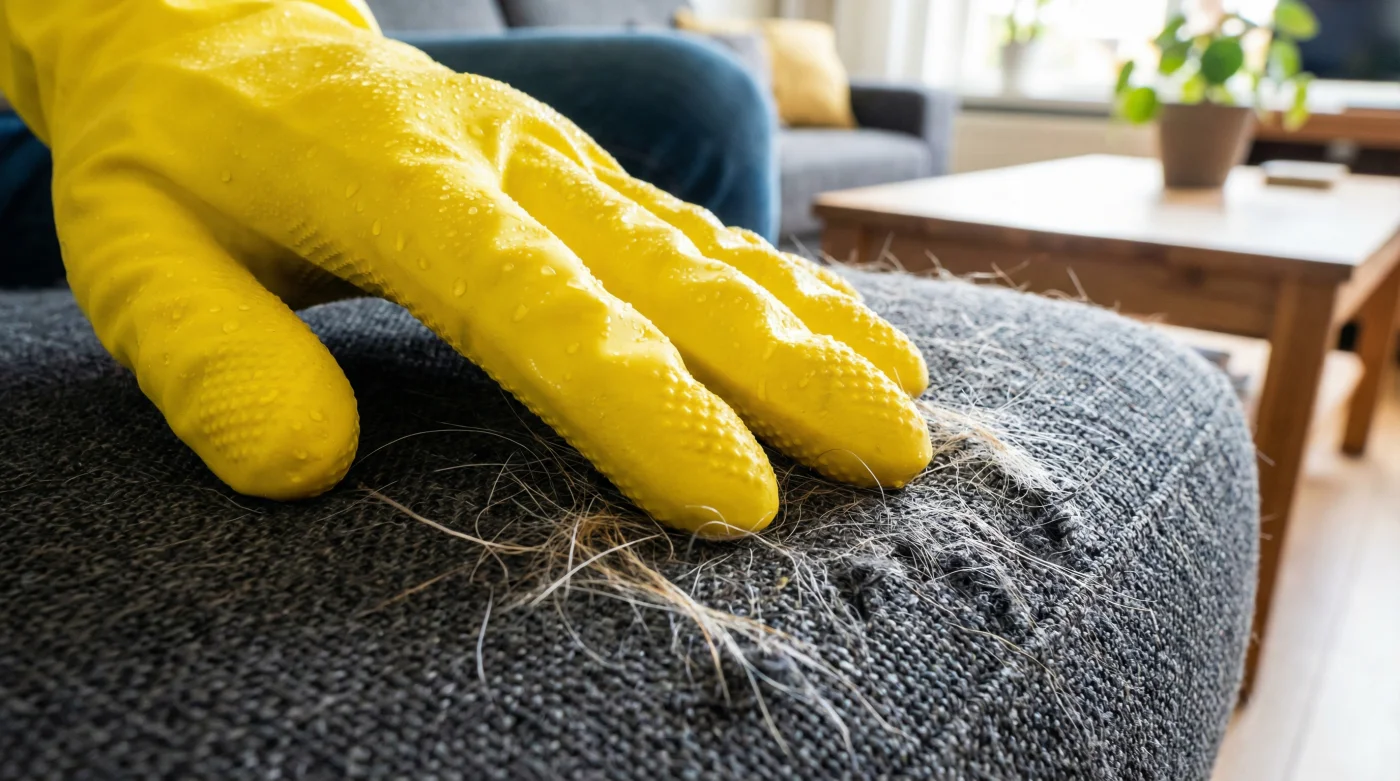
Clara note: If you buy just one thing, make it the rubber tool. Rubber creates friction that lifts embedded hair the vacuum simply skates over.
Step 1: Remove Cushions and Go After the Hair First
1A. Do the “dry lift” pass
Pull off all removable cushions. Work from top to bottom so you are not re-depositing hair as you go.
- Lightly mist your rubber glove with water (again, only if W or WS) or use it dry if you have an S code fabric.
- Wipe in one direction to gather hair into ropes.
- Pick up the clumps by hand and toss them before you vacuum.
1B. Vacuum like you mean it
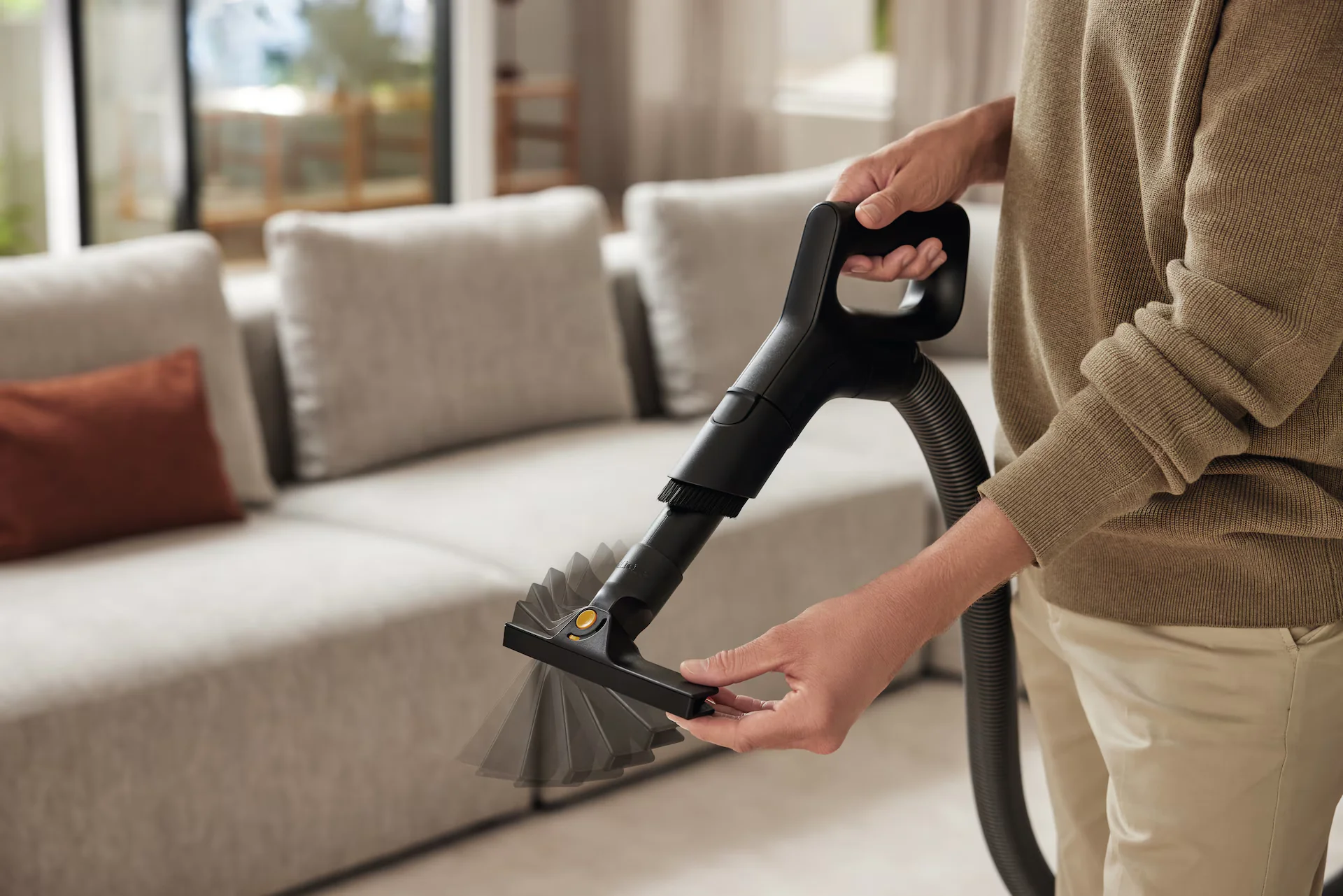
Now vacuum, slowly. Upholstery brush for the broad areas, crevice tool for the places where pet hair goes to retire forever:
- Along piping and seams
- Between seat deck and arms
- Under cushions and along the backrest edge
- On the fabric “skirt” where it meets the floor
If you are dealing with a very hairy sofa, repeat: rubber tool first, vacuum second. Two rounds is normal.
Step 2: Find the Odor Source (It Is Not Always the Whole Sofa)
Before you deodorize everything, do a quick sniff check with your nose close to the fabric. I know this is not glamorous. It is effective.
- Localized stink (one cushion, one arm): treat that zone directly with enzymes.
- Overall “doggy” smell: deodorizing powder plus airflow usually solves it.
- Sour or mildew scent: the sofa may have been over-wet in the past or the cushion inserts are holding moisture. Focus on drying and avoid heavy spraying.
Step 3: Deodorize Gently with Baking Soda (For General Pet Smells)
For everyday pet odor that is not from urine, baking soda is my quiet little workhorse.
How to do it
- Make sure the sofa is fully dry.
- Sprinkle a light, even layer of baking soda over the sofa and cushions.
- Work it in gently with a soft brush or dry microfiber cloth (do not grind it in).
- Let it sit for at least 30 minutes, or overnight for stubborn smells.
- Vacuum thoroughly using the upholstery brush, then crevice tool.
Important: Baking soda can clog some vacuums if you dump on a thick layer. Go light and vacuum slowly.
Skip baking soda if your sofa tag is X and the fabric is very textured or delicate, or if you have a vacuum you cannot risk. In that case, stick to vacuuming, airflow, and professional help if odors persist.
Step 4: Use an Enzyme Cleaner for “Stubborn” Odors (Especially Urine)
If the smell is sharp, persistent, or returns when the room warms up, you usually need enzymes. Enzyme cleaners break down the odor source instead of masking it.
Enzyme spray method (best for spots)
- Blot any moisture first. Do not rub.
- Apply enzyme cleaner until the area is evenly damp (not dripping). Enzymes need contact.
- Let it dwell as directed on the bottle, often 10 to 15 minutes or more.
- Blot again with a clean cloth.
- Air dry completely. Use a fan and keep pets off the area while it dries.
If the cushion insert is involved: Odors love foam. If you can unzip the cover, treat both the cover and the foam insert. That is often the difference between “smells better for a day” and actually solved.
Do not mix enzyme cleaners with vinegar, bleach, or other cleaners. You can deactivate the enzymes or create unsafe fumes. One product, one job.
Step 5: Refresh the Whole Sofa Without Over-Wetting It
When the odor feels general rather than spotty, you want freshness without soaking. Here is the safer approach for most W or WS sofas:
- Lightly mist a microfiber cloth with water and wipe high-touch areas (arms, headrest zone, front edge of cushions).
- Follow with a dry cloth to pick up loosened grime.
- Finish with airflow: open a window, run a fan, and let the sofa breathe.
This sounds too simple, but a lot of “pet smell” is actually a film of body oils plus dust holding onto odor molecules. A controlled wipe-down helps without saturating the upholstery.
Hard-to-Reach Zones: Seams, Tufts, and Between Cushions
These are the places that hold both hair and odor because they trap dander and crumbs.
- Seams and piping: Crevice tool first, then a lint roller for stragglers.
- Tufted sofas: Use a soft brush attachment and short strokes. Avoid snagging the tuft threads.
- Between cushions: Wrap a microfiber cloth around a ruler, mist the cloth lightly (if W or WS), and slide it along the gap to pull out grime.
When Smell Keeps Coming Back: The Hidden Culprits
- Cushion inserts: Foam and batting can trap odor deep inside. Treat inserts directly if possible.
- The sofa frame and dust cover: Flip the sofa (carefully) and check the underside fabric. Hair and odors can cling there, especially if pets sleep under or beside it.
- Throw blankets and pillow covers: If you deodorize the sofa but leave the blankets, the smell returns fast. Wash those on the same day.
- Rugs nearby: A rug can be the real odor source, making you blame the sofa.
Pet Hair Prevention That Actually Works
I love a pristine sofa in theory. In practice, I love a sofa that feels like home. These habits keep things manageable without turning your life into a cleaning schedule.
- Brush pets regularly, especially during seasonal shedding. Less loose hair, less couch hair.
- Keep a washable throw on the favorite pet spot. Choose one with texture (waffle, quilted cotton) because hair releases more easily.
- Do a 3-minute weekly reset: quick rubber-glove pass on cushions, then a fast vacuum along seams.
- Address accidents immediately: blot, enzyme treat, dry fully. Old stains are not just stains. They are odor time capsules.
When to Call a Professional (And What to Ask For)
Sometimes the kindest thing you can do for yourself and your sofa is handing it off.
- The odor returns within a day or two, especially in warm weather.
- You suspect urine reached the foam or frame.
- Your sofa has an S code and you are not comfortable using solvents.
- The fabric is vintage, delicate, or prone to water rings.
When you call, ask if they have experience with pet odor remediation and whether they can treat cushion inserts, not just the outer fabric. Also ask about their drying process, because lingering moisture is what turns “clean” into “musty.”
Quick Cheat Sheet
- Hair everywhere: rubber tool first, then vacuum slowly, then lint roller for finishing.
- General doggy smell: baking soda (light layer), sit, vacuum, add airflow.
- Urine or stubborn funk: enzyme cleaner, adequate dwell time, treat inserts if possible, dry fully.
- Musty smell: prioritize drying and avoid heavy spraying.
Your home is allowed to look lived-in. But it can still smell like fresh air and linen curtains, even with a furry roommate curled up in the best seat.