Remove Nail Polish and Acetone Marks From Fabric Sofas

Clara Townsend
Clara Townsend is an interior stylist, vintage furniture enthusiast, and the creative voice behind Velvet Abode. With over a decade of experience transforming both cramped city apartments and sprawling fixer-uppers, she believes that a beautiful home is built on personal stories rather than massive budgets. When she isn't hunting for the perfect brass sconce at a local flea market, she can usually be found rearranging her living room for the third time this month.
Nail polish on a fabric sofa is one of those heart-drop moments. It’s also one of those messes where the first 60 seconds matter more than the fanciest product you buy later. The tricky part is that polish is basically colored resin suspended in solvents, and nail polish remover is usually an even stronger solvent. On upholstery, that combo can turn a small drip into a pale ring or a crunchy patch if you rub or over-wet the area.
Let’s keep this calm, controlled, and as invisible as possible when you’re done.
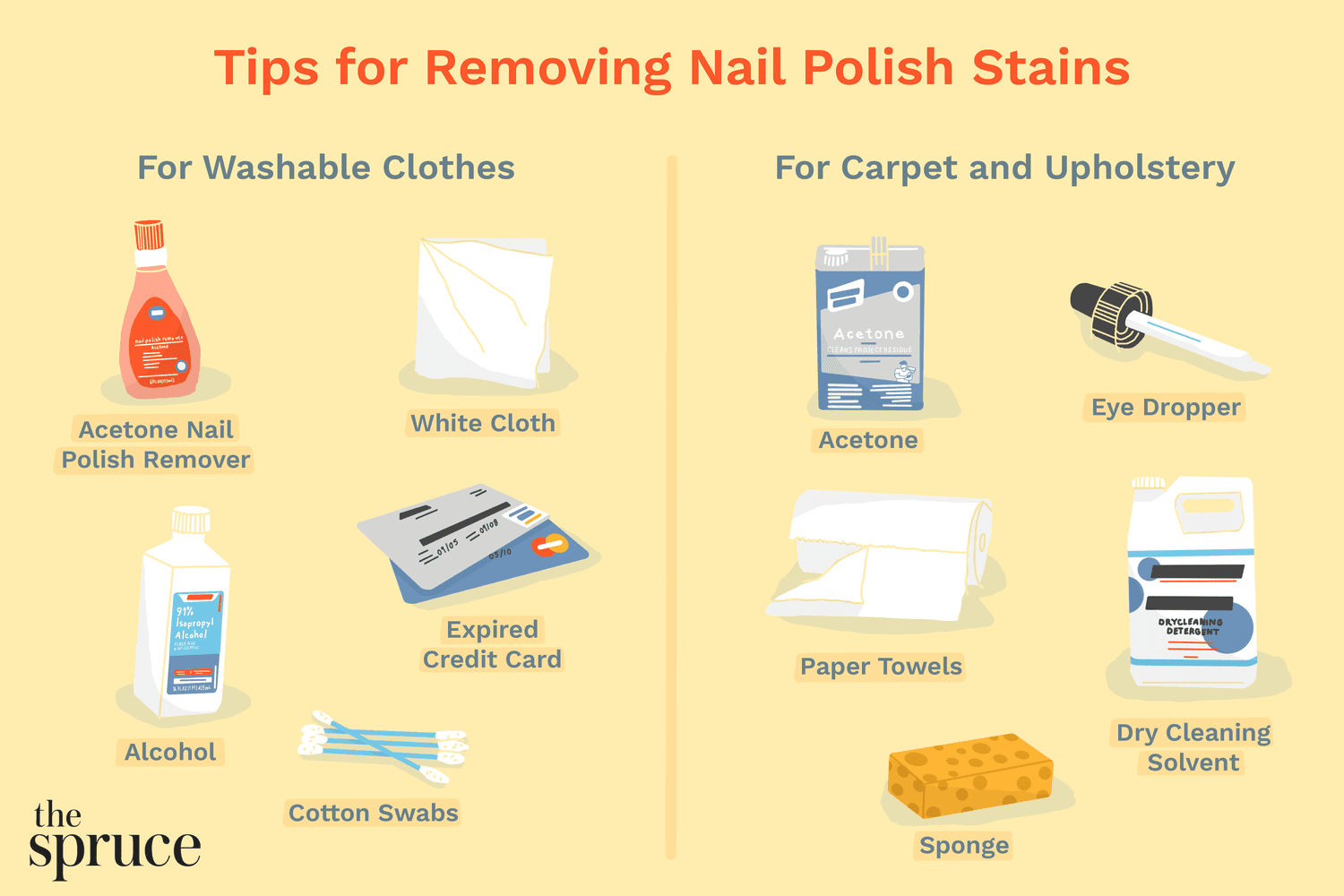
Before you touch it: quick safety check
Two things can make this worse fast: heat and rubbing. So we start with damage control.
Do this right away
- Don’t rub. Rubbing drives pigment deeper and roughs up fibers, especially on velvet, chenille, and bouclé.
- Don’t use a hair dryer. Heat can set dye and can harden polish into the weave.
- Scoop, then blot. If there’s a blob, gently lift the excess with the edge of a spoon, a dull butter knife, or a credit card. Then blot.
- Ventilate. If you’ll be using acetone or alcohol, crack a window and keep flames away.
Check the tag if you can
Look for the upholstery cleaning code (often under a cushion):
- W: Water-based cleaners are generally safe.
- S: Solvent-based cleaners only. Water can create rings.
- WS: Water or solvent can work, but still patch test.
- X: Vacuum only. For polish, this is a professional call.
How acetone behaves on common sofa fibers
Acetone is excellent at dissolving nail polish. It’s also excellent at dissolving or disturbing other things, like some dyes, latex backings, and certain finishes. Your goal is to use the least aggressive method that still lifts the stain.
Fiber notes
- Cotton and linen blends: Usually tolerate short, controlled contact, but they’re prone to water rings and “halo” marks when you spot clean. Over-wetting is the enemy.
- Polyester and microfiber (synthetic): Often more forgiving with staining, but acetone can sometimes leave a darkened patch if it partially dissolves oils or finishes and redistributes them. Blotting and even drying matter.
- Velvet (especially rayon/viscose velvet): High risk for pile crush and shading changes. Solvents can permanently change the nap. Go gently and know that a professional cleaning may be the best “perfect” option.
- Wool blends: Can felt or distort with aggressive agitation. Spot cleaning has to be minimal and cool.
- Acetate or triacetate: Very risky. Acetone can damage these fibers. Avoid acetone and call a pro.
- Leather or faux leather panels: Acetone can strip color and finish. Use leather-safe methods instead.
If you don’t know the fiber, assume it’s delicate and do a patch test before anything else.
The patch test rules (non-negotiable)
Patch testing is how you avoid turning a dot of polish into a bleached spot or a crunchy, stiff patch.
How to patch test
- Choose a hidden area: back edge, under a cushion, or the skirt hem.
- Use the same cloth and same solvent you plan to use.
- Dab, don’t soak. Hold for 10 seconds, then blot dry.
- Wait 10 to 15 minutes. Look for color transfer onto your cloth, lightening of the fabric, texture change, or a ring.
If you see dye lifting onto the cloth, stop and skip to the “When to call a pro” section.
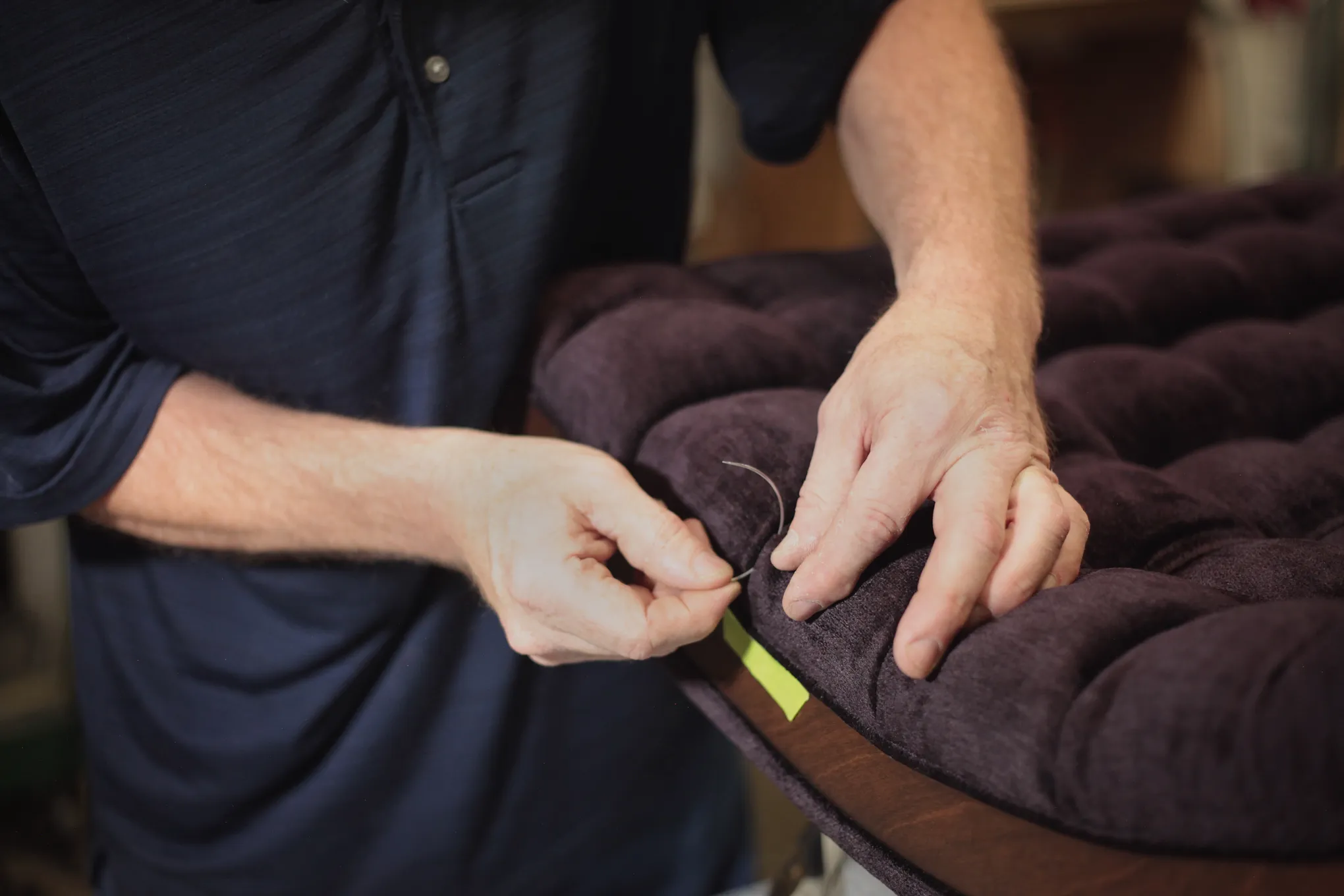
Blotting vs rubbing: how to avoid halos
Most “acetone marks” people complain about aren’t actually chemical burns. They’re tidelines, meaning a ring left behind when cleaner spreads outward and dries unevenly.
Use this blotting technique
- Work from the outside in. Whether you’re dealing with a concentrated polish spot or a wet ring, start at the outer edge and move toward the center. This helps keep the stain from spreading into a bigger circle.
- Press, lift, move. Switch to a clean section of cloth each time. Don’t scrub back and forth.
- Keep your cloth barely damp. You’re dissolving and transferring, not flooding.
What you need
- White cotton cloths or plain white paper towels (no printed patterns)
- Cotton swabs for precision around the edges
- A spoon or dull edge for lifting blobs
- Isopropyl alcohol (70% or 90%)
- Acetone or non-acetone remover (choose based on fiber and patch test)
- Mild dish soap
- Cool water
- Baking soda or cornstarch (for fresh, wet polish)
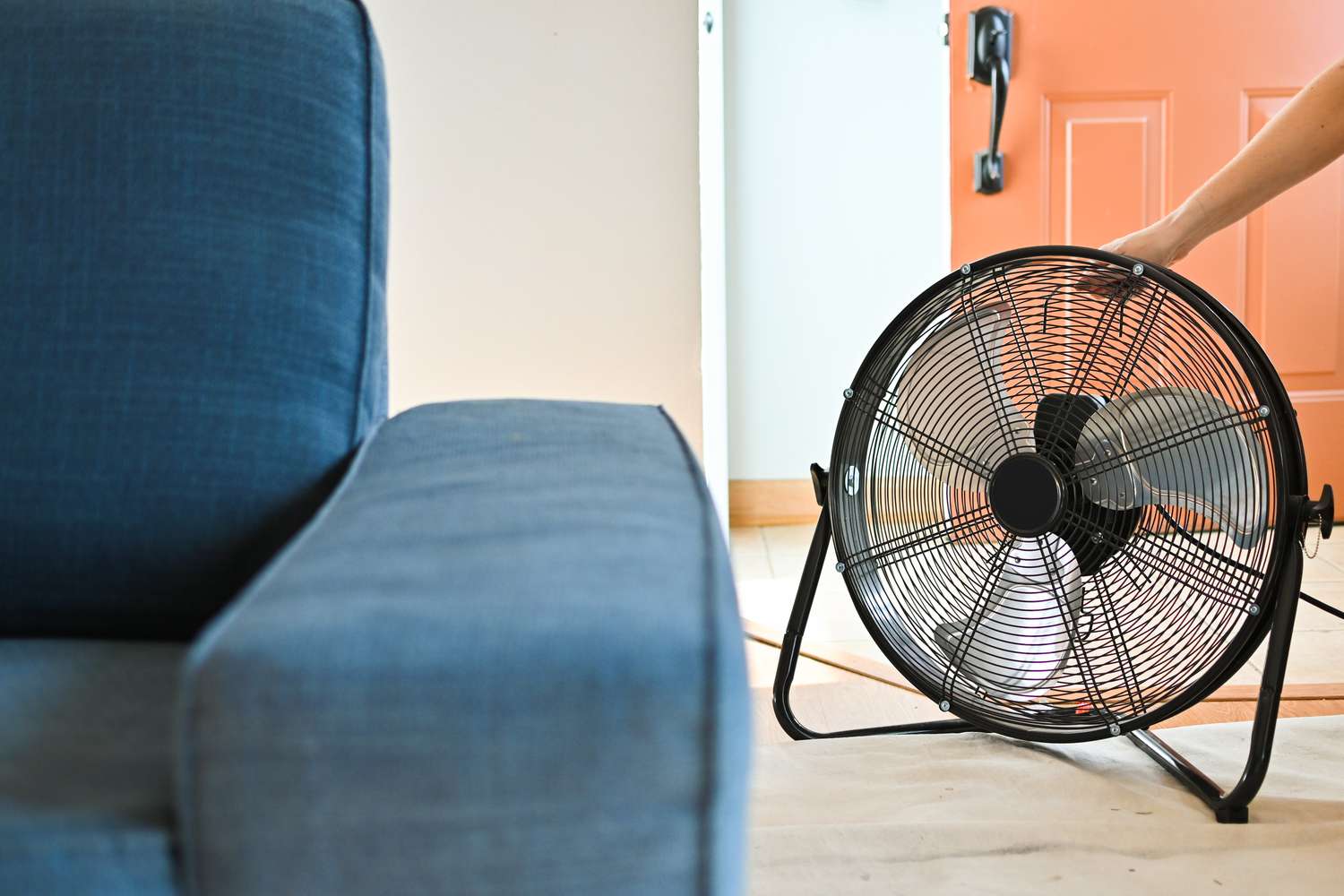
- A fan (for even drying)
Step-by-step: remove nail polish from a fabric sofa
1) If it’s wet, stabilize it
If the spill is fresh and glossy, your safest first move is to stop it from spreading.
- Blot the outer edge with a dry cloth to pick up what you can without smearing.
- If there’s a puddle, lightly sprinkle cornstarch or baking soda on top to absorb solvent and pigment. Let it sit 5 to 10 minutes, then gently lift with a spoon and vacuum.
2) Lift the polish without pushing it deeper
Once you’ve removed excess, you can dissolve what’s embedded in the fibers.
- Place a clean white cloth under the fabric if you can (for removable cushion covers). This helps transfer stain out instead of driving it in.
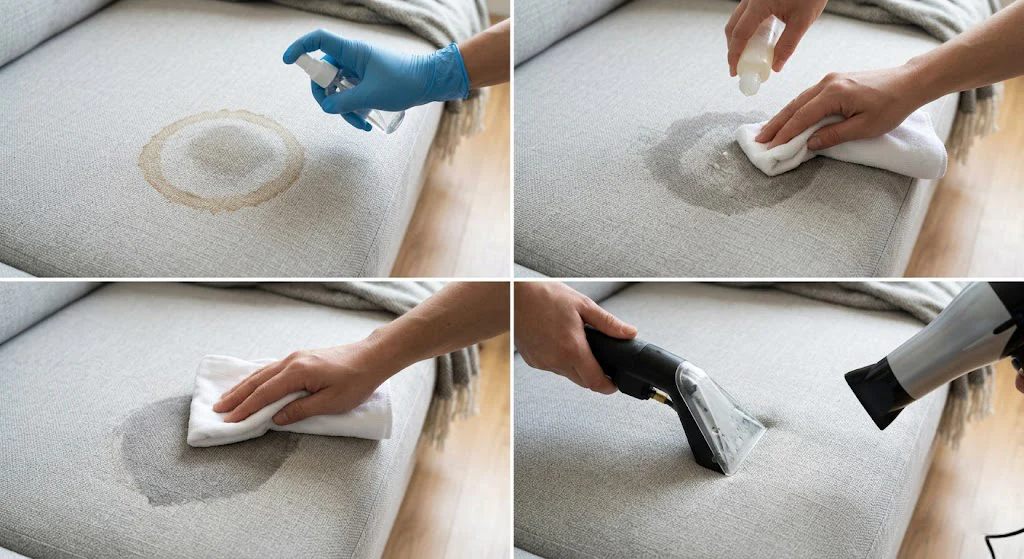
- Dampen a cotton swab or corner of a cloth with isopropyl alcohol first. Dab from the outer edge toward the center, then blot with a dry cloth.
- If alcohol isn’t lifting it and your patch test says it’s safe, move to acetone in tiny amounts. Dab from the outer edge toward the center, blot, rotate to a clean area, repeat.
Important: Always apply solvent to the cloth or swab, not directly to the sofa. Pouring is how halos are born.
3) Rinse the zone (so you don’t get a remover ring)
This is the part most people skip, and it’s why they get the pale circle afterward.
- Mix a few drops of mild dish soap in cool water.
- Dampen a fresh cloth and gently blot the cleaned area to remove remaining solvent and dissolved polish residue.
- Then blot with a cloth dampened with plain cool water.
- Finish by pressing a dry towel into the area to pull out as much moisture as possible.
4) Dry evenly
- Point a fan at the area for 30 to 60 minutes.
- Fluff the pile gently with your fingers once it’s mostly dry, especially on microfiber or velvet-like fabrics.
Glitter polish: what to do
Glitter polish is a double whammy: pigment plus chunky particles that catch in the weave like tiny sequins. The goal is to dissolve the binder and lift glitter mechanically without scraping the fabric.
Glitter steps
- After blotting with alcohol or acetone (as your patch test allows), use sticky tape to lift loose glitter. Press and lift, don’t drag.
- Use a soft toothbrush only if the fabric is durable (like tight weave polyester). Very lightly flick the glitter up once it’s loosened, then vacuum with a brush attachment.
- Repeat with patience. Glitter is a marathon, not a sprint.
Remove acetone marks and remover spills (the halo problem)
If remover spilled and now you see a lighter or darker ring, you’re usually dealing with uneven moisture, redistributed oils, or a tideline from drying.
Fix a ring without making it bigger
- Feather the boundary. Lightly dampen a cloth with plain water (for W/WS fabrics) or with isopropyl alcohol (for S fabrics) and blot just beyond the ring, then move inward. Keep it light and controlled so you’re softening the transition, not expanding the wet area.
- Blot dry right away with a towel. The goal is even dampness, then even drying.
- Use a fan so the whole area dries at the same pace.
If the ring is oily or dark, sprinkle a small amount of cornstarch on the area, let it sit 30 minutes, vacuum, then repeat the feathering step. This helps lift redistributed oils that can leave a shadowy mark.
Common mistakes (and how to avoid them)
- Spraying remover directly on the stain: It spreads solvent and pigment, creating a larger target.
- Using colored towels: Dye can transfer when solvents are involved. Stick with white.
- Over-wetting: Too much liquid equals halos and texture change. Small dabs win.
- Scraping glitter with a knife: You can snag fibers and create permanent fuzzing.
- Skipping the rinse step: Residue left behind becomes a ring when it dries.
When to call a professional
I love a DIY save, but there are times when calling an upholstery cleaner is the kindest thing you can do for your sofa.
- Cleaning code X, or you can’t find a tag and the fabric feels delicate.
- Viscose or rayon velvet, silk blends, acetate, or other high-sensitivity fibers.
- Large spill (bigger than your palm), especially on light fabric.
- Your patch test shows dye transfer onto the cloth.
- The sofa has visible texture changes like crushing, stiffness, or fuzzing.
Quick FAQ
Does acetone ruin fabric?
It can. Some fabrics tolerate brief, controlled dabbing. Others can discolor or change texture. Patch test first and use the smallest amount possible.
Is non-acetone remover safer?
Often, yes, but it can be slower and may contain oils or conditioners that leave a dark spot. Alcohol is a good middle step when it makes sense for your fabric.
What if the polish is already dry?
Gently lift any crusted surface with a spoon edge, then use the same dab-and-blot method with alcohol or acetone as your patch test allows. Expect more repetitions and a slightly longer cleanup.
A calm final note
If you’re staring at a tiny stain and feeling like it just ruined your whole room, I promise it didn’t. Go slowly, swap to clean cloth sections constantly, and prioritize even drying. A sofa is meant to hold real life, including the occasional chaotic manicure moment.