Remove Grass Stains From Fabric Couches and Chairs

Clara Townsend
Clara Townsend is an interior stylist, vintage furniture enthusiast, and the creative voice behind Velvet Abode. With over a decade of experience transforming both cramped city apartments and sprawling fixer-uppers, she believes that a beautiful home is built on personal stories rather than massive budgets. When she isn't hunting for the perfect brass sconce at a local flea market, she can usually be found rearranging her living room for the third time this month.
Grass stains are sneaky little artists. One backyard hang, one soccer cleat, one happy dog belly-flop, and suddenly your sofa is wearing a green watercolor wash. The good news is that grass and turf stains are usually treatable at home if you go in the right order and resist the urge to scrub like you are sanding a deck.
The goal is simple: lift the green pigment and organic residue without pushing it deeper into the fibers, then dry in a way that does not leave a pale halo on light upholstery.
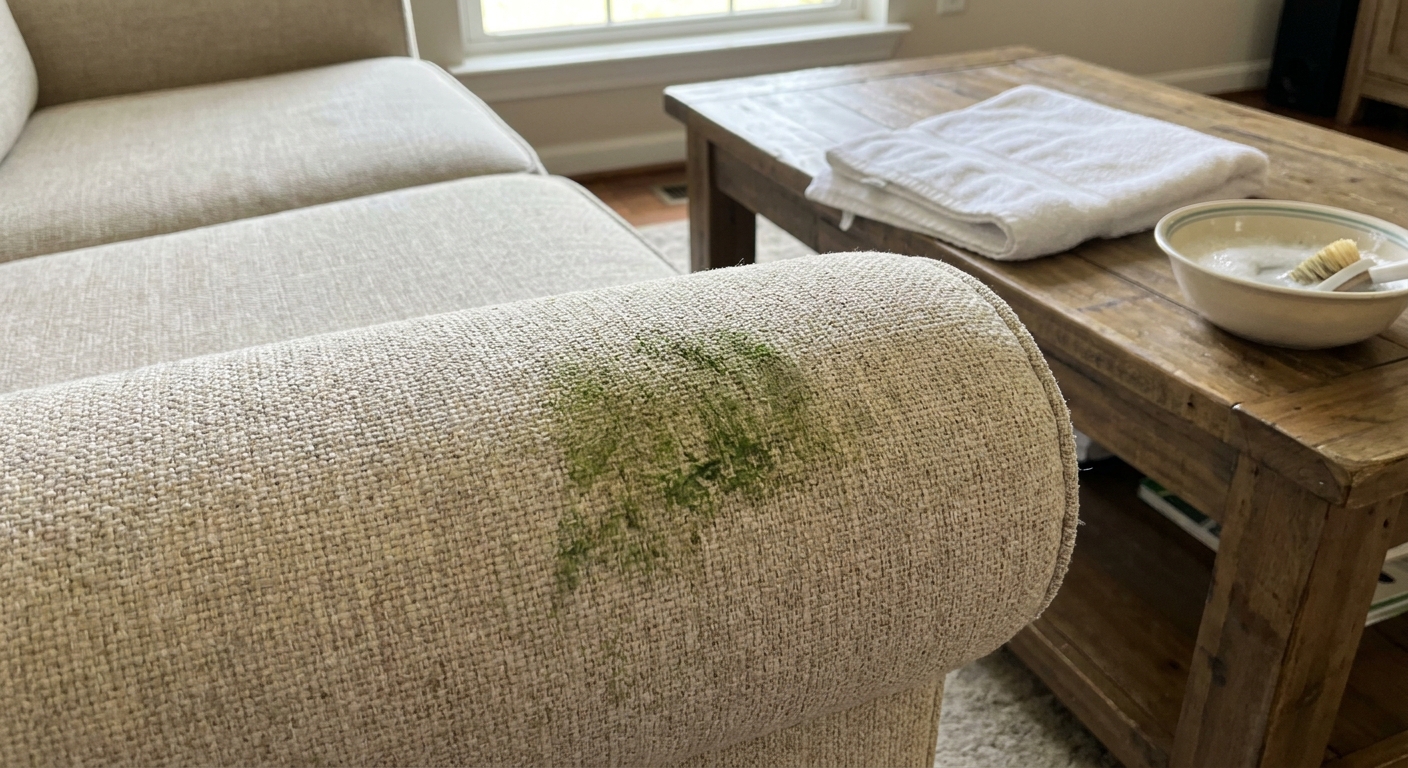
Before you start: check the care code
Flip the cushion or look under the seat for the upholstery care tag. This matters more than the stain itself.
- W: Water-based cleaners are generally safe. Easiest category.
- S: Solvent-based cleaners are recommended. Water can cause rings or texture changes, but some S-coded fabrics tolerate tiny, controlled amounts. When in doubt, stay solvent-first and test.
- WS or SW: Water-based or solvent-based. You have options, but still spot test.
- X: Vacuum only. No liquids. For grass stains on an X-coded piece, call a pro.
Spot test any cleaner in a hidden area first. For water-based tests, let it dry fully (often 1 to 3 hours on its own) or speed-dry with a fan for 20 to 30 minutes, then check for a ring, fading, stiffness, or texture change.
Why grass stains cling
Grass is usually a combo of plant pigments (hello, green), organic compounds, and whatever else was in the yard (soil, pollen, sunscreen, snack crumbs). That is why harsh scrubbing can make it worse and why a “one and done” wipe rarely works.
Order of operations
If you only take one thing from this article, take this: start dry, then go cold, then escalate gently.
Step 1: Lift solids first
- If there is any dried turf, dirt, or plant bits, let it dry fully and then vacuum with the upholstery tool.
- If there is a clump stuck on, lift it with a dull edge (a spoon works) rather than rubbing it in.
Step 2: Blot, do not rub
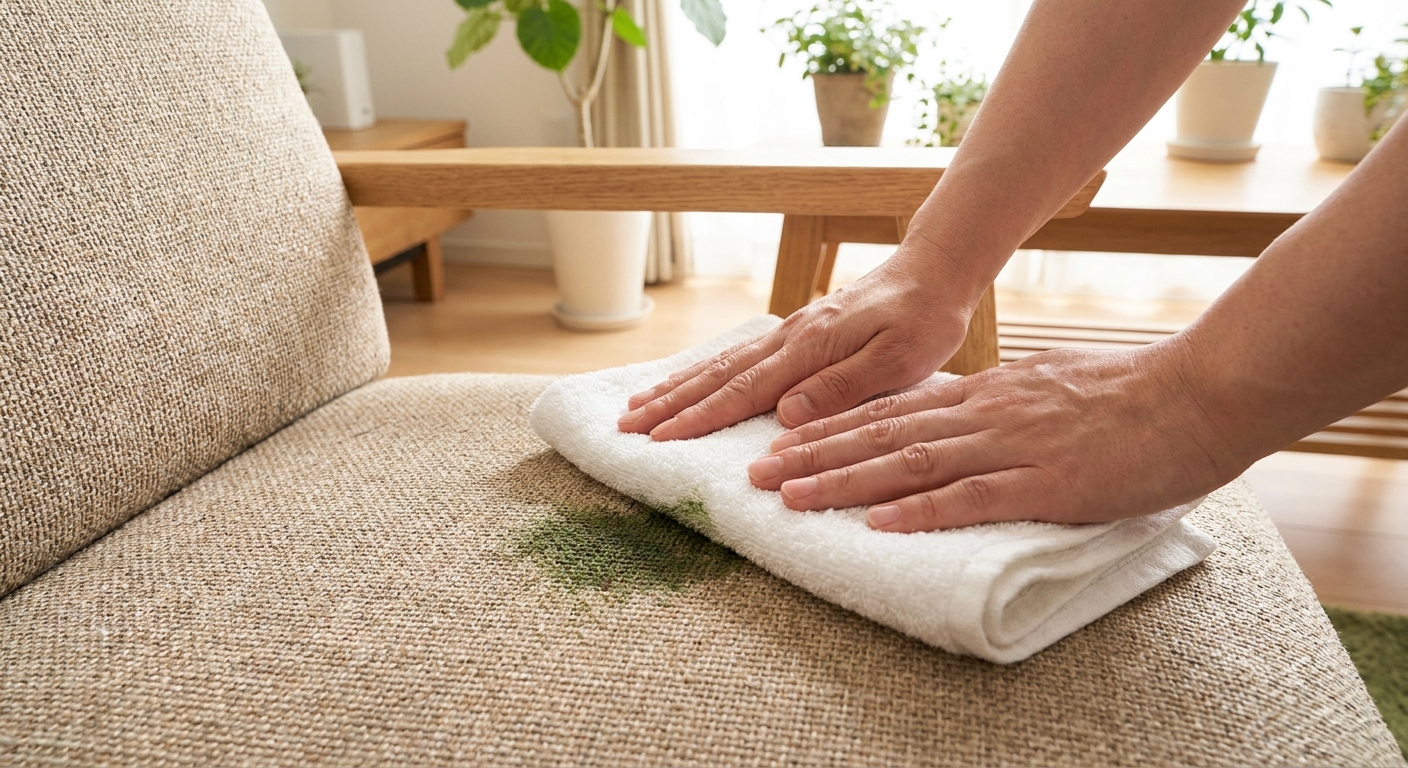
Use a clean white towel. Press straight down, lift, rotate to a clean spot, repeat. Rubbing twists fibers and drives green pigment deeper.
Step 3: Cold water first
For fresh grass stains, start with cold water. Heat can make some plant compounds and residues harder to remove, and it can increase the odds of rings or distortion on upholstery.
- Lightly dampen a white cloth with cold water. Think “barely damp,” not “pour it on.”
- Blot from the outside edge toward the center to avoid spreading.
- Stop once you are no longer seeing green transfer to the towel, then move to the next step.
Step 4: Add a mild detergent solution
If cold water alone is not shifting the stain, mix:
- 2 cups cold water
- 1 teaspoon clear, gentle dish soap (no lotion, no dye)
Dab the solution onto the stain with a cloth (aim for a teaspoon-sized amount on the cloth, not poured onto the cushion). Blot, then blot again with a separate cloth dampened with plain cold water to rinse.
Repeat in small rounds until the towel stops picking up green. If you feel tempted to scrub, take that as your sign to pause and blot instead.
Step 5: Oxygen-based cleaner (W or WS)
For lingering green on W or WS codes, an oxygen-based cleaner (sodium percarbonate) is often a strong next step because it targets organic staining more gently than chlorine bleach.
Mixing tip (important): Sodium percarbonate can be stubborn about dissolving in cool water. For best dissolve and activation without soaking your upholstery in heat, do this:
- Dissolve the powder in a small amount of hot water first (just enough to fully dissolve, like a few tablespoons in a cup).
- Then add cold water to bring the solution down to warm or cool before it touches the fabric.
- Follow the label for strength, and keep the final solution comfortably warm at most. Do not use it piping hot on upholstery.
- Apply sparingly with a cloth or soft sponge, then blot.
- Let it dwell for 5 to 10 minutes, keeping the area lightly damp, then rinse by blotting with a cloth dampened in plain water.
Important: Oxygen cleaners can lighten some dyes. Spot test is non-negotiable, especially on vintage textiles and saturated colors.
Step 6: Solvent options (S or WS)
If your piece is S or WS and water is risky, you may do better with a commercial upholstery solvent cleaner that matches the tag instructions. Some people use isopropyl alcohol as a spot solvent, but it is not the same as dry-cleaning solvent and it can pull dye or affect finishes. If you try it, test carefully.
- Use 70% isopropyl alcohol on a cloth (do not pour it on the cushion).
- Blot the stain gently, then blot with a dry towel.
- Work in a ventilated room and keep away from flames.
What not to do
- Do not scrub with a brush unless you are cleaning a very durable, low-pile fabric and you have already lifted most of the stain. Scrubbing is how pigment gets pushed down and spread out.
- Do not oversaturate. Too much liquid is how you get water rings, cushion odors, and slow drying.
- Do not mix chemicals. If you have tried one product, rinse and let dry before attempting another.
- Avoid vinegar-ammonia experiments and mystery “Pinterest cocktails.” If you are using a commercial product, follow its label and keep it simple.
- Use chlorine bleach with extreme caution. On non-removable upholstery, it is more likely to weaken fibers, cause yellowing, or create uneven light spots than it is to save the day. If you have a removable white cover that is actually washable, follow that tag instead (more on that below).
Cold vs warm water
Start cold for grass. If you have done a thorough cold-water and detergent treatment and you are left with a faint shadow on a W-coded synthetic fabric (like polyester), you can try slightly lukewarm water for the rinse step only. Keep it gentle and controlled.
For DIY spotting, avoid hot water, especially on unknown fibers. Pros may use heated extraction on certain fabrics, but at home it is easy to over-wet, set residue, or trigger shrinkage and rings.
Preventing water rings
Light upholstery is gorgeous, and also very honest. It will show you exactly where you got lazy with drying.
Feather moisture outward
Instead of wetting a tight little circle, lightly dampen a slightly larger area around the stain so the moisture transition is soft. This helps prevent a hard edge that dries into a ring.
Press dry
After rinsing, press a dry towel into the area with firm, even pressure. Step on it if you need to, like you are pressing flowers in a book.
Airflow matters
- Point a fan at the damp area.
- Open a window if humidity is low.
- Flip the cushion and let both sides breathe if possible.
Avoid heat blasting
Hair dryers can set remaining pigment and can shrink or warp certain fabrics. If you must use one, keep it on cool and keep it moving.
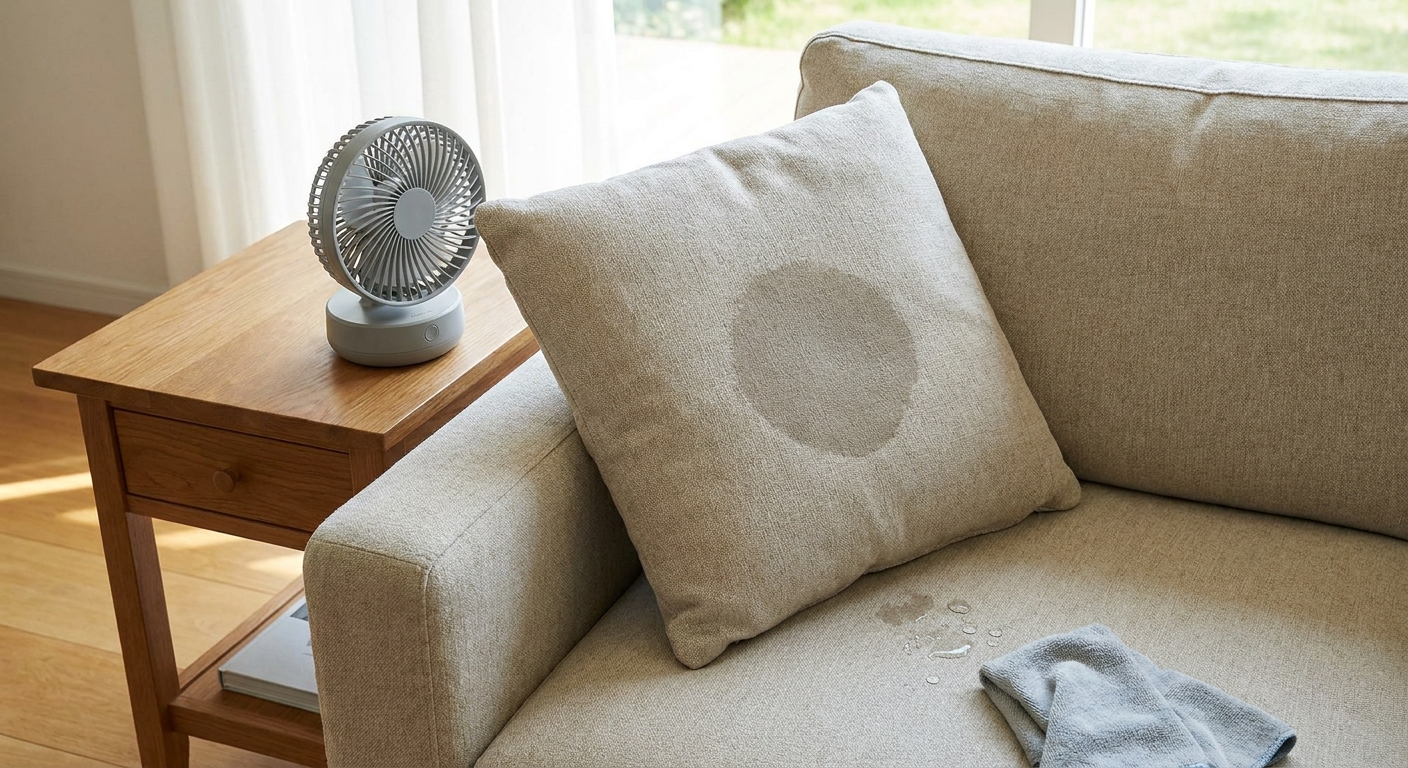
Drying tip: If you can still see a ring when it is damp, do not panic. Many rings look worse mid-dry. Keep airflow going and reassess once fully dry.
If the stain is old
Dried grass stains can cling harder, but the strategy stays the same. You just need more patience.
- Start with vacuuming and gentle dry lifting.
- Rehydrate with cold water blotting to loosen the stain.
- Use the dish soap solution in small passes.
- For W or WS codes, follow with an oxygen-based cleaner, then rinse.
If the fabric has a nap (velvet, chenille, microfiber), keep your motions consistent and gentle so you do not create a permanent “clean spot” that looks different from the rest of the cushion.
If the cover comes off
If your cushion cover unzips, check the tag on the cover itself.
- If it is washable: Blot and pre-treat first (cold water, then mild dish soap). Wash cold or cool per label. Air-dry or dry low if allowed. Heat is how you “bake in” any remaining green.
- If it is not washable: Treat it like upholstery. Spot clean gently and avoid soaking the seams and piping.
One small pro move: take the insert out before you spot clean, if you can. It helps you avoid over-wetting the cushion core.
Optional helpers
Enzyme cleaners
Enzyme cleaners can help with organic residue (especially if this is really a grass plus sweat, food, or pet mess situation). Use only if your care code allows it, spot test, and rinse well by blotting. Leftover product can attract dirt and leave a shadow later.
Peroxide caution
Hydrogen peroxide can lighten dyes, sometimes unevenly. If you use any peroxide-based product, spot test and keep it dilute and controlled. Never mix it with other cleaners.
Special fabric notes
Microfiber and suede-like synthetics
These can water-spot. Use minimal liquid, blot often, and brush the nap lightly with a clean, dry soft brush once fully dry to restore texture. If the care code is S, lean solvent-based.
Linen and cotton blends
They are absorbent and ring-prone. Feather moisture outward, rinse well, and dry with strong airflow. Never leave them damp overnight.
Wool blends
Wool can shrink and distort. Keep everything cool, use very small amounts of solution, and consider professional cleaning if the piece is valuable or vintage.
Performance fabrics
Many are forgiving, but still follow the tag. Pigments can cling to textured weaves, so multiple gentle passes beat one aggressive scrub.
When it is not just grass
Mud plus grass
Let mud dry, vacuum it up, then treat the remaining green. If you go in wet first, you basically paint the stain across a wider area.
Dye transfer plus grass
If you see color that looks more like a clothing dye smudge (blue or black) mixed with the green, stop and spot test carefully. Solvent-based upholstery cleaners sometimes handle dye transfer better than soap and water, but it depends on the fabric. When in doubt, this is a good moment to call a pro before it spreads.
When to call a professional
- The piece is labeled X or you cannot find a care tag.
- The stain covers a large area, like a full cushion face or an arm panel.
- The upholstery is vintage, delicate, or highly textured (silk blends, antique velvets).
- You see color transfer onto your cloth immediately.
- You have tried two gentle sessions (with a full dry in between) and the stain is not budging.
A reputable upholstery cleaner has extraction tools that remove moisture evenly, which is basically the cheat code for avoiding rings.
Quick checklist
- Check care code and spot test (and let it truly dry).
- Lift solids and vacuum.
- Blot, never grind.
- Cold water first, then mild soap solution.
- Oxygen-based cleaner for W or WS when needed (dissolve in a little hot water first, then cool it down).
- For S or WS, use the solvent option the tag calls for, and test before you commit.
- Rinse by blotting, then press dry.
- Feather moisture and dry with airflow to prevent rings.
And truly, do not feel bad if the grass wins the first round. Some stains take two gentle sessions with a full dry in between. Your sofa can still be the cozy hug you want it to be, even if it occasionally lives a little.