Remove Curry and Turmeric Stains From Upholstery

Clara Townsend
Clara Townsend is an interior stylist, vintage furniture enthusiast, and the creative voice behind Velvet Abode. With over a decade of experience transforming both cramped city apartments and sprawling fixer-uppers, she believes that a beautiful home is built on personal stories rather than massive budgets. When she isn't hunting for the perfect brass sconce at a local flea market, she can usually be found rearranging her living room for the third time this month.
There are stains that politely leave when you ask. And then there’s curry and turmeric, which behave like that friend who says they’re “just stopping by” and then quietly moves in.
If you have a yellow food stain on a fabric couch or chair, you are not imagining things. Turmeric’s color comes from curcumin, a dye-like pigment that can cling stubbornly to fibers and has a frustrating habit of reappearing as a faint yellow shadow after you think you’ve won. I call that ghosting, and it is exactly why you want a specific game plan.
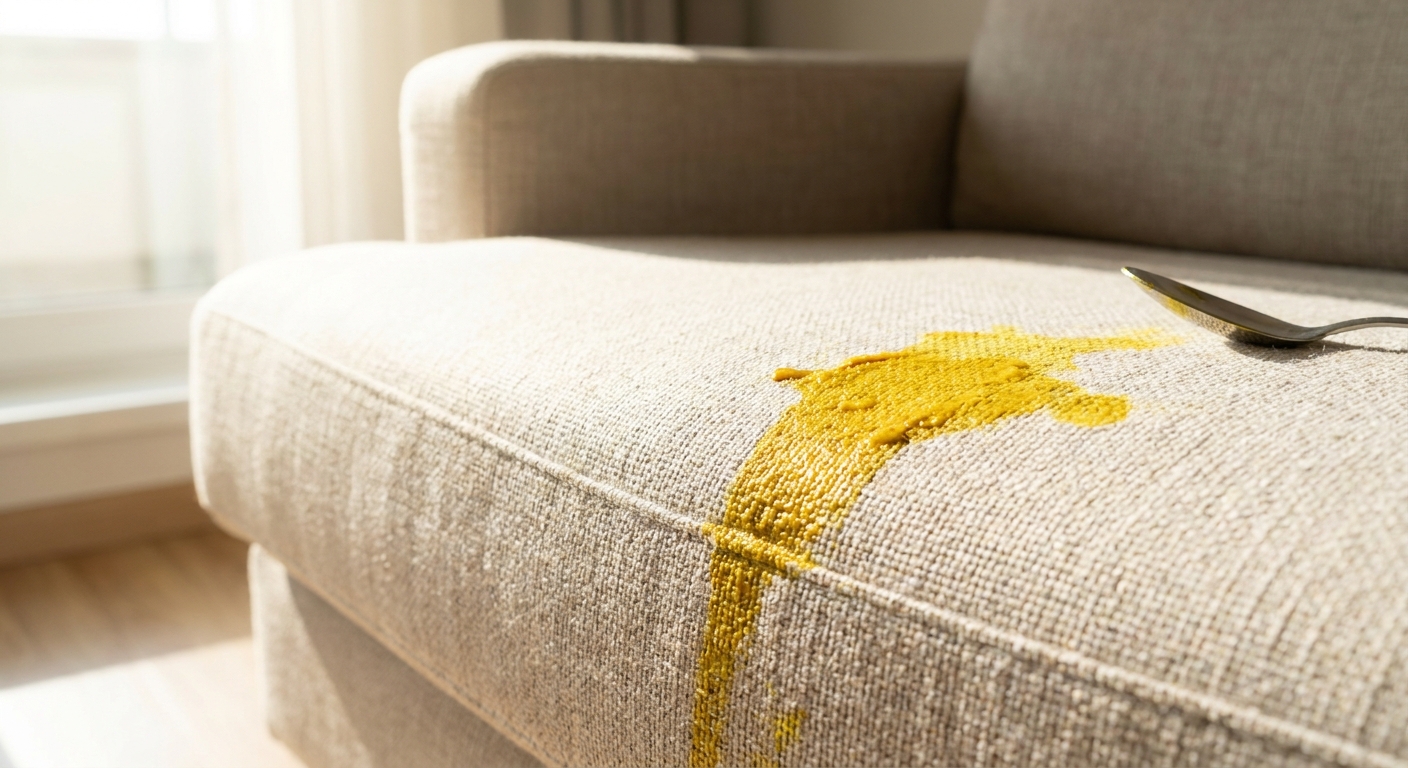
Below is my safest, most reliable order of operations, plus branches for fresh vs set-in stains and special notes for performance fabrics, velvet, and linen.
Why turmeric stains stick
Turmeric’s bright yellow comes from curcumin, a strongly colored compound that behaves more like a dye than a typical food stain. A few quirks make it cling:
- Oil loves it. Many curries are oily, and curcumin dissolves well in oils. That means the pigment can ride the grease deeper into fibers.
- It grabs onto fabric. Curcumin can interact with fibers (and with residues from detergents or hard water minerals), making the stain harder to lift with plain soap and water.
- pH and heat can change it. Heat and some high-alkaline cleaners can shift curcumin’s color and make removal trickier, which is why “I’ll just scrub it with whatever’s under the sink” can backfire.
- It can “ghost.” Even after the visible stain fades, a pale yellow shadow can reappear as the fabric dries.
The goal is simple: remove both the oil carrier and the pigment, without spreading it or setting it.
Before you start
1) Check the cleaning code
Look for the manufacturer tag (often under seat cushions). You may see:
- W: water-based cleaning is generally OK.
- S: solvent only (no water). Skip the water steps and peroxide. Use a solvent upholstery cleaner that is labeled for “S” code, or call a pro.
- WS: water or solvent.
- X: vacuum only. Do not wet clean. Call a pro for stains.
No tag? Treat it as delicate and proceed gently with minimal moisture, and always do a color-fast test.
2) Do a color-fast test
In an inconspicuous spot (back hem, under cushion), dab your chosen solution with a white cloth and leave it in contact for 30 seconds (no rubbing). Check for:
- dye transfer to the cloth
- lightening or darkening
- pile distortion (especially velvet)
- water rings
If you see color transfer, a texture change, or a mark that will not lift with plain water, stop and switch methods or call a professional.
3) Gather a calm “stain kit”
- white microfiber cloths or plain white cotton (no dye transfer)
- paper towels (for blotting only)
- a soft brush or clean toothbrush (optional)
- cool water
- clear dish soap (a grease-cutter, no lotion)
- 3% hydrogen peroxide (common pharmacy strength, optional)
- baking soda or cornstarch (for oily spills)
- a small bowl and measuring spoons
- gloves (turmeric loves hands too, and peroxide is drying)
My rule: You can always do another gentle pass. You cannot un-fuzz a velvet or un-bleach a linen.
What to avoid
- Heat (hair dryer, steamer, hot water): can set a yellow tone and bake in residue.
- Hard rubbing: pushes pigment outward and roughs fibers, creating a permanent “clean spot” texture difference.
- Chlorine bleach: can weaken fibers and cause uneven light patches, especially on colored fabrics.
- Acids when you are unsure (like vinegar): some performance fabrics tolerate mild acids, others have coatings or finishes that may not. If you cannot confirm it is recommended by the manufacturer, skip acids.
- Over-wetting linen: linen loves to show water lines. Use the least moisture possible and feather the edges.
- Saturating velvet: water can crush the pile and leave tide marks. Velvet needs a lighter touch and less liquid.
Fresh stain steps
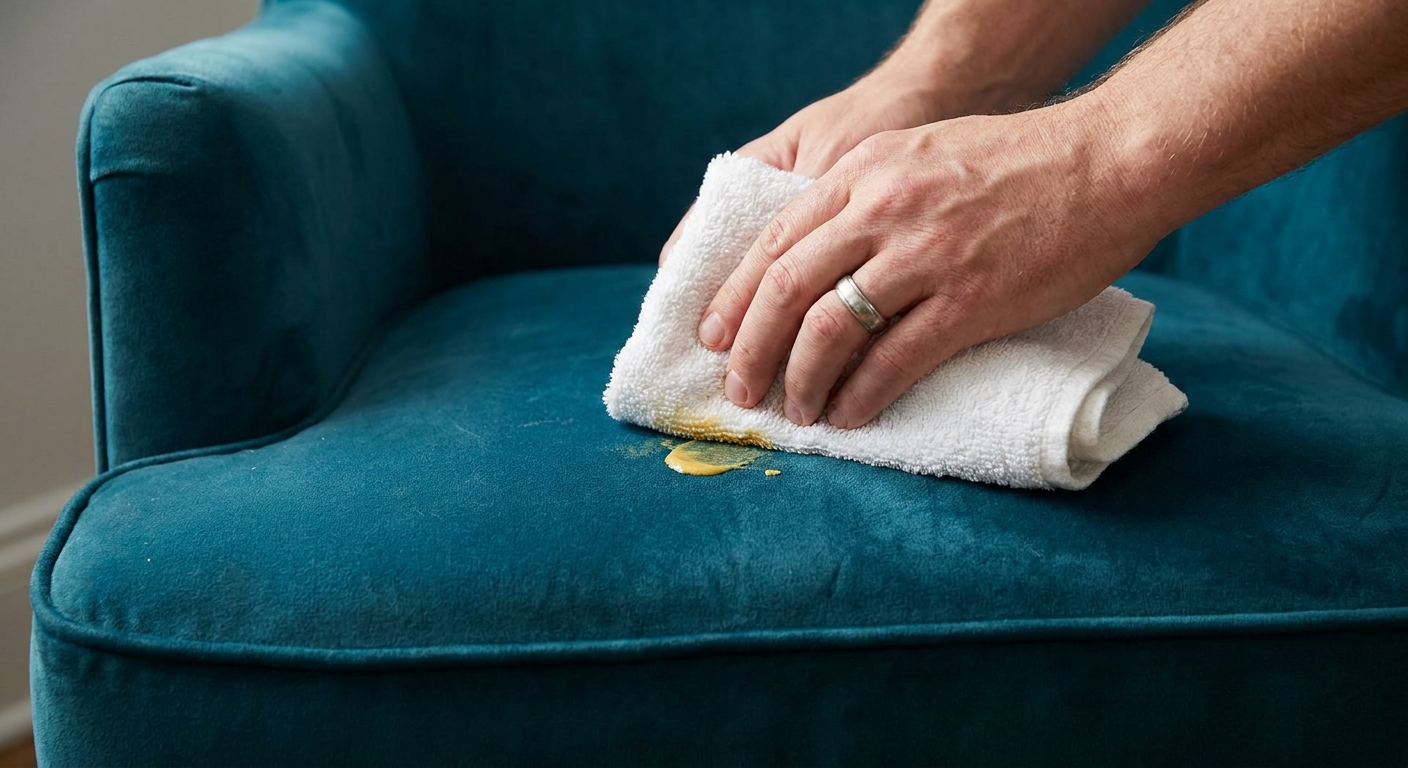
If the spill is still damp or happened within the last few hours, you have the advantage. Work from the outside in and keep everything cool.
Step 1: Lift solids and blot
- If there are chunks of sauce or rice, lift them with a spoon edge. Do not smear.
- Blot with a dry white cloth or paper towel. Press, lift, move to a clean area, repeat.
Step 2: Absorb oil first
If the stain looks oily or glossy, sprinkle a thin layer of cornstarch or baking soda over the spot. Let it sit 10 to 20 minutes to absorb oil, then vacuum gently.
Step 3: Cool soapy dab
Mix: 1 cup cool water + a few drops of clear dish soap (about 1/4 teaspoon).
- Dampen (do not soak) a white cloth in the solution.
- Dab from the outside toward the center.
- Switch to a clean section often so you are not re-depositing yellow.
- Go easy on the soap. Too much can leave residue and create a ring.
Step 4: Rinse-dab
Dab with a fresh cloth dampened with cool water only. This matters more than people think. Soap left behind can attract soil and create a faint ring.
Step 5: If yellow remains, spot-treat carefully
For many upholstery fabrics labeled W or WS, a careful peroxide step can help lift remaining yellow.
Do not use peroxide on S-code fabrics, and do not use it if your color-fast test showed any dye transfer.
Mix: 1 part 3% hydrogen peroxide + 2 parts cool water. Apply with a cloth corner or cotton swab so you stay precise. Dab a small amount on the stain, let it sit 3 to 5 minutes, then blot. Rinse-dab with cool water and blot dry.
Important: Hydrogen peroxide can lighten dyes and, with repeated use, can be tough on some natural fibers. Keep it diluted, keep it brief, and stop if you see any lightening or texture change.
Step 6: Dry the right way
- Blot dry with a clean cloth.
- Air-dry with good ventilation.
- Once fully dry, fluff fabric nap gently if needed (a soft brush helps on some weaves).
Set-in stain steps
If the stain is already dry, or you cleaned it once and now there’s a pale yellow shadow, treat it like two problems: residual pigment plus residue from prior cleaning.
Step 1: Rehydrate slowly
Dab with cool water to lightly re-wet the stained area (do not flood). This helps loosen pigment so it can transfer onto your cloth instead of staying lodged in the fibers.
Step 2: Gentle soap, then rinse
Use the same cool water + dish soap mixture. Dab, blot, then rinse-dab with cool water.
Step 3: Target the yellow in short rounds
If the fabric is colorfast and water-safe, try the peroxide dilution again, but in short rounds:
- Dab diluted peroxide (1:2) and wait 3 minutes.
- Blot.
- Rinse-dab with cool water.
- Blot dry.
Repeat up to 2 to 3 rounds rather than one long soak. Long dwell times raise the risk of lightening, texture change, or rings.
Step 4: Feather the edge
When the center looks improved, lightly dab the surrounding area with a cloth dampened with plain cool water, then blot. This softens the transition so you do not end up with a clean circle.
Step 5: Consider sunlight for the last ghost
One expert trick for a faint leftover turmeric shadow is UV light. Curcumin can break down in direct sunlight. If your fabric is sunlight-safe (and you have tested for colorfastness), place the cushion or the stained area in direct sun for a few hours and re-check.
Caution: Sunlight can fade or yellow some fabrics over time, especially deep colors and some natural fibers. If you cannot move the cushion, you can try positioning the stained area near a bright window, but direct sun is stronger. When in doubt, keep the exposure short and check often.
Step 6: Let it fully dry before judging
Turmeric can look different while damp versus fully dry. Give it a full dry cycle with airflow before deciding if you need another pass.
Fabric notes
Performance fabrics
- Start mild. Many performance textiles clean beautifully with cool water and a small amount of dish soap.
- Follow the brand guidance. If the manufacturer suggests a specific cleaner, use that instead of improvising with acids or strong solvents.
- Rinse matters. Cleaner residue can attract dirt and create a dull patch.
Velvet
- Use minimal liquid. Velvet shows water marks and crushed pile easily.
- Dab, do not scrub. If you must agitate, use the gentlest touch.
- Brush after drying. A soft upholstery brush can help lift the nap back up (go with the pile direction).
If the velvet is antique, silk, or very dark and saturated, consider professional cleaning sooner rather than later. Turmeric plus velvet can become a texture problem, not just a color problem.
Linen
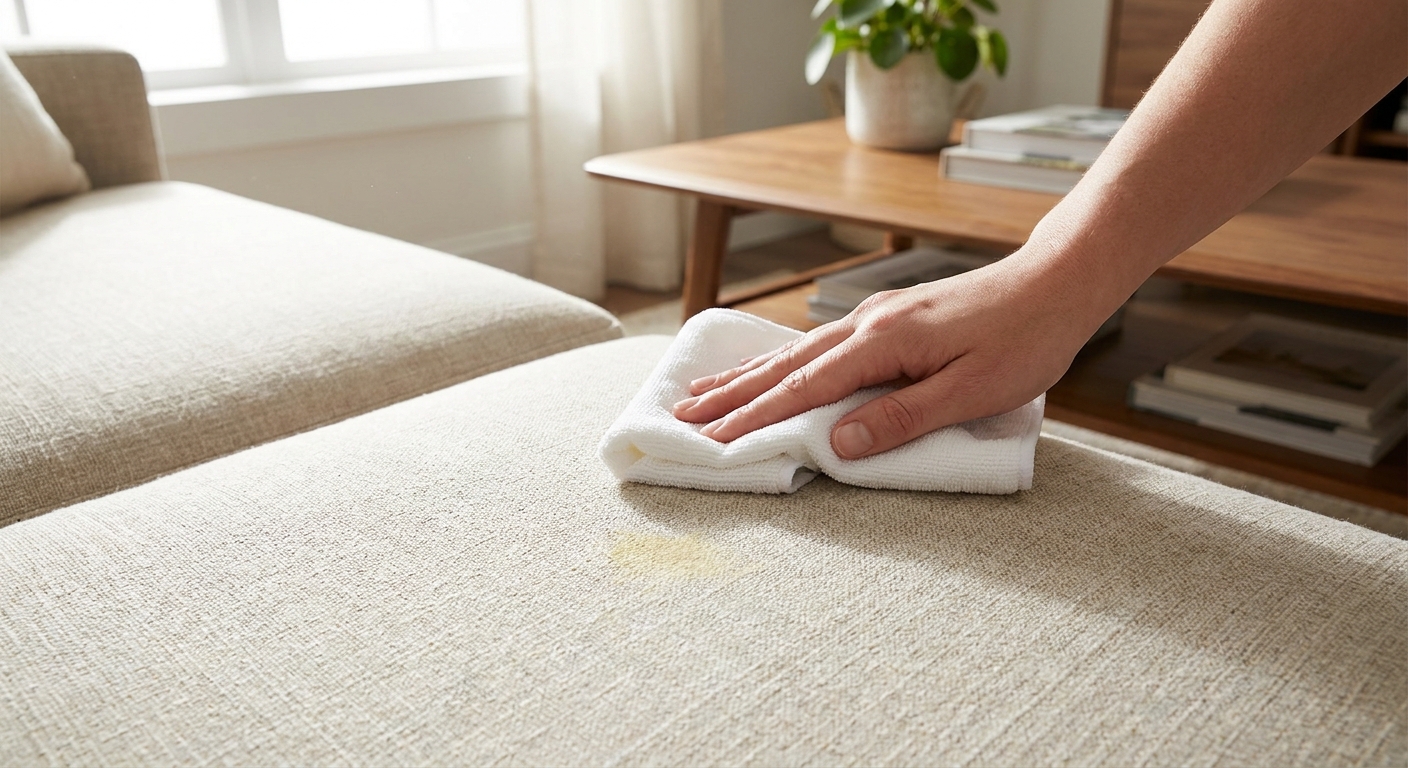
- Think “even moisture.” Linen can water-ring. Feather your dabbing outward so the stain area is not the only damp zone.
- Skip aggressive bleaching. Linen can weaken and go limp or patchy with harsh chemicals.
- Blot very dry. Leaving a damp spot to air-dry slowly invites rings.
Wool blends
- Keep it cool and gentle. Wool can felt with heat and agitation.
- Use tiny amounts of mild soap. Rinse-dab carefully.
S-code fabrics
If your tag says S, do not use water, dish soap mixes, or peroxide. Use a dry-solvent upholstery cleaner labeled for S-code fabrics (following the label exactly) or call a professional upholstery cleaner. Turmeric spreads easily when it is pushed around with the wrong liquid.
Product notes
- Enzyme cleaners: great for protein-based food messes, less impressive on turmeric pigment. They can help with the “food” part of the stain, but often not the yellow.
- Commercial upholstery stain removers: fine if they match your cleaning code, but avoid anything with bleach, optical brighteners, or “color safe bleaching” language unless the label explicitly says it is safe for your fabric.
Troubleshooting
“It got lighter, but now there’s a ring.”
That is usually cleaner residue or uneven wetting. Do a light, broader rinse-dab with plain cool water around the area, then blot very dry. Aim to dampen a slightly larger area so the edge softens, then remove as much moisture as possible with blotting.
“It looks gone, then comes back.”
Classic ghosting. Repeat a short round of targeted treatment after full drying, focusing on pigment lift and thorough rinsing. Avoid heat drying in between.
“The texture looks rough now.”
That often means too much friction. Stop and let it dry. On some weaves, a gentle fabric brush can help. On velvet, brush with the pile direction only.
“It’s spreading, changing color, or the fabric looks unhappy.”
Stop. Blot with plain cool water (W/WS only) to remove residue, blot dry, and call a professional. With curcumin, overcorrecting at home can spread the pigment and create a bigger, more permanent problem.
“The stain is huge, or the fabric is marked S or X.”
When the cleaning code is S or X, or the stain covers a large section, it is worth calling a professional upholstery cleaner. With turmeric, the safest move is often the quickest one.
Quick checklist
- Blot, do not rub.
- Cool water first.
- Remove oil (cornstarch) if needed.
- Mild dish soap dab.
- Rinse-dab well.
- Peroxide only if colorfast and only in short rounds (never on S-code).
- No heat.
- Feather edges to avoid rings.
- For a faint final ghost, consider short, fabric-safe sunlight exposure.
When in doubt, prioritize the fabric over the stain. A slightly imperfect fade is easier to live with than a permanent ring or a crushed patch of velvet.