Remove Chewing Gum From an Area Rug Without Matting the Pile

Clara Townsend
Clara Townsend is an interior stylist, vintage furniture enthusiast, and the creative voice behind Velvet Abode. With over a decade of experience transforming both cramped city apartments and sprawling fixer-uppers, she believes that a beautiful home is built on personal stories rather than massive budgets. When she isn't hunting for the perfect brass sconce at a local flea market, she can usually be found rearranging her living room for the third time this month.
Chewing gum in an area rug feels oddly personal, like the rug has been insulted. The good news is you can usually get it out cleanly without turning the pile into a sad, shiny flat spot. The secret is to harden the gum first, remove it in the direction your rug is built, and only then use the tiniest bit of cleaner to lift the last sticky trace.
If the gum is gritty: gently lift off any loose dirt or crumbs with a spoon or a dry paper towel first. Grit + rubbing turns into sandpaper, and your rug does not deserve that.
Before you start: Rug type and risk
Rugs are not one-size-fits-all. The same move that works on a durable synthetic flatweave can damage a wool loop pile or a silk blend.
Quick check
- Fiber: Look at the label or backing if possible. Common types: polypropylene, nylon, polyester (generally forgiving); wool (more sensitive to heat and chemicals); silk or viscose blends (most delicate).
- Pile height: Low-pile, medium-pile, shag.
- Construction: Cut pile vs loop pile (loops can snag if you scrape aggressively).
- Color stability: If you have a bright, saturated rug or vintage dyes, plan on gentler products and strict patch tests.
If your rug is antique, hand-knotted, wool with visible dye variation, silk or silk-blend, viscose, or has a “do not spot clean” label, skip ahead to the pro-clean section. You may still do the freezing step, but be very cautious with solvents.
What you’ll need
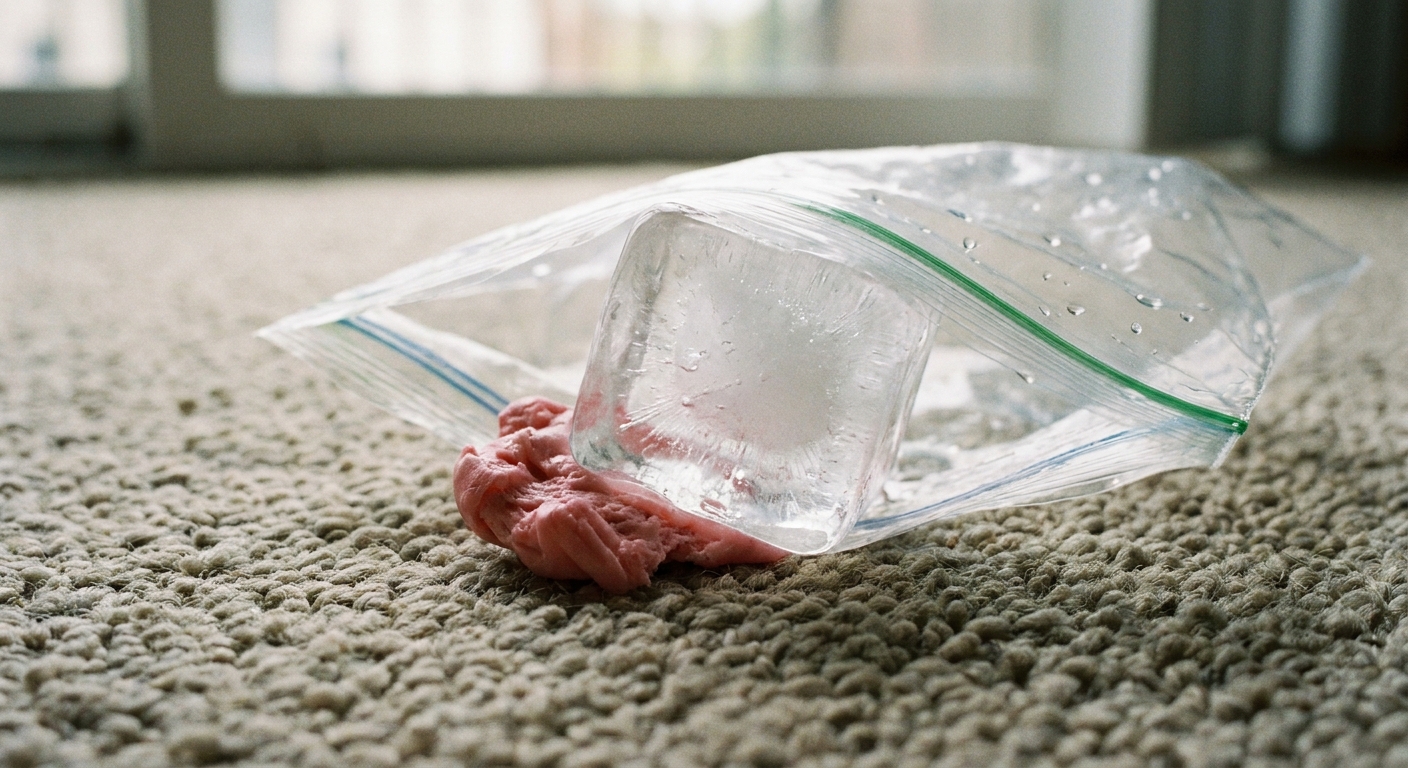
- Ice cubes in a zip-top bag or a can of compressed air held upside down (spot-freezing)
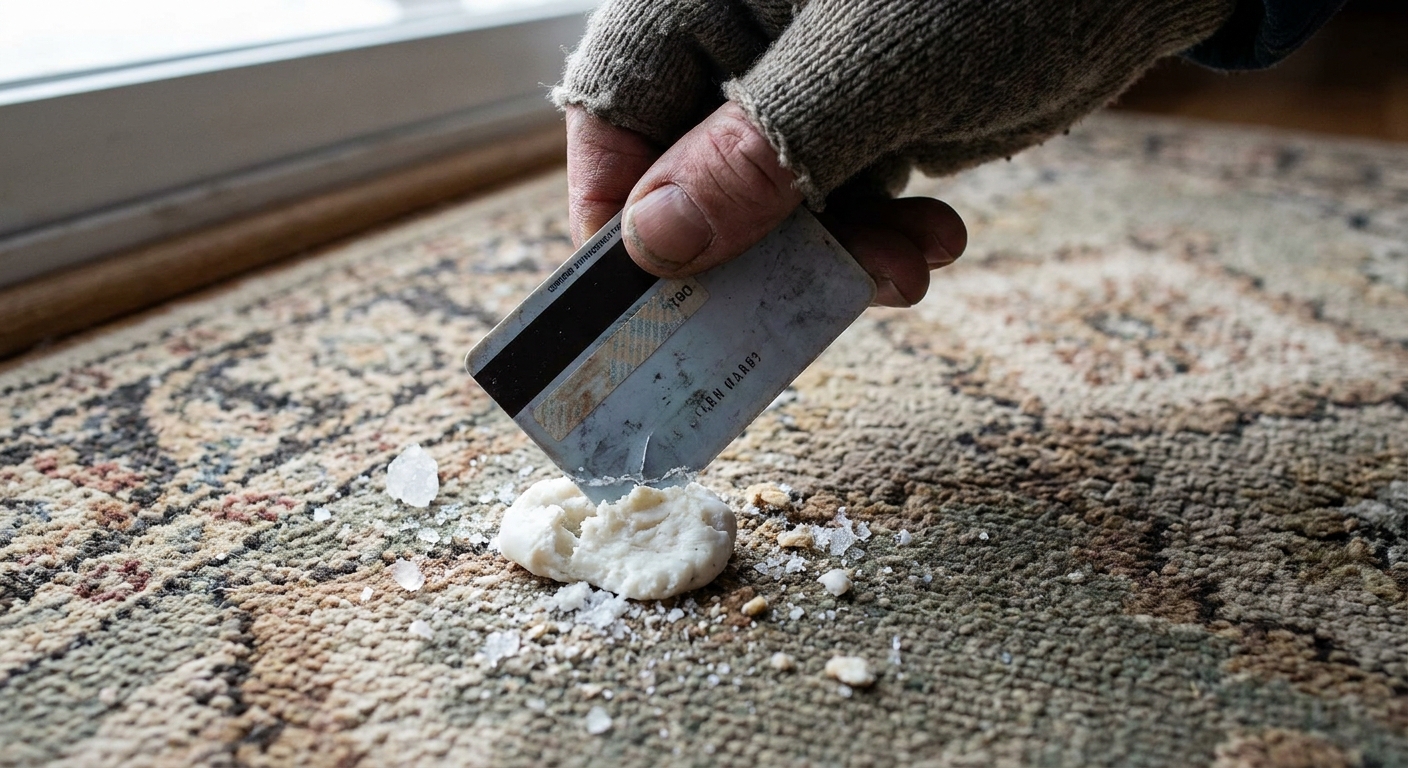
- A dull scraper: an old credit card, plastic putty knife, or spoon
- Butter knife (only if you are extremely gentle and the rug is sturdy)
- Paper towels or clean white cloths
- Vacuum (with brush roll off if possible)
- Mild dish soap and cool water
- Optional: small amount of isopropyl alcohol (70%) or a citrus-based adhesive remover
- A wide-tooth comb or a clean upholstery brush for fluffing
Skip heat. Hair dryers and steam may soften gum deeper into the fibers and can set dye or distort wool.
Compressed air note: It can work, but use it like a precision tool. Patch test first, use short bursts, and ventilate the area. Avoid it on delicate, vintage, or heirloom rugs, and be aware it can leave residue or affect some finishes and dyes.
Safest method: Freeze and scrape
This is the method I reach for first because it removes the bulk mechanically, meaning less rubbing, less chemical exposure, and less pile trauma.
Step 1: Freeze until brittle
Place a bag of ice directly over the gum. Hold it there for 5 to 15 minutes, refreshing the ice if it melts fast. You want the gum to feel hard, not just chilly.
Shag note: Press the ice bag down gently so the cold reaches the base of the fibers where gum likes to cling.
Step 2: Scrape with the nap
Use your plastic card or spoon and work from the outer edge of the gum toward the center. Keep your tool low and flat, almost parallel to the rug, and make short strokes.
- Low-pile rugs: You can be slightly firmer, but still scrape with the nap. If you see fuzz or pulled yarn, lighten up immediately.
- Loop pile (Berber-style): Scrape extra gently. Never hook under loops. Instead, chip away at the gum from the top.
- Shag rugs: Pinch and crack the gum with your fingers (through a paper towel) as it freezes, then pick out pieces. Scraping can twist or knot long fibers.
As chunks come free, lift them away with a paper towel. Do not push them around.
Step 3: Vacuum the crumbs
Once the big pieces are gone, vacuum the area to remove brittle fragments. If your vacuum has a beater brush, turn it off to avoid tangling or roughing up the pile.
Sticky residue: Minimal solvent
After scraping, you might still feel tackiness. That is normal. This is where people overdo it and end up with matted fibers or a faint ring.
Patch test first
Choose a hidden spot, like under the sofa edge. Apply your chosen solution, blot, and wait 10 minutes. Check for color transfer or texture change.
Option A: Rubbing alcohol (many synthetics)
Dampen a cloth with 70% isopropyl alcohol. Do not pour it directly on the rug.
- Blot the sticky area, then gently lift residue by pinching fibers with the cloth.
- Work in small sections. Re-freeze if the gum warms up and smears.
- Keep the area as dry as possible. Do not saturate the pile or backing, especially on tufted rugs with latex backing.
Avoid alcohol on: silk, viscose, and many hand-dyed wool rugs unless a pro has OK’d it.
Option B: Citrus adhesive remover (sparingly)
If alcohol is not appropriate or not working, use a drop of citrus remover on a cloth, dab, and blot. Citrus products can leave oily residue, so you must follow with a mild soap rinse (see next step).
High-risk products to avoid: acetone, nail polish remover, paint thinner, and harsh degreasers. They carry a high risk of damaging dyes, finishes, fibers, and backing materials.
Troubleshooting
- If the gum smears: Stop rubbing, re-freeze, and go back to chipping and lifting.
- If a faint oily or dark spot lingers after citrus: repeat the mild soap rinse and blot-dry. Residue attracts dirt, so this step matters.
Rinse and dry gently
Even if you used only a little solvent, a light rinse helps prevent a “sticky attracts dirt” situation later.
Simple rinse
- Mix a few drops of mild dish soap into cool water.
- Dampen a clean cloth, then blot the area. No scrubbing.
- Follow with a second cloth dampened with plain cool water to remove soap.
- Press with dry towels to pull out moisture.
Do not flood the area. Moisture can wick into the rug pad and subfloor, leading to odors, backing issues, or dye migration. If you suspect it soaked through, blot from above, check underneath if possible, and let everything dry fully.
Let it air dry completely. Aim a fan across the surface for airflow. Avoid direct heat. Drying time is often a few hours, but thicker rugs or humid rooms can take overnight. Avoid placing heavy furniture on the spot until it is dry.
Fix the pile after
Even careful removal can leave fibers looking a little out of sorts. Think of this step as a gentle hairbrush moment, not a battle.
When to comb
Only comb once the area is completely dry. Damp fibers are more likely to stretch or felt, especially wool.
How to lift fibers
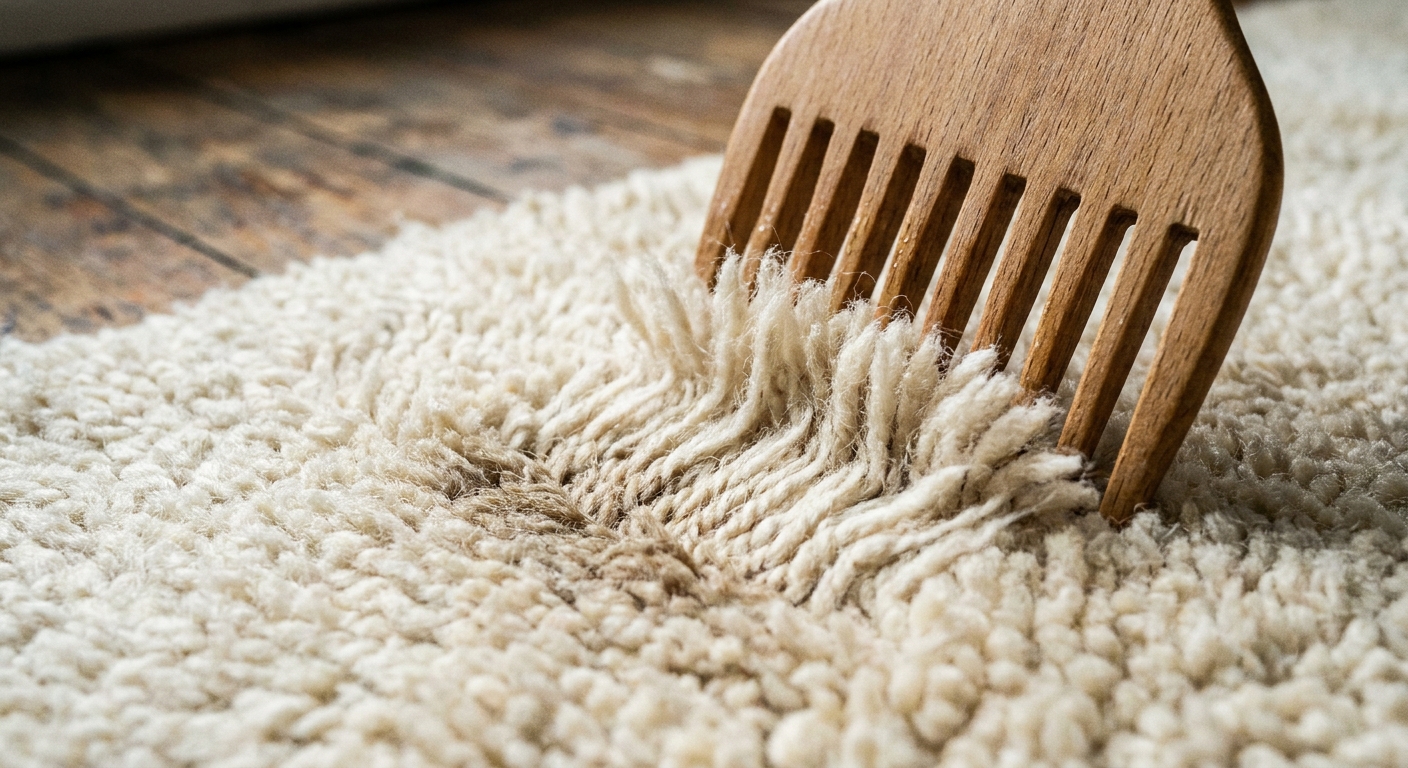
- Use a wide-tooth comb, your fingers, or a clean upholstery brush.
- Work from the outer area toward the center, lifting the fibers upward.
- For low-pile rugs, brushing lightly in multiple directions can help the nap blend back in.
- For shag, separate strands with your fingers first, then lightly comb just the tips.
Shag vs low-pile tips
Shag rugs
- Do more freezing, less scraping. Pick out hardened gum pieces with your fingers through a cloth.
- Do not twist fibers. Twisting while pulling can create a permanent kink or knot.
- Use minimal liquid. Moisture at the base can lead to slow drying and odors.
Low-pile rugs
- Scrape with the nap. If you are unsure which way that is, brush your hand across the rug and notice which direction looks smoother.
- Watch for shine. Over-rubbing can create a polished patch, especially on synthetics.
Loop pile (Berber-style)
- No tugging. If gum is wrapped around loops, freeze and chip away from the top.
- Stop if a loop starts to lift. Snipped loops can unravel if you cut without knowing the structure. That is a pro moment.
When to call a professional
I love a confident DIY, but there are moments when the gentlest move is outsourcing.
Call a pro if:
- Your rug is wool, silk, viscose, or a blend and you cannot confirm colorfastness.
- The rug is hand-knotted, antique, or heirloom.
- Gum is deeply embedded and you would need heavy solvent or aggressive scraping.
- There is latex backing that is cracking or sticky, or the rug is tufted and prone to backing damage.
- The gum spot is large, smeared, or mixed with dirt, which can turn into an abrasive paste when rubbed.
When you contact a cleaner, say: “chewing gum in the pile,” share the fiber type if you know it, and mention any product you already used. That helps them choose the safest approach.
Quick do and don’t list
- Do: lift loose grit first, then freeze thoroughly, scrape slowly, and vacuum crumbs.
- Do: blot with minimal solvent and always patch test.
- Do: keep liquids minimal and dry with airflow.
- Do: comb the pile only after it is fully dry.
- Don’t: use heat, steam, or hot water.
- Don’t: scrub in circles or grind the gum into the fibers.
- Don’t: soak the area. Water trapped in a rug can lead to odors, dye movement, or backing issues.
If you remember just one thing: hard gum comes out cleanly, soft gum smears. Freeze first, then do everything else with a light touch.