Remove Blood Stains From Fabric Upholstery

Clara Townsend
Clara Townsend is an interior stylist, vintage furniture enthusiast, and the creative voice behind Velvet Abode. With over a decade of experience transforming both cramped city apartments and sprawling fixer-uppers, she believes that a beautiful home is built on personal stories rather than massive budgets. When she isn't hunting for the perfect brass sconce at a local flea market, she can usually be found rearranging her living room for the third time this month.
Blood on a sofa feels dramatic, but it is often very fixable when it is fresh if you move calmly and stay cold-water only. Heat is the villain here. It can set proteins into fibers and turn a fresh spot into a stubborn shadow.
This guide is written for fabric upholstery with foam underneath, meaning we will clean the stain without soaking the cushion like a sponge. We will also cover when enzyme cleaners help, which fabrics need extra caution, and the exact moment to stop before you accidentally set or spread the stain.
Quick hygiene note: Blood is a biofluid. If you can, wear gloves, wash hands after, and launder used cloths hot with detergent (or discard paper towels in a sealed bag). Avoid mixing cleaners and never mix bleach with anything.
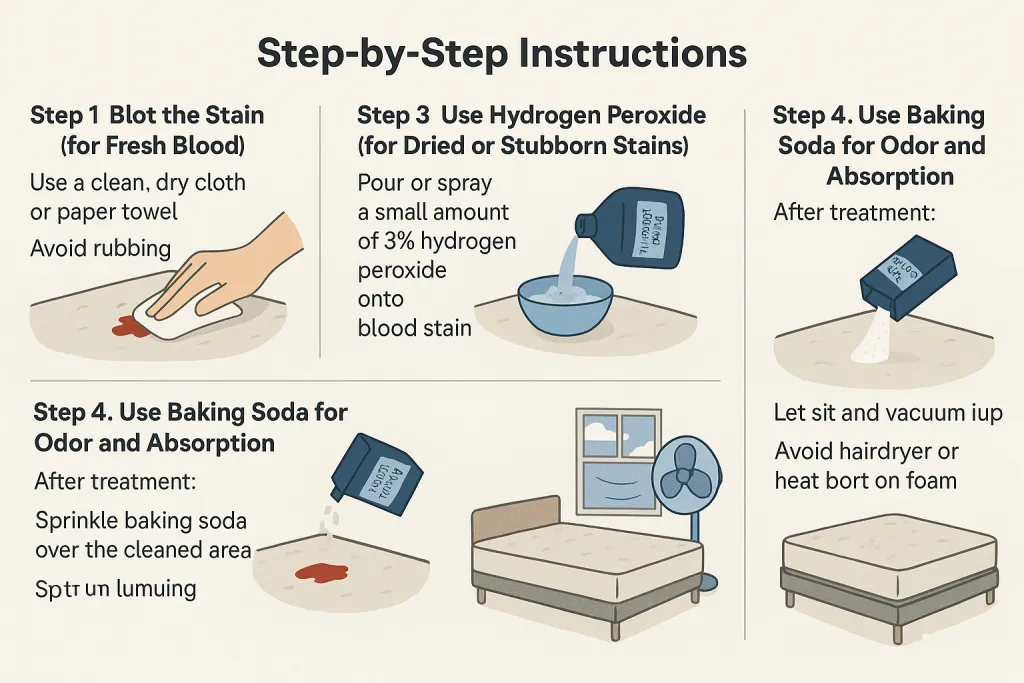
Before you start: what not to do
- Do not use hot or warm water. Cold water helps prevent proteins from setting into fibers.
- Do not scrub. Scrubbing can fuzz or distort the weave and drive the stain deeper toward the foam.
- Do not pour cleaner directly onto the stain. You want controlled moisture, not a soaked cushion.
- Do not use peroxide on unknown fabrics. It can lighten dye and create a bigger problem than the stain.
- Do not use a steamer. Steam equals heat and can set what is left.
Gather your supplies (foam-safe kit)
You do not need a full cleaning cabinet. You need a small, tidy setup that lets you control moisture.
- Cold water (a bowl or cup). Distilled water can help in hard-water areas to reduce rings.
- White cotton cloths (best). Plain white paper towels are okay as backup, but they can shed and are not always as absorbent.
- A dull edge like a spoon (only if there is dried residue)
- Mild dish soap (clear, non-bleach, non-citrus is ideal)
- Enzyme cleaner labeled for blood or protein stains (optional but very helpful)
- Spray bottle (to mist, not soak)
- Fan or hair dryer on cool setting for drying
Quick label check: If your sofa has a care tag, glance at it and follow it. “W” usually tolerates water-based cleaning. “S” typically prefers solvent only. “WS” can handle water or solvent. “X,” stick to vacuuming only and call a pro. (Codes can vary by manufacturer, so the tag wins.)
Step-by-step: fresh blood stains
If the stain is still damp or happened today, start here. The goal is to lift pigment and proteins up and out, while keeping the cushion minimally wet.
1) Blot, do not wipe
Press a dry white cloth straight down on the stain, then lift. Rotate to a clean area of cloth and repeat. You are lifting stain, not spreading it.
2) Colorfastness check (fast)
Before you go further, lightly dab a hidden seam or back edge with a cloth dampened with cold water. If you see dye transfer or the fabric surface changes, stop and consider professional cleaning.
3) Cold water blotting cycle
Lightly dampen a cloth with cold water (not dripping). Blot from the outer edge toward the center. Switch to a dry cloth and blot again. Repeat this “damp then dry” rhythm several times.
When to pause: If color is transferring to your cloth, you are making progress. Keep going gently. If the fabric starts feeling wet beyond the stain area, stop and dry it out before continuing.
4) Add a tiny amount of soap only if needed
If the stain is lighter but still visible, mix 1 to 2 drops of mild dish soap into a cup of cold water. Dampen your cloth with this solution and blot again. Follow with plain cold water blotting to remove soap residue, then blot dry.
5) Dry quickly (foam-safe finish)
Press a dry towel into the area to pull up as much moisture as possible. Then aim a fan at the cushion or use a hair dryer on cool. Drying matters because lingering dampness can leave a ring and can also bother the foam underneath.

Step-by-step: dried or older blood (enzyme method)
Once blood dries, it behaves more like a thin layer bonded to the fibers. This is where an enzyme cleaner can do the heavy lifting because it breaks down protein. The trick is to use enough dwell time to work, without soaking the cushion.
1) Loosen it with cold mist
Lightly mist cold water onto the stain (or dab with a damp cloth). Wait 2 to 3 minutes. Blot dry. Repeat once. This softens the stain so the enzyme can reach it.
2) Spot test first
Test the enzyme cleaner on a hidden seam or the back edge of a cushion. Look for color transfer, texture change, or a ring after it dries. If anything looks off, stop and call a pro.
3) Apply enzyme cleaner without soaking
Do not saturate the stain by spraying directly. Instead, spray the enzyme cleaner onto a cloth, then dab it onto the stain. You want the area evenly damp, not wet through.
4) Let it dwell, then blot
Enzymes need time. Follow the label for dwell time. Many products land in the 10 to 30 minute range. Keep it from drying completely during dwell time by covering with a barely damp cloth if needed. Then blot firmly with a clean dry cloth.
5) Rinse lightly and dry
Use a cloth dampened with cold water to blot away cleaner residue. Then blot dry and fan-dry thoroughly. If you can unzip the cushion cover, unzip slightly to help airflow, but do not remove foam unless your manufacturer says it is safe.
The blotting order that prevents rings
Most upholstery “I made it worse” stories are really moisture-migration stories. Keep these rules in your back pocket:
- Work outside-in. Start at the edge and move toward the center to prevent spreading.
- Damp then dry, every time. Always follow a damp blot with a dry blot.
- Do not chase perfection while it is wet. A faint shadow often fades as the fabric fully dries.
- Feather only if safe. On your last pass with plain cold water, you can very lightly blend just beyond the stain boundary, then blot dry. If your fabric is ring-prone, skip feathering and keep moisture tightly contained.
Fabric cautions
Cotton and cotton-linen blends
- Pros: Often responsive to cold water and gentle soap.
- Cautions: More prone to water rings and texture change if over-wet.
- Pro tip: Use smaller amounts of liquid than you think you need, and dry with a fan right away.
Polyester and polyester blends
- Pros: Usually forgiving and less likely to shrink.
- Cautions: Can hold onto residues. If you use too much soap, it may attract dirt later.
- Pro tip: If you used soap, do the light cold-water rinse step so the fabric does not feel tacky when dry.
Performance fabrics (Crypton, Sunbrella, stain-resistant weaves)
- Pros: Many are designed for spot-cleaning and resist absorption.
- Cautions: Some have protective finishes that dislike harsh chemicals. Aggressive scrubbing can disturb the surface.
- Pro tip: Use an enzyme cleaner approved for upholstery, blot gently, and avoid bleach or peroxide unless the manufacturer explicitly allows it.
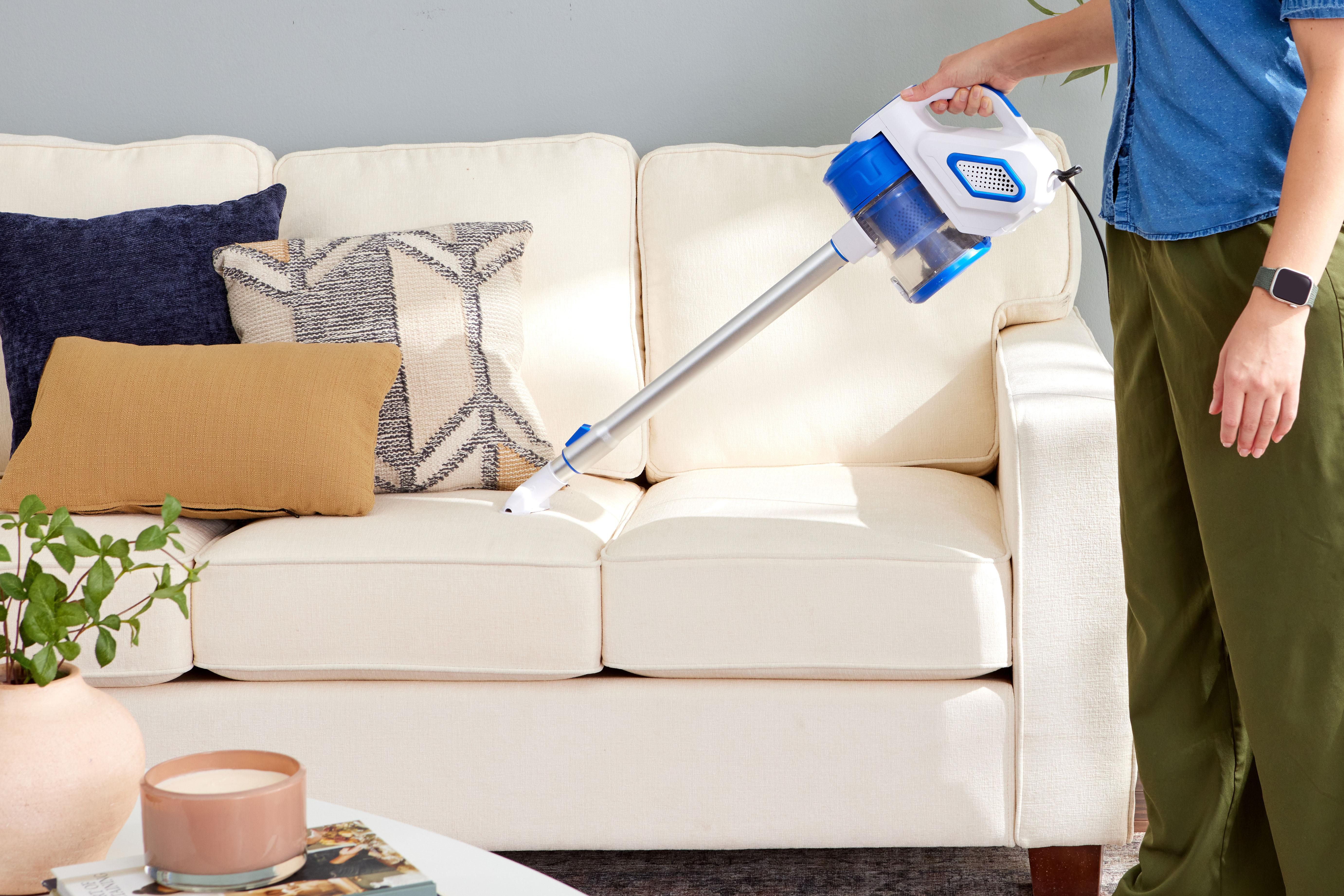
If it reached the foam
If blood soaked through the fabric, your priority shifts to moisture control and odor prevention. Blot firmly from the top with dry towels to pull as much liquid back up as possible, then run a fan on the area for several hours.
- Do not flood the cushion trying to rinse it out. That can push contamination deeper and make drying harder.
- If the cover is removable, open the zipper slightly to increase airflow while drying.
- If an odor returns after it seems dry, or the cushion feels damp inside, it is time for professional upholstery cleaning. In severe cases, foam replacement may be the cleanest fix.
When to stop
There is a point where more effort creates more damage than progress. Pause and reassess if:
- The area is getting noticeably wetter than the rest of the cushion.
- You see dye transfer onto your cloth during rinsing.
- The fabric starts to pill, fuzz, or lighten.
- You are tempted to “just try” hot water, peroxide, bleach, or a steamer.
At that point, dry the area fully and see what remains once it is completely dry. If there is still a visible stain, move to enzyme treatment or professional cleaning instead of escalating to heat or harsh chemicals.
Call a pro
I love a confident DIY moment, but upholstery foam is expensive and stains can migrate deep. Hire a professional upholstery cleaner if any of these are true:
- The stain is larger than a dinner plate or has soaked through to the cushion insert.
- The stain is older than 7 to 10 days, especially if it has been exposed to heat (sun, dryer, steamer, warm water).
- You have an “S” or “X” care code, or the fabric is velvet, silk, mohair, or a high-pile chenille that crushes easily.
- There is an odor after drying, suggesting deeper contamination in the padding.
- You tried once and the stain spread or formed a ring.
What to ask for: Look for a cleaner who offers low-moisture upholstery extraction and has experience with protein stains. Tell them exactly what you used so they can choose compatible chemistry.
Quick FAQ
Can I use hydrogen peroxide?
Sometimes it works, but it can also bleach dye and create a pale spot that never blends back in. On upholstery, I treat peroxide as a last resort and only after a hidden spot test. Enzyme cleaners are usually the safer first upgrade.
Can I use club soda?
It is mostly water. If you use it, keep it cold and use it like cold water: light damp blotting followed by dry blotting. The “fizz” is not the magic part, your blotting technique is.
What if the cushion cover is removable?
If the cover zips off and the care tag allows washing, you can pre-treat with enzyme cleaner and wash cold. Air dry only. But still blot the foam insert immediately if any blood reached it. Foam holds onto moisture and odor.
My gentle checklist
- Cold water only
- Blot outside-in
- Small moisture, repeated passes
- Enzyme for dried or stubborn stains
- Rinse lightly, then dry fast
- Stop before you soak the foam
If you want, tell me your fabric type, the care code (if you have it), and whether the stain is fresh or dry. I can help you choose the safest next step without turning your couch cushion into a wet sponge.