Refrigerator Noises in an Apartment: What’s Normal, What’s Not

Clara Townsend
Clara Townsend is an interior stylist, vintage furniture enthusiast, and the creative voice behind Velvet Abode. With over a decade of experience transforming both cramped city apartments and sprawling fixer-uppers, she believes that a beautiful home is built on personal stories rather than massive budgets. When she isn't hunting for the perfect brass sconce at a local flea market, she can usually be found rearranging her living room for the third time this month.
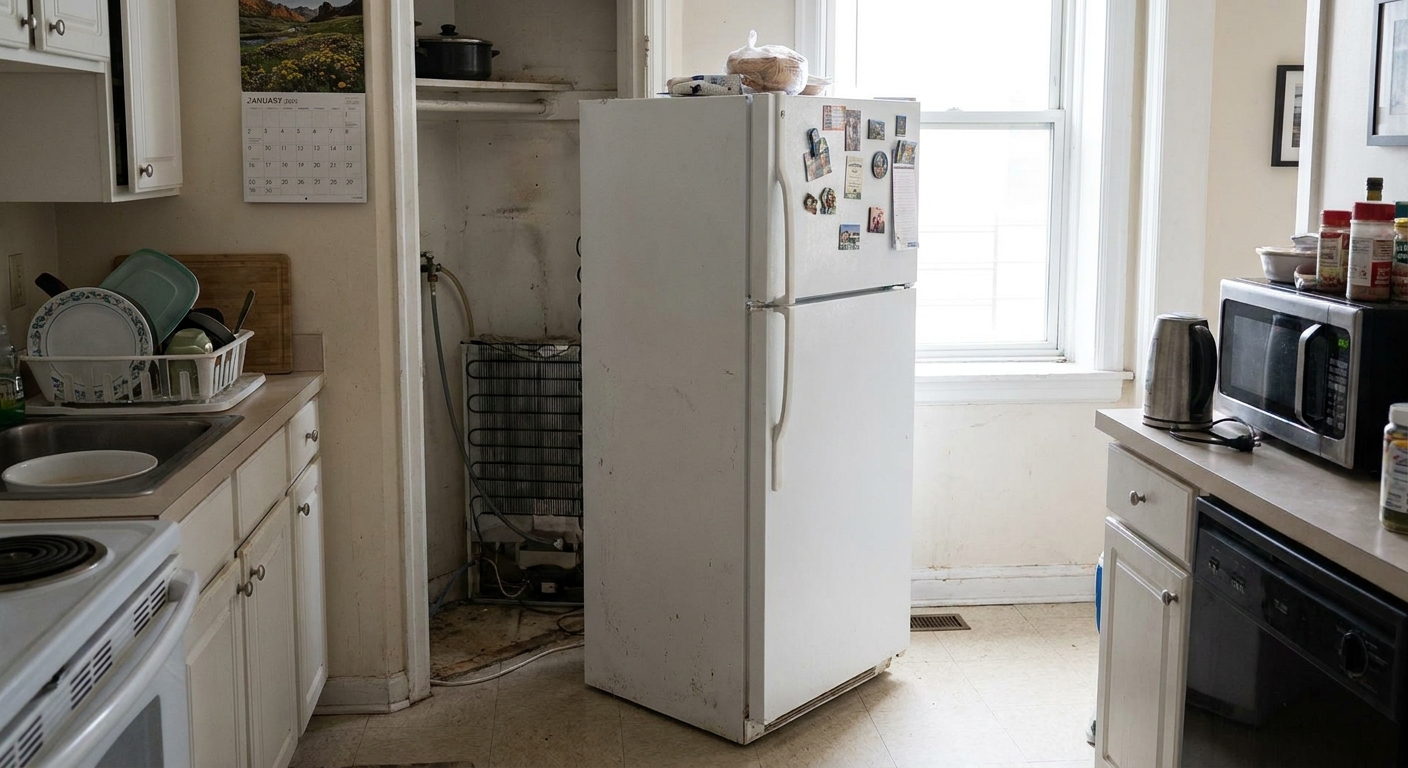
Apartment refrigerators aren't exactly whisper-quiet roommates. Between paper-thin walls, tight kitchen alcoves, and landlords who love to tuck a fridge into a cabinet like it's a decorative secret, even a perfectly healthy unit can sound dramatic. The trick is learning the difference between normal operating noise and warning noise.
Below is the sound map I use in my own rentals: what you can ignore, what you can fix in 10 minutes, and what deserves a maintenance request before you lose a freezer full of groceries.
Why fridges make noise
Refrigerators cycle on and off all day. That cycling creates a mix of sounds from a few main players:
- Compressor: the motor that pumps refrigerant. Often a low hum or brief start noise.
- Condenser fan (usually near the back or bottom): moves warm air away from the coils.
- Evaporator fan (inside the freezer section): circulates cold air through the fridge.
- Icemaker (if you have one): cycles water, freezes it, then “harvests” cubes with clicks and clunks.
- Defrost system: melts frost off coils periodically. Can cause crackles, hisses, and dripping sounds.
In an apartment, the same sounds can seem louder because the refrigerator is often boxed in with less airflow, sitting on uneven floors, or touching cabinets that act like a drum.
Normal sounds to ignore
Soft humming or steady whirring
This is typically the compressor running, a fan moving air, or both. It should be fairly consistent and not painfully loud. As a rough benchmark, it shouldn't be louder than normal conversation at arm’s length. (If you’re curious, a basic phone decibel app can help you compare “today” vs. “last week.”)
Expect it to cycle, meaning it may run for a while and then go quiet.
Click when the fridge starts or stops
A single click at start-up or shut-off is commonly a control, relay, or switch doing its job. If it's one click followed by normal running, it's usually fine.
Icemaker clicks and clunks
Icemakers are famously ungraceful. A normal cycle can include:
- a brief buzz as it refills with water
- a few sharper clicks as the mechanism rotates
- a clunk as cubes drop into the bin
If you only hear this occasionally and you’re actually getting ice, it’s typically normal.
Crackling or popping
Many fridges make plastic expansion noises as they cool down or warm slightly during defrost. It can sound like a distant tap or a light pop.
Gurgling, whooshing, or faint water sounds
Refrigerant moving through lines can sound like a gentle gurgle or swoosh. During defrost, you might also hear water dripping into a drain pan.
Buzzing and vibration: which fan?
When people tell me “my fridge is buzzing,” it’s often one of two fans. Here’s how to tell which one you’re hearing without taking your kitchen apart.
Condenser fan noise (back or bottom)
What it sounds like: a louder, lower buzz or a vibrating hum that seems to come from the floor or behind the unit.
Quick check: stand near the back lower area. If the sound is strongest there, it points to the condenser fan or something vibrating against the fridge.
Common apartment causes:
- Dusty coils restricting airflow, which can increase run time and overall noise
- Debris in the fan area (or a worn fan motor) causing extra buzzing or rattling
- The fridge pushed too tight to the wall, making airflow poor and noise more noticeable
- A power cord, water line, or thin metal panel lightly touching the fridge and rattling
Evaporator fan noise (inside freezer)
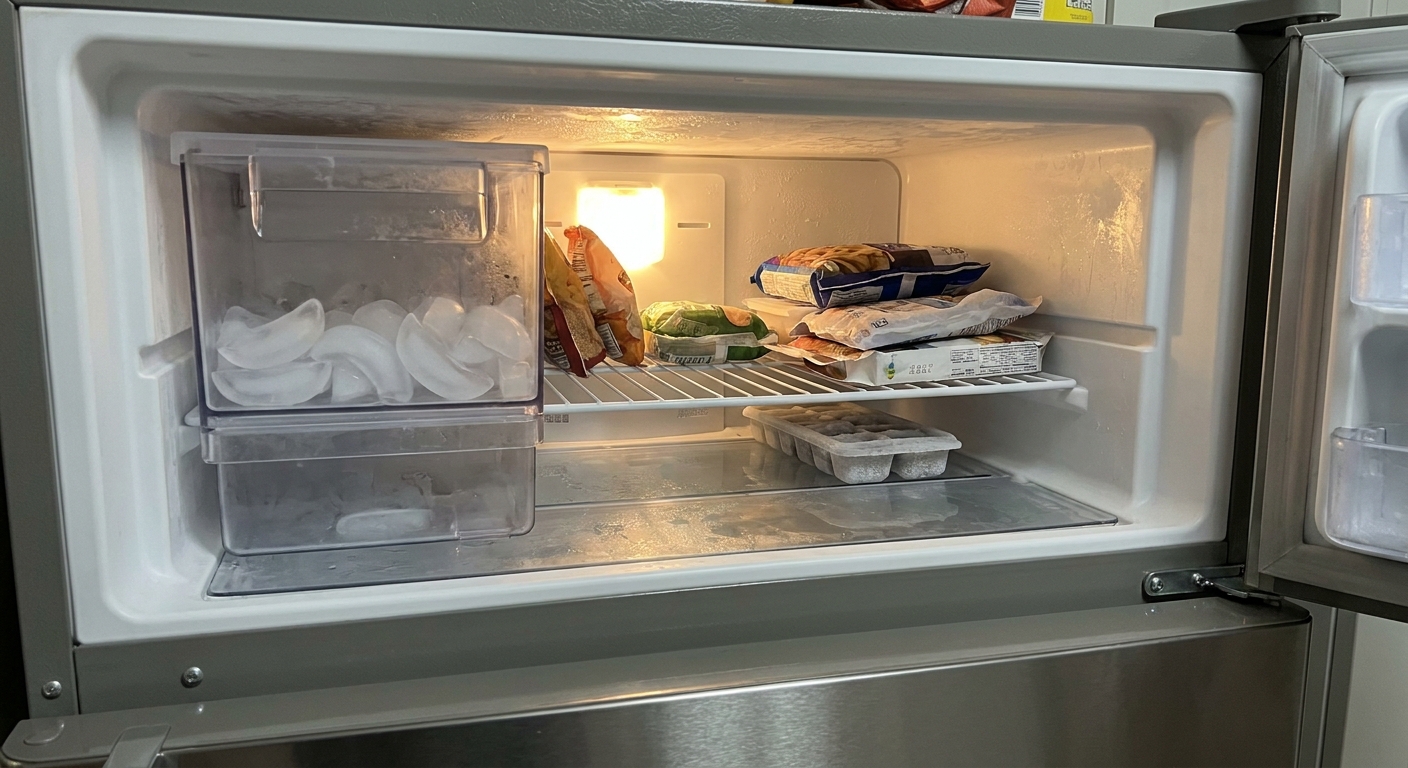
What it sounds like: a higher-pitched whirring, sometimes like a tiny hairdryer, and it feels like it’s coming from inside the freezer.
Quick check: open the freezer door. On many models the evaporator fan often stops when the door opens, but some units keep running or have a delayed stop (and some door switches can be sticky). If the noise changes dramatically when you open the freezer, the evaporator fan is a likely suspect.
Common apartment causes:
- Ice buildup rubbing the fan blades (often tied to a door left ajar or a leaky gasket)
- A loose internal panel or ice bin vibrating
- An overpacked freezer blocking airflow, forcing the fan to work harder
Compressor clicks and starts
The compressor is the heavy lifter, and it’s normal for it to be more noticeable than other components, especially in small apartments.
Normal behavior
- A brief click, then a low hum that settles into a steady run
- Longer run times during hot weather or after you load groceries
- Slightly louder running if the fridge is crammed into a tight alcove
Not-so-normal behavior
If you hear repeated clicking every few minutes and the fridge never fully kicks on, that can be a start relay, control issue, or compressor problem. This is a classic “it’s trying, but failing” pattern and deserves a maintenance request.
Quick temp targets
If you’re not sure whether a noise is “just a noise” or a real problem, temperature is the tie-breaker.
- Fridge: about 37 to 40°F (3 to 4°C)
- Freezer: about 0°F (-18°C)
If temps are drifting warmer and the fridge is also making new, harsh, or repetitive sounds, it’s time to escalate.
Setup tweaks that quiet things fast
Before you assume the fridge is dying, do the small, renter-friendly setup tweaks that reduce vibration and help airflow. They often make a surprising difference.
1) Give it breathing room
Most refrigerators need clearance for airflow. If your fridge is jammed against the wall or pressed tightly between cabinets, heat can’t escape and everything works louder.
- Pull the fridge out a bit so there’s space behind it and above it if possible.
- Make sure the front grille or bottom vent isn't blocked by rugs, pet hair, or a toe-kick panel that has slipped out of place.
2) Level it so it doesn't “walk”
Uneven apartment floors are the ultimate noise amplifier. If the refrigerator rocks, it can buzz against cabinets and rattle like it’s furious.
- Gently push on opposite corners. If it wobbles, adjust the front leveling legs (usually a simple twist).
- Once it’s level, the doors may seal better and the whole unit usually vibrates less.
3) Stop cabinet contact
If the fridge is touching a cabinet side panel, sound can travel through the wood like a speaker. Even a tiny gap helps.
- Center the fridge in its opening if you can.
- Make sure the water line or power cord isn't tapping the back panel.
4) Clean what you can reach
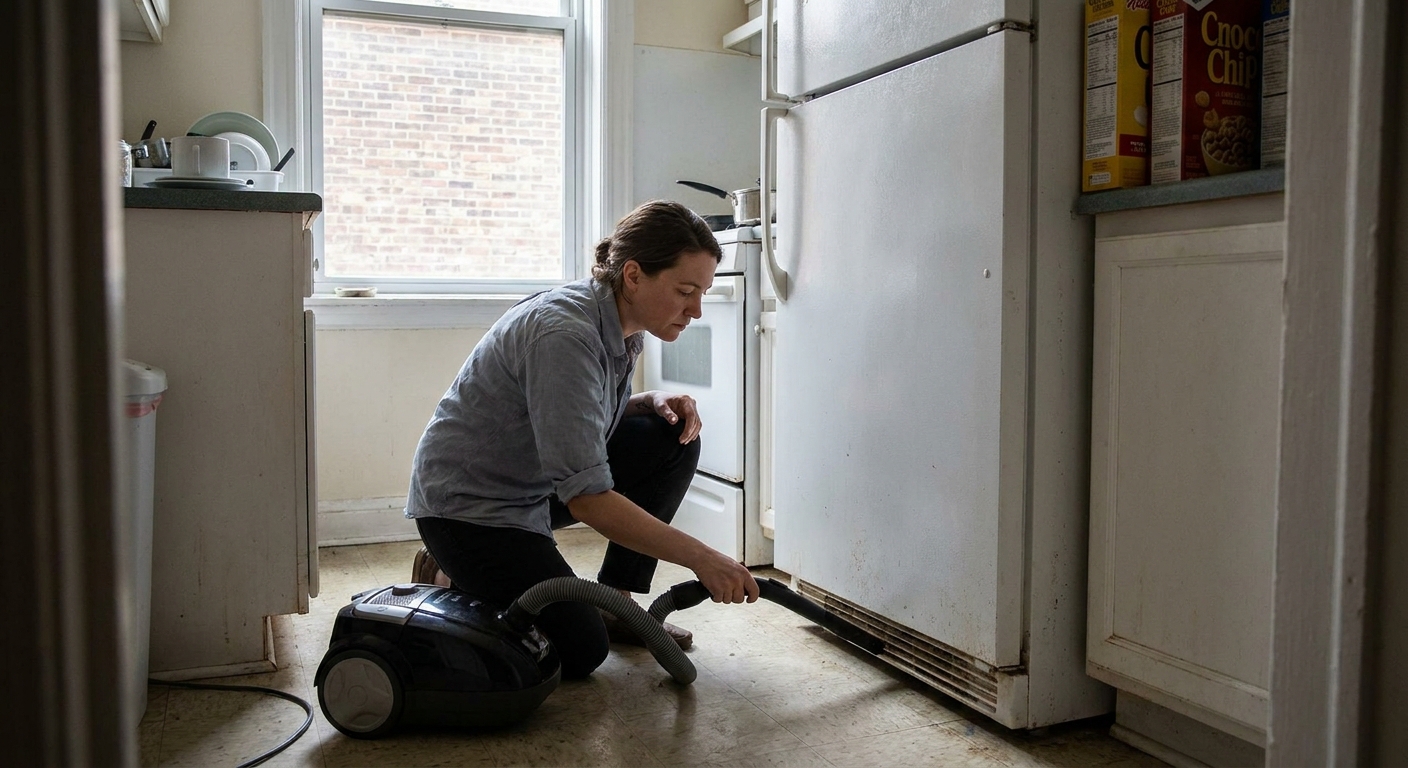
Dust and pet hair can make a fridge run longer and sometimes louder. If you can access the front grille, vacuum gently. If cleaning the back requires moving the fridge in a way that feels risky, that’s a good “maintenance, please” task.
5) Check the door and gasket
A door that’s slightly ajar or a gasket that isn't sealing well can lead to extra run time, frost buildup, and that annoying “fan hitting ice” sound.
- Make sure shelves and bins aren't keeping the door from closing fully.
- Do a quick gasket check: close the door on a strip of paper. If it slides out easily, the seal might be weak in that spot.
Icemaker and water-line noises
Icemakers are a frequent source of apartment noise complaints because they’re intermittent and startling.
Sounds that are usually normal
- Clicks and a short motor sound when cubes release
- A quick buzz when the valve refills with water
- Ice cubes dropping into the bin
Sounds that suggest a problem
- Rapid, repeated clicking and no ice production
- Buzzing for a long time as if it’s trying to fill, especially if the water supply is off
- Grinding or harsh chattering from the icemaker module
- Ticking, knocking, or water-hammer thumps when dispensing water or making ice (often a valve, loose line, or plumbing pressure issue)
If you suspect the icemaker, you can often turn it off (switch or arm) and see if the noise stops. If you hear loud knocking during water dispense or ice fill, you can also temporarily turn off the fridge water supply (if you know where it is and can do it safely) to help isolate the issue for maintenance.
Defrost cycle: the sizzle moment
Every so often, your fridge will go into defrost mode. During that window, you might notice a fan pause, then a faint hiss or sizzle as ice melts off the coils, plus dripping into the drain pan. If it’s periodic and cooling stays steady, it’s usually just the fridge doing routine housekeeping.
Warning sounds: unplug and call
Use this as your renter’s red-flag list. If you notice any of the below, protect your food and your apartment, then loop in your property manager.
- Repeated click-click-click every few minutes with the fridge failing to start cooling
- Loud grinding or metal-on-metal squeal (often a fan blade hitting ice or a failing motor)
- Burning smell, hot electrical odor, or visible smoke
- Buzzing plus tripped breaker or the outlet feels hot
- Water pooling near the electrical area, especially at the back bottom
- Sudden silence paired with warming temps in fridge or freezer
What to do: If there’s any burning smell, smoke, or electrical concern, shut it down and get help. If the plug is easily reachable and it’s safe to do so, unplug the fridge. If it isn’t safely reachable, turn off power at the breaker. Keep the doors closed to hold cold air and call maintenance immediately.
Also: avoid running a refrigerator on an extension cord, and in a rental, skip DIY internal repairs. (Cleaning vents and checking clearance is one thing. Taking panels off is another.)
Sound to action cheat sheet
- Single click, then hum: normal cycling.
- Occasional clunk from freezer: icemaker harvest, usually normal.
- High-pitched whir that changes when freezer opens: often evaporator fan. Check for ice buildup, door seal issues, or overpacking. Call maintenance if it’s grinding.
- Low buzz from back or floor: condenser fan area or vibration. Check clearance, leveling, and contact points.
- Ticking or hammering during water dispense or ice fill: water line or valve. Try turning off icemaker or water supply to isolate, then call maintenance.
- Clicking repeatedly and not cooling: maintenance now.
How to message maintenance
A good maintenance request is specific. It saves you time and helps them bring the right part.
Include:
- the sound type (buzzing, clicking, grinding)
- the location (inside freezer, back bottom, front grille)
- whether it changes when you open the freezer door
- current temps if you can check (or whether food is thawing)
- when it happens (constant, every few minutes, only at night)
- whether turning off the icemaker or water supply changes anything
If you can safely capture a 10 second audio clip, that can be surprisingly helpful.
One last calming note
Most refrigerator noises are just the sound of a machine doing its daily loops, especially in a small apartment where every hum feels personal. Start with airflow and leveling, then listen for patterns. If the noise is harsh, repetitive, or paired with poor cooling, trust your instincts and call maintenance. A quiet kitchen is lovely, but a safe, properly working fridge is the real luxury.