Refrigerator Leaking Water on the Floor: Renter-Safe Checks

Clara Townsend
Clara Townsend is an interior stylist, vintage furniture enthusiast, and the creative voice behind Velvet Abode. With over a decade of experience transforming both cramped city apartments and sprawling fixer-uppers, she believes that a beautiful home is built on personal stories rather than massive budgets. When she isn't hunting for the perfect brass sconce at a local flea market, she can usually be found rearranging her living room for the third time this month.
There are few apartment mysteries as rude as the surprise of stepping into a cold puddle you did not sign up for. The good news: most refrigerator floor leaks come from a handful of predictable places, and you can narrow them down without disassembling the fridge or risking your security deposit.
This checklist is designed for renters. Think: flashlight, paper towels, a little patience, and the kind of calm you reserve for untangling string lights.
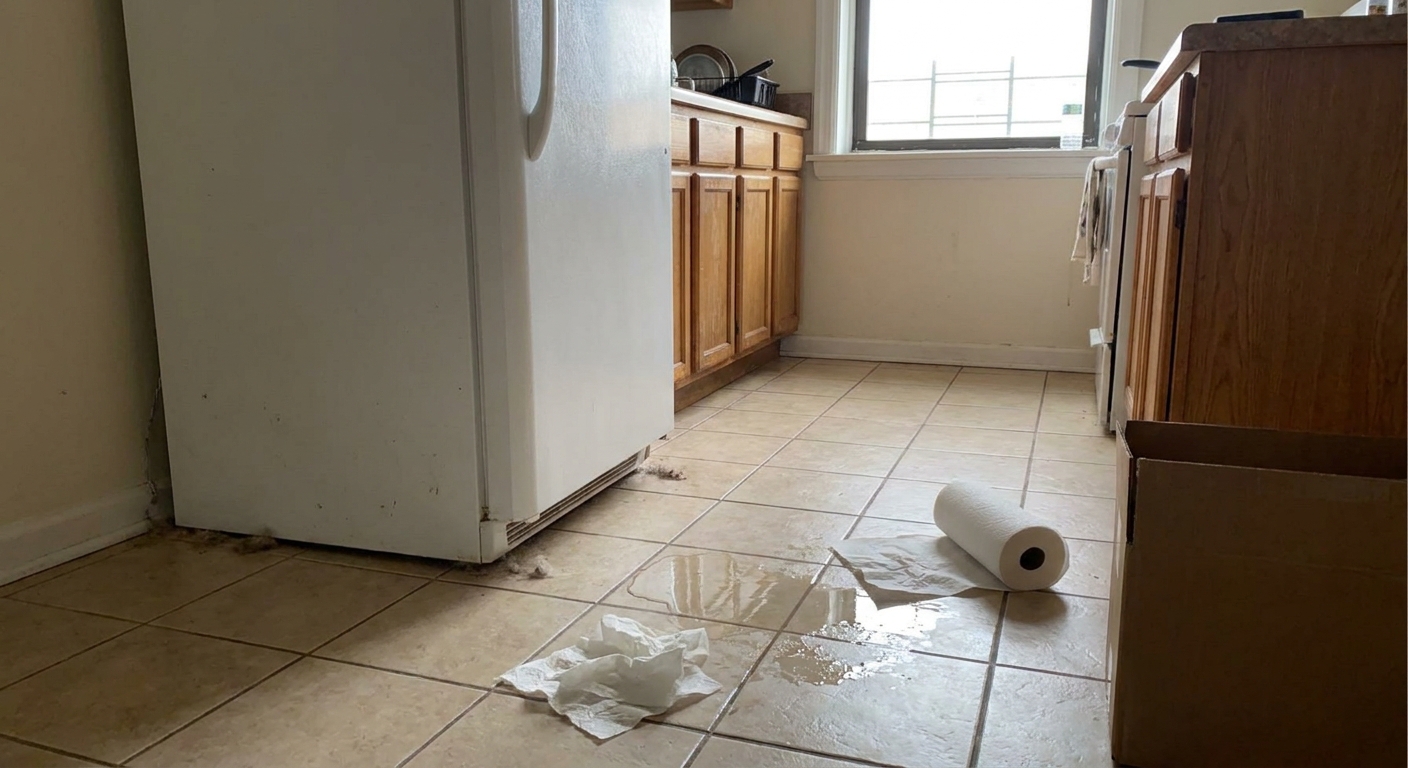
First, make it safe (two minutes)
1) Protect the floor
- Lay down towels around the puddle and along the fridge front edge.
- If you have it, slide a plastic tray, baking sheet, or shallow storage bin under the front lip to catch drips while you investigate.
2) Do a quick smell and color check
- Clear, odorless water is most common (condensation, defrost drain, ice maker line).
- Sticky spill might be something that leaked from inside the fridge and ran out (especially if the door shelves had a spill).
- Any burning smell, sparking, or buzzing plus water: call maintenance right away. If you need to unplug the fridge, do not stand in water while touching the plug. If the outlet area is wet, switch off the breaker first if you can do so safely.
3) Know when to stop
If the water is spreading fast, appears near an outlet, or you see water actively dripping from a tube or valve, skip the rest and call maintenance. A small issue can turn into floor damage quickly in apartments.
Find where the water is coming from
Your goal is not to fix everything yourself. Your goal is to answer one question: Is this condensation, a defrost-drain issue, a drain-pan problem, or a supply line leak?
Step 1: Map the puddle
- Water at the front often points to door-gasket condensation or a clogged defrost drain that is overflowing inside and sneaking out.
- Water at the back can point to the drain pan, the water supply line (if the fridge has an ice maker or dispenser), or the house shutoff connection.
- Water from one front corner sometimes happens when the fridge is tilted wrong and the defrost water is not flowing toward the drain.
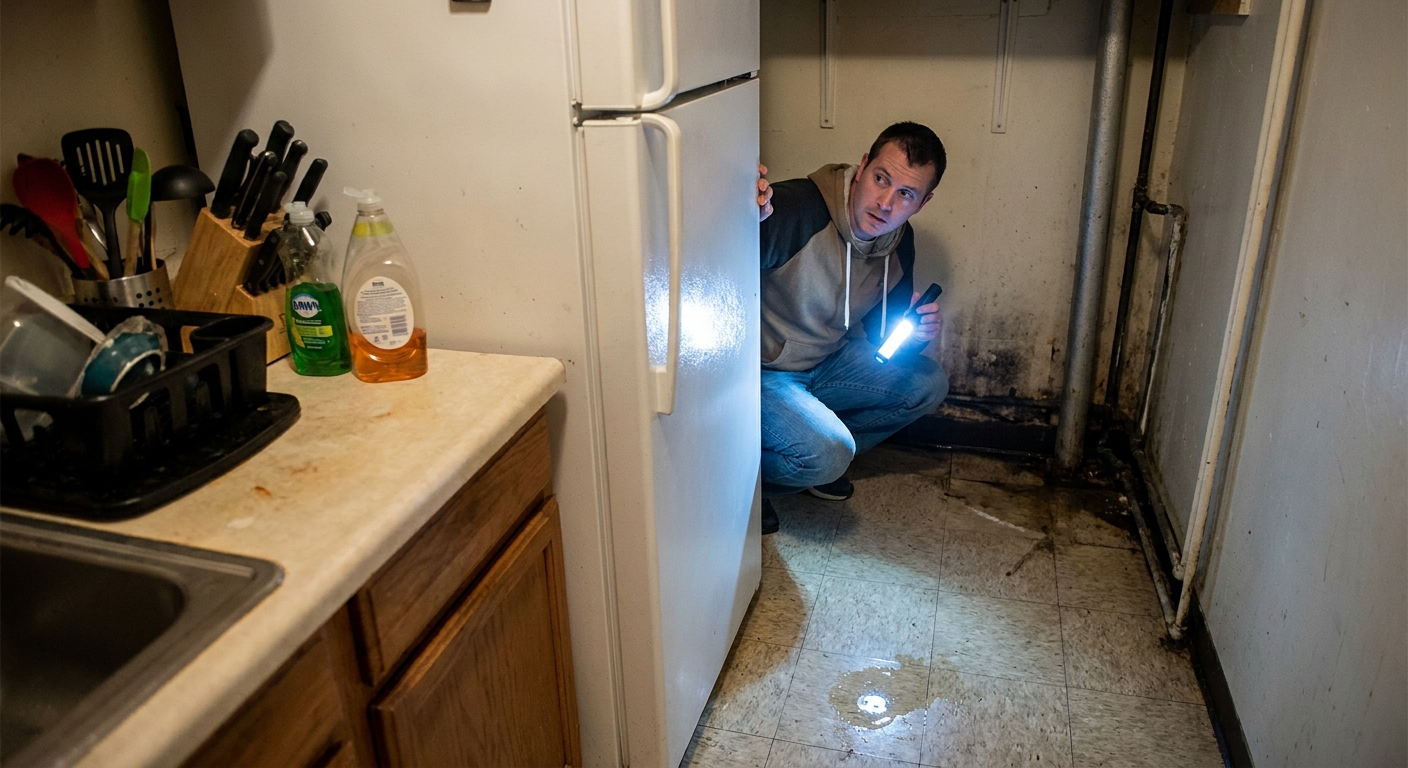
Step 2: Do the paper towel test
Dry the floor completely, then press a paper towel along:
- the bottom edge of the fridge door
- the front underside (the grille or kick plate area at the bottom front)
- the floor at the back corners (as far as you can safely reach)
Tip: use separate towels for the front and the back so you do not mix clues. Check again in 10 to 15 minutes. Where the towel gets wet first is your best lead.
Renter-safe causes and what to check
1) Door-gasket condensation (looks like a leak, but it is sweat)
If humid air keeps sneaking in, moisture can condense and drip down the door frame. It can pool on the floor like a “leak,” especially in summer or in a warm, steamy kitchen.
- Look for: water beading on the outside edge of the door, dampness around the gasket, or droplets on the front of the fridge.
- Quick checks:
- Wipe the gasket and the frame dry, then see if it returns.
- Close the door on a dollar bill (or a strip of paper). If it slides out easily in multiple spots, the seal may be weak.
- Check if any bins or food containers are preventing the door from closing fully.
- Renter-safe fix: clean the gasket with mild soap and warm water, dry it well, and make sure nothing blocks the door. If the gasket is torn, hardened, or warped, document and request maintenance.
2) Clogged defrost drain (classic puddle-under-the-fridge culprit)
Most fridges periodically defrost. That meltwater is supposed to flow down a small drain to a pan underneath where it evaporates. If the drain clogs with gunk or ice, the water can back up and end up on your floor.
- Look for: a thin sheet of ice or standing water on the bottom of the freezer (especially under the drawer), or water inside the fridge compartment near the back.
- Renter-safe checks:
- Remove freezer items enough to peek at the bottom for ice or pooled water.
- Optional clue: you may hear faint dripping inside during a defrost cycle, but do not rely on sound alone.
- What not to do: do not pry panels, chip ice with sharp tools, or use a hair dryer. Those are the exact moves that turn “minor clog” into “maintenance nightmare.”
- Best next step: if you see ice or water buildup inside, report “suspected clogged defrost drain causing overflow” to maintenance. That phrase is helpful and specific.
3) Drain pan problems (cracked, shifted, or overflowing)
Under many refrigerators sits a shallow pan that catches defrost water. It should not be leaking. But pans can crack, get knocked out of position during cleaning, or overflow if the defrost water volume is unusually high or evaporation is slow (high humidity, poor airflow around the unit).
- Look for: water primarily at the back of the fridge, and a drip pattern that shows up after the compressor has run for a while.
- Renter-safe checks:
- Pull the fridge forward only as far as you can safely manage (ask a friend if it is heavy). If you cannot move it safely, skip this and call maintenance.
- With a flashlight, look underneath for a pan that is visibly out of place or obviously cracked.
- Best next step: do not try to remove the pan if it is not designed to slide out easily. Take a photo and call maintenance.
4) Ice maker or water dispenser supply line leak
If your fridge has an ice maker or water dispenser, it is connected to a small pressurized water line. Even a slow drip can create a surprising amount of water on the floor.
- Look for: water pooling behind the fridge, a wet spot on the wall baseboard, or a steady dampness that returns even when the fridge is not opened.
- Renter-safe checks:
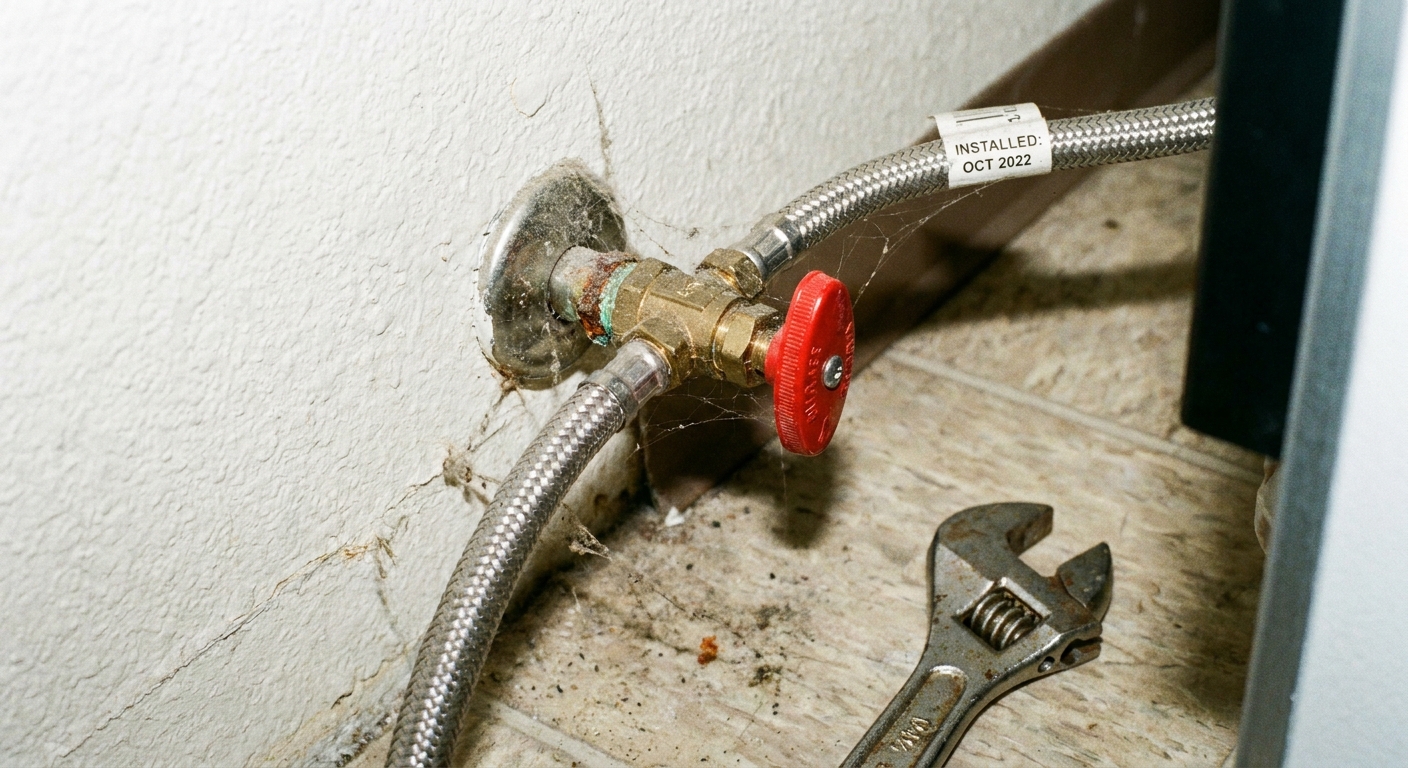
- Follow the thin tube from the back of the fridge to the wall connection. Look for active dripping or mineral stains.
- Check the floor directly under the connection point at the wall.
- Best next step (safe and fast): turn off the fridge water supply at the shutoff valve if you can access it. Then call maintenance and note that you shut the valve off due to a suspected supply line leak.
5) Ice maker bin or chute issues (sneaky extra meltwater)
If your fridge has an ice chute or an ice bin, a small misalignment can invite warm air in, which creates extra frost. That frost later melts during defrost cycles and can show up as water you did not order.
- Look for: clumpy ice, frost around the ice chute area, or an ice bin that does not sit flush.
- Renter-safe checks: make sure the ice bin is seated correctly, and that the chute door is closing fully (no cubes jammed in the way). If the chute area is heavily frosted, call maintenance.
6) Leveling issues (water goes where it should not)
Fridges are typically meant to sit slightly higher in front than in back, so they tilt back a touch. That helps the doors close properly and encourages defrost water to drain the right way. If the fridge is leaning forward or rocking, water can migrate toward the front and escape.
- Look for: doors that drift open, a fridge that rocks when you press a corner, or water that appears at the front even when the back seems dry.
- Renter-safe check: gently test for rocking. If it is unstable, do not try to “fix” it with random cardboard or furniture pads under the fridge. Ask maintenance to level it correctly.
7) Something simple inside the fridge (spill travel)
Sometimes it is not a mechanical leak at all. A spill in a door shelf or a drawer can sneak into seams and drip out over time, especially if the fridge is slightly tilted.
- Look for: sticky residue, colored drips, or dampness beneath drawers.
- Renter-safe fix: remove and wash drawers and door bins, wipe the interior thoroughly, then monitor. If the water is truly clear and keeps returning, it is likely not just a spill.
8) Blocked vents or overpacked shelves (more frost, more melt)
When internal air vents are blocked by food boxes or overstuffed bags, the fridge can ice up in odd places. That ice eventually melts and may contribute to pooling water.
- Look for: frost buildup in one area, uneven cooling, or items freezing in the fridge section.
- Renter-safe fix: give the back wall vents a little breathing room and avoid packing items tightly against them. If icing keeps returning, maintenance should check airflow and the defrost system.
9) Mini fridge note (different setup, different puddles)
Mini fridges often do not manage defrost water the same way full-size models do. Puddles may come from manual defrost meltwater, an overfilled drip tray (if your model has one), or heavy condensation from frequent door opening.
- Renter-safe move: if you recently defrosted it, make sure all meltwater was fully captured and the unit is dry before restarting. If water keeps returning, document it and contact maintenance.
If you need to shut something off
Turning off the water (ice maker or dispenser)
If you see active dripping from the supply line or the wall connection, shutting off the water is renter-safe and can prevent serious damage. The shutoff is often a small valve on the wall behind the fridge or under the sink.
- Traditional knob valve: turn clockwise until it stops (do not force it).
- Quarter-turn ball valve: rotate the handle 90 degrees until it is perpendicular to the tube or pipe.
- Dry the area and place a towel or tray beneath the connection.
- Tell maintenance you shut off the fridge supply due to an active leak.
Unplugging the fridge
Unplug only if water is near an outlet, you smell electrical burning, or you are instructed to by maintenance. Do not stand in water while unplugging. If the outlet area is wet, switch off the breaker first if you can safely access it. Otherwise, keep the doors closed to protect your food and focus on stopping the water source.
Temporary damage control
- Keep door openings minimal while you wait for help.
- Keep towels down or put an absorbent mat where the water shows up.
- If you suspect the supply line is the issue, leave the valve off until maintenance confirms it is safe to turn back on.
What to tell maintenance (and what to document)
A clear maintenance request gets you a faster fix. Before you call or submit a ticket, grab:
- Two photos: one of the puddle location (front or back), one of the back of the fridge showing any wet tubing or the wall connection if accessible.
- A short timeline: when you first noticed it and whether it returns after you dry it.
- Any clues: ice in the freezer bottom, water inside the fridge, or dripping behind the unit.
Helpful phrases you can use:
- “Water pooling on floor in front of fridge, possible defrost drain backup. Noticed ice or water at bottom of freezer.”
- “Water pooling behind fridge, possible supply line leak at shutoff or connection. I turned off the fridge water valve.”
- “Drain pan looks shifted or cracked under fridge, water collecting at back.”
- “Possible condensation from door gasket, moisture around seal and water at front.”
Quick troubleshooting flow (save this)
- Puddle mostly in front + damp door edge: likely gasket condensation or door not sealing.
- Puddle in front + ice or water at bottom of freezer: likely clogged defrost drain.
- Puddle mostly in back + fridge has ice maker: likely supply line or connection leak. Turn off water and call maintenance.
- Puddle in back + no ice maker: likely drain pan issue or defrost drain overflow reaching the pan area.
- Fridge rocks or doors drift open: leveling issue may be contributing (front should be slightly higher than back).
- Clumpy ice or frost near chute: ice bin or chute door may be letting warm air in.
When it is urgent
Call maintenance immediately (or after-hours emergency line if your building has one) if:
- Water is spreading quickly or soaking into flooring.
- You see active dripping from a pressurized line.
- Water is near electrical cords, outlets, or power strips.
- You are in an upstairs unit and suspect water could travel to a neighbor below.
Until help arrives: keep towels down, keep the area clear, and if it is a supply line leak, keep the fridge water valve turned off.
A small home note from me
I know, a leaking fridge is not exactly the cozy, candlelit vibe we are going for. But once you have the puddle handled, take a second to dry the baseboards and the cabinet toe-kick nearby. Water damage in rentals is sneaky, and you deserve a home that feels like a comforting hug, not a constant cleanup.
If you are reading this on a blog or community post, drop a comment with your fridge type (top freezer, bottom freezer, French door, mini fridge) and where the water shows up (front, back, left, right). You will get to the most likely culprit faster, and your maintenance request will be that much easier to write.