Recliner Footrest Won’t Stay Up?

Clara Townsend
Clara Townsend is an interior stylist, vintage furniture enthusiast, and the creative voice behind Velvet Abode. With over a decade of experience transforming both cramped city apartments and sprawling fixer-uppers, she believes that a beautiful home is built on personal stories rather than massive budgets. When she isn't hunting for the perfect brass sconce at a local flea market, she can usually be found rearranging her living room for the third time this month.
There are few things more irritating than a recliner footrest that almost works. It pops up, then immediately sinks back down like it lost confidence. Or it refuses to deploy unless you yank the handle with your whole body. And in that moment, it is so tempting to force it.
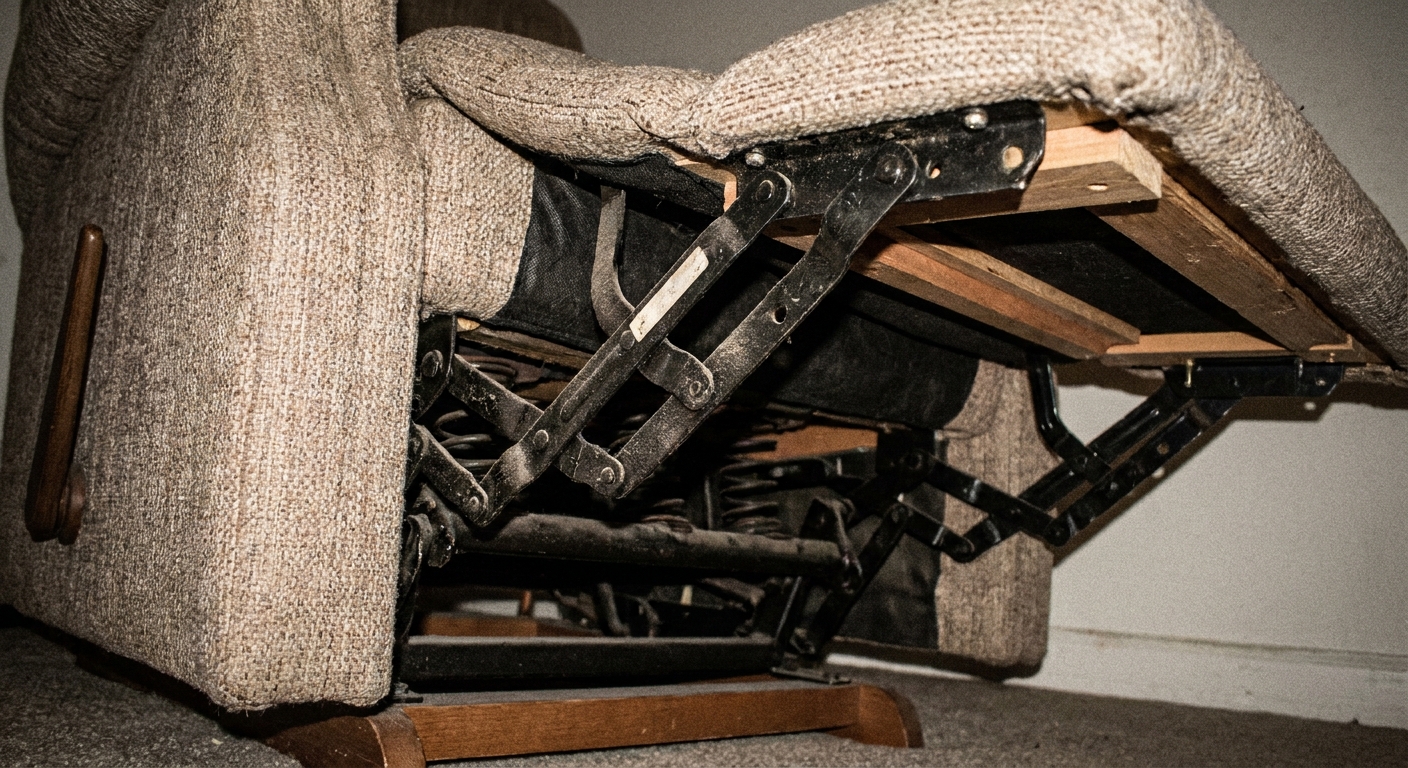
Pause before forcing it. A footrest mechanism is basically a folding metal lattice under tension. Forcing it can pinch fingers, throw you off balance, snap a spring, or tweak the frame so it never tracks smoothly again. Let’s do the safe checks first, the ones I run through in my own home before I even think about tools.
First: make it safe to inspect
Whether your chair is vintage thrift-store magic or a newer power recliner, start with a little safety ritual.
- Clear the area: move rugs, baskets, and coffee tables so you can fully extend the footrest without it hitting anything.
- Keep hands out of the scissor links: the crisscrossing arms under the footrest can pinch hard.
- Unplug power recliners: if it has a cord, unplug it before putting your eyes and hands underneath.
- Tip carefully: if you need access underneath, tip the recliner onto its side or back with a helper and protect the floor with a blanket.
If the chair feels unstable, wobbly, or makes a loud pop when you try the footrest, stop and skip ahead to the “When not to DIY” section.
Quick symptoms guide
A few clues can point you toward the right check. Recliners vary a lot by brand and mechanism, so treat these as common patterns, not promises.
- Footrest won’t stay up and drops right away: commonly a latch or pawl problem, a missing retaining clip, or the linkage not reaching the “over-center” lock point.
- Footrest won’t deploy at all: often a jam, disconnected cable or handle, bent linkage, or on power models an actuator or control issue.
- Footrest deploys but won’t lock at certain positions: on models with multi-position footrests, this can point to wear, misalignment, or a loose pivot.
- Footrest deploys but slowly sinks with weight: commonly spring tension loss (manual), worn lock surfaces, or on power units an actuator, controller, or limit behavior issue.
Safe check #1: look for a simple jam
Before we blame mysterious “mechanical failure,” check for the low-drama stuff that blocks the linkage.
What to check
- Coins, pens, toy parts: especially near the front edge where the footrest folds back in.
- Fabric and batting: upholstery can get pulled into the mechanism, especially at the corners.
- Dust and pet hair: thick buildup can keep parts from seating fully, so the footrest never reaches the lock position.
- Rug interference: a plush rug can push up on the footrest from below and make it behave oddly.
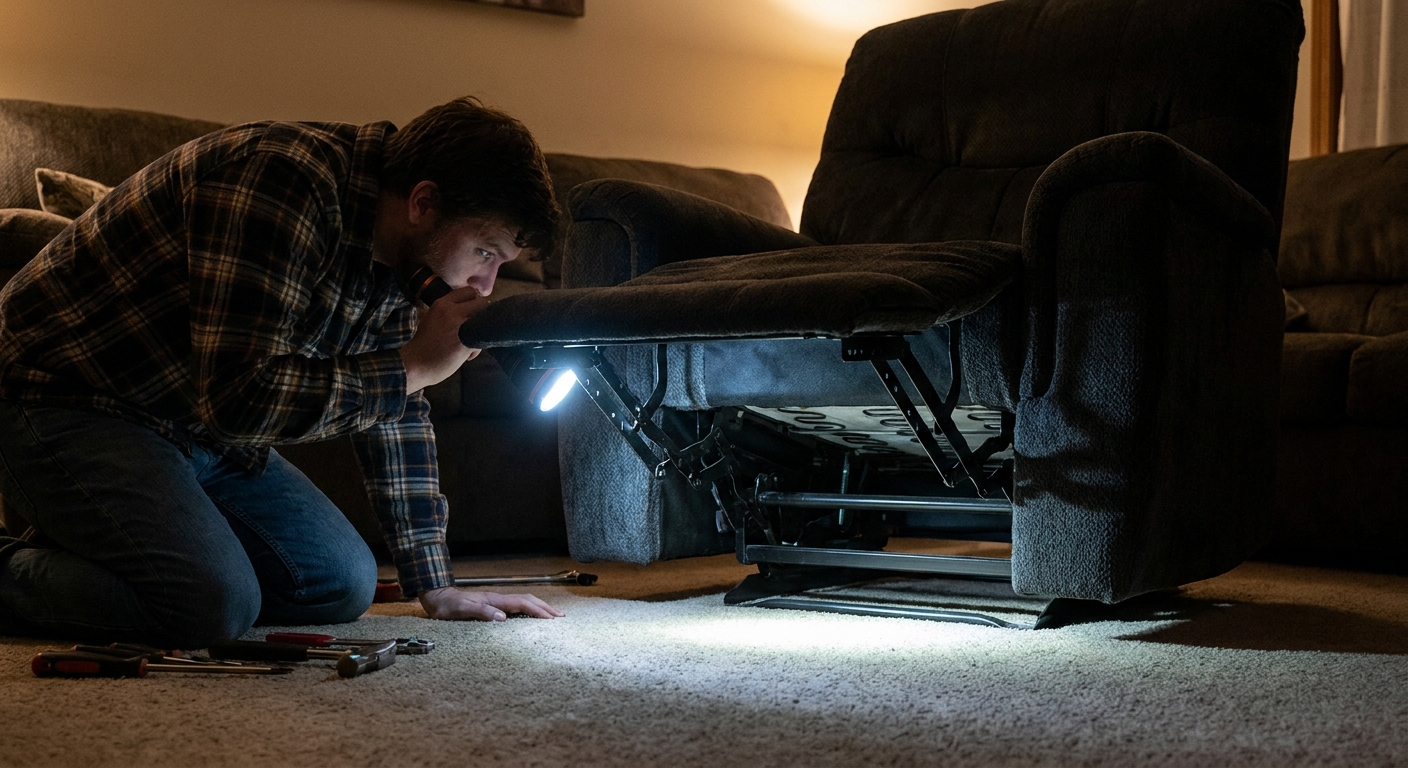
What to do: Use a flashlight, then gently sweep debris out with a soft brush or vacuum crevice tool. Avoid compressed air if it’s going to blow grit deeper into joints.
What success looks like: the footrest reaches the end of travel smoothly and clicks into place without you helping it.
Safe check #2: confirm it is level
This one feels too simple, but a recliner that is slightly racked can cause the linkage to bind and refuse to lock. It’s like a sticky dresser drawer. The problem is not always the drawer.
- Check all feet touch the floor: if one leg is floating, the frame can twist under load.
- Try it on a hard surface: temporarily slide it off thick carpet to see if the symptom changes.
- Listen for rubbing: metal scraping on one side can signal a skewed track.
If leveling changes the behavior, the mechanism may be fine and the frame or base may need tightening. If you spot loose base bolts, snug them gently, but do not overtighten into stripped wood.
What success looks like: the footrest tracks evenly on both sides and stops listing or rubbing.
Safe check #3: handle and cable
On many manual recliners, the handle pulls a cable that releases the footrest latch. If the cable is stretched, loose, or partially detached, the latch may not fully engage or release.
Clues it is the cable
- The handle feels floppy or has too much free play.
- You hear the latch click, but the footrest does not stay in position.
- The footrest works only if you pull the handle and lift the footrest by hand.
What you can do safely: With the recliner tipped carefully, trace the cable from the handle to the mechanism. Look for a cable sheath that has popped out of its bracket or a retaining clip that slipped. If it is simply unseated, you can often press it back into place.
If the cable is frayed or kinked, stop. A frayed cable can snap suddenly and whip back.
What success looks like: the handle has firm resistance, and the latch action feels crisp instead of mushy.
Safe check #4: pins, clips, and loose bolts
This is the unglamorous one, but it matters. Many recliners rely on small retaining clips (E-clips, cotter pins, hairpin clips) to keep pivot pins in place. If one goes missing or walks out, the mechanism can mis-track, bind, or drop unexpectedly.
What to look for
- A pivot pin that looks like it is sliding out: you may see shiny metal where it has shifted.
- Missing clips: one side has a clip, the other side does not.
- Loose mechanism-to-frame bolts: not just base bolts. The metal mechanism itself can loosen where it mounts to the wood frame, which throws alignment off.
What to do: If you find a clearly loose bolt, snug it gently. If a clip is missing, do not improvise with random wire. Use the correct replacement clip for that pin and mechanism, or call for service.
What success looks like: both sides move together without a lag or “one-sided” twist.
Safe check #5: latch and pawl wear
If your footrest pops up and then drops, it may not be catching firmly on the internal lock points. Different brands use different shapes, but the concept is the same: one piece has to seat into another.
What wear looks and sounds like
- Rounded edges where there should be crisp corners.
- Metal dust or shiny fresh rub marks.
- A weak click, or multiple rapid clicks as it tries to catch.
Do not file or grind parts to “make them fit.” It can remove hardened surfaces and make slipping worse. If you suspect worn lock surfaces, the safest path is replacement parts or professional service.
What success looks like: a single decisive click, and the footrest stays up when you put gentle pressure on it.
If you want to learn the overall anatomy of recliner hardware, we have a deeper walk-through you can reference without duplicating everything here: recliner mechanism repair basics.
Safe check #6: spring tension
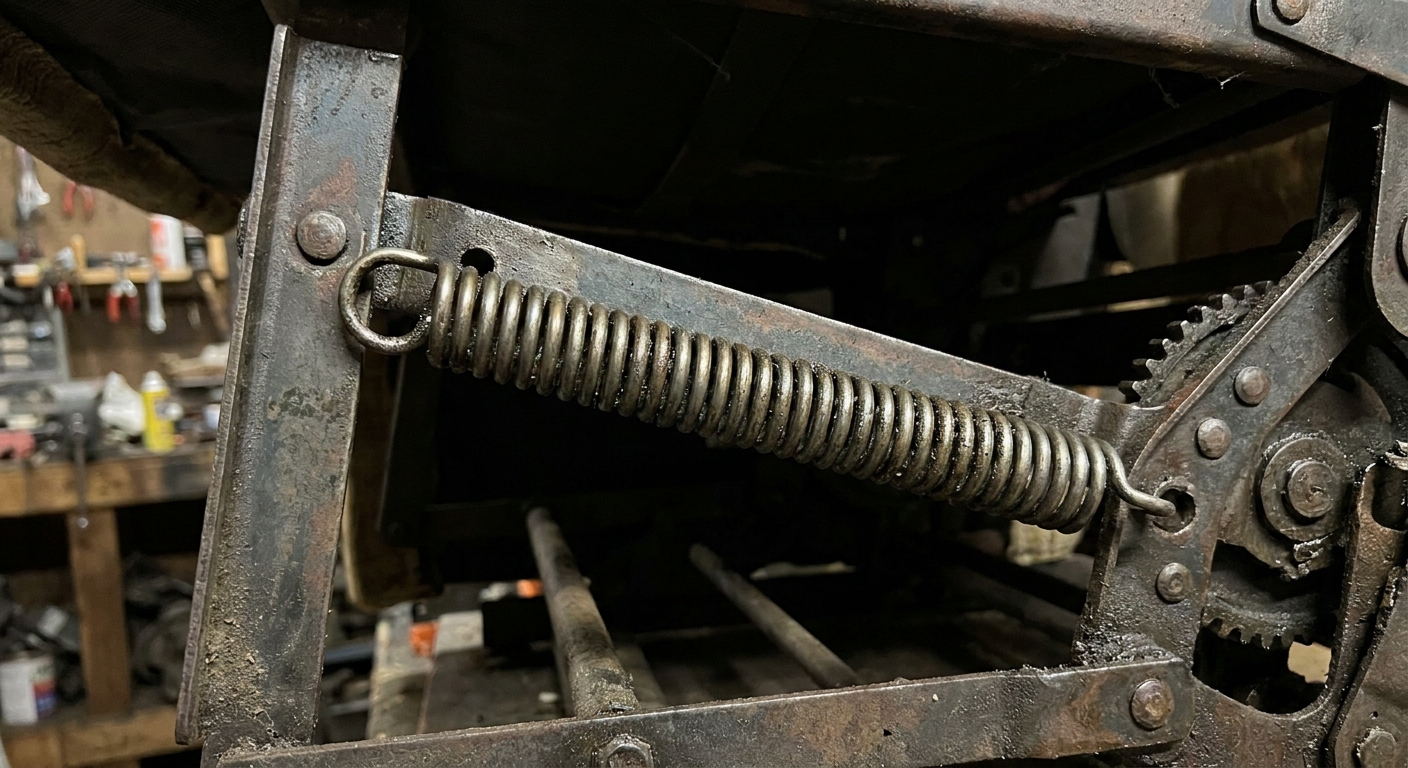
Springs do a lot of the heavy lifting in a manual footrest. When they weaken, the footrest may feel heavy, hesitate mid-way, or fail to snap into the up position.
Signs a spring is the culprit
- The footrest used to pop up easily, and now it takes effort.
- It rises, but won’t reach the final lock point unless you kick it up.
- You see a spring that looks stretched, bent, or hanging at an odd angle.
Important: Do not attempt to unhook or re-hook high-tension springs unless you have the right tools and experience. Springs can release with real force. If a spring is visibly damaged, that is a solid “call a pro” moment.
What success looks like: the footrest feels assisted again and reaches the lock point without extra muscle.
Power recliners: easy checks
Power footrests add another layer: the motor and controller have to know when to stop and how hard to push. Depending on the model, this might be handled by internal actuator limits, external limit switches, or controller behavior (like sensing load). So if it stops short, drifts, or refuses to hold, it is not always “stiff joints.”
Try these before assuming the motor is dead
- Check the power supply and connections: unplug and replug for a brief power cycle. Confirm the transformer is firmly seated and the cord is not pinched under the base.
- Check the hand control cable: make sure the plug from the remote or side switch is fully seated and not partially pulled out or pinched.
- Look for a “click then stop” pattern: that can indicate a loose connector or a control issue.
- Test the remote or side switch: if one direction works but the other does not, the switch could be failing.
- Listen for motor strain: a humming motor with no movement can indicate a jam or a failing actuator.
- Battery backup (if you have one): some models include a battery pack for outages. A weak or leaking pack can cause odd behavior. Disconnecting it temporarily (per the manual) can be a useful test.
About limit behavior: many actuators have internal limit settings rather than a visible switch, but some use external switches or a controller to stop travel. If the footrest stops at a slightly different spot each time, or stops short and then works later, that can point to an actuator, controller, or connection issue.
Because electrical troubleshooting can get brand-specific fast, we cover broader recliner power issues here: recliner won’t recline troubleshooting.
Lubrication: what helps
I love a good fix that involves making something glide quietly again, but recliners are picky. The wrong lubricant can attract grit, soften plastics, or migrate into upholstery. If you have the manual, follow the manufacturer’s recommendation first.
Do lubricate
- Metal pivot points where two metal pieces rotate.
- Scissor joints that squeak, after debris is removed.
Use
- Dry PTFE (often a safe bet) when you want less residue.
- Silicone spray lightly, only if recommended for your mechanism and you can control overspray.
- White lithium grease sparingly on metal-to-metal pivots if you can keep it controlled.
Do not use
- WD-40 as your “lubricant”: it is a great water displacer and cleaner, but it tends to attract dust and grit over time. If you use it to clean, follow up with a proper lubricant once it is dry.
- Heavy oils that drip and collect dirt.
Do not lubricate
- Lock teeth, pawls, or latch faces: lubricant can make them slip, which is exactly what you are trying to prevent.
- Cables and plastic housings unless the manufacturer recommends it.
How to apply: Put a small amount on a rag or precision nozzle, then move the footrest through its range a few times. Wipe away excess. If it starts dripping, you used too much.
What success looks like: smoother motion and less squeak, without any new slipping at the lock point.
Why forcing it is risky
When you force a stubborn footrest, you often push the mechanism out of alignment. It may hold for a day, then start clicking, grinding, or listing to one side.
- Bent linkage arms can make the footrest sit crooked and rub.
- Stripped fasteners can loosen the whole assembly over time.
- Frame damage can turn a small mechanism repair into a bigger upholstery or structural job.
If your chair is already making grinding or clicking noises, you may want to read our separate guide: recliner grinding or clicking .
When not to DIY
I am all for hands-on home care, but I am also very pro keeping all your fingers.
Call a professional or the manufacturer if:
- The footrest drops suddenly with weight, even after cleaning and leveling.
- You see cracked metal, a broken spring, or a bent scissor link.
- You see a pivot pin migrating out or you cannot confirm a missing clip type and replacement.
- The recliner feels unstable or the base rocks.
- A power recliner smells hot, trips a breaker, or the transformer gets unusually warm.
- You have to put your body weight into it to get any movement.
Helpful info to gather before you call: brand, model number (often under the seat), whether it is manual or power, and a short video of the footrest trying to deploy and then dropping.
A gentle reset
If nothing looks obviously broken and the footrest is just acting out of sorts, try this calming little reset:
- Clear the area and ensure the chair is level.
- For power recliners, do a brief power cycle by unplugging and reconnecting.
- Cycle the footrest slowly through its full range 3 to 5 times.
- Listen for the moment it should lock. If that moment never happens, stop forcing and move to service or parts replacement.
A recliner should feel like a comforting hug, not a wrestling match. With a few careful checks, you can often pinpoint whether you are dealing with a simple jam or a true latch and spring issue that needs a more serious repair.