Quiet Luxury Living Room on a Budget

Clara Townsend
Clara Townsend is an interior stylist, vintage furniture enthusiast, and the creative voice behind Velvet Abode. With over a decade of experience transforming both cramped city apartments and sprawling fixer-uppers, she believes that a beautiful home is built on personal stories rather than massive budgets. When she isn't hunting for the perfect brass sconce at a local flea market, she can usually be found rearranging her living room for the third time this month.
Quiet luxury is not about logo pillows or a room that looks like nobody lives there. It is that soft, confident feeling you get when everything is calming, tactile, and intentional. Think: a linen sofa that looks better slightly rumpled, a wool throw that feels substantial in your hands, and lighting that makes everyone look like they slept eight hours.
The good news is you can get the vibe without the price tag. This style is less about buying “designer” and more about editing, upgrading textures, choosing fewer things with better presence, and getting the proportions right.
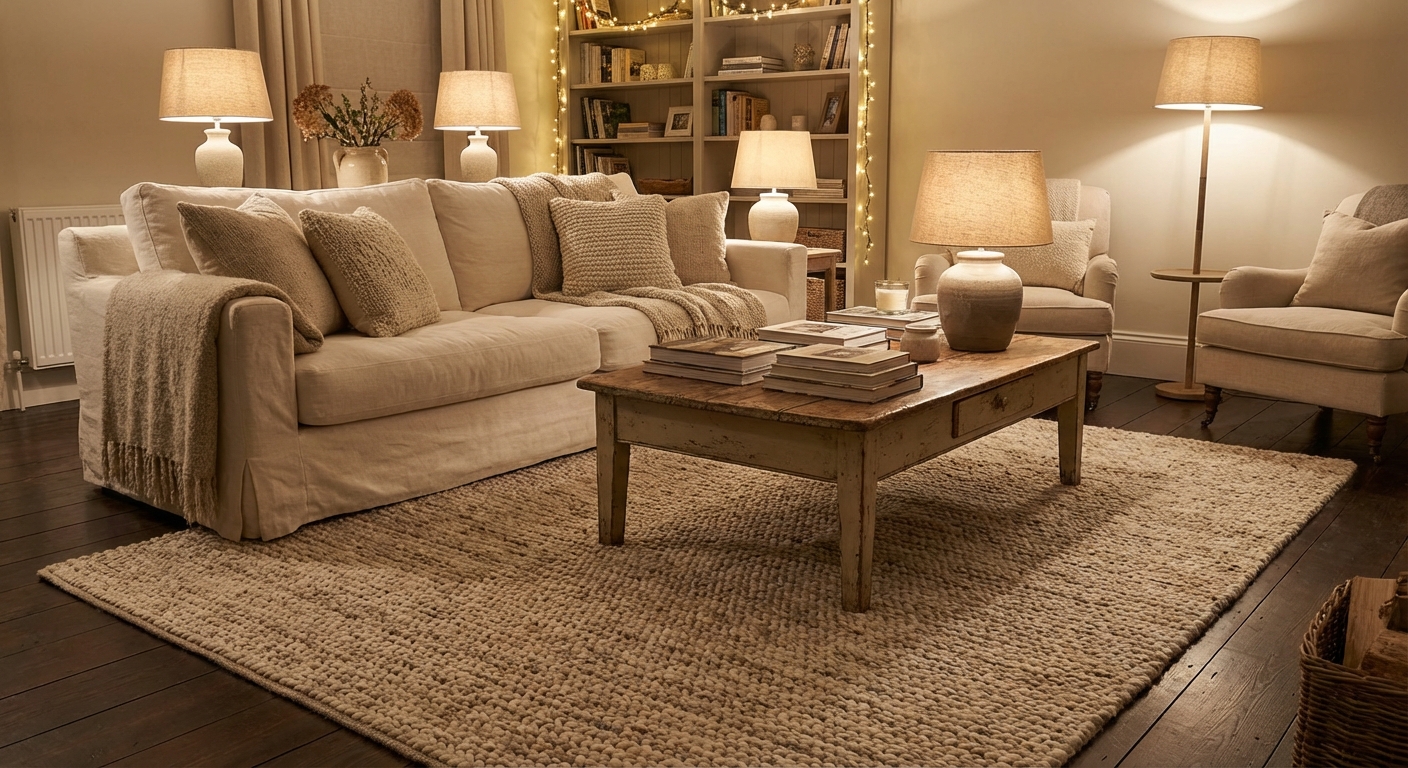
What it looks like
Before you buy anything, let’s pin down what you are chasing. A quiet luxury living room usually has:
- Muted, layered neutrals instead of high-contrast color blocking
- Natural materials like linen, cotton, wool, wood, stone, leather, and brass
- Low-shine finishes that feel soft and grown-up
- Negative space so the room can breathe
- Quality over quantity with a few pieces that carry the room
- Warm, layered lighting that flatters everything
If your living room currently feels busy or mismatched, do not worry. This is often an editing project first and a shopping project second.
Calm color story
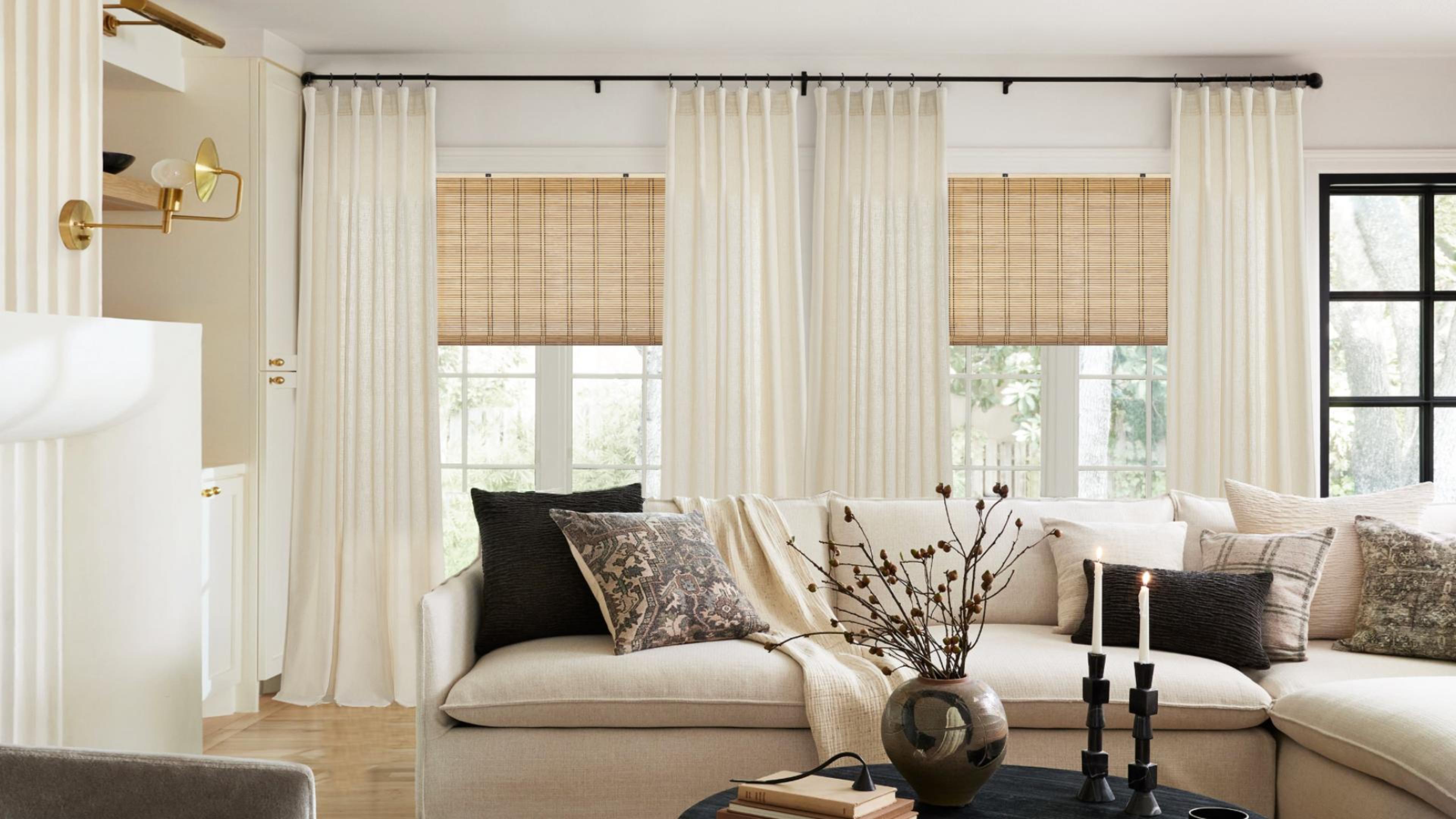
The fastest way to signal the look is a restrained palette. You want your walls, big upholstery pieces, and rug to live in the same family, with gentle contrast.
Pick one base neutral
Choose one of these as your anchor and repeat it at least three times around the room (sofa, curtains, rug, and pillows):
- Warm ivory (creamy, not stark white)
- Greige (a beige-gray that plays nicely with both warm and cool tones)
- Taupe (quiet, earthy, forgiving)
- Mushroom (soft, moody neutral that can read elevated quickly)
Use undertones for contrast
Instead of adding a bright accent color, add depth with cocoa brown, smoke gray, muted olive, or inky navy used sparingly. The contrast should feel like a whisper, not a shout.
Budget move: If repainting is not happening, bring your base neutral in through curtains, a rug, and a slipcover or throw. Your eye reads the “field” color first.
Texture does the heavy lifting
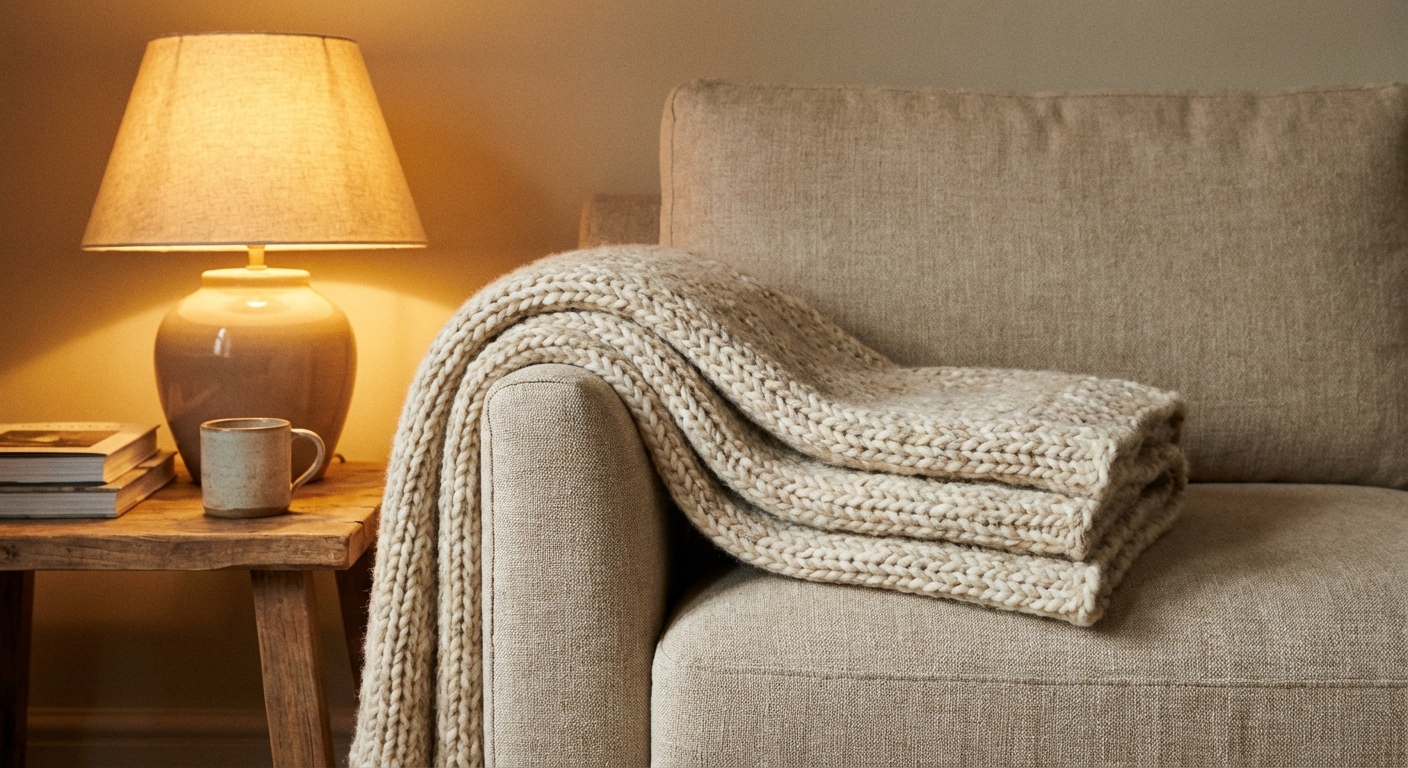
If you only remember one thing, let it be this: the “expensive” feeling is mostly texture. Texture gives you depth even when the pieces are affordable.
A simple texture stack
- Something nubby: bouclé pillow, looped wool rug, or a chunky knit throw
- Something smooth: velvet cushion, crisp cotton cushion covers, or a polished wood surface
- Something matte and relaxed: linen curtains, linen blend slipcover, or washed canvas
- Something with patina: vintage brass, aged wood, antique mirror, or worn leather
My favorite budget trick: Upgrade what you touch first. A beautiful throw and two substantial pillow covers do more than a cart full of small decor.
Affordable materials that still look elevated
- Linen blend (often drapes nicely, but quality varies, so check weight and lining)
- Wool blend rug or a flatweave with a wooly look
- Real wood veneer over particle board when possible
- Brushed brass over shiny gold
Lighting glow-up
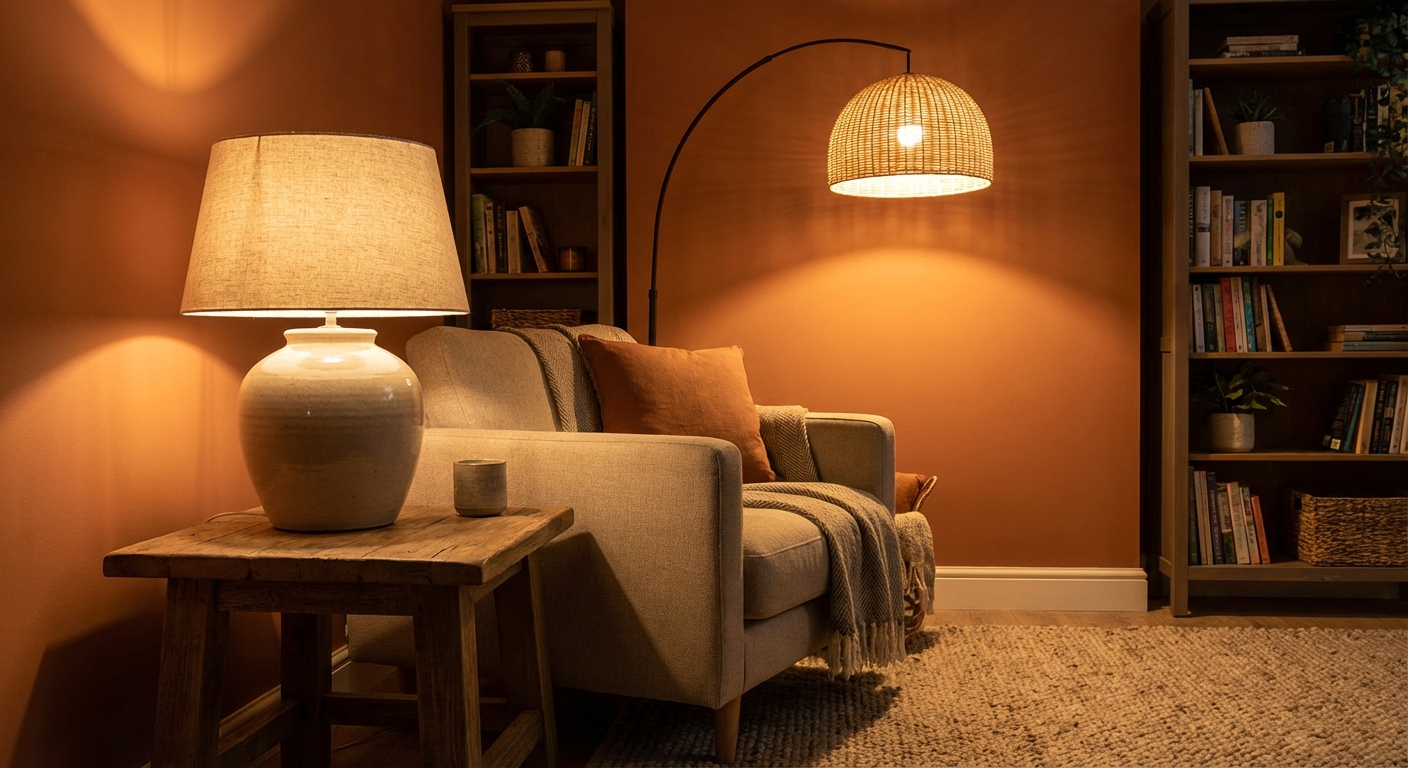
Lighting is where budget rooms often tell on themselves. Rooms with this vibe rarely rely on a single overhead light. They glow from multiple points, low and warm, like candlelight but practical.
A helpful 3-light rule
A useful rule of thumb is three light sources in the living room, ideally at different heights:
- Table lamp near the sofa
- Floor lamp for a reading corner
- Accent light like a small lamp on a console, picture light, or plug-in sconce
Warm bulbs, as a starting point
Look for 2700K (warm white) as a baseline. If your room is very beige and you want it to feel a touch more “hotel,” you can try 3000K. Shade material, paint undertones, and daylight all affect how bulbs read, so test one bulb in the room before you commit.
Budget move: Add dimmers without rewiring using plug-in dimmer switches for lamps. This look is, in many ways, a dimmer setting.
Scale and layout
Quiet luxury lives or dies on proportion. You can have beautiful pieces, but if they are floating, too small, or jammed together, the room will not feel calm.
Quick spacing checks
- Rug size: Aim for at least the front legs of the sofa and chairs on the rug. A too-small rug is the fastest way to make a room feel temporary.
- Coffee table distance: Keep it close enough to use, roughly 14 to 18 inches from the sofa edge.
- Curtain length: Let panels kiss the floor, or hover just above it. Hang the rod high to stretch the walls upward.
- Walkways: Leave clear paths so nothing feels tight or cluttered.
Spend vs save
When you are trying to look elevated on a budget, you cannot spread your money evenly. Put your dollars where the eye lands and where your body feels it.
Worth spending a bit more
- Rug (it sets the tone, especially in neutral rooms)
- Sofa upholstery or sofa cover (the largest visual surface)
- Lighting (makes everything else look better)
- One solid wood vintage piece (coffee table, sideboard, or side table)
Easy places to save
- Frames (simple, thin, and consistent is the secret)
- Decor objects (thrifted ceramics, stacked books, found bowls)
- Side tables (a vintage pair rarely costs what you think it will)
- Throw pillows (buy covers, not inserts, and upgrade inserts slowly)
A rule I love: fewer, heavier, better. A single stoneware bowl on a coffee table looks calmer than eight little trinkets.
Vintage that feels timeless
This is my happy place. Vintage pieces bring story, patina, and that unteachable sense of permanence. The trick is choosing shapes and finishes that feel classic, then letting them coexist with modern basics.
What to hunt for
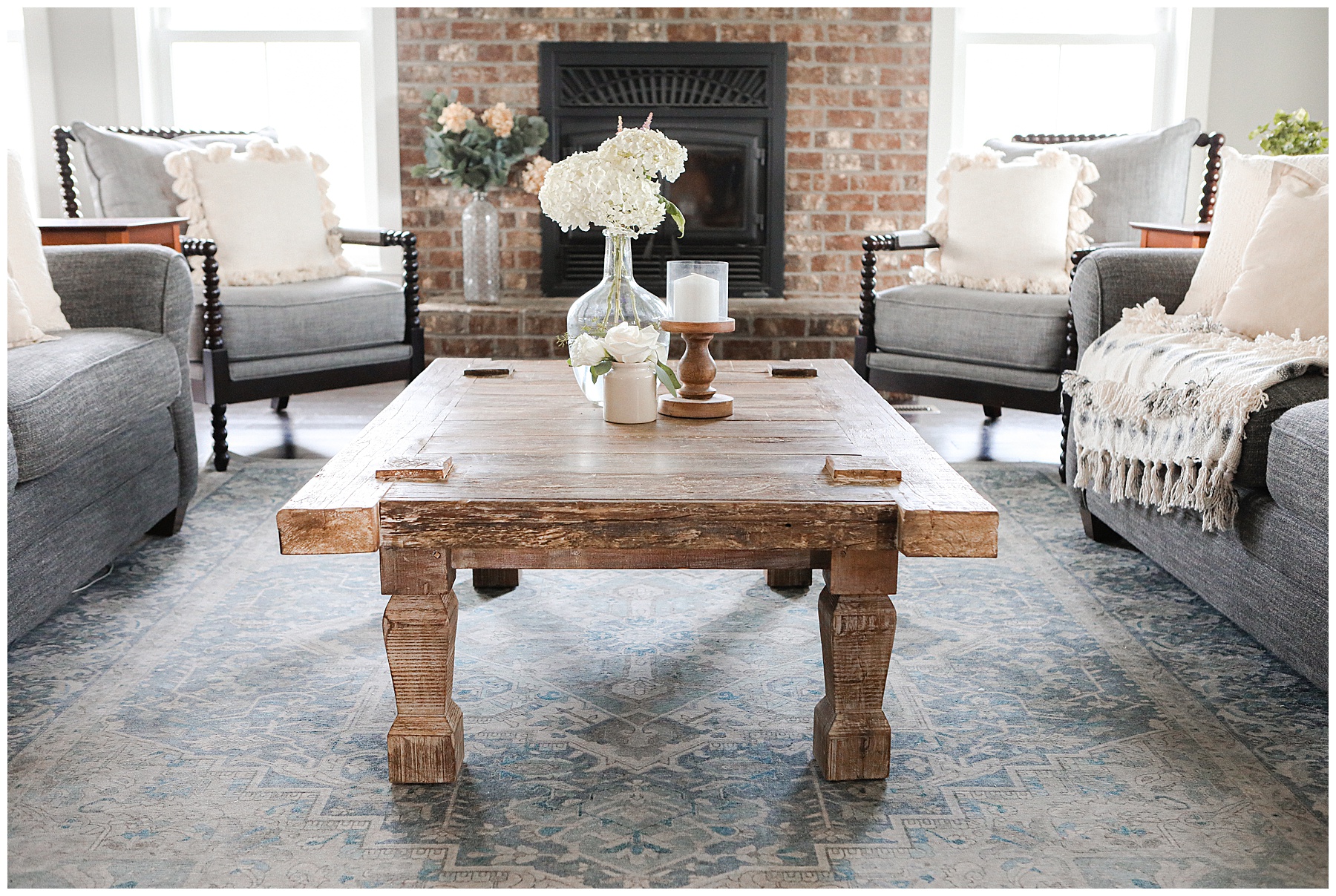
- Solid wood coffee table with simple lines and honest wear
- Vintage brass floor lamp or a ceramic table lamp with a linen shade
- Antique or vintage mirror with a thin frame and soft aging
- Wool blanket in camel, cream, charcoal, or muted plaid
- Pair of matching frames for instant polish
Quick checks before you buy
- Stability: does it wobble or feel solid?
- Proportion: will it look grounded next to your sofa?
- Finish: can you live with the wear, or can it be cleaned and conditioned?
My favorite mixing tip: Let the vintage piece be the “soul” and keep the surrounding items simple. A modern sofa plus a vintage wood table is a classic pairing.
Style, but keep it simple
Styling is edited, but it is not sterile. The room should still feel like you live there, just with fewer visual interruptions.
Coffee table formula
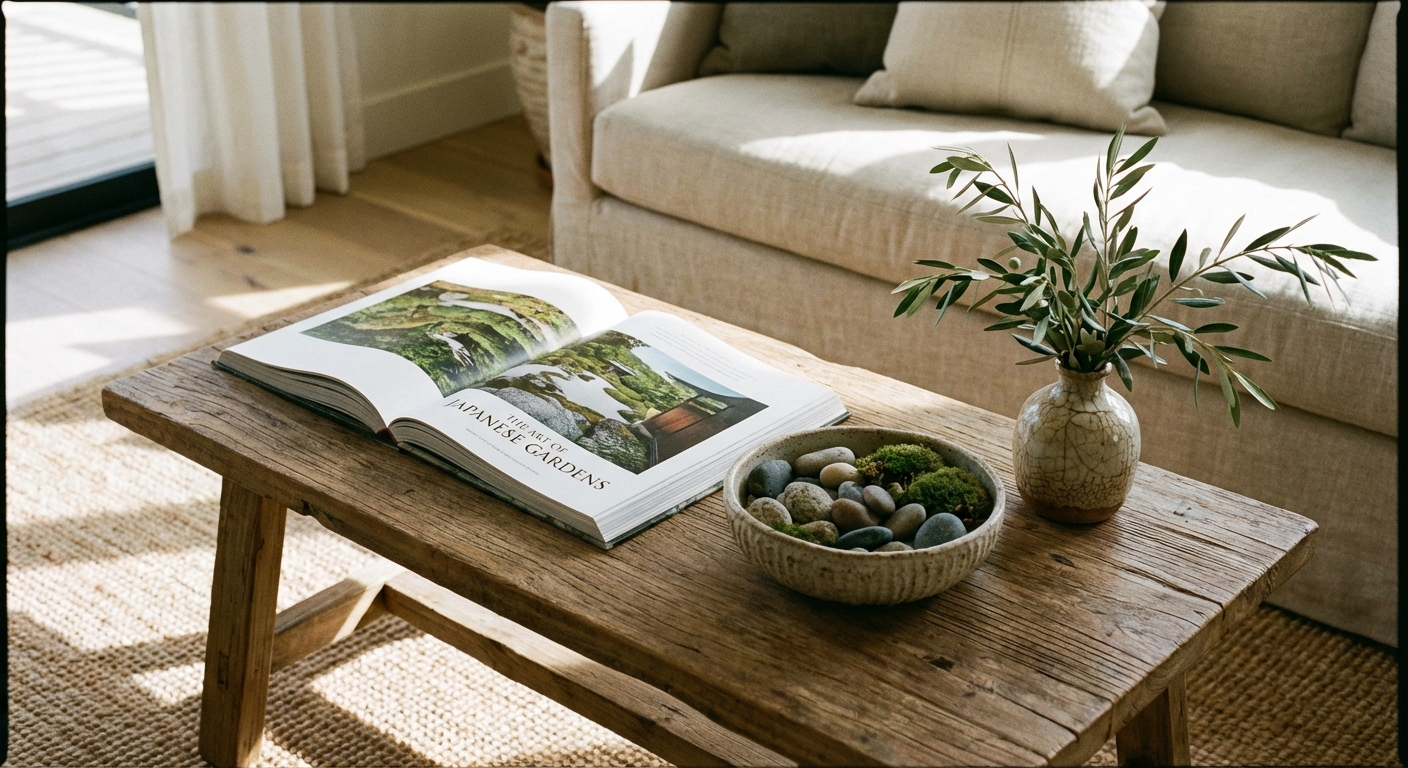
- One tray or large book to anchor the arrangement
- One organic object (a branch in a vase, a bowl of pears, an olive tree, or olive-branch look)
- One tactile piece (stoneware bowl, wooden box, linen coasters)
Keep the height variation gentle and leave actual empty space. Empty space is the design flex nobody talks about.
Art that feels confident
Instead of filling every wall, choose one larger piece or a small set that shares a palette. Black-and-white photography, muted landscapes, and simple line drawings work beautifully. Use consistent frames, and hang art a little lower than you think. The gallery-height rule can feel too high in many homes, so adjust for your ceiling height and where you actually sit.
Common mistakes
- Undersized rug: makes everything look like it is floating
- Cold bulbs: 4000K and up can turn neutrals flat and gray
- Too many small decor items: visual noise adds up fast
- Shiny synthetics: high gloss and slick polyester often read cheaper than simple matte textures
- Cluttered surfaces: if every table has something on it, nothing feels intentional
Budget game plan
If you want the quickest path, here is the order I would tackle it in a real home, with real bills.
- Edit first: remove anything that feels loud, overly shiny, or overly themed
- Choose a base neutral: repeat it across curtains, rug, and pillows
- Upgrade lighting: add two lamps, warm bulbs, and a plug-in dimmer
- Add texture: wool, linen, matte ceramics, aged metals
- Bring in one vintage anchor: wood table, mirror, or lamp
- Style simply: fewer objects, larger scale, more breathing room
Realistic budget examples
- $50 to $150: two warm bulbs (2700K), a plug-in dimmer, and linen-look pillow covers
- $150 to $350: linen-look curtain panels plus a simple rod, hung high
- $250 to $600: a larger neutral rug (often the biggest visual upgrade)
- $200 to $400: a vintage solid wood coffee table or side table (thrifted or marketplace)
Keep it livable
The most luxurious rooms I have been in were not the most expensive. They were the ones that felt deeply considered, and still worked for real life. If you have kids, pets, or both, you can absolutely do this.
- Performance fabrics: look for tightly woven upholstery and washable covers when possible
- Slipcovers: a well-fitted, matte slipcover can be a lifesaver and still look tailored
- Wool rug care: vacuum regularly and spot clean quickly, and consider a low-pile wool blend if shedding worries you
A little worn leather. A lamp that casts the kind of light that makes you want to put on jazz and stir something warm on the stove. A coffee table with a scratch that has a story.
If you tell me what you already have in your living room and what you want to keep, I can help you pick the best upgrades for your space.