Portable Dishwasher Hookups for Renters

Clara Townsend
Clara Townsend is an interior stylist, vintage furniture enthusiast, and the creative voice behind Velvet Abode. With over a decade of experience transforming both cramped city apartments and sprawling fixer-uppers, she believes that a beautiful home is built on personal stories rather than massive budgets. When she isn't hunting for the perfect brass sconce at a local flea market, she can usually be found rearranging her living room for the third time this month.
A portable dishwasher is one of my favorite “small luxury” upgrades for renters because it gives you that calm, reset-the-kitchen feeling without remodeling a thing. But the hookup can get… fussy. The two usual villains are mismatched faucet threads and sneaky little leaks that only show up once the machine is running.
Let’s make this easy, clean, and reversible, so your kitchen stays spotless now and your faucet looks untouched on removal day.
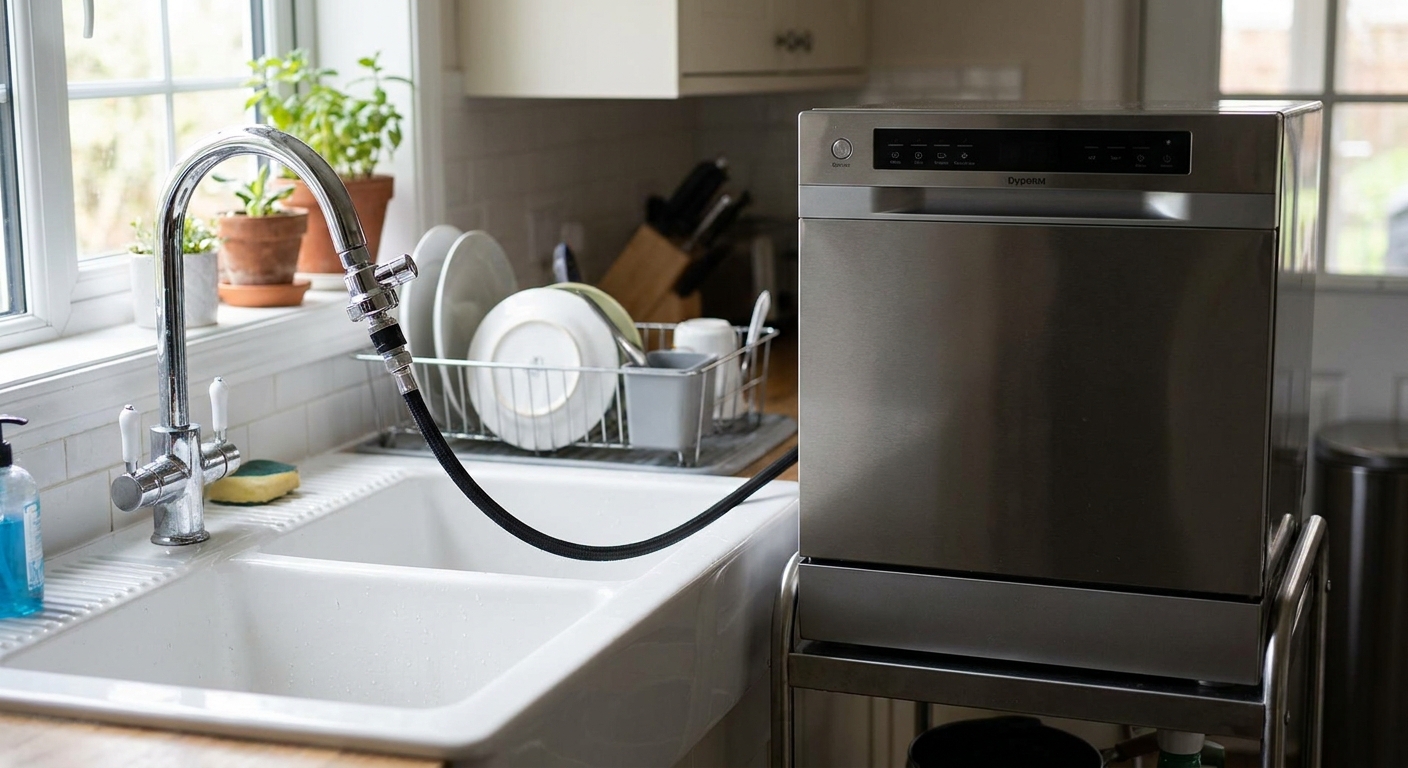
Before you buy anything: the 3-minute faucet check
Portable dishwashers typically connect to your kitchen faucet where the aerator normally lives. That means your success depends on one tiny detail: threading.
Step 1: Identify your faucet type
- Standard faucet with a removable aerator: best case scenario. This is what portable units are designed for.
- Pull-down or pull-out spray faucet: sometimes possible, often annoying. Many have nonstandard ends or hidden aerators that do not play nicely with universal adapters.
- Fancy “laminar flow” or designer faucet: may have proprietary parts. You can still make it work sometimes, but it becomes a parts-matching exercise.
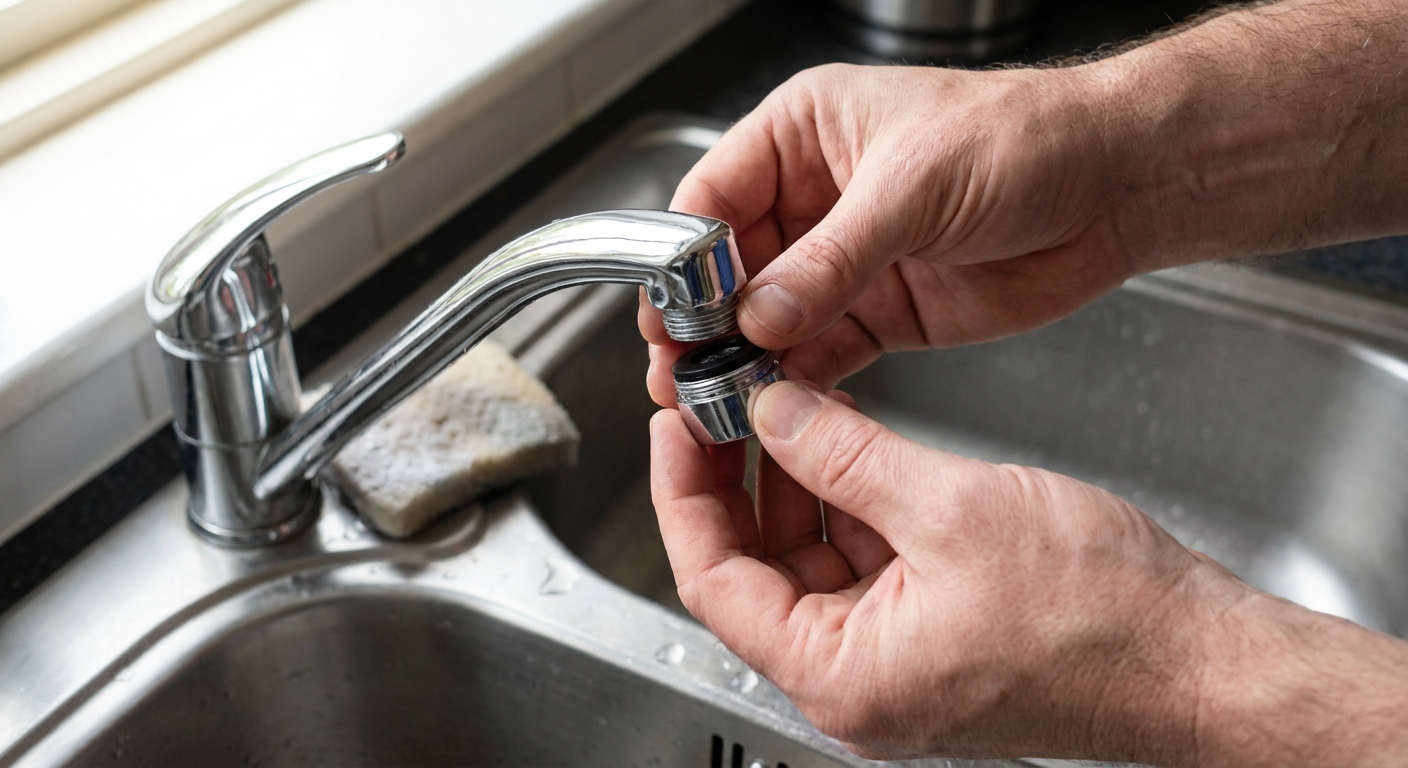
Step 2: Remove the aerator gently
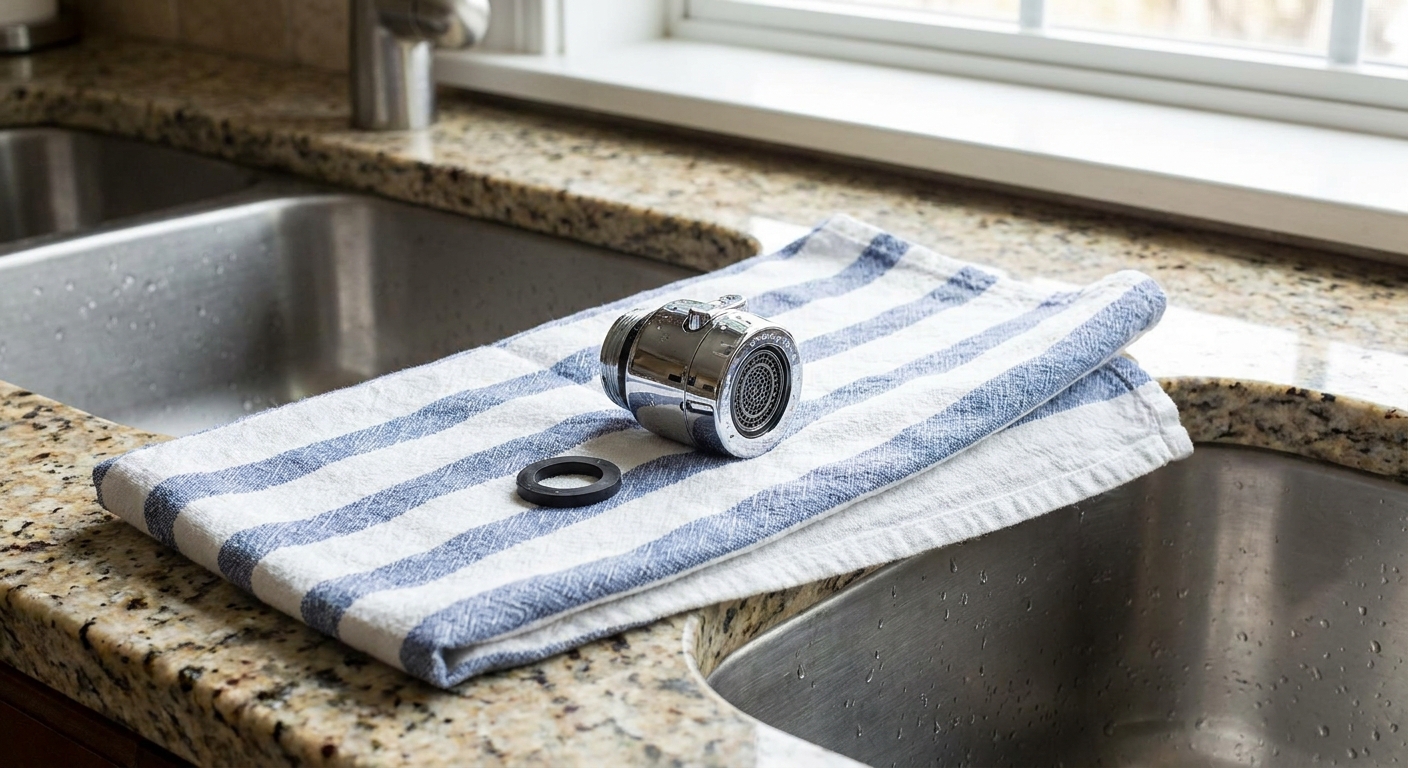
Put a towel in the sink first, then use your fingers if you can. If it is stuck, use channel-lock pliers over a cloth so you do not scar the finish. If you have an aerator key, even better.
Step 3: Check if your faucet is male or female threaded
- Male threads are on the outside of the faucet tip.
- Female threads are inside the faucet tip.
Portable dishwasher kits often assume a common thread, but “common” is doing a lot of work here. Which brings us to the most frequent renter headache.
Aerator threading pitfalls (and how to avoid the spiral)
If you have ever stood in the plumbing aisle holding three adapters and your last shred of patience, you are not alone. Faucet aerators come in different diameters and thread patterns, and the wrong match will either not screw on at all or will feel like it fits and then leak the second water pressure hits.
The pitfalls I see most often
- Cross-threading: the adapter goes on crooked and chews up the threads. If it does not spin smoothly with fingertip pressure, stop.
- Metric vs. standard sizing: many modern faucets use metric aerators. A standard adapter may “almost” fit.
- Hidden or recessed aerators: you may need a special key, and the thread type can be less obvious.
- Pull-down faucets with integrated spray heads: the end can be shaped in a way that makes adapter seating imperfect.
Your best renter-friendly strategy
Bring the aerator with you to match it, or order a thread adapter set that includes multiple common sizes. Keep it all together in a labeled bag so you can reinstall the original parts later.
If your portable dishwasher comes with a proprietary quick-connect, look up the manual and confirm what thread it expects before forcing anything. “Hand-tight only” is your friend here.
Parking and stability
Portable dishwashers are not just heavy. They are heavy in motion. When the pump kicks on, you can get vibration. When you open the door, the center of gravity shifts forward. In small rental kitchens, that can mean counter dents, cabinet dings, and a machine that slowly “walks” away from where you parked it.
Make it stable (without scuffing anything)
- Lock the wheels if your model has wheel locks. If it does not, slide a non-slip rug pad under the wheels where it parks.
- Protect the top surface if your unit has a butcher-block style top and you use it for light prep. A simple cutting board or silicone mat prevents little grit scratches from turning into a permanent “shadow ring.”
- Mind the door drop: avoid loading with the door fully supported by the counter edge. If your kitchen is tight, pull the unit forward a few inches so the door can open without levering against anything.
Quick placement check
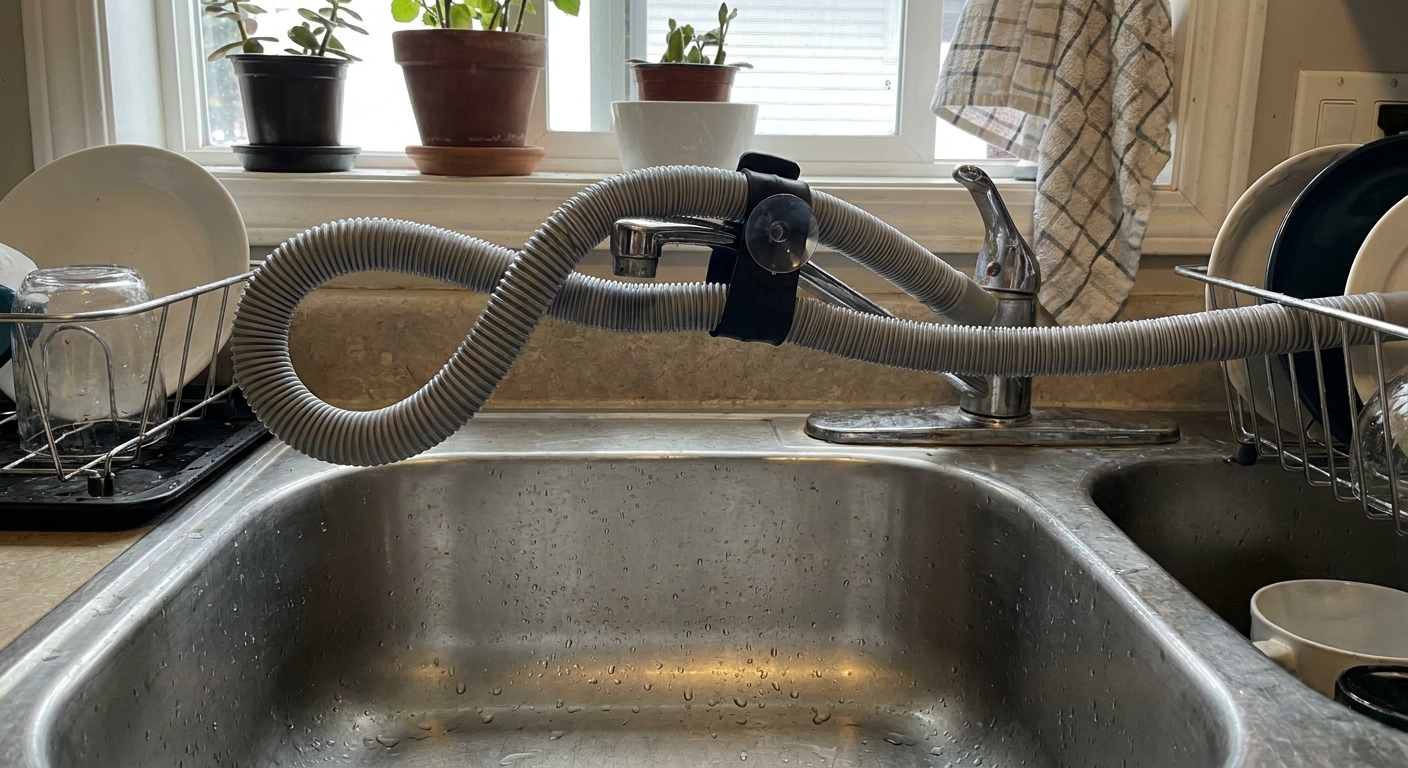
Park it close enough that the hose reaches the faucet comfortably, but not so close that the hose kinks. Kinks are a secret source of leaks because they strain the connector and gaskets.
Hookup basics: adapter, quick-connect, and hot water
Most portable units use a quick-connect collar that snaps onto an adapter screwed into your faucet where the aerator was.
Leak-proofing checklist
- Confirm the rubber washer is present inside the adapter or quick-connect. Missing washer equals guaranteed drip.
- Clean the threads on the faucet tip. A little mineral buildup can prevent a tight seal.
- Hand-tighten first, then snug. Over-tightening can deform the washer and cause a leak later.
- Run water briefly and watch: turn the faucet on for 10 seconds after connecting so you can spot drips before a full cycle.
The one step people miss: turn on the hot water
When you are ready to start the dishwasher, turn the hot water tap fully on and leave it on for the whole cycle (or however your manual instructs). Most portable dishwashers are designed to fill from your faucet’s hot water supply, and the machine assumes that hot water is available. If you run it on cold by accident, performance usually tanks and cycle times can get weird.
If you need extra help sealing threads, use PTFE tape only on threaded connections that are designed for it, and keep it minimal. Many aerator-style connections seal with a washer, not with thread tape, so tape can actually make the fit worse if it prevents the washer from seating.
Drain routing without floods
This is the part renters worry about most, and honestly, it is worth respecting. Portable dishwashers drain into the sink through the same hose assembly, and if the hose slips or the sink clogs, you can get a messy surprise.
Route the drain like you are babysitting it
- Seat the drain outlet securely in the sink basin, not perched on the rim. Many quick-connect assemblies have a shaped hook or clip. Use it.
- Avoid sharp bends in the hose. Tight curves slow drainage and can cause backing up.
- Keep the sink clear before running a cycle. No bowls, no colanders, no mystery pile of utensils that could block flow.
- Check your garbage disposal if you have one. A partially clogged disposal slows draining and raises water level fast.
A simple flood-prevention habit
The first time you run a cycle after any change, stay nearby for the first 5 to 10 minutes. Watch the connection at the faucet and watch the drain outlet into the sink. If anything is going to misbehave, it usually does it early.
Common leak spots and fast fixes
1) Dripping at the faucet adapter
- Cause: wrong thread size, cross-threading, missing washer, or mineral buildup.
- Fix: remove it, clean threads, reseat washer, and reattach straight. If it still drips, you likely need a different thread adapter.
2) Leaking at the quick-connect collar
- Cause: collar not fully engaged or O-ring inside is worn.
- Fix: disconnect and reconnect until you feel it lock. Inspect for a flattened or cracked O-ring and replace if needed.
3) Water around the bottom of the unit
- Cause: door not closing fully, unit not level, or internal hose issue.
- Fix: check that the unit is level and not rocking. Clean the door gasket and confirm nothing is blocking the latch. If it persists, pause use and consult the manual or service.
4) Sink overflow during draining
- Cause: slow sink drain, clogged disposal, or blocked sink strainer.
- Fix: clear the sink drain first, then run a short rinse cycle while watching the water level.
Removal day: restore the faucet
This is the part I love because it is all about leaving a space better than you found it. Put on a playlist, set out a towel, and treat it like a tiny goodbye ritual.
What to do (in order)
- Turn off the dishwasher and disconnect the quick-connect from the faucet.
- Unscrew the faucet adapter carefully. If it is stuck, use a cloth and gentle plier pressure.
- Rinse and wipe the faucet threads with a soft cloth. If there is mineral buildup, a little vinegar on a cloth helps, then wipe dry.
- Reinstall the original aerator. Hand-tighten, then a tiny snug if needed.
- Run the faucet for 10 seconds to confirm a smooth stream and no drips.
Keep your parts organized from day one
Here is my renter trick: store the original aerator and any special keys in a small zip bag and tape it inside the cabinet under the sink. You will not lose it, and you will not be digging through junk drawers during move-out week.
When it might not be worth it
I am all for making rentals work for real life, but there are a few situations where I recommend pausing before you force it.
- Your faucet has a pull-down head with no compatible adapter and you cannot swap the faucet in a rental.
- You have very low water pressure, which can lead to long fill times and poor cleaning.
- Your sink drains slowly and your landlord is not responsive about plumbing maintenance.
If any of these sound familiar, a countertop dishwasher with a tank fill option or a compact under-sink filtration style setup might fit your space better. Different tool, same peaceful kitchen energy.
Portable dishwasher hookup checklist
- Remove aerator carefully and identify thread type (male vs. female).
- Use the correct faucet adapter and confirm washer or O-ring is in place.
- Hand-tighten, then test for drips before running a full cycle.
- Before starting, turn the hot water fully on and leave it on (per your manual).
- Secure the drain outlet in the sink basin and make sure the sink drains fast.
- Stabilize the unit so it cannot roll, wobble, or bang cabinets.
- Save original faucet parts in a labeled bag under the sink for move-out day.
If you want, tell me your faucet style (standard, pull-down, recessed aerator) and the dishwasher brand or model. I can help you narrow down the adapter route so you are not buying a random pile of parts.