Pocket Door Stuck or Off Track? Renter-Friendly Fixes

Clara Townsend
Clara Townsend is an interior stylist, vintage furniture enthusiast, and the creative voice behind Velvet Abode. With over a decade of experience transforming both cramped city apartments and sprawling fixer-uppers, she believes that a beautiful home is built on personal stories rather than massive budgets. When she isn't hunting for the perfect brass sconce at a local flea market, she can usually be found rearranging her living room for the third time this month.
Pocket doors are the introverts of the doorway world: quietly sliding away until one day they decide they will not be moved. If yours is scraping the floor, wobbling like a shopping cart, refusing to latch, or fully off track, you can usually get it behaving again without turning your rental into a construction site.
I will walk you through renter-friendly checks first, then the fixes that typically solve 90 percent of pocket-door drama. I will also flag the moments where it is smarter to stop before you strip a screw, crack paint, or end up holding a door that weighs more than it looks.
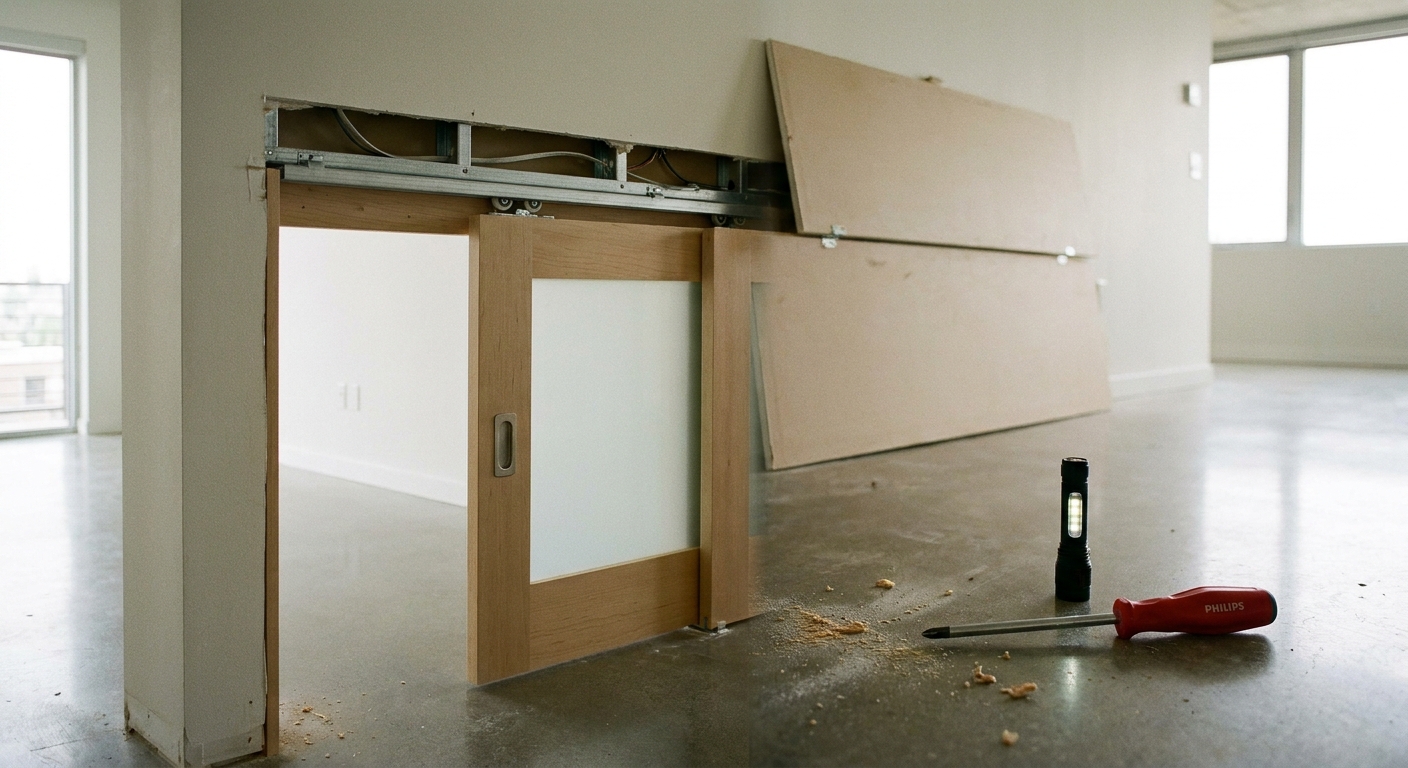
Before you touch anything: quick safety and rental boundaries
What renters can usually do safely
- Clean and vacuum the track area and floor guides.
- Tighten accessible hardware like handle screws, strike plates, and visible guide screws.
- Adjust height using an access slot or removable trim piece if it is clearly designed for adjustment.
- Lubricate lightly with a dry lubricant (not oil) to reduce squeaks and drag.
What to avoid in most rentals
- Removing the entire door frame or casing around the pocket. Many pocket systems are buried behind drywall.
- Drilling new holes into studs, track, or header without permission.
- Forcing stripped screws until the head rounds out. That becomes a bigger repair than the original issue.
- Oil-based sprays (like heavy multipurpose oils) inside the track. They attract dust and turn into gritty paste.
A simple LTV rule for renter fixes
I like using an LTV limit as a gut check: Low Tools + Low Time + Low Visible impact.
- Tools: basic screwdriver, flashlight, vacuum, maybe an Allen key.
- Time: 5 to 45 minutes, not a weekend project.
- Visible impact: no new holes, no removed trim you cannot reinstall, no paint damage.
If the fix is drifting beyond that, it is usually a maintenance call.
Tools you probably already have (and what to buy if you must)
You can do most pocket-door troubleshooting with a very unglamorous lineup.
- Flashlight or phone flashlight
- Vacuum with a crevice tool
- Phillips and flathead screwdrivers
- Small step stool (or a sturdy chair you trust)
- Microfiber cloth
- Dry lubricant: silicone spray labeled “dry” or a PTFE dry lube
- Optional: a 4-foot level (or a small torpedo level)
- Optional: hex keys (some hangers use Allen bolts)
If you are buying only one thing, make it a dry PTFE lubricant. It is the least messy, and it does not collect every dust bunny in your hallway.
Diagnose first: what is your pocket door actually doing?
Stand at the opening and slowly slide the door in and out. Listen and watch for clues.
- Scraping at the bottom: the door is hanging too low, the bottom guide is misaligned, or the floor is rubbing.
- Wobbling side to side: bottom guide issue, loose hangers, or rollers not seated.
- Stops halfway: track obstruction, bent track, or a roller binding.
- Won’t latch: strike plate misaligned, door shifted, or the latch edge is rubbing the jamb.
- Feels like it drops or clunks: roller off track or hanger hardware loose.
If it suddenly got worse after humidity swings (hello, sticky summers), wood doors can swell slightly and start dragging. The fix is often adjustment and lubrication, not sanding. Sanding is a landlord-level choice.
Fix 1: Clean the track area and bottom guide
This is the least exciting fix and also the one that works the most often. Pocket doors live in a dust cave. Hair, plaster dust, pet fur, and tiny bits of paint collect where you cannot see them.
Step-by-step
- Vacuum the opening along the top track area you can reach and the floor near the pocket opening.
- Wipe the door edges with a slightly damp microfiber cloth to remove grime that can rub and squeak.
- Find the bottom guide. Many pocket doors have a small plastic or metal guide at the floor inside the jamb.
- Vacuum and wipe the guide. Look for hair wrapped around it or grit packed into the channel.
- Test slide the door slowly. If it improved even a little, you are on the right track.
Renter note: Avoid spraying cleaner deep into the pocket cavity. Moisture can warp MDF doors and soften drywall edges over time.
Fix 2: Dry-lube the rollers and track (lightly)
If your door squeaks, shudders, or feels gritty, lubrication helps, but only when the track is reasonably clean.
How to do it without making a mess
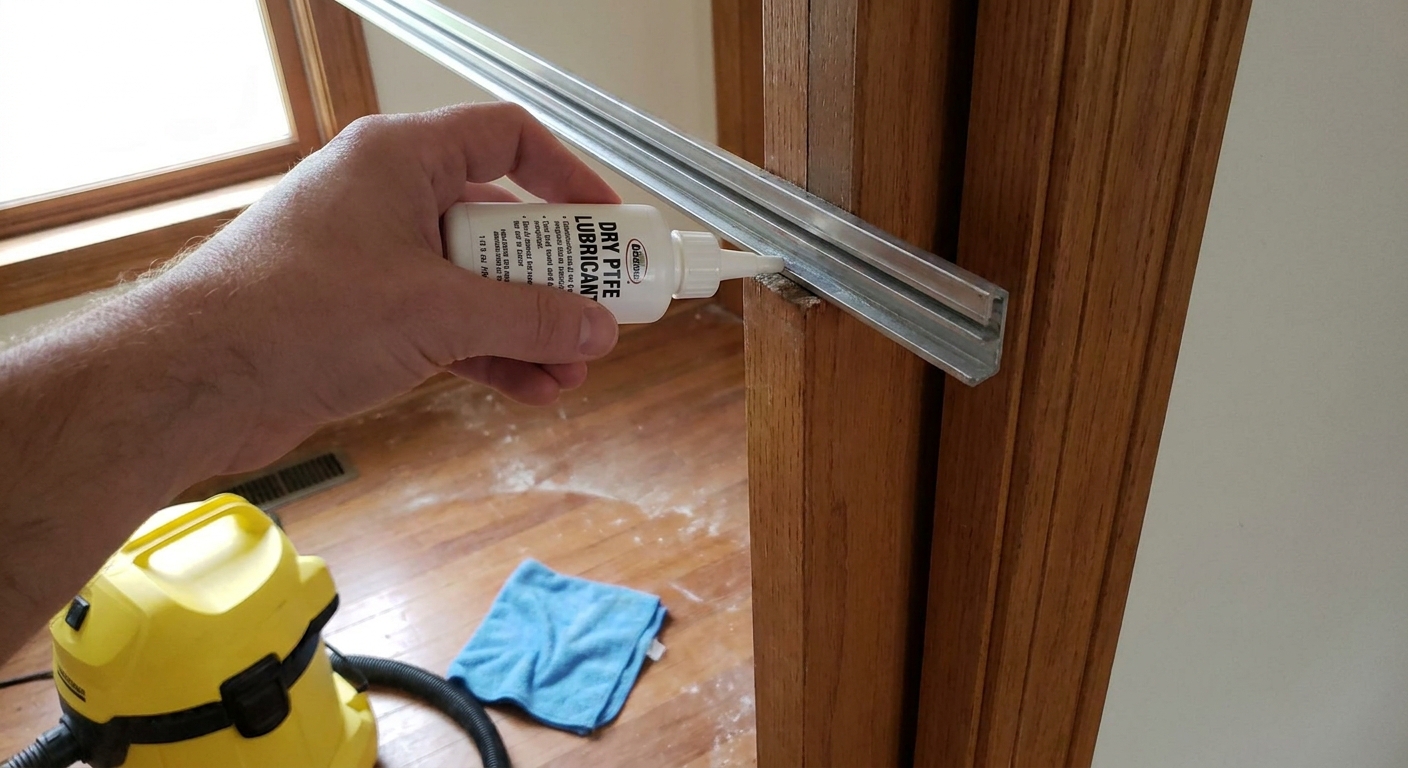
- Choose a dry lubricant (PTFE or dry silicone).
- Place a towel on the floor below the opening to catch any overspray.
- Spray onto a cloth first if your nozzle is wild. Then wipe the cloth along the reachable track lip and the roller area.
- Slide the door back and forth 10 to 15 times to distribute.
- Wipe excess so it does not migrate to painted trim.
Skip grease and heavy oils. They feel great for a day, then collect dust and turn your pocket track into a tiny sandbox.
Fix 3: Tighten what you can see (handles, guides, strike plates)
Before you go hunting for roller adjustments, check the simple hardware that loosens with normal use.
Common tightening points
- Door pull or edge handle: a loose pull can snag and make the door feel “stuck.”
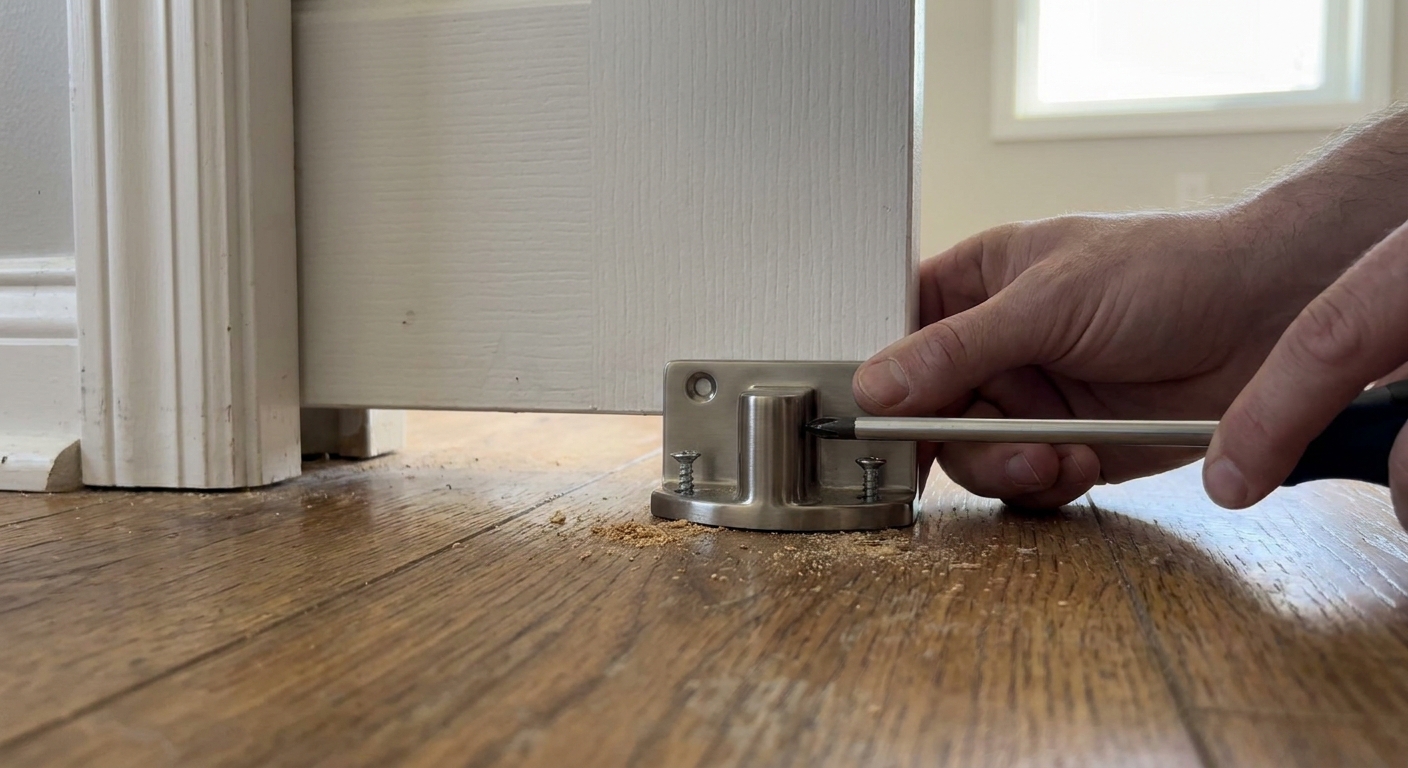
- Bottom guide screws: if the guide wiggles, the door will wobble.
- Strike plate screws: if the latch does not catch, the strike may have shifted.
Stop here if screws spin freely. That means the hole is stripped. In a rental, that is a maintenance request, because the proper fix may involve anchors, dowels, or filling and re-drilling.
Fix 4: Adjust door height if it is dragging
Dragging usually means the door needs a tiny lift. Many pocket-door systems have adjustable hangers at the top, but access varies. Some have a removable head jamb trim piece, others have small access holes.
How to check for an adjustment point
- Look along the top of the opening for a removable trim strip or a small access slot.
- Shine a flashlight up and see if you can spot hanger bolts attached to the top of the door.
- If you cannot see anything without prying painted trim, pause and consider calling maintenance.
If you can access the hanger bolt
- Open the door halfway so you can reach the hanger area.
- Support the door lightly with one hand to reduce strain on the hardware.
- Turn the adjustment nut in small increments (often clockwise raises, but it depends). Do a quarter-turn at a time.
- Test the slide and check for floor clearance.
- Adjust both hangers evenly so the door stays level.
Pro tip: If the latch edge is now rubbing the jamb, you may have raised one side more than the other. Level matters more than perfection.
Fix 5: If the pocket door jumped the track (or feels off-track)
If you felt a sudden drop, hear clicking, or the door is scraping in a new and dramatic way, a roller may have come out of the track or the hanger may be mis-seated.
Try this gentle reset first
- Do not force it closed. That can bend the track or damage the roller.
- Slide the door toward the opening where you have the most visibility and control.
- Look up with a flashlight to see if one roller is hanging lower or angled.
- Apply upward pressure on the door (just enough to reduce the sag) and try sliding slowly to see if it re-centers.
When you should stop and call maintenance
- The door feels like it could fall or the top hardware looks separated.
- You can see a bent track or cracked roller.
- The only way to access the rollers requires removing nailed or painted trim.
Pocket doors can be heavier than they look, and the safest off-track fix often involves removing the door and re-hanging it. That is a maintenance-level job in most rentals.
Fix 6: Latch won’t catch or the lock is fussy
Misaligned latches are common because pocket doors shift slightly over time. The goal is to make the latch meet the strike plate cleanly without shaving paint off the jamb.
Quick checks
- Close the door slowly and watch where the latch hits.
- Look for rub marks on the strike plate or jamb.
- Test with gentle upward lift on the handle edge. If lifting makes it latch, the door is hanging low.
Renter-friendly fixes
- Tighten strike plate screws if the plate has shifted.
- Micro-adjust the strike plate only if the screw holes allow slight movement. Loosen a turn, nudge, re-tighten.
- Adjust door height (see Fix 4) if lifting helps.
Avoid filing or chiseling the jamb in a rental. That is permanent, and it is easy to overdo when you are annoyed and late for work.
When the door drags only at one spot
If the door glides nicely, then hits one stubborn section, you are probably dealing with a track obstruction or a floor issue.
What to look for
- Track obstruction: a screw backing out, dried paint, debris, or a damaged roller.
- Floor swelling: laminate or wood near bathrooms can swell slightly and steal clearance.
- Misaligned bottom guide: the guide may be pinching the door only at part of the travel.
What you can do
- Vacuum and wipe the accessible track and guide again.
- Check the bottom guide alignment. If it is adjustable and visibly crooked, straighten it and retighten.
- Document the spot with a quick phone video if you need maintenance. “It sticks 18 inches before fully closed” is useful information.
Do not strip the screws: renter-safe technique
Stripped screws are where small fixes turn into landlord emails. A few habits help.
- Use the right bit size. A too-small Phillips bit will cam out and chew the head.
- Press in firmly and turn slowly.
- If it resists, stop. A stuck screw can mean paint sealing it or the metal is corroded.
- Try a rubber band trick only for lightly worn heads. If it is already rounded, call maintenance rather than escalating with power tools.
When to escalate to maintenance (and what to say)
Call maintenance if any of these are true:
- The door is off track and unstable, or you suspect it could fall.
- You see cracked rollers, bent track, or broken hanger hardware.
- The door requires trim removal to access adjustments.
- Hardware screws are stripped or holes are wallowed out.
- The door is scraping badly and adjustment does not fix it.
A simple script you can copy
“Hi, my pocket door is dragging and occasionally feels off track. I cleaned the bottom guide and track and tightened visible hardware, but it is still scraping and won’t latch consistently. Could maintenance check the rollers/hangers and adjust the door height?”
This tells them you did the gentle stuff and points them to the likely fix without sounding like you are diagnosing their job.
Prevent it from happening again
Once you get it sliding smoothly, keep it that way with small habits that feel almost too simple.
- Vacuum the bottom guide when you vacuum the room.
- Close gently. Pocket door hardware hates being slammed.
- Re-lube lightly every 6 to 12 months if it squeaks.
- Watch humidity. If your door swells seasonally, a small dehumidifier nearby can make everything feel less stubborn.
A pocket door in a rental should feel like a quiet glide, not a full-body workout. Start with cleaning and alignment, adjust only what is clearly meant to be adjusted, and let maintenance handle anything that requires disassembly or new holes.