Outdoor Cushion Cleaning and Storage

Clara Townsend
Clara Townsend is an interior stylist, vintage furniture enthusiast, and the creative voice behind Velvet Abode. With over a decade of experience transforming both cramped city apartments and sprawling fixer-uppers, she believes that a beautiful home is built on personal stories rather than massive budgets. When she isn't hunting for the perfect brass sconce at a local flea market, she can usually be found rearranging her living room for the third time this month.
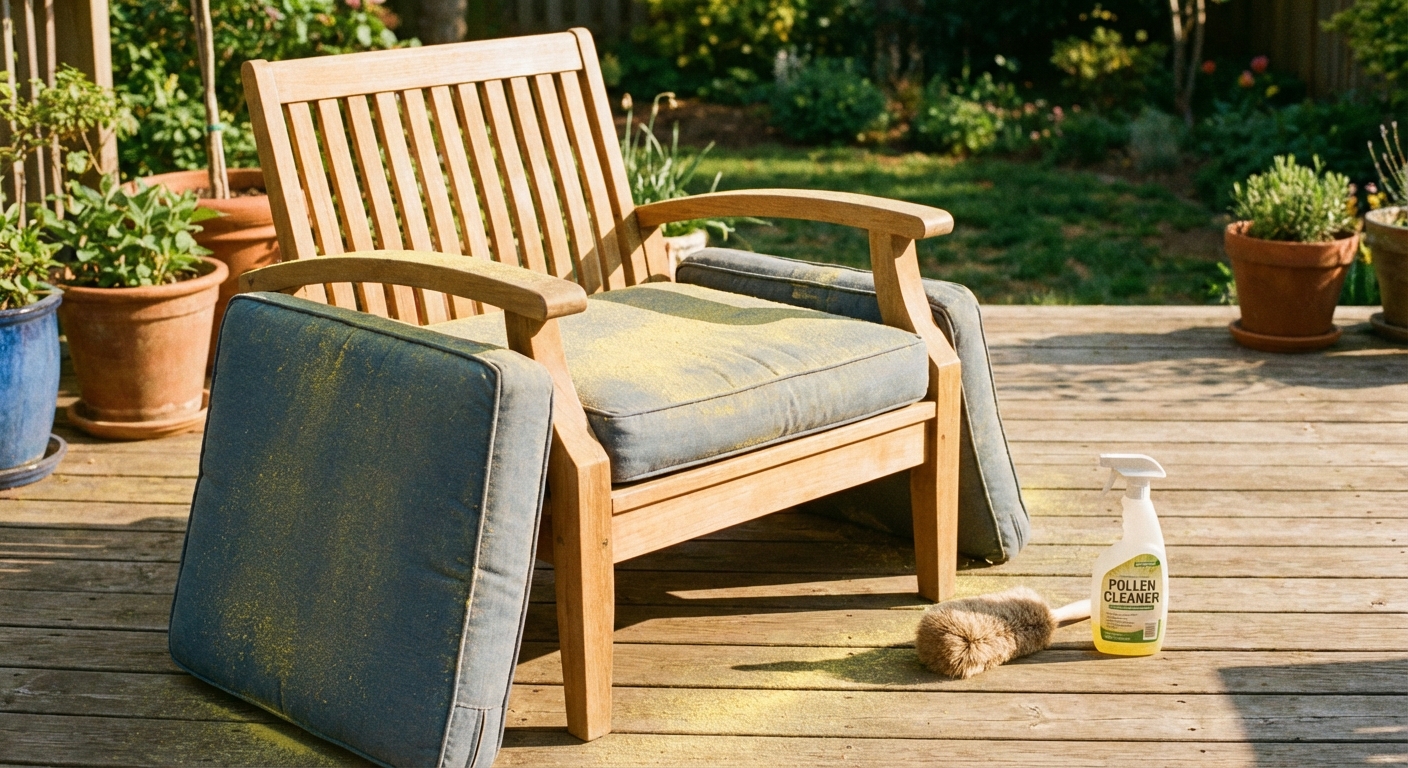
If your patio cushions look a little dull by midsummer, you are not imagining it. Pollen settles like a fine yellow powder, sunscreen leaves invisible grime that turns into gray smudges, and one rainy week can invite that unmistakable mildew smell. The good news is that most outdoor cushion messes are very fixable with the right method for your fabric, a little patience, and one non-negotiable rule before storage: everything must be completely dry.
Know your outdoor fabric first
Before you reach for any cleaner, check the care tag or the manufacturer page for your set. Outdoor cushion covers are usually one of these, and each behaves a bit differently.
Solution-dyed acrylic (for example, Sunbrella)
This is the MVP of outdoor textiles. The color is locked into the fiber, so it resists fading and tolerates stronger cleaning. Many solution-dyed acrylics can handle a diluted bleach solution for mildew, but always confirm on the tag because not every outdoor acrylic is identical.
Polyester (often coated or blended)
Common on budget-friendly sets and patterned cushions. It cleans well but can be more prone to holding onto oily residue from sunscreen and food. Some polyester can be bleach-safe, many are not. When in doubt, use oxygen bleach instead of chlorine bleach.
Olefin (polypropylene)
Olefin is tough, quick-drying, and often used in outdoor rugs and cushions. It is often fairly bleach resistant, but finishes, coatings, and dyes vary a lot by brand. Translation: check the manufacturer guidance and test first. Whatever you use, rinse very thoroughly so you do not end up with that stubborn “grimy film.”
Textilene and sling fabrics
These are woven, vinyl-coated fabrics used for chair seats. They usually do best with gentle soap, a soft brush, and a careful rinse. Avoid abrasive scrubbing or scouring pads, which can scuff the coating and rough up the surface over time.
Quick rule: If you cannot confirm bleach-safe status, assume no chlorine bleach and choose oxygen bleach or a vinegar-based approach instead.
Brushing vs washing
I like to treat outdoor cushion care the way I treat vintage upholstery: start as gently as possible, then level up only if you need to.
When brushing is enough
- Dry pollen dust
- Loose dirt and sandy grit
- Dried leaves and plant debris
How: Take cushions off the furniture. Stand them on edge and use a soft upholstery brush to sweep debris away. Hit seams and welting, where pollen loves to hide. If you have a vacuum with an upholstery attachment, this is a great moment to use it.
When to wash
- Visible stains or dingy overall color
- Sunscreen or food residue
- Mildew spots or musty smell
- End-of-season refresh before storage
How: Start with a gentle soap wash, then spot treat stubborn areas. Mildew is a fungus that feeds on organic dirt and moisture. If you remove the grime and fully dry the cushion, the spots often lift significantly and the smell has a much harder time coming back.
One thing to skip: Pressure washing. High pressure can fray seams, drive grime deeper, and strip protective finishes. If you must use a pressure washer, keep it on a low setting, stand well back, and test on an inconspicuous area first.
The basic wash routine
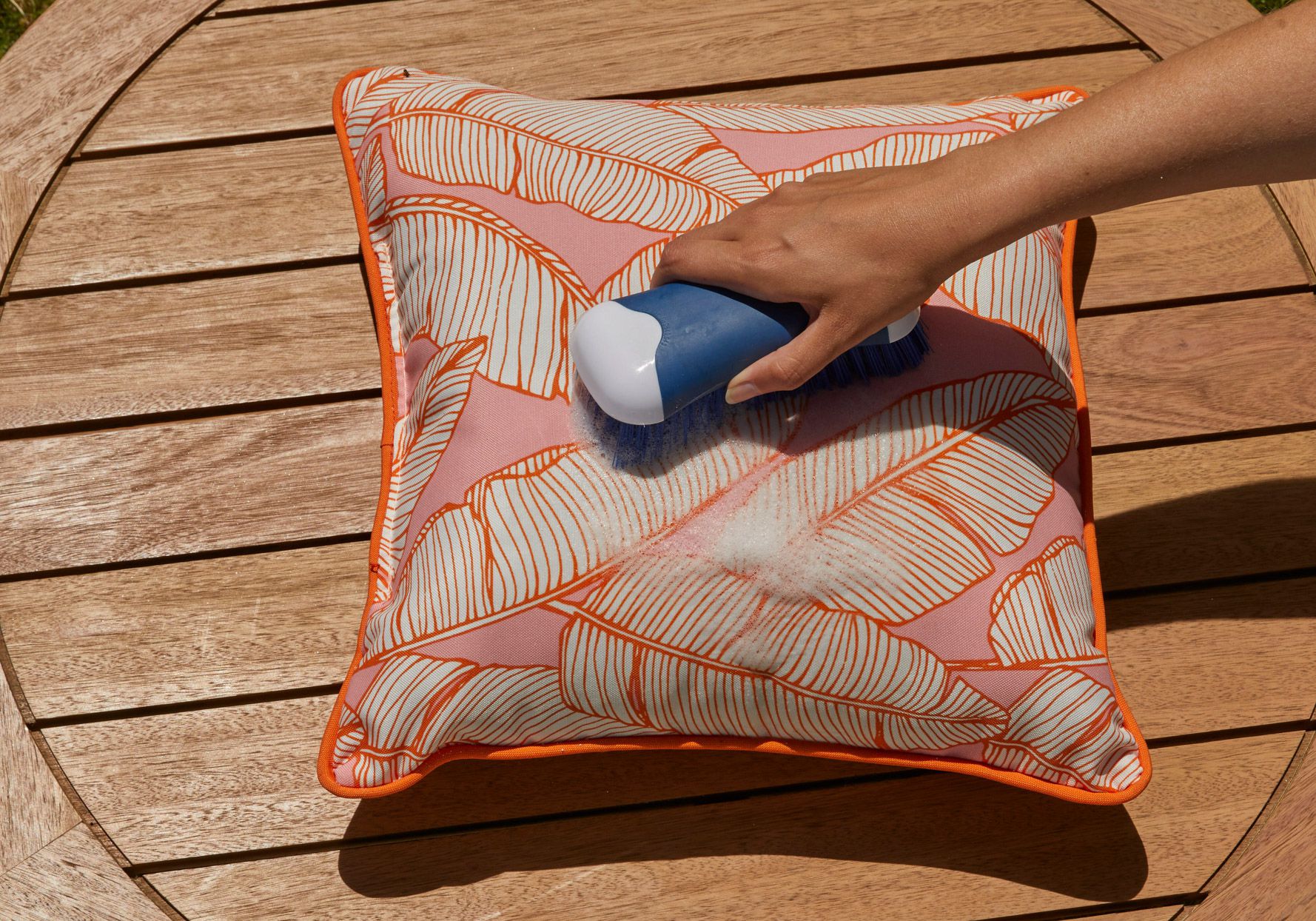
This is my go-to method for general cleaning, and it is kind to most materials.
What you need
- Mild dish soap or gentle laundry detergent
- A bucket of lukewarm water
- Soft-bristle brush or sponge
- Garden hose for rinsing
- Clean towels
Step-by-step
- Unzip and remove covers if your cushions have them. Wash covers and inserts separately when possible.
- Pre-rinse with a hose to remove surface pollen and grit. This prevents scrubbing debris into the weave.
- Wash with soapy water. If you like a concrete ratio, aim for about 1 to 2 teaspoons of mild soap per quart of water. Work from seams outward, using gentle circular motions.
- Let it sit for 5 to 10 minutes if the fabric is grimy, then lightly brush again.
- Rinse very well until water runs clear. Leftover soap attracts dirt.
- Press with towels to pull out moisture, especially along piping and corners.
Machine washing removable covers: If the tag allows it, close zippers and turn covers inside out to protect piping. Wash on cold or warm, gentle cycle. Skip fabric softener. Air dry or tumble on low only if the tag approves. Heat is where outdoor covers can shrink and become a wrestling match to rezip.
Pollen
Pollen is easiest when it is dry. Once it gets wet, it can cling more stubbornly and leave faint stains, especially on lighter cushions.
- First, dry brush and vacuum. This does 80 percent of the work.
- Then, rinse before you soap. A quick hose-down helps float away what brushing missed.
- For lingering yellowing: Use a paste of mild detergent and water, gently work it in, then rinse thoroughly.
Quick tip: If you are in peak pollen season, drape a lightweight throw or a simple outdoor cover over your seating when not in use. It saves you from the constant “why is everything yellow again?” loop.
Mildew
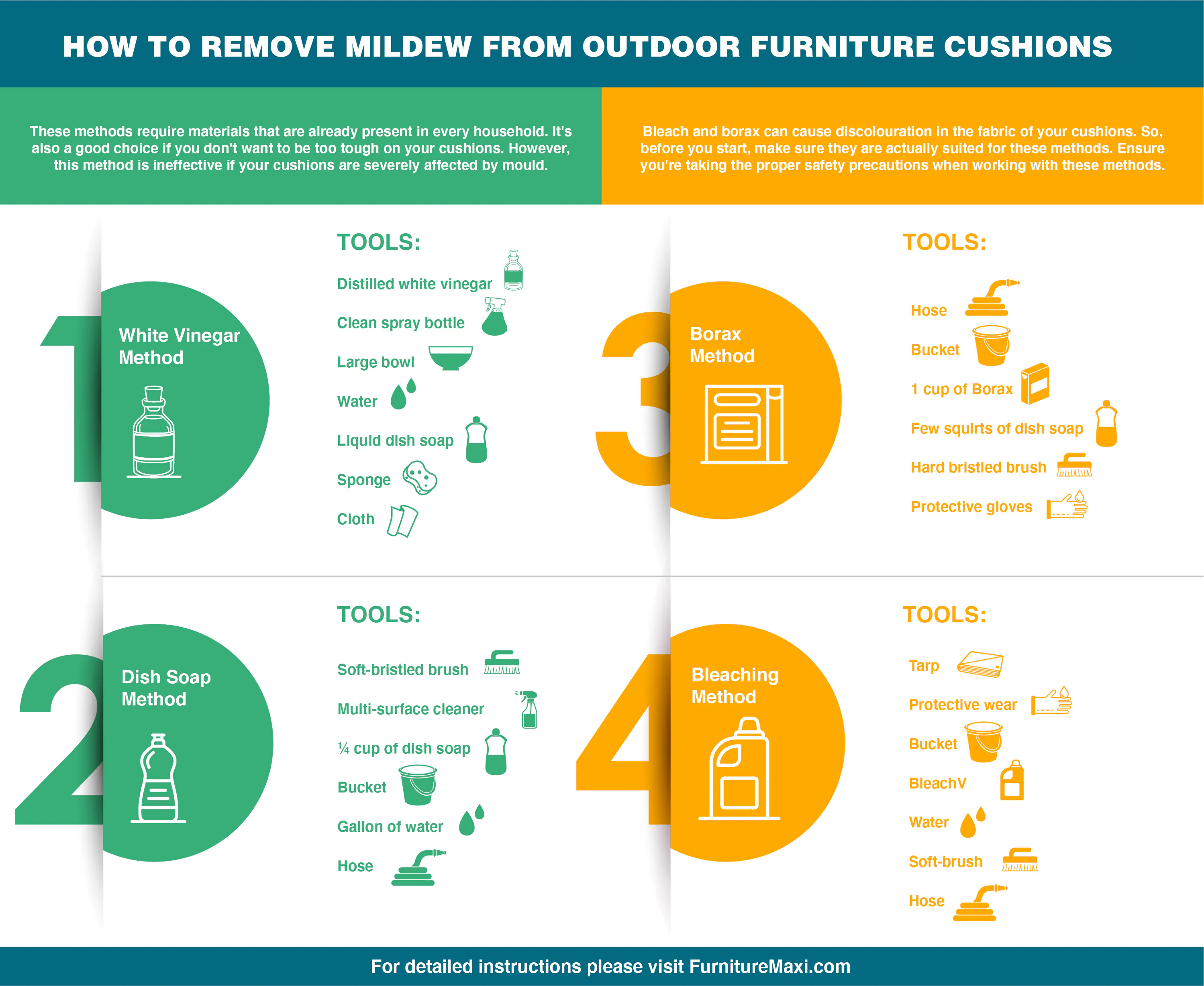
Mildew is not just a stain. It is also a smell, and it will come back if you store cushions even slightly damp. Choose your method based on what your fabric can handle.
Before anything
- Work outside or in a very well-ventilated area.
- Wear gloves, and consider eye protection if you are using bleach.
- Test any solution in an inconspicuous spot first.
Bleach-safe option (only if your fabric allows it)
This is commonly appropriate for many solution-dyed acrylic outdoor fabrics, but confirm first.
- Mix a solution of 1 cup regular, unscented household chlorine bleach + 1/4 cup mild, non-ammonia soap per 1 gallon of water.
- Apply to mildew areas with a sponge or spray bottle.
- Let sit for up to 15 minutes, keeping the surface damp.
- Lightly brush, then rinse extremely well.
- Air dry fully in sun and moving air.
Important: Never mix bleach with ammonia or vinegar. Also avoid soaps that contain ammonia or “added cleaners” you cannot identify. Rinse your bucket and tools if you are switching products.
No-bleach option
If you are unsure about bleach safety, this is the route I recommend.
- Oxygen bleach soak: Dissolve oxygen bleach powder in warm water (follow package directions). Apply generously or soak removable covers in a tub. Let sit 30 to 60 minutes, then rinse well.
- Vinegar spray for odor and light mildew: Spray plain white vinegar on affected areas, let sit 10 to 15 minutes, then scrub gently with mild soap and rinse. Vinegar helps with musty smell and light surface mildew, but it is not always strong enough for deep growth in foam.
If mildew keeps coming back: When inserts smell musty even after cleaning and drying, the spores may be living in the foam. At that point, replacing the inserts is often the most realistic fix, and it instantly upgrades comfort too.
Spot treatment
Sunscreen and body oils
These cause that overall dingy look and can hold onto dirt.
- Pre-treat with a small amount of grease-cutting dish soap.
- Let sit 10 minutes, gently brush, rinse well.
- Repeat if needed rather than scrubbing aggressively.
Bird droppings
- Let it dry, then lift off solids carefully.
- Wash with mild soap and water, rinse thoroughly.
Tree sap
Sap is tricky because solvents can damage some outdoor coatings.
- Try warm soapy water first.
- If it remains, test a small amount of rubbing alcohol on a hidden area, dab lightly, then rinse. Do not saturate.
Rust marks
Use an outdoor-fabric-safe rust remover only if the manufacturer approves, and test first. Many rust removers are acidic and can lighten certain dyes.
Drying
If you remember nothing else, remember this: storage plus moisture equals mildew. Outdoor foam holds water longer than you think, especially in corners and along seams.
How to dry properly
- Airflow beats heat. Dry in a breezy spot, ideally with some sun.
- Stand cushions on edge so gravity can help water escape.
- Rotate every few hours. Pay attention to the bottom edge and zipper side.
- For inserts: If they feel cool or slightly heavy, keep drying. That “cool to the touch” feeling is lingering moisture.
Aim for: 24 to 48 hours of drying time after a deep wash, depending on humidity.
Storage
This is where most patio cushions lose the plot. They get cleaned, then they get tucked into a damp corner of a shed inside a too-tight plastic bag. When spring arrives, the smell arrives too.
Best conditions
- Dry and temperature-stable if possible (a closet, finished basement, or under-bed storage in a guest room).
- Off the floor in garages or sheds, where condensation happens.
- A little breathing room is better than airtight sealing.
Bags and bins
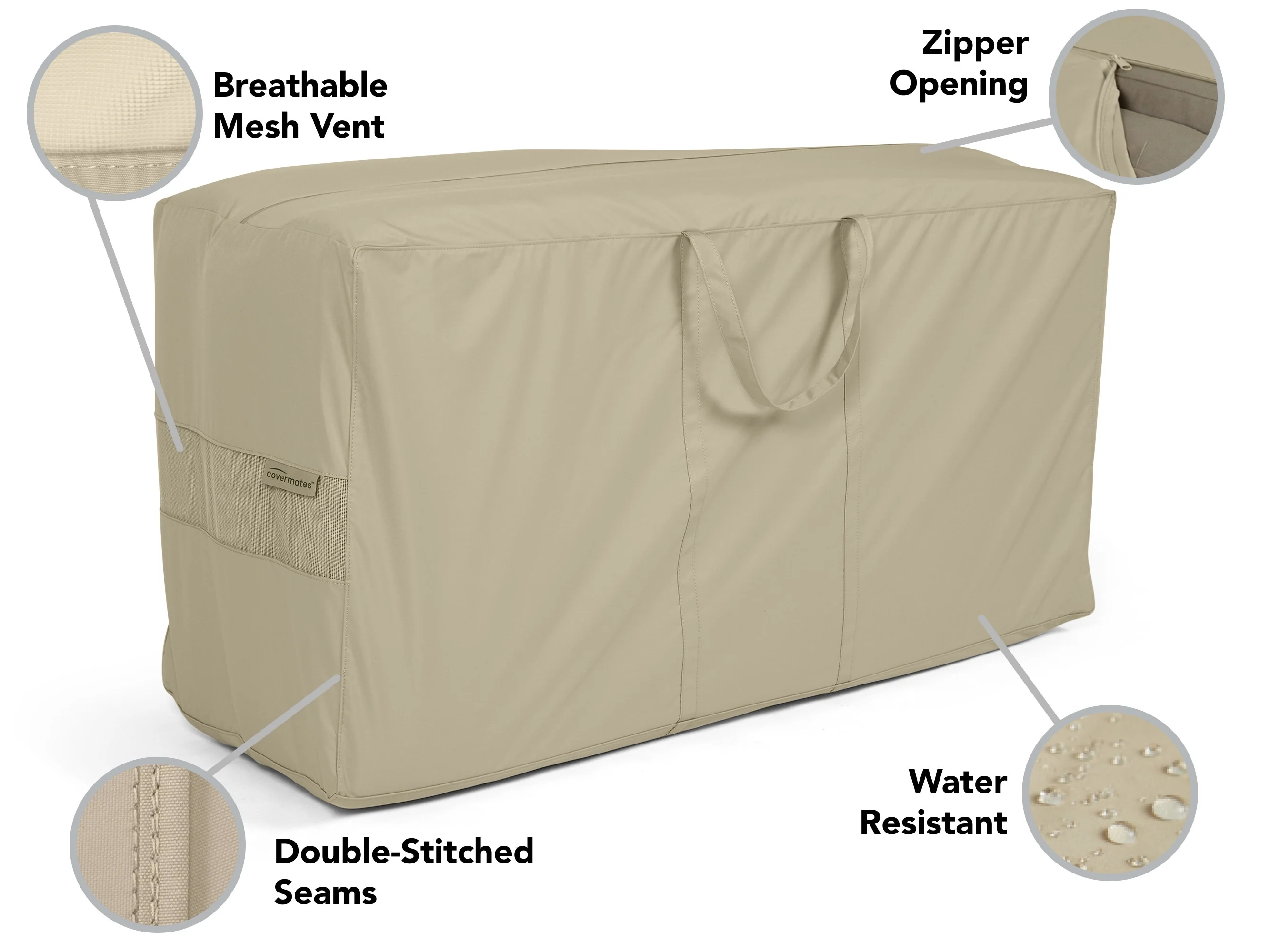
- Breathable cushion storage bags (fabric or vented) are ideal. They protect from dust while letting moisture escape.
- Plastic bins can work if, and only if, cushions are bone dry. Add moisture absorbers and do not cram them.
- Avoid thin plastic trash bags for long-term storage. They trap humidity and create a mildew party.
Extra insurance: Slip a few silica gel packs or a moisture absorber tub near (not on) the cushions, especially in humid climates.
What not to do
- Do not store cushions even slightly damp.
- Do not mix bleach with vinegar or ammonia.
- Do not use hot water or high heat drying unless the tag explicitly allows it.
- Do not use fabric softener on removable covers.
- Do not scrub with anything abrasive that can scuff coatings or fuzz fibers.
Seasonal rhythm
- Weekly in high pollen months: Brush or vacuum, quick rinse if needed.
- Monthly in summer: Light soap wash on armrest areas and seat fronts where sunscreen collects.
- Before storage: Full clean, mildew check, and a full dry-out day.
Your patio should feel like an extension of your home, not a place where you sit down and immediately notice a stain from three weekends ago. A little routine care keeps the colors crisp, the fabric soft, and the whole space feeling inviting all season long.