Open Concept vs. Broken Plan Living

Clara Townsend
Clara Townsend is an interior stylist, vintage furniture enthusiast, and the creative voice behind Velvet Abode. With over a decade of experience transforming both cramped city apartments and sprawling fixer-uppers, she believes that a beautiful home is built on personal stories rather than massive budgets. When she isn't hunting for the perfect brass sconce at a local flea market, she can usually be found rearranging her living room for the third time this month.
There is a reason people get oddly passionate about open concept vs. broken plan living. Your layout is not just a floor plan choice; it is a daily-life choice. It decides whether you can chop onions while still chatting with friends, whether your kid’s LEGO city will be visible from every angle, and whether the TV sound follows you like a small, stubborn cloud.
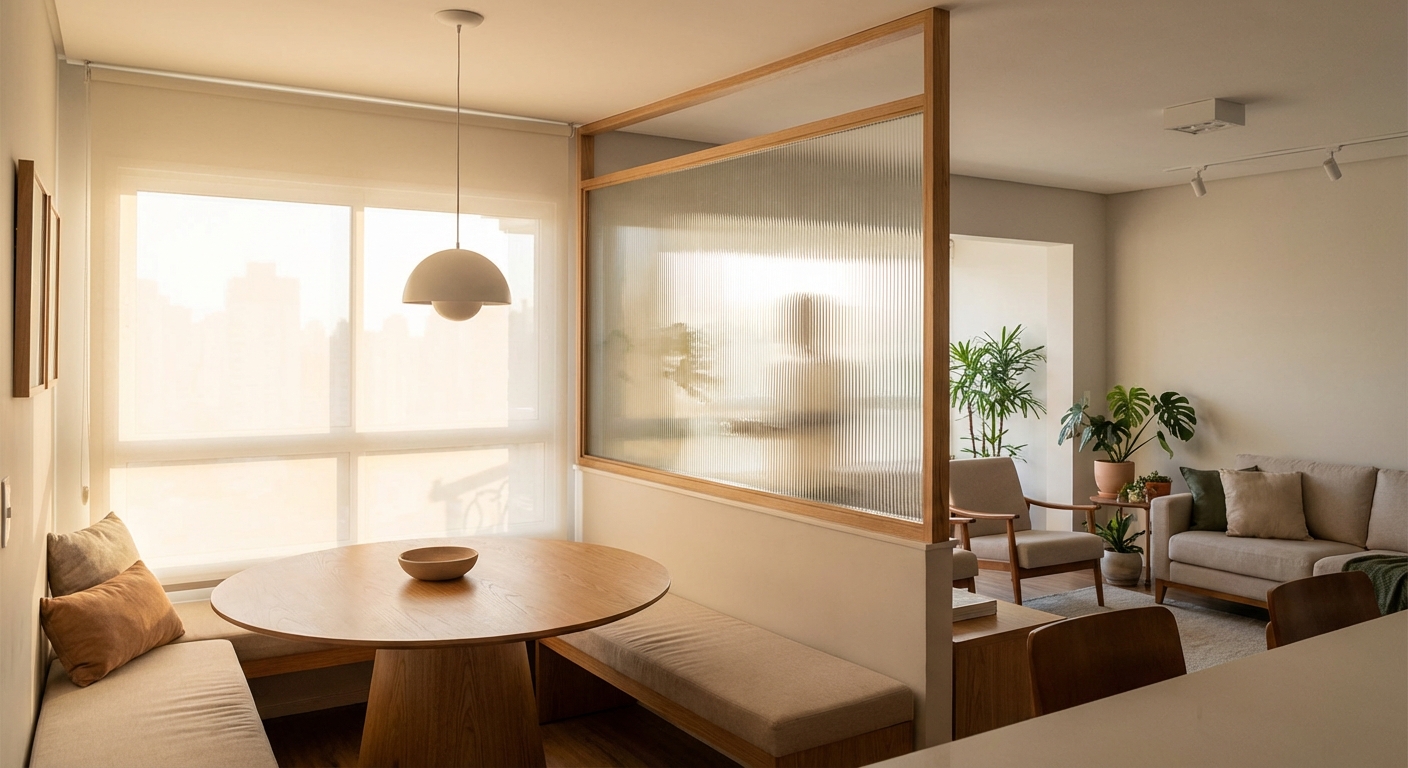
Let’s break it down in plain English: open concept is one big shared space, usually kitchen, dining, and living all together. Broken plan (also called semi-open plan or zoned open plan in some markets) keeps the connected feeling, but adds gentle divisions like half walls, glass panels, archways, built-ins, or level changes, so each zone has a little identity.
What open concept does best
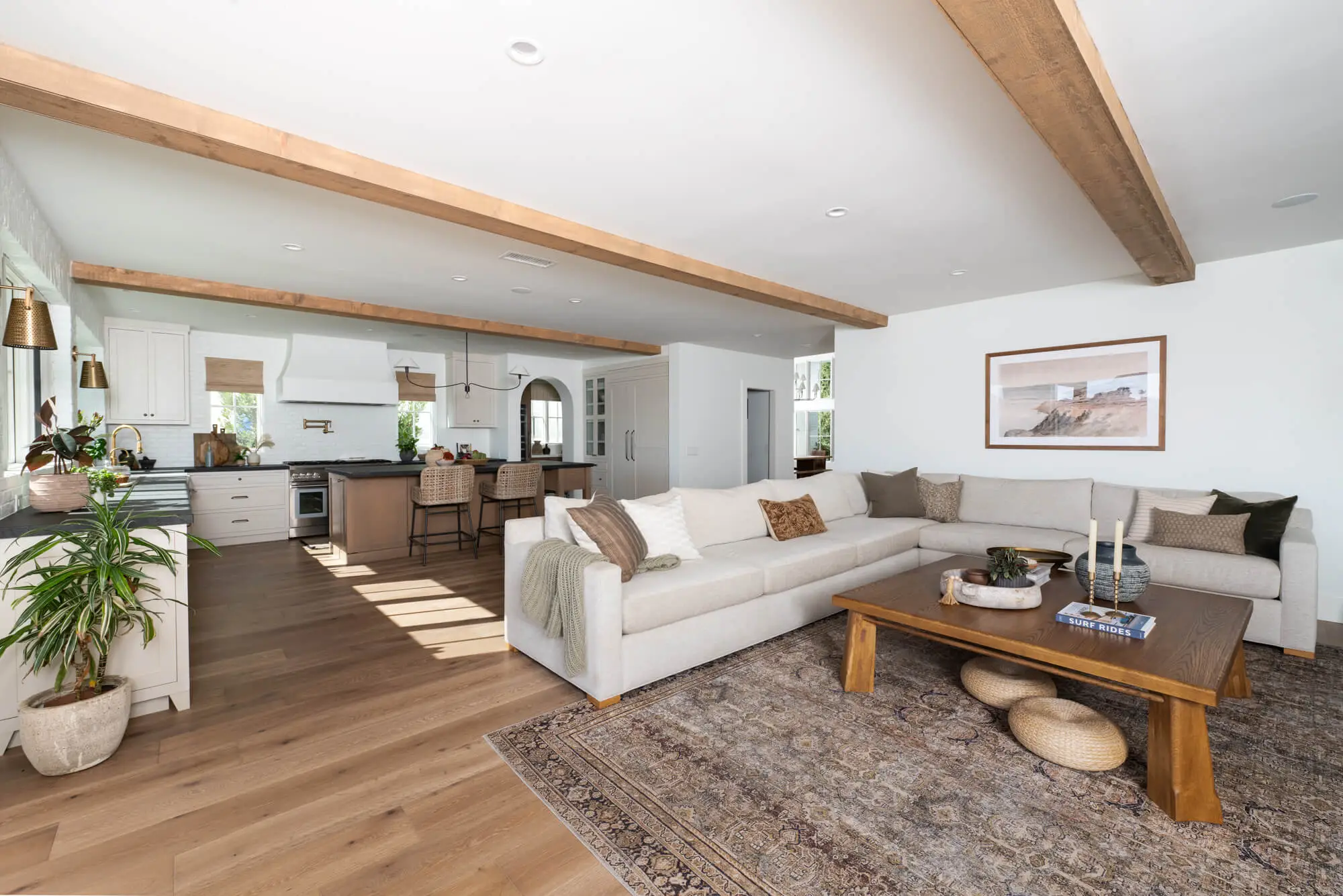
If you love a home that feels social, breezy, and flexible, open concept can be magic. It’s the layout equivalent of pushing the chairs back and turning on a good playlist.
Pros
- Natural light travels farther. Fewer walls means windows can “share” their sunshine. Even a modest apartment can feel bigger when light reaches the back corners.
- Easy hosting. You can cook, pour drinks, and still be part of the conversation. No disappearing into a separate kitchen like a Victorian ghost.
- Flexible furniture layouts. One big canvas lets you float a sofa, add extra dining chairs, or create a play corner without feeling boxed in.
- Better sightlines. Great for keeping an eye on kids or pets while you do the everyday stuff.
Cons
- Noise has nowhere to go. The blender, the TV, the dishwasher, the phone call. They all become roommates.
- Smells travel. That cozy garlic-and-tomato simmer is lovely. Yesterday’s fish is less charming. (A good range hood helps more than most people realize.)
- It can feel visually busy. Open concept asks for tidier “backgrounds” because everything is on display, especially the kitchen.
- Cozy takes intention. Not impossible, but a large open room can feel like it’s waiting for directions.
What broken plan does best
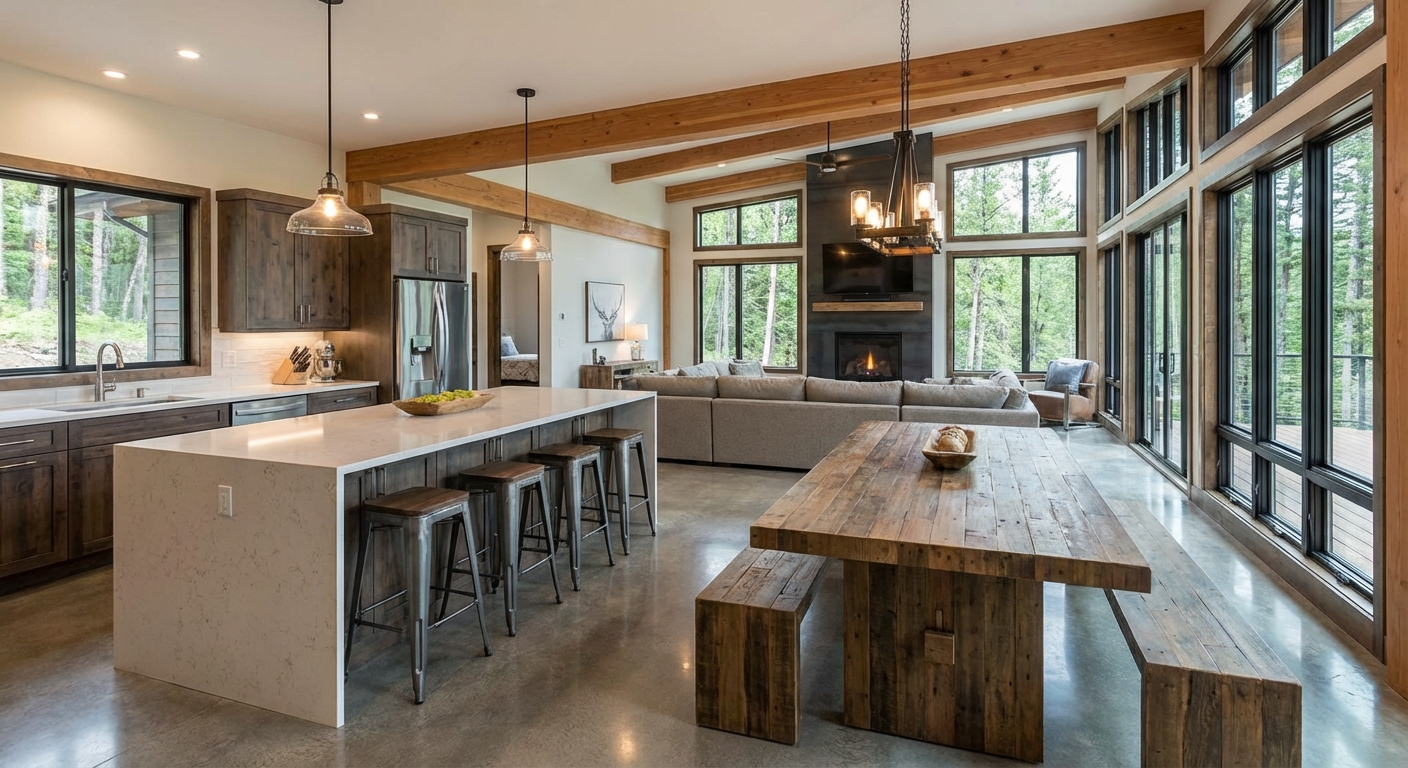
Broken plan is for people who want connection and calm. It gives you the togetherness of open living, with a little more control over mood, mess, and sound.
Pros
- Zones feel purposeful. The dining area feels like dining, the living area feels like living. Your brain relaxes when the room gives it clues.
- More privacy without isolation. You can read on the sofa while someone cooks, without staring directly at the dirty pan situation.
- Can improve acoustics. Partial walls, doorways, and built-ins can interrupt direct sound travel. Soft finishes (rugs, curtains, upholstered pieces) help even more, especially in echo-prone homes.
- More wall space. This is huge for vintage lovers. More walls means more places for art, shelves, lamps, and that antique mirror you swore you didn’t need but absolutely did.
Cons
- Less “wow” openness. If you crave a big airy sweep, broken plan can feel a little more contained.
- Light can get interrupted. Dividers and partitions can cast shadows if they aren’t planned thoughtfully.
- Changes can cost more than you expect. Adding glazing, built-ins, or partial walls can be less invasive than removing or relocating structural walls, but the final price depends on the scope and finishes.
Which fits your real life?
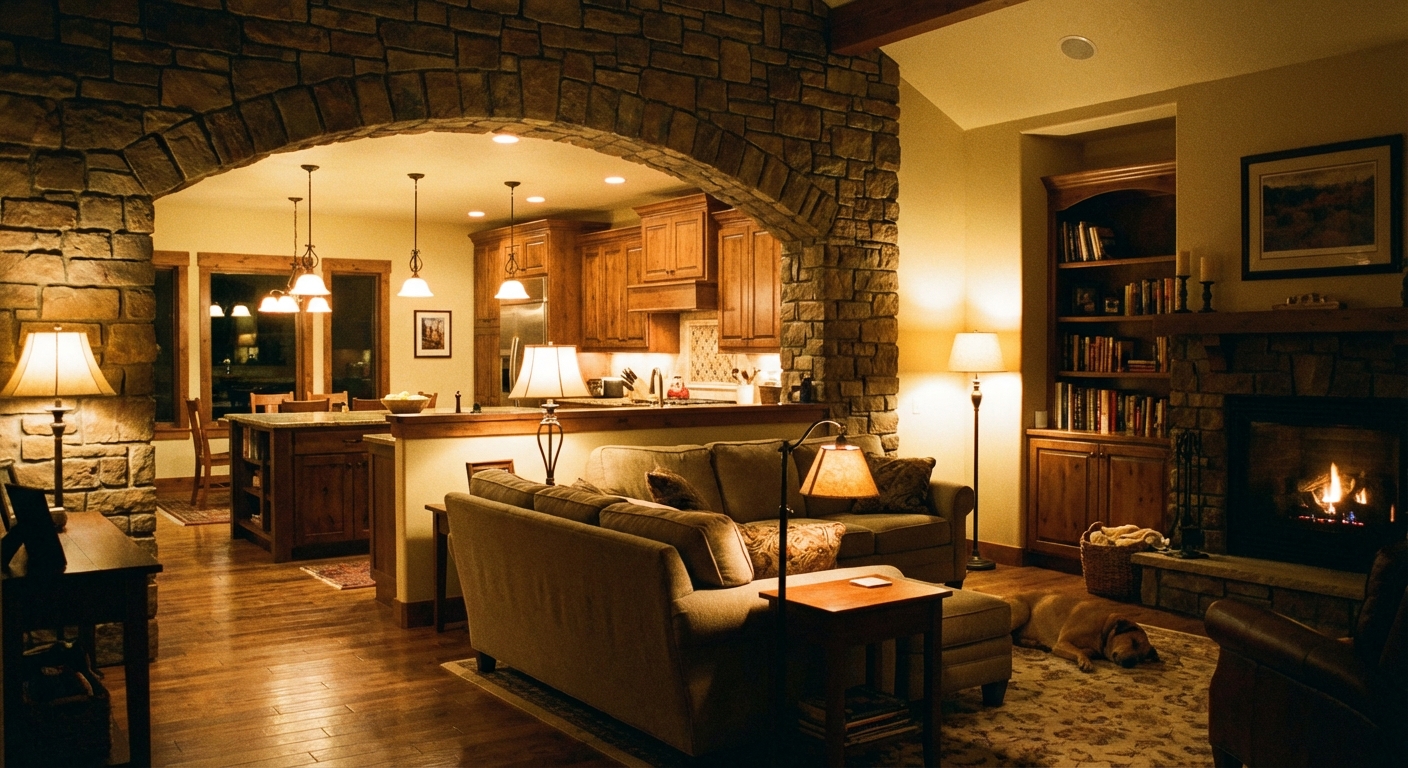
Instead of asking “What looks modern?” ask “How do we actually live at 6:30 on a Tuesday?” Here are the lifestyle tells I see again and again when I’m styling homes.
Open concept works if you...
- Host often and want the kitchen to be part of the party.
- Have a smaller home and want it to feel larger and brighter.
- Prefer a casual, flexible vibe over a room-by-room rhythm.
- Don’t mind some visual togetherness, including kitchen counters in the background.
Broken plan works if you...
- Work from home and need pockets of quiet without full separation.
- Love cozy nooks, reading corners, and rooms with a clear purpose.
- Have different schedules in the household and want sound to travel less.
- Collect art, vintage furniture, or books and crave wall space to display them.
My gentle rule: If your home feels happiest when everyone can see each other, lean open. If your home feels happiest when everyone can be together but doing different things, lean broken plan.
Other real-world factors
Heating and cooling
Open layouts can be trickier to heat and cool evenly, especially in homes with high ceilings or lots of glass. Broken plan layouts can make it easier to create comfortable zones, whether that’s with doors, vents, or smart controls.
Resale and trends
Layout preferences swing by region, price point, and the type of home. Open concept still photographs beautifully, but buyers also ask for spaces that can close off, like a study nook or a quieter lounge. If resale matters, aim for flexibility instead of extremes.
Walls, permits, and safety
If you’re changing walls, assume nothing is purely decorative until a pro confirms it. Load-bearing walls, HVAC runs, and electrical lines can all be in the mix. Permits and qualified advice are worth it here, both for safety and future paperwork.
Make open concept feel intentional
If you already have an open layout, you don’t need to build walls to get structure. You need soft boundaries.
- Anchor each zone with a rug. Living room rug under front legs of the sofa and chairs, dining rug large enough for pulled-out chairs. This is the quickest “rooms inside a room” trick.
- Use lighting like punctuation. A pendant over the dining table, a pair of lamps in the living area, under-cabinet lights in the kitchen. Separate switches help, too.
- Create a visual break with furniture height. A low vintage sideboard behind the sofa or a slim open bookshelf can define space without blocking light.
- Repeat a color thread. Choose one warm neutral and one accent, then echo them across zones so it reads as cohesive, not chaotic.
- Plan your “backgrounds.” In open layouts, the kitchen is part of your decor. Pretty containers, a tray for oils, closed storage for everyday clutter, and a designated mail drop zone go a long way.
Make broken plan feel airy
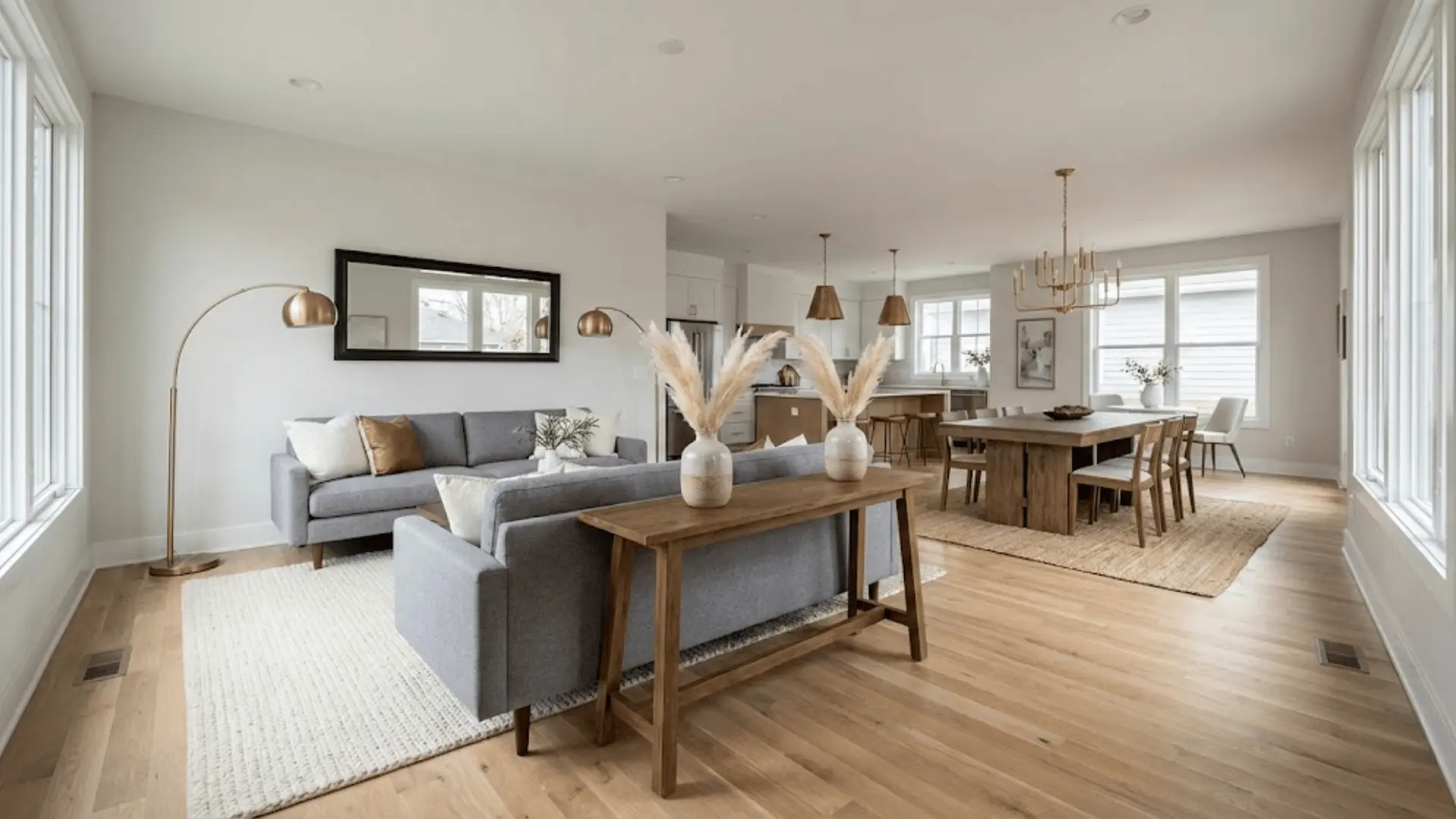
Broken plan can swing a little too choppy if the transitions feel abrupt. The goal is separation without the maze effect.
- Choose dividers that pass light. Think glass panels, reeded glass, open shelving, or slatted wood. They define zones while keeping brightness.
- Keep sightlines in mind. A wide doorway, an arch, or a half wall that stops below eye level helps the home feel connected.
- Use consistent flooring where it makes sense. One continuous floor material across shared living zones is a calm-flow secret. In entries, bathrooms, and sometimes kitchens, durability and water resistance may call for a switch.
- Let one statement piece lead. An antique mirror, a sculptural light, or a bold artwork can act like a north star you glimpse from multiple areas.
- Layer warmth in each zone. Curtains, textured cushions, and a soft lamp in every area prevent “forgotten corners.”
Broken plan, no construction
If renovating isn’t on the table, you can still borrow the broken-plan feeling with reversible, renter-friendly moves.
- A tall vintage cabinet (secured properly) to create a hallway-like moment between zones.
- Ceiling-mounted curtain track with linen panels to close off a TV nook or dining area when you want calm.
- Two-tone wall paint or a painted arch behind the dining table to visually “claim” that zone.
- Room dividers like folding screens or open étagères for gentle separation.
Quick decision checklist
If you want a simple gut-check, answer these with your real habits, not your Pinterest self.
- Do you cook most nights? Open concept is lovely if you like company while cooking. Broken plan is helpful if you want cooking mess, smells, and noise contained (or at least softened).
- Do you need quiet for calls or studying? Broken plan wins more often.
- Does clutter stress you out? Broken plan gives you places to tuck life away. Open concept asks for more visual editing and smarter closed storage.
- Do you collect and display? Broken plan gives you more walls and more moments for styling.
- Do you crave light and spaciousness? Open concept wins, unless your broken plan uses glass and wide openings.
Whichever way you go, remember: a layout isn’t a moral choice. It’s a tool. The right one is the one that makes your home feel easier to live in and more comforting to come back to at the end of the day.