Nail Polish Spilled on a Quartz Counter
Gust
A little flutter. A cozier corner.
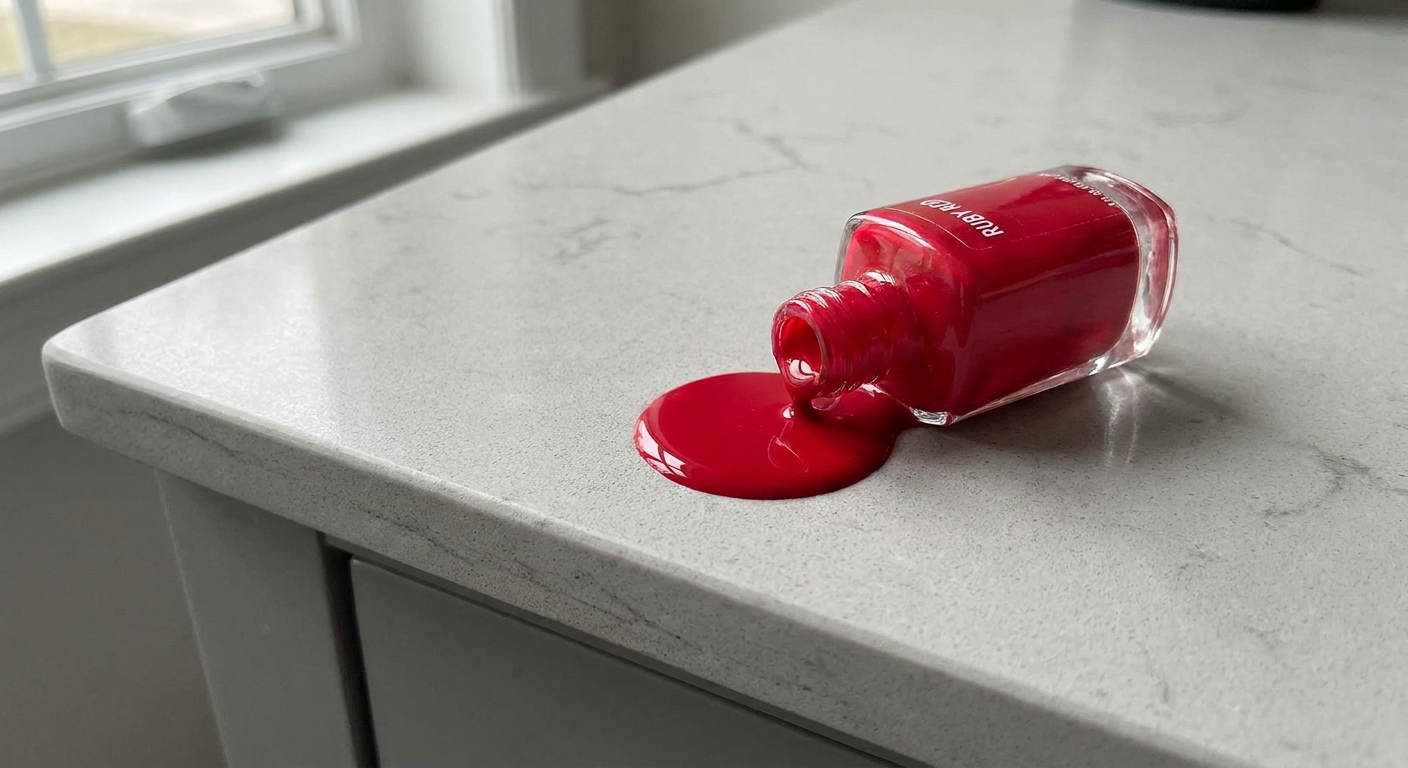
Nail polish on engineered quartz is one of those spills that feels dramatic instantly. It is colorful, it dries fast, and the obvious fix (acetone) can be the very thing that leaves the counter looking cloudy. Let’s do this in a calm, quartz-safe order: scrape first, dissolve second, and only polish last.
First, what you are protecting on quartz
Engineered quartz is mostly stone, but it is held together with resins and pigments. Those resins are why quartz is low-porosity and easy day-to-day, and also why strong solvents can sometimes leave a dull, hazy patch. Quick contact is usually less risky than soaking, but repeated rubbing and leaving solvent to sit are common paths to a visible mark.
So the plan is to remove as much polish as possible without chemicals, then use the mildest chemical that works, in short contact time, with a spot test.
What you need (keep it simple)
- Plastic scraper, old plastic card, or a plastic putty knife
- Microfiber cloths or soft paper towels (white is helpful so you can see color transfer)
- Mild dish soap and warm water
- Isopropyl alcohol (70% or 91%)
- Non-acetone nail polish remover (typically ethyl acetate based) or acetone (only if needed)
- Cotton swabs for tight control
- A quartz-safe cleaner (optional for final wipe)
Skip: abrasive powders, magic eraser style melamine sponges, steel wool, and razor blades. Quartz can scratch and a metal blade can leave gray marks that look like a stain.
Wet nail polish: blot, then lift
1) Blot the puddle, do not wipe it around
Use the edge of a paper towel or microfiber and gently blot upward. If you wipe sideways, you spread pigments into the texture and seams.
2) Scrape first while it is still soft
Hold a plastic card nearly flat and push from the outside of the spill inward. The goal is to gather polish into a thicker bead you can lift off.
3) Wash with dish soap and warm water
Once the bulk is gone, wash the spot with a few drops of dish soap in warm water. This removes oily binders that can keep pigment clinging.
4) If color remains, step up gently
Try isopropyl alcohol first. Dampen a cloth and press, then wipe in short strokes. Rinse with water and dry.
If alcohol is not cutting it, move to a non-acetone remover next. Put a small amount on a cotton swab, touch only the remaining polish, and lift immediately with a clean cloth. Then rinse well.
Dried nail polish: soften the top, then scrape
1) Pop off what will release dry
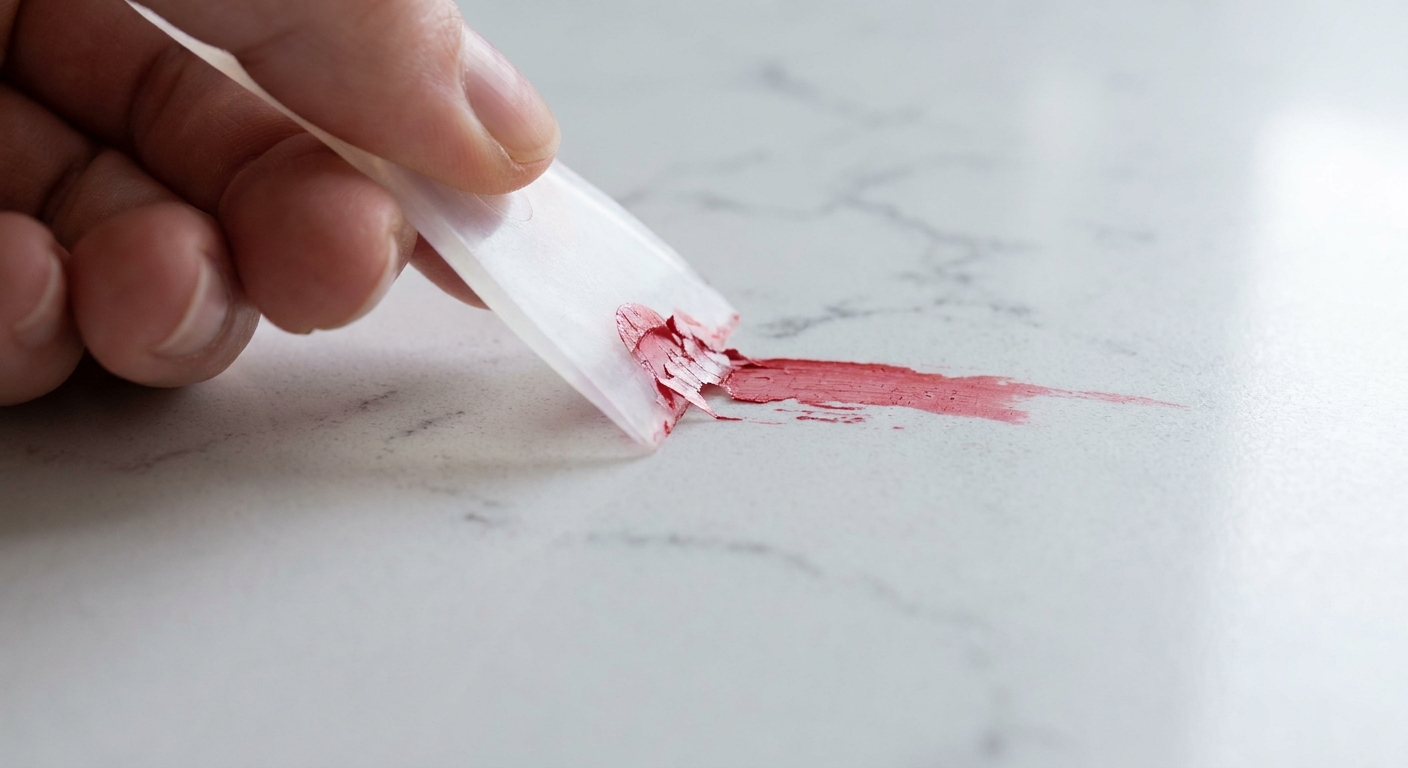
Dried polish often comes up in flakes if you nudge an edge with a plastic scraper. Work slowly and keep the tool flat so you do not dig into the resin surface.
2) Use controlled solvent contact, not a soak
Instead of saturating a rag and rubbing for a minute, target the polish only.
- Dampen a cotton swab with isopropyl alcohol and hold it on the polish for 10 to 20 seconds.
- Try scraping again.
- If it still will not budge, move to non-acetone remover the same way.
Only if those fail, use acetone as a last resort. Use a cotton swab, touch the polish for a few seconds, and immediately wipe with a damp cloth. Do not let acetone puddle, and do not keep re-wetting and rubbing the same spot.
3) Final wash and dry
Wash with dish soap and water, then dry fully. A wet counter can hide dullness, so you want it dry before you judge the finish.
The spot test that actually helps
Before any remover touches the obvious area, do a quick test in a low-visibility place on the same counter surface, like near a backsplash corner.
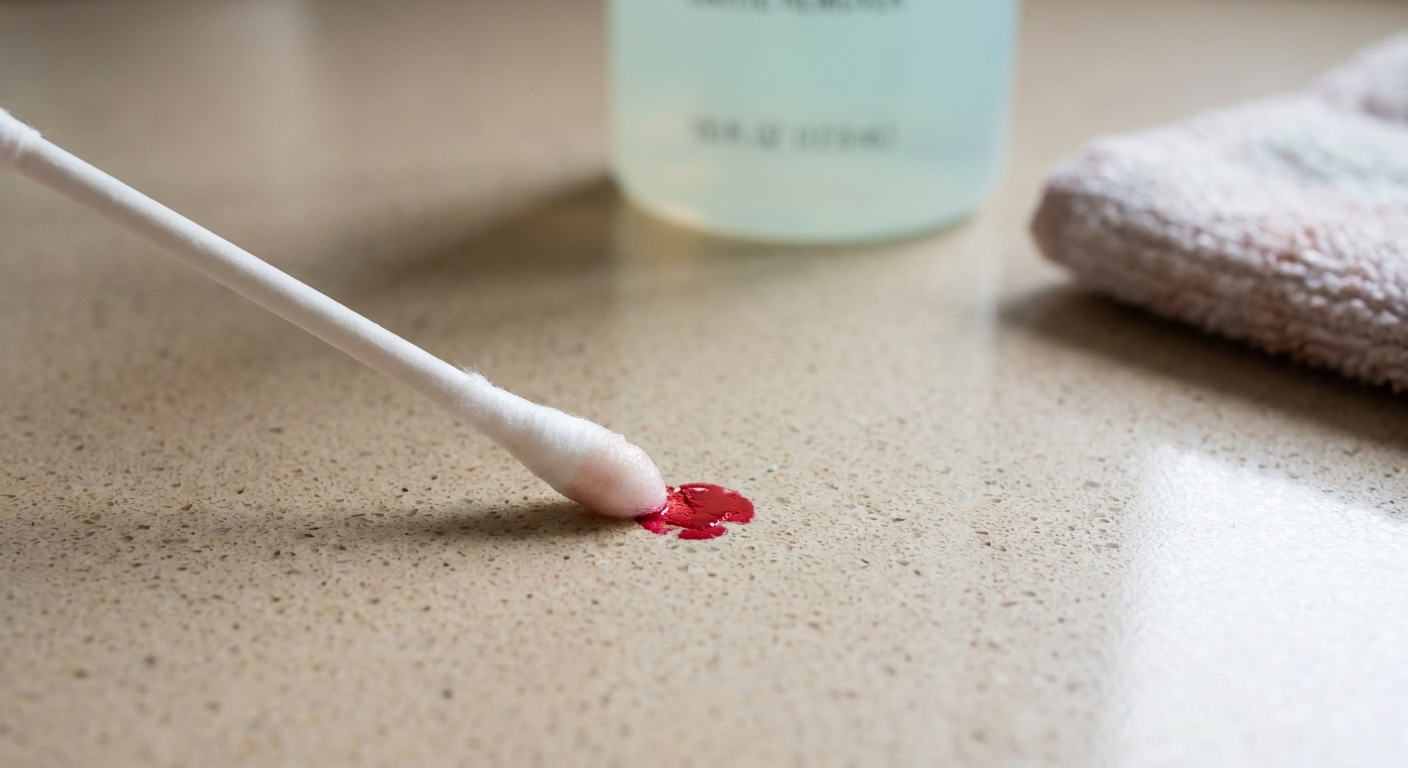
- Put a drop of the chosen remover on a cotton swab.
- Touch the hidden spot for 5 seconds.
- Wipe with water, dry, then look from a few angles under overhead light.
If you see a new dull patch in the test area, do not proceed with that product. Stick to scraping and soap and water, and consider calling your fabricator for advice specific to your brand of quartz.
Stain or dull spot?
This is the moment that decides what you do next. A stain and a dull spot can look similar at first glance, but they behave differently.
Signs it is leftover pigment or dye staining
- The spot looks tinted (pink, red, blue, purple) rather than simply cloudy.
- Color appears stronger in the pores of a matte finish or along micro-texture.
- When the counter is wet, the color still looks like color, not just less noticeable.
What to do: keep working on lifting color gently: soap and water, then alcohol, then small controlled touches of non-acetone remover. Multiple short passes with rinse breaks are safer than one long rub.
Signs it is a dull or etched-looking patch (solvent haze)
- The area looks grayish, cloudy, or slightly matte compared to the surrounding sheen.
- It is most visible when light reflects across the surface.
- When the counter is wet, the haze seems to disappear or blend in, then reappears when dry.
What to do: stop using solvents and stop scrubbing. Further solvent contact can expand the hazed area. Clean the area with soap and water, dry it, then move to the “repair the finish” steps below.
If acetone already touched the quartz
Not every quartz surface can be “polished out” at home, especially honed or matte finishes where sheen is carefully uniform. Still, you can often improve the look if the problem is residue or minor surface disruption.
1) Remove any remaining residue
Wash with dish soap and warm water, rinse well, and dry. Follow with a wipe of isopropyl alcohol to remove oily film, then rinse again and dry.
2) Try a quartz-safe polish only if your counter is glossy
If your countertop is a glossy finish, a quartz-safe polishing product can sometimes help blend a faint haze. Use it sparingly and follow label directions. Work a small area, then buff with a clean microfiber.
If you have a honed, suede, or matte quartz, polishing one spot can create a shinier island. In that case, it is better to stop at cleaning and consult a pro if the dull spot bothers you.
3) When to call your fabricator
- The dull patch is larger than a coaster and clearly visible from standing height.
- Your counter has a special finish (honed, leathered, suede) and the mark looks like a sheen change.
- You are tempted to sand or use an abrasive pad. That is your cue to pause.
Quick do not list
- Do not use razor blades or metal scrapers for nail polish.
- Do not use abrasive scrub powders or gritty pastes.
- Do not leave acetone, remover, or alcohol sitting on the surface.
- Do not keep rubbing harder when you are not seeing progress. Switch methods instead.
Mini cheat sheet
- Wet spill: blot, plastic scrape, dish soap wash, alcohol, non-acetone remover, last resort acetone with a swab
- Dried spill: plastic scrape, alcohol softening, non-acetone softening, last resort acetone with immediate rinse
- After: wash, rinse, dry, inspect for tint vs haze
FAQ
Will nail polish permanently stain quartz?
Often it does not, especially if you remove it quickly and avoid spreading it. Some highly pigmented colors can leave a faint tint if they sit, but controlled cleaning usually lifts most of it.
Is non-acetone remover always safe on quartz?
Not always. “Non-acetone” usually means different solvents, and some can still affect resins or leave a dull patch. That is why the spot test matters, even for non-acetone removers.
Can I use a magic eraser to remove the last shadow?
Better not. Melamine foam is a micro-abrasive and can change the sheen on quartz, especially on darker colors and matte finishes.
Why does the spot look fine when wet, then cloudy when dry?
That pattern points to a sheen change or micro-surface haze rather than a dye stain. Water temporarily fills tiny surface irregularities and makes the light reflection look more even.
Quartz rewards a light touch. If you move in that scrape-first order, keep solvent contact brief, and stop the moment you see haze, you can usually get back to a clean counter without trading one problem for another.