Mudroom Drop Zone for a Narrow Hallway

Clara Townsend
Clara Townsend is an interior stylist, vintage furniture enthusiast, and the creative voice behind Velvet Abode. With over a decade of experience transforming both cramped city apartments and sprawling fixer-uppers, she believes that a beautiful home is built on personal stories rather than massive budgets. When she isn't hunting for the perfect brass sconce at a local flea market, she can usually be found rearranging her living room for the third time this month.
If your “entryway” is basically a skinny hallway where everyone barrels in at once, you do not need a dedicated mudroom to get that calm, put-together feeling. You need a drop zone: a small, intentional landing area by the door with a few very specific jobs. It should catch the coats, corral the shoes, contain anything wet, and make it easy to reset.
The secret is going vertical and going slim. Think of it like styling a tiny gallery wall, except the art is your real life. Keys, backpacks, dog leash, rain jacket, all of it gets a home that is obvious the second you walk in.
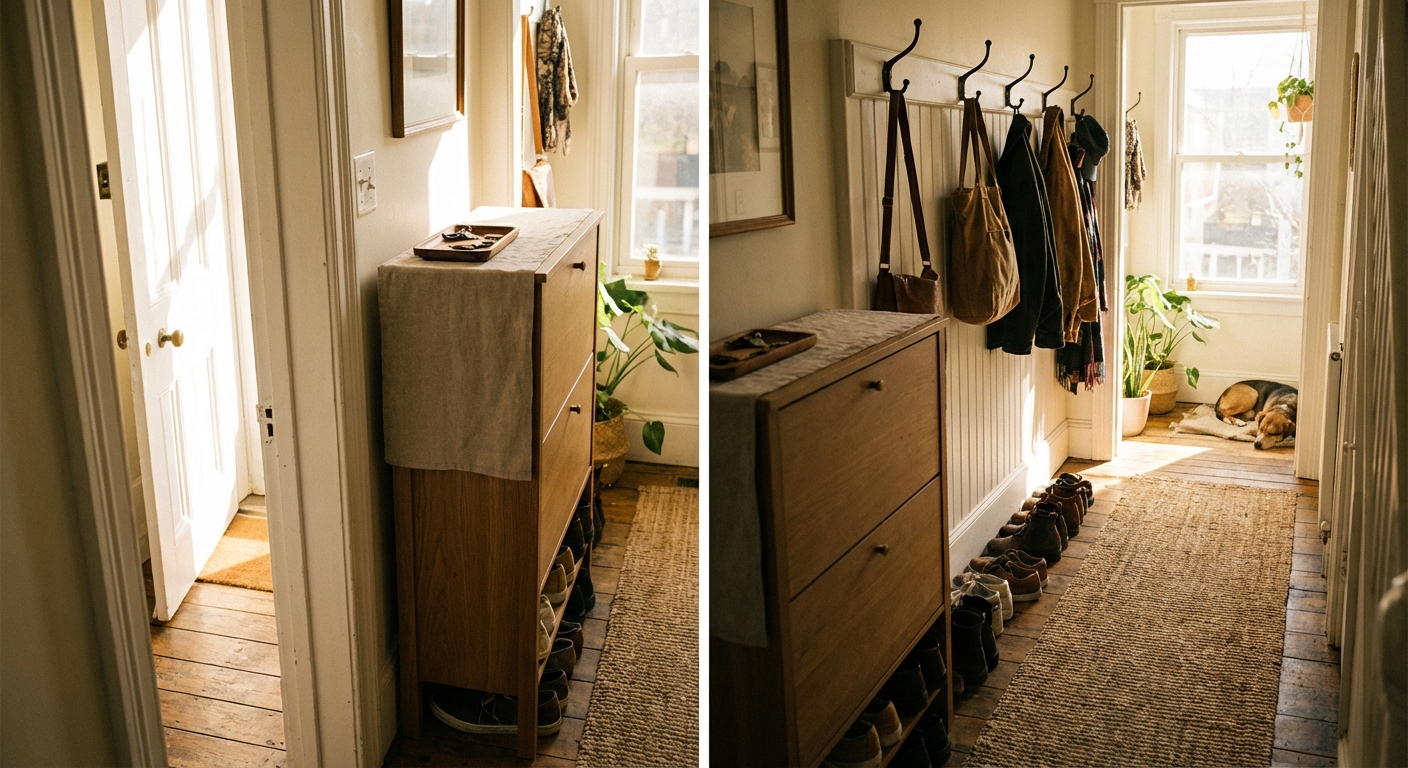
Start with a reality check
Before you buy anything, take two minutes to measure and observe. Narrow spaces fail when storage sticks out too far or when there is no clear path for bodies to pass each other.
Two measurements that matter
- Clear walking path: As a rule of thumb, aim for 30 to 36 inches of clear space for comfortable passing in a typical hallway. If you need accessibility clearance (stroller, walker, wheelchair), go wider and keep more of the plan wall-mounted.
- Depth of anything on the floor: Keep floor pieces as shallow as you can. Many slim shoe options land around about 7 to 11 inches deep depending on the model and your baseboards, so measure from the wall to the front edge once installed, not just the listed product depth.
One simple question
What actually lands here every day? Make a quick list: shoes, wet umbrella, kid backpack, work tote, keys, sunglasses, dog leash, mail. Your drop zone should serve that list, not a fantasy version of you who never gets caught in the rain.
Hooks without the chaos
Hooks are the backbone of a no-mudroom mudroom. They keep bulky items off the floor and they are incredibly forgiving in tight spaces.
Pick a hook strategy
- One rail with multiple hooks: Best for visual calm. It reads like one intentional piece instead of scattered hardware.
- Individual hooks spaced out: Best when you need to stagger heights for kids and adults.
- Double hooks: Great for coats plus bags, but choose slimmer profiles so they do not feel spiky in a narrow hall.
Height and spacing
- Adult hook height: A comfortable starting point is 60 to 66 inches from the floor to the hook point (the part that actually holds the item). If you are installing a rail, check the manufacturer’s template so you are measuring consistently.
- Kid hook height: 36 to 48 inches, depending on age.
- Spacing: Give each person 8 to 10 inches if you can. If not, assign zones and use slimmer outerwear hangers for overflow inside a closet.
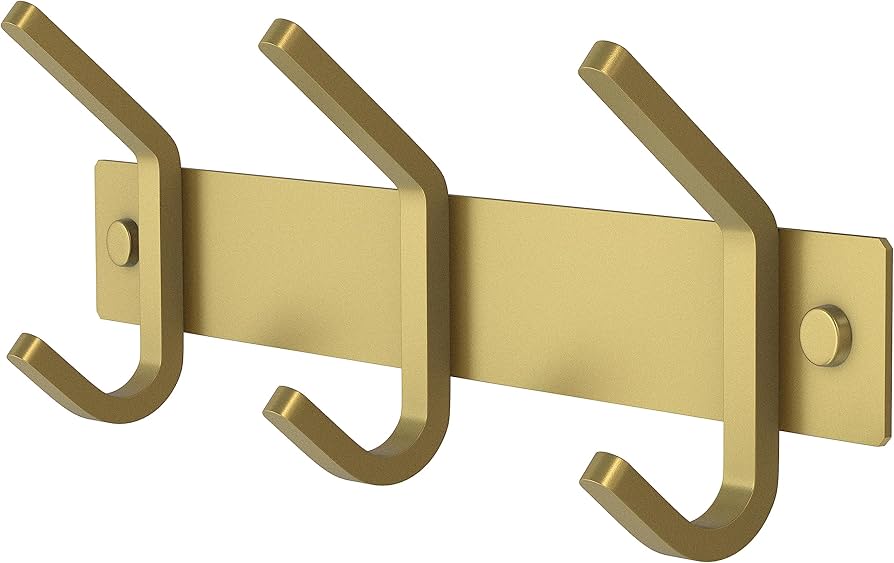
Stylist tip from my own perpetually rearranged life: matching hooks create instant order even when the items hanging on them are a mess of colors and textures. If you love vintage, hunt for a set of similar brass hooks so the patina feels intentional, not random.
Install note: Hooks and rails earn their keep only if they are mounted well. Hit studs when possible, or use the correct wall anchors for your wall type and the weight you plan to hang. Heavy backpacks are not polite.
Slim shoe storage
Shoes are usually the thing that turns a narrow hall into an obstacle course. The fix is choosing storage that is shallow, easy to use, and strict about capacity.
Best options for tight spaces
- Slim flip-down shoe cabinet: The classic narrow-hallway hero. Many are roughly about 7 to 11 inches deep once you account for installation and baseboards. They reduce visual clutter. If odor is a concern, choose a design with ventilation or leave it slightly cracked after rainy days.
- Wall-mounted shoe shelves: Great for daily sneakers and flats. Keep them minimal, and place them where they will not catch hips.
- Boot tray plus one small basket: If your household is mostly boots and chunkier shoes, a tray can be more honest than forcing them into a cabinet they do not fit.
The capacity rule
Only store “current shoes” here. That means the pairs worn this month, not your entire shoe life story. The rest lives elsewhere, even if “elsewhere” is a high closet shelf in a labeled bin.
Safety note: If you choose a tall, slim cabinet, secure it to the wall with the included anti-tip hardware (or your own). Narrow pieces are great until gravity gets involved.
No bench? Use this
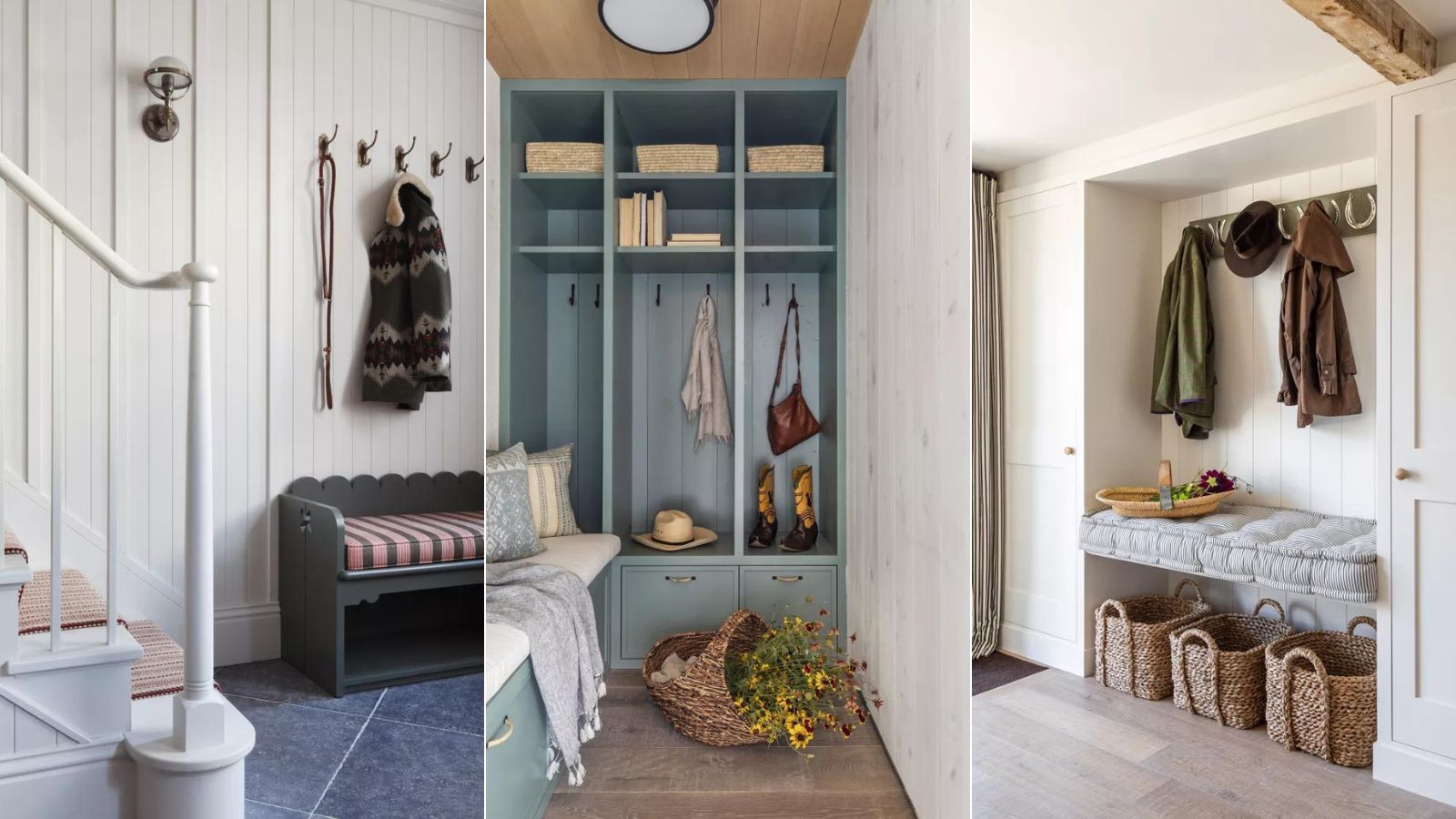
I love an entryway bench. I also live in reality, where some hallways are basically a runway. If you cannot spare the depth, you can still create a place to pause without blocking the path.
Space-smart swaps
- Wall-mounted flip-down seat: It folds up flat when not in use and feels almost architectural. Check the weight rating, and install into studs whenever possible.
- Perch stool: Choose a narrow stool that tucks under a slim console or into a corner. Bonus points for vintage wood with a little patina.
- Leaning ladder-style rack: A slim ladder rack can hold scarves and totes and gives you a spot to brace while tying shoes, without a deep footprint. (Also: it looks styled even when it is working hard.)
- Door-side pause spot: Claim a small landing area right by the door, like an 18 x 24 inch rug plus one wall hook and one tray. That is enough to change the whole flow.
Contain wet gear
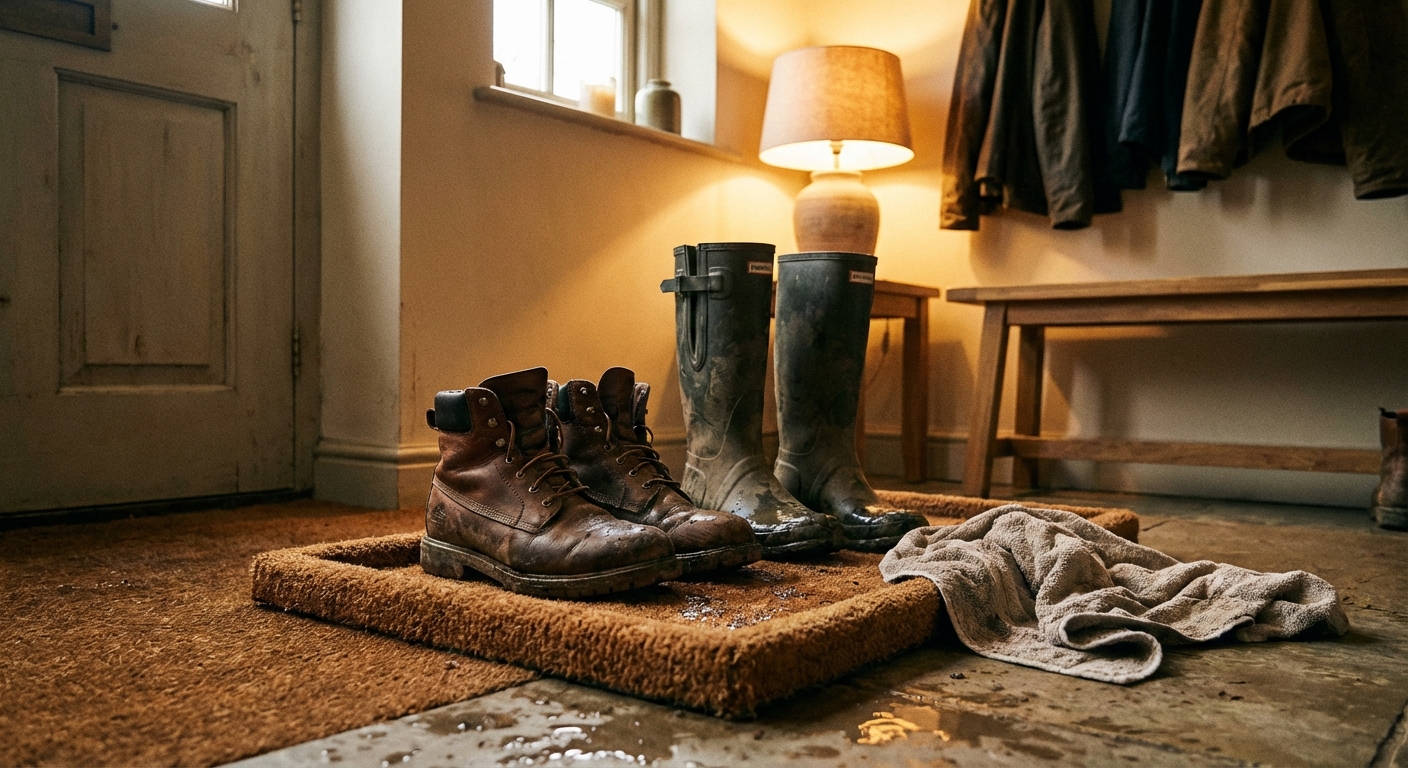
Wet items need a dedicated boundary. Without one, they drip along the baseboards, slump onto rugs, and make the whole entry feel slightly stressed.
Choose your tools
- Boot tray: A shallow tray by the door for wet boots and shoes. Look for something with a lip to catch slush and rain.
- Umbrella drip spot: A tall crock, a weighted umbrella stand, or even a deep ceramic pot that you do not mind getting damp.
- “Wet jacket” hook: One hook that is intentionally for damp outerwear so it is not pressed against your nicest wool coat.
Two rules that work
- If it is wet, it goes on the tray or the wet hook. Not the floor. Not the perch stool. Not the nearest doorknob.
- Empty and wipe once a week: A 60-second reset prevents mystery grime from becoming a whole project.
Make it feel pretty, too. A matte black tray, a vintage galvanized pan, or a stone-colored rubber tray can look surprisingly chic when it is paired with a warm lamp glow nearby.
Extra-protective tip: Keep a small towel tucked in the tray for quick wipe-downs, and consider a small wipeable wall panel (or clear wall guard) if muddy coats tend to brush the wall.
A simple layout
If you want a starting blueprint, here is a layout I use again and again because it respects the walkway and still handles real life.
- On the wall: One hook rail or a row of hooks for coats and bags.
- Below or nearby: Slim shoe cabinet or a shoe shelf that stays shallow.
- Closest to the door: Boot tray for wet shoes and a dedicated umbrella spot.
- At hand height: A tiny wall shelf or bowl for keys and sunglasses.
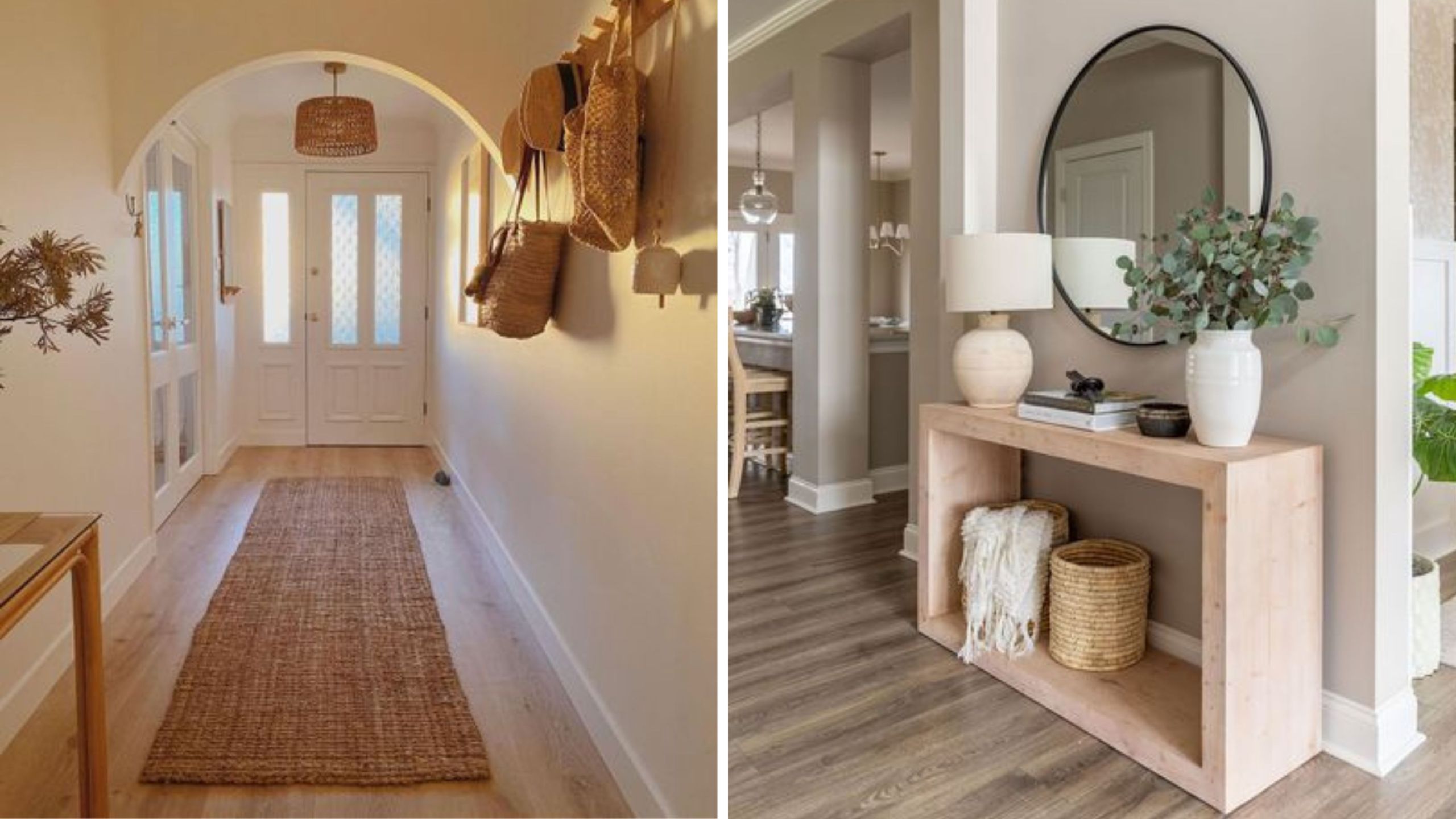
- On the floor: A durable runner rug that can take grime and still look good.
If you have a closet nearby, treat it like your back-of-house storage. Your hallway drop zone handles the daily flow. The closet handles overflow.
Renter-friendly options
If you cannot drill holes (or you just do not feel like patching later), you can still get 80 percent of the function with temporary solutions.
- Removable adhesive hooks: Choose weight-rated versions and use them for lighter items like keys, dog leash, and small bags.
- Over-the-door hooks: Great for coats and backpacks, especially if your hall is too tight for anything else.
- Adhesive key ledge or catchall: A small stick-on shelf can act as a landing strip for sunglasses and mail.
- Freestanding slim shoe cabinet: If it is not anchored, keep it low and stable, and do not overload the top.
Real talk: even renter-friendly setups work best when you keep the “heavy stuff” (like fully loaded backpacks) either on a sturdy over-the-door hook or inside a closet.
Seasonal swap routine
This is the part most people skip, and it is why drop zones start strong and slowly unravel. A narrow hallway cannot store four seasons at once. It should not have to.
The schedule
- Twice a year: One swap in early fall, one swap in spring.
- Micro-swap: A quick check at the start of a rainy week or a cold snap.
The 20-minute routine
- Step 1: Empty the zone completely. Hooks, tray, shoe storage, everything.
- Step 2: Wipe down surfaces and vacuum the runner.
- Step 3: Put back only what you will wear in the next 4 to 6 weeks.
- Step 4: Move out-of-season items into one labeled bin per category: outerwear, accessories, footwear.
- Step 5: Do a quick “launch pad” check: keys, leash, umbrella, and one spare tote bag.
Labeling does not have to be fussy. A simple tag on a lidded bin on a high shelf is plenty. The goal is not perfection. The goal is making it easy to be the kind of person who actually puts things away.
Make it feel like home
Even the most hardworking drop zone can feel warm and intentional. This is where your style gets to peek through.
Small styling moves
- Lighting: If there is an outlet nearby, a small lamp on a slim wall shelf makes the whole area feel welcoming at night.
- Texture: A flatweave runner or a washable rug adds softness underfoot without becoming a dirt sponge.
- One reflective element: A small vintage mirror or a framed print helps the hallway feel less tight. Bonus: last-second outfit checks.
- Hardware: Brass, matte black, or aged nickel hooks can tie into the rest of your home and make the storage feel designed.
Quick fixes
If hooks overflow
Reduce what lives there. Add one rule: only today’s coat and one bag per person. Everything else goes in a closet or bedroom.
If shoes escape
Your storage is too small or too annoying to use. Switch to a boot tray for bulky pairs and reserve the cabinet for flats and sneakers.
If it still feels tight
Go lighter visually: fewer items on display, matching hooks, and a shoe cabinet with a flat front. Choose a runner that is not too dark or busy.
If you need kid or pet clearance
Keep the floor as open as possible: wall-mount the shoe storage, park the boot tray tight to the door, and put kid hooks low enough that they can actually use them. For pets, dedicate one hook to the leash and one small bin for bags and wipes so you are not digging in a drawer while the dog spins in circles.
The small checklist
If you want your narrow hallway to function like a mudroom, keep these five pieces in place:
- Hooks for coats and bags
- Slim shoe storage or a strict shoe tray setup
- A dedicated wet zone (tray plus umbrella spot)
- A small catchall for keys and daily essentials
- A seasonal swap habit that keeps volume under control
That is it. Not a full renovation. Not a massive budget. Just a few smart choices that turn the everyday chaos of coming home into something that feels, honestly, like a comforting hug.