Mixing Brushed and Polished Metal Finishes

Clara Townsend
Clara Townsend is an interior stylist, vintage furniture enthusiast, and the creative voice behind Velvet Abode. With over a decade of experience transforming both cramped city apartments and sprawling fixer-uppers, she believes that a beautiful home is built on personal stories rather than massive budgets. When she isn't hunting for the perfect brass sconce at a local flea market, she can usually be found rearranging her living room for the third time this month.
There is a particular kind of panic that hits when you realize your faucet is polished chrome, your cabinet pulls are brushed nickel, and your pendant lights are somewhere in the middle. It can feel like you accidentally walked into a lighting showroom where nothing was meant to live together.
Here's the good news. Mixing brushed and polished finishes can look incredibly intentional. The secret isn't finding a perfect match. It's creating a clear hierarchy, repeating what matters, and keeping undertones from quietly fighting each other.
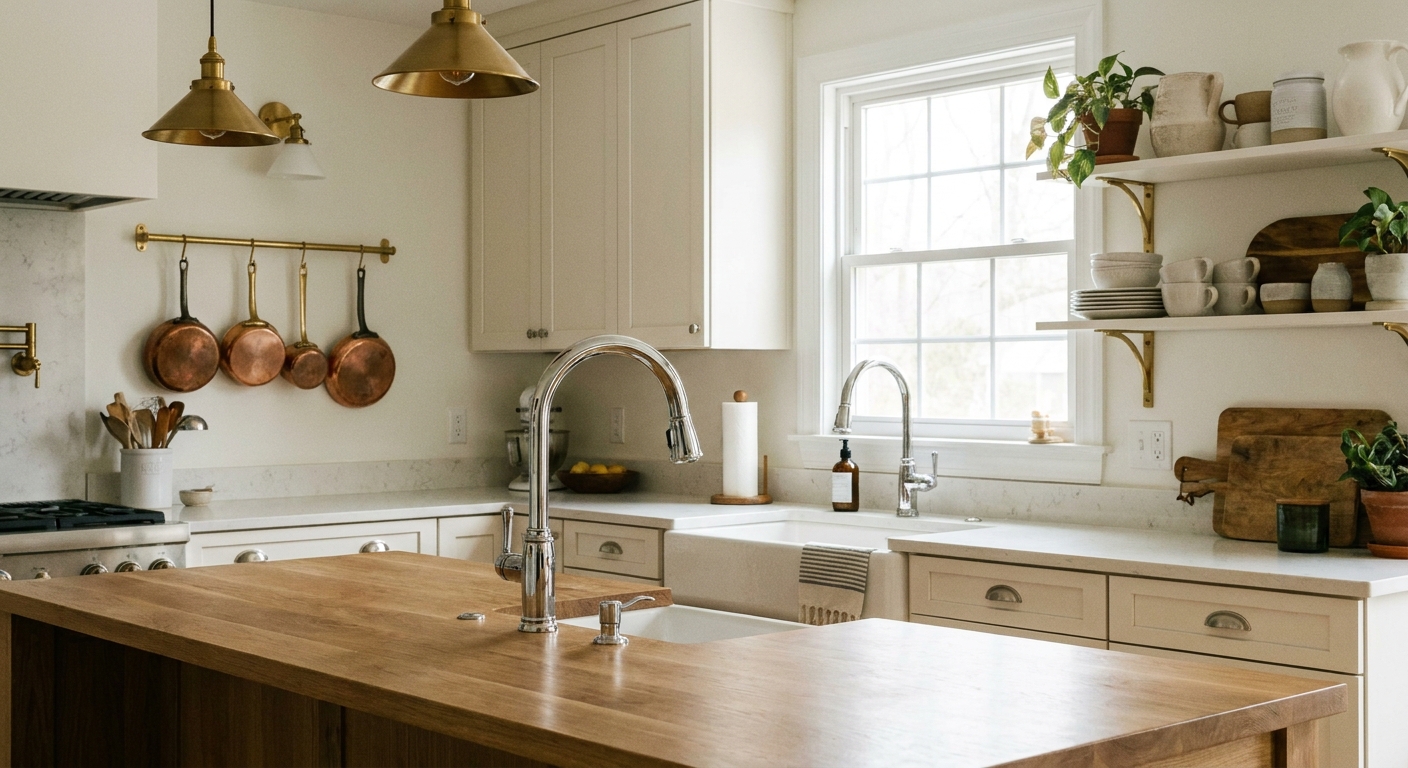
Brushed vs. polished: what you're seeing
Before we get strategic, it helps to name what's happening.
- Polished finishes are reflective and crisp. They bounce light around and read as higher contrast, especially in bright kitchens and bathrooms.
- Brushed finishes are softer and more diffuse. They scatter light, feel calmer and more lived-in, and they're often more forgiving with fingerprints than polished finishes. (Some brushed stainless can still show oils, especially under bright task lighting.)
When these clash, it rarely means mixing is “wrong.” Usually, it's because the room doesn't have a clear leader or because the finishes are pulling different temperatures.
The rule of thumb: pick a lead sheen
If you take only one thing from this article, let it be this: choose one dominant sheen and one supporting sheen.
Dominant doesn't mean you have to replace everything. It means your eye should land on one sheen as the “main character.” The other sheen becomes a supporting actor that shows up in a few deliberate places.
How to pick the dominant sheen
- Go polished-dominant if your space is modern, high-contrast, or you want a brighter, cleaner sparkle. Think polished chrome with glossy tile and crisp paint.
- Go brushed-dominant if your space leans cozy, vintage, or you want a quieter look. Brushed nickel and brushed stainless steel finishes are lovely with soft whites, stone, and wood.
An easy way to decide: stand where you spend the most time, usually at the sink. The finish you see and touch the most often makes a great candidate for the lead.
Repeat the lead sheen in anchor spots
Mixing looks intentional when your lead sheen repeats in places that naturally carry visual weight. In kitchens and baths, those anchors are:
- Plumbing: faucet, pot filler, shower set, tub filler
- Lighting: pendants, vanity lights, recessed trim if visible
- Hardware: cabinet pulls, knobs, towel bars, toilet paper holder
- Big appliances (kitchens): range and hood trim, refrigerator handles if prominent
A helpful guideline is mostly one sheen, intentionally some of the other. If you like numbers, aim for something like about 60 to 80% lead and 20 to 40% supporting, but treat that as a rule of thumb, not a design law.
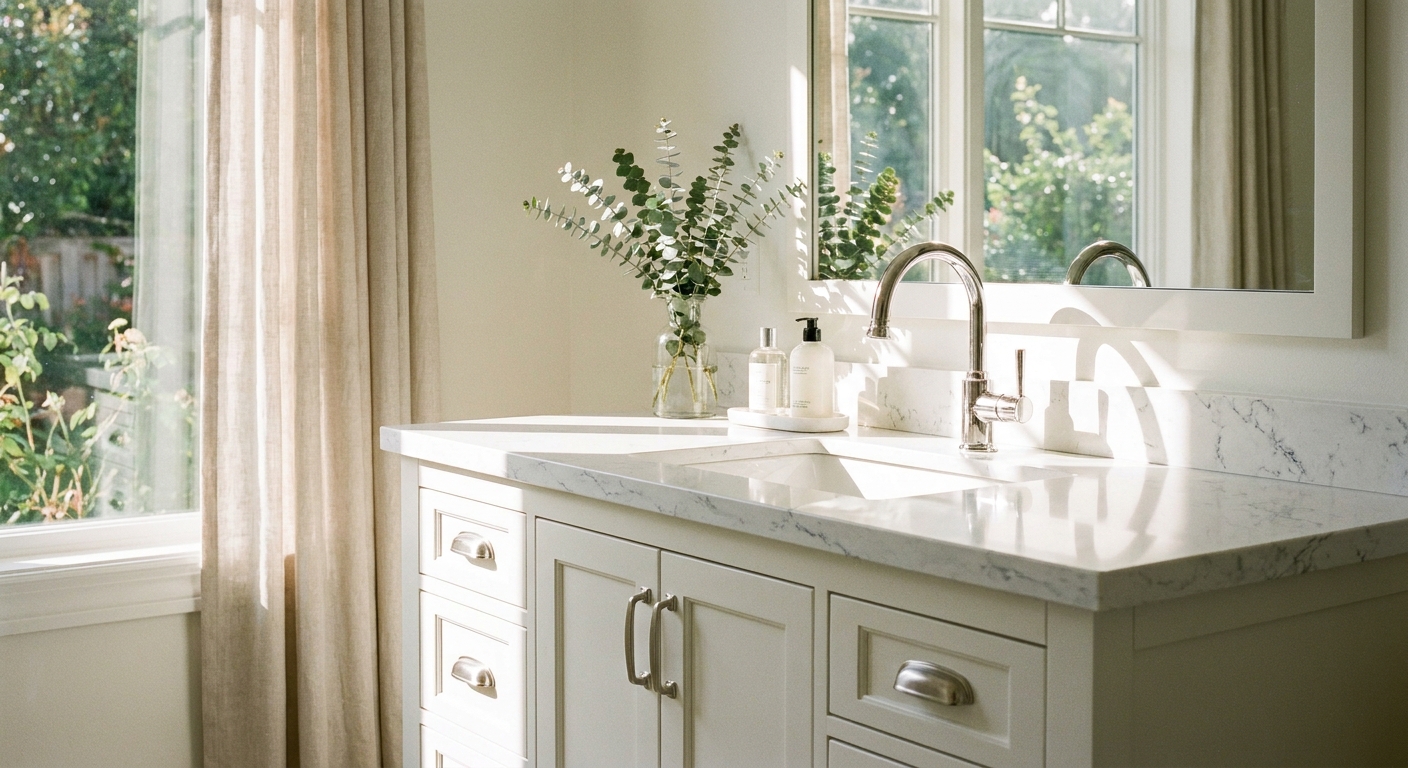
Undertones: the quiet make-or-break
Two finishes can both be “silver” and still clash if their undertones disagree. And because undertones can vary by brand and finish process, it's best to treat any cheat sheet as “typical,” not absolute.
Quick undertone cheat sheet
- Chrome often reads cool and mirror-like.
- Polished nickel is reflective too, but it can feel slightly warmer than chrome.
- Brushed nickel usually reads neutral-to-warm with a soft, pearly cast, although some lines skew cooler or grayer.
- Stainless steel typically reads neutral-to-cool and a bit more industrial, but lighting temperature can shift how it looks.
If you're mixing brushed nickel and polished chrome, your goal is to bridge the temperature so the room doesn't feel split into teams.
Easy ways to bridge warm and cool
- Add a small dose of a third “mediator” finish, like aged brass in one mirror frame or one sconce. Matte black can also work as a calm, modern neutral when used sparingly.
- Use a stone or tile with both warm and cool notes, like a creamy marble with gray veining.
- Repeat the supporting sheen at least twice so it reads like a choice, not a leftover.
Kitchens: avoid the showroom look
Kitchens are where mixed finishes can look accidental fast, because there are so many hard surfaces reflecting light back at you. Here's a framework that keeps it collected.
1) Let plumbing lead, then echo it in lighting
If you already have a faucet you love, treat it like a decision that's been made. Repeat that same sheen in one more “big” place, like pendant hardware or a pot filler. Then let cabinet hardware become your supporting sheen if you want contrast.
2) Keep one category consistent
Choose one category to be harmonious on purpose. For example, keep all cabinet hardware the same finish, even if the faucet is different. Or keep all lighting consistent, even if hardware varies.
3) Watch the sightlines
Clashes happen most when two different sheens sit in the same visual snapshot. If your polished faucet is front-and-center, consider placing brushed hardware on a less prominent run, like the pantry wall, rather than the sink base and surrounding drawers.
4) Don't mix two different silvers in the same run
This is the sneaky one. On a single sightline like a sink wall or island face, avoid combining chrome, nickel, and stainless all at once. Two finishes can feel layered. Three “almost the same” silvers can feel like a mismatch.
5) Use texture to soften the mix
A polished finish feels louder against glossy tile and shiny lacquer. If you're mixing sheens, add some quiet texture nearby: a honed backsplash, matte paint, woven shades, or a linen roman shade.
Two quick kitchen recipes
- Clean and classic: polished chrome faucet + polished chrome pendant stems + brushed nickel cabinet pulls + warm wood accents.
- Soft and layered: brushed nickel faucet + brushed nickel pulls + polished chrome statement sconce over the sink + one aged brass tray or mirror frame as the mediator.
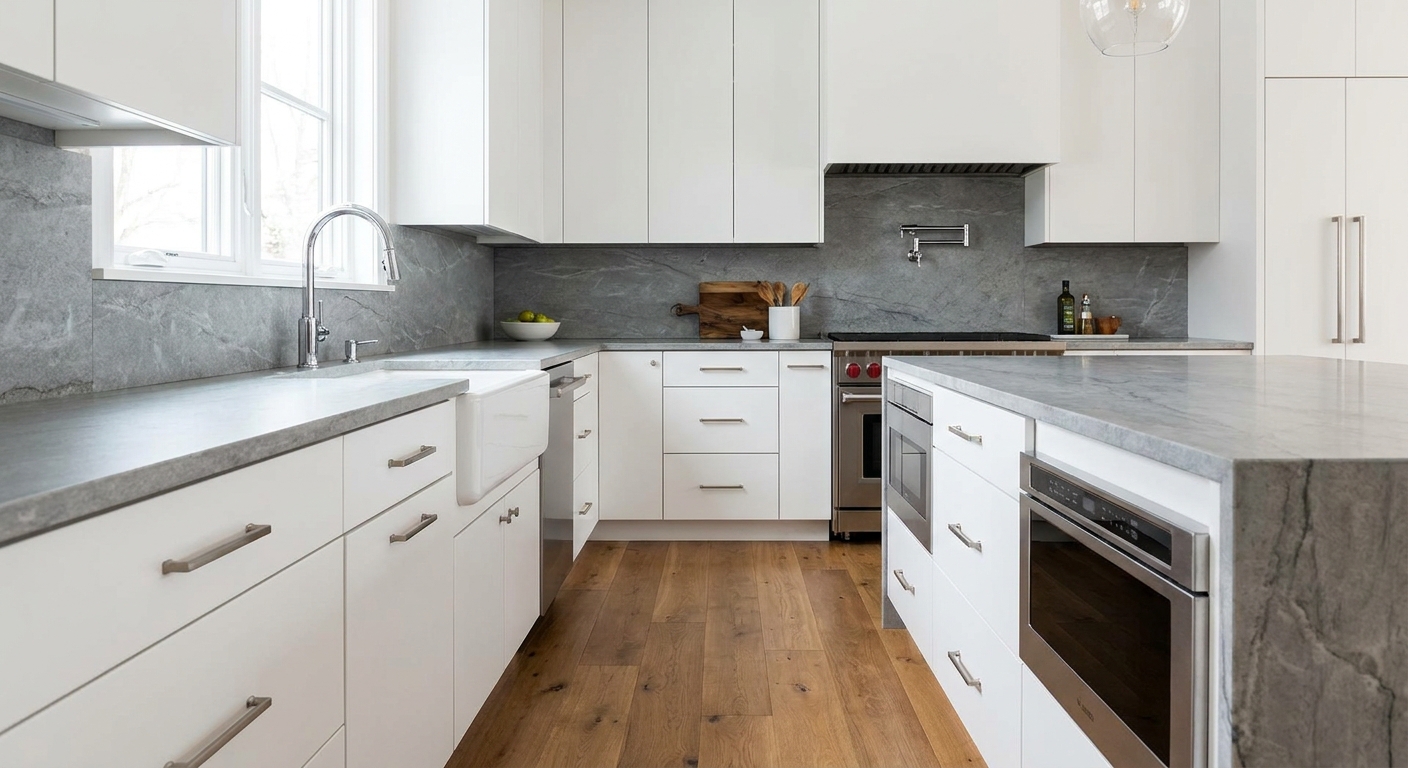
Bathrooms: keep it simple
Bathrooms are small, which means every finish choice is amplified. The trick is to simplify your “finish story.”
A simple bathroom formula
- One sheen for plumbing (faucet, shower, tub)
- One sheen for accessories (towel bar, hooks, mirror frame)
- Lighting matches one of the two (not a third random option)
If you want brushed and polished together, try this: brushed as the everyday touchpoints (hardware and towel bars) and polished as the sparkle (faucet or lighting). It reads like jewelry instead of noise.
Two quick bathroom recipes
- Bright and airy: polished chrome faucet + polished chrome vanity light + brushed nickel towel bar and hooks.
- Warm and calm: brushed nickel shower set + brushed nickel towel hardware + polished chrome faucet + one small brass accent (mirror frame or sconce backplate).
Pairings that usually work
These are common combinations that tend to behave well in real homes. Think of them as friendly starting points, not rules.
Brushed nickel + polished chrome
- Best for: transitional kitchens, classic baths, homes with stainless appliances
- Why it works: both are in the silver family, so the mix is subtle.
- Styling tip: choose pieces with similar undertones where you can, ideally from the same brand line for the most visible items. Add warmth through wood, cream tile, or a soft brass accent so it doesn't feel too icy.
Brushed stainless steel finish + polished chrome
- Best for: modern kitchens with stainless appliances
- Why it works: stainless gives you a grounded, utilitarian base and chrome adds crisp sparkle.
- Styling tip: repeat chrome in one more place, like pendants or a soap dispenser, so it doesn't look like a one-off.
Brushed nickel + polished nickel
- Best for: elegant, layered spaces that still want cohesion
- Why it works: same metal family, different sheen. It reads intentional and quietly luxe.
- Styling tip: keep polished nickel to highlight moments, like a statement sconce or a mirror frame.
What makes it look accidental
Let's gently name the usual culprits. Fix these, and most “something feels off” moments settle down fast.
- Too many sheens in one line of sight. Faucet, soap pump, cabinet pulls, and pendant chain all different is where things start to feel jittery.
- Random one-offs. A single polished element with no repeat looks like a leftover from a previous plan.
- Competing temperatures. Cool chrome next to warm brass can be beautiful, but only if you bridge it with repeated accents or a mediator.
- Mixing brands with noticeably different color casts. One “brushed nickel” can look yellowish, another can look gray. If possible, order samples or stick to the same manufacturer for the most visible pieces.
- Ignoring lighting. Warm bulbs can make nickel look warmer, daylight can make it look cooler. Always judge finishes in the room's actual light.
A quick reset for a confused room
If your kitchen or bath already has a mix and it feels off, here's how I'd troubleshoot it in a calm, no-drama afternoon.
- List what's expensive to change (plumbing, built-in lighting, appliance trim). These are your constraints.
- Choose your lead sheen based on what you're keeping.
- Repeat the lead sheen twice in visible places if it's currently only appearing once.
- Pick one supporting sheen and remove any extra “third finish” pieces that don't have a purpose.
- Bridge undertones with one warm element (wood, brass accent, creamy stone) or one cool element (gray veining, slate tile), depending on what the room needs.
- Check it at night with your normal lights on. If it looks harmonious then, you've won.
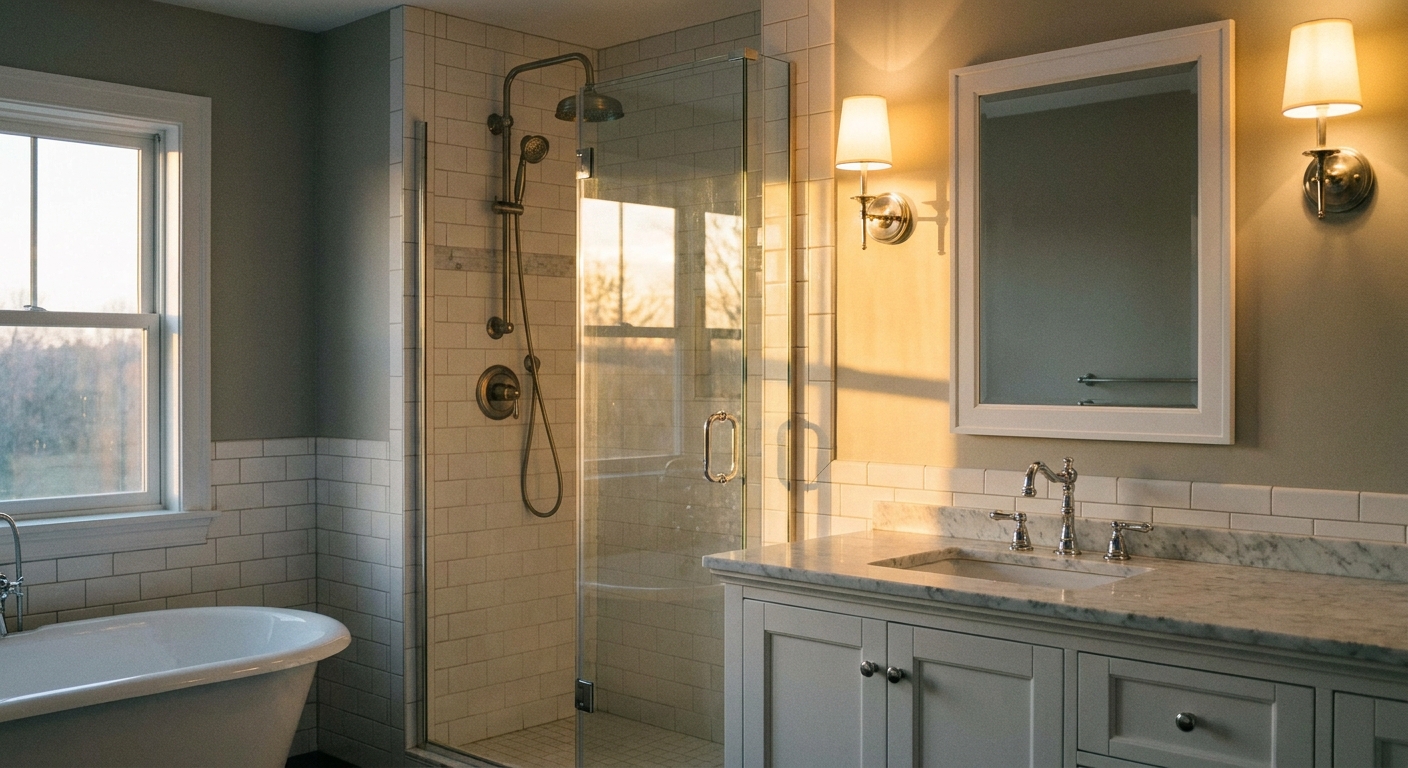
Little details that feel designed
Once your hierarchy is set, these tiny moves make the whole mix feel like it was always meant to be.
- Match shapes, not just finishes. If your faucet is curved, choose pulls with a soft curve too. Shape harmony smooths over sheen contrast.
- Keep the finish consistent within one object. A light fixture with mixed finishes can work, but it should look deliberate. Skip pieces that look like the manufacturer ran out of one finish.
- Use patina as permission. Vintage or aged pieces, like an antique mirror or timeworn brass sconce, make mixed finishes feel collected and personal.
If you want your mix to feel “real home” instead of “display kitchen,” add one thing with history. A slightly timeworn frame, a vintage tray, an old apothecary jar. Patina is the friendliest bridge between different sheens.
FAQ
Can I mix brushed nickel and polished chrome in the same bathroom?
Yes. Keep plumbing mostly one finish, then use the other as a repeatable accent, like a mirror frame plus towel bar. Make sure both finishes lean similar in undertone, and avoid adding a third silver that looks different again.
Should my faucet match my cabinet hardware?
Not necessarily. What matters more is that your lead sheen repeats and that the supporting sheen shows up at least twice. A faucet can be your sparkle moment while hardware stays soft and brushed.
How many finishes is too many?
In kitchens and bathrooms, two is easiest. Three can work if one is clearly a small accent and it repeats intentionally. More than three usually starts to feel busy unless the space is very eclectic and heavily layered with texture.
The Velvet Abode takeaway
Brushed and polished finishes can absolutely live together, peacefully and beautifully, without that “why does this feel off?” buzz in the back of your mind. Pick a lead sheen, repeat it in anchor spots, choose undertones on purpose, and let the supporting sheen show up like a thoughtful accessory, not a surprise guest.
If you're stuck between two options in the store, choose the one you'll touch every day and love seeing in your own light. A home that feels like a comforting hug usually starts with choices that feel like you.