Melted Plastic Stuck Inside a Dishwasher

Clara Townsend
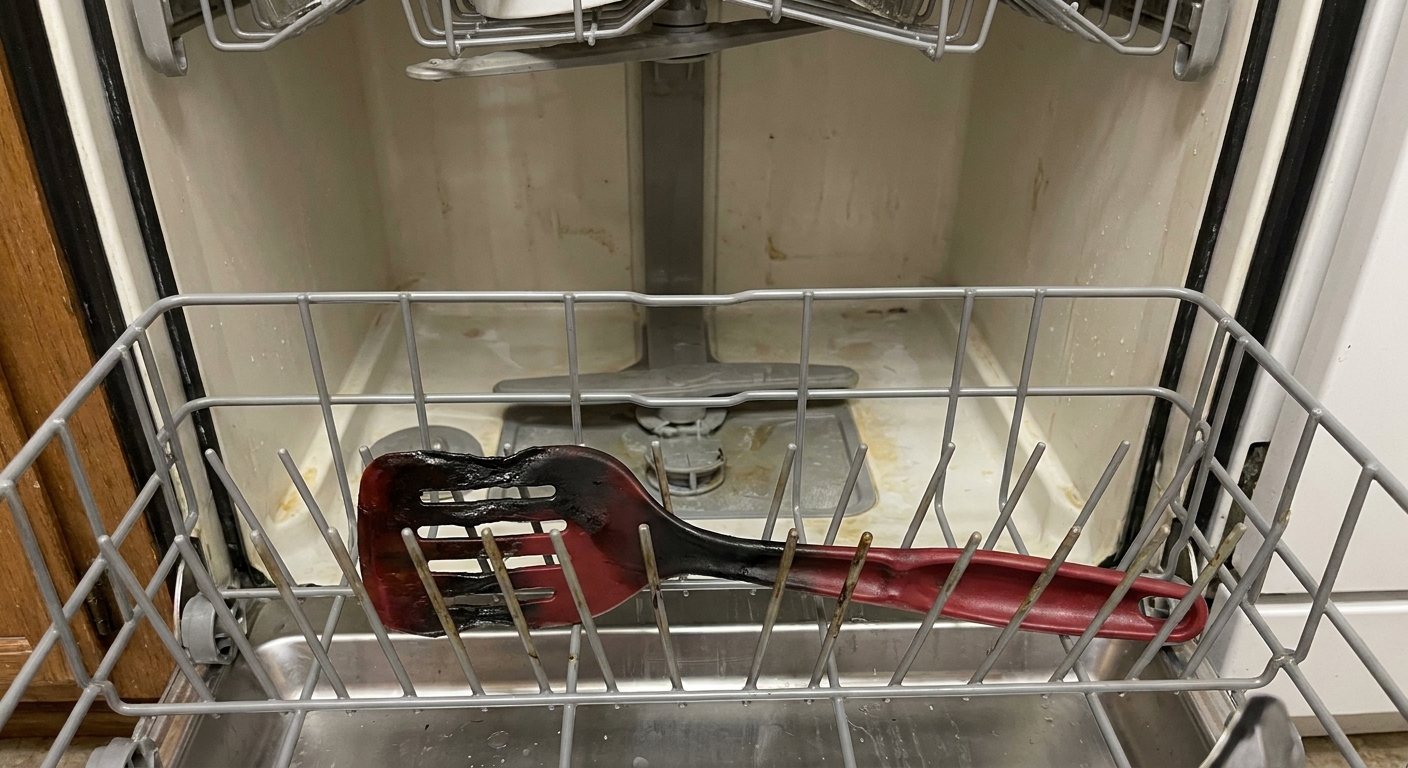
The first time I found a melted spatula inside a dishwasher, I stared at it like it was modern art I never asked for. That lumpy, waxy puddle smell is immediate, and if you rent, the bigger fear is making things worse by attacking it with the wrong tool. Good news: melted plastic in a dishwasher can often be removed safely with patience, cold, and gentle lifting, especially when it is on a rack or the tub surface.
This is the renter-friendly approach: stabilize the plastic, loosen it without gouging enamel, plastic, or stainless, and avoid doing anything that could nick a heating element, damage a rack coating, or compromise a seal.
Before you touch it: safety and quick triage
Start here, even if you are tempted to pry.
- Turn the dishwasher off and let it cool completely. If it just ran, give it at least 60 minutes.
- Cut power if you can. If your unit is hardwired or you are unsure, switch the breaker off. At minimum, leave it off at the control panel and do not start a cycle while you work.
- Ventilate. Open a window or run the hood fan. Melted plastic odor can linger.
- Figure out where it melted. Common spots are the bottom rack, the tub floor, the filter area, or near a heater.
Where it melted matters. Plastic on a rack is usually straightforward. Plastic on a heating element, in the filter area, or down in the sump or pump zone can be trickier, and that is where renters should be extra cautious.
What a renter can do safely
As a general rule, renters are safest doing removal and cleanup that does not involve disassembly or aggressive scraping. These are usually safe:
- Cooling and lifting plastic from racks or the tub surface
- Removing racks for better access
- Checking the door gasket and wiping out any residue you can reach
- Checking the filter for loose plastic bits (if it twists out by hand)
- Wiping residue with mild dish soap
- Running an empty rinse cycle afterward
What I do not recommend in a rental: sanding, using harsh solvents, taking apart panels, removing heater covers, or using any blade tool inside the dishwasher.
Tools that help
You do not need anything fancy. Aim for soft, flexible, and nonmetal.
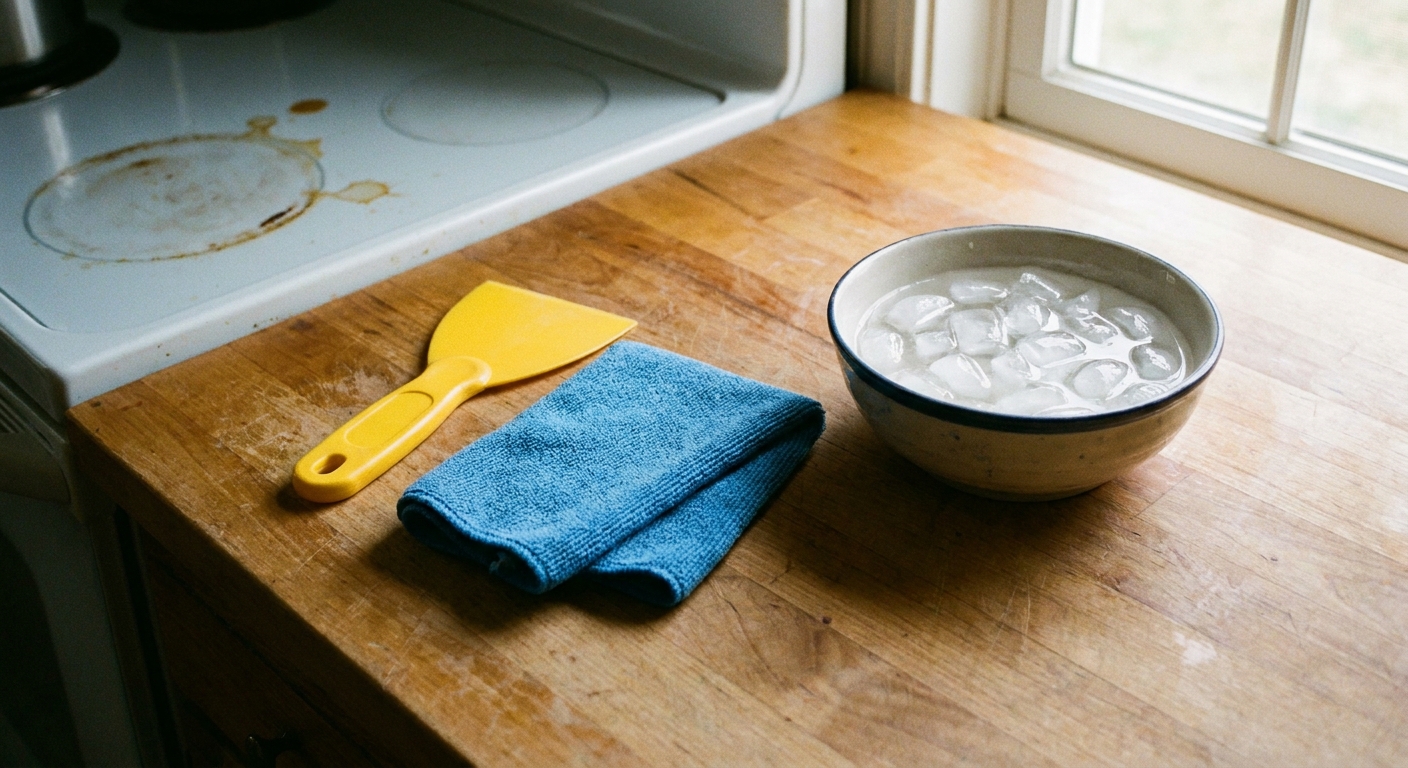
- Ice cubes or a zip-top bag of ice
- A plastic putty knife or an old plastic gift card
- Wooden spoon or wooden chopstick for gentle nudging
- Microfiber cloths or paper towels
- Dish soap and warm water
- Baking soda (optional, for odor)
- Rubber gloves (optional, but helpful for grip)
Skip metal scrapers and razor blades. They can gouge the tub, slice a gasket, or nick rack coating.
Remove melted plastic from a rack
1) Pull the rack out and assess
Slide the rack out as far as it comfortably goes. If your model allows, lift it out completely and set it on an old towel. If the melted item is wrapped around tines, do not force it. You are trying to avoid bending or chipping the rack coating, which can lead to rust later.
2) Freeze the plastic until it turns brittle
Pack ice in a bag and lay it directly on the melted plastic for 10 to 20 minutes. The goal is to make the plastic contract and harden. You may even hear a faint crackle as it firms up, but do not worry if you do not.
3) Gently lift, do not pry
Use a plastic putty knife or a plastic card to lift the edges. Think of it like peeling a sticker off glass. Slow, steady pressure usually beats force.
4) If it is still rubbery, switch tactics
Some plastics do not get very brittle with ice, especially thicker blobs. In that case:
- Try another round of ice and approach from a different edge.
- Wiggle the plastic slightly side to side to break the bond.
- If a utensil is fused to the rack, you may need to sacrifice the utensil and cut it away from the blob using household scissors, keeping the scissors away from the rack coating.
5) Wash the rack
Once the chunk is off, wash the rack with warm water and dish soap. Dry it well. If you see any exposed metal where the rack coating got nicked, avoid picking at it. In a rental, that is worth mentioning to maintenance so it can be sealed before rust spreads.
Remove melted plastic from the tub
Dishwasher tubs vary. Many are stainless steel or plastic, and some older models are porcelain or enamel-coated steel. Either way, you want to avoid gouges. Gouges can stain, rust, or become little grime magnets.
1) Cool it hard
Lay a bag of ice on the plastic blob for 15 to 30 minutes. Add a towel underneath if the ice bag wants to slide.
2) Lift with a plastic edge
Use a plastic putty knife or card to lift one edge and work around the perimeter. If it breaks into pieces, that is fine. Keep going slowly.
3) For thin smears, try rolling it up
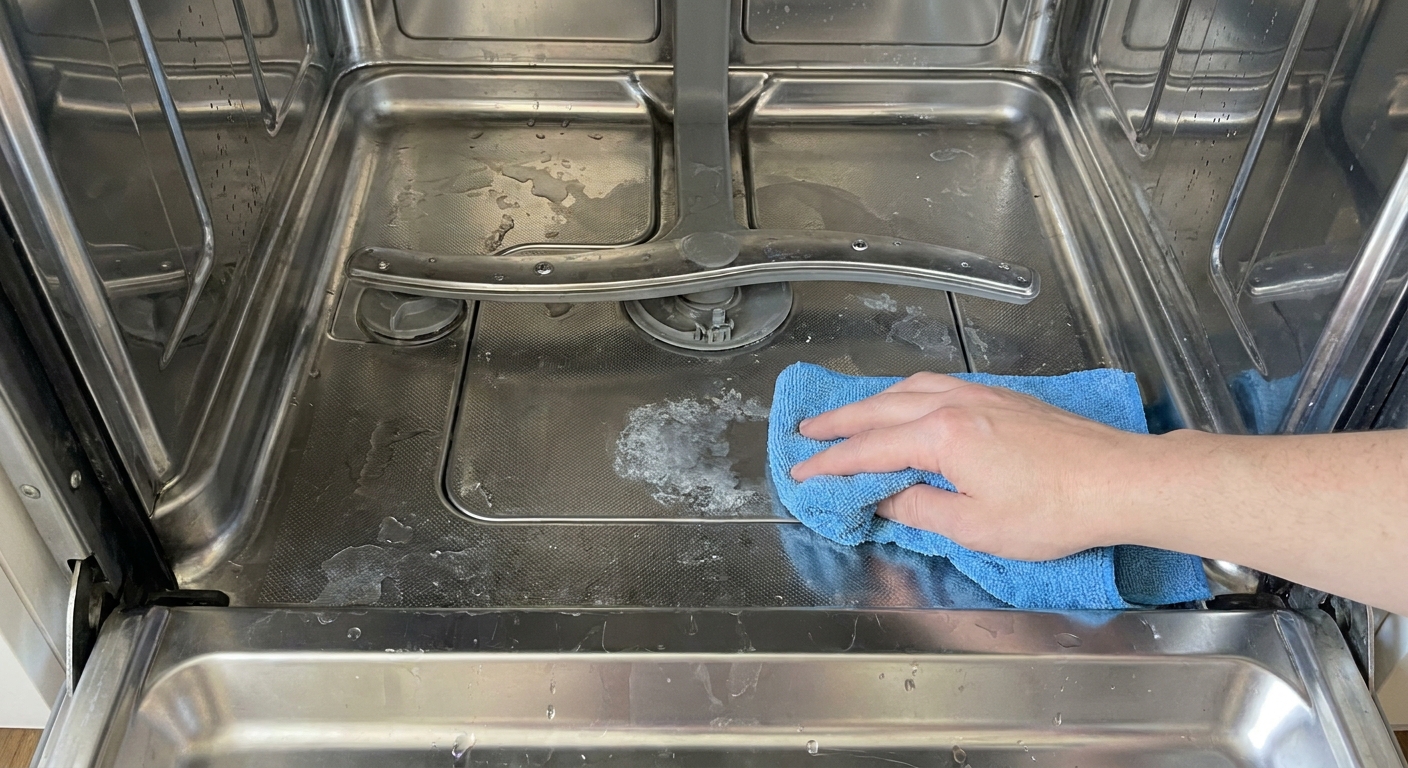
If there is a thin film left behind, you can often roll it up by rubbing firmly with a damp microfiber cloth or the pad of your thumb through a cloth. It is oddly satisfying when it works.
4) Finish with a gentle wash
Wipe the area with warm soapy water, then wipe again with clean water so no soap remains.
Do not scrape a heating element
Some dishwashers have an exposed heating element at the bottom. Others use a hidden heater or a different heating system entirely. If you do not clearly see an exposed element, do not go hunting for it. Just focus on what you can safely access.
If you do have an exposed element and melted plastic landed on it, this is where I want you to be extra conservative.
Avoid these moves
- Do not scrape the heating element with metal tools. A scratch, dent, or weakened spot can shorten its life.
- Do not chip at it with anything sharp. You can damage the element coating.
- Do not run repeated hot cycles to burn it off. That can create stronger odor and potentially more smoke.
What you can try
- Let it cool fully, then use ice in a bag to harden the plastic sitting on or near the element.
- Try lifting only if it releases easily with a plastic tool, with almost no force.
If the plastic is truly bonded to the heating element, if you see deformation, or if you are unsure what you are looking at, stop and call maintenance. In a rental, this is exactly the sort of repair you want documented.
When to call maintenance
I am all for confident DIY, but there are clear moments when the smartest move is stepping back.
- Plastic is stuck to a heating element and will not lift with gentle cooling and light pressure.
- You smell burning plastic when the dishwasher is off, or the smell returns immediately when it runs.
- The dishwasher shows error codes, stops mid-cycle, or will not heat or dry afterward.
- You hear grinding or rattling that suggests plastic bits made it into a moving part or pump area.
- You see exposed wires, cracked parts, or melted spray arm pieces.
- The rack coating is damaged and metal is exposed across a large area.
- The tub surface is gouged or chipped down to bare metal.
If you need to message a landlord or property manager, be simple and factual: what melted, where it is stuck, and whether you see damage. A quick photo with the rack pulled out helps a lot.
After removal: get rid of the smell
Even after the plastic is gone, the smell can cling to the warm, humid interior like it is paying rent.
Do this in order
- Wipe down the interior around the affected area with warm soapy water, then wipe with clean water.
- Check the filter and door gasket for trapped plastic flecks, then rinse or wipe them clean.
- Run a short hot cycle empty if your dishwasher is functioning normally. Skip heated dry the first time if you are nervous about lingering residue.
- Air it out by leaving the door cracked open for a few hours.
If odor lingers
- Sprinkle a light layer of baking soda on the tub floor, let it sit overnight, then run a rinse cycle.
- Consider running a manufacturer-recommended dishwasher cleaner (the kind meant for dishwashers) if you still notice odor after a normal wash.
Avoid mixing strong cleaners or using anything not meant for dishwashers. The interior is not a kitchen counter. It is a small appliance with seals and parts that can react poorly to harsh chemicals.
Prevent it next time
Most melted plastic incidents happen because something lightweight shifts on the bottom rack. A few small habits help:
- Keep plastic on the top rack only, unless it is clearly labeled dishwasher-safe and bottom-rack safe.
- Angle lightweight containers so water does not pool, and secure lids so they cannot flip.
- Do not crowd the bottom rack near the heater area.
- Use the utensil basket thoughtfully so spatulas and measuring spoons do not slide down through the rack.
Quick FAQ
Will melted plastic damage my dishwasher?
It can, but not always. Melted plastic on a rack is usually just a cleanup issue. Melted plastic on a heating element or in moving parts can cause odor, poor heating, or component damage. When in doubt, call maintenance.
Is it safe to keep using the dishwasher after I remove the plastic?
If all plastic is removed, nothing is stuck to the heating element (if you have an exposed one), and the machine runs normally without a burning smell, it is typically fine. Run one empty cycle first to be sure.
What if tiny plastic flecks are everywhere?
Wipe what you can, check the filter, and look around the door gasket. If you suspect pieces entered the pump area (for example, you hear grinding or rattling), stop using it and call maintenance.
A final reminder
In a home, design is about the details. In a rental, so is maintenance. If you feel even slightly unsure about the heating element or you see damage, that is not you being dramatic. That is you being smart. Take a clear photo, send the message, and let the people responsible for the appliance handle the risky part.