Mattress Sagging in the Middle: Low-Cost Fixes

Clara Townsend
Clara Townsend is an interior stylist, vintage furniture enthusiast, and the creative voice behind Velvet Abode. With over a decade of experience transforming both cramped city apartments and sprawling fixer-uppers, she believes that a beautiful home is built on personal stories rather than massive budgets. When she isn't hunting for the perfect brass sconce at a local flea market, she can usually be found rearranging her living room for the third time this month.
A mattress that’s sagging in the middle can feel like your bed is gently (or not so gently) folding you into a taco. You wake up stiff, your shoulders creep forward, and somehow you’re always rolling toward the center like it’s magnetized.
Before you spend big on a replacement, it’s worth checking whether the problem is actually the mattress, the support underneath, or a mismatch between the two. Below are low-cost, reversible fixes that can buy you time, improve comfort, and help you decide if a new mattress is truly necessary.
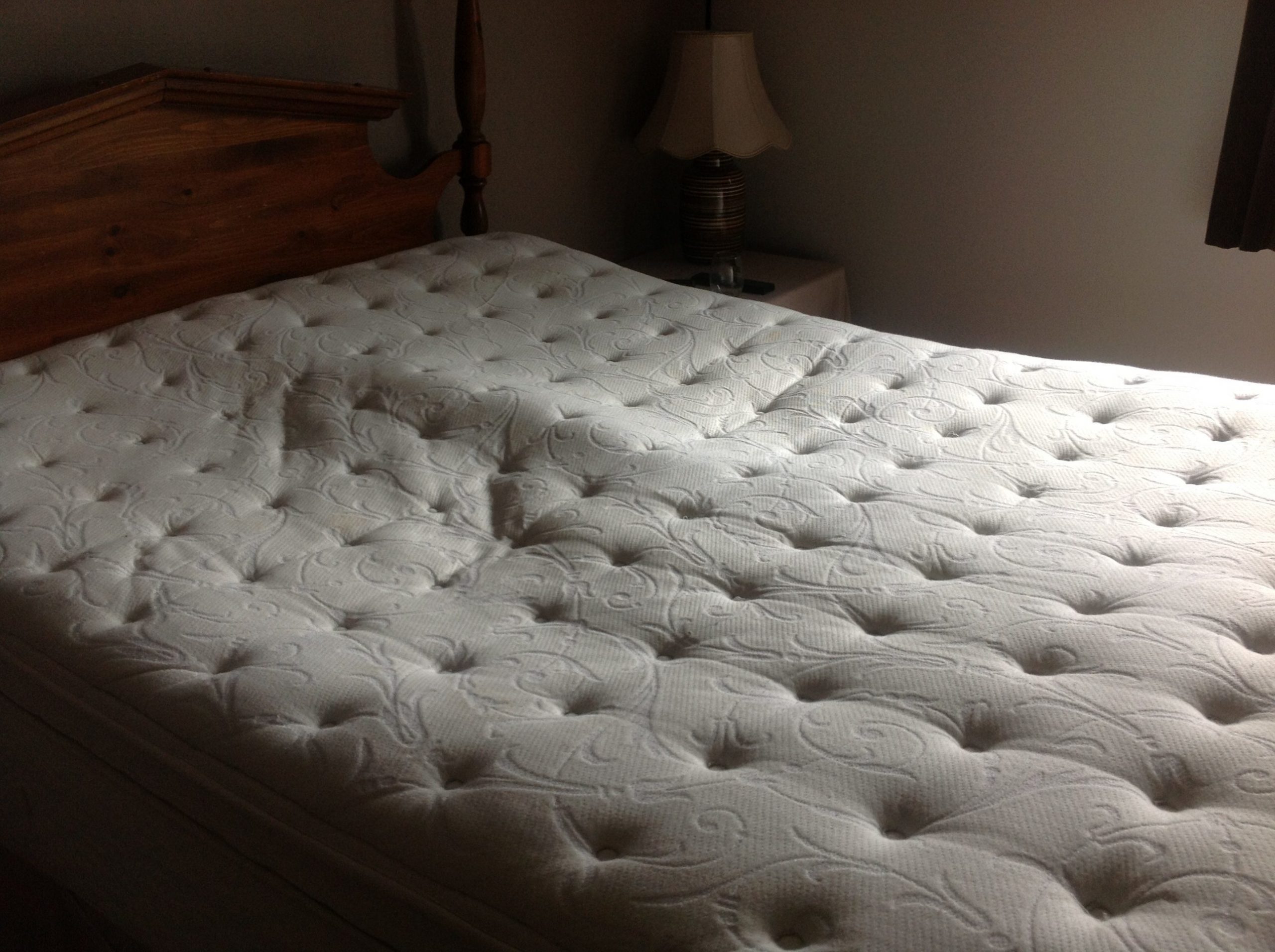
Why mattresses sag in the middle
Some sagging is normal as materials relax over time, but a noticeable dip is usually caused by one (or a combo) of these issues.
1) Worn foam or broken internal support
Foam can soften and compress permanently, especially in the spots you sleep on most. In innerspring and hybrid mattresses, coils can weaken, shift, or break. When the center zone is compromised, you get that classic hammock feeling.
2) Inadequate slats or too much spacing
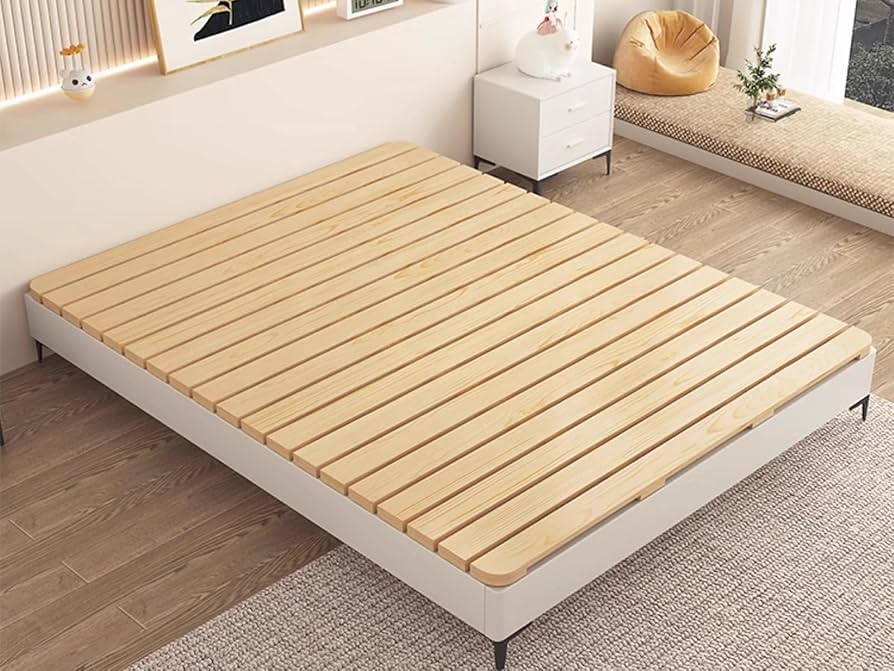
Slats that are too far apart let the mattress bow between them. Many foam and hybrid mattresses do best with slat spacing typically around 2 to 3 inches (5 to 7.5 cm), but it varies by brand. Check your mattress specs or warranty requirements, because some are pickier than others. Thin slats can also flex more than you realize.
3) Missing or weak center support
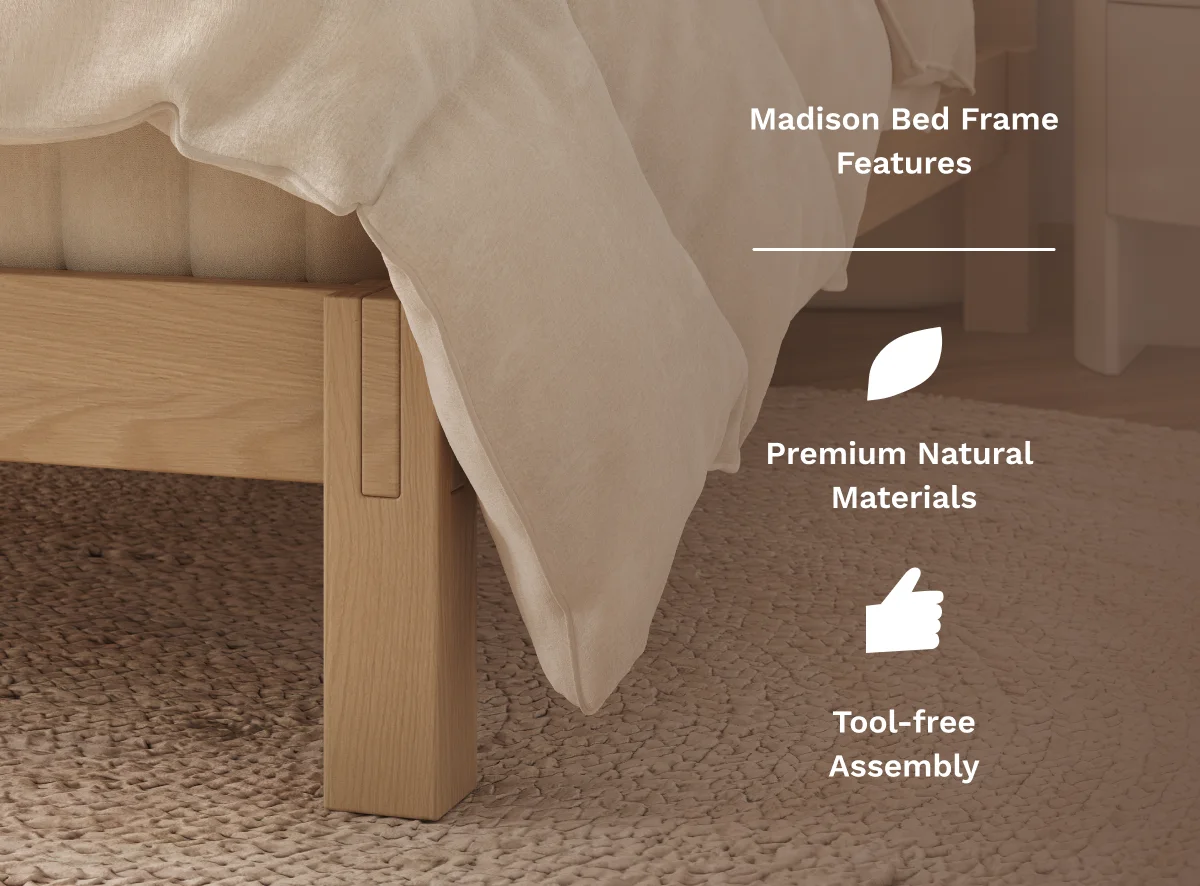
For most queen sizes and up, a center support beam is important, often with one or more legs that firmly touch the floor. Some platform beds use different engineering, so confirm your frame’s design. If the middle of the frame dips, the mattress dips, even if the mattress is still in decent shape.
4) Foundation mismatch
Putting a foam mattress on an old box spring, a bowed platform, or an adjustable base that is not fully flat or properly locked can create sagging that looks like mattress failure. Even a great mattress will struggle on a tired base.
Quick checks before you try fixes
Take ten minutes to do a mini investigation. It helps you spend money in the right place, not just throw solutions at the dip.
- Strip the bed down to the mattress and base. Pillowy toppers can hide what’s really happening.
- Look at the frame on bare floor. Is the center beam straight? Are legs wobbling or missing?
- Measure slat gaps. If gaps are wider than about 2 to 3 inches (5 to 7.5 cm), your mattress may be sinking between them.
- Check the floor. Old homes can be charming and slightly tilted. A leaning bed can mimic “middle sag.”
- Try the straightedge test. Place a long straightedge across the mattress surface (a level, yardstick, or long ruler works well). Measure the deepest point of the dip with a ruler. If the dip is obvious even when the mattress is on the floor, the mattress is the likely culprit.
- Check weight ratings. Bed frames and foundations have limits. If the frame is under-rated for the combined weight of sleepers plus the mattress, sagging and damage get more likely.
- If you use an adjustable base, go fully flat. Make sure all sections are aligned and locked as designed, and confirm your mattress is compatible.
Safety note: If you see cracked wood, bent metal, or a frame that feels unstable, fix or replace the base first. A failing frame can collapse and cause injury.
Low-cost fixes you can try first
These options range from free to modest, and they’re all reversible. Start with the simplest step and work upward.
Rotate it (flip only if designed to flip)
If your mattress is one-sided, rotate it 180 degrees so the head becomes the foot. This can redistribute wear, especially if you sleep in the same spot every night.
- How often: Try rotating now, then every 3 to 6 months.
- Do not flip unless your mattress is explicitly labeled as two-sided. Many modern mattresses have comfort layers on top only.
- Protect your back: Mattresses are awkward. Ask for help if you need it.
Move it to the floor for one night
This is a fast way to isolate the problem. If the sag feels dramatically better on the floor, your foundation is the main issue. If it feels the same, you’re dealing with mattress wear.
Tip: For longer than a night or two, check your warranty and watch for moisture and airflow issues, especially with foam. Mold is not a design vibe.
Add a bunkie board or solid support layer
If your slats are wide-spaced or flexy, adding a supportive layer can be a game changer.
- Bunkie board: A thin, firm foundation made for platforms and slats. It is usually lighter and more breathable than a full sheet of wood.
- Plywood insert: A budget option, but choose a smooth panel that is at least 1/2 inch thick. Go thicker if you notice flex. Sand rough edges to avoid tearing fabric, and consider drilling ventilation holes if you live in a humid climate. For extra protection, you can wrap the plywood in a breathable fabric (like an old cotton sheet) to reduce snagging and splinter risk.
Safety note: Make sure any added panel lies flat and does not shift. If it slides, it can destabilize the mattress and frame.
If the dip is localized
Sometimes the middle sag is a small crater instead of a full hammock. In that case, targeted support can help you limp along comfortably while you plan for a replacement.
Use a support panel under the sag zone
For a center dip, you can place a narrow, firm support panel under the sagging zone, between the mattress and the base. Think of it like giving the weak spot a little backbone.
- Best for: Slat-related dips, mild to moderate sagging.
- A ready-made option: Commercial “mattress savers,” support boards, and foam wedges exist for this exact purpose. They are often easier to size and position than DIY materials.
- Avoid if: The mattress has broken coils or a sharp internal failure. A hard panel can create pressure points.
Avoid stuffing the sag from above
It’s tempting to shove blankets or towels under the fitted sheet. Unfortunately, soft materials compress quickly and can create uneven pressure on your back and hips.
If you need a temporary fix, go firm and flat underneath the mattress rather than lumpy on top.
The topper strategy
A topper can make a tired bed feel nicer, but it’s not a structural repair. The key is choosing the right type for your specific sag situation.
When a topper helps
- Mild sag with surface discomfort: If the mattress feels hard, lumpy, or pressure-pointy but isn’t deeply dipping.
- You need a short-term solution: Guest room, rental, or you are saving for a new mattress.
What kind of topper to choose
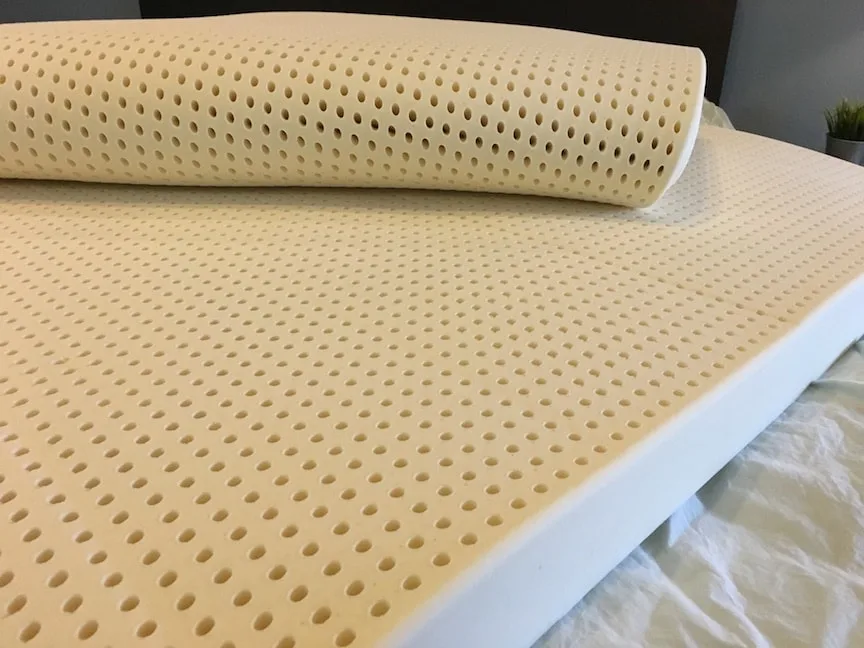
- Latex (medium to firm): Buoyant and supportive. Often a better choice than very soft memory foam when sagging is involved.
- High-density foam (firmer): Can smooth minor unevenness without letting you sink too far.
- Avoid ultra-plush toppers if the middle already dips. Soft-on-soft usually exaggerates the hammock effect.
Realistic expectation: A topper can make the bed feel more comfortable, but if your spine is still bowing toward the center, the underlying support problem remains.
Fix the base
The least glamorous purchases are often the most life-changing. A solid base is one of them. If your mattress is decent but your support is not, a small upgrade underneath can feel like a brand-new bed.
Strengthen slats
- Add more slats to reduce spacing.
- Replace thin slats with sturdier wood.
- Use non-slip pads if slats shift or rattle.
Add or repair center support
For many queen, king, and California king frames, a center beam and at least one support leg that reaches the floor makes a huge difference. If the leg does not touch firmly, the beam cannot do its job. Confirm your specific frame design and assembly instructions.
Safety note: If you are not comfortable modifying a frame, choose a ready-made support kit or consult a professional. A wobbly DIY fix can be worse than doing nothing.
When to replace the mattress
Sometimes the kindest thing you can do for your body is let the old mattress retire.
Signs it’s time
- The dip is deep and persistent even when the mattress is on the floor.
- You feel back or hip pain that improves when you sleep elsewhere.
- Visible damage like broken coils, lumps, or torn foam.
- It’s past its typical lifespan (often 5 to 10+ years, depending on materials, sleeper weight, and use).
- Warranty check: Many brands define a measurable body impression as a defect and require specific foundations and slat spacing. If you are within the warranty period, measure the dip according to their instructions before you add toppers or alter the base.
How to measure sag for warranty
- Remove all bedding and toppers.
- Place a straightedge across the surface (no weight on the mattress).
- Measure the deepest point with a ruler and take a clear photo.
Conservative tip: If you suspect a warranty claim, avoid long-term setups that may violate the fine print. Some brands do not love extended floor placement or non-approved foundations.
Order of operations
If you want a calm, low-cost plan, here’s the sequence I recommend:
- Inspect the frame and slats for spacing, bowing, center support, and weight rating.
- Rotate the mattress and reassess for a week.
- Test the mattress on the floor for a night to identify whether the base is the issue.
- Add a bunkie board or plywood layer if support is lacking.
- Try a supportive topper only after the base is corrected.
- Replace the mattress if the sag persists and affects sleep or pain levels.
Your goal is not perfection. It’s a bed that supports you safely, comfortably, and consistently. If a few small tweaks can get you there, you just saved yourself a big purchase and a lot of restless nights.