Mattress Dipping at the Edges: Frame, Slats, or Mattress?

Clara Townsend
Clara Townsend is an interior stylist, vintage furniture enthusiast, and the creative voice behind Velvet Abode. With over a decade of experience transforming both cramped city apartments and sprawling fixer-uppers, she believes that a beautiful home is built on personal stories rather than massive budgets. When she isn't hunting for the perfect brass sconce at a local flea market, she can usually be found rearranging her living room for the third time this month.
If your mattress is dipping at the edges, you are not imagining it. Edge sink can feel different from the classic “center sag” problem. Instead of a hammock in the middle, you get that subtle slide toward the perimeter, the shoe-tying sit that suddenly turns into a mini cliff, and the uneasy feeling that your bed is quietly betraying you.
The good news: you can usually get a strong clue in under 20 minutes with a flashlight and a little patience. The better news: many fixes are inexpensive, especially when the culprit is the frame, slats, or a tired foundation rather than the mattress core.
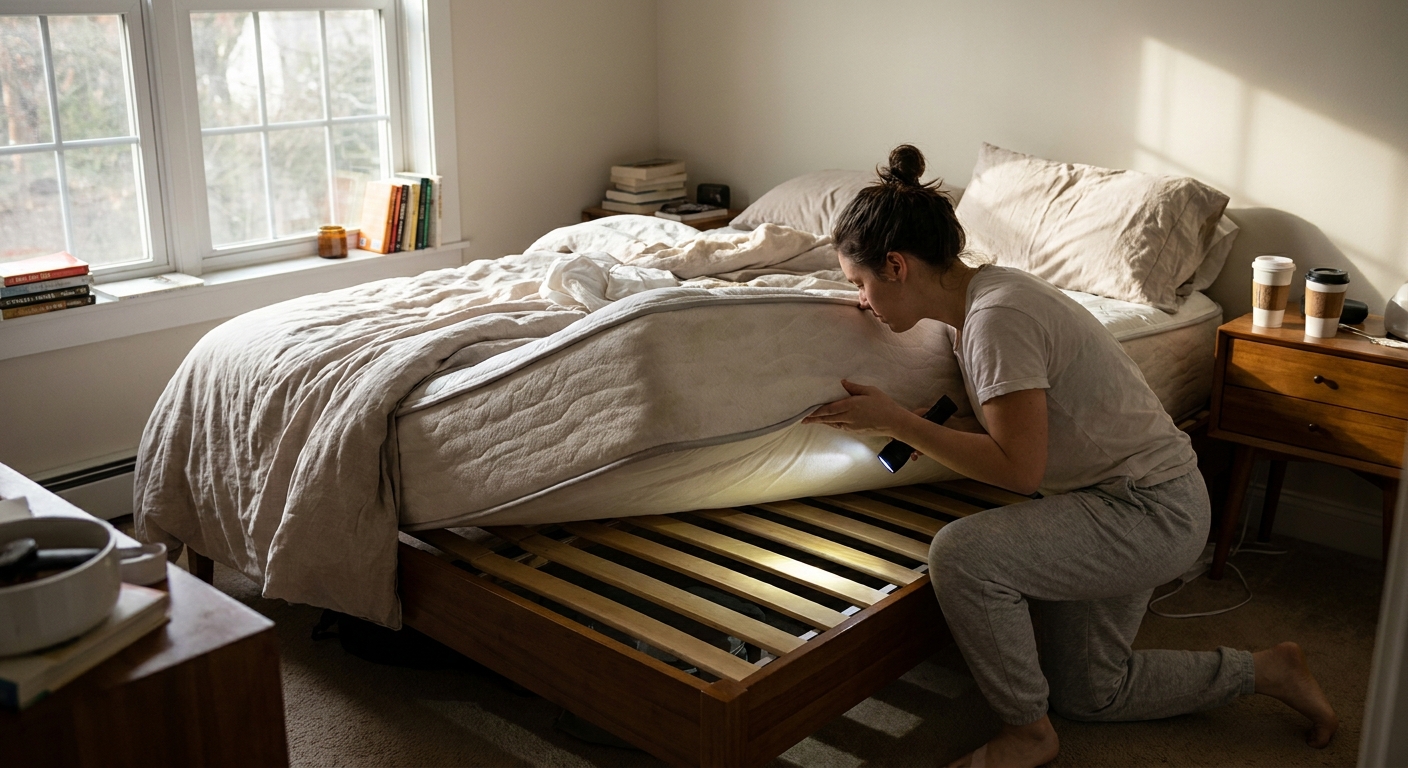
Edge dip vs center sag
These two complaints get lumped together, but they behave differently.
- Edge dip (edge collapse): The perimeter compresses more than it should. You feel it most when sitting on the side of the bed, sleeping near the edge, or getting in and out.
- Center sag: The lowest point is in the middle third of the mattress. You wake up feeling like you slept in a bowl.
Why the distinction matters: edge dip is often a support system issue (frame, rails, slats, box spring, platform, adjustable base deck) or a mattress with weak perimeter reinforcement. Center sag more commonly points to overall foam fatigue or coil breakdown in the main sleep zone.
Quick 15-minute diagnosis
Before you buy anything, do this simple sequence. It helps you separate “the bed beneath” from “the mattress itself.”
Step 1: Strip the bed and check the perimeter
Remove sheets and mattress protector. Stand at the side and look along the edge at eye level. You are checking for:
- Visible waves or crushing along one side only
- Seams that look stretched or piping that looks distorted
- A corner that sits lower than the others
Step 2: Straightedge test (edge)
Lay a broom handle, level, or straight board parallel to the edge, about 2 to 4 inches in from the side. You are checking for a trough that runs along the edge, not “bridging” the whole mattress width. Measure the deepest gap with a ruler or tape measure.
- Less than about 1 inch: Often normal plush compression, especially on pillow tops.
- 1 to 1.5 inches: Borderline. Keep testing the foundation before blaming the mattress.
- Over 1.5 inches: More likely true edge collapse or a major support failure beneath.
Step 3: Put the mattress on the floor
This is the clearest “who is guilty” test. Move the mattress to the floor and repeat the sit and straightedge checks near the edge.
- Practical note: Ask for help if your mattress is heavy, and use a flat, hard surface if possible. If your mattress is strapped, clipped, or otherwise attached to an adjustable base, do not force it. Use the adjustable-base checks below instead.
- If the edge feels better on the floor: your frame, slats, foundation, or adjustable base deck is the problem.
- If it still collapses on the floor: the mattress core or perimeter reinforcement is the problem.
Step 4: Swap orientation
If your mattress is one-sided (most are), rotate it 180 degrees. If it is flippable, flip it. Give it a few nights. This will not repair damage, but it can confirm localized wear and sometimes buy you time by redistributing pressure.
- If the dip “moves”: you are seeing localized wear, often from always sitting on the same side.
- If it does not change: look harder at the support system or a uniform design weakness.
If it is the frame
Frames fail quietly. A small bend in a side rail can translate into a big edge slump once your body weight hits that spot.
What to inspect
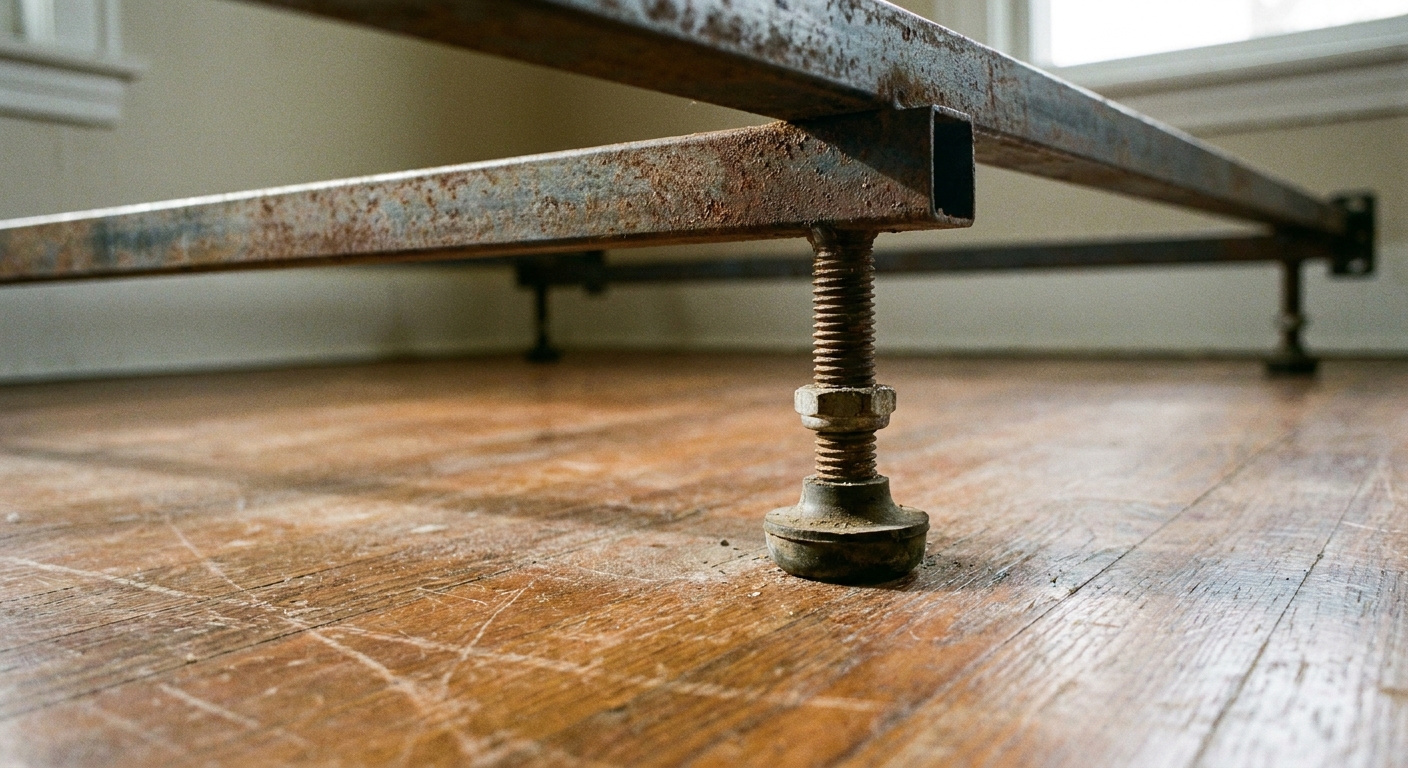
- Side rails: Look for bowing, cracks, or loose hardware where rails meet headboard and footboard.
- Center support: On many queen sizes and up, especially metal frames and slatted platforms, a center beam with at least one leg to the floor is required. Some heavy-duty platforms use different engineering (solid decks, multiple beams), so follow your frame’s spec.
- Legs: Wobbly legs or legs sinking into soft carpet can tilt the entire support plane.
- Corner joints: If a corner joint loosens, the mattress can dip diagonally at that corner edge.
Low-cost fixes
- Tighten everything: Yes, really. Use the correct tool, and do not forget the center beam brackets.
- Add center support: Many universal kits add a beam and legs for queen and king beds.
- Use furniture cups on carpet: They keep legs from slowly nesting into the pile.
- Replace bent rails: If a metal rail is visibly bowed, no topper on earth will fix that feeling.
If it is slats
Slats are one of those “out of sight, out of mind” parts of a bed. But edge dip loves a slat problem, especially on platforms with widely spaced slats or slats that have shifted.
What to look for
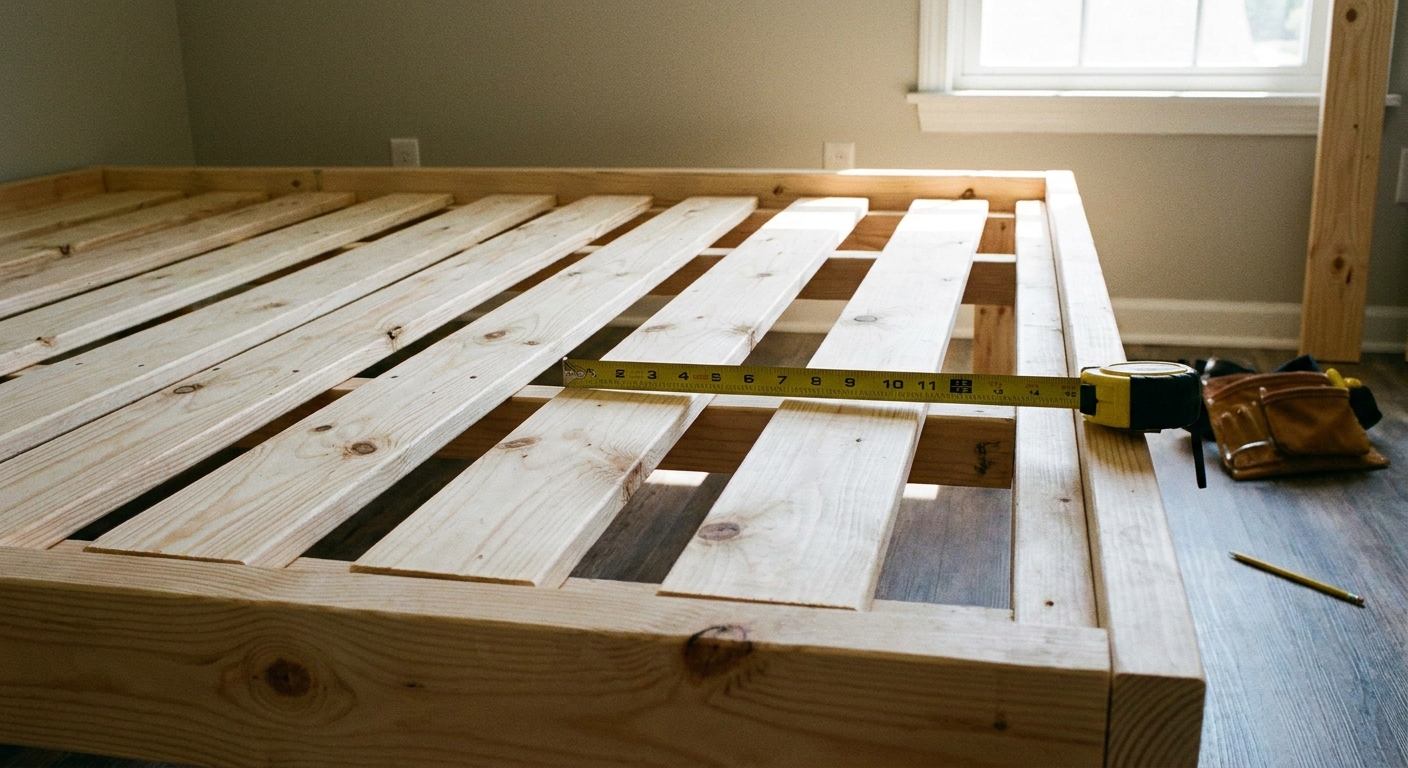
- Slat spacing: Check your mattress brand’s requirements. Many foam and hybrid mattresses do best with slats spaced around 3 inches or less, but some allow wider (often up to about 4 inches). Wider gaps can let edges sink, even if the middle feels fine.
- Broken or bowed slats: Run your hand across the top. A cracked slat can sit “almost flat” until weight hits it.
- Slats drifting outward: If slats slide, you can end up with a larger gap near the edge than you realize.
- Minimal side ledge: Some frames have a small lip for slats to rest on, and slats can tilt slightly under edge load.
Low-cost fixes
- Add a bunkie board: A thin, firm foundation layer spreads weight across the slats.
- Close the gaps: Add extra slats or replace with a slat kit that has closer spacing.
- Secure slats: Use slat holders, rubber caps, or non-slip grip pads so they stop migrating.
- Replace weak wood: If slats are thin and springy, upgrading to thicker slats can change everything.
If it is the foundation
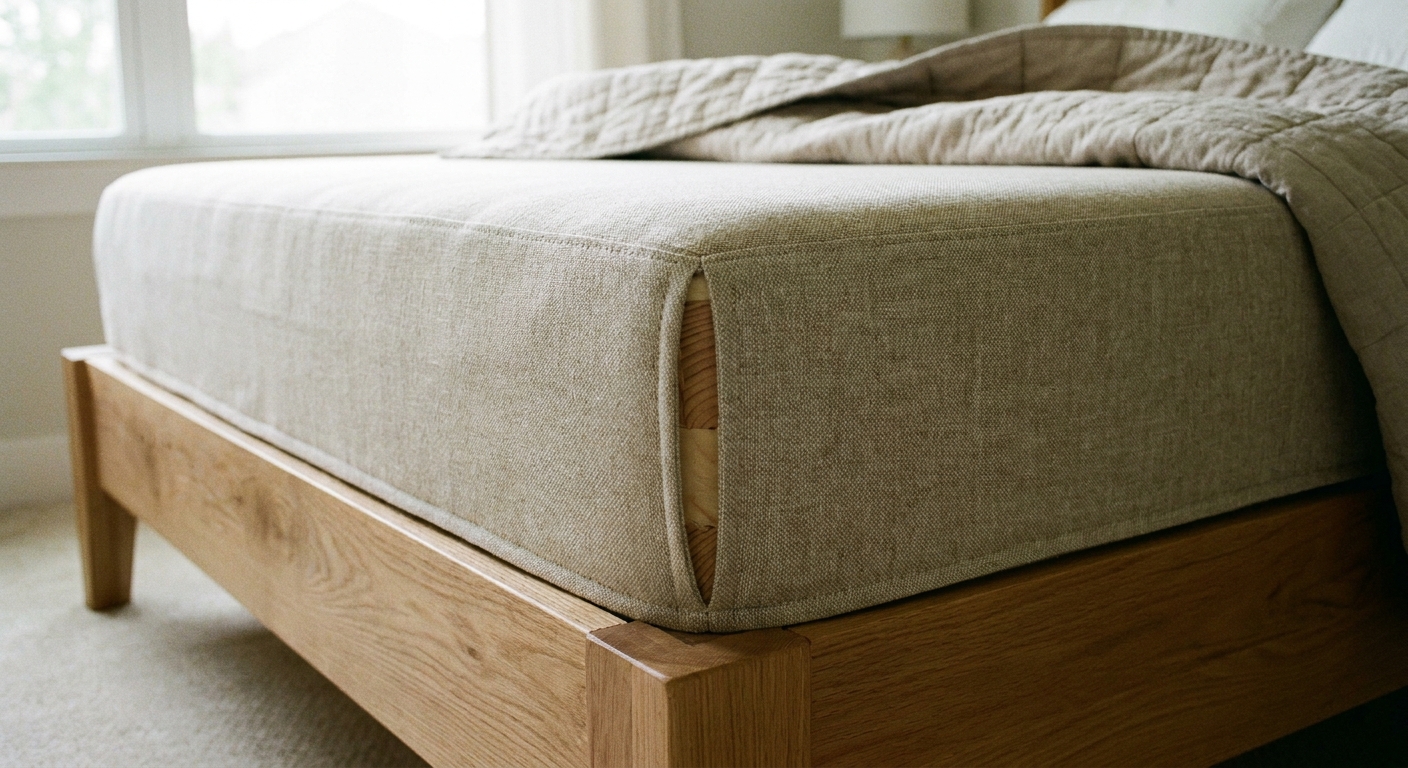
“Box spring” often means “the thing under the mattress,” but there are different types, and they age differently.
Common edge-dip problems
- Old true box springs: If it has actual springs inside, the perimeter can soften over time.
- Weak grid foundations: Metal grids can bend or detach at the edges.
- Unsupported foundation: A foundation sitting on a frame without the required center support can sag, pulling edges down with it.
- Wrong size fit: A slightly undersized foundation can leave the mattress edge less supported, especially on queen and king sizes.
How to test it
- Remove the mattress and press along the foundation edge with your hands. It should feel firm and even.
- Place a straight board across the foundation and look for bowing near the sides.
- Listen for creaks and crunches when you apply weight near the perimeter.
Fix options
- Replace the foundation: If the edge is soft or the frame is bending, replacement is usually more effective than patching.
- Add a bunkie board on top: Great if the foundation is basically fine but a little too flexible.
- Check weight limits: Foundations and frames have limits that include the mattress plus sleepers. A heavy mattress on a light-duty base can create edge issues fast.
If it is an adjustable base
Adjustable bases are great, but they add a few “moving parts” checks that a normal platform bed never has.
What to check
- Deck panels and gaps: Make sure the mattress is fully supported across the base, especially near the sides. Some bases have small gaps at the perimeter that can exaggerate edge sink.
- Hinges and alignment: If the head or foot articulation sections sit unevenly, you can get a subtle tilt that feels like an edge dip.
- Retainer bar pressure: A foot retainer bar that is bent or pressing oddly can change how the mattress sits, especially when the base is flat again.
- Leveling and legs: Confirm all legs are tight, equally extended, and not sinking into carpet. An out-of-level base can feel like a collapsing edge.
Quick test
- Put the base in a fully flat position, remove bedding, and look along the deck from the side for any visible low spots.
- If possible, place a straight board across the deck near the edge to spot dips in the base itself.
If the mattress only feels “dippy” when the base is articulated (and feels fine when flat), that points more to base mechanics and positioning than mattress failure.
If it is the mattress
If the mattress dips on the floor, or if only one long side is collapsing where you sit every day, you are likely dealing with the mattress itself.
Why edges fail
- Foam fatigue: Softer foams near the perimeter compress and do not rebound.
- Weak edge encasement: Some hybrids use thin foam rails that soften before the center coils do.
- Coil issues near the edge: In innersprings and hybrids, perimeter coils can lose tension, especially if the edge design is not reinforced.
- Habitual “perch spot” wear: Sitting in the same place to put on socks can wear an edge faster than sleeping does.
Stop tinkering signs
- The edge dip is clearly visible and increasing month to month.
- You feel like you are rolling out, or you avoid half the bed.
- Your hip or shoulder feels “jammed” when you sleep near the edge.
- The mattress is within warranty and you can document the indentation.
Warranty note
Most warranties require a measurable body impression with no weight on the mattress (commonly around 1 to 1.5 inches, but some brands use different thresholds). Typically you must measure with the mattress bare (no topper), on an approved support system. Check your brand’s warranty page for the exact method and limit, then take photos of the setup and your measurements for any claim.
Topper: yes or no
I love a topper for comfort tuning, but toppers are not structural braces. They can soften the sensation of an edge, but they cannot rebuild a broken perimeter.
A topper can help if
- The edge feels a little firm or uneven, and you want a more forgiving surface.
- You have mild edge compression under 1 inch and your base is solid.
- You primarily notice discomfort, not instability.
A topper will not help if
- You feel like you are sliding off the bed.
- The edge collapses when you sit, especially in one spot.
- Your slats are too widely spaced, your frame is bending, or your adjustable base deck is uneven.
What I would choose
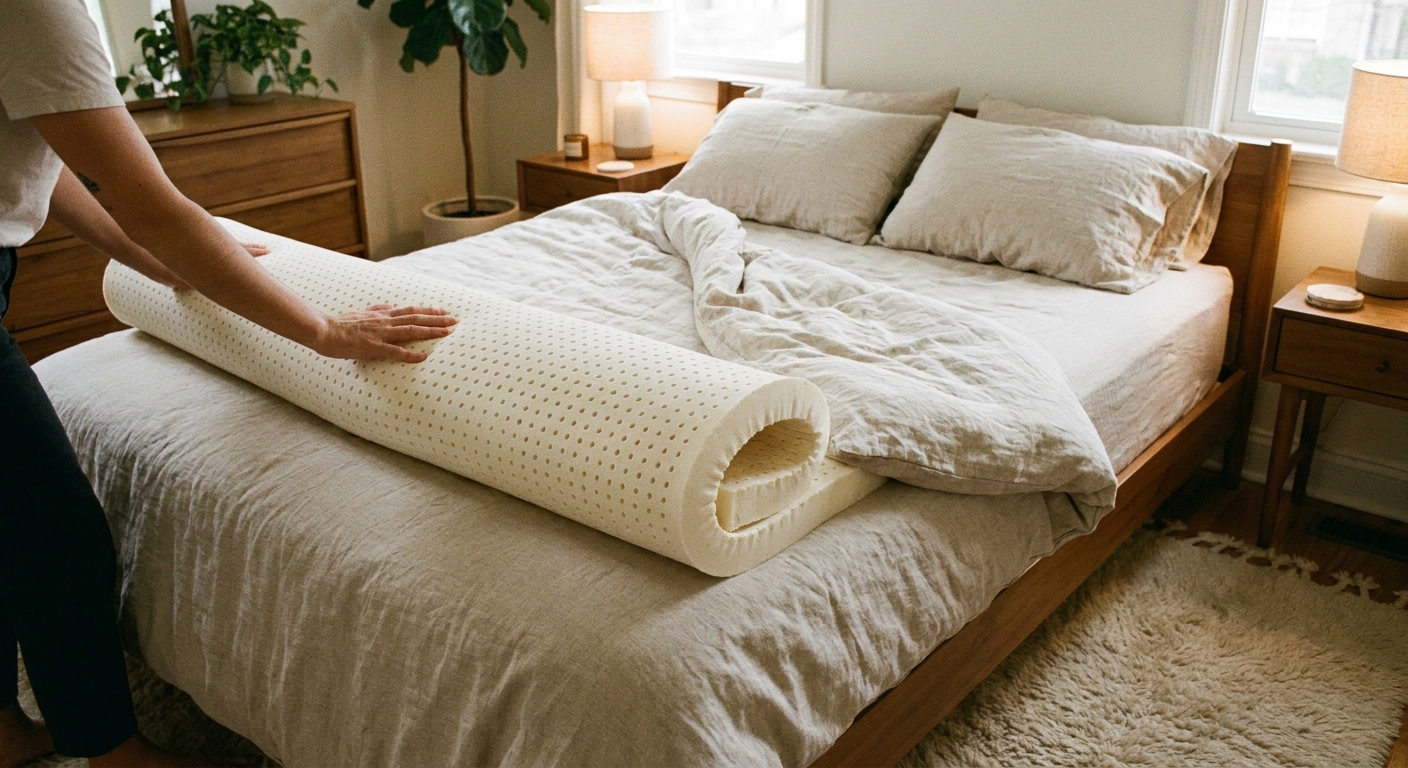
- Latex topper (2 inches): Great for buoyant support without that stuck-in feeling.
- High-density memory foam (2 to 3 inches): Cozy, but it can make weak edges feel weaker if the base is already failing.
Easy upgrades
If you want the short list of “start here” upgrades, this is it.
- Add center support: Especially for queen, king, and California king, if your frame design calls for it.
- Improve slat support: Reduce spacing or add a bunkie board.
- Replace a tired foundation: If it creaks, bows, or feels soft along the edge, it is done.
- Level the bed: Tighten hardware, stabilize legs, and use cups on carpet.
- Flatten and level an adjustable base: Tighten legs, check deck alignment, and confirm there are no edge gaps.
Think of it like styling a room. A gorgeous vintage mirror still looks off if the hook is loose. Your mattress is the same. Comfort depends on what it is resting on.
When to replace
Replace the mattress (or pursue warranty) when:
- The edge collapse remains on the floor and is clearly measurable.
- The mattress is older and you have also noticed general softening or new pressure points.
- You need strong edge support for mobility, or you share the bed and rely on the full surface.
If you are shopping, look for mattresses that specifically mention reinforced edge support (higher-gauge perimeter coils, sturdy foam encasement, or extra edge rows) and confirm the foundation requirements. Also check the fine print: slat spacing, center support needs, and adjustable base compatibility can affect both performance and warranty.
Checklist
- Test the mattress on the floor to separate core vs base (when practical).
- Check frame rails, center support requirements, and leg stability.
- Measure slat spacing and replace broken or bowed slats.
- Press-test the foundation edge for softness and bowing.
- For adjustable bases, check deck gaps, hinge alignment, and leveling.
- Consider a bunkie board for quick, even support.
- Use a topper only for comfort, not structural collapse.
- Document measurements if pursuing warranty.
If you want, tell me your bed size, your support setup (platform slats, box spring, adjustable base), and whether the dip is on one side or both. I can help you narrow the culprit with just a few details.