Loose Back Cushions That Slump

Clara Townsend
Clara Townsend is an interior stylist, vintage furniture enthusiast, and the creative voice behind Velvet Abode. With over a decade of experience transforming both cramped city apartments and sprawling fixer-uppers, she believes that a beautiful home is built on personal stories rather than massive budgets. When she isn't hunting for the perfect brass sconce at a local flea market, she can usually be found rearranging her living room for the third time this month.
If your sofa looks a little tired lately, odds are the back cushions are telling on it. You know the look: the tops lean forward like they are listening hard, the middle caves in, and no amount of “karate chopping” brings back that crisp, inviting shape.
Good news: loose back cushions are usually fixable with small, targeted tweaks. This page is all about back-cushion slumping specifically, not seat-cushion sliding , not a sagging frame, and not a full-on restuff overhaul. Think: tighten what is already there, add just enough support, and repair the little closures that quietly do a lot of work.
One quick note on cushion types: A blown-fiber cushion (polyfill) slumps differently than a foam core with fiber wrap, and down or feather backs are basically famous for needing regular fluffing. The fixes below still apply, but your material will change which step helps most.
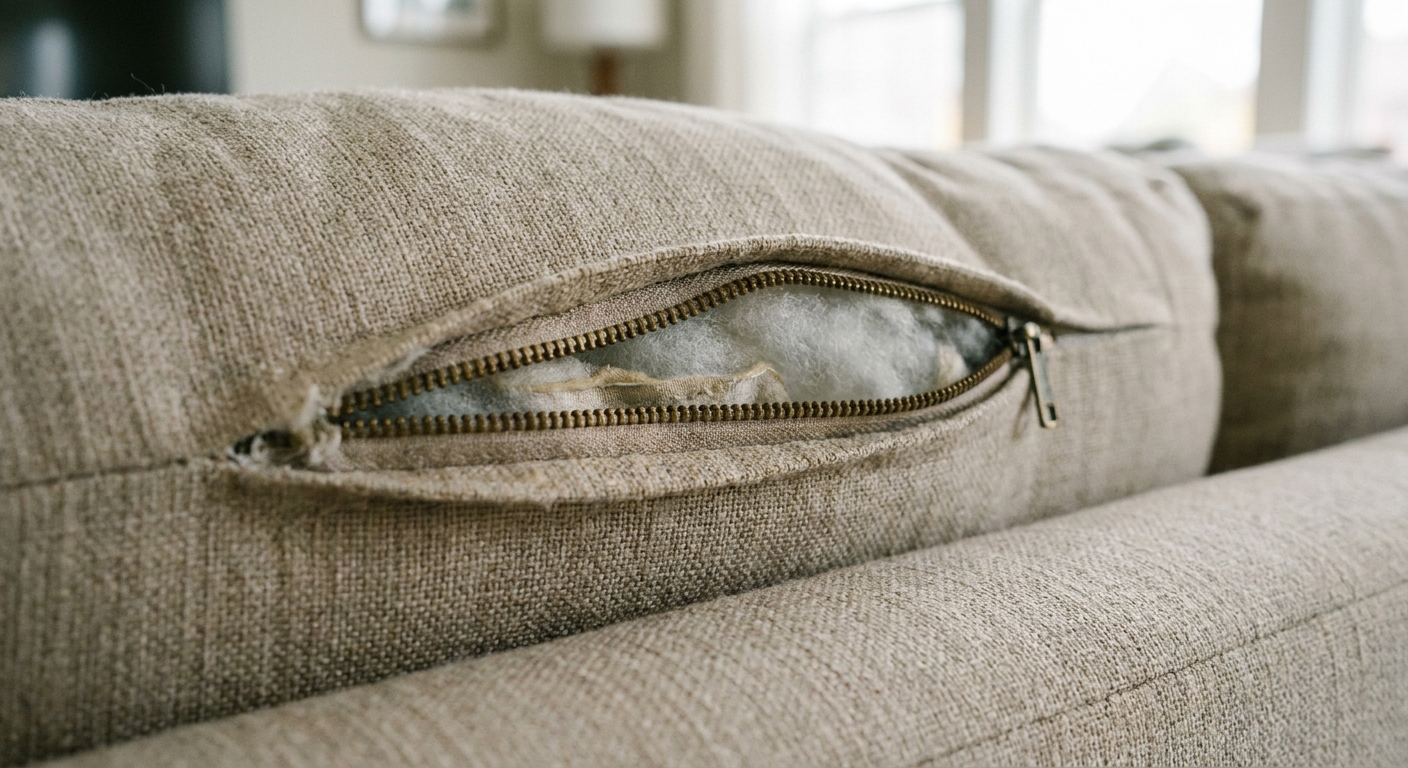
Back or seat?
Before you buy anything or unpick a seam, do a two-minute diagnosis. Back and seat issues can look similar from across the room, but the fix is different.
Signs it is the back cushions
- The top edge folds forward and the cushion looks shorter than it used to.
- The center looks hollow, while the corners stay puffy.
- You feel a “dead zone” behind your shoulder blades even when you sit on a firm seat.
- Fluffing helps for an hour, then it slumps right back .
Signs it is not the back cushions
- You sink low even before you lean back (seat support issue).
- The whole sofa feels tilted or uneven (frame, springs, or webbing issue).
- Only one spot is bad and it lines up with where someone always sits (often seat foam or seat filling).
Quick test: Put the back cushions on the floor, standing upright against a wall. If they still slump or fold, the problem lives inside the cushion. If they hold shape fine on the floor but collapse on the sofa, the issue is more likely how they are being held in place (ties, zipper closure fit, back support panel) or how you are sitting into them.
Second quick test: Swap cushions left to right (or center to side) for a day. If the slump follows the cushion, it is the insert. If the slump stays in the same sofa spot, check the sofa back support in that section.
Fluff and reset fill
Most slumping loose backs are simply under-filled in the places that matter, even if they feel “full” overall. Fill migrates. It drifts down and outward. It clumps. It gets compacted by years of movie nights and long phone calls.
What you need
- A clean floor space
- Your hands and a little patience
- Optional: a wooden spoon handle or ruler to gently push fill into corners
Step-by-step
- Unzip the cushion cover and inspect the insert. If it is a blown-fiber style (polyfill), you can usually feel where it is thin.
- Break up clumps by pulling fiber apart gently, like teasing cotton. Do not yank. You want loft, not tangles.
- Build a “top shelf”: push extra fill toward the top third of the cushion near the top seam. This is the area that prevents that forward fold.
- Firm the side rails: work fiber into the left and right edges along the side seams so the cushion does not collapse inward.
- Close it up and test on the sofa. Sit, lean back, stand up, and look again. Repeat once. Often one more pass makes the difference.
Note: If your cushion feels like it has plenty of fiber but still slumps, it is often because the fill is too airy for the job. That is where a low-loft support layer shines.
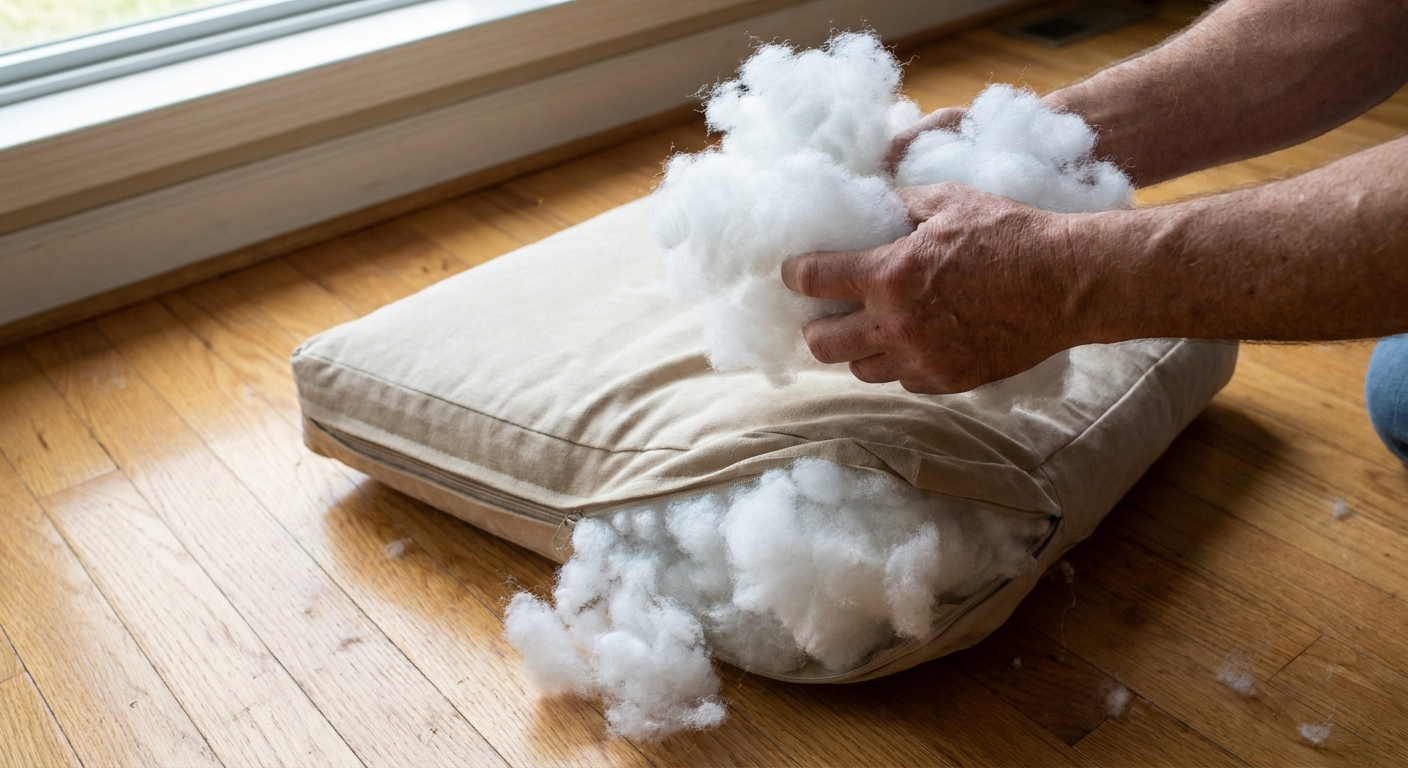
The steam trick
If your insert is crushed but not torn, a little steam can be an upholsterer’s secret weapon. Steam helps relaxed fibers and foam open back up, especially along that flattened top edge.
How to do it safely
- Use a garment steamer, not an iron, and do not press down.
- Steam the insert lightly (or steam through the cover) while you gently reshape it with your hands.
- Keep the steamer moving and avoid soaking the cushion. You want warm, damp air, not wet fabric.
- Let it dry fully before zipping everything closed.
This is not magic on completely dead foam, but it can noticeably improve a cushion that is simply tired and compressed .
Add gentle support
If you love a relaxed sofa, you probably do not want a rigid, overstuffed back. The sweet spot is gentle structure that keeps the cushion tall and smooth, while still letting it feel like a soft landing.
When it works best
- The cushion looks lumpy or collapsed but the cover still fits well.
- You want more shape retention without turning the back into a board.
- Your cushions are blown fiber or a fiber wrap that has gotten tired.
Options that play nicely with existing cushions
- Thin polyester batting sheet: Great for smoothing and adding a little “body.” Wrap around the existing insert like a cozy scarf.
- Low-loft fiber insert (a slim inner pillow): Slide it behind the existing insert to prop up the top half.
- Thin foam sheet: Start thinner than you think, often 1/2 to 1 inch, then adjust. Measuring your current insert thickness helps. Too much foam can push you forward and make the sofa feel oddly upright.
A simple method that avoids overstuffing
- Open the cover and remove the insert.
- Add a layer of batting around the insert. To test, hold it in place with temporary fabric clips. For longer-term security, use a few large basting stitches, light hand tacking, or a batting-safe spray adhesive made for upholstery.
- If the top still folds, add a thin support panel behind the insert, positioned in the top two-thirds.
- Reinsert, zip, and test. If the cover strains at the zipper, remove a layer. A strained cover will wear faster and look puckered.
Quick measuring tip
Measure the cover (or old insert) width, height, and thickness. You typically want an insert that fills the corners cleanly, but not so large that the zipper fights you. If your zipper barely closes, that is not “extra plush.” It is extra stress.
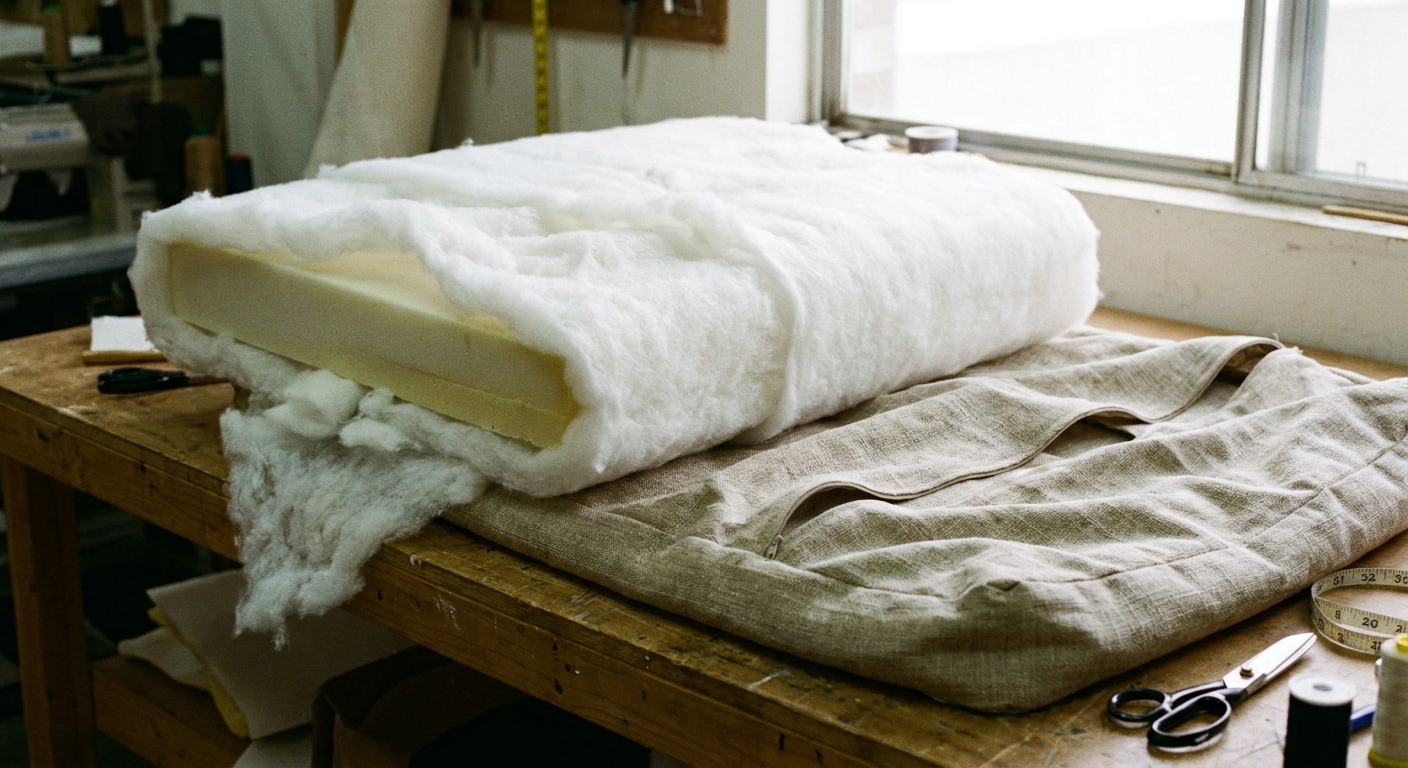
Down and feather backs
Down and feather-filled back cushions are cozy, forgiving, and prone to that relaxed slump. Sometimes the best “fix” is simply accepting that they need more maintenance.
If you are adding fill
- Use down-proof ticking (a tightly woven inner liner) if you open the insert or add a new inner bag. It helps prevent poky feathers and messy leaks.
- Top up gently and evenly, especially in the upper third. Overfilling can make the cushion feel bouncy and distorted.
- Plan on regular fluffing. Down looks its best with a quick shake and pat a few times a week.
If you love the down feel but want less slump, a thin foam or low-loft support panel behind the down insert can add structure without taking away the softness.
Zippers and fit
Sometimes back-cushion slumping is not about the stuffing at all. It is about control. When a zipper fails or the cover cannot close properly, the insert shifts, twists, and settles into odd shapes that read as “slump.”
Common zipper issues (and what to do)
- Slider won’t close teeth: Often the slider is worn. Replace the slider if the zipper tape and teeth are intact.
- Teeth separating: A worn slider is a common culprit, even if the teeth look fine. Also check the bottom stop. If it is loose or missing, a simple zipper stop can fix it.
- Zipper tape tearing away from seam: Reseam the tape back into the cushion seam. If the fabric is fraying, reinforce with twill tape or a small patch.
Quick replacement guideline
If the zipper teeth are damaged or missing, it is usually easier to replace the zipper than to fight it. Take the cover (or one cushion) to a local tailor or upholstery shop and ask for a zipper replacement. It is typically a fast job, and it restores a clean, snug closure that helps the cushion hold shape.
Tip: While the zipper is open, check if the insert is the correct size. An insert that is even slightly too small encourages slumping because the cover has empty space to collapse into.
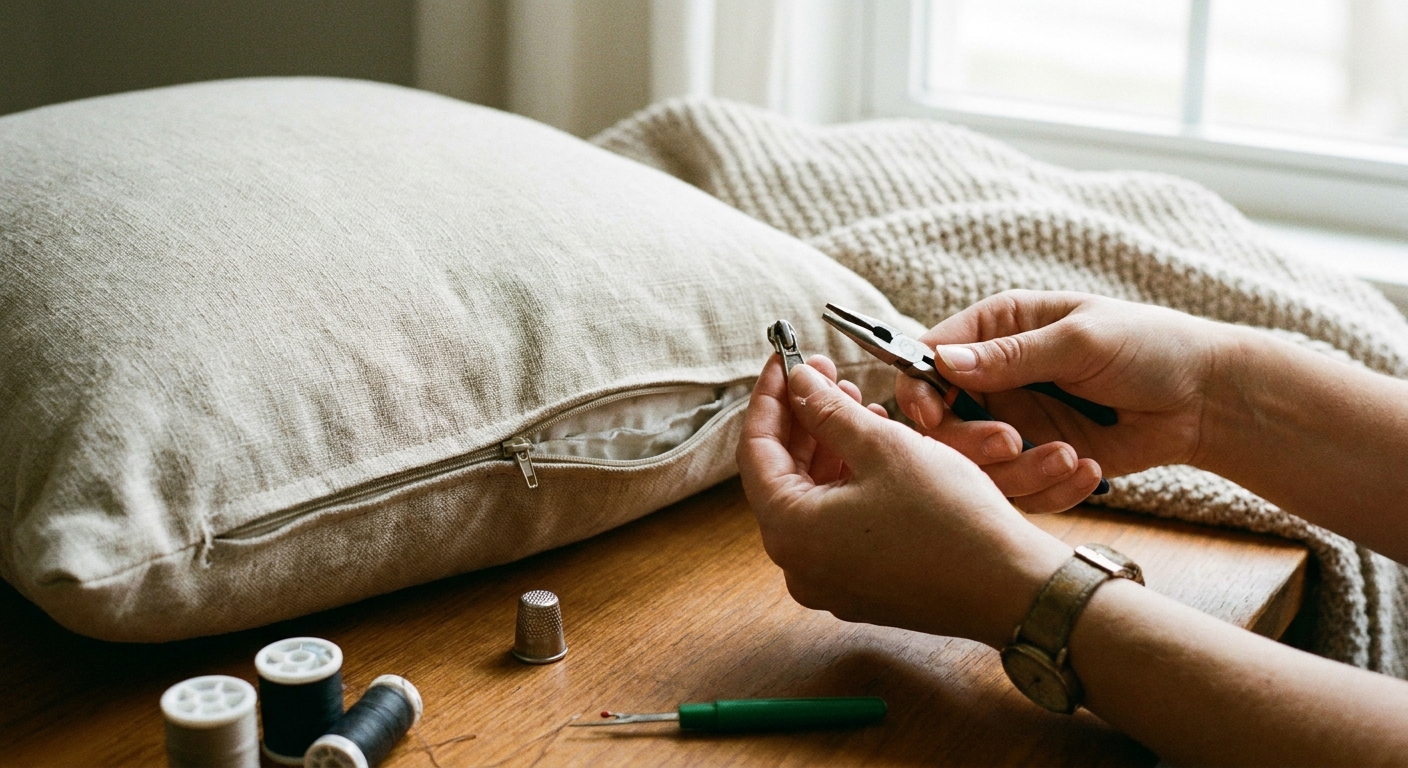
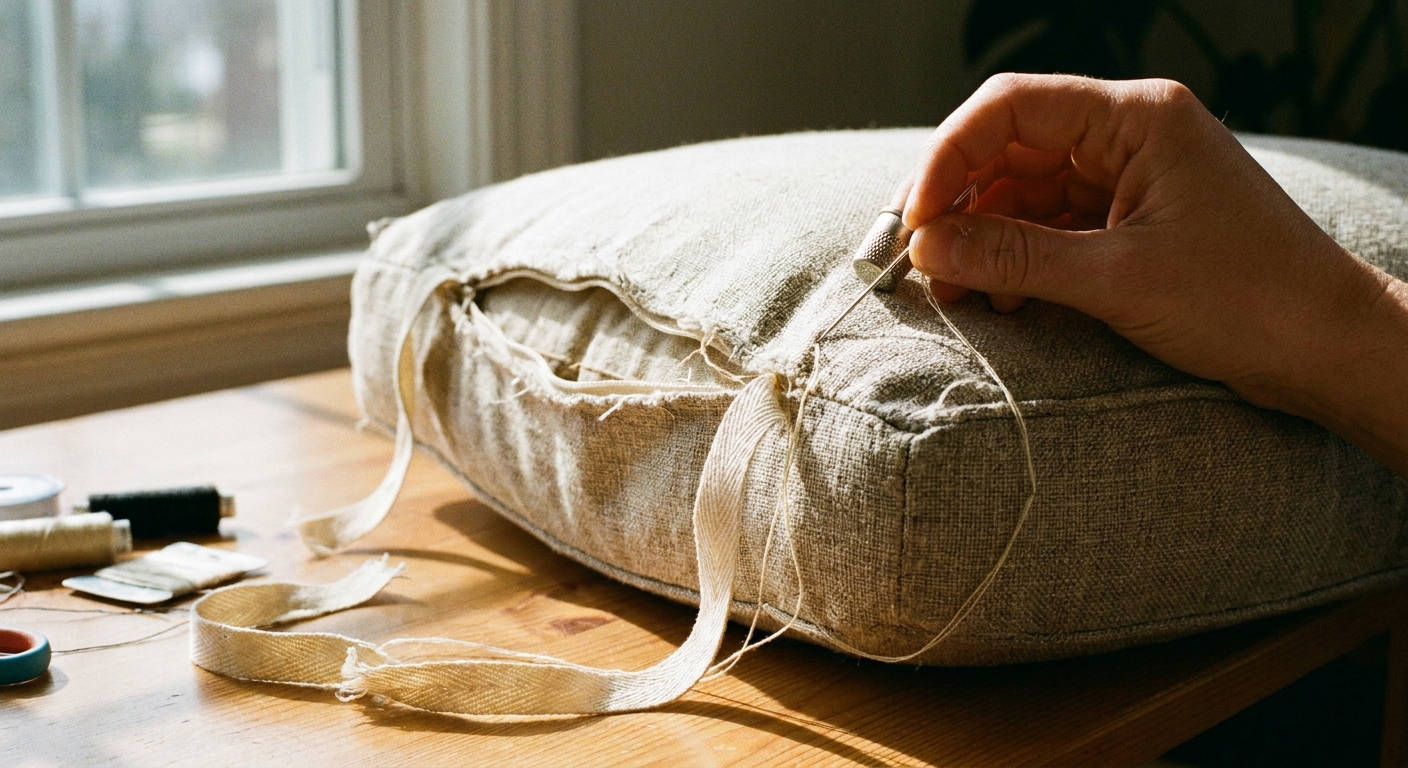
Fix loose ties
If your back cushions are designed to be anchored and the ties are missing, stretched out, or pulled loose, the cushion will slide and rotate every time you sit. That rotation often looks like “slumping,” especially at the top corners.
Check these tie points
- At the cushion: Is the tie securely stitched into the seam, or dangling from a few stressed threads?
- At the sofa frame: Is there a matching loop, button, or ring? Is it intact?
- Length: If ties are too long, the cushion still wanders.
Simple upgrades
- Re-stitch existing ties with heavy-duty thread and a reinforced box stitch.
- Add new ties using cotton twill tape, linen tape, or even leather thonging for a vintage look.
- Shorten ties so the cushion sits upright and snug, not floating an inch away from the back.
Stylist trick: If your sofa is modern and clean-lined, match ties to the upholstery color so they disappear. If your sofa is more relaxed or vintage, contrast ties can look charming and purposeful, like a little tailored detail.
Check the sofa back
If your cushions look fine off the sofa but slump once installed, take a quick look behind them. Some sofas have a back support panel, webbing, or a fabric “deck” that can loosen over time. If that backing bows inward, your cushions follow it.
What to look for
- Loose or sagging webbing behind the cushions
- A back panel that has pulled free at staples or seams
- Uneven support in the exact spot that keeps slumping
If you spot a clear structural issue, that is a good moment to move to the “call a pro” section. A small repair back there can make every cushion look better instantly.
When foam needs replacing
I am not quick to tell people to replace foam. It can get expensive, and you can often revive a cushion with redistribution, steam, and a supportive layer. But sometimes the foam inside a back cushion is simply done.
Signs the foam is beyond a quick fix
- It stays compressed after you press it, with little spring-back.
- It crumbles, flakes, or feels gritty inside the cover.
- It has a permanent bend or “banana” curve that forces the cushion to slump forward.
- It is noticeably thinner in the middle than at the edges.
What to replace it with
- Medium-soft foam core for shape, wrapped in polyester batting for softness.
- Foam plus fiber wrap if you like a plush look but need the foam to do the structural work.
If you want the back to feel sink-in soft, ask for a foam that is supportive but not firm, then rely on the wrap for that pillow-like surface. A good upholstery supplier can help you match density to your comfort preference.
Keep it back-cushion appropriate: Back cushions usually need less thickness than seat cushions. Too much foam can push you forward and make the sofa feel awkwardly upright.
Before you buy
- Did you confirm it is a back cushion issue by testing the cushion off the sofa?
- Did you try the swap test to see if the slump follows the cushion or the sofa spot?
- Did you redistribute and de-clump the existing fill, especially in the top third and along the side seams?
- Did you try the steam trick to re-expand crushed fill or foam?
- Is the cover zipping fully and holding the insert snugly?
- Do ties or anchors need re-stitching or shortening?
- Would a low-loft support layer solve it without changing the feel?
- If it is down or feather, do you need down-proof ticking before you add fill?
- Is the foam truly degraded (crumbly, permanently bent, or dead)?
If your sofa back is slumping, start with control (zippers and ties) and distribution (where the fill is sitting). Then use steam and add structure only as needed. It is the gentlest path back to that “comforting hug” feeling.
When to call an upholsterer
If any of these sound familiar, a pro is worth it:
- The cushion has a torn inner liner and fill keeps escaping (especially with down and feathers).
- You need a full zipper replacement on multiple cushions and want it to look factory-neat.
- The cushion shape is unusual (curved, boxed, channel-tufted) and you want the insert rebuilt cleanly.
- You suspect the issue is actually the sofa back support, not the cushion insert.
A good upholstery shop can often refresh back inserts affordably, especially compared to replacing the whole sofa. Bring one cushion as a sample, plus photos of the sofa straight-on.
Keep it looking good
- Fluff and pat the top third weekly if your cushions are soft-filled.
- Rotate and swap cushions monthly if you can.
- Zip covers fully and fix small zipper issues early. Tiny gaps turn into shifting inserts fast.