Lights Flicker When the Microwave or AC Kicks On

Clara Townsend
Clara Townsend is an interior stylist, vintage furniture enthusiast, and the creative voice behind Velvet Abode. With over a decade of experience transforming both cramped city apartments and sprawling fixer-uppers, she believes that a beautiful home is built on personal stories rather than massive budgets. When she isn't hunting for the perfect brass sconce at a local flea market, she can usually be found rearranging her living room for the third time this month.
If your lights do that quick little flutter when the microwave starts humming or the AC compressor kicks on, you are not imagining it. Big appliances take a sudden gulp of power at startup. In some homes that shows up as a brief dim, a flicker, or a momentary voltage sag (a quick dip).
Most of the time it is explainable and fixable, especially in rentals where lighting upgrades and mystery wiring choices have happened over the years. Below are renter-safe checks you can do without opening a panel or playing electrician. I will also flag the moments where you should stop and call your landlord or the utility.
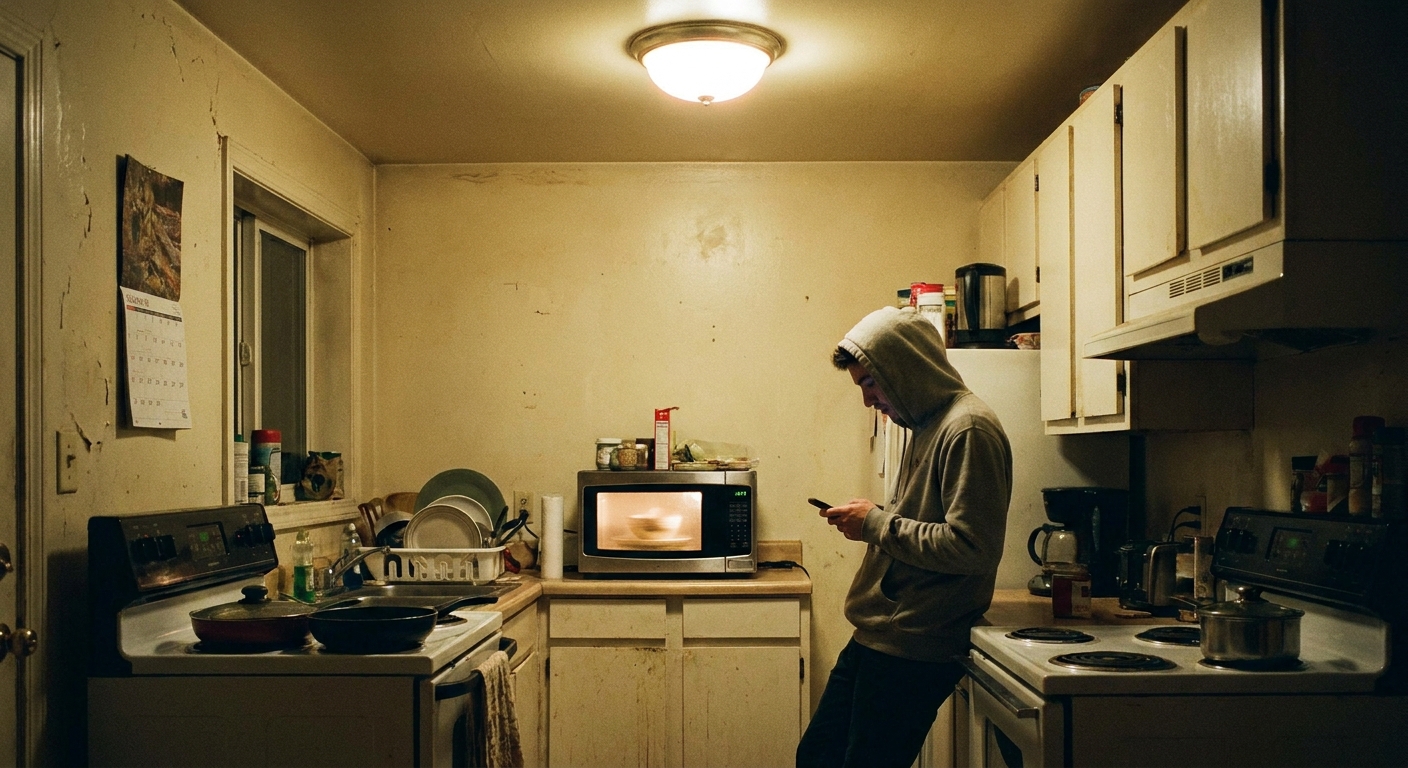
First: what kind of flicker is it?
The pattern matters. Before you troubleshoot, take 30 seconds to notice:
- Is it a one-time dip? Lights dim for a second right when the appliance starts, then go back to normal.
- Is it rapid flickering? The light stutters or shimmers repeatedly, especially with LED bulbs.
- Is it room-specific? Only one lamp or one ceiling fixture acts up.
- Is it apartment-wide? Multiple rooms change brightness at the same time.
- Any sound or smell? Buzzing at a switch, crackling, hot plastic smell near an outlet or dimmer.
That quick detective work helps you separate “annoying but normal” from “needs attention today.”
Renter-safe checks (no tools, no panel)
1) Reseat the simplest culprit: the bulb
A slightly loose bulb can flicker when vibration hits, and yes, compressors can cause tiny vibrations through floors and walls.
- Turn the light off and let the bulb cool.
- Gently tighten the bulb until snug. Do not force it.
- If it is a lamp, try a different outlet and see if the behavior follows the lamp or stays with the outlet.
Clue it is a bulb issue: Only one fixture flickers, especially a table lamp or a single recessed can.
2) Check LED and dimmer compatibility
This is one of the most common “everything is fine but it looks haunted” situations. Many older dimmers were designed for incandescent bulbs, not modern LEDs. When your power line gets a little noisy from a big load starting up, a marginal LED plus dimmer combo can show that disturbance as fluttering or shimmer.
- If the flickering light is on a dimmer, slide it to full brightness and test again.
- If the flicker mostly happens at lower dim settings, incompatibility is likely.
- Look at the bulb base or box: it should say dimmable if you are using it on a dimmer.
What helps: swapping to a quality dimmable LED (some bargain bulbs are just more sensitive). As a quick diagnostic, you can also test a different known-good bulb. If you happen to have an incandescent, it can be a helpful test, but skip it if your fixture is enclosed or has strict heat limits. In a rental, replacing the dimmer switch itself is usually a landlord job, but you can ask for an “LED-compatible dimmer.”
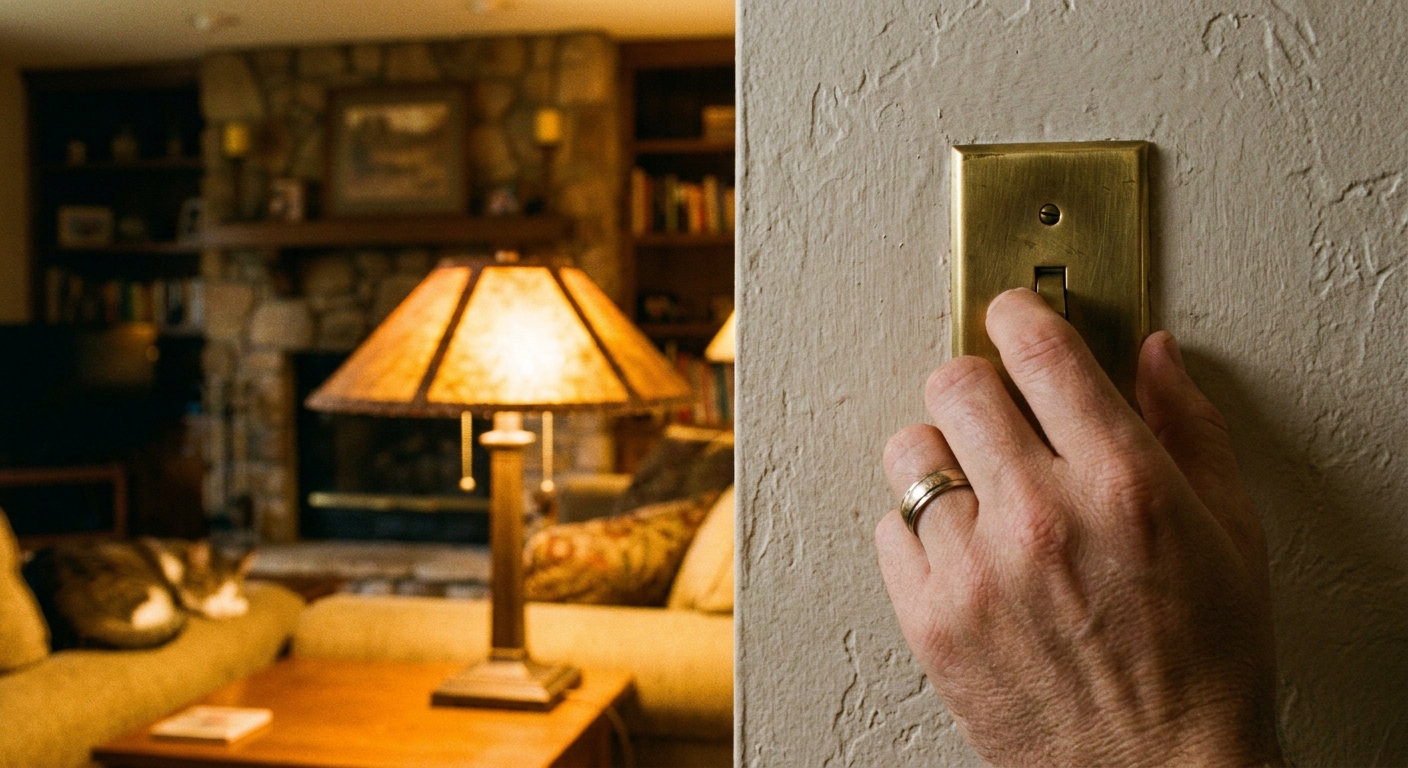
Circuit issue or voltage dip?
Here is the difference in plain language: an too-busy circuit is usually about how your unit’s outlets and lights are grouped, while a voltage sag can be a building issue or even a neighborhood utility supply issue.
Signs it is one circuit (inside your unit)
- The flicker happens mostly in one room or on a specific set of outlets and lights.
- It lines up with what is plugged in in that area: microwave plus toaster oven, AC plus hair dryer, space heater plus anything.
- The issue improves when you unplug other items on that same countertop or wall of outlets.
Renter check: Reduce the pileup. Try running the microwave with other countertop appliances unplugged. If your window AC seems to trigger a lamp flicker, try moving the lamp to a different outlet in another room (using a normal-length cord, not a daisy chain of extension cords).
Signs it may be building-wide or utility-side
- Multiple rooms change brightness at the same time, including lights that are nowhere near the appliance.
- You notice it when neighbors likely have big loads too, like evening AC cycles.
- You see odd, inconsistent behavior like some lights getting noticeably brighter while others dim, or the flicker looks “wider” than one circuit.
Renter check: Ask a neighbor: “Do your lights dip when your AC kicks on?” If it is happening across units, it is not a “you overloaded your kitchen” situation. That points to building wiring, a shared service issue, or utility-side voltage regulation. It can also point to a loose connection (including a loose neutral), which is a safety issue and should be checked promptly.
Safety signs (do not ignore)
This is the part where I go from cozy styling friend to firm big-sister voice. Flicker alone can be minor, but flicker plus heat, smell, or noise is not a DIY moment.
Stop using it and contact your landlord if you notice:
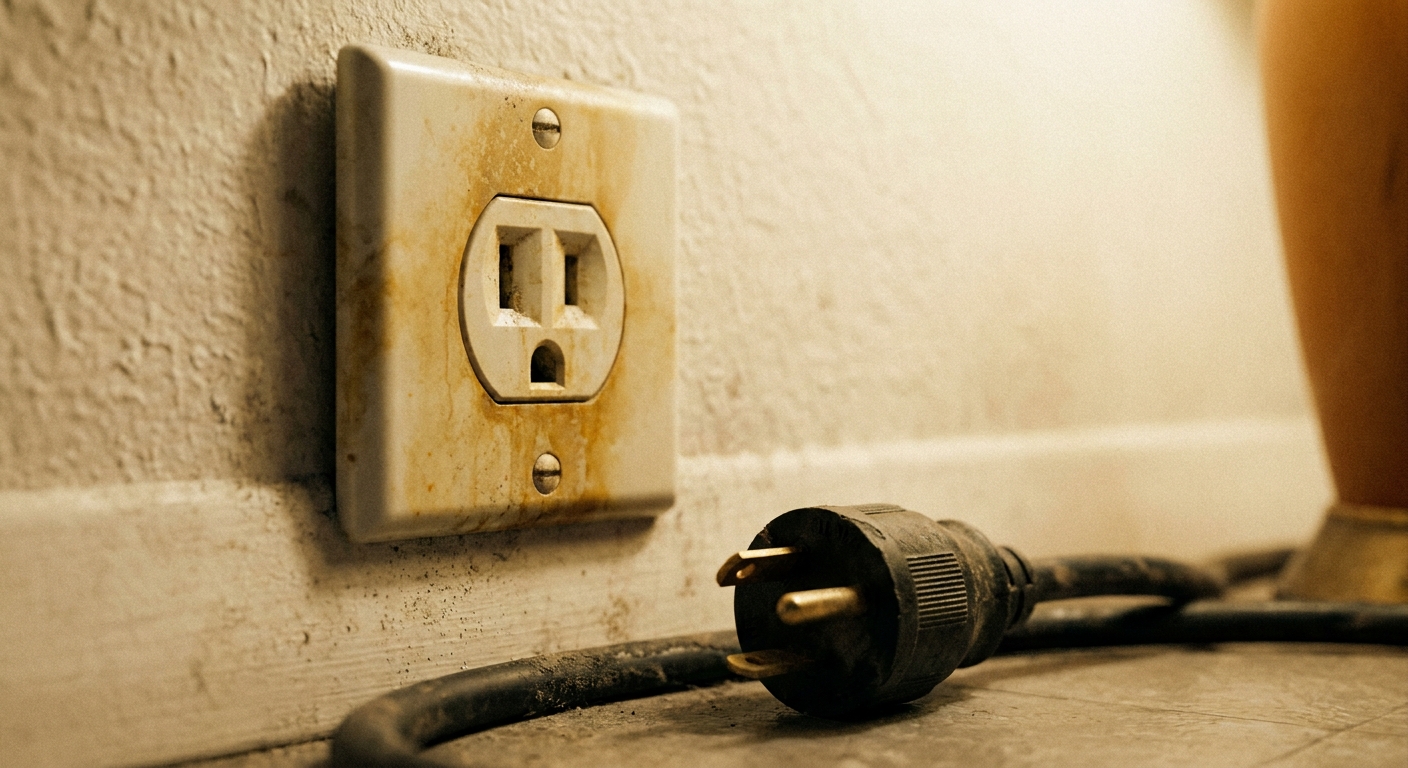
- Warm or hot outlet cover, hot plug, warm power strip, or a warm dimmer plate (warmth often points to a loose connection or overheating, not just “too much stuff plugged in”)
- Burning or fishy smell (often described as hot plastic)
- Discoloration around an outlet or switch
- Buzzing, crackling, or popping sounds
- Sparking when plugging something in
- Breaker trips repeatedly
If you smell heat: unplug what you can safely unplug, avoid using that circuit, and notify maintenance promptly. If there is smoke, visible sparking, or flames, call emergency services.
Microwave vs AC: what is normal?
Microwave dip
A brief dim when the microwave starts can be normal, especially in older buildings or kitchens where multiple outlets share one circuit. Microwaves draw a lot of power while heating, and some models surge at startup.
- More normal: a quick, mild dim for less than a second
- Less normal: repeated pulsing or obvious swings in brightness while it runs
AC compressor flicker
AC units, especially window units or older central systems, can create a noticeable momentary dip when the compressor kicks on. If the lights dim every time the compressor cycles, it can still be “expected,” but it is worth tracking because it also can point to an undersized circuit, worn connections, or a struggling motor.
- More normal: slight dim at compressor start, then steady
- Less normal: lights repeatedly flicker in rhythm with the AC, or dim a lot across the unit
What about CFLs and fluorescents?
Older rentals sometimes still have CFL or fluorescent bulbs. They can flicker at end-of-life, in cold rooms, or with older ballasts. If your flicker is only in one fixture with a CFL or fluorescent tube, a bulb swap (or landlord ballast replacement) is often the fix.
Quick troubleshooting flow
If you want a simple order of operations, here it is:
- Check the bulb (tighten, swap with a known-good bulb).
- If it is on a dimmer, test at full brightness and confirm the bulb is dimmable.
- Reduce load in that area: unplug extra appliances and re-test.
- Map the pattern: one fixture, one room, or whole apartment?
- Watch for safety signs: heat, smell, buzzing, crackling means stop and report.
- Ask a neighbor if they see it too.
Keep a tiny note on your phone: time of day, which appliance, which lights, and whether anything else was running. That kind of detail makes maintenance take you seriously faster.
Who handles what?
You (renter) can usually handle:
- Replacing a bulb with a quality LED that matches the fixture (and “dimmable” if needed)
- Plugging high-draw appliances into appropriate outlets and not overloading power strips
- Noting patterns and reporting clear symptoms
Your landlord or building maintenance should handle:
- Replacing or upgrading a dimmer switch to LED-compatible
- Fixing loose outlets, warm switches, arcing, buzzing, or any damaged receptacles
- Evaluating circuits that are frequently pushed to their limits
- Investigating flicker that affects multiple rooms or multiple units (this is also where they should rule out loose connections, including neutral issues)
The utility company may need to handle:
- Neighborhood-wide voltage fluctuations
- Repeated significant dimming across multiple homes
- Service line issues outside the building (often identified after building maintenance checks their side)
If your landlord says “it is normal” but you are seeing big dips, frequent flicker, or anything that looks like a connection problem (heat, smell, buzzing, or brightness acting weird across rooms), you can also contact your utility to ask whether they can check voltage at the meter or service. Policies vary by area, and it is reasonable to have building maintenance rule out loose connections first because those can be hazardous.
Escalate right away
Call your landlord or maintenance right away if:
- The flicker is new and suddenly intense
- Outlets or switch plates are warm
- You smell burning or “hot plastic”
- You hear buzzing, crackling, or popping
- Breakers trip repeatedly, or you lose power to parts of the unit
- Lights brighten in one area while dimming in another, or the flicker is building-wide (possible connection or neutral issue)
And if you ever see smoke, flames, or active sparking you cannot stop safely, treat it as an emergency.
Flickering lights are unsettling, I know. But with a few calm checks, you can usually pin down whether it is a picky bulb, an LED-on-old-dimmer situation, a too-busy circuit, or something bigger that your landlord or utility needs to address. Your home should feel like a comforting hug, not a suspense movie soundtrack.