Light Spot on a Fabric Couch After Bleach or Cleaner
Gust
A little flutter. A cozier corner.
And then, the horror: a cleaner spill and suddenly your couch has a light spot like it has been moon-kissed. Before you scrub your way into a bigger problem, let’s name what’s happening. A pale patch after bleach or a strong cleaner is usually one of three things: the dye is gone, there is chemical residue sitting in the fibers making the color look wrong, or the fibers and texture have changed so the fabric reflects light differently.
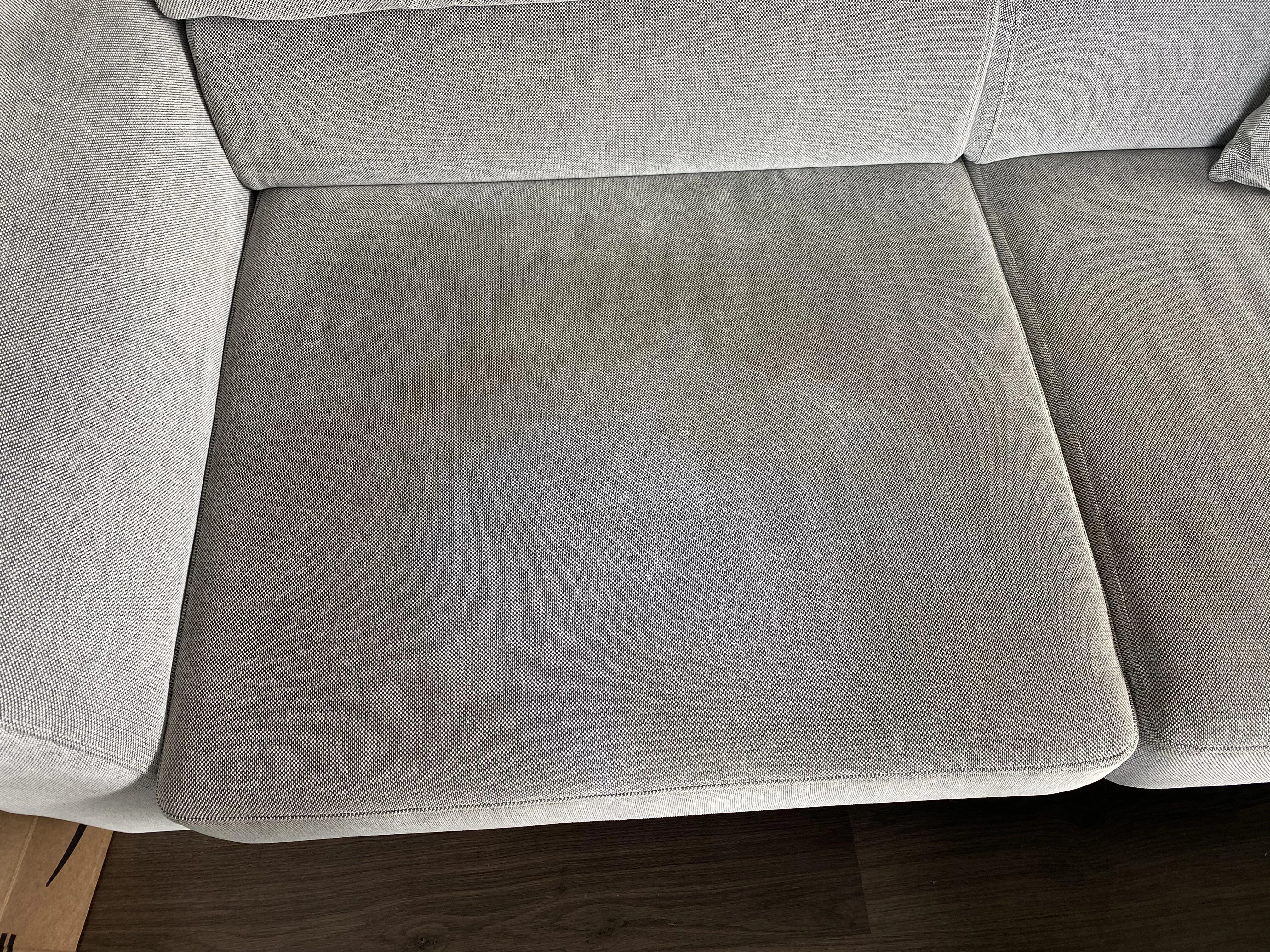
What a light spot usually means
1) Lost dye (true bleaching)
Bleach and some oxidizing cleaners can remove or break down the dye in fabric. If that happened, no amount of regular cleaning can bring the original color back, because the colorant is no longer there. Also worth saying plainly: bleach can sometimes weaken fibers, especially natural fibers, even if the fabric still “looks fine” at first.
- Typical look: a clearly lighter patch, sometimes with a sharp edge or drip shape.
- Typical feel: sometimes slightly rougher or drier if the chemical was harsh, but not always.
- Typical behavior: the spot looks the same whether the fabric is damp or dry.
2) Residue or concentration mark
Some cleaners leave behind a pale film, a sticky residue, or a patch that reflects light differently. This can mimic bleaching, especially on darker upholstery. Sometimes it is not “damage” so much as cleaner left behind, uneven rinsing, or a product that dried in one place at a higher concentration.
- Typical look: hazy, cloudy, or like a tide mark that changes under different angles of light.
- Typical feel: stiff, crunchy, tacky, or slightly soapy.
- Typical behavior: the spot may look better when damp, then reappear as it dries.
3) Texture, pile, or fiber change
Especially with microfiber, velvet-like weaves, and anything with a nap, a light spot can be the fabric’s surface getting scuffed, etched, or brushed into a new direction. Sometimes a strong product changes the finish. Sometimes scrubbing does it. Sometimes the spot is simply the nap laying the “wrong” way and catching light like a spotlight.
- Typical look: lighter at some angles, darker at others, almost like a handprint or brush mark.
- Typical feel: the spot may feel smoother, rougher, or just different, even if it is not sticky.
- Typical behavior: brushing the fabric one way, then the other, changes the appearance.
Before anything: check the care code
If you can, find the upholstery tag and look for the care code. It is not glamorous, but it can keep a small mistake from turning into a bigger one.
- W: water-based cleaning is generally allowed.
- S: solvent-based cleaning only. Avoid water.
- WS or SW: either water-based or solvent-based products are usually acceptable.
- X: vacuum only. No water or solvents. If you have an active chemical spill, blot and get professional guidance.
Stop the damage: dilute and blot
If the spill just happened or the area still smells like cleaner, treat it like an active situation. The goal is to dilute and remove what is still in the fibers. This step matters even if the dye is already lost, because leftover chemical can keep weakening fabric over time.
- Ventilate and protect yourself. Open windows if you can. Wear gloves if the product was strong.
- Blot, do not rub. Use a white cloth or plain paper towels to blot from the outside in.
- Rinse with cool water (if the code allows it). Lightly dampen a clean cloth with cool water and blot, then switch to a fresh cloth and repeat. You are trying to lift product out, not soak the cushion.
- If hard water is an issue, consider distilled water. It can reduce the chance of mineral rings, especially on cotton and linen.
- Keep it controlled. If the cushion cover comes off and the tag allows water-based cleaning, you can rinse the cover more thoroughly in a sink. If it does not come off, use small amounts of water and patience.
- Dry well. Press with dry towels, then let it air dry with good airflow. A fan helps.
Important: Never mix bleach with ammonia, acids (including vinegar), or other cleaners. If you are unsure what was used, stick to plain water rinsing, ventilation, and time.
How to tell what it is
Do the damp test
Dampen a small part of the light spot with plain water and blot immediately so it is just slightly darker from moisture, not wet. Then look at it.
- If the spot nearly disappears while damp and returns as it dries, residue, minerals, or texture change is likely.
- If the spot stays obviously lighter even when damp, dye loss is more likely.
Do the feel test
Run clean fingers across the area.
- Stiff, sticky, or crunchy: residue, leftover detergent, or product concentration is common.
- Normal feel but looks “off”: could be dye loss, nap direction, or a finish that has changed.
Do the white cloth test
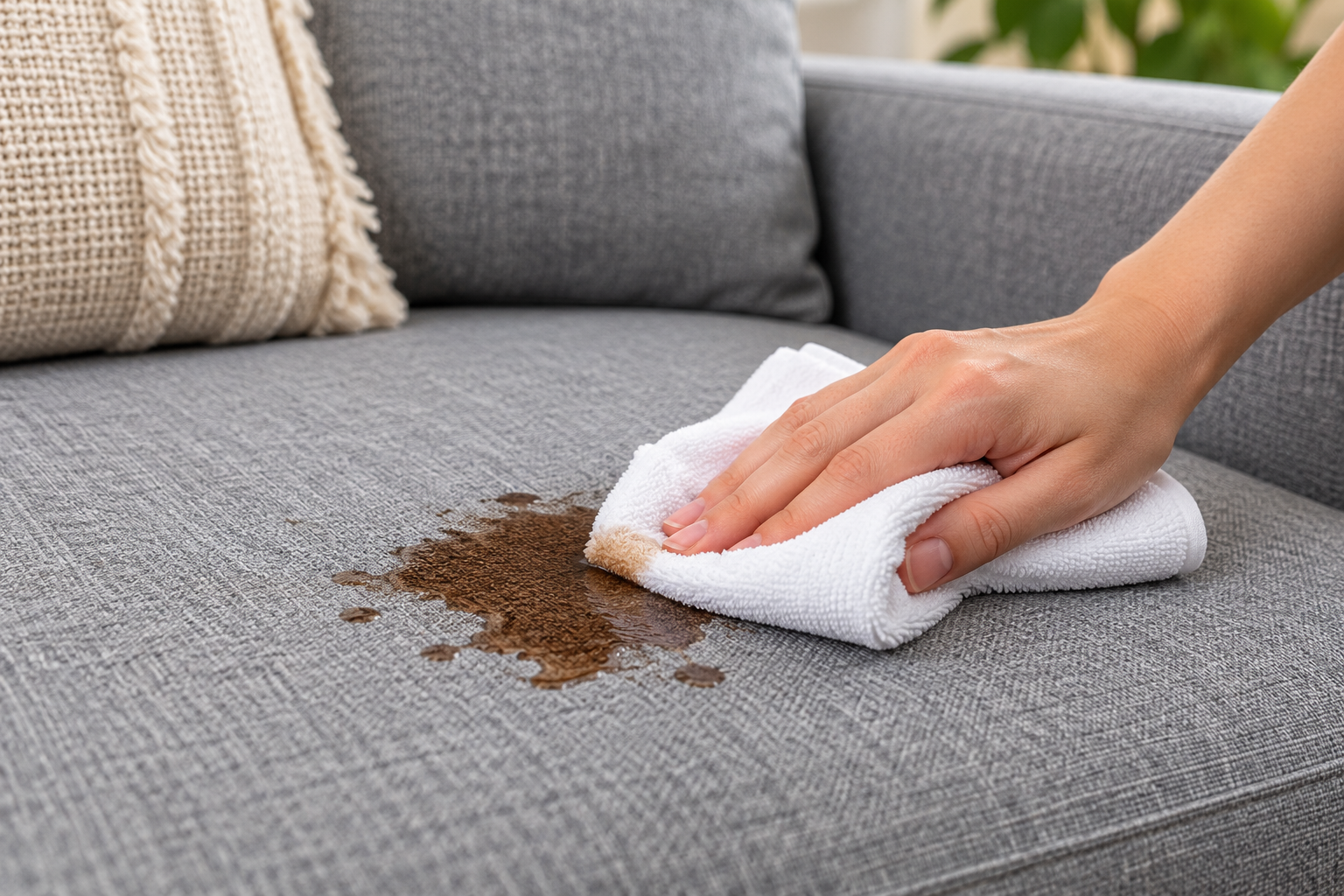
With a cloth dampened in plain water, blot the spot firmly, then inspect the cloth. You might see faint suds, feel slipperiness, notice tackiness, or smell cleaner transferring. If you do, keep doing gentle water-only rinse cycles until the cloth feels clean and the scent fades.
Do the nap test (for microfiber and velvet-like fabrics)
Use a clean, dry, soft brush or a clean microfiber cloth to gently brush the area in one direction, then the other. If the light patch changes dramatically, you may be looking at pile direction or surface disturbance more than missing dye.
If it is residue: a gentle reset
If your tests point to residue, you have a good chance of improvement. The fix is usually thorough rinsing and careful drying, not stronger product.
Option A: Water-only rinse cycles
Blot with a water-damp cloth, then blot dry. Repeat several times. Switch cloths often so you are not re-depositing cleaner. If rings are a recurring issue in your home, distilled water can help here.
Option B: Tiny bit of mild soap, then rinse a lot
If the area feels greasy or sticky, a tiny amount of mild dish soap diluted in water can help lift residue, followed by multiple water-only rinses. The rinse is the main event.
Option C: Upholstery machine or steamer (use care)
Heat and excess moisture can permanently alter some fibers and can also drive residue deeper if you are not extracting well. If you use an upholstery machine, favor light moisture, good extraction, and thorough drying. If you use steam, keep it minimal and do not linger in one spot.
If the dye is gone: what works
Bleaching is basically reverse dyeing. The color is missing. Sometimes the fabric stays intact, but bleach can also weaken fibers, so treat the area gently. Your best options are touch-up, re-coloring, replacement, or a stylish cover-up.
1) Fabric markers and repair pens
For small spots, color-matched fabric markers can reduce contrast quickly. This works best on tightly woven fabrics where the color sits on the surface evenly.
- How to do it well: test in a hidden area, build color slowly, and feather the edges so the spot blends into the surrounding fabric.
- Watch for: marker strokes on textured weaves, or color that looks perfect indoors but off in daylight.
2) Recolor the full cover (removable covers only)
If your cushion cover unzips and the care tag allows wet cleaning, you may be able to use a dye product intended for the fiber type to recolor the entire cover for consistency. Spot dyeing can leave a ring, so full-cover recoloring tends to look more even.
Because upholstery fabrics vary wildly, patch-test and follow the dye manufacturer’s instructions for your specific fiber content.
3) Professional color repair
Furniture repair pros and some upholstery cleaners offer color repair services. If the couch is a keeper or the spot is front-and-center, this is often the highest-success route for a natural-looking blend.
4) Swap what you can swap
Small-space trick: rotate cushions, flip reversible cushions, or swap the stained cushion with a less-visible one. If your sofa has modular pieces, move the affected section to a corner seat.
5) Cover it on purpose
Throw blankets, quilted covers, and fitted slipcovers turn a “problem” into a texture moment. If the bleached area is on one cushion, a single cushion cover in a coordinating color can look like styling, not hiding.

Choose a fix by fabric
Polyester and microfiber
- Residue issues are common and often fixable with rinsing.
- Nap and texture changes are also common. Gentle brushing can improve how the spot reads in light.
- Color repair pens can work well for small bleached dots.
- Avoid aggressive scrubbing that roughens the nap and makes the spot look bigger.
Cotton and cotton blends
- Chemicals can wick and spread through damp fabric, which can enlarge the affected area.
- Feathered marker touch-ups can blend well, but test for wicking and bleeding.
- If covers are removable, full-cover re-dyeing may be your most even-looking option.
Linen and linen blends
- Water marks and mineral rings are common if you spot-wet one area and not the rest.
- If residue is suspected, rinse and then gently even out moisture across the cushion face so it dries uniformly.
- Slipcovers and cushion cover replacements can be the cleanest aesthetic fix.
Wool or silk blends
- These fibers can be damaged by bleach, high-pH products, and aggressive spot cleaning.
- Water-only blotting is the safest immediate step if your care code allows any moisture at all.
- Consider professional help sooner rather than later, especially if the spot is large.
What not to do
- Do not keep adding stronger cleaner. If dye is missing or fibers are altered, cleaner cannot restore it.
- Do not scrub hard. You can fray fibers, spread discoloration, and change texture so the spot catches light.
- Do not play chemist. Never mix bleach with ammonia, acids (including vinegar), or other cleaners. Fumes are not a badge of effort.
- Do not soak the cushion foam. Trapped moisture leads to odors and can cause rings as it dries.
Quick FAQ
Will the light spot darken again over time?
If it is true bleach damage, the dye does not come back. If it is residue, minerals, or nap direction, yes, it can improve after thorough rinsing, gentle grooming of the fibers, and even drying.
Can I neutralize chlorine bleach?
The safest household approach on upholstery is usually dilution and removal: flush what you can with plain water (if your care code allows it), blot, repeat, and ventilate. Avoid “neutralizers” unless they are specifically recommended for your fabric and situation, because adding more chemistry can create new problems.
Can I use fabric paint instead of a marker?
You can, but paint can stiffen upholstery and look flat on textured weaves. If you try it, use very thin layers and test in a hidden area first.
Why did a “non-bleach” cleaner lighten my couch?
Some products use oxygen bleach or other oxidizers, and some high-pH cleaners can shift dyes. Even when the label does not say bleach, the chemistry can still affect color, especially on darker fabrics. And sometimes the color is fine, but the texture changed.
When is it time to call a pro?
If the fabric feels weakened, the spot is large, the upholstery is wool or silk blend, your tag says S or X, or the couch is a centerpiece you love, professional color repair or upholstery cleaning can save you a lot of trial and error.
A quick decision guide
- Spot fades when damp: suspect residue, minerals, or nap direction. Rinse gently (if allowed) and dry evenly.
- Spot stays light when damp: suspect dye loss. Plan for touch-up, recolor, replacement, or cover-up.
- Spot changes with brushing: suspect pile or texture shift. Gentle grooming can help.
- Care code is S or X: go slow and consider a pro, especially after a chemical spill.
A small, cozy way to think about it
A light patch is annoying, yes. But it is also information. It tells you whether you are dealing with something you can rinse away, something you need to recolor, or something that needs a texture reset or disguise. Either way, you still get to steer the ending. Sometimes the fix is a careful touch-up. Sometimes it is a new cushion cover that makes the whole room feel refreshed on purpose.