Layered Bedroom Lighting

Clara Townsend
Clara Townsend is an interior stylist, vintage furniture enthusiast, and the creative voice behind Velvet Abode. With over a decade of experience transforming both cramped city apartments and sprawling fixer-uppers, she believes that a beautiful home is built on personal stories rather than massive budgets. When she isn't hunting for the perfect brass sconce at a local flea market, she can usually be found rearranging her living room for the third time this month.
If your bedroom lighting feels a little… dentist’s office, you are not alone. Most bedrooms are stuck with one ceiling fixture trying to do every job, which usually means it does none of them well. The good news is that a warm, relaxing bedroom is less about buying fancy fixtures and more about layering light the way you layer textiles: one base, a couple of functional pieces, and a few cozy finishing touches.
Today, we’re building a lighting “wardrobe” for your room: ambient (overall glow), task (reading and getting dressed), and accent (the pretty mood makers). Once you have all three, your bedroom starts to feel calmer the second you walk in.
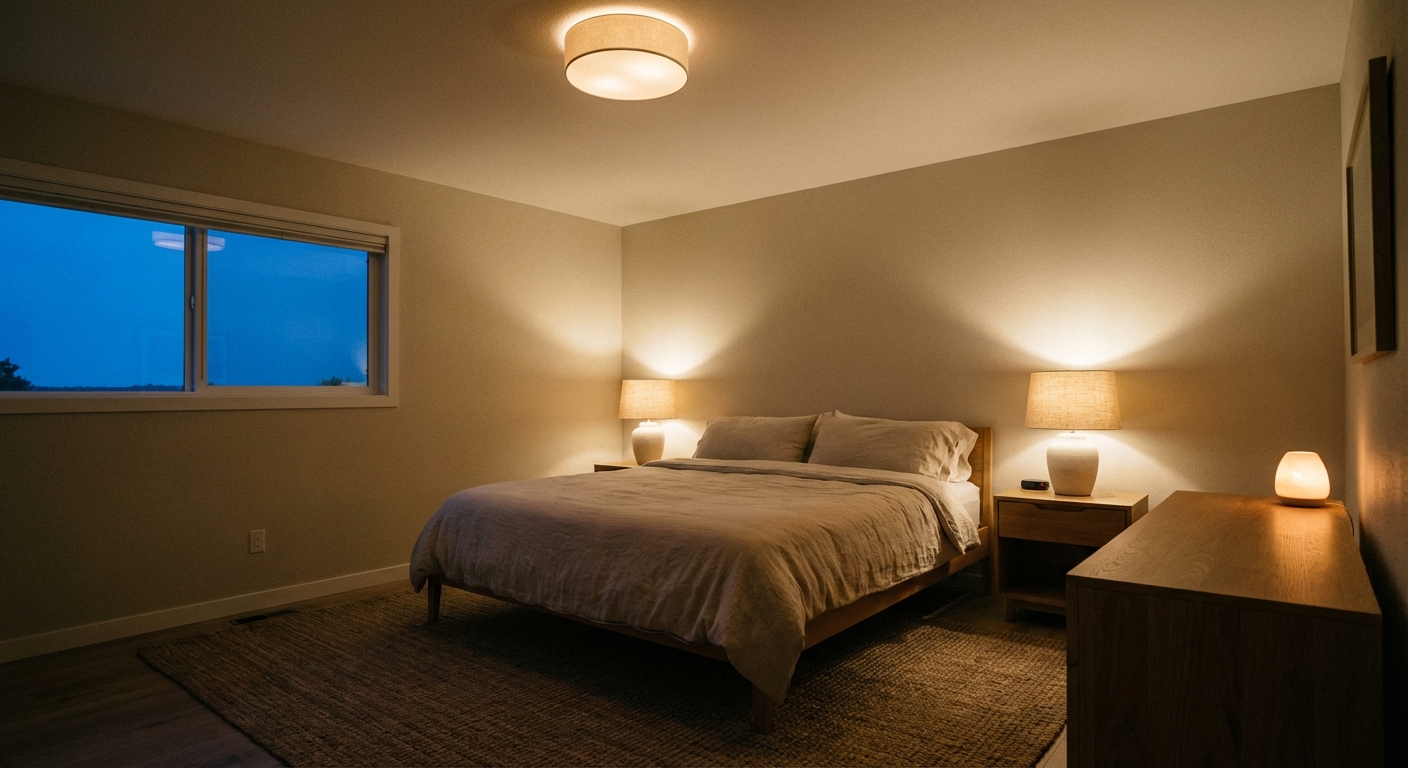
The three layers
Think of bedroom lighting like a little trio that works best together. Each layer has a job, and when one is missing you feel it.
- Ambient lighting: the general, whole-room light that helps you move around comfortably.
- Task lighting: focused light for reading in bed, doing skincare, folding laundry, or finding a missing earring without turning the room into a stadium.
- Accent lighting: smaller pools of glow that add depth, highlight textures, and make the room feel relaxed and intentional.
The goal is not “bright.” The goal is options. In a bedroom, options equal calm.
Start with ambient light
Ambient lighting is your base layer. It should feel gentle and spread evenly, not beam straight down like a spotlight.
Best ambient sources
- Ceiling fixture on a dimmer: a semi-flush mount, flush mount, or small chandelier can work beautifully when dimmed.
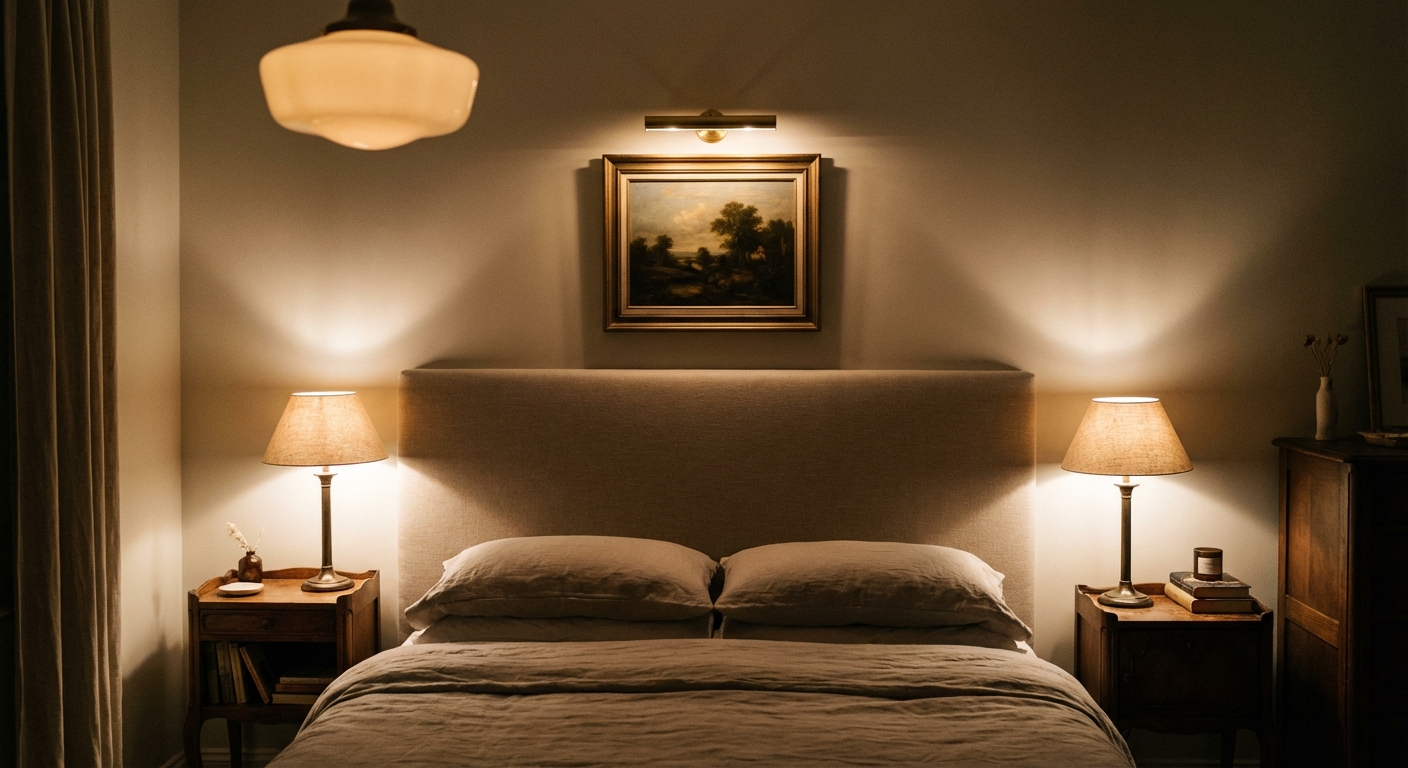
- Two matching or complementary lamps: in smaller bedrooms (or rentals), bedside lamps can carry the ambient load surprisingly well. In larger rooms, consider adding a floor lamp or a second accent source so the corners do not feel gloomy.
- Wall sconces: hardwired or plug-in, they free up nightstand space and create a hotel-like wash of light.
My cozy rule of thumb
Make sure your ambient light can go from “making the bed” to “winding down” without changing fixtures. That usually means a dimmer or a lower-lumen bulb paired with additional layers.
If you do one upgrade this weekend, do this: add a dimmer switch (or use plug-in dimmers for lamps). It is the quickest way to make a bedroom feel more soothing and grown-up.
Quick compatibility note: if you are dimming LEDs, make sure the bulb is labeled dimmable. Some older dimmer switches can cause flicker with LED bulbs, so an LED-rated dimmer can be worth it.
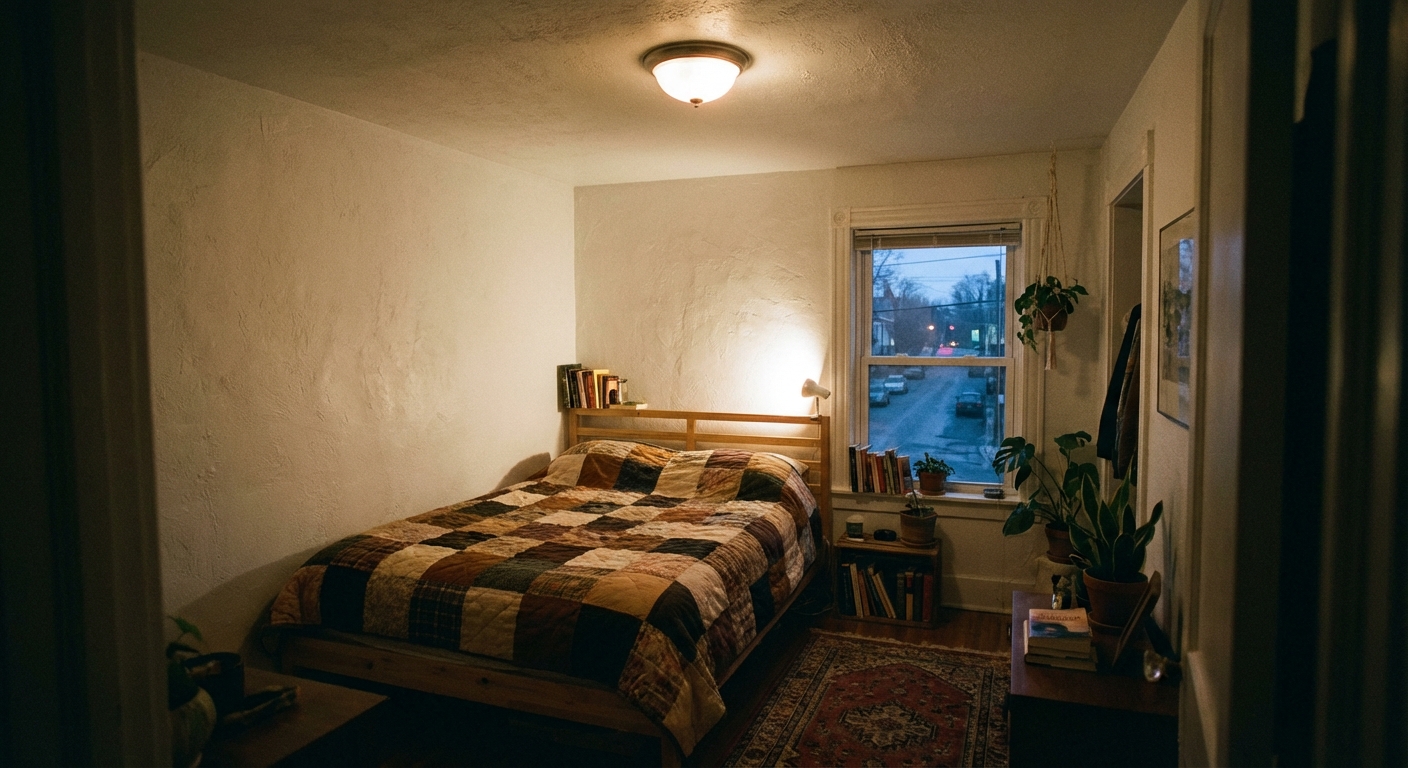
Add task lighting
Task lighting is the difference between “I can read comfortably” and “Why does my book look like a shadow puppet show.” In bedrooms, task light usually belongs in two zones: the bed and the getting-ready area.
Task lighting at the bed
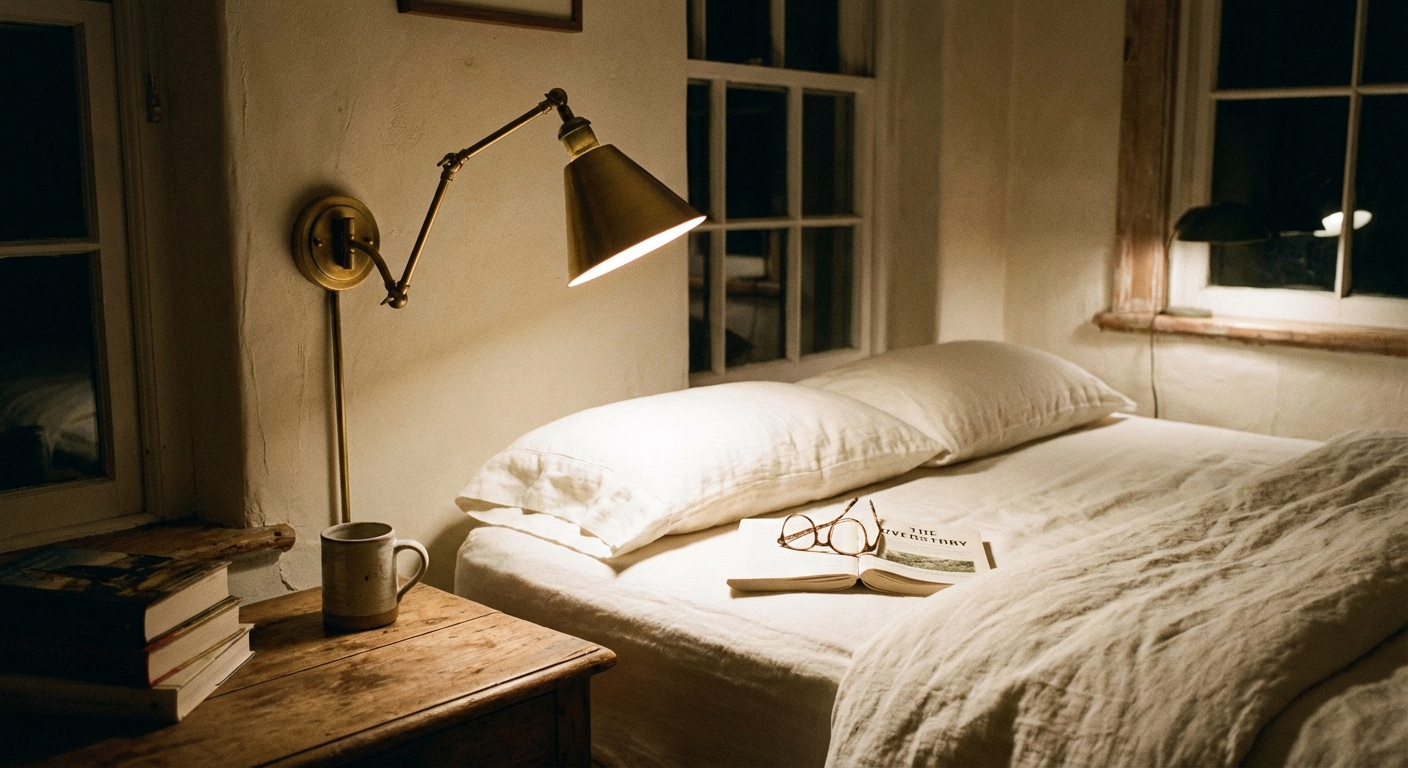
- Adjustable bedside lamps: look for a shade that directs light downward and a height that puts the bottom of the shade around shoulder to chin level when you are sitting up.
- Swing-arm sconces: a favorite for small rooms. Aim them toward the page, not into your partner’s eyes.
- Clip-on or integrated headboard lights: great for tight budgets or temporary setups, just keep the color temperature warm.
Quick fit check: If the bulb is visible from your pillow, you will probably feel glare. Choose an opaque or lined shade, or position the light so the shade hides the bulb when you are in bed.
Task lighting for getting ready
- A table lamp on a dresser: warm, flattering, and it adds that lovely lived-in glow.
- A floor lamp near a mirror: especially helpful if your overhead light casts shadows on your face.
- Closet lighting: stick-on rechargeable puck lights or motion sensor lights are rental-friendly and life-changing.
If you want clothing colors and makeup to look true, look for bulbs labeled high CRI (Color Rendering Index), ideally 90+ near mirrors and dressers. And if you can, add light at face level (from the side or front) instead of relying on overhead-only light.
Finish with accent lighting
Accent lighting is where the magic happens. It creates depth and softness, and it keeps you from relying on one harsh source. This is also the layer that lets you show off vintage finds and quirky pieces without the room feeling like a showroom.
Easy accent ideas
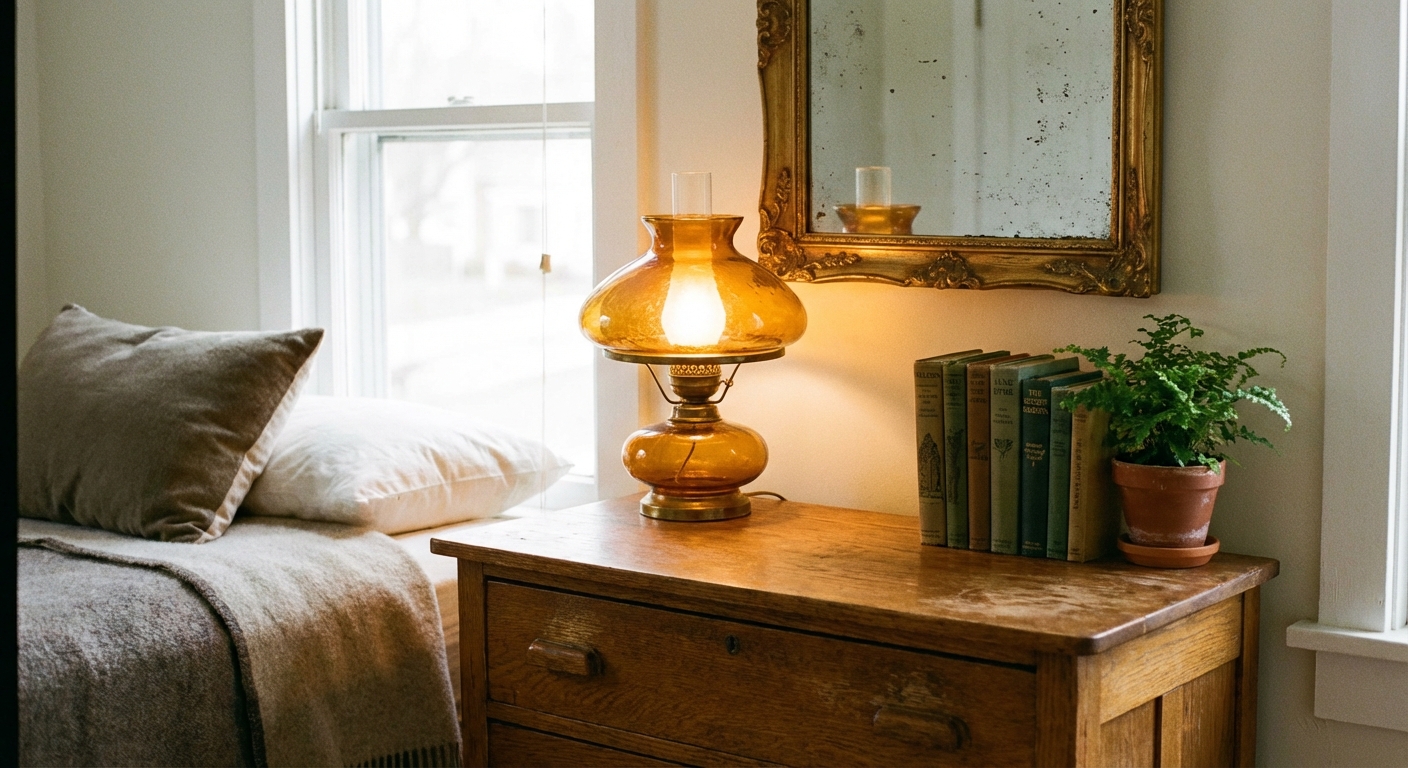
- A small lamp on a dresser or bookshelf: I love an amber glass lamp or a tiny ceramic base that feels like a treasure.
- Picture lights or slim art lighting: highlight one piece you love, even if it is just a thrifted landscape in a wobbly frame.
- LED candlelight: especially on a tray with books and a little dish for jewelry.
- Under-bed or behind-headboard glow: warm LED strip lighting (hidden) can feel incredibly calming when used subtly.
My favorite accent trick: put a small lamp on a timer so it clicks on in the evening. Many people find it helps them ease into a softer end-of-day routine.
Bulbs matter most
You can have the prettiest lamp in the world and still hate your bedroom if the bulb is wrong. Bulbs are the quiet heroes of cozy.
Choose a warm temperature
- 2700K: classic warm, inviting, great for most bedrooms.
- 2200K to 2400K: extra cozy, candle-like. Lovely for accent lamps and bedtime routines.
- Be cautious with 4000K+: it reads cooler and can feel more alerting to many people, which may not be the vibe at 10 p.m. It can still work if you prefer a crisp look or need brighter task light.
Pick the right brightness
Brightness is measured in lumens. In bedrooms, I prefer multiple lower-lumen sources rather than one super bright light.
- Bedside lamps: often happiest around 400 to 800 lumens each, depending on your shade, bulb, and how much you read in bed.
- Accent lamps: 200 to 450 lumens is usually plenty, especially with warm bulbs.
- Overhead fixture: can be brighter, but it helps to keep it on a dimmer so you can pull it way down at night.
Shades change everything
Linen and cotton shades diffuse light softly. Clear glass shades can look beautiful but often feel glaring unless you use a frosted bulb. Dark shades create drama and a tighter pool of light, which can be gorgeous for accent lighting.
Easy lighting layouts
Not sure where to start? Here are simple combos that work in real bedrooms, including rentals and smaller spaces.
Small bedroom, no rewiring
- One warm overhead bulb (or skip overhead if it is awful)
- Two bedside lamps or one bedside lamp plus one plug-in sconce
- One accent lamp on a dresser or shelf
Primary bedroom with a dresser
- Ceiling fixture on a dimmer
- Bedside reading lights (lamps or sconces)
- Table lamp on the dresser (soft, flattering light)
- Optional: picture light over art for extra polish
Studio or shared space
- Floor lamp with a shade for ambient light
- Clip-on reading light at the bed or daybed
- Small accent light on a shelf to define the sleep zone
Make it easy to use
Layered lighting works best when it is easy to use. If you have to cross the room to turn off five different lamps, you will stop using them. Cozy lighting should feel effortless.
Simple upgrades
- Dimmers: wall dimmers for overhead lights, plug-in dimmers for lamps (and dimmable LED bulbs).
- Smart bulbs: set scenes like “Evening,” “Wind Down,” and “Morning” without changing fixtures.
- Timers: especially for a bedside or accent lamp. Instant atmosphere, every day.
- Warm night light: a tiny low-level light for midnight water runs, so you do not blast yourself awake.
If you want your bedroom to feel calmer tonight: turn off the overhead, turn on two warm lamps, and add one tiny accent glow. The room will instantly feel deeper, softer, and more intentional.
Common mistakes
- Only one light source: add one lamp. Even a thrifted base with a new linen shade can transform the room.
- Bulbs that are too cool: swap to 2700K or warmer. It is the fastest before and after.
- Glare at the bed: hide the bulb with a better shade, lower the lamp, or switch to a sconce with a directional shade.
- Everything on one switch: split your lighting into at least two plug groups or circuits so you can keep soft light on while turning off brighter sources.
- Overlighting the ceiling and underlighting the corners: add a floor lamp or a small accent lamp to bring light down to eye level.
Shopping checklist
If you are building your lighting from scratch, here is what I would prioritize, in order:
- Two warm bulbs you love (seriously, start here).
- Bedside task lighting that makes reading comfortable.
- One accent lamp for mood.
- Dimmers or smart control so you can shift the vibe in seconds.
Layering light is not about perfection. It is about creating a room that supports your evenings and your mornings, and makes you want to linger a little longer under the covers.
If you try one thing from this article, let it be this: add one more warm, low light source to your bedroom tonight. Many people are surprised by how much softer the whole room feels.