Keep Area Rugs from Slipping and Curling

Clara Townsend
Clara Townsend is an interior stylist, vintage furniture enthusiast, and the creative voice behind Velvet Abode. With over a decade of experience transforming both cramped city apartments and sprawling fixer-uppers, she believes that a beautiful home is built on personal stories rather than massive budgets. When she isn't hunting for the perfect brass sconce at a local flea market, she can usually be found rearranging her living room for the third time this month.
If you have ever done that little accidental ice-skate move on a rogue runner, you already know this is not just a styling problem. A slipping or bunching rug is a safety issue, a pet hair trap, and a daily micro-annoyance.
The good news is that most rug misbehavior comes from a few fixable causes: the wrong pad for your floor, a rug that needs time to relax, or corners that have learned bad habits from shipping and storage. Let’s get your rug to sit like it belongs there, without wrecking your floors or your deposit.
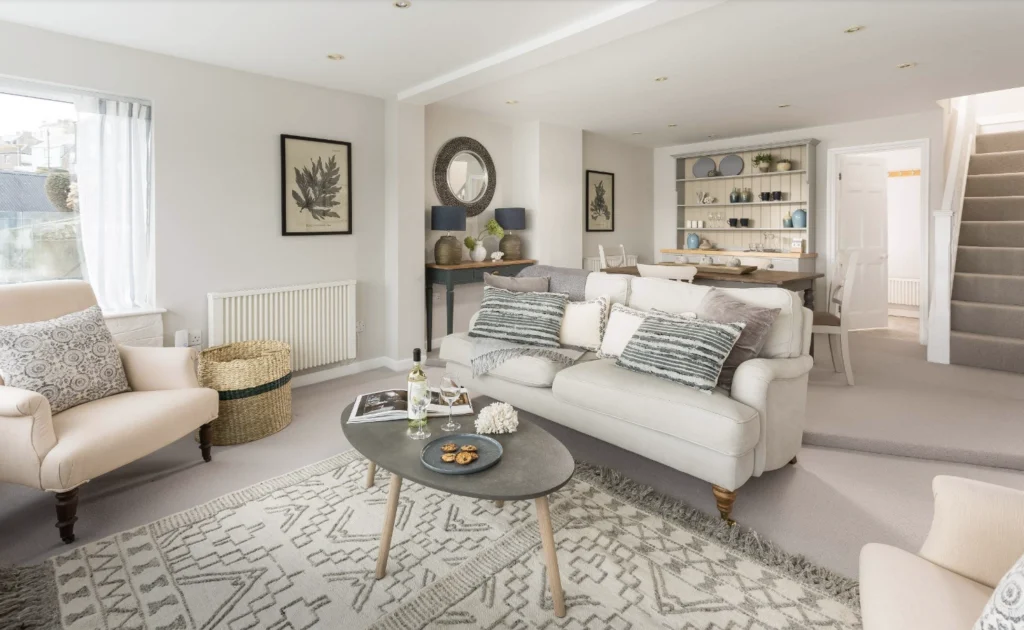
Why rugs slip, curl, and bunch
Before you buy anything, it helps to diagnose the kind of chaos you are dealing with.
- Slipping: The whole rug migrates across the room, especially on smooth hardwood, tile, laminate, luxury vinyl plank (LVP), or polished concrete.
- Bunching or rippling: Waves form in the middle, often under traffic lanes or furniture legs, or after vacuuming.
- Curling corners: Edges lift, usually from being rolled too tightly, humidity shifts, or a rug with a thicker binding that wants to spring up.
Most of the time, the fix is a combination of grip (pad, tape, or corner grippers) and weight (smart furniture placement and flattening habits).
Pick the right rug pad for your floor
Rug pads are the quiet hero of a calm living room. The right one stops sliding, protects your floor finish, and makes even an inexpensive rug feel more plush. The wrong one can stain certain floors, crumble, or do absolutely nothing.
Hardwood and engineered wood
Choose a pad that is labeled safe for hardwood finishes and designed to grip without sticking aggressively.
- Best everyday choice: Felt + rubber blend pad. Felt adds comfort; rubber grips the floor.
- For low-clearance doors: Thin rubber pad or a low-profile felt-rubber pad.
- Avoid: Unknown vinyl or PVC pads, especially on older or oil-finished floors. Some can discolor or leave residue over time due to plasticizers and chemical additives. Some latex and rubber backings can also react with certain finishes. When in doubt, go with a pad explicitly labeled floor-safe for your finish.
Tip: If your hardwood is very slick, prioritize grip. If your rug is thin and scratchy, prioritize a felt-rubber blend for comfort.
Tile, stone, and polished concrete
These floors are smooth and unforgiving, which means rugs love to skate.
- Best choice: Natural rubber or rubber-grip pad designed for hard surfaces.
- For heavier rugs: Felt-rubber blend still works beautifully, just make sure the rubber side faces the floor (unless your pad brand instructs otherwise).
On tile, watch for moisture. If your entry rug gets damp from rainy shoes, let it dry out occasionally so nothing gets funky underneath.
Laminate and luxury vinyl plank (LVP)
Laminate and LVP can be sensitive to certain materials and trapped moisture. You want a pad labeled safe for your flooring, and you want to avoid anything that traps dampness underneath.
- Best choice: Pad specifically labeled safe for laminate or vinyl, often felt with a non-staining rubber backing.
- Avoid: Pads that feel tacky, gummy, or have a strong chemical smell. Also avoid moisture-trapping setups, and follow your flooring and pad manufacturer guidance (especially in basements or humid climates).
Rugs over radiant heated floors
Heat changes the rules. Adhesives can soften, and some pads can degrade.
- Best choice: Only use a rug pad explicitly rated for radiant heat use.
- Extra note: Confirm the manufacturer’s maximum surface temperature for your floor and pad, and keep the rug and pad breathable per their guidance.
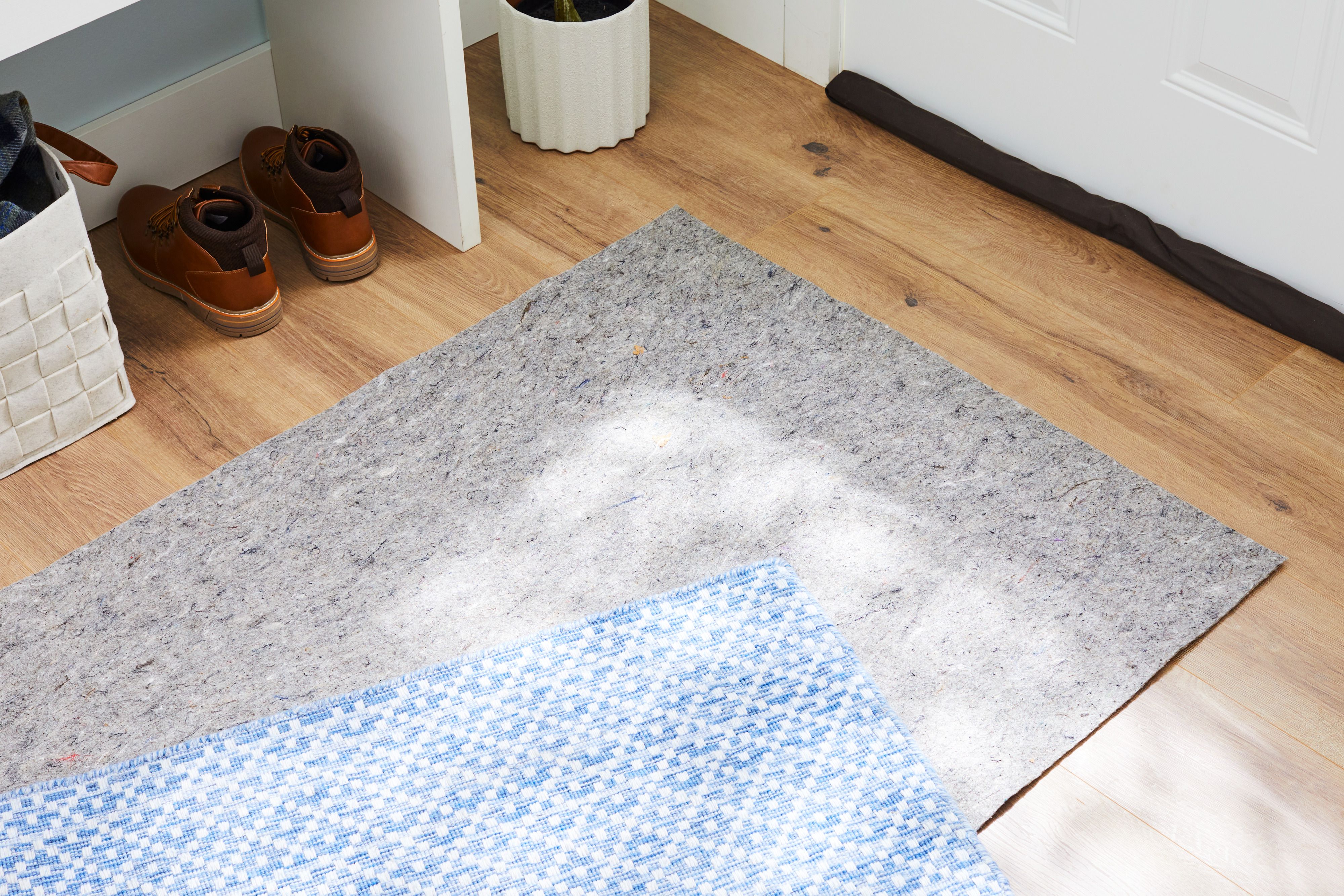
Rug tape vs. corner grippers vs. pads
If rug pads are the foundation, tape and corner grippers are the little reinforcements for trouble spots. Here is how to choose without turning your floor into a sticky crime scene.
Rug pads
- Best for: Whole-rug slipping, added cushioning, floor protection.
- Pros: Covers the full area, renter-friendly, long-lasting.
- Cons: Needs trimming; very lightweight rugs may still need corner help.
Rug tape (double-sided)
Rug tape is powerful, but it is not one-size-fits-all.
- Best for: Keeping edges down, stopping small rugs from shifting, layering rugs.
- Pros: Fast, invisible, cheap.
- Cons: Some tapes can leave residue or pull finish, especially on delicate wood, older floors, or certain vinyl surfaces.
Use tape safely: Look for tape labeled hardwood-safe or renter-safe, and test a small hidden spot first. If you are renting, consider using tape on the rug-to-pad connection rather than rug-to-floor.
Removal tip: If you need to take tape up, warm it gently with a hairdryer, peel slowly at a low angle, then use a manufacturer-approved adhesive remover for your floor type if any residue remains.
Corner grippers (also called corner grips or non-slip tabs)
- Best for: Corner curl and edge lift.
- Pros: Targeted fix, often removable, great for thin flatweaves.
- Cons: Not always enough for a rug that slides as a whole.
My favorite combo for most rooms: A felt-rubber pad cut slightly smaller than the rug, plus corner grippers only if the rug still tries to lift.
How to stop a rug from slipping
- Clean the floor. Dust reduces friction and grip under pads and tapes. A quick vacuum or microfiber mop makes grip products work better.
- Trim your pad correctly. Cut it 1 to 2 inches smaller than the rug on all sides so it stays hidden and does not peek out.
- Cut safely. Scissors work for thin pads. For thicker felt or dense rubber, use a sharp utility knife with a straightedge on a protected surface (like cardboard) for a cleaner cut.
- Place rubber side down. For grip pads and felt-rubber blends, rubber should meet the floor unless the manufacturer says otherwise.
- Set the rug and walk it in. Smooth it outward with your hands and feet to remove air pockets.
- Add reinforcement only where needed. If the rug still creeps, add corner grippers or small pieces of tape between rug and pad.
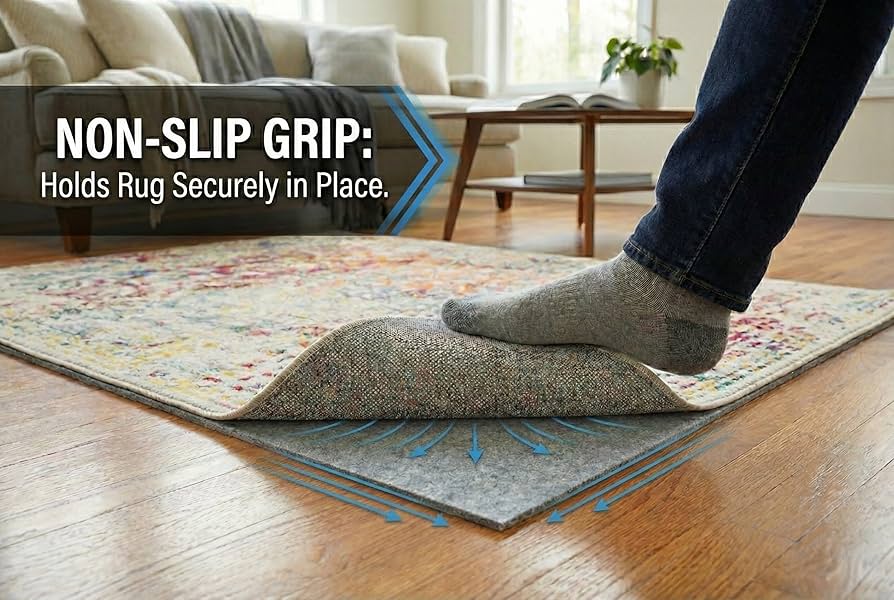
How to fix curling corners
Curling corners are like a cowlick. You can fight them, or you can train them.
1) Reverse roll the rug
If your rug arrived tightly rolled, reverse roll it gently in the opposite direction, then unroll it and let it sit flat for 24 to 48 hours. This helps relax the fibers and backing.
2) Add weight the pretty way
For stubborn corners, place a heavy book, a ceramic bowl, or a small stack of magazines on each lifted corner overnight. If it is in a visible spot, make it intentional. A sculptural object works beautifully.
3) Use corner grippers or tape tabs
Corner grippers are made for this exact issue. If you use tape, choose removable versions and use small pieces placed diagonally under the corner.
4) Try gentle heat if the rug allows it
Some rugs respond well to gentle warmth. Always check care instructions first, and avoid high heat, especially on synthetic backings.
- Safer approach: Warm the room, let the rug relax, then weight the corners.
- If using an iron: Use the lowest setting, a protective cloth, and never touch rubbery backing directly.
When to stop and call a pro: If the rug is an antique, a valuable hand-knotted piece, or the backing is cracking, talk to a rug cleaner or repair specialist. A small fix now can prevent permanent damage later.
How to stop bunching and ripples
Bunching usually happens when the rug and pad are sliding at different rates, or when furniture legs create stress points.
- Make sure the pad is flat and centered. If the pad is wrinkled, the rug will telegraph that wrinkle.
- Check door drag. A door that catches the rug edge will slowly pull and ripple it. Switch to a thinner pad near that doorway.
- Use furniture as anchors. A solid, simple rule is front legs on the rug for sofas and chairs. Just keep the rug squared to the walls so it is not being tugged off-angle over time.
- Adjust vacuum habits. Use a higher pile setting when possible, and vacuum in the direction of the pile. For fringes, avoid vacuuming over them directly.
Quick reset trick: Grab the rug at two corners, lift slightly, and give it a gentle shake to re-seat it over the pad. Then smooth outward like you are making a bed.
Renter-safe options
If you are renting, you can still make a rug behave. You just want solutions that are removable and low-residue.
- Best first step: A quality rug pad labeled safe for your floor type.
- Use tape between rug and pad: This avoids sticking anything directly to your landlord’s floors.
- Removable corner grippers: Look for versions designed for hardwood, laminate, vinyl, or tile and described as removable or residue-free.
- Skip harsh adhesives: If a product smells strongly of chemicals or feels aggressively sticky, it is not the one I would gamble my deposit on.
Test, always: Any adhesive product should be tested in a hidden spot for at least 24 hours, especially on laminate and vinyl.
Removal tip: Go slow. Warm adhesives gently, peel at a low angle, and clean residue using products approved for your specific floor finish.
Special situations
Some homes put rugs through boot camp. Mine included.
Homes with pets
- Choose a pad that grips well: Rubber-grip or felt-rubber blend helps when a dog launches into zoomies.
- Consider washable options: If accidents happen, you will appreciate anything you can clean easily. Check the product care instructions before you buy.
- Trim claws and keep edges down: Lifted corners are irresistible to curious paws.
Homes with kids
- Prioritize safety: Full-coverage pad plus corner grippers if needed.
- Avoid thick, squishy pads under thin rugs: They can feel unstable and contribute to rippling.
Entryways and hallways
- Use a dedicated runner pad: Hallways create a lot of shear force from walking.
- Consider tape at the ends: Ends take the most abuse in a runner. For renters, tape runner-to-pad where you can.
Rug material notes
Most rug drama is pad-related, but material matters too.
- Jute and sisal: Beautiful, but humidity-sensitive. They can expand or contract, which can show up as rippling. Keep them dry, use a stable pad, and expect a little seasonal movement.
- Wool: Generally stable and forgiving, but it can shed at first. A good pad helps it feel thicker and keeps it from drifting.
- Flatweaves: Lightweight and more likely to slide. They almost always benefit from a grippy pad, and sometimes corner grippers too.
- Latex-backed rugs: The backing can degrade over time and get sticky or crumbly, especially with heat. If you see flaking, cracking, or tackiness, swap the pad strategy and consider professional cleaning advice.
Quick troubleshooting checklist
- Rug slides even with a pad: Pad may be too small, too smooth, dusty underneath, or not the right material for your floor.
- Corners curl only on one side: That area may get more sun, heat, or foot traffic. Add targeted corner grippers and weight overnight.
- Rug ripples after cleaning: Let it fully dry, then re-seat it on the pad. If it is a natural fiber rug, slight movement with humidity can be normal.
- Residue on floor: Use a cleaner appropriate to your floor type and switch to a non-staining, floor-safe grip method.
When to replace your rug pad
Pads do not last forever, and a failing pad can create slipping, residue, and weird lumps.
- Replace it if: it is crumbling, cracking, shedding bits, losing grip, smelling strongly, or leaving discoloration or tacky residue.
- Also replace it if: you switched flooring types (like moving from carpet to LVP) or moved the rug to a higher-traffic spot.
My calm, everyday setup
If you want the simplest solution that works in most real homes, start here:
- A felt-rubber blend rug pad cut 1 to 2 inches smaller than the rug
- Corner grippers only if corners lift after a week of settling
- For small accent rugs, renter-safe tape between rug and pad (not rug to floor) when possible
Your rug should feel like it is part of the room, not a separate object you have to negotiate with every morning. Once it is anchored, the whole space reads calmer and more intentional, like you meant it to be cozy all along.