Japandi vs. Scandi

Clara Townsend
Clara Townsend is an interior stylist, vintage furniture enthusiast, and the creative voice behind Velvet Abode. With over a decade of experience transforming both cramped city apartments and sprawling fixer-uppers, she believes that a beautiful home is built on personal stories rather than massive budgets. When she isn't hunting for the perfect brass sconce at a local flea market, she can usually be found rearranging her living room for the third time this month.
Minimalism can feel like a breath of fresh air, until you realize there are multiple “fresh air” options and they all look gorgeous on your feed. If you're torn between Japandi and Scandinavian (Scandi) style, you're not alone. They share a love of simplicity, natural materials, and clutter-free rooms. But they can land in different emotional places.
Think of this article like we're standing in your living room with a mug of coffee, moving a chair two inches to the left and asking the real question: what do you want your home to feel like at the end of the day?
Quick note: These are tendencies, not hard rules. Both styles have modern and traditional interpretations, and real homes often blend them.
Quick definition
Scandinavian style
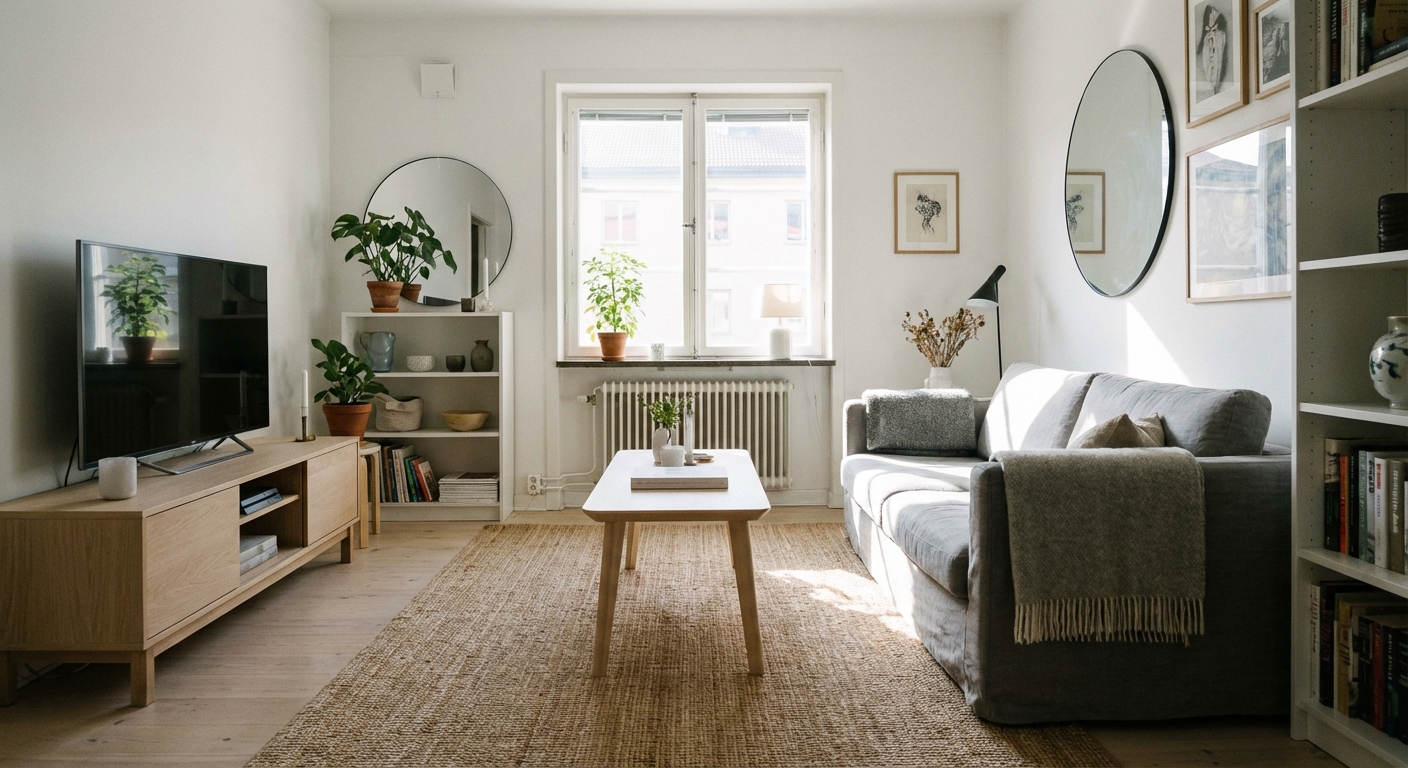
Scandi design is often shaped by Nordic life: long winter light, practical needs, and a strong comfort culture. The goal is a home that feels light, functional, and cozy, even during long winter afternoons. It's minimal, yes, but it's also friendly. A Scandi room usually says: “Come in, kick off your shoes, stay awhile.”
Japandi style
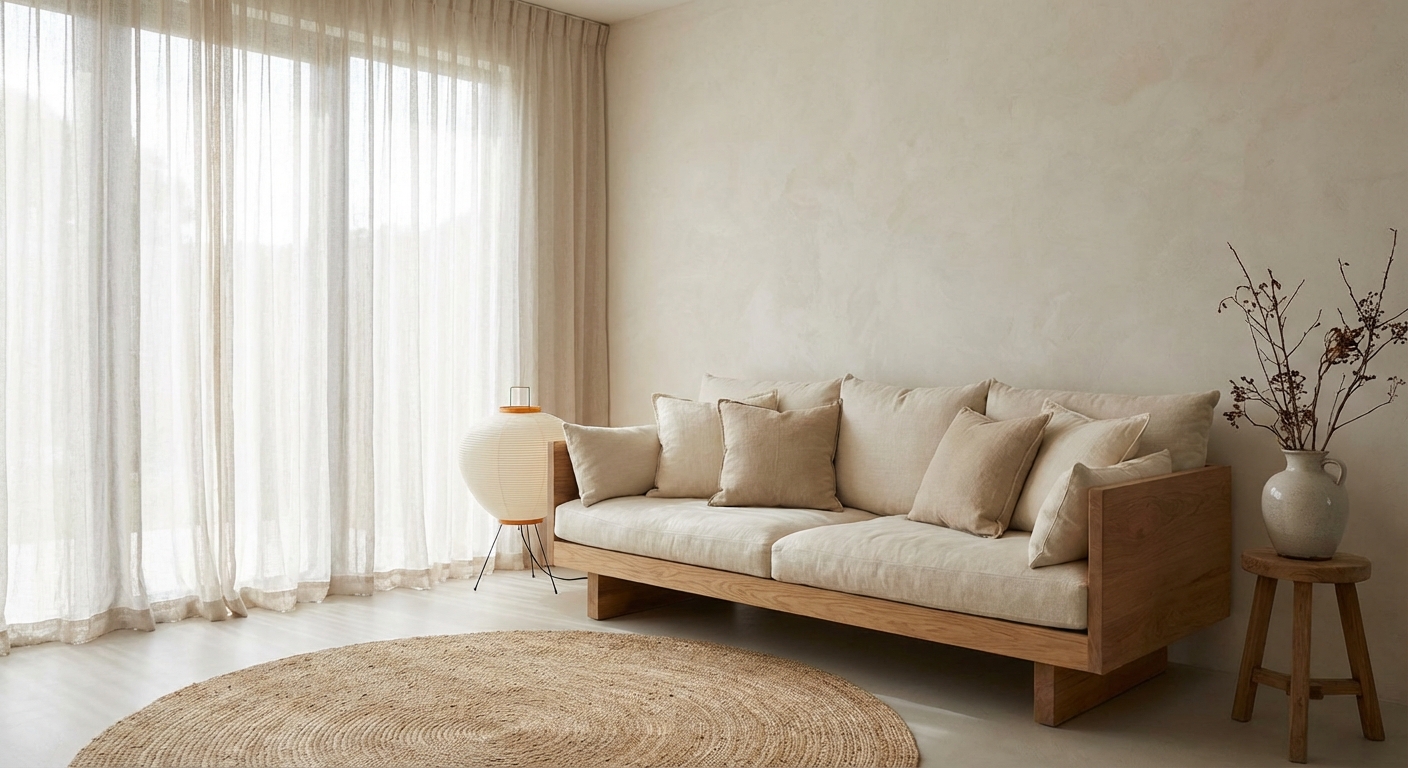
Japandi is a modern blend of Japanese and Scandinavian design. It keeps the Scandinavian love of simplicity, then deepens it with Japanese restraint and an appreciation for quiet, intentional beauty. Japandi spaces often feel more grounded, more sculptural, and a touch moodier. A Japandi room says: “Exhale. Everything here is chosen on purpose.”
Key differences
1) Color palette
At a glance: Scandi tends to brighten. Japandi tends to ground.
Scandi: Bright whites, soft grays, pale woods, and gentle pastels. Contrast shows up in small doses, like a black picture frame or a charcoal throw.
Japandi: More warmth and depth, typically. Cream, oatmeal, clay, mushroom, ink, and muted greens. Black accents are common, but they feel intentional, like a brushstroke.
- If your home is dim: Scandi can help it feel brighter fast.
- If your home is already bright: Japandi can add grounding without making things heavy.
2) Wood tones and finishes
At a glance: Scandi skews lighter. Japandi often goes richer and more varied.
Scandi: Pale woods like birch, ash, and light oak, often with a matte finish. The vibe is clean and optimistic.
Japandi: Mid-tone to darker woods often show up, plus more visible grain and contrast. Walnut, smoked oak, or stained woods are common. Pieces can feel a bit more “crafted” and less “factory perfect.”
3) Furniture shape
At a glance: Scandi feels easygoing. Japandi feels architectural.
Scandi: Slim legs, light profiles, and ergonomic comfort. Sofas look easy to live with. Chairs often have a soft curve and a little bounce to them.
Japandi: Lower silhouettes, thicker legs, and shapes that feel sculptural. A Japandi coffee table can look like it belongs in a gallery, but still wants a stack of books and a mug on top.
4) Texture
At a glance: Scandi layers cozy. Japandi layers quiet tactility.
Scandi: Hygge is the heartbeat here. Think chunky knits, sheepskin, woven rugs, and layers that make you want to curl up.
Japandi: Texture is still key, but it's more restrained and natural: linen, cotton, raw wood, paper, stoneware, rattan. Less fluffy, more tactile.
5) Styling mindset
At a glance: Scandi is a little more forgiving. Japandi is a little more edited.
Scandi: Minimal, but flexible. A basket of throws can be part of the look. Kids' toys in a lidded bin still counts.
Japandi: More negative space, typically. Fewer objects, more meaning per object. Japandi often leans on hidden storage and intentional display, like one well-chosen ceramic on a shelf instead of a lineup of small decor.
Which one fits your home
If you're choosing between these styles, don't start with the sofa. Start with your reality.
Choose Scandi if you want
- More light in a north-facing room or small apartment
- Cozy comfort as the main mood, with lots of soft layers
- Easy maintenance and pieces that are simple to swap over time
- A playful softness through rounded shapes and gentle color
Choose Japandi if you want
- A calmer, more grounded home that feels like a retreat
- Fewer, better pieces and a more curated look
- Natural, earthy tones and deeper contrast
- Craft and patina, including vintage wood and handmade ceramics
If you're stuck, ask yourself
- Do you crave “cozy” or “quiet”? Cozy points Scandi. Quiet points Japandi.
- Do you prefer pale woods or richer woods? Pale points Scandi. Rich points Japandi.
- Are you okay seeing stuff? Scandi tolerates more visible living. Japandi tends to like clearer surfaces, plus a few intentional display moments.
Room-by-room tips
Living room
Scandi living room formula: light wall color + pale wood + comfy sofa + layered textiles. Add warmth with a big rug and a few lamps, because overhead lighting can feel harsh in most rooms.
Japandi living room formula: grounded palette + low, simple furniture + one or two sculptural elements. Let negative space do some of the decorating. Choose a statement ceramic vase or a vintage wood stool instead of a cluster of small trinkets.
Bedroom
Scandi: crisp bedding, soft neutrals, and a knit throw at the foot of the bed. Keep it airy. Add a simple gallery wall if you want personality without visual clutter.
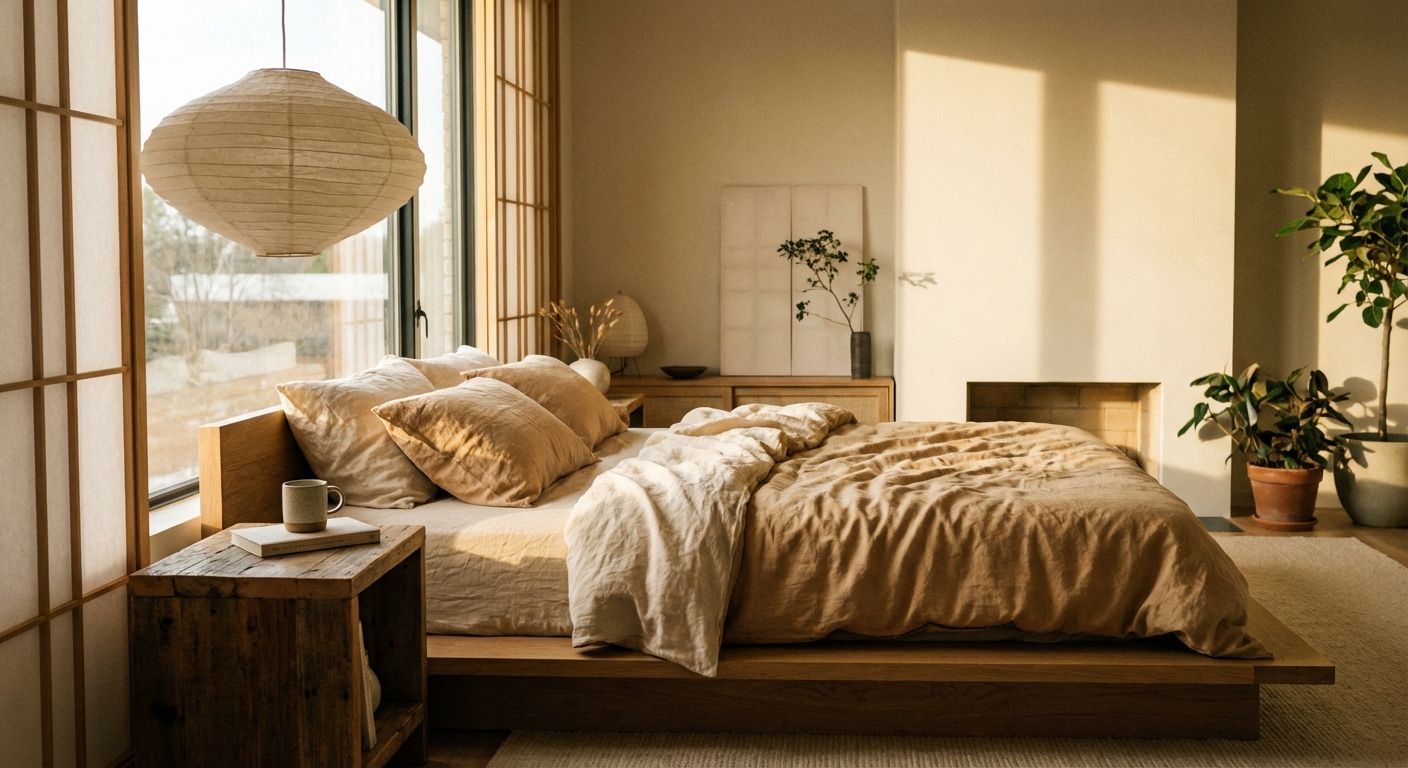
Japandi: linen bedding in warm neutrals, a minimal bedside surface, and gentle lighting. I love a paper lantern style pendant or an amber bedside lamp for that soft evening glow.
Kitchen and dining
Scandi: white or light cabinetry, open shelving used sparingly, and pale wood dining chairs. A small color moment, like a muted blue runner, works beautifully.
Japandi: flat-front cabinetry, warm wood tones, and stone or concrete textures. Keep counters mostly clear, then make one everyday object look intentional, like a wood tray with a soap bottle and hand brush.
Bathroom
Scandi: bright and clean, with soft towels and a simple mirror. A little greenery helps.
Japandi: spa-like and minimal. Think natural stone, matte black or aged brass hardware, and one beautiful bottle you don't mind leaving out.
Materials and decor
Scandi staples
- Pale woods (birch, ash, light oak)
- Wool rugs, cotton throws, chunky knits
- Simple ceramics in white or soft neutrals
- Clean-lined lighting with warm bulbs
- Graphic black accents in small doses
Japandi staples
- Mid-tone and dark woods (walnut, smoked oak)
- Linen curtains with a relaxed drape
- Stoneware, handmade ceramics, textured vases
- Natural fibers like jute and rattan
- Black accents, used with restraint
Patterns, art, and plants
Scandi: If you want pattern, go simple and graphic, like subtle stripes, small-scale geometrics, or a clean check. For wall art, light-toned photography and playful line drawings feel right at home. Plants can be casual, like a few leafy pots on a windowsill.
Japandi: Skip busy prints and lean into texture or one quiet motif. Think ink-style artwork, simple landscapes, or a single oversized piece with lots of breathing room around it. Plants look best when they're sculptural and intentional, like a bonsai-inspired silhouette, a tall branch in a vase, or one strong statement plant.
Common mistakes to avoid
- Going too cold: Minimalism without warmth can feel like a waiting room. Add texture and warm lighting.
- Over-decorating the “minimal” style: Both looks depend on breathing room. If you love objects, rotate them seasonally.
- Buying sets: The fastest way to make either style feel flat is matching everything. Mix a vintage piece with modern lines for depth.
Buy less, buy better
Both Scandi and Japandi tend to reward longevity. Instead of chasing “the look” with fast furniture, put your money where you'll feel it every day: a comfortable sofa, a solid wood table, good lighting, and textiles that hold up.
- Look for: real wood (or quality veneer), repairable construction, timeless shapes, and secondhand finds with patina.
- Skip: ultra-trendy pieces that only work for one season, and anything that looks good online but feels flimsy in person.
Mixing the two
In real homes, the best answer is often “a little of both.” If you love Scandi brightness but crave Japandi calm, start with a Scandi base and add Japandi depth through materials.
- Keep the walls light, then add richer woods in small doses (a coffee table, a frame, a stool).
- Choose one sculptural statement, like a ceramic lamp or a vintage bench, instead of many small accessories.
- Swap high-contrast patterns for texture (linen, wool, matte ceramics, woven shades).
If you're mixing, let one style lead and the other whisper. Your home should feel cohesive, not like it's trying to win two trends at once.
Try it today
- Lighting: Add one warm lamp (2700K is a flattering, cozy glow).
- Edit one surface: Clear your coffee table or dresser, then put back only 1 to 3 items you genuinely love.
- Add one natural material: A linen pillow cover, a wood tray, or a stoneware mug you use daily.
- Choose your wood direction: Go lighter for Scandi, richer for Japandi. This single choice makes everything else easier.
When you're choosing between Japandi and Scandi, you're not picking a rulebook. You're picking a feeling. And your home should feel like you, not like a showroom that forgot to leave room for living.