How to Mix Metal Finishes in a Kitchen or Bathroom

Clara Townsend
Clara Townsend is an interior stylist, vintage furniture enthusiast, and the creative voice behind Velvet Abode. With over a decade of experience transforming both cramped city apartments and sprawling fixer-uppers, she believes that a beautiful home is built on personal stories rather than massive budgets. When she isn't hunting for the perfect brass sconce at a local flea market, she can usually be found rearranging her living room for the third time this month.
Mixing metals is one of those design moves that looks effortless in other people’s homes and strangely stressful in our own. I get it. Hardware and fixtures feel permanent, and nobody wants to stare at “almost matching” finishes every morning while brushing their teeth.
Here’s the truth I’ve learned after styling a lot of kitchens and bathrooms: mixed metals look best when there’s a simple plan. Not a strict matching rule, just a rhythm. Think of it like jewelry. You can wear gold and silver together, but you usually repeat something, and you don’t throw every single piece you own on at once.
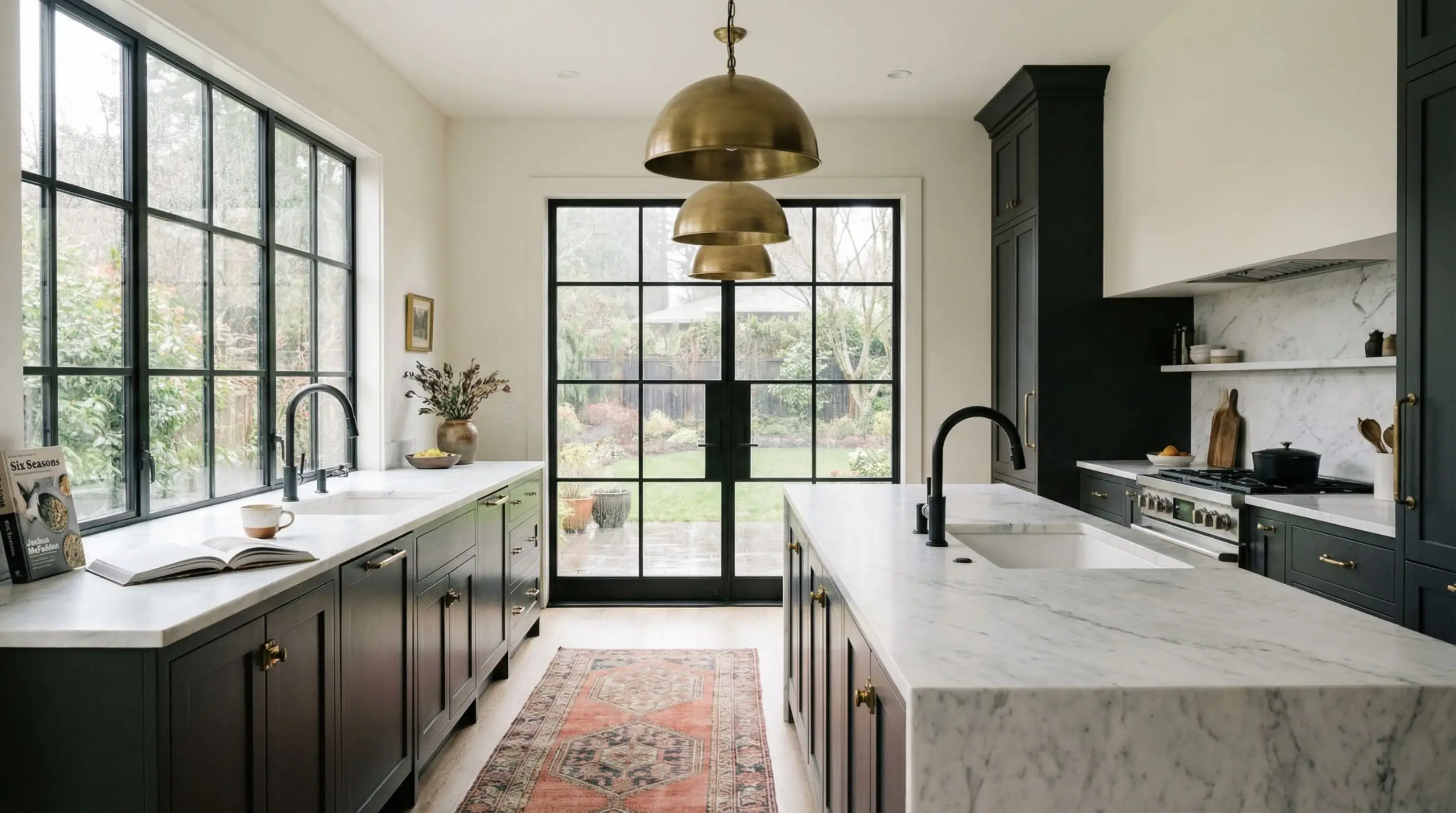
A reliable 4-rule set
1) Choose a dominant metal
Your dominant metal is the one that shows up the most, usually in the most repeated items. In a kitchen, that’s often cabinet hardware. In a bathroom, it’s often the faucet and shower trim.
- A useful guideline is 60 to 80% of the visible metal in the room as your dominant finish.
- Pick the finish you want to see every day, up close, in your hand.
- If you already own a finish you love (like a faucet you’re not replacing), let that be the dominant and build around it.
2) Limit accents (one, maybe two)
Accents are your supporting players. They make the room feel layered instead of matchy. But too many accents can read as “sample board” (like you installed every swatch at once).
- Best practice: one accent finish.
- More flexible option: two accents only if one is very small or very subtle (like stainless in appliances, or a tiny bit of chrome in a drain).
- If you’re tempted by three accents, choose your favorite two and stop.
3) Match undertones, not exact finishes
This is the sneaky secret that makes mixed metals feel calm instead of chaotic. Metals have undertones, just like paint. The catch: undertones vary by brand and sheen, so it’s worth sampling in your own lighting before you commit.
- Often warm: brass, polished brass, champagne bronze, antique brass, copper, rose gold.
- Often cool: chrome, polished nickel, stainless steel.
- Can swing warm or cool depending on formulation and surroundings: satin nickel, gunmetal, oil-rubbed bronze, and even “matte black” (black is usually a neutral, but it can lean warmer or cooler next to certain tiles and paint colors).
- Helpful bridges: matte black and deeper bronzes often work like “denim” in many palettes, especially when you repeat them and keep your lighting warm. In very icy-cool schemes, they can read heavy or brown, so sample first.
If your room already reads warm (creamy tile, oak, beige paint, warm white counters), a warm dominant metal will feel natural. If your room reads cool (crisp white, gray stone, bluish whites), cooler metals tend to feel at home.
4) Repeat your metals in the right places
Repetition is what turns “mixed” into “intentional.” In kitchens and bathrooms, the most natural repeat points are:
- Knobs and pulls (the easiest place to establish the dominant).
- Faucet (a key focal point, especially at a vanity).
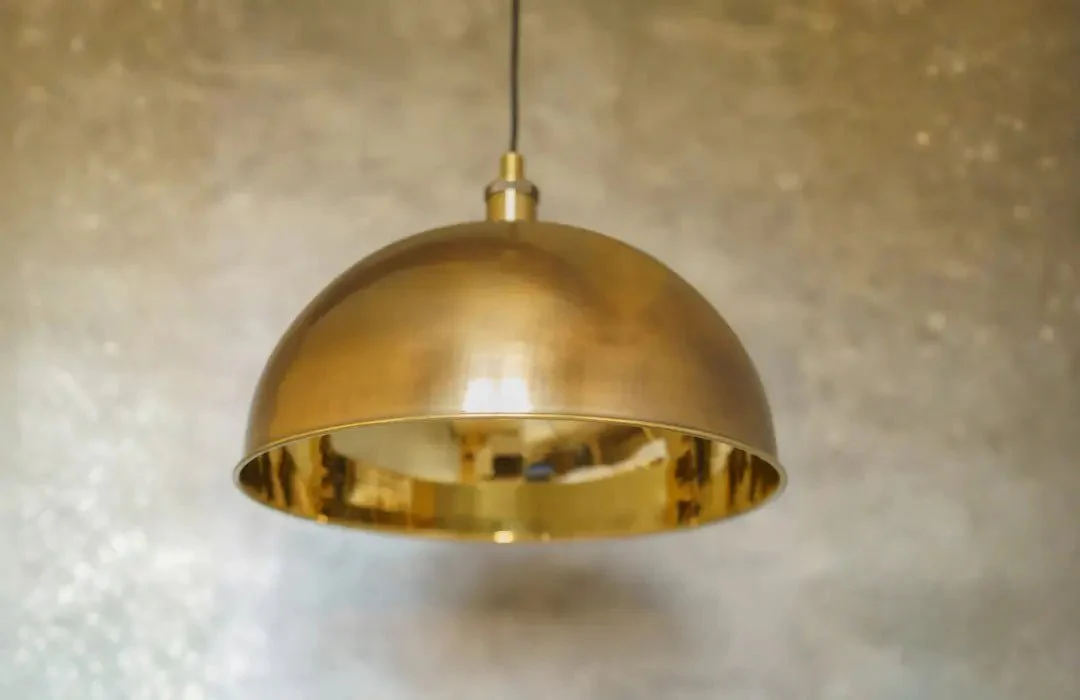
- Lighting (sconces over a mirror, pendants over an island).
- Mirror frame (a perfect place for your accent).
- Small accessories (towel bar, toilet paper holder, soap pump, cabinet latch).
A simple way to keep your head clear: make sure each finish appears at least twice in the room. Once can look accidental. Twice looks chosen.
Warm vs cool check
If you’re standing in your kitchen or bathroom thinking, “Why does this brass look kind of green?” or “Why does my chrome feel icy?” you’re probably dealing with undertone conflict, or lighting that’s shifting everything.
Use this quick check before you buy:
- Warm room + warm metals: cozy, vintage-friendly, forgiving.
- Cool room + cool metals: crisp, tailored, spa-like.
- Warm room + cool metals: can work beautifully, but it usually needs a bridge (often matte black, wood, or warmer lighting).
- Cool room + warm metals: also works, especially with brass as an accent to soften hard stone or bright white tile.
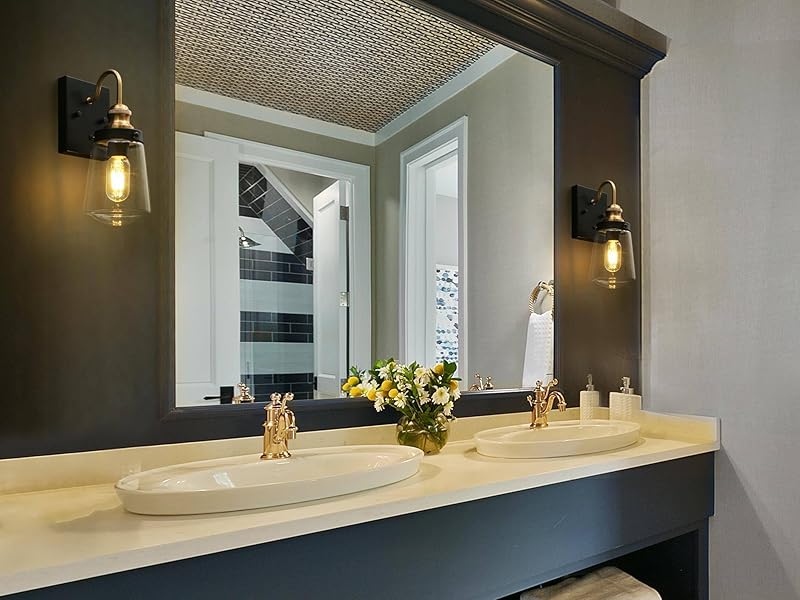
Kitchens: mix without chaos
Pick your dominant
Most kitchens have a lot of cabinets, which means a lot of hardware. That makes cabinet knobs and pulls the easiest dominant finish.
- If your cabinets are the star: make hardware dominant, then choose a faucet as the accent.
- If your faucet is a splurge: treat the faucet’s finish as the lead, then repeat it once or twice (pendants, a pot filler, or even a couple of glass-front cabinet latches) so it feels intentional.
Repeat points that matter
- Cabinet hardware: repeat everywhere you can, or at least on the most visible run.
- Faucet: one of the first things you notice, especially with an apron sink.
- Pendants: perfect for bringing in the accent finish without adding more tiny pieces.
- Range hood accents or a pot filler: treat these like jewelry. They can echo the faucet or the pendants.
My rule of thumb: if you’ve got open shelving, keep the metal story even simpler. The visual noise of dishes and glassware already adds a lot of texture.
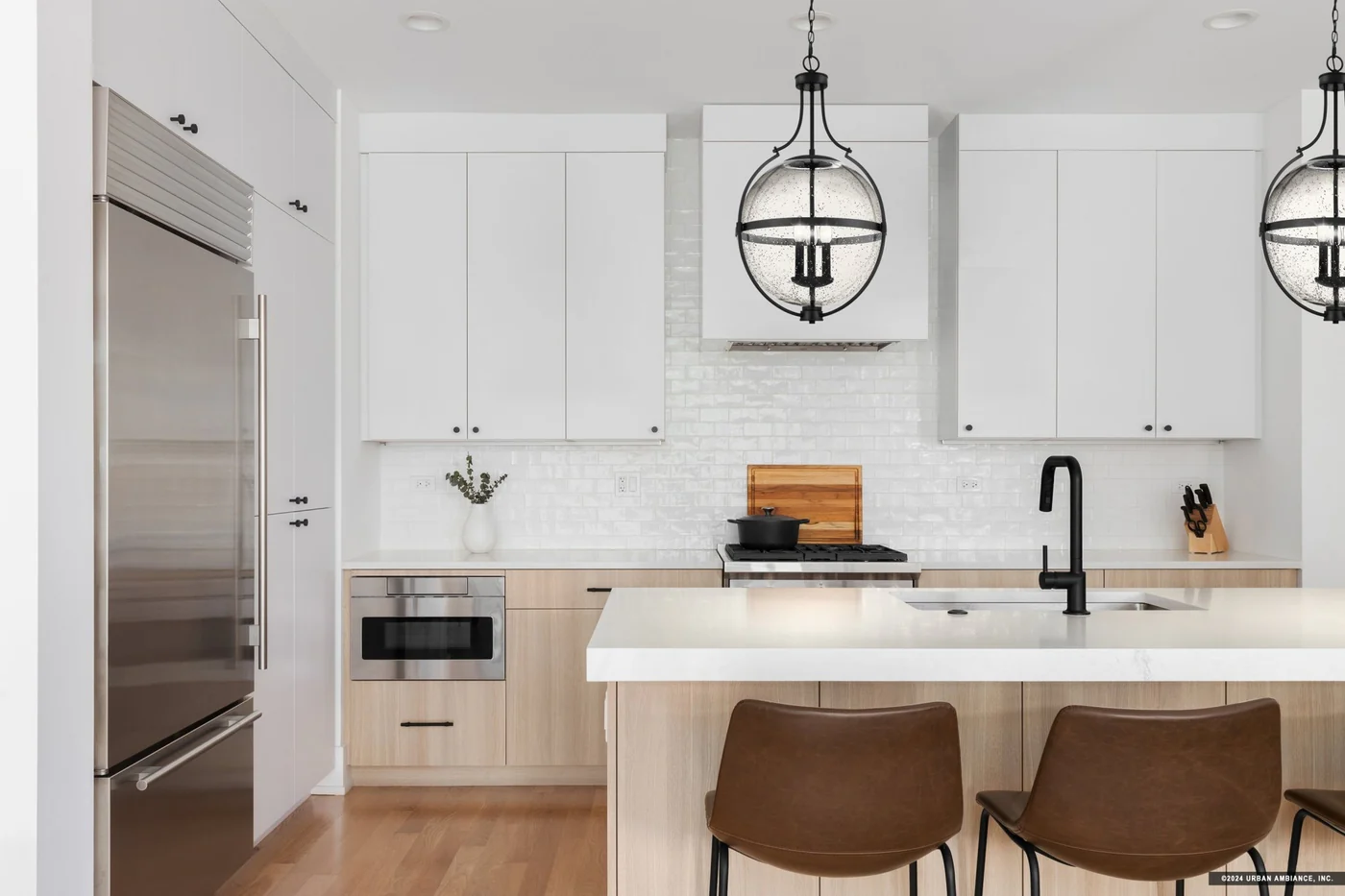
Bathrooms: the calm version
Let plumbing be the anchor
Bathrooms have fewer metal items, but they’re more concentrated in one zone. That makes the faucet and shower trim feel very loud, even in a tiny powder room.
- Best anchor: faucet and shower trim in the same finish.
- Accent options: mirror frame, sconces, towel hardware, cabinet pulls.
Keep the shower consistent
If you mix metals anywhere, try not to do it inside the shower unless you’re being very intentional. A mismatched shower head and valve trim can look like a repair, not a style choice.
If you want contrast, do it outside the shower: choose a different finish for the vanity light or mirror frame and repeat it once more.
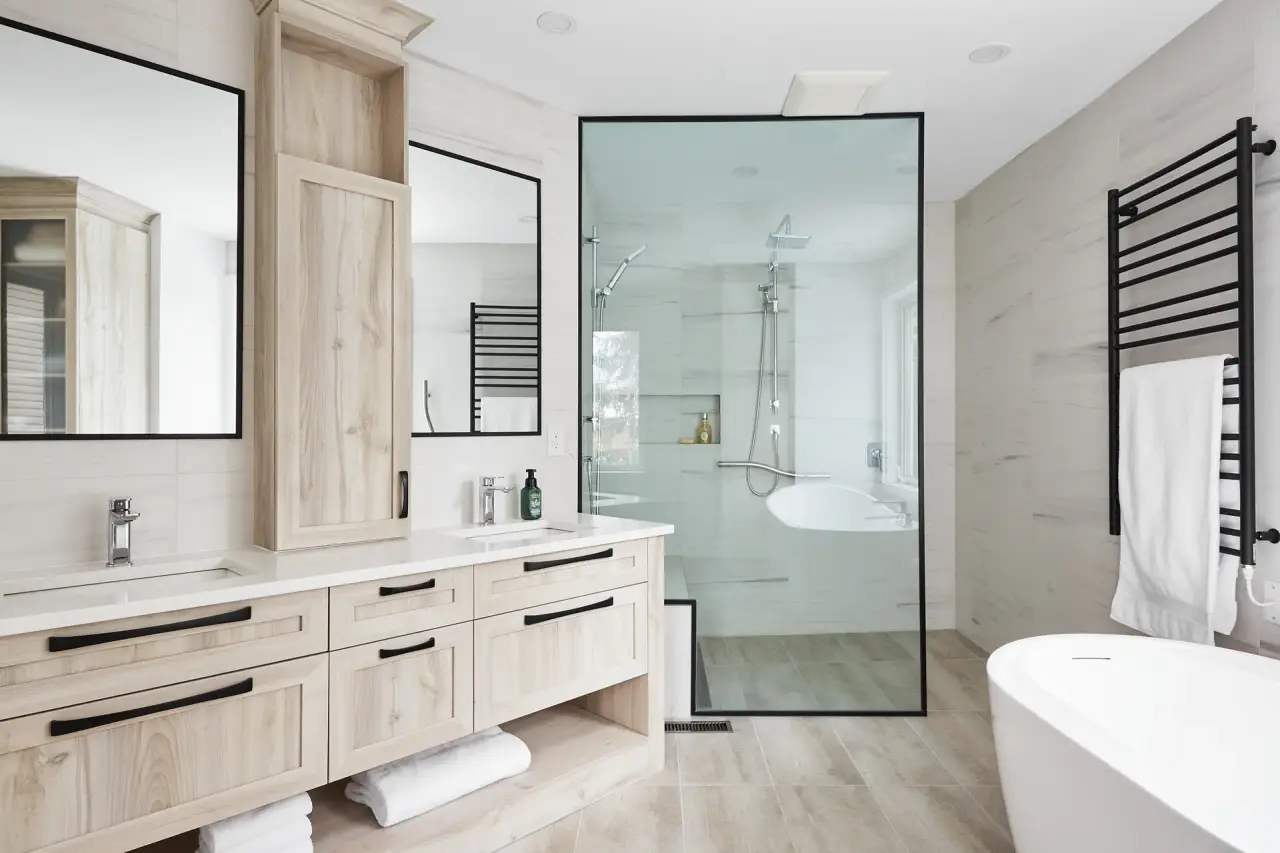
Open-concept continuity
If your kitchen flows into a dining or living area, you don’t have to make every metal match, but you do want the finishes to feel related.
- Keep one finish consistent across the shared sightline (often black or brass in lighting, or a consistent cabinet hardware finish).
- Let the second finish shift by zone (for example, kitchen plumbing in chrome, dining chandelier in aged brass), then repeat each finish at least twice within its zone.
- Use a bridge like warm bulbs, wood tones, and textiles so the transition feels soft instead of choppy.
Work with what’s fixed
Some metals are hard to change, and that’s fine. Think of them as background unless you decide to feature them.
- Stainless appliances: usually read as a quiet neutral in kitchens. You can treat them like they don’t “count” as your accent, as long as your other metals are intentional and repeated.
- Door hinges, window hardware, outlets: if they’re visible and you can’t change them, keep your main finishes simple and avoid adding a third or fourth competing shine nearby.
- Existing faucets you’re keeping: let them lead, then echo that finish once or twice so they look chosen, not leftover.
Combos that rarely fail
These combinations show up again and again in real homes because they feel balanced. Below each combo, I’ll tell you exactly what to repeat so it looks intentional.
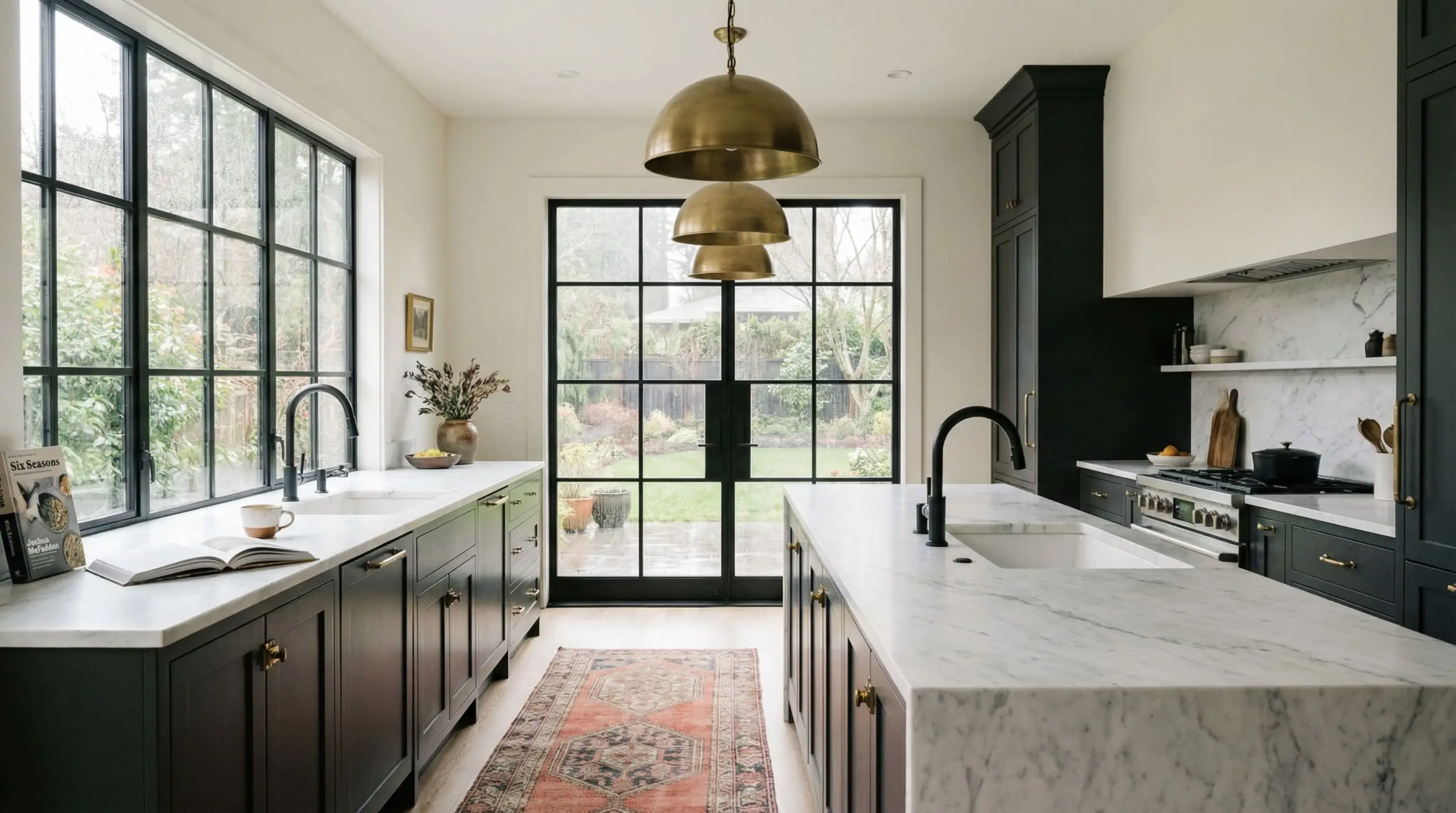
Brushed brass + matte black
- Vibe: warm, modern-vintage, slightly moody.
- Do this: brass as the dominant (faucet or pulls), black as the accent (lighting or mirror frame).
- Repeat: black twice minimum, for example sconces and cabinet pulls, or mirror frame and a pot filler.
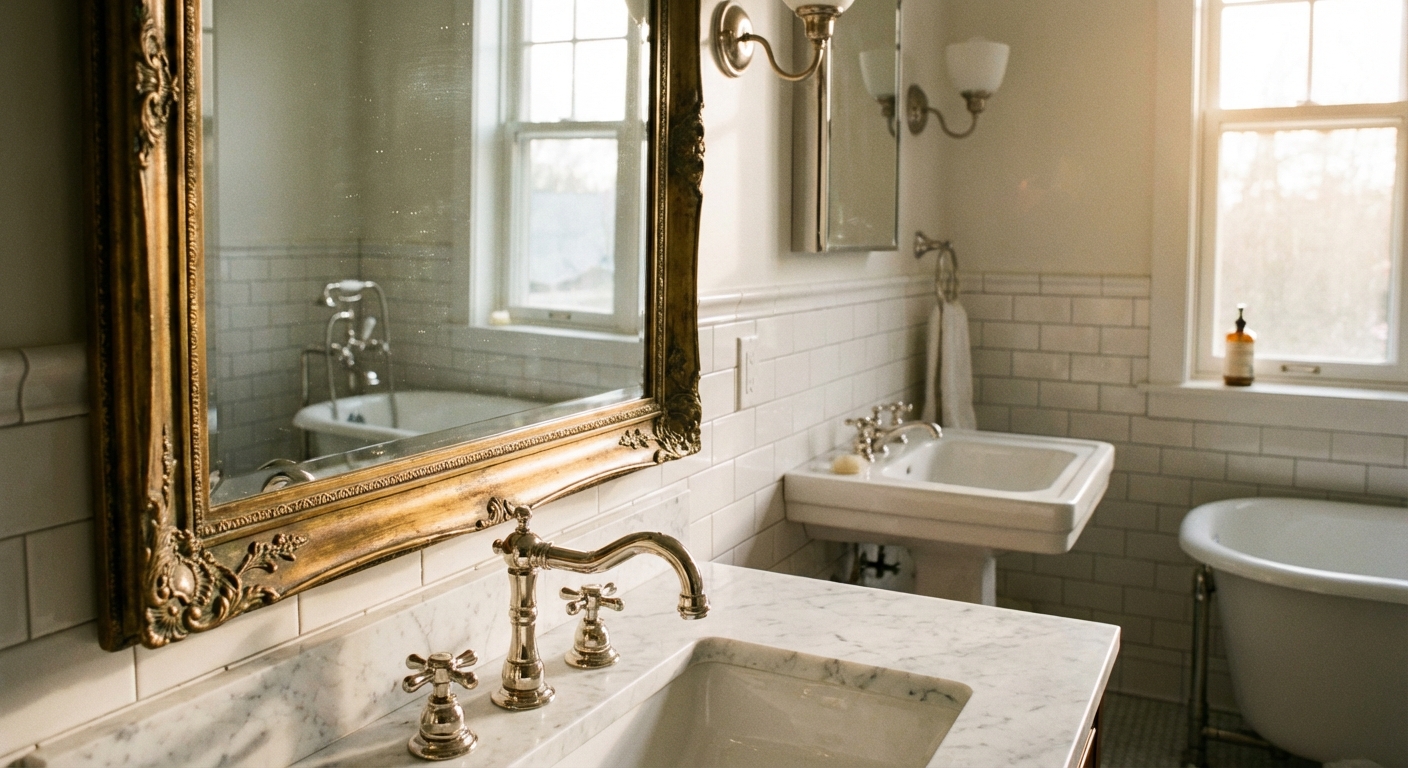
Polished nickel + unlacquered brass
- Vibe: classic, collected, “this house has history” even if it doesn’t.
- Do this: nickel as the clean anchor (plumbing), brass as the soft accent (mirror or lighting).
- Repeat: bring brass in at least two points, like a mirror frame and a small shelf bracket, and let nickel handle the hardworking pieces.
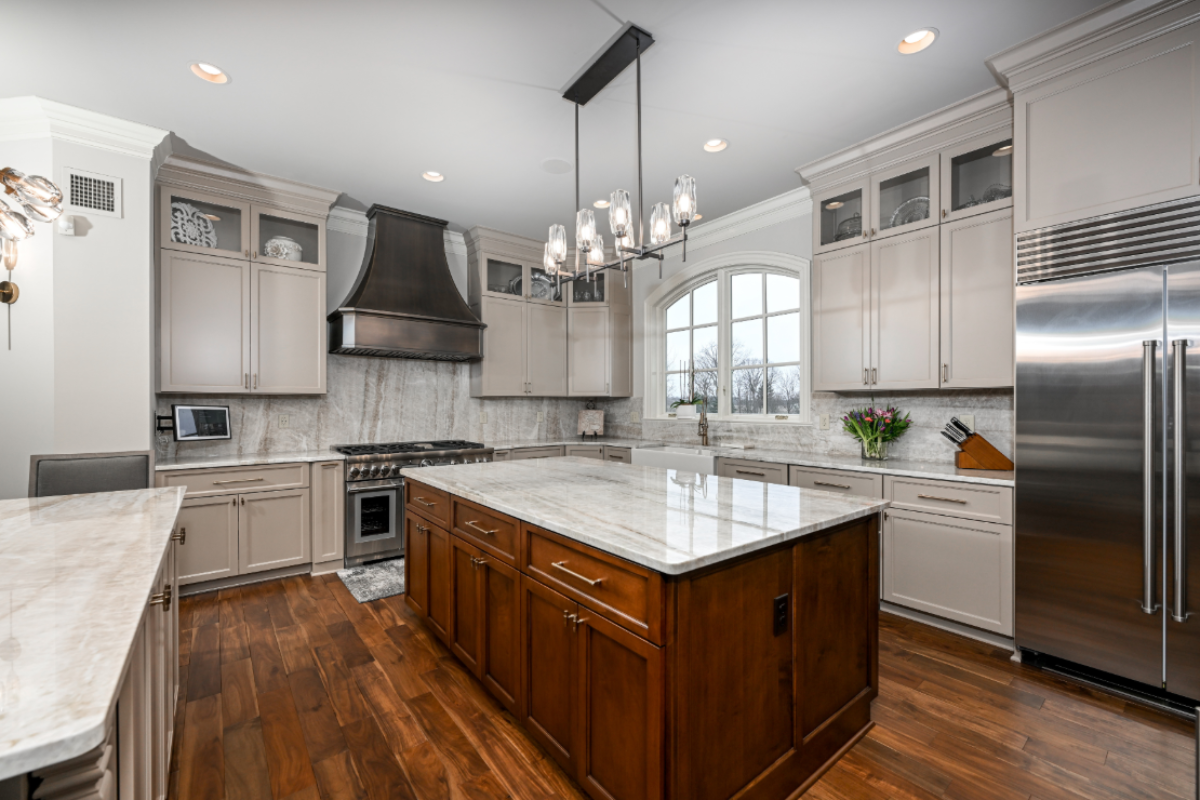
Stainless steel + champagne bronze
- Vibe: airy, updated, friendly in family kitchens.
- Do this: stainless stays quietly present via appliances, champagne bronze becomes the intentional warmth.
- Repeat: champagne bronze on cabinet hardware and one more place, like pendants or a faucet.
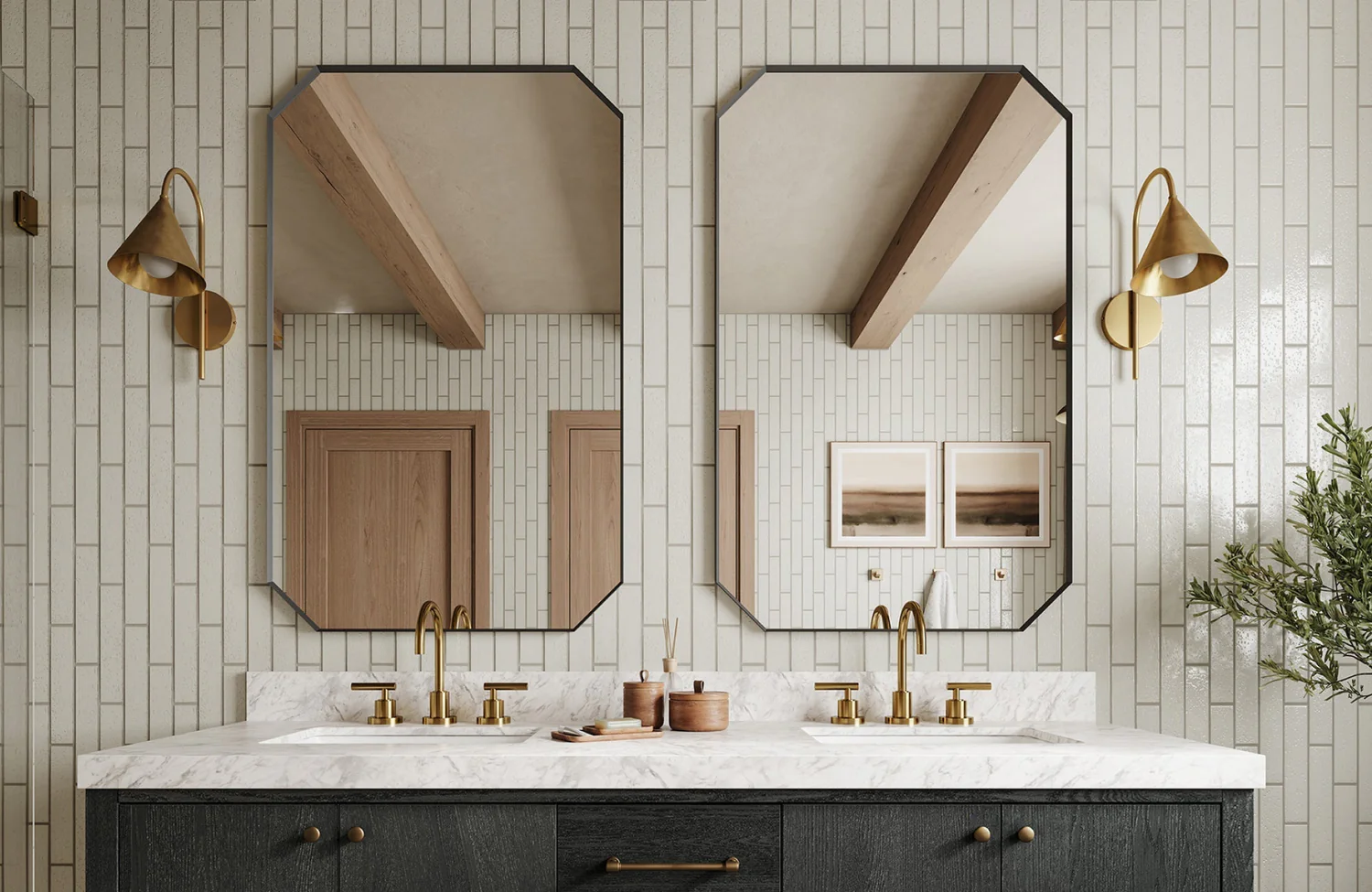
Chrome + matte black
- Vibe: crisp, graphic, a little Parisian bistro when paired with tile.
- Do this: chrome for plumbing, black for lighting and mirror, or the other way around.
- Repeat: make sure black shows up at least twice so it reads as style, not a random add-on.
Oil-rubbed bronze + brass
- Vibe: warm, traditional, cozy, especially with creamy paint and natural wood.
- Do this: keep one of them dominant and the other as a smaller accent.
- Repeat: use brass on lighting and one more small piece, like a soap dispenser, while bronze handles the main hardware. In cooler, gray-leaning rooms, test oil-rubbed bronze first because it can read very brown.
Common mistakes
Mistake: clashing undertones
Fix: decide whether your room reads warm or cool, then choose metals that support that. If you’re stuck between warm and cool, add a bridge like matte black, warm wood, or linen-textured textiles. And always view samples in your actual room lighting, not just online.
Mistake: every item is a different metal
Fix: go back to one dominant. Swap the easiest pieces first (cabinet pulls, a light fixture, a mirror). Let the small stuff follow.
Mistake: one lonely accent piece
Fix: repeat it once. Add a second touch of that finish, like a soap pump, a sconce, or a towel hook.
Mistake: mixing sheens and expecting a match
Brushed brass and polished brass are cousins, not twins.
Fix: treat different sheens as different finishes. If you must mix sheens, keep the undertone consistent and repeat each sheen intentionally.
Sample before you buy
- Order finish chips when you can, or buy one “test” knob and one small accessory first.
- Look at finishes in morning light, evening light, and with your vanity lights on.
- If you’re choosing unlacquered brass, remember it will patina quickly and unevenly, which is part of the charm. If you want it to stay consistent, choose a lacquered or brushed brass instead.
- If you’ve got hard water or you hate wiping down fixtures, skip super-polished finishes. Brushed and lightly aged finishes usually hide water spots and fingerprints better, although some matte finishes can show oils or soap haze, so they still need gentle cleaning.
A quick example
Warm white kitchen with oak floors: aged brass cabinet pulls as the dominant, matte black pendants as the accent, and stainless appliances as a quiet neutral. Repeat the black again with a black-framed art piece or bar stools, and you’ve got that layered look without it feeling busy.
Checklist
- What’s my dominant finish?
- What’s my one accent finish?
- Do these metals share a warm or cool undertone, or do I have a bridge?
- Where will I repeat each finish at least twice?
- Am I adding a third “metal” accidentally, like a shiny chrome drain or a brushed nickel light?
If you can answer those five questions, you’re not guessing anymore. You’re styling.
If you want the coziest, most forgiving mixed-metal look, choose a dominant finish you love in a slightly aged or brushed version. That softer sheen usually hides a lot of real-life fingerprints and water spots, but still plan on gentle cleaning if you’ve got hard water or kids who love to touch everything.
Bring it home
Mixing metal finishes isn’t about being bold for the sake of it. It’s about making a kitchen or bathroom feel lived-in, layered, and unmistakably yours. Choose a dominant, keep your accents intentional, match undertones, and repeat what you want the eye to notice. That’s the whole recipe.
If you’re still unsure, start small: swap a mirror frame or a pair of sconces first. Hardware is surprisingly powerful, but it’s also surprisingly changeable, and your home’s allowed to evolve with you.