How to Get Lipstick and Makeup Stains Out of a Fabric Sofa

Clara Townsend
Clara Townsend is an interior stylist, vintage furniture enthusiast, and the creative voice behind Velvet Abode. With over a decade of experience transforming both cramped city apartments and sprawling fixer-uppers, she believes that a beautiful home is built on personal stories rather than massive budgets. When she isn't hunting for the perfect brass sconce at a local flea market, she can usually be found rearranging her living room for the third time this month.
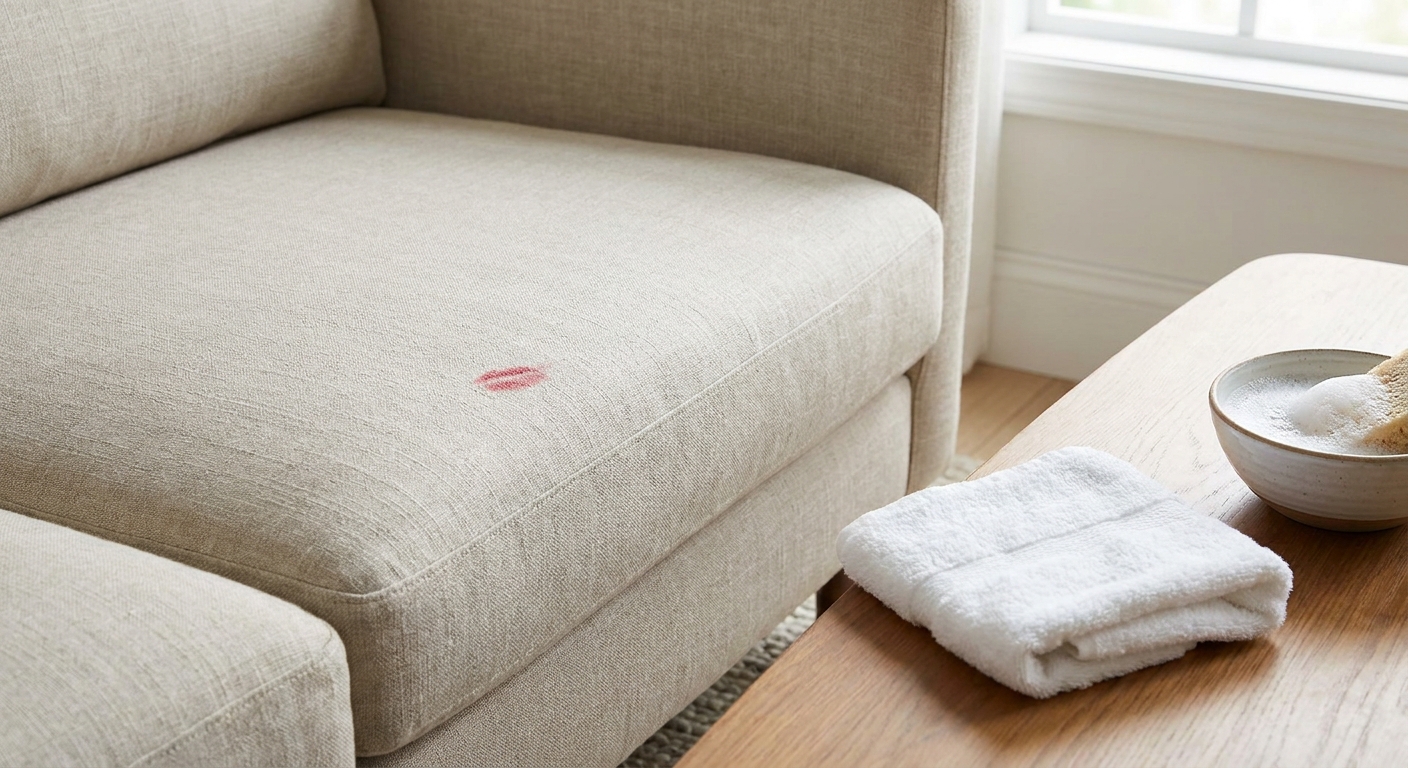
Lipstick on the sofa is one of those tiny disasters that feels weirdly personal. Like your couch is judging your choice of bold berry. The good news is that most cosmetic stains come up beautifully if you treat them in the right order and use a cleaner that matches your upholstery tag and your sofa’s fabric.
In this guide, we will separate oil-based makeup messes from water-based ones, walk through the blotting sequence that prevents spreading, and help you pick a safer cleaner based on the tag. Act fast, but do not panic. The biggest “oops” is rubbing.
What you need (grab this first)
- White cloths or paper towels (no dye transfer)
- A spoon or dull butter knife (for lifting solids)
- Cotton swabs (for tight spots)
- Distilled water (helps prevent rings on many fabrics)
- Clear dish soap (for W and WS fabrics)
- An upholstery spot cleaner that matches your code (optional but helpful)
- A fan for drying
First, figure out what kind of makeup you are dealing with
Cosmetics are usually a blend of pigments plus either oils, waxes, silicones, or water-based binders. The “right” method depends on what is holding the pigment to the fabric.
Quick cheat sheet
- Usually oil-based or waxy: lipstick, liquid lipstick, long-wear foundation, concealer sticks, cream blush, tinted balms, some sunscreens and primers (silicone-heavy).
- Usually water-based: many skin tints, some liquid foundations labeled water-based, washable face paint, some gel blushes.
- Mixed and tricky: mascara, eyeliner, setting spray, transfer-proof formulas. Treat as oil-based first, then finish with a gentle water-based rinse if your code allows.
If you are not sure: assume oil-based and start by lifting and blotting dry. Water can sometimes emulsify oily binders and spread pigment, which is how “one spot” becomes “the whole cushion.”
Before you touch the stain: two rules
Rule 1: Read the cleaning code
Look for a tag under the seat cushion or along the sofa base. The codes below are common, but always follow your specific manufacturer instructions when they are available.
- W: Water-based cleaners are generally appropriate.
- S: Solvent-based cleaners only. Avoid water.
- WS or SW: Either water-based or solvent-based cleaners are generally acceptable.
- X: Vacuum only. No liquids. Call a pro for stains.
If you cannot find a tag, start with the gentlest dry steps (lift solids, blot, vacuum powder). Then check the brand website or call the manufacturer, or use a professional cleaner. Guessing with solvents or water can backfire depending on the textile and finish.
Rule 2: Patch test like you mean it
Pick a hidden spot like the back corner of a cushion. Test your chosen cleaner on a cotton swab, then:
- Press for 10 to 15 seconds.
- Wait 5 to 10 minutes.
- Check for color transfer, rings, stiffness, or lightening.
If the fabric changes, stop and switch methods or call a professional upholstery cleaner.
The no-spread blotting sequence
Whether it is lipstick, foundation, or a mystery smudge, the order matters. This is how you avoid turning one spot into a whole cushion situation.
- Lift, do not smear. If there is any solid product, gently lift it with the edge of a spoon or a dull butter knife. Do not rub.
- Blot from the outside edge toward the center. Use a clean white cloth or paper towel. Press, lift, rotate to a clean area, repeat.
- Use tiny amounts. You want controlled dampness, not a wet cushion.
- Support underneath if possible. If the cover is removable, slip a white towel behind the stained area so product does not transfer through to the other side.
- Air dry, then reassess. Many stains look “gone” while wet, then reappear as they dry. Let it dry fully before you declare victory.
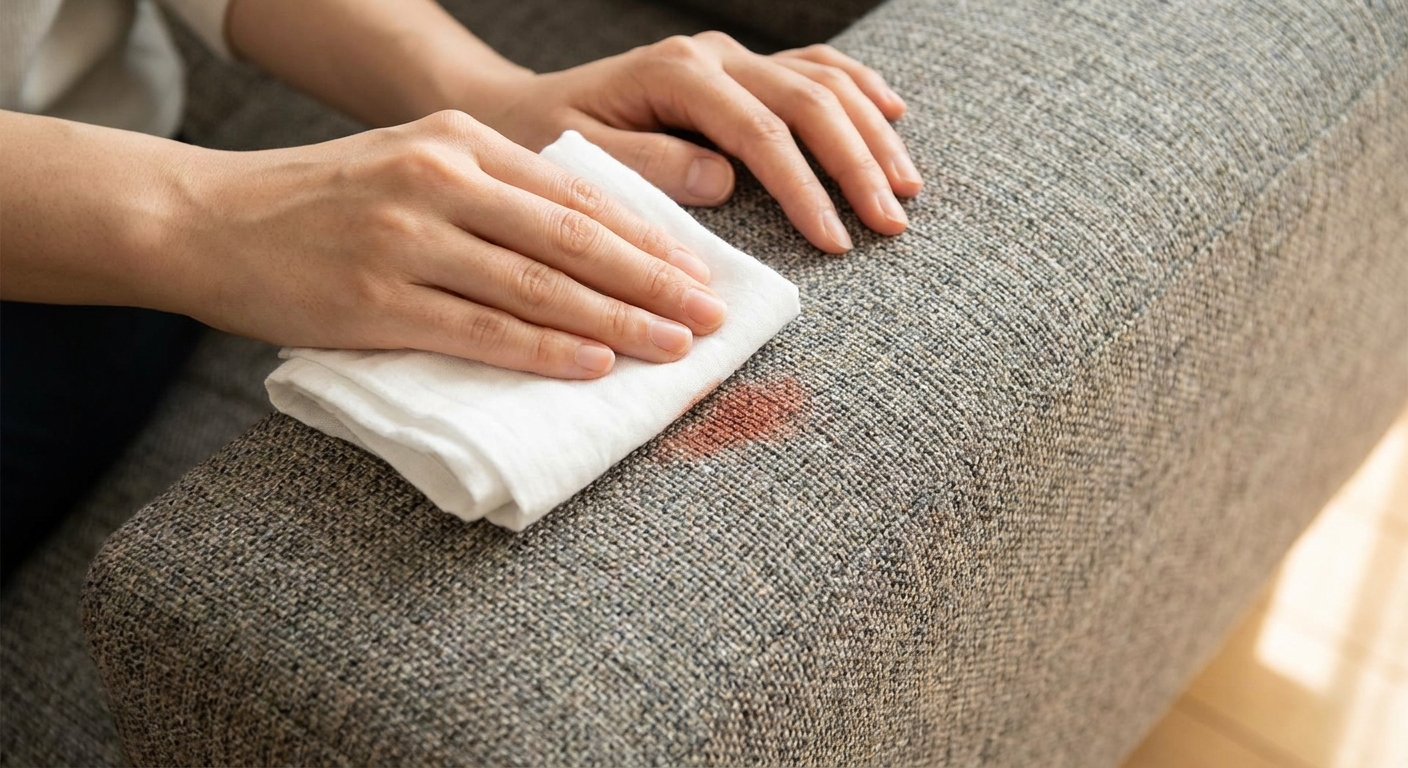
Cleaner choices by fabric code
Here is a sofa-friendly way to choose your cleaner without going rogue. When in doubt, follow the tag and use products labeled for upholstery.
Code W
- Dish soap solution: 1 to 2 drops clear dish soap in 1 cup cool water.
- Upholstery shampoo foam: Apply foam to a cloth first, not directly to the sofa, to avoid overwetting.
- Distilled water rinse: Helps reduce rings on many fabrics, especially linen blends.
Code S
- Dry-cleaning solvent labeled for upholstery: Use a product specifically intended for S-coded fabrics.
- Isopropyl alcohol: Sometimes used as a DIY spot solvent on certain microfiber and other S-coded fabrics, but it is not universally “S-safe.” Patch test carefully, use sparingly, ventilate well, and avoid open flames. If your fabric has a backing, special finish, or is dye-prone, skip this and use an upholstery solvent or call a pro.
Code WS
- Start with the least aggressive option (dish soap solution). Move to an S-safe upholstery solvent only if pigment remains and your patch test looks good.
Code X
- Do not apply water or solvent. Vacuum loose powder only and contact a professional.
Quick fabric note: Microfiber often behaves like S fabric and may need gentle solvent-style spot cleaning plus brushing to restore the nap. Velvet and delicate weaves are easier to mark and crush, so keep moisture minimal and consider a pro if the stain is noticeable.
Removable covers: a quick note
If your cushion cover zips off, check the care label before you get optimistic. Some covers can be machine-washed, but many cannot. Even when washing is allowed, spot treat first and avoid hot water, which may set oils or dyes in some fabrics.
Remove lipstick from a fabric sofa
Lipstick is usually pigments suspended in waxes and oils. Your goal is to lift the oily binder first, then chase any leftover color.
Step-by-step
- Lift excess. Scoop any solid lipstick off the surface.
- Choose the right track for your code.
- If code W: Use dish soap solution on a cloth and blot gently. Repeat with fresh cloth sections. Finish with a light distilled water blot to remove soap.
- If code S: Use an upholstery solvent labeled for S fabrics. Lightly dampen a cloth and blot. Keep moving to a clean area of cloth.
- If code WS: Start with dish soap solution. If a pink shadow remains after drying, move to an S-safe upholstery solvent (patch tested), then finish with a distilled water blot to remove residue.
- Do not oversaturate. Lipstick loves to travel. Use the smallest amount that still transfers color onto your cloth.
- Dry and fluff. Press with a dry towel, then let air dry with airflow. Brush the nap gently with a soft brush if the fabric looks flattened.
If a faint shadow remains after drying: repeat the same code-safe method once more. Pigment can need two passes on light upholstery.
Remove foundation and concealer
Foundation is famous for looking “fine” until you add the wrong thing and suddenly it is everywhere. Treat it like a layered stain: binders first, then pigment, and do not flood the cushion.
Liquid foundation (by code)
- Blot immediately. Press, lift, repeat. No circles.
- Pick the right method.
- If code W: Blot with dish soap solution applied to a cloth. Work from the outer edge toward the center. Then blot with distilled water to remove soap residue.
- If code S: Blot with an upholstery solvent labeled for S fabrics. Keep it light. You are lifting, not soaking.
- If code WS: Start with dish soap solution. If beige transfer stops but a stain remains after drying, step up to an S-safe upholstery solvent (patch tested), then do a light distilled water blot to even things out.
- Dry fully. If you see a ring, do not panic. See the “ring rescue” section below.
Powder foundation or setting powder
- Let it stay dry. If you wet powder, it can set.
- Vacuum gently using an upholstery attachment.
- Spot treat what remains using the appropriate method for your fabric code.
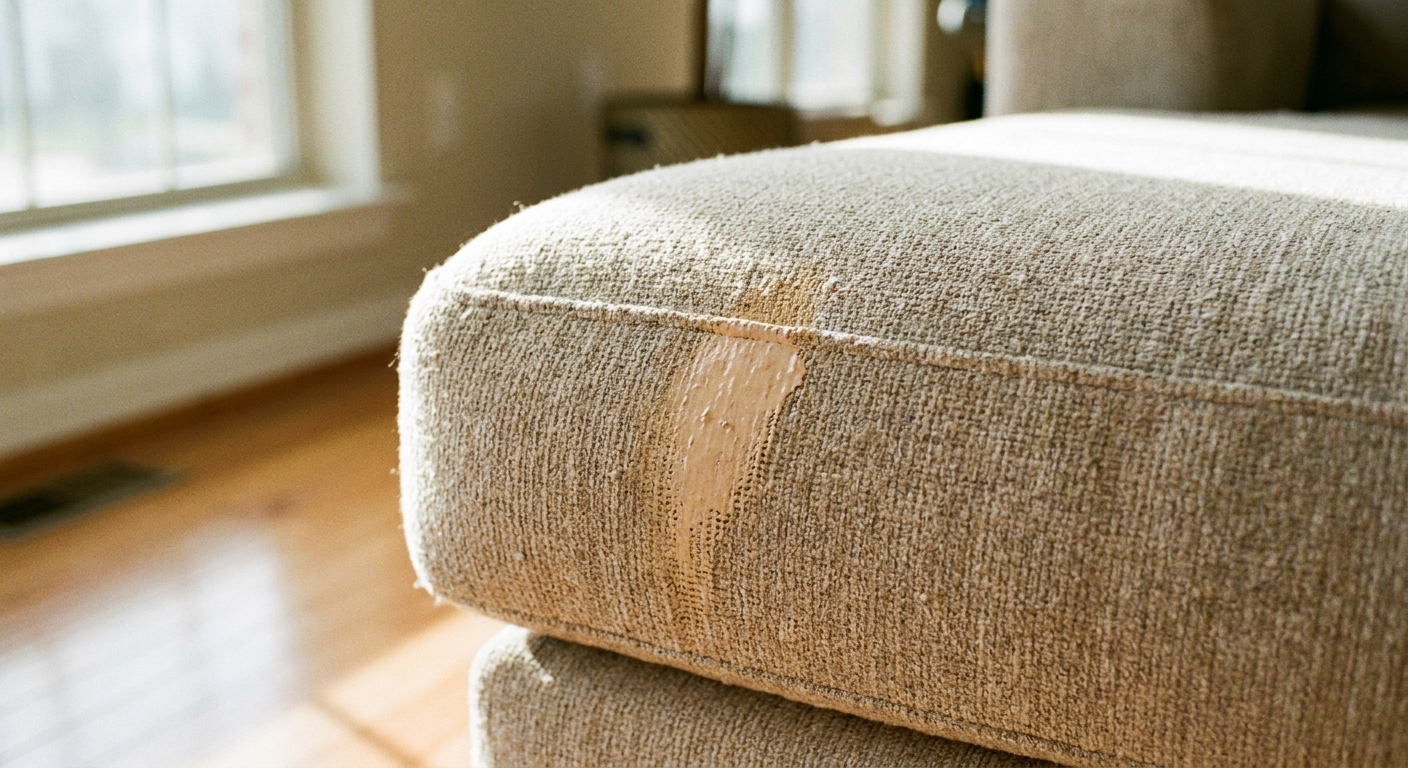
Mascara and eyeliner
Mascara and eyeliner often combine pigments, waxes, and film-formers that are designed to stick. Be patient and expect a couple of rounds.
Step-by-step (by code)
- Blot, do not rub. Rubbing can drive black pigment into the weave.
- Use the right cleaner.
- If code W: Use dish soap solution on a cloth and blot gently. Repeat. Finish with a distilled water blot.
- If code S: Use an S-labeled upholstery solvent and blot carefully. Ventilate well and keep away from flames.
- If code WS: Start with dish soap solution. If residue remains after drying, move to an S-safe upholstery solvent (patch tested), then finish with a light distilled water blot.
- Repeat as needed. Let the area dry between rounds so you can see what is truly left.
When the stain spreads
This is common with foundation and creamy products. It usually happens because of rubbing, too much liquid, or cleaning from the center outward.
What to do now
- Stop adding more product.
- Contain it. Start at the outer edge of the stain and blot toward the center.
- Switch cloths constantly. A “dirty” cloth just redeposits makeup.
- Pull out moisture. Press with a dry towel to draw cleaner out of the cushion.
If the cushion cover is removable
- Remove it carefully to avoid spreading the stain through the zipper area.
- Place a towel behind the stain and continue blotting from the back side if accessible. This can help push pigment out rather than deeper in.
Ring rescue
Sometimes you remove the makeup but leave a pale halo. That is usually cleaner residue or uneven moisture, not leftover lipstick.
For W or WS fabrics
- Lightly mist or dab the area with distilled water to evenly dampen a slightly larger area than the ring.
- Blot thoroughly with a clean towel.
- Let it air dry with good airflow. A fan helps.
For S fabrics
Use only an S-safe upholstery solvent, applied evenly and sparingly, then blot dry. If rings persist on S-coded fabric, it is often worth calling a pro to avoid color shifting.
What not to do
- Do not rub. It frays fibers and spreads pigment.
- Do not soak the cushion. Over-wetting can cause rings, mildew, and interior cushion staining.
- Do not mix lots of cleaners. Layering products can set stains or leave residue that attracts dirt.
- Do not use hot water. Heat may help oils bond and may set some pigments.
- Avoid harsh DIY solvents that are not upholstery-approved. Some pros use stronger solvents in controlled ways, but at-home experimenting is how you end up with a clean stain and a damaged fabric.
When to call a professional
Sometimes the most stylish choice is outsourcing.
- Your sofa is code X.
- The stain is on viscose, rayon, silk blend, velvet, or antique upholstery.
- Color is transferring during patch tests.
- The makeup stain is large, old, or has been heat-dried.
- You cleaned it once and now have a bigger shadow or ring.
If you do call, tell them exactly what the product was and what you used so far. That info saves time and protects your fabric.
Aftercare so it does not reappear
Even when the stain looks gone, residue can wick back up while drying.
- Blot dry longer than you think you need to. Think press and hold, not quick dabs.
- Let it dry fully with airflow. A fan across the cushion is ideal.
- Vacuum once dry. This lifts any crusty residue and revives the texture.
- Consider a sofa throw if makeup mishaps are frequent. Not forever, just for the season of your life when the couch is also your getting-ready station.