How To Get Blood Out Of Upholstery

Clara Townsend
Clara Townsend is an interior stylist, vintage furniture enthusiast, and the creative voice behind Velvet Abode. With over a decade of experience transforming both cramped city apartments and sprawling fixer-uppers, she believes that a beautiful home is built on personal stories rather than massive budgets. When she isn't hunting for the perfect brass sconce at a local flea market, she can usually be found rearranging her living room for the third time this month.
Blood on upholstery feels dramatic, even when it is just a nicked finger and a light-colored cushion. The good news is that blood is usually very removable if you move gently and use the right temperature. The not-so-fun truth is that heat and over-scrubbing can set the stain or rough up the fabric pile. Let’s keep your upholstery looking like itself.
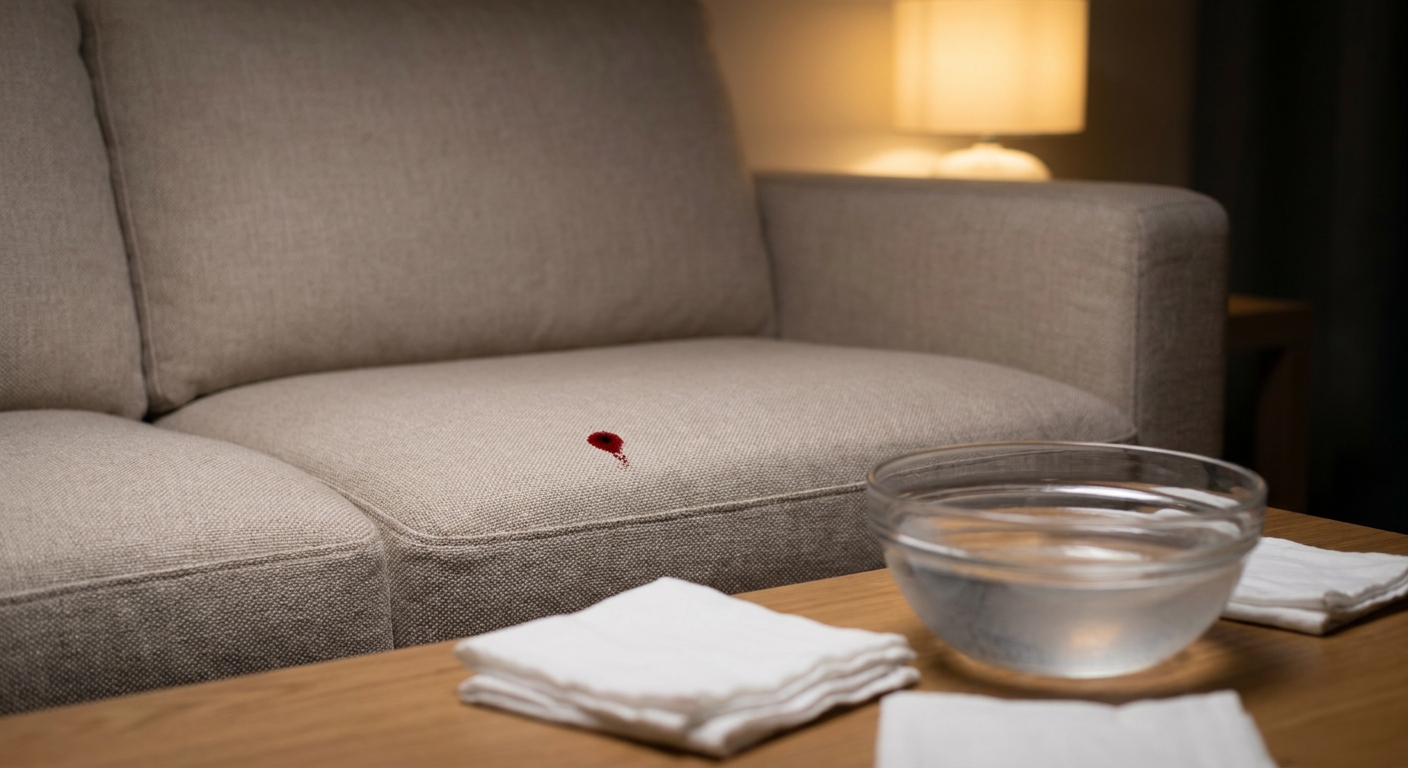
First, check these two things
1) Find the cleaning code
Look for a tag under the cushion or along the sofa frame. Codes are not perfectly universal across every manufacturer, but they typically mean:
- W: Water-based cleaning is usually safe.
- S: Solvent-based cleaning only. Avoid water.
- WS or W/S: Either water-based or solvent-based.
- X: Vacuum only. No DIY liquids. (Some pieces can still be professionally spot-cleaned.)
If your piece is S or X, skip to the code-specific notes below. For silk blends, antique upholstery, or anything you cannot easily test, professional help is often the safest path.
2) Fresh or dried?
- Fresh blood: prioritize blotting and cold water. You are preventing the proteins from binding to the fibers.
- Dried blood: you will rehydrate slowly, then lift in layers.
What you will need
- Cold water (truly cold)
- White cloths (best) or plain, unprinted paper towels (avoid dyed or printed towels on light fabric)
- A small bowl
- Mild dish soap (clear, no bleach or added moisturizers)
- 3% hydrogen peroxide (optional, for sturdy light fabrics only)
- Soft brush or clean toothbrush (optional)
- Vacuum with upholstery attachment
- Optional safety add-ons: disposable gloves, a small trash bag
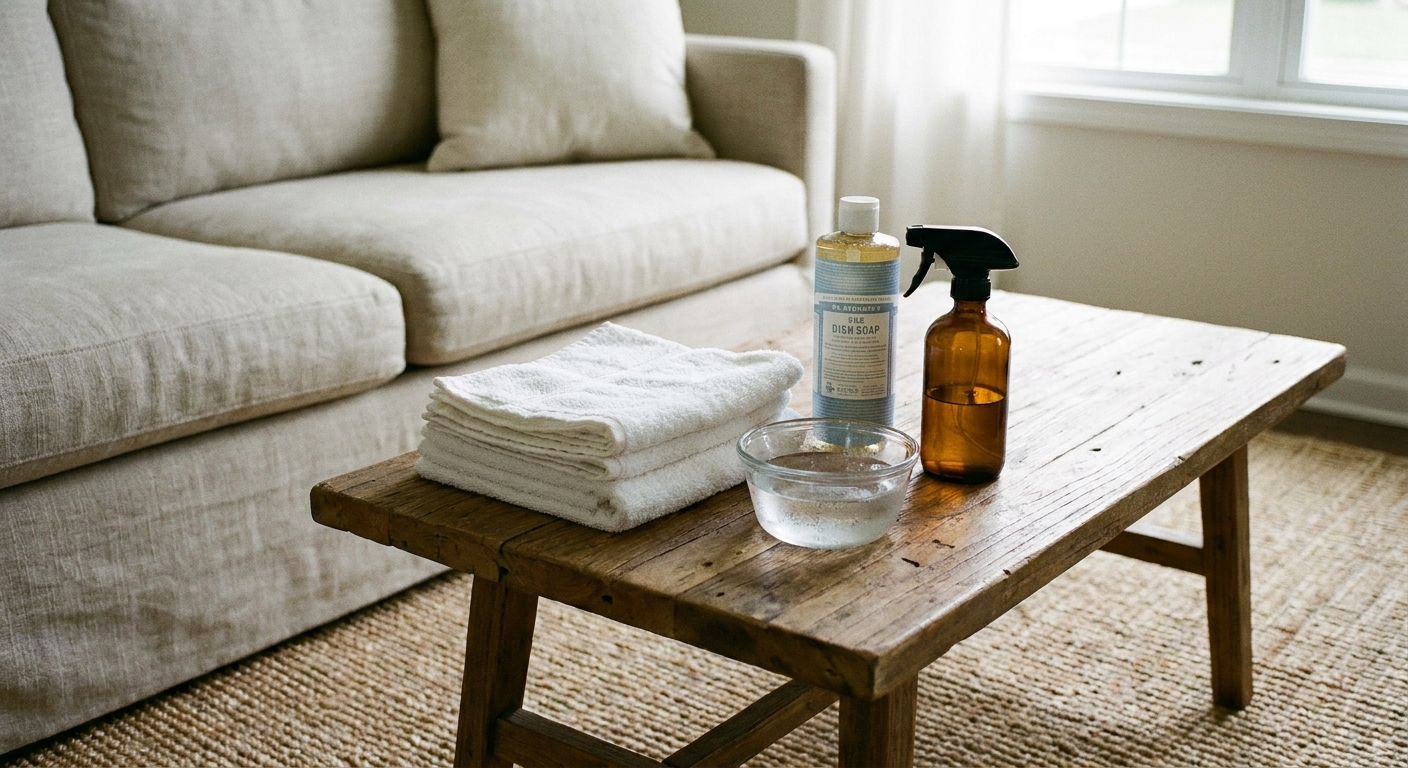
Before you start (quick safety note)
If the blood is from an unknown source, wear gloves. Wash hands afterward and launder cloths on hot if the fabric allows, or dispose of paper towels in a sealed bag. Keep cleaning tools and surfaces you used (like the bowl) sanitized when you are done.
Method for fresh blood (most upholstery)
Step 1: Blot, do not rub
Press a folded white cloth on the spot to absorb what you can. Lift straight up. Repeat with a clean area of cloth until you are no longer picking up wet blood.
Step 2: Cold water blotting
Dampen a clean cloth with cold water and blot the stain from the outside edge inward. Work in small sections to keep the stain from spreading. Keep switching to a clean section of cloth so you are not re-depositing pigment.
Step 3: Add a tiny bit of soap if needed
If there is still a shadow, mix 1/2 teaspoon mild dish soap into 1 cup cold water. Lightly dampen a cloth and blot again. You want the fabric barely damp, not soaked.
Step 4: Rinse blot
Use a fresh cloth dampened with plain cold water to blot away soap residue. Leftover soap can attract dirt later and create a slightly darker ring.
Step 5: Dry properly
Blot with a dry towel. Let it air dry. If you can, aim a fan across the cushion. Avoid hair dryers or other heat.
Method for dried blood
Step 1: Rehydrate gently
Wet a cloth with cold water, then wring it out very well. Lay it over the stain for 5 to 10 minutes. The goal is to soften the dried proteins without flooding the cushion.
Step 2: Blot and lift in layers
After the dwell time, blot firmly. Repeat the rehydrate and blot cycle a few times. Dried stains usually come out in rounds, not all at once.
Step 3: Use the mild soap mix
Use the dish soap solution (1/2 teaspoon per 1 cup cold water) and blot. Rinse blot with plain cold water.
Step 4: If a stain shadow remains
On sturdy, colorfast, light upholstery, you can try 3% hydrogen peroxide as a last step. Test first in a hidden area. Apply a drop to a cloth, dab the stain lightly, let sit for 1 to 3 minutes, then blot with cold water to rinse.
Important: Skip peroxide on wool, silk, mohair, velvet with a delicate pile, and on dyed, printed, or dark fabrics. Peroxide can weaken some fibers and can cause uneven lightening even when fabric looks light overall. Stop immediately if you see any color shift.
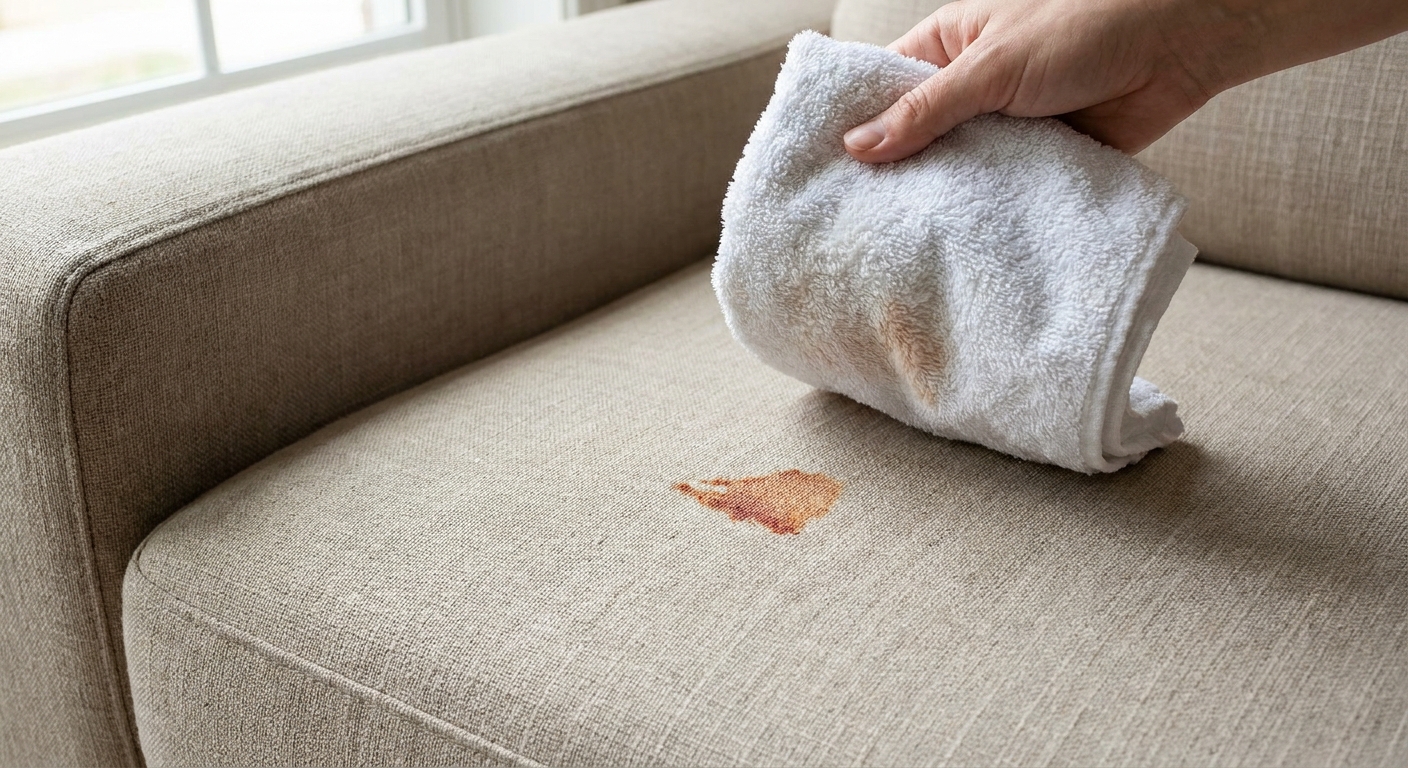
Fabric-by-fabric tips
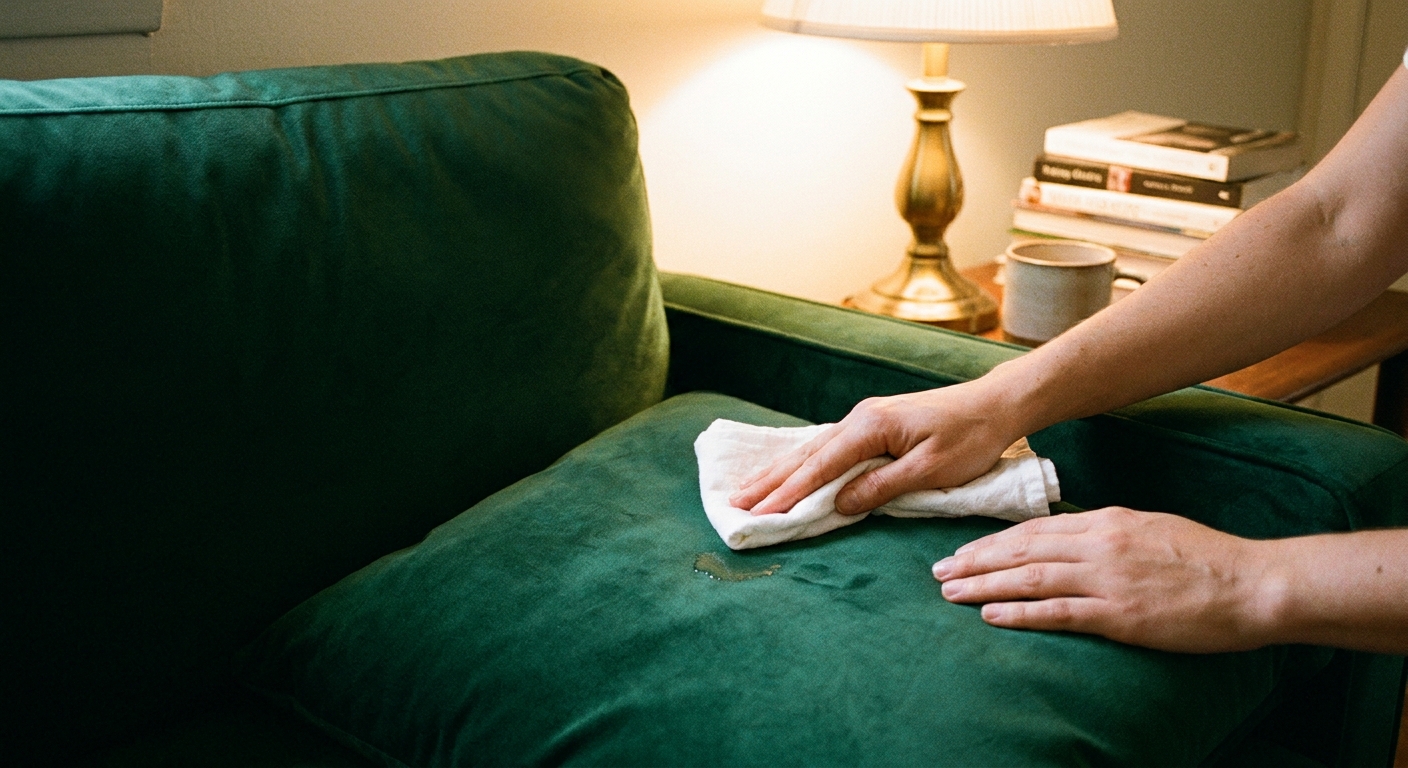
Velvet
Velvet is all about the pile. Rubbing and over-wetting can crush it, leaving a darker patch even if the stain is gone.
- Blot only, using very little liquid at a time.
- Use cold water first, then a tiny amount of the mild soap mix if needed.
- Once dry, brush the pile lightly in one direction with a soft brush to revive the nap.
- If it is silk velvet or an antique piece, consider professional cleaning. Those fibers can watermark easily.
Microfiber
Microfiber can show water rings, and some finishes get a little crunchy or patchy if you use too much moisture. The goal is light, controlled dampness and patient blotting.
- Check the code. Many microfibers are S or WS.
- If W or WS, use minimal moisture and blot from the outside edge inward.
- If the fabric feels stiff after drying, lightly brush with a soft brush to restore texture.
- If S, follow the solvent-only guidance below.
Linen, cotton, and performance fabrics
- These are usually more forgiving, but still avoid heat.
- Rinse thoroughly to prevent a faint soap halo.
- For removable cushion covers, check the care label. If washable, pre-treat with cold water and wash cold. Air dry.
Wool blends and delicate weaves
- Use cold water and mild soap sparingly.
- Do not scrub. Wool can felt and fuzz.
- Avoid hydrogen peroxide unless a professional directs you. It can weaken or lighten protein-based fibers.
- When in doubt, stop early and consult a professional cleaner, especially for large stains.
If your code is S or X
S (solvent only)
Use a dry-cleaning solvent labeled for upholstery and follow the product directions exactly. General best practices:
- Ventilate the room and keep away from flames.
- Test in a hidden spot for color transfer and texture change.
- Apply solvent to a white cloth, not directly to the fabric, then blot. Do not scrub.
- Use a dry cloth to blot after, then let the area air dry fully.
If the stain is spreading, the fabric is delicate, or you are not sure which solvent is appropriate, call a professional.
X (vacuum only)
Do not use DIY liquids. Vacuum gently, then contact a professional upholstery cleaner for spot treatment options that match your fabric and construction.
What not to do
- Do not use hot water. Heat can set blood into fibers.
- Do not rub aggressively. It pushes stain deeper and damages texture, especially velvet and chenille.
- Do not bleach unless the fabric label specifically allows it. Bleach can weaken fibers and discolor upholstery.
- Do not over-soak cushions. Moisture trapped inside can lead to odors or mildew.
If blood soaked through
If the stain reached the cushion insert, treat this like two problems: the cover and the inside.
- If the cover is removable, take it off and treat it separately (cold water first). Follow the care label.
- Blot the insert with cold water using a barely damp cloth, then blot dry.
- Dry thoroughly with airflow (a fan helps). Do not put a damp insert back into a cover. That is how musty odors and mildew start.
If there is still a stain after drying
Before you escalate, let the area dry fully. Wet fabric can look darker and trick you into thinking the stain is still there.
- If a faint shadow remains, repeat the cold water and mild soap blot once more.
- If your fabric is light and colorfast, try the hydrogen peroxide dab method cautiously, and only if it is appropriate for the fiber.
- If the stain is large, old, on a delicate fabric, or there is a lingering odor, a professional upholstery cleaner can be a very cost-effective next step because it reduces the risk of texture damage.
When to call a pro
- The upholstery is silk, viscose, mohair, vintage, or antique.
- The stain is large, has spread, or soaked into the cushion.
- The fabric tag is missing, the code is X, or you cannot confirm colorfastness.
- You see water marks, pile distortion, or color change as you clean.
Preventing the next upholstery panic
- Keep a small soft stain kit handy: white cloths, mild dish soap, gloves, and a spray bottle for cold water.
- Know your cleaning code now, not mid-emergency.
- If you have pets or kids, consider a washable throw in a texture you love. Think linen, chunky cotton, or a vintage quilt that gets better with every wash.
Quick cheat sheet
- Fresh blood: blot, cold water blot, mild soap blot, rinse blot, air dry.
- Dried blood: rehydrate with a well-wrung cold damp cloth, blot in rounds, mild soap, rinse, air dry.
- Velvet: minimal moisture, no rubbing, brush pile once dry.
- When unsure: test in a hidden spot and stop before you damage the fabric.
If you only remember one thing, make it this: cold water first, always. Your upholstery will thank you quietly, like a lamp giving off that soft amber glow at the end of the day.