How to Get Blood Out of a Mattress at Home

Clara Townsend
Clara Townsend is an interior stylist, vintage furniture enthusiast, and the creative voice behind Velvet Abode. With over a decade of experience transforming both cramped city apartments and sprawling fixer-uppers, she believes that a beautiful home is built on personal stories rather than massive budgets. When she isn't hunting for the perfect brass sconce at a local flea market, she can usually be found rearranging her living room for the third time this month.
There is nothing quite as humbling as discovering a blood stain on a mattress. It happens. The good news is you can usually handle it at home. The trick is treating a mattress like what it is: a thick, layered sponge you cannot toss in the wash. Your goal is to lift the stain out of the top fibers without pushing it deeper into the padding where it can linger and, worst case, invite mildew.
Quick mindset shift: blot, do not rub. Use cold water, not warm. Keep moisture shallow, then dry thoroughly.
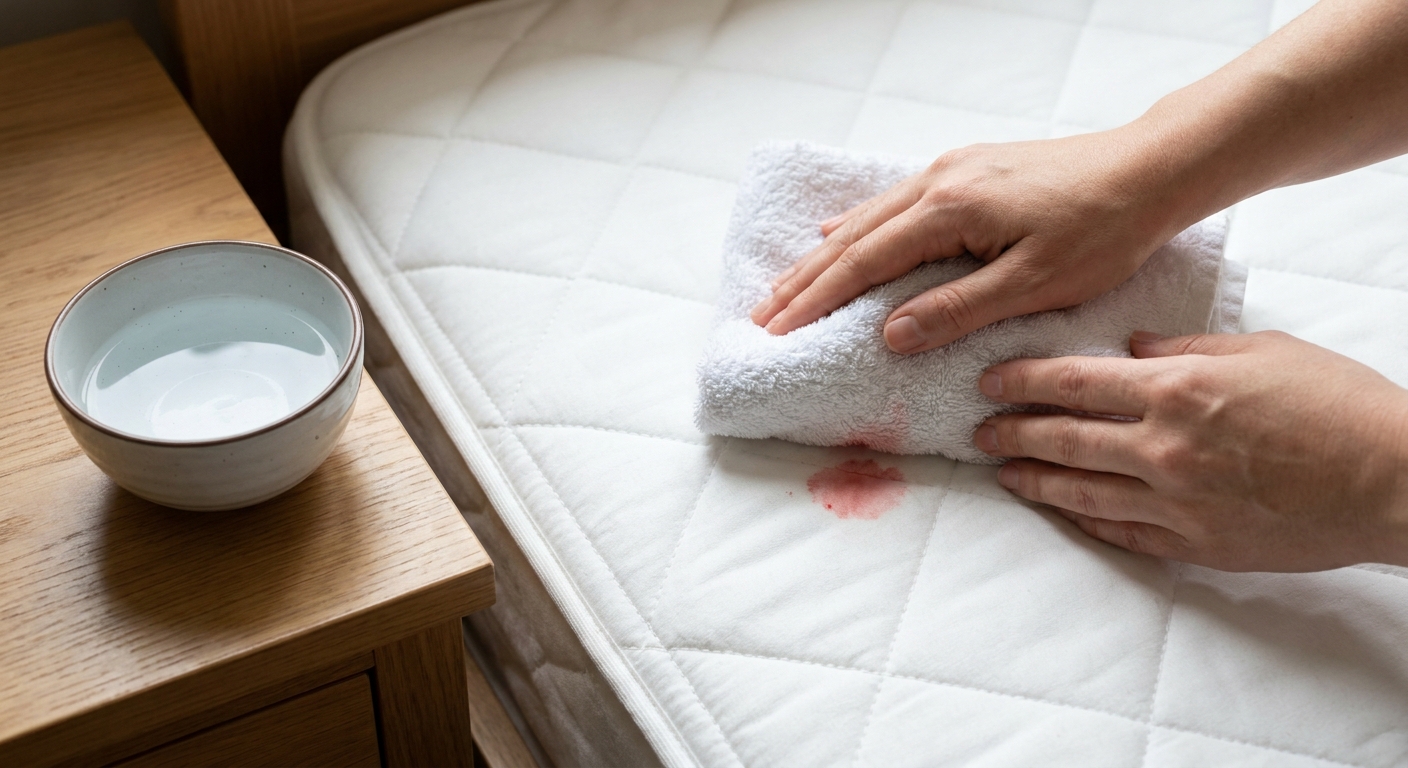
Before you start: what to grab
You do not need a fancy kit. You need the right few things so you can work quickly and gently.
- Clean white cloths or paper towels (white so dyes do not transfer)
- Cold water in a small bowl
- Enzyme cleaner labeled for blood, urine, or protein stains (the “protein” part matters)
- Liquid dish soap (clear, gentle) as a backup option
- 3% hydrogen peroxide (optional, best on light mattresses and only after spot testing)
- Baking soda (for deodorizing and moisture control)
- Spray bottle (fine mist helps you avoid soaking)
- A fan and, ideally, a dehumidifier
- Mattress protector or encasement (once everything is fully dry)
Safety note: If there is a lot of blood, wear disposable gloves. And if you are cleaning a child’s or shared bed, treat it like any other bodily fluid cleanup: wash hands, wash linens hot, and disinfect any hard surfaces the stain touched. If the blood is from an unknown source or you have health concerns, consider professional cleaning.
One more quick check: If you still have the mattress care tag or warranty info, glance at it first. Some manufacturers advise against certain chemicals or excessive moisture.
The no-soak rule
On a sofa cushion, you can sometimes unzip a cover or pull out an insert. On a mattress, you are working with stacked layers of fabric, batting, foam, and sometimes latex. If liquid gets past the surface, it spreads. That means:
- Stain can “bloom” into a larger area.
- Drying time skyrockets.
- You risk musty odor or mold in humid climates.
So think in mists and blots, not pours and scrubs.
Fresh blood
Fresh blood is far easier than dried blood because it has not fully bonded with the fibers yet.
1) Strip the bed
Remove sheets, mattress pad, and protector. Rinse fabric items in cold water first, then launder. Avoid hot water until the stain is gone, because heat can set protein stains. Also, avoid the dryer until the stain is fully removed (heat sets what you cannot see yet).
2) Blot with cold water
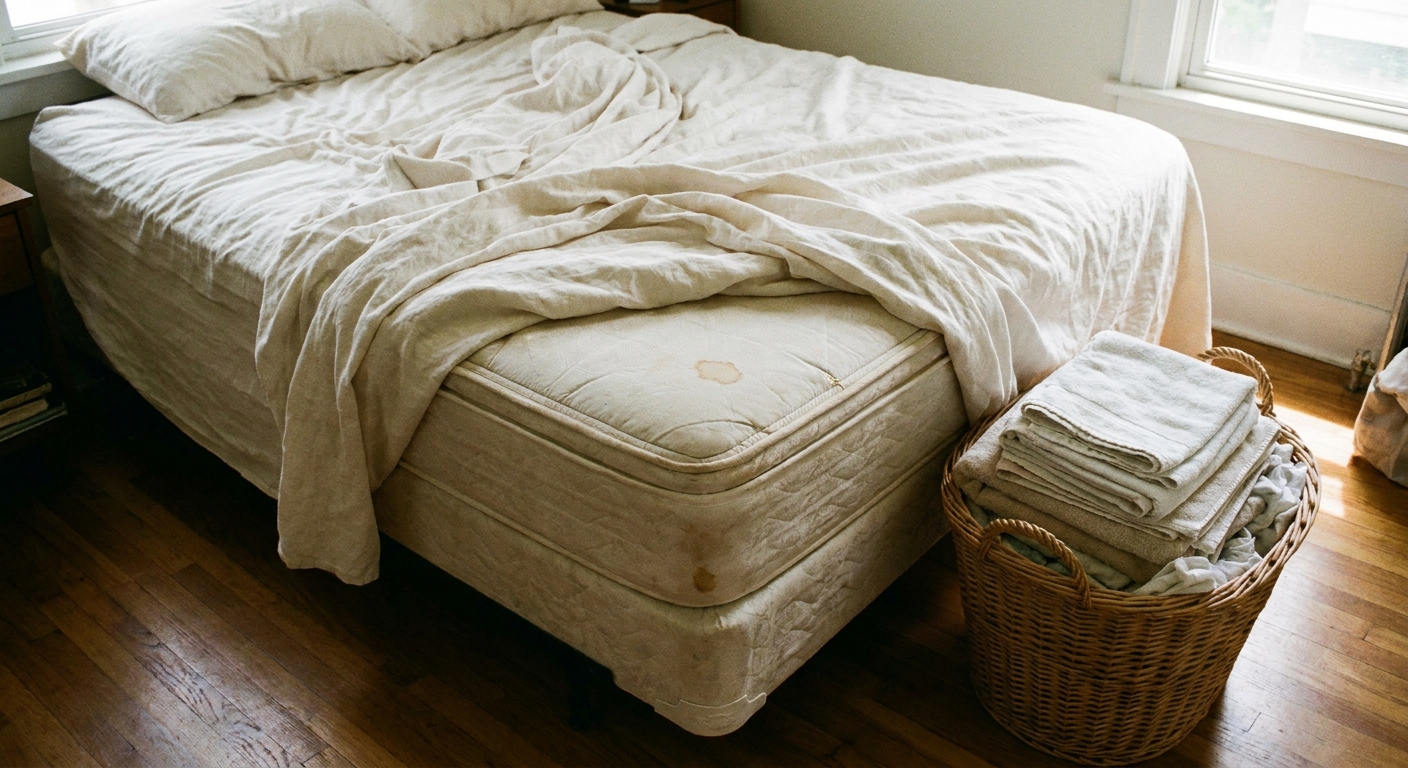
Dampen a cloth with cold water, wring it out well, and blot from the outside edge toward the center. Use firm pressure, like you are pressing moisture into a towel, not grinding it into the mattress. Hold each blot for a few seconds, then lift. Switch to a clean part of the cloth often.
- Do not scrub.
- Do not use warm water.
- Do not saturate the spot.
3) Enzyme cleaner (best option)
Enzymes break down the proteins in blood. This is your best friend for mattress stains, especially once the stain is no longer fresh.
How to apply without soaking: Lightly mist the enzyme cleaner onto the stain until it is evenly damp, not dripping. Then leave it alone for the time on the label. Typical dwell time is 10 to 15 minutes, sometimes up to 30 minutes. Enzymes need time to work.
After the dwell time, blot firmly with a clean dry cloth. Repeat once or twice if needed.
Color note: If your mattress has a colored cover or piping, spot test any cleaner on a seam or hidden edge first.
4) Rinse lightly
Mist plain cold water onto the area to remove cleaner residue, then blot until the cloth comes up mostly clean and the surface feels only slightly damp.
Dried blood
Dried blood needs rehydration, but you still want to keep moisture controlled.
1) Rehydrate with a cold mist
Use a spray bottle of cold water and mist the stain until it is evenly damp. Wait 5 minutes, then blot. You might do this cycle a couple times to soften what is dried into the fibers.
2) Enzyme cleaner with a longer dwell
Apply enzyme cleaner as above and give it the full label dwell time. For older stains, it is common to need 2 to 4 rounds of mist, dwell, blot.
3) Optional: dish soap mix (if you do not have enzyme cleaner)
If you do not have an enzyme cleaner, you can try a simple surfactant mix.
- Mix 1 cup cold water with 1 to 2 drops of clear dish soap.
- Lightly mist the stain (or apply to a cloth first, then dab).
- Let sit 5 minutes, then blot.
- Mist with plain cold water to rinse, then blot again.
This is not as effective as enzymes for protein stains, but it can help lift residue gently.
4) Optional: hydrogen peroxide (spot test first)
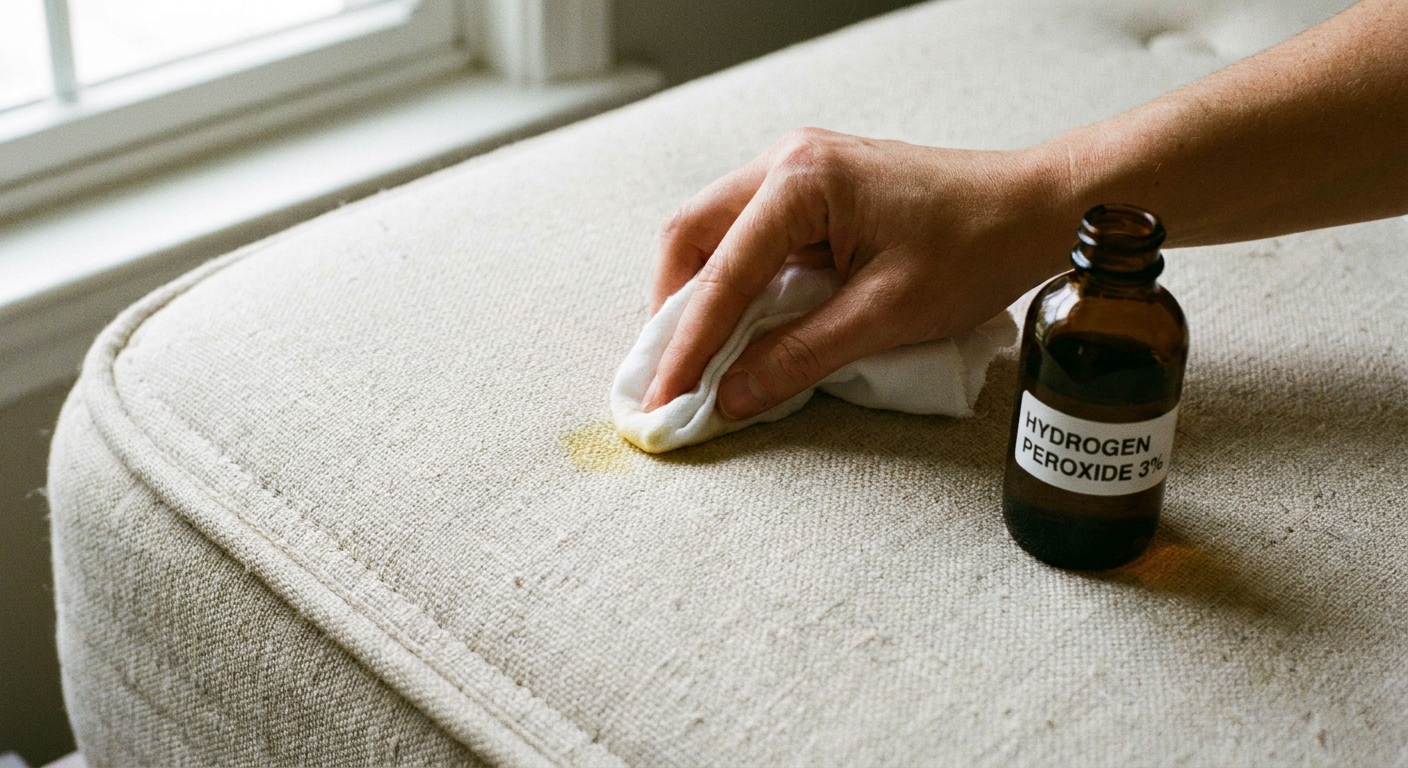
If your mattress is white or very light and the stain is still visible after enzyme treatment, you can try 3% hydrogen peroxide.
- Spot test in an inconspicuous place first. Some mattress fabrics can lighten, weaken, or yellow.
- Apply a small amount to a cloth, then dab the stain rather than pouring directly on the mattress.
- Let it fizz for a few minutes, then blot.
- Rinse lightly with a cold mist, then blot dry.
Chemical caution: Never mix peroxide with bleach. If you used any other cleaner first (including vinegar-based products), rinse with plain water and blot before using peroxide. Do not combine products in the same bottle.
Memory foam: extra caution
Memory foam and many polyurethane foams absorb liquid quickly and can hold it. If you soak foam, it can take a very long time to dry in the center.
- Use the smallest possible amount of liquid.
- Prefer enzyme misting and blotting over any “pour-on” method.
- Plan for extra drying time, plus fan and dehumidifier.
If the stain area feels squishy or wet deeper down, treat drying as the priority, even if a shadow of stain remains for the moment.
Protectors and encasements
A mattress protector is your quiet hero, but it only helps if you treat it correctly.
Washable protectors
- Rinse the blood out with cold water first.
- Wash on cool or warm with a good detergent.
- Avoid high heat until the stain is gone. Air dry if you can.
- Do not machine-dry until you are sure the stain is fully out.
Waterproof membrane protectors
Many have a polyurethane backing that can crack with high heat. Check the care label. When in doubt, dry low or air dry.
Zippered encasements
If blood reached the encasement, unzip and wash per label. Dry completely before re-encasing. Trapping even slight dampness under an encasement is a recipe for odor.
Drying
Once the stain is lifted, drying is not optional. Even small amounts of moisture can sit in the padding.
Best drying setup
- Blot with dry towels until they come away barely damp.
- Sprinkle a thin layer of baking soda over the area, let sit 4 to 8 hours, then vacuum thoroughly using an upholstery attachment.
- Run a fan aimed at the spot for several hours.
- If you have one, run a dehumidifier in the room.
Do not put sheets back on until the mattress surface feels fully dry and cool, with no clammy sensation.

What not to do
- Hot water: can set blood.
- Rubbing or scrubbing: pushes stain deeper and roughs up fabric.
- Soaking: spreads stain and creates deep dampness.
- Bleach: can damage fibers and foams, discolor fabric, and is not a great match for porous upholstery.
- Hair dryer on high heat: can set the stain and warm the moisture inside the mattress.
When to call a pro
I am all for at-home fixes, but mattresses have limits. Get help or rethink the mattress if any of these are true:
- The stain is large and has soaked through to deeper layers.
- You have a memory foam mattress and the interior feels wet or heavy hours later.
- You notice a musty smell developing after cleaning.
- The stain is from an unknown source in a used mattress, or you are dealing with health concerns.
Professional upholstery and mattress cleaners can use controlled extraction and faster drying equipment. If the foam core is saturated and you cannot dry it quickly, replacement can be the safer choice, especially in humid climates.
Next time setup
This is my Velvet Abode take: a home that feels like a comforting hug also has a few quiet protections in place.
- Use a waterproof mattress protector that feels like fabric, not plastic.
- If allergies are a thing in your house, consider a zippered encasement plus a protector on top.
- Keep a small cleaning caddy with an enzyme spray, white cloths, and a mini spray bottle for cold water.
It is not glamorous. But it is the kind of grown-up magic that lets you sleep easy, literally.
Quick checklist
- Cold water only
- Blot, do not rub
- Mist cleaners, do not pour
- Enzyme cleaner + label dwell time
- Light rinse mist + blot dry
- Baking soda + vacuum
- Fan and dehumidifier until fully dry