How to Fix a Door That Won’t Close

Clara Townsend
Clara Townsend is an interior stylist, vintage furniture enthusiast, and the creative voice behind Velvet Abode. With over a decade of experience transforming both cramped city apartments and sprawling fixer-uppers, she believes that a beautiful home is built on personal stories rather than massive budgets. When she isn't hunting for the perfect brass sconce at a local flea market, she can usually be found rearranging her living room for the third time this month.
A door that will not close has a special talent for ruining the mood of an otherwise cozy home. It catches, it scrapes, it bounces back open like it has an opinion. The good news is that most “won’t close” problems come from a handful of fixable causes: loose hinges, a shifted latch, swelling from humidity, or a slightly out-of-square frame.
This guide walks you through quick tests, then the most reliable fixes in the order I’d try them in my own home. No gatekeeping, no fancy tools required, and no guessing in the dark.
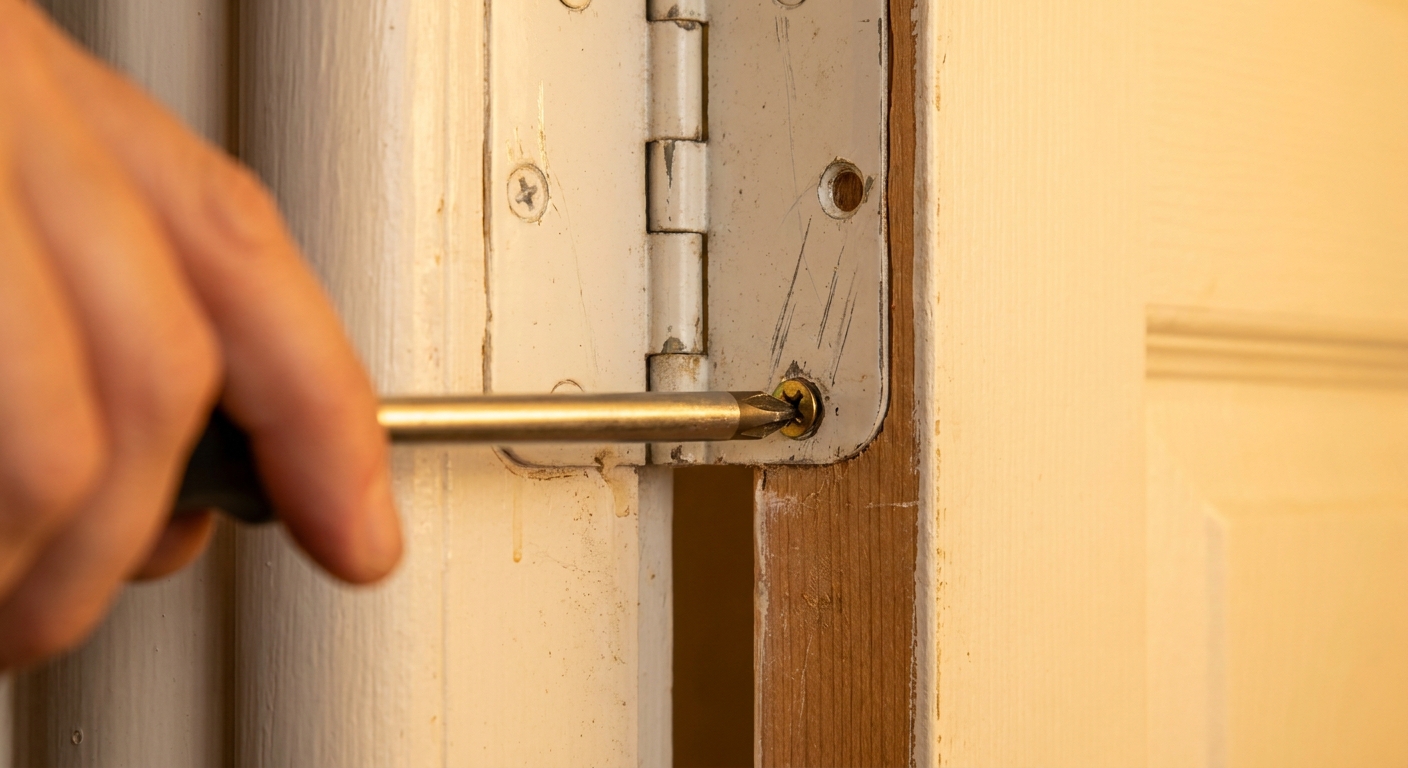
Before you start: a 2-minute diagnosis
Think of this like styling a room. You do not move every piece of furniture at once. You look for what is visually “off,” then make one small change at a time.
Step 1: Watch the gap lines
Close the door slowly and look at the reveal, the narrow gap between the door and the frame.
- Even gap on the sides, but latch will not catch: usually a strike plate or latch alignment issue.
- Gap is tight at the top latch side and wide at the bottom latch side: the door is sagging, usually hinge-related.
- Door rubs along the latch side or top edge only in summer or rainy days: humidity swelling.
- Door hits the frame at one corner with weird angles everywhere: frame or door may be out of square or slightly warped.
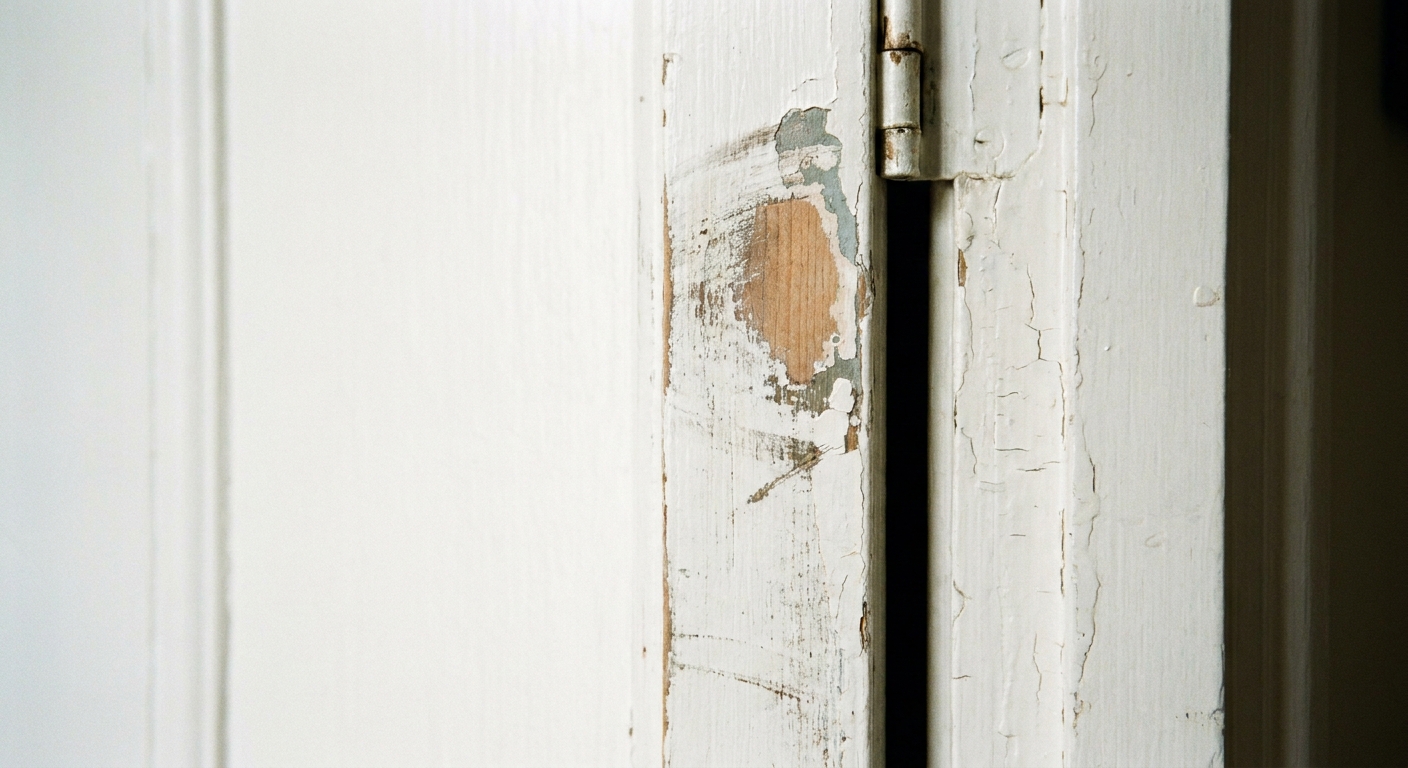
Step 2: Find the rub marks
Open the door and look for shiny scuffs on the edge, paint wear, or compressed spots on weatherstripping. If you cannot see it, try this: lightly rub chalk (or a pencil) on the edge where you suspect contact, then close the door. The transfer tells you where it is hitting.
Tools you might need (nothing dramatic)
- Phillips screwdriver or drill with a Phillips bit
- 2 to 3 inch wood screws (for hinge reinforcement)
- Hammer and a small nail set or punch (for hinge pin tweaks)
- Utility knife and sandpaper (80 and 120 grit)
- Wood plane (optional but lovely for stubborn sticking)
- Level or a phone level app
- Pencil
Safety note: If you are planing or sanding painted doors in an older home, assume lead paint until proven otherwise. Use a respirator and contain dust, or skip to a pro.
Fix #1: Tighten hinge screws (the easiest win)
If your door used to close and now it “sags” or drifts, start here. Hinge screws loosen over time and the door drops just enough to catch the frame.
What to do
- Open the door halfway so it is stable.
- Tighten every hinge screw on the door side and the frame side.
- If a screw spins and never tightens, move to Fix #2.
Quick check: Close the door. If the top corner no longer rubs, you are done.
Fix #2: Replace stripped hinge screws with longer screws
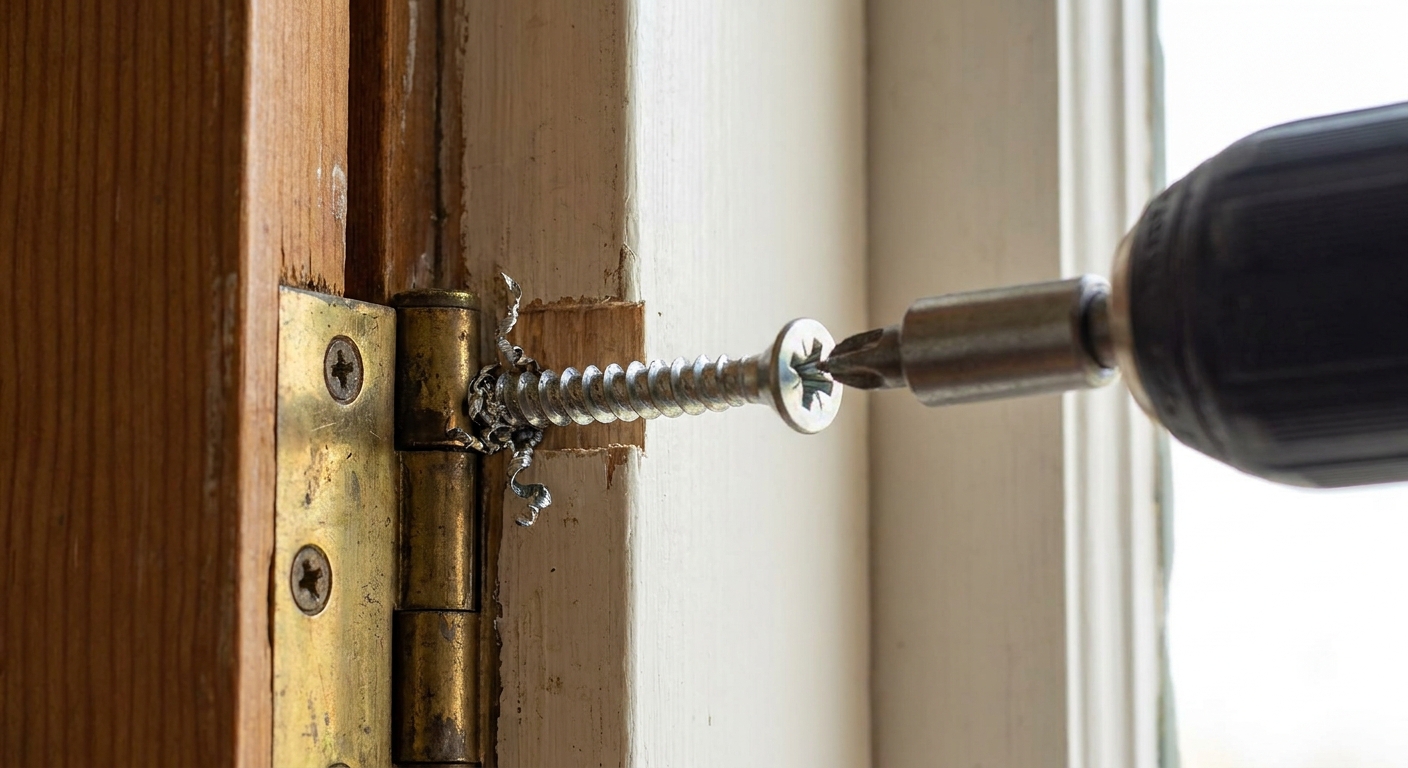
This is my favorite “old house” trick because it feels like magic and costs about the same as a fancy coffee. Many hinge screws are short and only bite into the thin door jamb. A longer screw reaches the framing behind it, pulling the door back into alignment.
What to do
- Pick one screw hole on the top hinge, ideally the one closest to the door stop (the inner side of the hinge).
- Remove that screw and replace it with a 2 to 3 inch wood screw of similar diameter.
- Drive it in snugly. Do not over-tighten and strip it.
- Test the door. If needed, repeat with one more long screw in the same hinge.
Why top hinge first? Most sagging shows up at the top latch corner. The top hinge is your steering wheel.
Fix #3: Adjust the hinge pins (for subtle rubbing)
If the door is only barely kissing the frame, you can nudge the hinge alignment without sanding or planing.
Option A: Reseat a popped hinge pin
Sometimes a hinge pin slowly walks upward. Tap it down with a hammer until it sits flush.
Option B: Slight bend for tiny alignment changes
This is a gentle, old-school move:
- Remove the hinge pin from the hinge you want to adjust (often the middle hinge).
- Place the pin on a hard surface and tap the middle slightly with a hammer to create a tiny bend.
- Reinsert the pin. This changes the hinge geometry just enough to pull the door inward.
Go slow. You are aiming for “barely” bent, not “modern sculpture.”
Fix #4: Move the strike plate so the latch actually catches
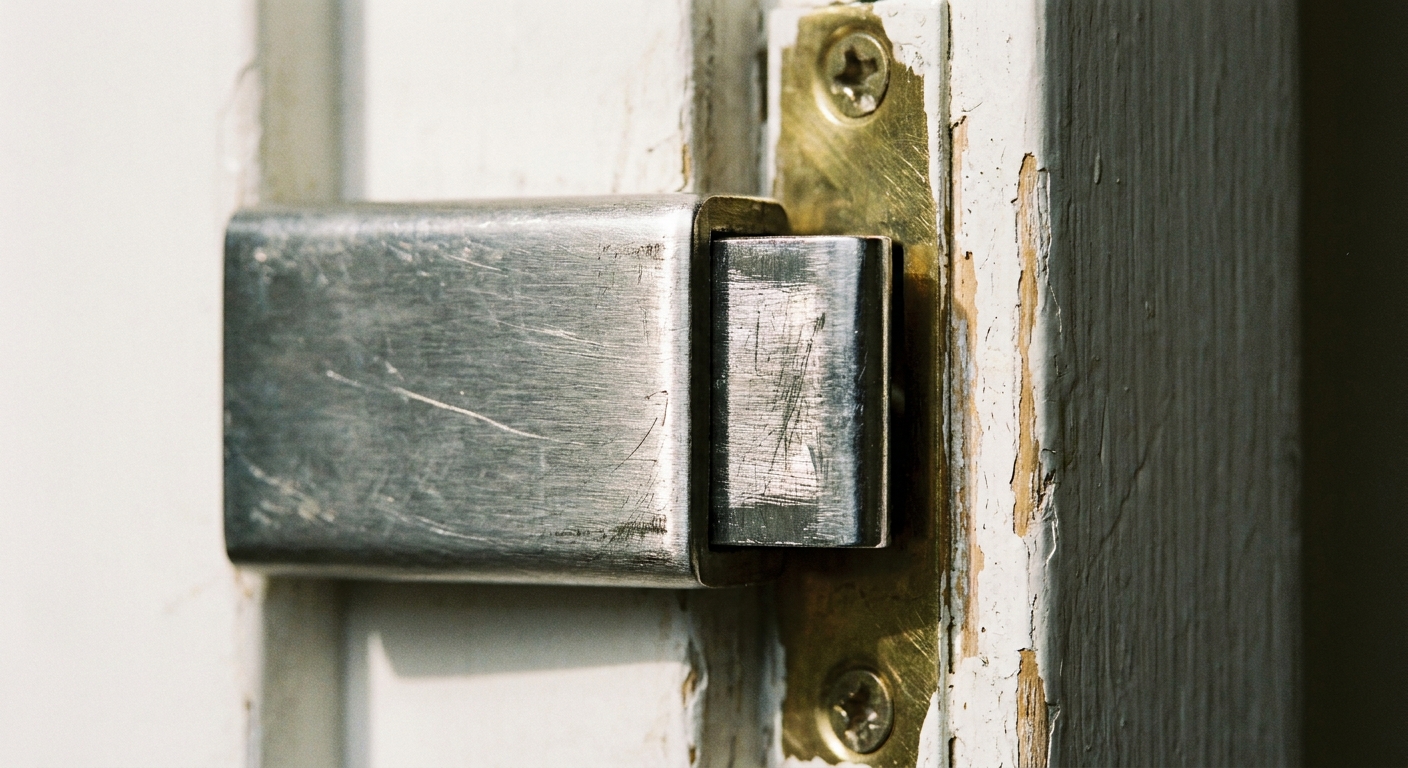
If the door closes into the frame but the latch does not click, the latch and strike plate are misaligned. This can happen after settling, hinge wear, or a fresh paint job that slightly changes clearances.
How to confirm
Close the door slowly and watch where the latch tongue hits the strike plate. If it hits above or below the hole, alignment is your culprit.
Quick fixes first
- Tighten strike plate screws: It may have shifted.
- Enlarge the strike opening slightly: Use a file to widen the opening in the direction the latch needs to go. Small adjustments can be enough.
When you need to reposition the strike plate
- Unscrew the strike plate.
- Hold it where it needs to sit for the latch to enter cleanly.
- Trace the new screw holes with a pencil.
- Pre-drill small pilot holes, then screw the plate back on.
Pro tip: Rub lipstick or a soft pencil on the latch, close the door, and open it again. The mark shows you exactly where the latch is landing.
Fix #5: Deal with humidity swelling (the seasonal “sticky door”)
If your door only misbehaves during humid months, the wood is likely swelling. This is common with solid wood doors, older frames, and doors that were painted shut a few times over the decades.
Try these in order
- Control the room: Run a dehumidifier for a few days and see if the problem improves. This is the least invasive option.
- Check paint buildup: Thick paint on the door edge can be the difference between smooth and stuck. Light sanding can help.
- Sand the sticking area: Mark the rub spot, sand a little, test, repeat. Finish with 120 grit for a smoother edge.
Seal the raw wood: If you sand or plane down to bare wood, prime and paint that edge. Unsealed wood drinks moisture and swells again.
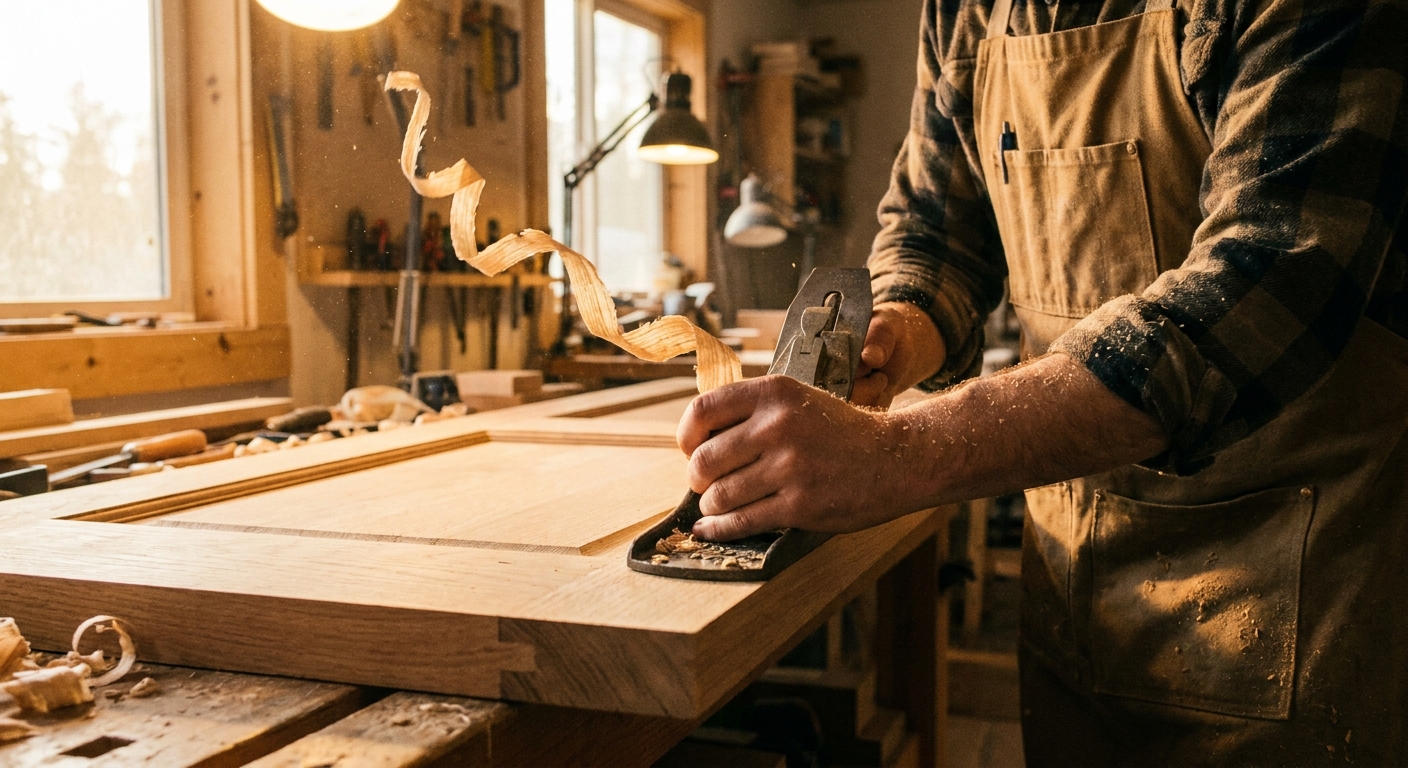
Fix #6: Plane the door edge (for persistent rubbing)
When a door is truly rubbing hard, a hand plane is tidy and controlled, like tailoring a hem instead of hacking with scissors.
How to do it without overdoing it
- Remove the door or wedge it steady with the problem edge accessible.
- Mark the area to remove with pencil.
- Plane with the grain, taking thin passes.
- Rehang or test frequently. The goal is a clean close with an even reveal.
- Sand lightly, then prime and paint the planed edge.
Small is beautiful here. Remove the least material possible. You can always take more off. Putting wood back is a whole different hobby.
Fix #7: If the door bounces open after latching
If it clicks shut but pops back open, the latch may not be fully engaging or the weatherstripping may be too thick.
- Check the strike plate depth: Sometimes the latch hits the plate but does not sink into the hole far enough. Deepen the mortise slightly with a chisel, or use a strike plate with a deeper lip.
- Weatherstripping compression: New seals can push the door outward. Give it a few days to compress, or switch to a slimmer profile.
- Doorknob latch issue: A worn latch spring can cause shallow latching. If the knob feels loose or the latch is sticky, replacing the latch or the whole knob set is often the simplest fix.
Fix #8: When the frame or door is out of square
If you see wildly uneven gaps, or the door only closes when you lift it, you may be dealing with settling or a frame that has shifted.
What you can do as a homeowner
- Hinge reinforcement: Long screws (Fix #2) often correct mild settling.
- Hinge shim: A thin shim (even a piece of cardstock) behind a hinge leaf can move the door a surprising amount. Add behind the hinge on the side you want to “push” outward.
- Check for loose jambs: If trim is pulling away or the jamb moves when you push it, you may need to re-secure the jamb, which can be more involved.
Call a pro if the door frame is visibly cracked, the door is badly warped, or multiple doors in the house suddenly stop closing. That can signal structural movement.
Troubleshooting: common symptoms and the likely fix
| Symptom | Most likely cause | Try first |
|---|---|---|
| Door rubs at top latch corner | Sagging hinges | Tighten screws, then long screw in top hinge |
| Latch hits strike plate | Strike misalignment | Tighten strike plate, file opening, reposition plate |
| Door sticks only when humid | Wood swelling | Dehumidify, then sand and reseal |
| Door closes but pops open | Shallow latch or weatherstripping | Adjust strike depth, check seals, inspect latch |
| Uneven gaps everywhere | Out-of-square frame or warp | Long screws, hinge shim, consider professional help |
A quick “Velvet Abode” note on finishes
If you end up sanding or planing, take five extra minutes to make it pretty again. A freshly painted door edge is one of those tiny details that quietly makes a whole home feel more cared for. Use a small foam roller for smoothness, or a good angled brush if you like that hand-painted character.
Your door does not need to be perfect. It just needs to close softly and reliably, like the home version of exhaling at the end of a long day.
When to replace instead of repair
Most doors can be fixed, but replacement may be worth it if:
- The door is significantly warped or delaminating.
- The latch hardware is failing repeatedly and the door is hollow-core and damaged around the knob.
- The frame is so out of square that repairs become a cycle of constant adjustments.
If you do replace, consider salvaging the original knobs or hinges if they have that beautiful patina. Vintage hardware brings instant soul, even on a brand-new slab.