How to Dry a Wet Couch Fast After a Spill

Clara Townsend
Clara Townsend is an interior stylist, vintage furniture enthusiast, and the creative voice behind Velvet Abode. With over a decade of experience transforming both cramped city apartments and sprawling fixer-uppers, she believes that a beautiful home is built on personal stories rather than massive budgets. When she isn't hunting for the perfect brass sconce at a local flea market, she can usually be found rearranging her living room for the third time this month.
A wet couch is one of those household moments that feels dramatic even when it is just a glass of water. The good news is that most spills are totally salvageable. The not-so-fun news is that cushion foam and couch frames dry slowly , especially when moisture gets trapped against plywood platforms, inside zipper covers, or under fabric that feels dry on top but is still damp underneath.
This is a faster way to dry your sofa after a spill, using airflow on purpose. Think: blot, press, lift, ventilate, and keep the air moving until the hidden parts are truly dry.
First, decide how urgent this is
Drying speed matters because damp foam and wood can hold moisture for days, which is when odors and mildew start to creep in. Use this quick triage:
- Clear water spill (small, caught immediately): usually a same-day dry with good airflow.
- Big water spill, leak, or soaked seat: often 24 to 72 hours of active drying, sometimes longer depending on foam type and humidity.
- Sugary drinks, coffee, wine, pet accidents: treat as urgent. You want fast drying and basic cleaning so residue does not become a sticky odor magnet.
- Any floodwater or sewage: this is a replacement or professional remediation situation. Do not try to “air it out.” Porous materials exposed to contaminated water are often not safely salvageable.
The fast-dry method (step by step)
Step 1: Strip it down
Remove everything you can: throw pillows, seat cushions, back cushions, slipcovers, and any blanket layers. The goal is to expose seams, zippers, and the platform under the cushions, because those are the moisture traps.
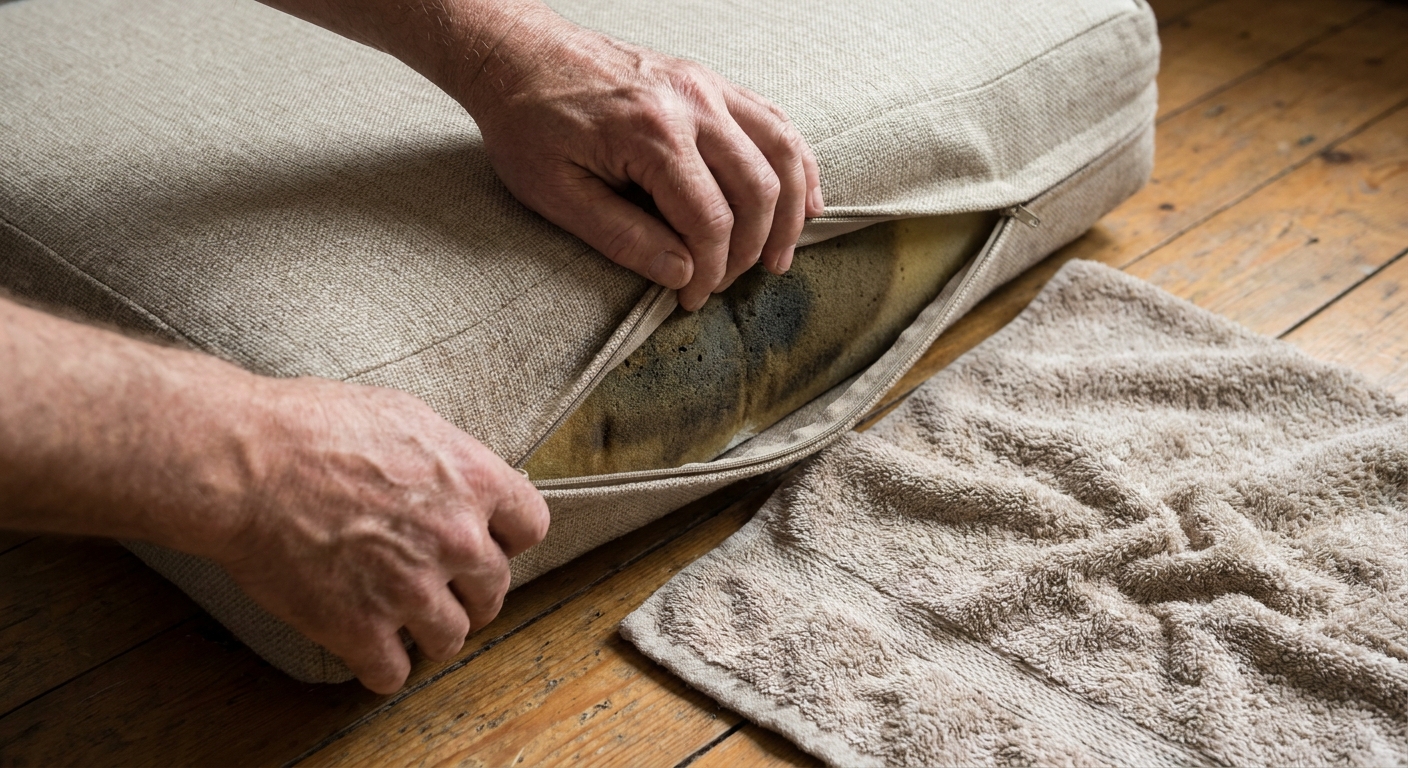
If your cushion covers zip off, unzip them right away. A closed zipper cover is basically a little greenhouse for damp foam.
Quick caution: if the foam is heavily soaked, do not yank it out of a tight cover. Wet foam tears easily, and some fabrics can tighten or look a little smaller when damp. If it does not slide out with gentle, even pressure, leave it in the cover, unzip fully, and focus on extraction and airflow.
Step 2: Pull water out (towels or suction)
Start by removing as much liquid as you can before you switch to “drying.” The more water you remove now, the fewer hours you spend chasing hidden dampness later.
Option A: Towels (good for light to moderate spills)
For the upholstery and cushion covers, start with dry towels. Blot first, then press down with your body weight. I like to layer towels like this:
- One towel directly on the wet spot.
- Another towel on top.
- Press firmly with flat hands or kneel gently for 10 to 20 seconds.
Swap towels as soon as they feel damp. Rubbing can push liquid deeper into the cushion and distort textured weaves.
Option B: Wet/dry shop vacuum or upholstery extractor (best for deep saturation)
- If you have a wet/dry shop vac, use the wet pickup setting with an upholstery nozzle if possible.
- Work slowly and overlap passes. Think “press and lift,” not “scrub.”
- If the cover is unzipped and the foam is exposed, vacuum both the fabric side and the foam side to pull water out of the core.
- If you own an upholstery extractor, this is its moment. Extract after blotting and again after any light cleaning.
This suction step is one of the fastest ways to meaningfully cut drying time.
Step 3: Use gravity
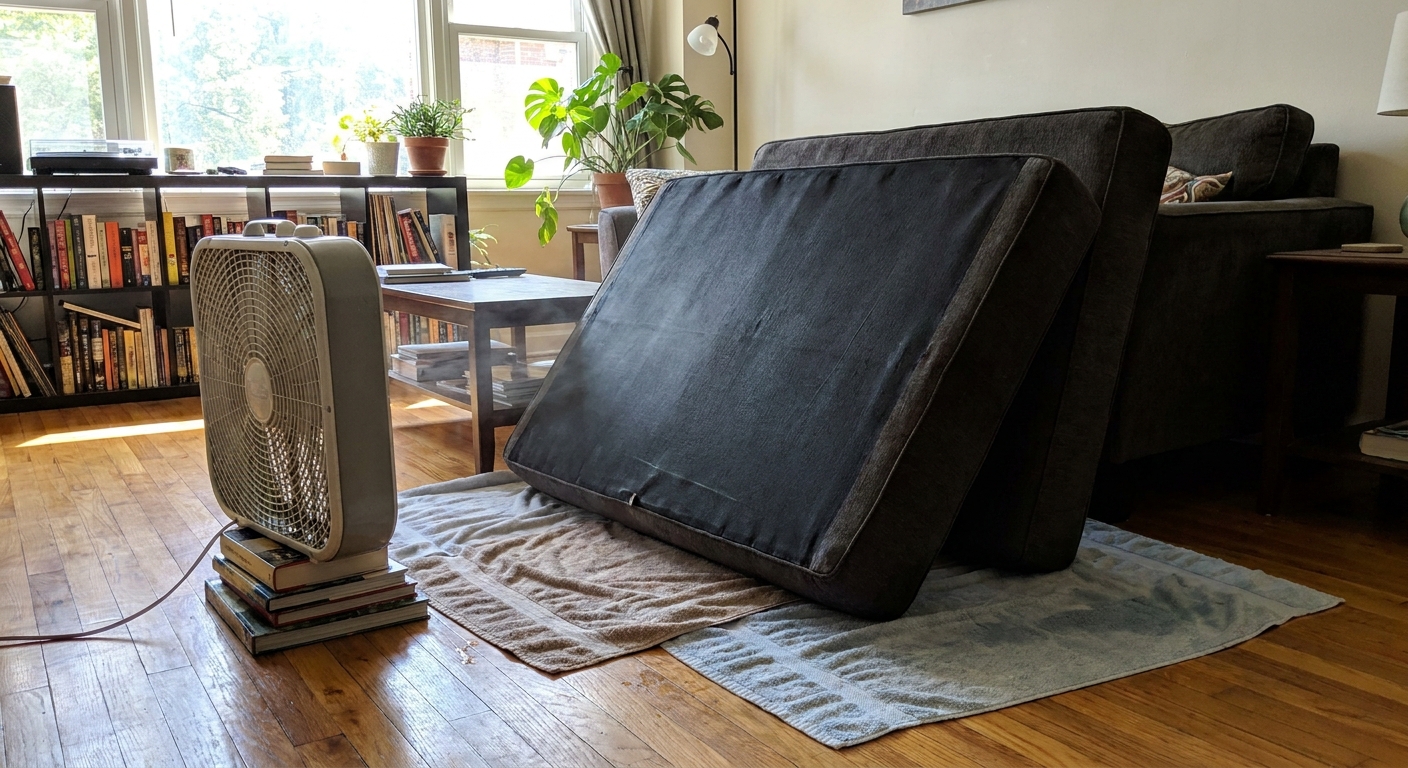
Here is the single biggest “dry faster” trick: elevate and stand cushions on edge. Foam dries when air can reach more than one side.
- Stand seat cushions upright like books, with space between them.
- If the foam is separate from the cover, stand the foam up too.
- For down blend or fiberfill cushions, fluff and rotate them so the damp side is not always facing down.
If you can, elevate the couch frame slightly by sliding blocks under the legs to improve airflow underneath. Even an extra half inch helps. Keep it stable and level so the sofa cannot tip.
Step 4: Aim the fan
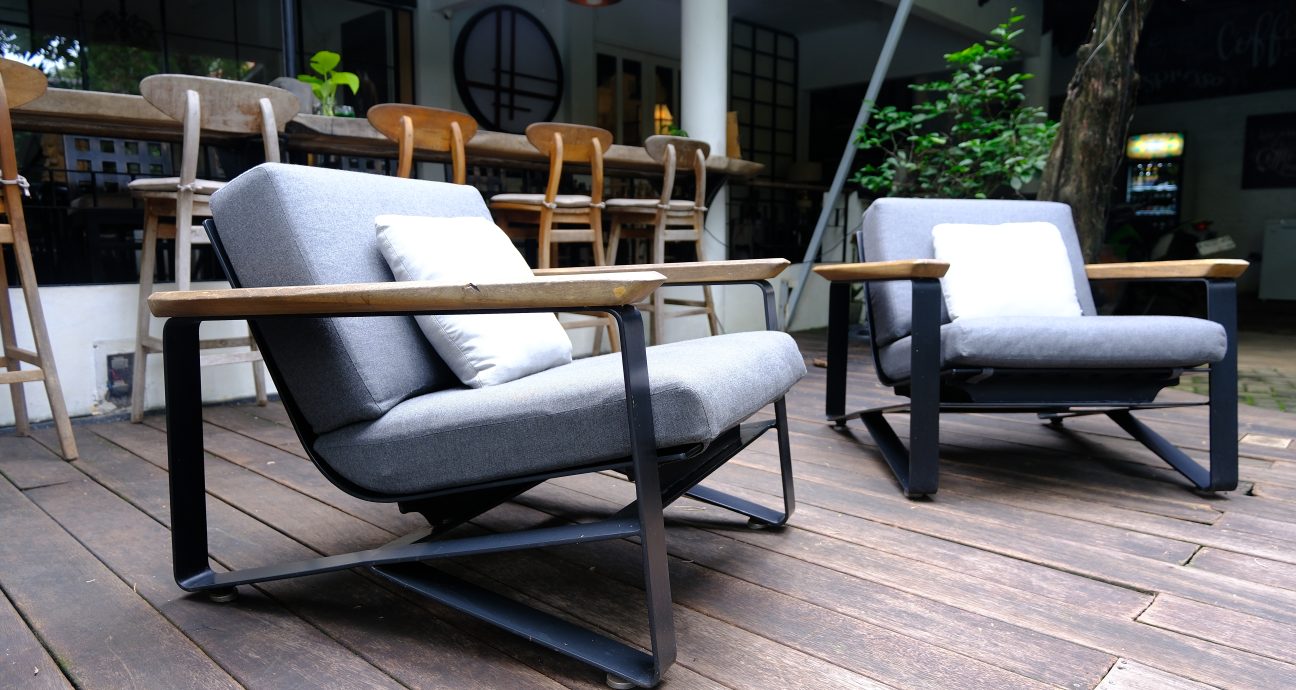
A fan dries by moving humid air away from the wet material. In most cases, you want airflow across the surface so evaporation keeps happening. If the cover is closed, blasting air into it does not help much because the moisture has nowhere to go.
- Best setup: place a box fan 3 to 6 feet away, aimed so air skims across cushion faces and exits the area.
- Create a path: crack a window or open a door on the opposite side of the room so moist air can leave instead of circling back.
- Rotate every 30 to 60 minutes: turn cushions to expose new faces to airflow.
If the covers are off and the foam is exposed, you can also angle the fan so air hits one face and can exit out the other side. The main idea is still the same: steady airflow plus an escape route for humid air.
If you have two fans, set one to blow in and one to blow out through a window for a simple cross-breeze.
Step 5: Drop the humidity
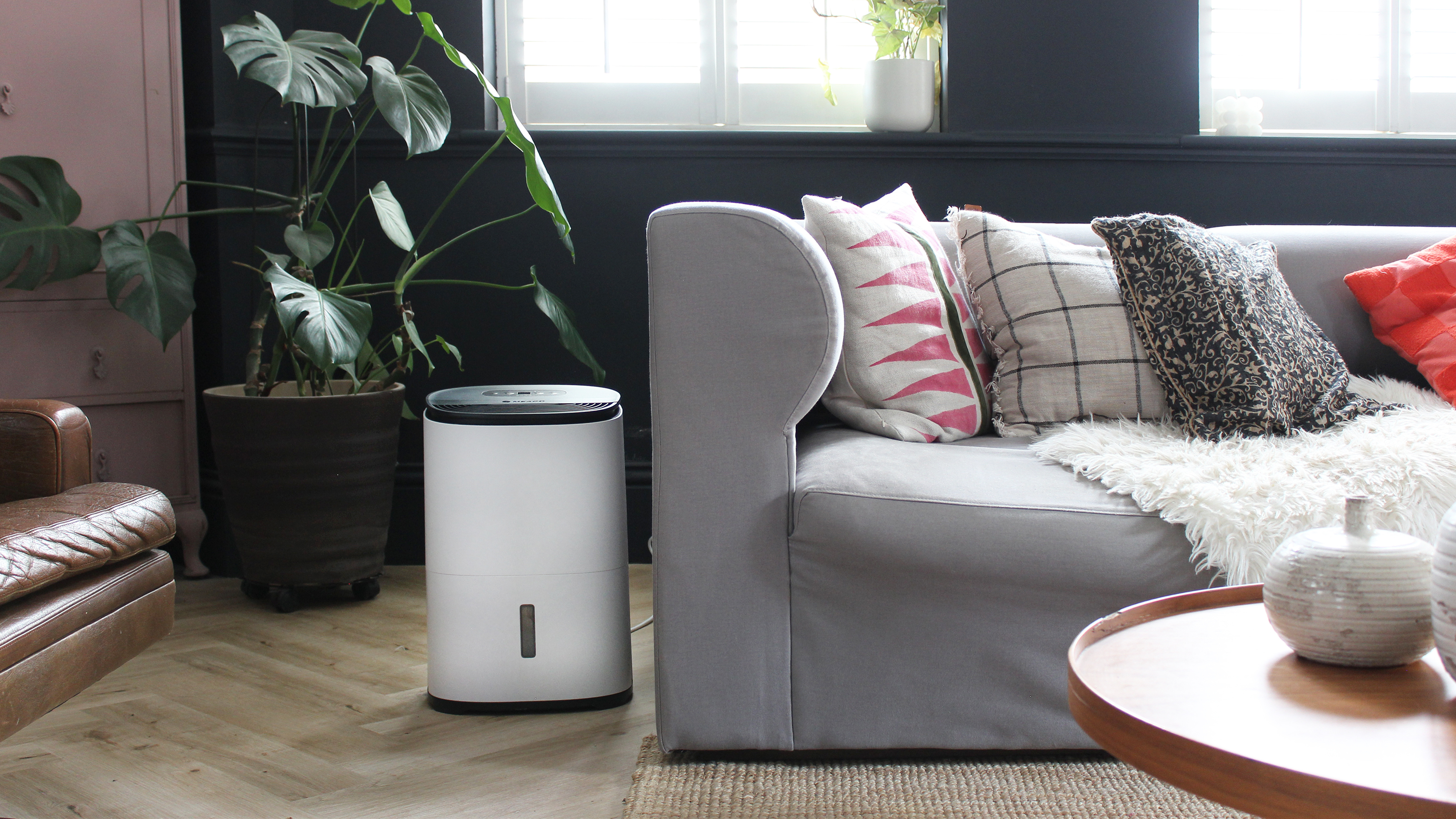
If your home is humid, the fan is trying to dry with one hand tied behind its back. A dehumidifier pulls moisture out of the air so evaporation keeps happening.
- Close windows if it is humid outside.
- Run the dehumidifier in the same room with the door mostly closed.
- Keep the fan going too. The combo is what speeds things up.
Rule of thumb: if indoor humidity is around 50 to 60 percent or higher , a dehumidifier often makes a noticeable difference.
Step 6: Dry the base and frame
Even when cushions come off, the couch base can hold moisture in sneaky places:
- Plywood platforms: can stay damp under fabric stapled to the frame.
- Webbing and springs: can trap moisture at attachment points.
- Dust cover fabric underneath: can hold water like a wick.
Do this:
- Blot the platform with towels.
- Angle the fan so air moves across the seat deck.
- If the underside dust cover is soaked and sagging, consider carefully removing it to dry the interior faster. You can replace it later with new cambric dust cover fabric and a staple gun.
Before you clean: check the care tag
Before you reach for water, soap, or enzyme cleaner, look for the upholstery care code, usually on a tag under a cushion:
- W: water-based cleaner is generally OK.
- WS: water-based or solvent-based is generally OK.
- S: solvent only. Skip water and call a pro if it is soaked.
- X: vacuum only. No water, no cleaner. Professional help is your safest move.
If you cannot find a tag, test anything you use in an unseen spot first.
If the spill was not just water
Coffee, soda, wine, juice
After blotting or extracting, you want to remove residue before it dries sticky inside the fibers.
- Mix a small bowl of cool water with a drop of mild dish soap (only if your fabric code allows water).
- Dampen a clean cloth, then dab the area. Do not soak it again.
- Follow with a plain water dab to rinse lightly.
- Go back to towels or suction, then airflow immediately.
If your couch is velvet, linen blends, or anything that shows water marks easily, test in an unseen spot first.
Pet accidents
Urine needs both fast drying and an enzyme cleaner designed for upholstery (and compatible with your care code). Blot, apply per label directions, blot or extract again, then return to fan and dehumidifier. If the accident reached the foam, you may need to treat the foam itself, not just the cover.
Leather and faux leather
Wipe immediately, then dry with a clean towel. Keep airflow gentle and avoid aiming hot, dry air right at the surface for hours. Once dry, a leather conditioner can help prevent stiffness or dull patches.
Microfiber and velvet
These can be prone to water marking. Use minimal moisture, blot thoroughly, and keep airflow moving. When dry, a soft brush can help reset the nap if it looks flattened.
Mistakes that slow drying
- Leaving cushions flat on the couch: the damp underside is pressed against the platform with no airflow.
- Assuming “surface dry” means done: foam can feel dry outside while the core is still wet.
- Using a hair dryer on high heat: it can shrink some fabrics, set stains, or damage foam and adhesives. Gentle airflow beats blast heat.
- Closing the cushion cover zipper to “make it look tidy”: it holds humidity against the foam.
- Putting a wet cushion back because it feels almost dry: “almost” is how musty smells start.
- Running a fan in a closed, humid room: you just recirculate damp air. Vent or dehumidify.
- Over-wetting during cleaning: too much cleaner or water adds hours or days to drying time.
How long will it take?
Dry times vary by foam density, cushion construction (wrapped foam, down envelope, memory foam), fabric, and room humidity. With active airflow, here is a realistic range:
- Light spill on cover only: often 2 to 6 hours.
- Damp cushion foam: often 12 to 48 hours.
- Soaked foam or wet platform: often 24 to 72 hours, sometimes longer. Thick or memory foam can take extra time.
Rotate cushions every few hours and keep the airflow going longer than you think. I would rather run a fan overnight than live with that faint “basement” note for months.
Is the foam still wet inside?
Foam is sneaky. Use a few checks:
- Weight test: a damp cushion feels noticeably heavier than a dry one.
- Press test: press firmly with a paper towel against seams. If it picks up moisture, keep drying.
- Smell test: a sour or musty smell means moisture is lingering inside.
- Touch the zipper area: the foam near the zipper is often the last place to dry.
If you own a moisture meter, you can use it on exposed wood parts of the frame and platform. For foam, your best tools are time, airflow, and patience.
When to call a pro
Sometimes “dry faster” is not enough because the water source or saturation level is too intense.
- The couch sat wet for more than 24 to 48 hours in a warm room.
- There is visible mold, persistent musty odor, or you see black spotting on fabric or wood.
- The spill came from a dishwasher leak, roof leak, or any unknown water source.
- The frame is particleboard or MDF and feels swollen or soft.
- Your care tag code is S or X and the wet area is large or soaked through.
An upholstery cleaner can sometimes remove and dry components more effectively. If the frame is compromised, it may be safer to replace than to keep chasing odors.
A small spill kit
I am not saying you need a linen closet worthy of a hotel, but a tiny spill kit makes you feel absurdly capable:
- White cotton towels or bar mops (they blot better than plush bath towels)
- A spray bottle for plain water
- Enzyme cleaner for pet households
- A wet/dry shop vac or a small handheld upholstery extractor if you deal with frequent spills
- A compact hygrometer to watch humidity during drying
And my favorite tip: if you buy a vintage sofa with a solid frame, you can often re-foam and re-cover cushions more easily than you think. A good couch deserves a second chance, especially when it is part of your home’s story.