How to Disinfect a Fabric Sofa Without Bleach

Clara Townsend
Clara Townsend is an interior stylist, vintage furniture enthusiast, and the creative voice behind Velvet Abode. With over a decade of experience transforming both cramped city apartments and sprawling fixer-uppers, she believes that a beautiful home is built on personal stories rather than massive budgets. When she isn't hunting for the perfect brass sconce at a local flea market, she can usually be found rearranging her living room for the third time this month.
If someone in your house has been coughing on the couch all week, or you just hosted a movie night with sticky fingers and shared blankets, it makes sense to want more than a quick lint roll. The tricky part is disinfecting without bleaching, fading, or stiffening your upholstery.
The good news: you can lower germ levels on a fabric sofa with a simple, renter-safe routine. Think: remove debris first, choose the right disinfecting option for your fabric, then dry thoroughly. Clean, calm, and still soft enough to sink into.
Before you start: identify your sofa fabric
Disinfecting goes sideways when we treat every couch like the same couch. Your first step takes about 20 seconds and saves you from water rings, fading, or that crunchy, over-cleaned texture.
Find the care code tag
Look under a seat cushion or along the underside of the frame. You will usually see one of these:
- W: Water-based cleaners are generally safe.
- S: Solvent-based cleaners only. Avoid water and steam.
- WS (or SW): Water-based or solvent-based can be used with care.
- X: Vacuum only. No liquids. Professional cleaning recommended.
Quick reality check: Care codes are guidance, not a guarantee. When the manufacturer has specific instructions, those win.
Do a 2-minute spot test
Even if your tag says W or WS, test first. Dab your chosen product on a hidden spot like the back hem or under a cushion. Wait 10 to 15 minutes and check for color transfer, darkening, rings, or stiffness.
What disinfecting can do
Let's set expectations in a helpful way. Most home methods are about reducing germs and removing the stuff germs cling to, not creating a sterile medical environment.
- Cleaning removes dirt, body oils, crumbs, and residue. This is the foundation.
- Disinfecting uses an EPA-registered disinfectant (or a fabric-safe option) to reduce pathogens when used correctly, including proper contact time.
- Sanitizing lowers germs to a safer level. Some products sanitize but do not disinfect.
If you are dealing with a high-risk situation (vomit, stool, or someone immunocompromised), consider a professional upholstery cleaner and follow healthcare guidance.
Step 1: Vacuum like you mean it
This is the least glamorous step and the most important. Disinfectants are more effective on pre-cleaned surfaces, not on top of crumbs and dust.
- Remove pillows and throws. Wash what can be washed.
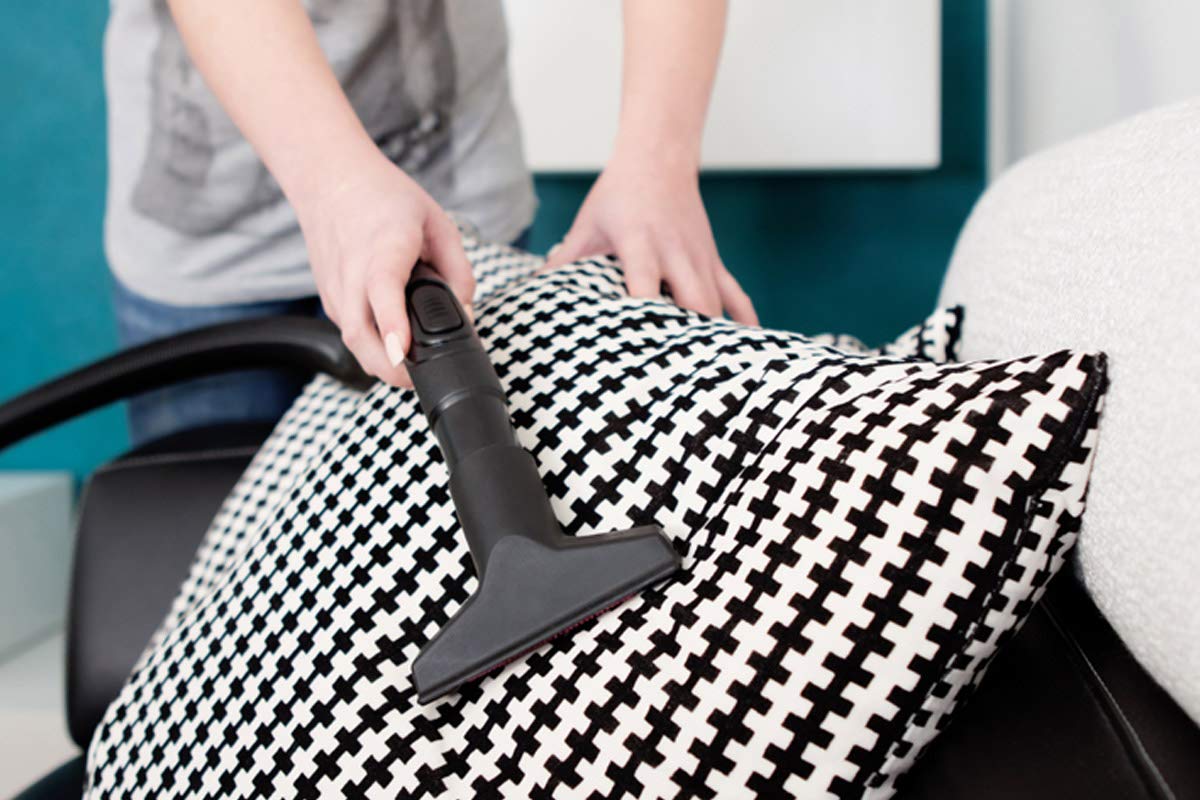
- Use the upholstery attachment on cushions, arms, and back.
- Use a crevice tool where snacks go to disappear.
- If you have pets, use a rubber squeegee or pet hair tool first, then vacuum again.
Simple safety note: Gloves are optional. Either way, wash your hands when you are done and ventilate the room while products dry.
Step 2: Choose a bleach-free method
Your best method depends on (1) your care code and (2) what you have on hand. Below are options that are typically sofa-friendly when used correctly, but always follow the specific product label and your fabric code.
Option A: Soft-surface disinfectant spray
Look for a product that explicitly says it is for soft surfaces or upholstery, and check that it lists viruses you care about (often influenza, some list certain coronaviruses). Many disinfectants are only intended for hard, non-porous surfaces, so read the label carefully.
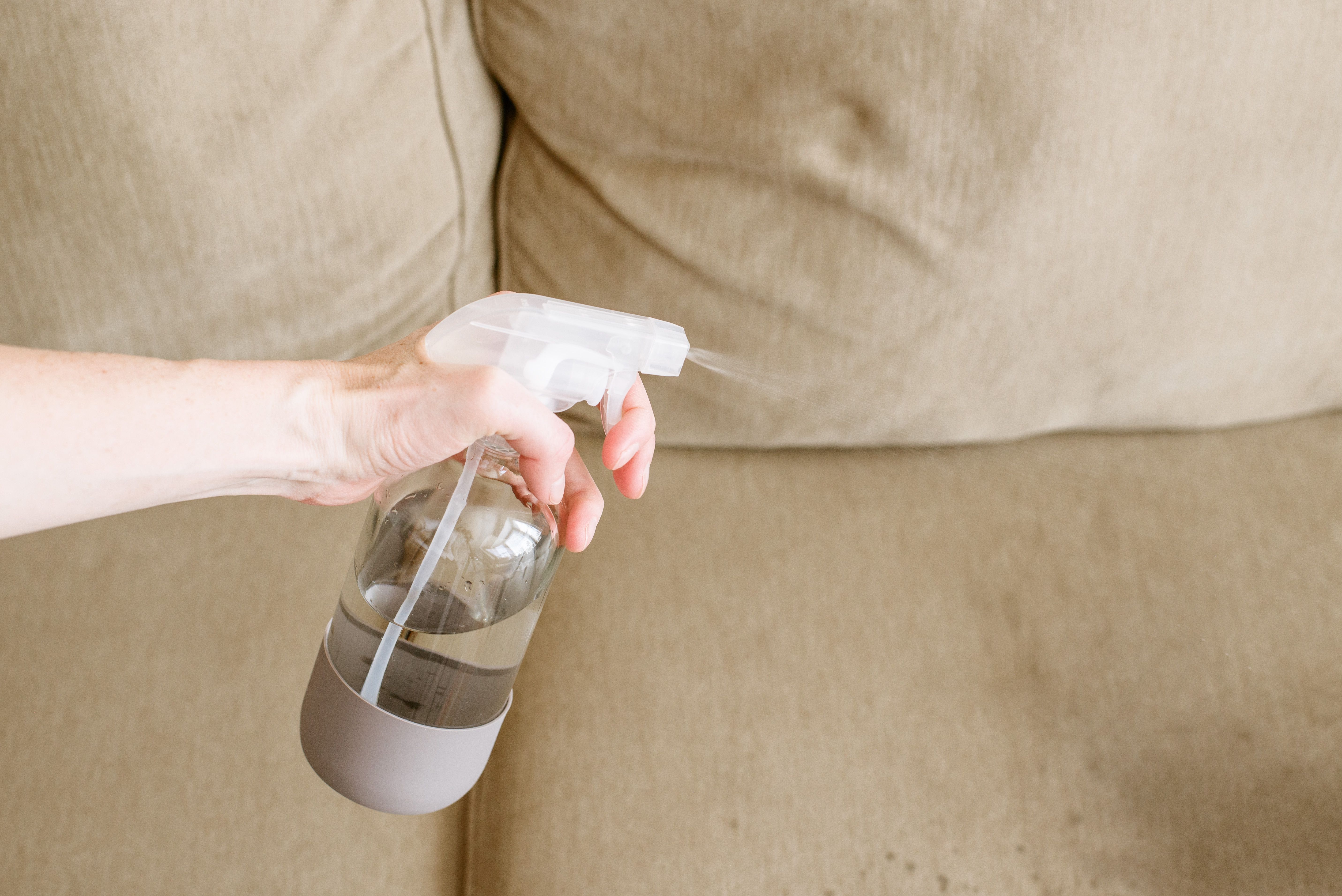
- How to use: Lightly mist a clean microfiber cloth, not the sofa, then wipe high-touch areas (armrests, headrest, seat fronts).
- Follow contact time: The label may require the surface to remain visibly wet for a set number of minutes. This is where most people accidentally under-disinfect.
- Avoid overwetting: Soft surfaces are tricky because keeping fabric wet long enough can mean using too much product. If a product has unclear soft-surface directions, pick a different one.
Option B: 70% isopropyl alcohol (spot use)
For many synthetic fabrics (often including microfiber), a light application of 70% isopropyl alcohol can be a practical bleach-free option because it evaporates quickly. Still, it is not universal. Some fabrics can show rings, dye lift, or texture change, so spot test and follow manufacturer guidance.
- Often best for: Many microfibers and polyester blends, and quick spot disinfecting on armrests and kid-height touch points.
- How to use: Mist alcohol onto a cloth and wipe. For some microfibers you can lightly mist the fabric itself, then brush with a soft brush once dry to restore the nap.
- Do not use on: Leather, suede, velvet, or anything coated or “performance-finished” unless the manufacturer confirms compatibility.
Important: Alcohol is flammable. Ventilate well and keep away from candles, pilot lights, and sparks while using and drying.
Option C: Hydrogen peroxide (3%), limited and cautious
Hydrogen peroxide can be useful for certain messes, but on upholstery it is best treated as a cautious, small-area option. On porous fabric, it may reduce some germs but may not deliver reliable, label-grade disinfection unless you are using an EPA-registered product with explicit soft-surface directions and contact time.
- Only consider if: Your fabric is light-colored, you spot test carefully, and you are treating a small area.
- How to use: Apply to a cloth first, dab gently, then blot with a dry towel.
- Skip it if: Your sofa is dark, richly dyed, vintage, or you love its patina and want zero surprises.
Option D: Steam (optional, not automatic disinfection)
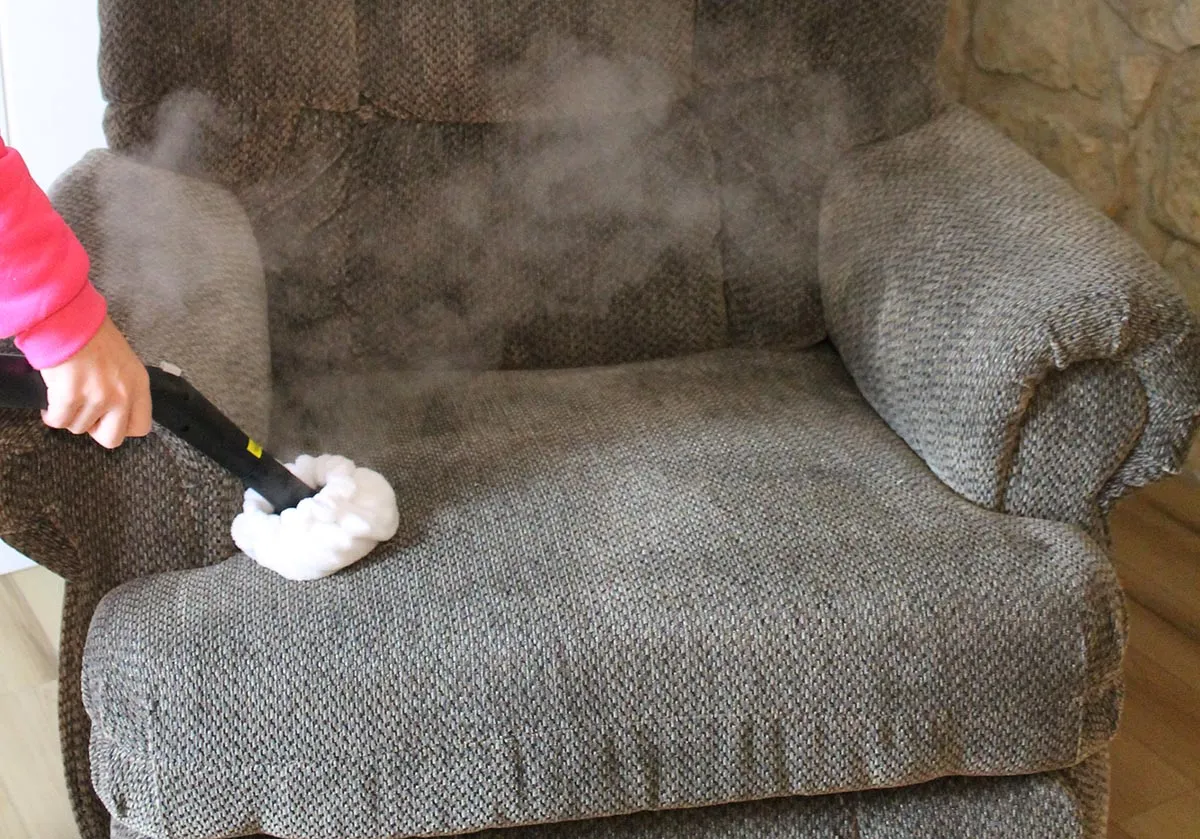
Steam is tempting because it feels clean, but it is not universally safe for upholstery. Heat and moisture can shrink natural fibers, loosen adhesives, and create watermarking. Also, many consumer garment steamers are not designed or tested to disinfect soft surfaces. Meaningful germ reduction depends on achieving the right temperature and dwell time, which varies by device and technique.
- Safer on: Some synthetics with a W or WS code.
- Be cautious with: Linen, cotton, wool blends, and anything that water-spots easily.
- Do not use on: S, X, velvet (especially cotton velvet), silk blends, suede, leather, or coated “wipeable” fabrics unless approved by the manufacturer.
If you steam, keep the head moving, do not soak, and let it dry fast with airflow. If your steamer claims sanitizing or disinfection, follow its instructions precisely.
Step 3: Hit the high-touch zones
If you want the biggest impact with the least product, focus on the places hands and faces land most often:
- Armrests and the front edge of the arms
- Headrest area and the top back cushion seam
- Seat fronts where people perch
- Chaise edge and corner seats
- Any spot where a sick person rested or napped
Work in small sections. Wipe in one direction, then flip to a clean part of the cloth so you are not redistributing yesterday’s germs like you are frosting a cake.
Step 4: Dry thoroughly
Moisture left in upholstery can lead to musty odor and mildew risk. Drying is not an afterthought. It is the finish line.
- Open windows if weather allows.
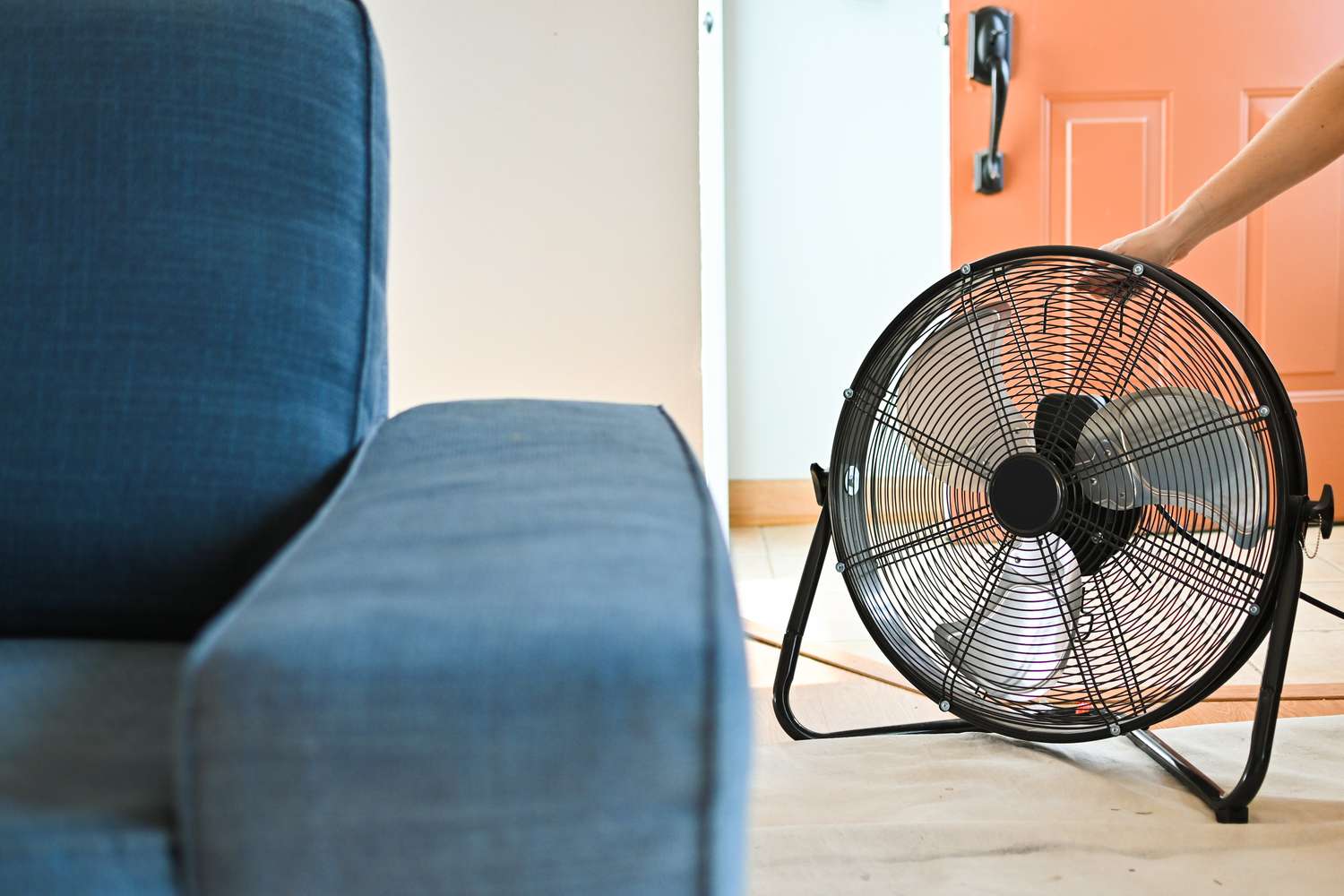
- Run a fan aimed across the sofa, not directly into a cushion seam.
- If your home is humid, run a dehumidifier for a few hours.
- Keep kids and pets off until fully dry to the touch.
Wash what you can
If your sofa has removable, zippered cushion covers, laundering is often the simplest way to get a true reset on that part of the couch.
- Check the tag or manufacturer instructions first.
- Wash on the recommended cycle and dry fully.
- Put covers back on only when they are completely dry to avoid musty smells.
Throws, pillow covers, and slipcovers are also high value here. If it is machine-washable, that is often your best “disinfection” tool.
Cold and flu week: a simple schedule
If someone in your household is actively sick, you do not need to drench the couch daily. You want consistency and high-touch coverage.
- Daily (while symptoms are active): Vacuum crumbs and hair if present, then wipe armrests and headrest zones with your chosen fabric-safe method.
- Every 2 to 3 days: Rotate and air out removable pillows. Wash throws and pillow covers.
- After recovery: Do one thorough vacuum, then a final wipe-down of high-touch areas and allow a long, well-ventilated dry.
Small habit, big peace of mind.
What not to do
This is the part that saves sofas. Here is what I see people do in a panic that causes the real damage.
- Do not use chlorine bleach. It can weaken fibers, leave yellowing, and create uneven fading.
- Do not mix products. Especially avoid mixing ammonia products with bleach. Even without bleach, mixing cleaners can create irritating fumes or residue.
- Do not soak cushions. Overwetting is a fast track to water rings and lingering odor.
- Do not use hard-surface disinfecting wipes on fabric unless the label says soft surfaces. Many leave residue that attracts dirt and can cause discoloration.
- Do not steam or water-clean an S or X code sofa. That is when you get blotches that never quite go away.
- Do not scrub velvet, wool, or vintage upholstery. Blot gently, keep moisture minimal, and when in doubt, call a pro.
- Do not forget ventilation. Even “gentle” products can irritate lungs in a closed room.
Fabric cautions
Microfiber (often W or WS)
- Often does well with light alcohol-based spot disinfecting, but it varies by finish and dye. Spot test.
- Brush gently after drying to restore texture.
Polyester and performance fabrics
- Typically durable, but some have special coatings. Follow the manufacturer guidance.
- Use minimal moisture and avoid heavy residue.
Cotton and linen blends
- More prone to water spotting and shrinkage.
- Use cloth-first application, minimal product, and quick drying.
Velvet (especially cotton velvet)
- Water can crush the pile and create marks.
- Skip steam and heavy wet cleaning. Use the gentlest method possible and consider professional help if disinfection is critical.
Wool blends
- Heat and water can felt fibers.
- Avoid steam, go minimal, and spot test obsessively.
“S” code sofas
- Use solvent-based upholstery products only, and follow the label precisely.
- Note that many solvent upholstery cleaners are not EPA-registered disinfectants. If you need true disinfection during illness, professional cleaning is often the safest route.
A simple routine to repeat
If you want a no-drama plan you can actually stick with, here it is:
- 1) Vacuum cushions, seams, and arms.
- 2) Spot test your method in a hidden area.
- 3) Wipe high-touch zones with a cloth lightly misted with a soft-surface disinfectant or 70% alcohol (fabric permitting).
- 4) Dry fast with airflow and patience.
Want it even easier? Save this as your “sick week” checklist, and keep one designated microfiber cloth just for the sofa so you are not cross-contaminating from kitchen counters to cushions.
FAQ
Can I use vinegar to disinfect a fabric couch?
White vinegar is great for deodorizing and some light cleaning, but it is not a reliable disinfectant for cold and flu viruses. If your goal is disinfection, choose a product labeled for soft surfaces or use a fabric-appropriate method like 70% isopropyl alcohol where safe.
Will disinfectant spray stain my sofa?
It can, especially on natural fibers or richly dyed fabrics. Spot test first, apply to a cloth instead of directly to the sofa, and avoid soaking seams and cushion edges.
Is steam enough to disinfect upholstery?
Sometimes, but it depends on the device, temperature, and dwell time, plus whether your fabric can tolerate heat and moisture. Many consumer steamers are not rated for disinfection. When in doubt, choose a labeled soft-surface disinfectant method or consult the manufacturer.
What if my sofa tag says X?
X means vacuum only. Avoid liquids and steam. To reduce germs, focus on vacuuming, laundering removable covers and throws, and improving ventilation. For illness-related disinfection concerns, professional upholstery cleaning is the safest next step.