How to Clean a Sisal Rug

Clara Townsend
Clara Townsend is an interior stylist, vintage furniture enthusiast, and the creative voice behind Velvet Abode. With over a decade of experience transforming both cramped city apartments and sprawling fixer-uppers, she believes that a beautiful home is built on personal stories rather than massive budgets. When she isn't hunting for the perfect brass sconce at a local flea market, she can usually be found rearranging her living room for the third time this month.
Sisal rugs are the design equivalent of a crisp white button-down. Effortless, textured, and somehow they make everything around them look more intentional. But they’re also a little particular, especially when it comes to moisture. If you’ve ever tried to “just shampoo it” like a synthetic rug, you already know sisal will hold a grudge.
This guide walks you through a sane, low-drama routine for keeping sisal clean, plus what to do when life happens and something spills.
Quick note before you start: check your rug’s care label or the manufacturer’s guidelines. Some sisal rugs are dry-clean only, some are sealed or treated, and dyed borders, bindings, and backings can react differently to moisture.

Why sisal is different
Sisal is a natural fiber (from the agave plant) that behaves more like a basket than a bath mat. It’s absorbent, prone to water spots, and can stiffen or ripple if it gets too wet. In some cases, excess moisture can also cause discoloration, including yellowing or browning, depending on the fiber, backing, and any finishes.
- Dry methods work best. Think vacuuming, brushing, powders, and minimal moisture.
- Speed matters. When spills happen, fast blotting can save you from a permanent shadow.
- Gentle tools win. Harsh scrubbing can fuzz the fibers and rough up the weave.
What you need
- Vacuum with suction-only option or adjustable height (beater bar off if possible)
- Soft-bristle brush (a clean upholstery brush works well)
- White absorbent cloths or paper towels (white helps prevent dye transfer)
- Baking soda or cornstarch (for oils and odors)
- Mild dish soap (clear, gentle, no bleach)
- White vinegar (optional, used lightly and carefully)
- Spray bottle for lightly misting cloths (not soaking the rug)
- Fan or open windows for faster drying
- Spoon or dull knife (to lift solids before blotting)
Skip: steam cleaners, carpet shampooers, soaking wet rags, and anything with bleach or optical brighteners.
Routine cleaning
Call it a quick weekly habit. For small rugs it’s a couple minutes. For bigger ones, think two to five.
1) Vacuum the right way
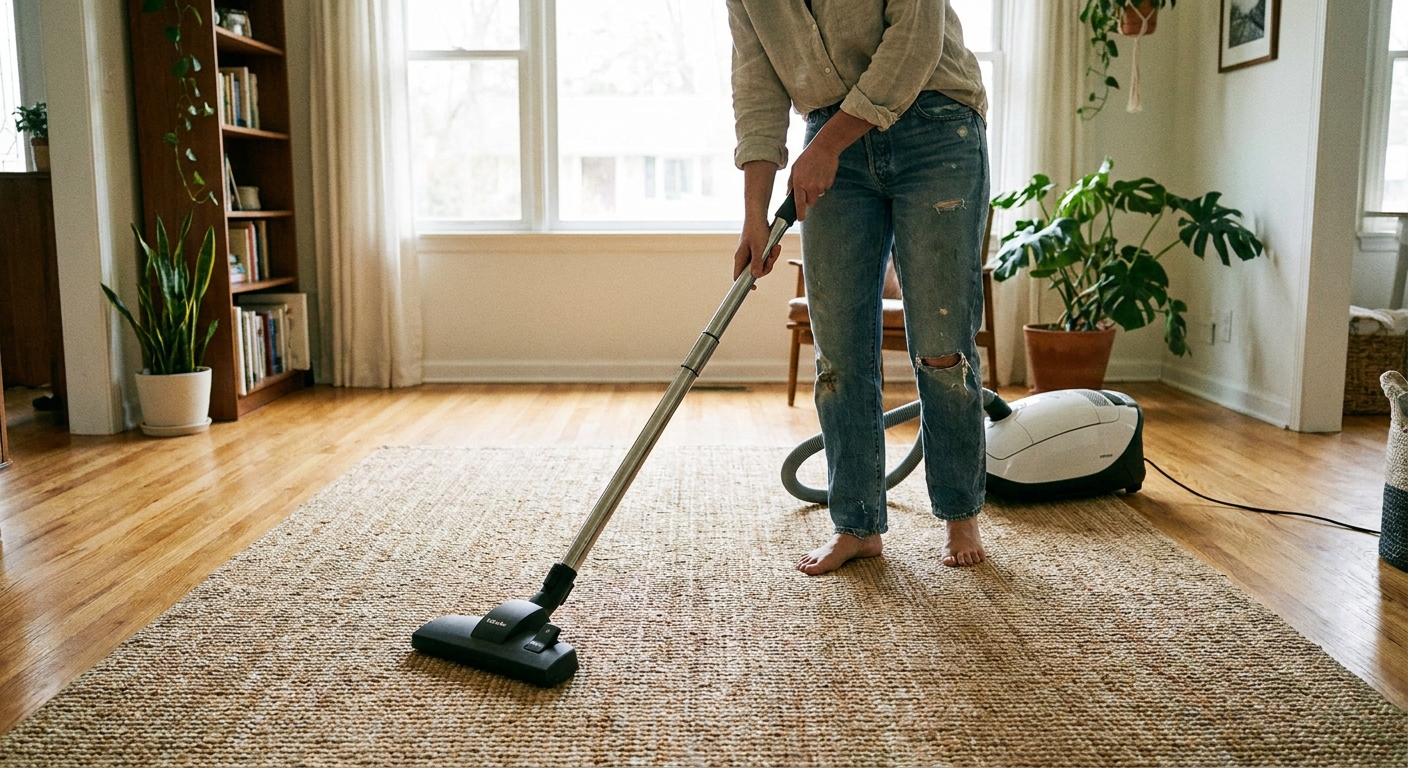
Vacuuming is your best defense because grit acts like sandpaper inside the weave.
- Use suction-only if your vacuum allows it. If not, set the vacuum to a higher pile setting and go gently.
- Vacuum with the weave direction first, then lightly across it.
- Don’t press down. Let the vacuum glide.
- Edges and fringe: avoid running the vacuum head over fringe or bound edges. Use an upholstery attachment and gentle suction instead.
2) Lift surface hair and fuzz
If you have pets, sisal will collect hair like it’s getting paid for it. Use a soft brush to gently sweep hair into a pile, then vacuum it up.
Spot cleaning
When something spills, think “dab and lift,” not “rub and grind.” Scrubbing pushes liquid deeper and can raise the fibers.
First: solids vs liquids
- If it’s solid or chunky (salsa, sauce, mud): lift what you can with a spoon or dull knife first. Then blot.
- If it’s liquid: go straight to blotting.
Steps for most spills
- Blot immediately with a dry white cloth. Press down firmly, lift, and move to a clean area of cloth. Repeat.
- Lift residue by blotting with a cloth that’s lightly damp (not dripping) with plain water. You’re aiming for barely-there moisture. If your care label says dry-clean only, skip this and stick to dry methods.
- Dry fast with a dry cloth, then aim a fan at the spot for 30 to 60 minutes.
If you see a faint ring forming, stop adding moisture. Next: keep blotting with dry cloths, increase airflow, and let it fully dry. Water marks are common on sisal, and “just a little more water” can make the halo worse.
Common stains
Oily stains (salad dressing, butter, lotion)
Oil is one of the most common sisal enemies, but you can often pull it up.
- Blot excess oil gently.
- Cover the spot with cornstarch or baking soda.
- Let it sit for 4 to 12 hours (overnight is great).
- Vacuum thoroughly.
- Repeat if needed.
Avoid adding water to an oil stain at the start. Powder first, always.
Red wine, coffee, tea
- Blot immediately.
- Mix 1 teaspoon mild dish soap into 2 cups cool water.
- Dampen a cloth with the mixture (don’t pour on the rug) and blot from the outside in.
- Blot with a cloth lightly dampened with plain water to remove soap, if your rug allows water-based spot cleaning.
- Dry quickly with cloths and a fan.
Mud and dirt
Let mud dry completely. Then vacuum and gently brush the fibers. If a mark remains, use the minimal-moisture blot method with plain water, if allowed by the care label.
Pet accidents
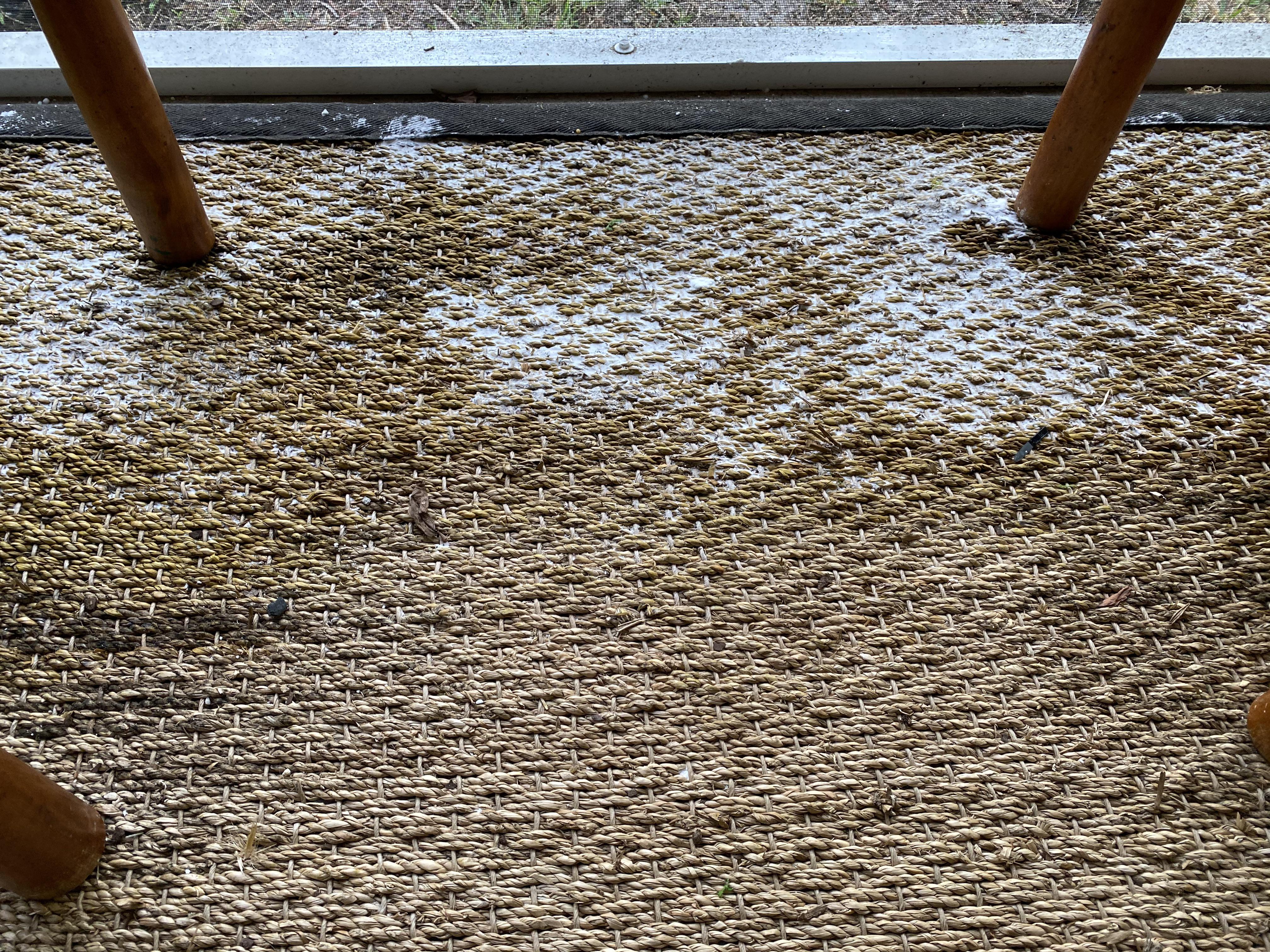
Sisal and pet urine are a tricky combination because moisture wants to soak in and linger.
- Blot immediately, using multiple dry towels until you’re not pulling up more liquid.
- Sprinkle baking soda over the area and let it sit overnight to absorb odor.
- Vacuum thoroughly.
- If odor remains, you can try a cloth lightly dampened with a 50/50 mix of water and white vinegar and blot gently, then dry fast with a fan. Test in an inconspicuous spot first, and use as little moisture as possible.
Important: vinegar can help with surface odor, but it won’t always fix urine that’s soaked into the rug, pad, or floor. If it penetrated, you may need professional treatment and you may need to replace the affected pad section.
Deodorizing
For that “closed up apartment” smell or pet funk that’s just hanging around, keep it dry.
- Vacuum the rug.
- Lightly sprinkle baking soda across the surface.
- Let it sit for 2 to 8 hours.
- Vacuum slowly, in overlapping passes.
Optional: If you can, take the rug outside on a dry day and let it air out in indirect sun for a few hours. Bright sun for too long can fade natural fibers.
Humidity note: if you live somewhere humid or the rug got damp, keep airflow going until it’s completely dry before putting furniture back. Natural fibers can hold moisture and develop musty smells over time.
Deep cleaning
If your sisal rug looks generally dingy (not stained, just tired), your best “deep clean” is usually a combination of:
- A very thorough vacuum in multiple directions
- Gentle brushing to lift embedded grit
- Spot treating any specific marks
For wall-to-wall sisal or a valuable bound sisal rug, consider a professional cleaner who has experience with natural fiber rugs. Ask what their moisture method is, and whether they’ve handled sisal, seagrass, jute, and coir before.
Editor’s note: I know it’s tempting to “just rent a carpet cleaner.” Sisal isn’t the place to experiment. Too much water can cause rippling, discoloration (including browning on some rugs), and permanent water rings that are almost impossible to erase.
When to call a pro
- A large spill, especially if it soaked through
- Dye bleeding or a colored border that’s reacting to moisture
- Widespread discoloration or water rings that won’t fade
- Persistent pet odor after thorough blotting and drying
Prevent stains
Use a rug pad
A good pad reduces wear, keeps the rug from shifting, and can help protect your floors. Choose one that breathes and is safe for your flooring.
One catch: pads can trap moisture. If you have a spill, lift the rug edge when you can and make sure the pad and floor underneath dry completely.
Rotate seasonally
Turn the rug 180 degrees every 3 to 6 months, especially in sunny rooms or heavy traffic paths.
Take shoes off
Sisal holds onto fine grit. A doormat plus a quick shoe wipe goes a long way.
Consider a fiber protector
Some natural fiber rugs can be treated with a fabric protector, but it’s best done professionally or with a product approved for natural fibers. Always test first.
Troubleshooting
The rug feels stiff after cleaning
It likely got too wet. Increase airflow, use a fan, and let it dry completely. Once dry, gently brush to soften the fiber surface.
I see a water ring
Stop adding water. Blot with dry cloths, then dry the area fast with airflow. If the ring remains, a professional natural-fiber cleaner is your safest next move, because trying to “blend” with more moisture often spreads the mark.
Fibers are fuzzy or rough
That’s usually from aggressive scrubbing. Use gentle brushing going forward, and vacuum often to reduce the need for spot agitation.
Simple care routine
- Weekly: vacuum with suction-only or gentle settings
- Monthly: brush lightly, then vacuum again in multiple directions
- As needed: blot spills immediately, use powder for oils, dry fast with airflow
- Seasonally: rotate the rug and check the pad
Sisal is one of those materials that rewards steady, small care. Treat it like a beautiful vintage piece you want to keep for years, and it’ll keep giving your room that warm, woven grounding that makes everything feel finished.