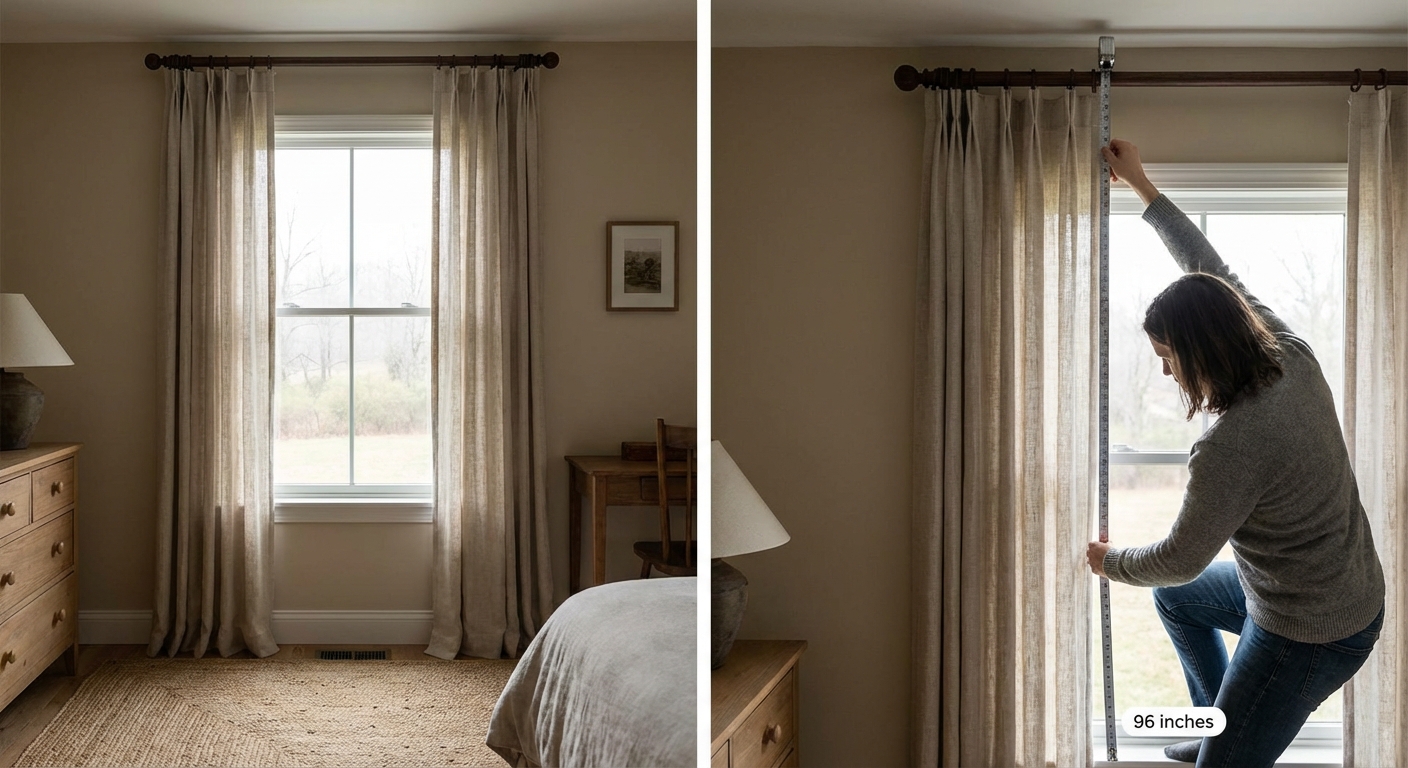
How to Choose Curtain Length: Sill, Apron, Floor, or Puddle

Clara Townsend
Clara Townsend is an interior stylist, vintage furniture enthusiast, and the creative voice behind Velvet Abode. With over a decade of experience transforming both cramped city apartments and sprawling fixer-uppers, she believes that a beautiful home is built on personal stories rather than massive budgets. When she isn't hunting for the perfect brass sconce at a local flea market, she can usually be found rearranging her living room for the third time this month.
Choosing curtain length is one of those tiny decisions that quietly changes the whole mood of a room. Crisp and tailored. Soft and romantic. A little bit “I have my life together,” even if your laundry chair says otherwise.
Here is the only question we are answering today: Where should the fabric end relative to your window and floor?
We’ll walk through the four classic lengths, show you text-described diagrams you can picture while holding a tape measure, and clear up the most common measuring mix-up: rod placement is not the same thing as panel length.

The four curtain lengths
When people say “short curtains” or “long curtains,” they usually mean one of these four endpoints. The best choice depends on how you want the room to feel and what your window situation allows.
- Sill: ends right at the window sill.
- Apron: ends a few inches below the sill.
- Floor: ends just above the floor or kisses it.
- Puddle: intentionally pools on the floor.
Sill length
Where it ends
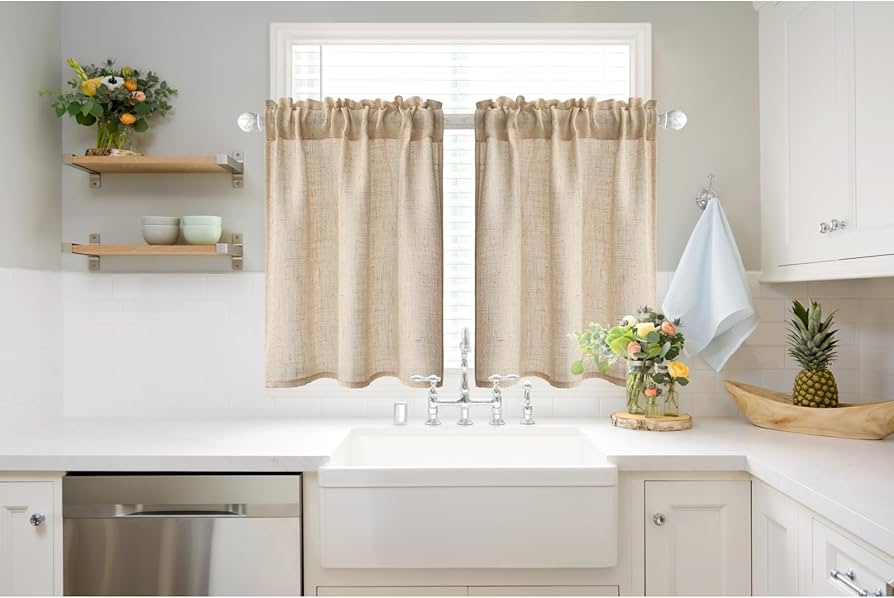
Sill curtains stop at the window sill, usually right at the top surface of the sill or just barely covering it.
Text diagram you can picture
[rod]
  |
  |  (panel)
  |
 [sill]  <- hem lands here
  |
 [radiator / furniture below]
Best for
- Kitchens, especially over sinks where long fabric would be splashed and constantly in the way.
- Bathrooms where you want airflow and easy cleaning.
- Windows with radiators directly below, when you need heat to circulate.
- Tiny rooms where you want a neat, unfussy look.
Ceiling height notes
- Low ceilings: Sill length can look a bit “cut off” if the rod is also mounted low. If you use sill curtains, consider mounting the rod higher than the trim to keep the window looking tall.
- High ceilings: Sill length reads casual and practical, not grand. That is not bad, just a vibe choice.
Common mistake
Measuring to the sill but buying panels listed as “length” from a different starting point. Curtain length is usually measured from the top of the panel to the hem, but the exact “top” can vary by header style and retailer. Always check the product’s measuring diagram so you know what their listed length actually includes.
Apron length
Where it ends
Apron curtains fall 2 to 4 inches below the sill, hovering above whatever is beneath the window.
Text diagram you can picture
[rod]
  |
  |  (panel)
  |
 [sill]
  |  <- 2 to 4 in
 [hem]  <- lands here
  |
 [wall / radiator / furniture]
Best for
- Bedrooms with a dresser or desk under the window where floor length would bunch.
- Living rooms where a radiator, vent, or low bookshelf sits beneath the window.
- Kids’ rooms if you want less fabric dragging around.
Ceiling height notes
- Standard ceilings (8 to 9 ft): Apron length can look very “intentional” if the hem lands consistently across multiple windows.
- Taller ceilings: If you want drama, apron length may feel a little lightweight visually. Floor length typically delivers that “finished” vertical line.
Common mistake
Picking apron length when you actually want your room to feel taller. If the goal is height and softness, apron length breaks the vertical line. It is great for function, just not the most elongating option.
Floor length
Where it ends
Floor-length curtains are the classic, most versatile choice. There are two good-looking versions:
- Just above the floor: hem hovers about 1/4 to 1/2 inch up. Clean, tailored, and less likely to collect dust.
- “Kiss” the floor: hem barely touches. Softer, slightly more romantic.
Text diagram you can picture
[rod]
  |
  |  (panel)
  |
  |
 [floor]  <- hem lands 1/4 to 1/2 in above, or just touches
Best for
- Living rooms where you want a polished, cozy backdrop.
- Bedrooms for a calm, hotel-like feel.
- Dining rooms if you want the room to feel more “set” and intentional.
- Any space where you want the window to read taller, especially when the rod is mounted high.
Ceiling height notes
- Low ceilings: Floor length + higher rod placement is your best friend. It creates a longer vertical line, even if your ceiling is doing the bare minimum.
- High ceilings: Floor length looks appropriately substantial. Puddle can work too, but floor length is easier day-to-day.
Common mistake
Measuring only to the window trim, then being shocked when the panels stop mid-wall. For floor length, you measure from where the curtain actually starts (more on that below) down to the floor, not from the top of the window.

Puddle length
Where it ends
Puddle curtains intentionally extend onto the floor, creating extra fabric that pools. Typical puddle amounts:
- 1 to 3 inches: a “soft break” puddle, relaxed but still tidy.
- 4 to 6 inches: a fuller puddle, more romantic and old-world.
- 6+ inches: dramatic and editorial, also high-maintenance in real life.
Text diagram you can picture
[rod]
  |
  |  (panel)
  |
 [floor]____
        \__\__  <- extra fabric pooling 1 to 6+ in
Best for
- Primary bedrooms where you want softness and you do not mind a little extra sweeping.
- Formal living rooms or spaces you want to feel historic and plush.
- Very tall ceilings where a bit of pooling looks natural, not accidental.
When to avoid
- High-traffic areas where people step on hems.
- Homes with pets who love to nap on anything that looks like a blanket.
- Rentals with dusty floors or baseboard heaters you cannot block.
Common mistake
Accidental puddle. This happens when panels are too long and you are trying to “make it work.” If you want puddling, commit to it. The difference between “romantic” and “oops” is usually just a couple of inches and consistent styling across all panels.

Room and ceiling tips
If you’re torn, here is the quick, practical logic I use when styling real homes, including the charmingly imperfect rental kind.
By room
- Kitchen: sill or apron for function. Floor length only if the window is not near food, water, or a heat source.
- Bathroom: usually sill. If privacy is the goal, consider other window treatments, but curtain length still follows “keep it clear of moisture.”
- Bedroom: floor is the most universally flattering. Puddle if you want softness and do not mind upkeep.
- Living room: floor almost always wins for polish. Apron is great if there is a radiator or built-in directly under the window.
- Dining room: floor for a finished look, unless chairs snag the fabric or the window is tight to furniture.
By ceiling height
- 7 to 8 ft ceilings: floor length gives the most “lift,” especially if the rod is mounted above the trim. Sill can look choppy unless the look is intentionally casual.
- 9 ft ceilings: floor length is the sweet spot. Puddle can work if the room leans classic and not cluttered.
- 10 ft+ ceilings: floor or puddle. Shorter lengths can feel a bit underdressed unless the space is very modern and minimal.
Measure the right way
Most curtain frustration comes from mixing up two measurements:
- Rod height: where the hardware sits on the wall.
- Panel length: how long the fabric is from the curtain’s listed start point to the hem.
If you raise the rod to make your windows look taller, you must also increase the panel length. There is no way around it. The fabric cannot teleport.
Start point matters
Here is the nuance people skip: your measuring “start” should match how your specific curtain is designed to hang, and retailers do not all label this the same way. Before you order, look for the brand’s measuring diagram (or a line like “length is measured from…”).
Two common setups
1) Panels hang directly on the rod (rod pocket or grommets)
- Measure from where the curtain will actually start to your chosen endpoint (sill, apron, floor, puddle).
- Quick cheat: many people measure from the rod itself, but it is not perfectly universal. Rod-pocket fabric sits a bit above the rod; grommets sit a bit below. If you want the hem to land perfectly, follow the product’s measuring diagram.
2) Panels hang from rings or clip rings
- Measure from the bottom of the ring (or where the clip grips the fabric) down to your chosen endpoint. Rings add height, so do not ignore them.
The “why are my curtains short?” greatest hits
- Measuring from the window trim instead of the rod setup.
- Forgetting ring height. Even 1 to 2 inches matters visually at the hem.
- Measuring to the floor in shoes. It sounds silly, but it happens. Measure barefoot or kneeling.
- Not checking if the floor is level. Old homes are charming. They are also sometimes sloped. Measure on both sides of the window.
- Ignoring heaters and vents. Avoid covering baseboard heaters or blocking airflow. If fabric would sit in the way, choose apron length, or use side panels with holdbacks so the heater area stays clear.
Measuring diagrams
Stand where the curtain will hang and imagine a straight vertical line. Your tape measure is that line.
Sill
Measure: from the curtain’s start point (per your header and retailer diagram) to the sill.
Start: where curtain starts
End: top of sill
Apron
Measure: from the curtain’s start point to 2 to 4 inches below the sill.
Start: where curtain starts
End: (sill measurement) + 2 to 4 in
Floor
Measure: from the curtain’s start point to the floor, then decide your finish.
- Tailored hover: subtract 1/4 to 1/2 inch.
- Kiss: subtract 0 inches.
Start: where curtain starts
End: floor (minus 0 to 1/2 in)
Puddle
Measure: from the curtain’s start point to the floor, then add your puddle amount.
Start: where curtain starts
End: floor + 1 to 6+ in
What lengths to buy
After you measure, the next question is always: “Okay, but what length do I actually order?”
Common ready-made lengths
Ready-made panels are often sold in standard lengths like 63, 84, 96, 108, and sometimes 120 inches (common in the U.S.).
How to choose the closest size
- If you’re between sizes, go slightly longer. It is easier to hem, adjust with ring clips, or nudge the rod height than it is to fix a too-short panel.
- If you are doing a hover, remember rugs and carpet pile can “eat” that clearance. A thick rug under the hem can turn “hover” into “kiss” fast.
- If you plan to wash cotton or linen, allow for possible shrinkage. If in doubt, buy a touch longer (or pre-wash fabric before hemming if you are sewing custom).
Renter checklist
If you rent, you’re often working around existing holes, weird trim, and the eternal question: “Can I mount this higher without losing my deposit?” This checklist keeps you sane.
- 1) Decide your endpoint: sill, apron, floor, or puddle.
- 2) Confirm your hanging style: rod pocket, grommet, back tabs, pinch pleat hooks, clip rings. (This changes your start point.)
- 3) Check the retailer’s measuring diagram: confirm exactly how they define “length” for that header.
- 4) Pick your rod height: use the existing bracket height if you cannot move it. If you can move it, choose the height first, then measure from there.
- 5) Measure in three spots: left, center, right. Use the longest number for floor or puddle so nothing looks accidentally short.
- 6) Check obstacles: radiator, baseboard heater, AC unit, desk, bed, sofa arm, vent. If fabric will block heat or airflow, switch to apron or plan side panels with holdbacks.
- 7) Note your hem preference: hover (about 1/4 to 1/2 inch up), kiss (touching), or puddle (add inches).
- 8) Double-check units: inches vs centimeters. It is heartbreakingly easy to mix them.
- 9) Save your final number: “Needed finished panel length: ___” and keep it on your phone while you shop.
Stylist note: If you’re between two lengths, go slightly longer rather than slightly shorter. A too-short curtain looks like it shrank in the wash. A slightly long curtain can often be hung a touch higher, adjusted with rings, or hemmed if you’re allowed.
Hemline troubleshooting
If your curtains look awkwardly short
- Your rod is higher than you measured for.
- You measured from trim, not from the curtain’s actual start point.
- Rings or clips added height you did not account for.
- The retailer’s listed “length” uses a different start point than you assumed.
If your curtains drag more than you wanted
- Your floor is uneven and you measured only in the center.
- You bought for “kiss” but got “puddle.”
- Your rod is lower than planned.
- A thick rug or carpet pile is lifting the floor closer to your hem.
If your curtains look limp, even at the right length
This is usually not a length issue. It is often a heading and fullness issue. But length still helps: floor length with a gentle break tends to look more relaxed than a dead-straight hem hovering mid-wall.
Pick your length fast
- Need practical and tidy? Choose sill.
- Need clearance for furniture, heat, or vents? Choose apron.
- Want the most universally “finished” look? Choose floor.
- Want soft, vintage romance and do not mind upkeep? Choose puddle.
Whatever you choose, measure from the rod setup you’ll actually use, and match your measuring start point to the header style you’re buying. Your future self, standing on a chair with a drill and a mild headache, will be deeply grateful.