Headboard Bumping Your Nightstands? Fix the Fit

Clara Townsend
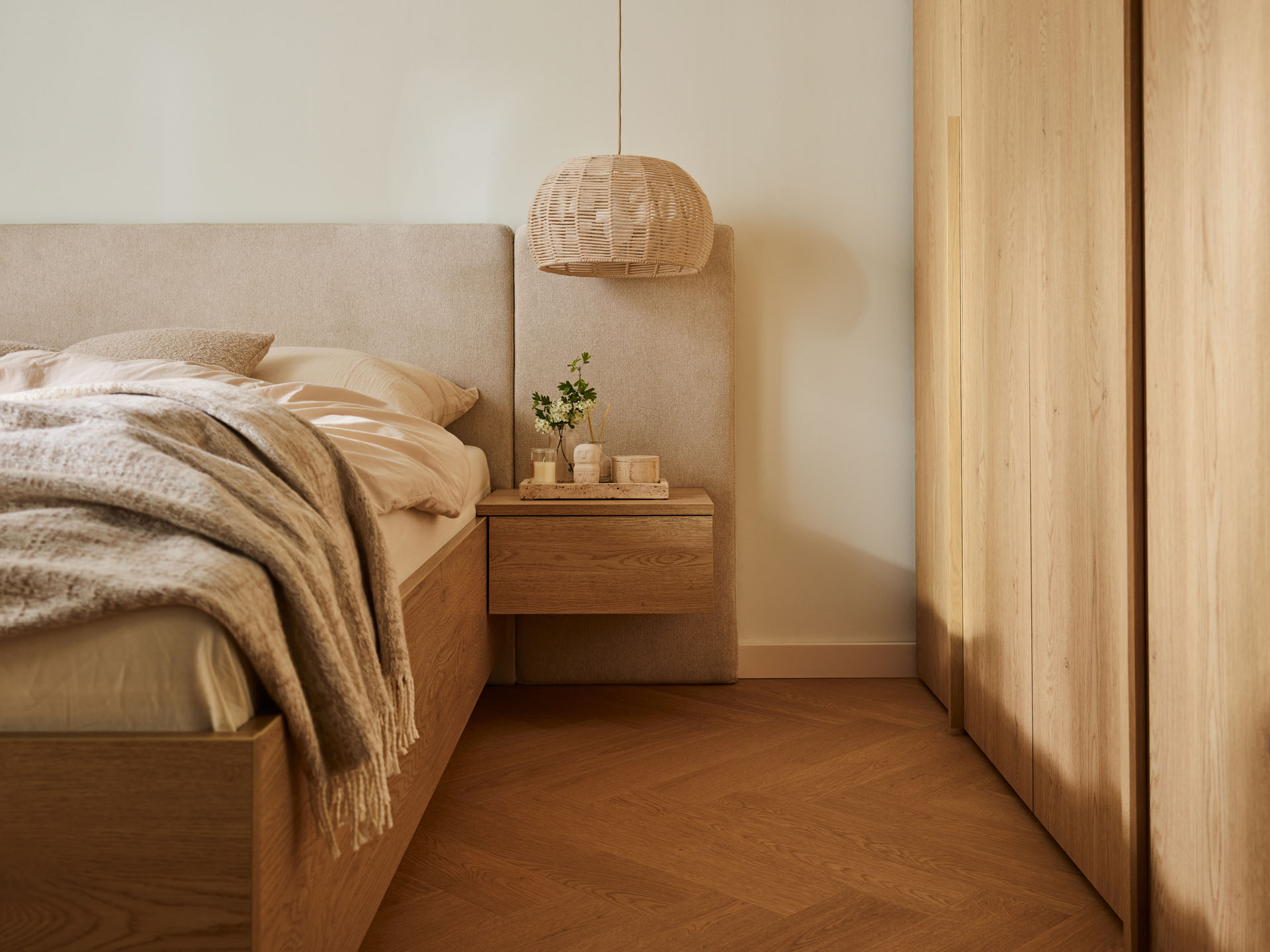
The quickest way to make a bedroom feel inexplicably fussy is this: you scoot your nightstand into that satisfying “just right” spot, and your fabric headboard immediately bonks it like it owns the place. I have styled more than one small apartment where the bed wall was the only real “design moment”, and nothing kills the calm faster than furniture constantly fighting for the same inch.
The good news is that a headboard that bumps one or both nightstands is usually a measurement problem, not a you problem. Let’s figure out what is actually too wide, how much, and which fix gets you to a clean, intentional look without redesigning your entire room.
First: confirm what’s colliding
When people say “my headboard is too wide,” they often mean one of three things:
- The upholstered panel is wider than the mattress and extends past the bed on one or both sides.
- The headboard legs or frame rails are wider than the upholstered part, so the collision happens lower down near the nightstand top.
- The bed is not centered on the wall, so one side bumps while the other has a gap that feels suspiciously generous.
Stand at the foot of the bed and look straight on. If it looks off-center, it might be, but don’t let optical illusions win. Measure to confirm (trim, windows, and sloped ceilings can trick the eye). Start with centering because it is the easiest win.
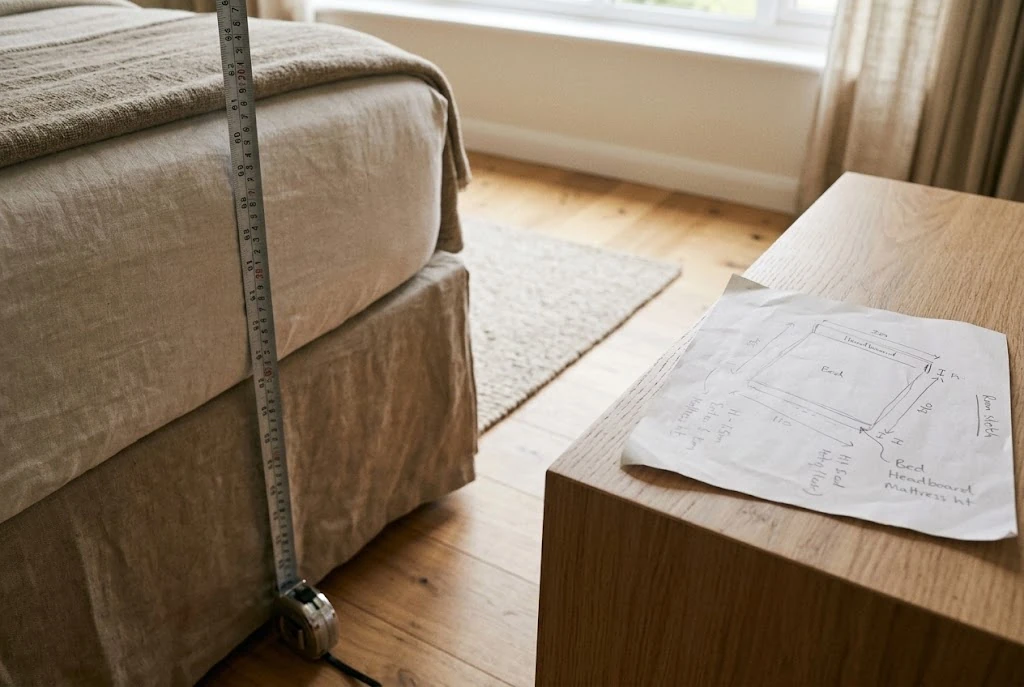
Measure the overhang (it takes 3 minutes)
Grab a tape measure and note four numbers:
- Mattress width (twin, full, queen, king, etc. but measure the actual mattress).
- Whole bed width at the widest point (some upholstered or platform frames are wider than the mattress, which matters for nightstand clearance).
- Headboard width at the point that’s actually hitting (top corners or wings, or lower legs or brackets).
- Nightstand width (and if it has a top lip or hardware that sticks out, include that).
Now do the math:
- Total overhang = headboard width (at the collision point) minus mattress width.
- Overhang per side = total overhang divided by 2 (unless the bed is off-center, in which case measure from mattress edge to headboard edge on each side).
What this tells you: if the overhang per side is around an inch or two, you can often solve it with placement tweaks. If it is several inches per side, especially in a tight room, it tends to call for a smarter fix than shoving furniture around.
Check whether the frame is the wide piece
This is the detail people miss: on many upholstered headboards, the wood legs, metal brackets, or side rails flare out wider than the padded panel. That means:
- Your headboard can look like it should fit, but the lower structure is what actually hits the nightstand.
- Adjusting height can change where the collision happens.
Run your hand down the outer edge and look from the side. If the bump happens around tabletop height, the culprit is often hardware or legs, not the pretty upholstered face.
The simplest fixes, in the order I try them
1) Pull the nightstands slightly forward
If your headboard sticks out behind the nightstands, you can often stop the bump by moving the nightstands 1 to 3 inches toward the foot of the bed. It sounds too simple, but it works surprisingly often, especially with plush fabric headboards that have a soft curve at the edge.
- Pro styling tip: keep both nightstands aligned with each other, even if only one was bumping. Symmetry reads calmer.
- Watch for: drawers that now hit the bed, or a lamp that feels too far back for comfortable reaching.
2) Adjust headboard height and mounting
Many headboards have multiple bolt holes or slots on the legs. Using a different set can change how the headboard sits relative to the nightstand. This can help, but only within the manufacturer-approved mounting options. Do not drill new holes or improvise hardware unless the manufacturer explicitly allows it.
- If the bump is happening low (legs, brackets, rails): try a different approved height so the wide, structural bits clear the nightstand top.
- If the bump is happening high (wings, top corners): changing height usually helps less, because the widest point is still the widest point. In that case, you’re often better off with a placement tweak or slimmer nightstand.
Safety note: after any adjustment, tighten all bolts, confirm the headboard is stable, and follow the bed frame instructions (some setups also want wall anchoring, especially with tall upholstered headboards).
3) Re-center the bed and “split the difference”
If you have uneven bumping, your bed might be drifting left or right. Center the bed frame and mattress first, then position nightstands.
- Measure from each mattress edge to the nearest wall or fixed point.
- Aim for equal spacing on both sides if possible, or as close as your room allows.
4) Fix what’s forcing the nightstand forward
Sometimes the nightstand is not being “difficult”. It is being pushed out by real-life stuff like baseboards, outlets, or a radiator. That can put the nightstand corner right where the headboard flares.
- Baseboards: try a small spacer behind the nightstand so it sits square, or choose a nightstand with a notched or inset back.
- Outlets and cords: a nightstand with an open back (or a cord cutout) can sit closer without kinking cords.
- Radiators: prioritize airflow and safety, then consider a slimmer, more forward-pulled bedside surface so nothing is wedged.
5) Swap the nightstands (or cheat with a slimmer silhouette)
If your overhang per side is substantial, a bulky nightstand will always feel like it is losing a wrestling match. Consider:
- Narrower nightstands with a smaller footprint.
- Wall-mounted shelves that act like nightstands without taking floor width (use studs or proper anchors and follow the shelf weight rating).
- C-shaped side tables that can tuck slightly under the bed edge.
This is not about buying something expensive. I have found the most perfect slim vintage nightstands at flea markets because nobody wants the “weird little ones.” Those weird little ones are bedroom gold.
6) Confirm you have the right headboard size for the bed
Design-wise, it is normal for a headboard to be a bit wider than the mattress. Practically, though, there is a point where it starts interfering with bedside furniture. In many rooms, a small overhang (a couple inches per side) is easy to live with, while a larger overhang can get tricky fast, especially with wide nightstands or tight clearances.
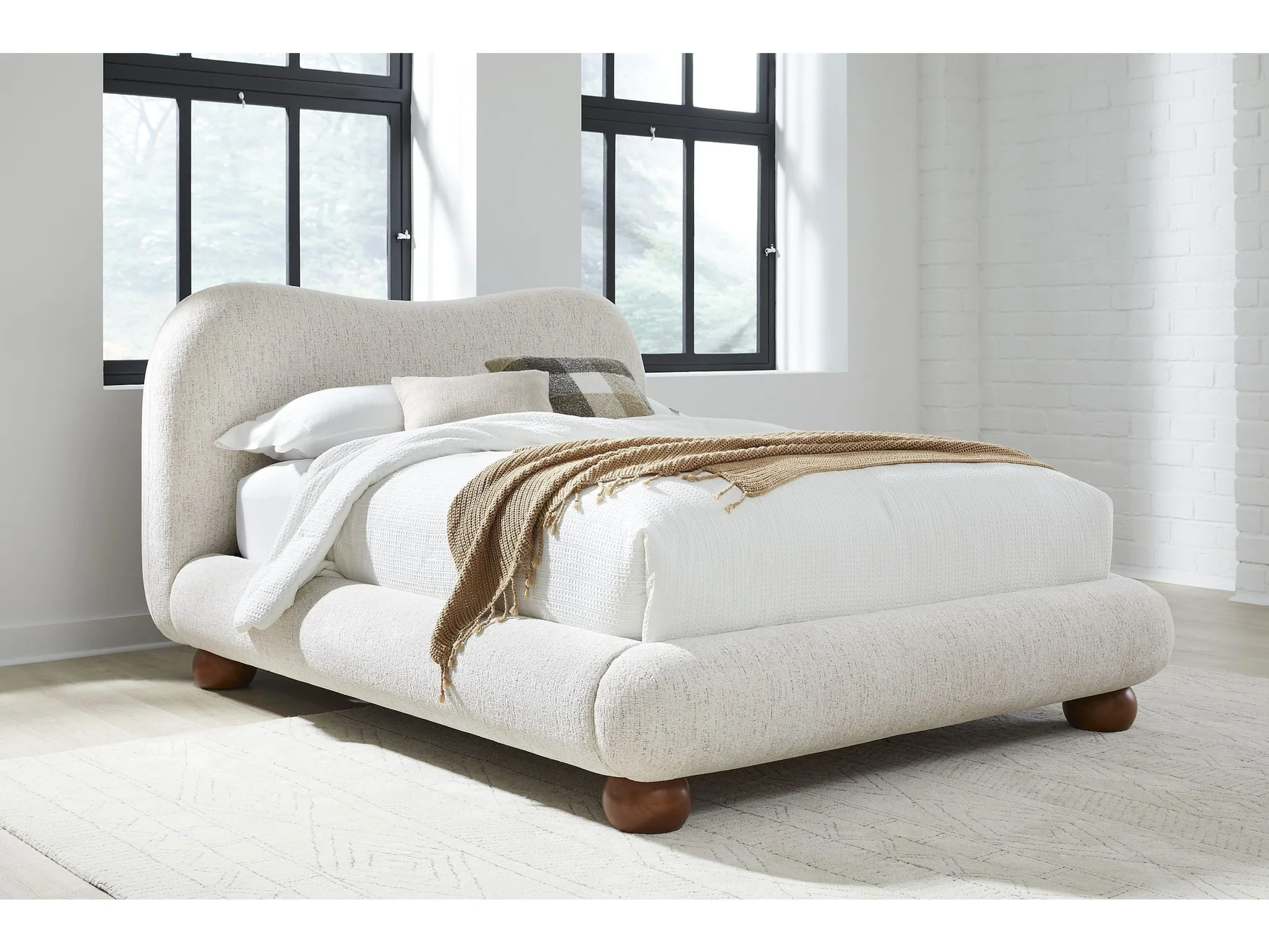
If the headboard is dramatically wider than the mattress, it may simply be the wrong size (for example, a king headboard paired with a queen mattress).
When the headboard is attached to the frame
If your fabric headboard is part of a complete bed (not a separate piece), your options depend on how the frame is built.
- If the bed has side rails that flare out: the nightstand may be hitting the rail or leg, not the upholstered panel. Pulling the nightstand forward can help, or switching to a slimmer nightstand shape.
- If the headboard is integrated and truly too wide: the cleanest fix is usually changing the nightstands or replacing the headboard, rather than forcing an awkward fit.
Quick troubleshooting
- Bumps at the top corner of the headboard: try pulling nightstands forward first. If the headboard has wings, consider slimmer nightstands.
- Bumps lower down near tabletop height: check whether the legs or brackets are wider than the upholstered face, then try an approved height adjustment.
- Only one side bumps: measure and re-center the bed and headboard, then reset both nightstands.
- Both sides bump and the room feels tight: consider slimmer nightstands, wall-mounted shelves (anchored properly), or a different headboard size.
FAQ
Is it okay if my headboard is wider than my mattress?
Yes. A little extra width can look intentional and luxe. It becomes a problem when the overhang steals the real estate your nightstands need.
Should my nightstand touch the bed?
I prefer a small, breathable gap if you can manage it, even just half an inch. It prevents scuffs and makes cleaning less annoying. But in a tiny room, close is fine as long as drawers open and nothing is constantly rubbing.
My headboard hits even after I move the nightstands forward. Now what?
That usually means the overhang is substantial, the frame is wider than the mattress, or the headboard legs or brackets are the wide point. Re-check measurements (including the bed frame width), find the true collision spot, then decide between an approved mounting adjustment, slimmer nightstands, or replacing the headboard with the correct size.
How much space should I leave between the nightstand and headboard edge?
If you can get about 1 inch of clearance, you will feel the difference immediately. It stops the bumping, prevents fabric wear on upholstered edges, and looks more relaxed.
The “calm bedroom” test
Once you have your fix in place, do this tiny ritual: stand in the doorway and look at the bed wall. If your eye catches on the corners because something looks pinched, give yourself permission to adjust by a single inch. Bedrooms are emotional spaces. When everything fits without touching, it feels like the room is exhaling.
And if you needed to hear it from a fellow chronic furniture-rearranger: you are not being picky. You are noticing what your body notices every single night.