Hard Water Stains in a Toilet Bowl

Clara Townsend
Clara Townsend is an interior stylist, vintage furniture enthusiast, and the creative voice behind Velvet Abode. With over a decade of experience transforming both cramped city apartments and sprawling fixer-uppers, she believes that a beautiful home is built on personal stories rather than massive budgets. When she isn't hunting for the perfect brass sconce at a local flea market, she can usually be found rearranging her living room for the third time this month.
That stubborn gray-brown ring in the toilet bowl is usually not “dirt” in the normal sense. It is minerals. Hard water leaves behind calcium and magnesium, and if there is any iron in the supply, those deposits can skew rusty orange or tea-brown. The good news is that mineral buildup responds to the right tools. The bad news is that the wrong tools can quietly rough up porcelain, making future stains cling even harder. Especially in a rental, the goal is simple: remove the ring, protect the glaze, and flag anything that looks like a plumbing issue.
First, identify what you are looking at
Different stains behave differently. A quick read on the color and texture helps you choose the gentlest effective method.
- Chalky white, crusty, or gray ring at the waterline: classic limescale from hard water.
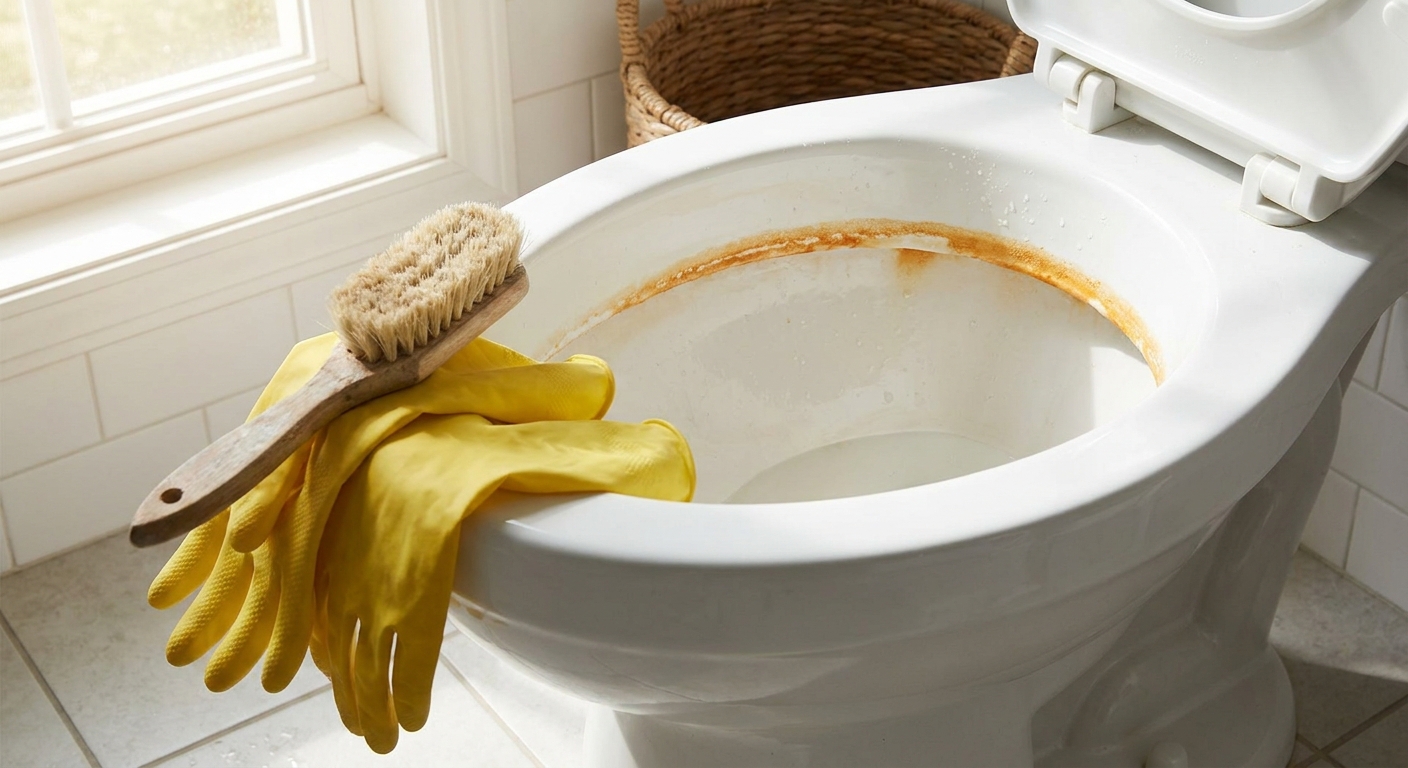
- Rusty orange or brown streaks: often iron in the water, or mineral-rich water sitting in the bowl for long stretches.
- Pink or slimy film: often bacterial growth (commonly associated with Serratia) that thrives in damp bathrooms. Use a disinfecting cleaner and a brush, and improve ventilation.
- Black or dark gray marks: can be manganese staining, mold in a damp bathroom, or rubber scuffs from certain brushes. Treat gently and avoid abrasives first.
If the ring is raised and feels rough (you can tell with a gloved finger), you are dealing with mineral scale. If it looks like a stain but feels smooth, you might just need a mild acid soak and a brush.
What works (and why)
1) Pumice stone, used the safe way
Pumice is a mechanical solution. It works because it physically shaves down mineral scale, which is why it is so satisfying when chemical cleaners barely make a dent. But pumice is also where renters get into trouble if they go in dry or too aggressive.
- Use only on fully wet porcelain: Flush, then keep the area wet. A dry pumice stone can scratch.
- Soak the pumice first: Drop it in a bucket of water for a few minutes so it is fully saturated.
- Light pressure, short passes: Let the stone do the work. You are polishing scale off, not sanding the bowl.
- Test a small spot first: Even on porcelain, finishes vary. Check an inconspicuous area before you commit to the whole ring.
- Use on porcelain or ceramic only: Do not use pumice on plastic parts, soft-close seats, decorative finishes, or enamel-coated fixtures. It can scratch those surfaces.
Rental note: Pumice is often safe for glazed porcelain when used wet and gently, but it can dull or scratch some finishes if you scrub hard. If you are nervous, try mild acid first and save pumice for what remains.
2) Mild acids that dissolve minerals
Mineral deposits are alkaline, so mild acids help dissolve them. These are often the most renter-friendly approach because they are low-abrasion.
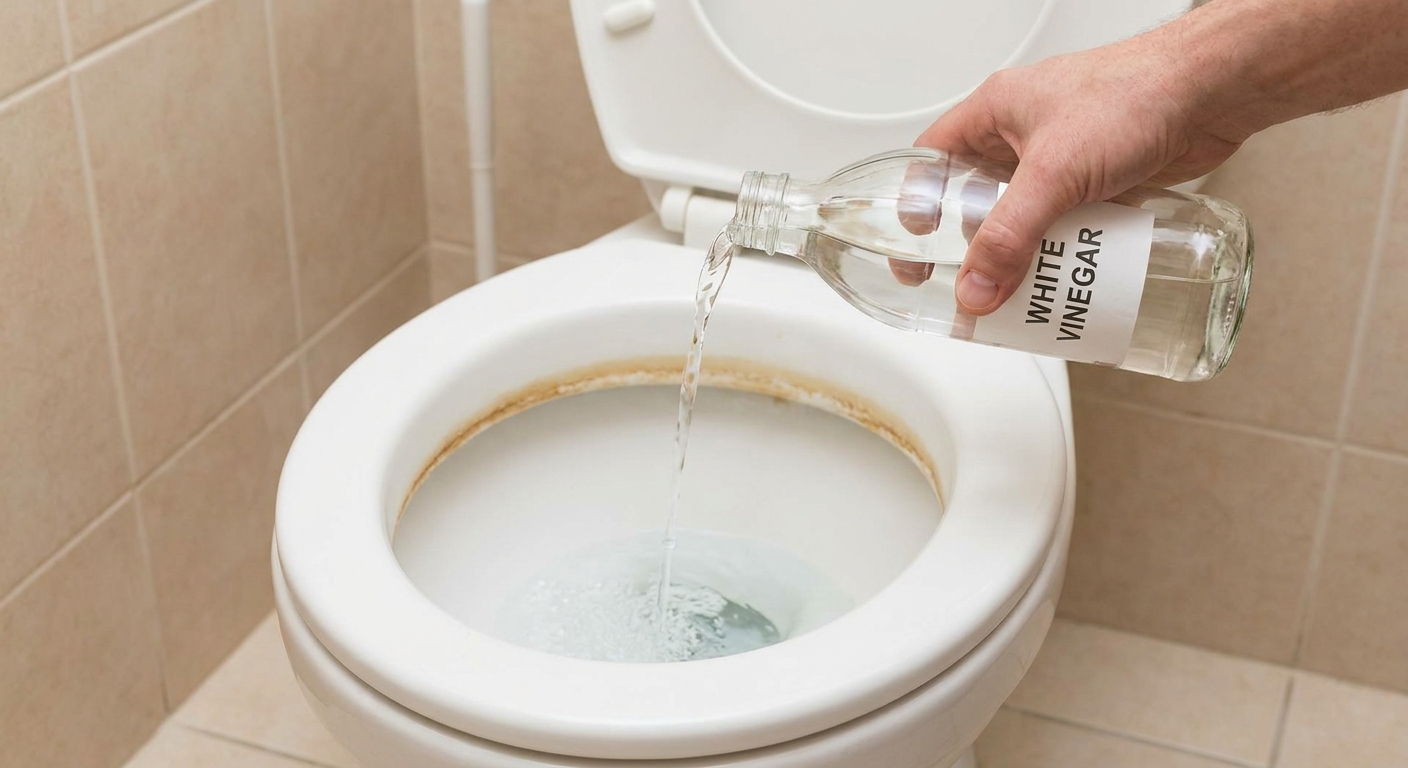
- White vinegar: Great first step for light to moderate scale. It is gentle, affordable, and easy to find.
- Citric acid: Excellent on limescale. Often sold as powder, it can be stronger than vinegar without harsh fumes.
- Phosphoric-acid toilet cleaners: Common in commercial “lime and rust” toilet products. Effective for iron and heavy deposits, but follow directions carefully, ventilate well, and consider eye protection.
How to make acids actually work: Acids need contact time. If the bowl water is high, the ring is not fully exposed, which reduces contact with the cleaner. You can lower the water level by turning off the toilet supply valve and flushing once, or by scooping water out with a disposable cup. In a rental, keep it simple: reduce the water a bit, apply the cleaner to the ring, and let it sit.
Important: Never layer toilet cleaners. If you switch products mid-clean, flush and rinse thoroughly first so you are not mixing residues.
3) A toilet brush plus patience
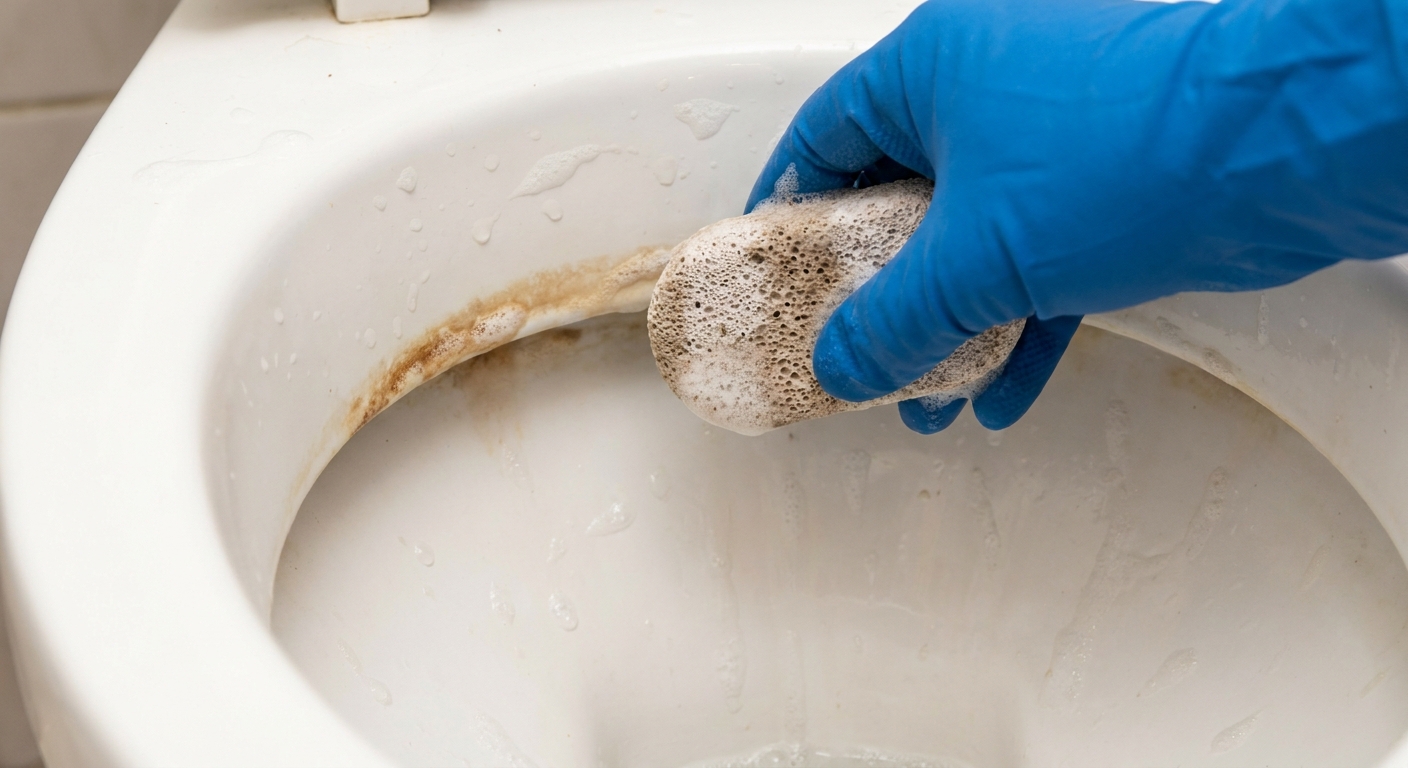
After a soak, a regular brush can do more than you think. The soak loosens the mineral bond, the brush lifts it away. It is not glamorous, but it is glaze-safe and usually all you need for moderate rings.
4) Dye tabs for the “is this actually a leak?” question
Dye tabs do not remove stains. They help diagnose the hidden cause of stains: a slow, constant trickle from the tank into the bowl. That trickle creates a steady mineral trail that keeps reappearing, no matter how lovingly you scrub.
- Drop a dye tablet (or a few drops of food coloring) into the tank, not the bowl.
- Do not flush.
- Wait 10 to 20 minutes.
- If color appears in the bowl, you likely have a flapper or fill valve leak that should be addressed.
Rental note: If dye shows up in the bowl, that is a maintenance request, not a you problem.
What can etch porcelain (and what to skip in a rental)
Porcelain toilet bowls have a glossy glaze. Once that glaze is etched or scratched, the bowl becomes a magnet for stains because the surface is no longer slick.
Avoid these common shortcuts
- Bleach as your main weapon: Bleach disinfects and can lighten organic stains, but it does not dissolve mineral scale well. People over-scrub after bleach fails, and that is when scratches happen.
- Abrasive powders: Scouring powders can dull the glaze over time. In a rental, play the long game.
- Metal scrub pads or steel wool: These can scratch, leave metal marks, and make the bowl harder to clean forever.
- Harsh acids used too long: Strong acid cleaners left sitting for extended periods can dull surfaces and damage nearby metals. Follow label times and rinse well.
- Mixing chemicals: Never combine bleach with vinegar or other acids. This can create toxic chlorine gas. Also do not mix bleach and ammonia. If you want to try a different cleaner, flush and rinse first.
If you only remember one rule: choose dissolve before sand. Start with a soak, then brush, then reach for pumice only if the deposit is still raised and stubborn.
A renter-safe routine
- Ventilate: Open a window or run the fan. Put on gloves. If you are using a stronger commercial descaler, consider eye protection.
- Lower the water level a bit: Turn the supply valve clockwise and flush once, or scoop some water out. This gives your cleaner a fighting chance at the ring.
- Soak with a mild acid: Coat the ring with vinegar, a citric-acid solution, or a targeted toilet descaler. Let sit 20 to 40 minutes (follow label directions for commercial products).
- Brush: Work the ring with a standard toilet brush. Flush and check progress.
- Spot-treat remaining scale: If a rough ridge remains, use a soaked pumice stone gently on the wet area only. Flush again.
- Rinse thoroughly: Turn the supply back on if you shut it off. Flush once or twice to clear residue. If you plan to try a different product, rinse first.
For very heavy buildup, it is often better to repeat a gentle soak twice than to go aggressive once. Porcelain appreciates patience.
Septic systems and building rules
Not every home has the same plumbing setup, and rentals sometimes have “do not use” lists tucked into the lease or welcome packet.
- Septic-friendly approach: Occasional use of vinegar or citric acid is typically compatible with septic systems in normal household amounts. Avoid frequent, heavy doses of bleach or antibacterial cleaners, and follow product labels.
- Avoid drain-opening acids: Products meant for drains are often far more aggressive than toilet descalers. They are not the right tool for porcelain and can create serious hazards.
- HOA or building maintenance preferences: Some buildings prefer certain cleaners to protect older plumbing. If your rental has vintage pipes, stick with mild acids and gentle abrasion only when needed.
If you are unsure, keep it simple: vinegar, a brush, and time will solve most moderate rings.
Prevention that actually helps
Once you have the bowl back to clean, prevention is about reducing mineral contact time and catching small problems early.
- Weekly quick brush: Even 30 seconds keeps minerals from building a ridge.
- Monthly vinegar or citric acid soak: A short soak before scale hardens is the easiest “future you” gift.
- Check for slow leaks: Use dye in the tank every few months, especially if rings return fast.
- Consider a tank tablet carefully: Many blue “cleaning” tablets can degrade rubber flappers over time and stain tank parts, which can lead to leaks. In a rental, I usually skip anything that lives in the tank long-term unless the product explicitly states it is safe for toilet components and your landlord approves.
A clean toilet is not about constant deep cleaning. It is about not letting minerals settle in and get comfortable.
When to report a problem
Sometimes the stain is basically a sticky note from your toilet saying: “Hey, something is off.” In a rental, it is worth reporting when:
- The ring comes back within days after cleaning, especially with a vertical streak down the bowl. This often suggests a tank-to-bowl leak or a flapper that is not sealing.
- You hear occasional refilling when no one has flushed. That can indicate the toilet is running slowly.
- Water level changes mysteriously or the bowl looks like it is constantly “rinsing” on one side.
- There is rust in multiple fixtures (sinks, tub, toilet). That can be a building-wide water issue worth flagging.
Reporting it is not being picky. A silent leak can waste a lot of water and often shows up first as stains.
Quick method cheat sheet
- Light ring: vinegar or citric acid soak + brush.
- Moderate scale that feels rough: soak first, then gentle pumice on wet porcelain (test a small spot first).
- Rusty streaking: a toilet-safe descaler with rust removal (often phosphoric acid) + brush, then test for leaks if it returns.
- Ring returns fast: dye tab test, then report a likely leak to maintenance.
If you want the Velvet Abode approach: protect the porcelain like it is a vintage mirror you plan to keep forever. Gentle first, aggressive last. Your bathroom stays calmer, and your deposit stays where it belongs.