Hang Heavy Mirrors in a Rental Without Damage

Clara Townsend
Clara Townsend is an interior stylist, vintage furniture enthusiast, and the creative voice behind Velvet Abode. With over a decade of experience transforming both cramped city apartments and sprawling fixer-uppers, she believes that a beautiful home is built on personal stories rather than massive budgets. When she isn't hunting for the perfect brass sconce at a local flea market, she can usually be found rearranging her living room for the third time this month.
There is a special kind of heartbreak that happens when you find the perfect vintage mirror and then remember you are renting. The good news is you can absolutely hang heavy art and mirrors safely without turning your move-out inspection into a suspense thriller. The trick is choosing the right support system for your wall type and your lease rules, then matching hardware to the actual weight of what you are hanging.
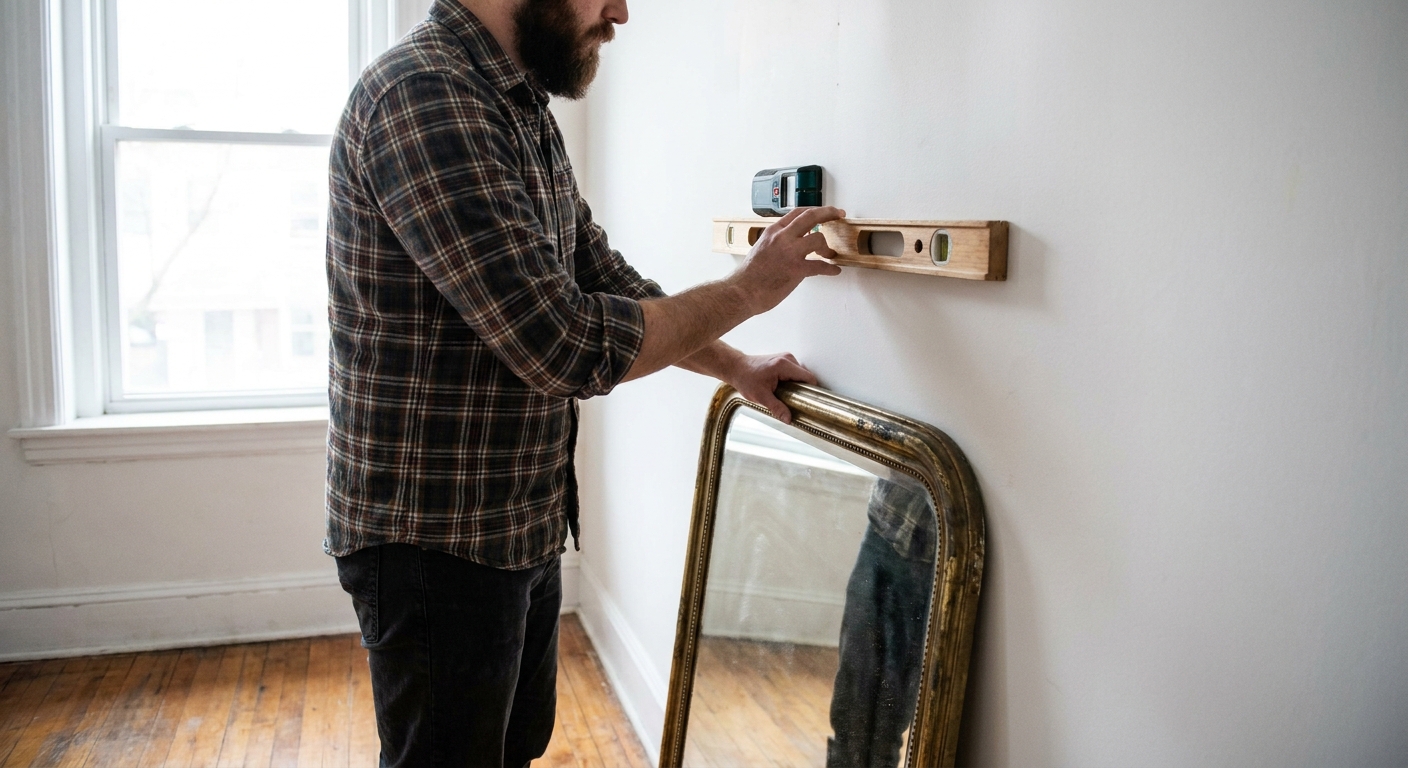
Start here: weigh it, then add a safety buffer
Before you buy hardware, get a real number. Step on a bathroom scale holding the piece, then subtract your weight. Include the mirror’s backing and any added hanging hardware.
- Under 10 lb: usually fine with quality picture hooks or small anchors, depending on wall type.
- 10 to 25 lb: you are in “use a real anchor or a stud” territory for drywall. For plaster, you need to be more cautious and often aim for studs or picture rail.
- 25 to 50 lb: choose studs, a properly installed cleat into studs, or a rated toggle system where allowed.
- Over 50 lb: treat it like a serious install. Prefer a cleat into studs, a picture rail system, or hire a pro. This is also where building policies can matter a lot.
My rule: choose hardware rated for at least 2x the item’s weight. Ratings assume perfect installation. Rentals are rarely perfect.
Know your wall: drywall vs plaster changes everything
Drywall (most modern apartments)
Drywall is basically a chalky sandwich. It holds lightweight things well, but heavy pieces need help from studs or the right anchor.
- Best-case scenario: hang into a stud with a screw.
- If you cannot hit a stud: use a properly rated drywall-specific solution (like a curved wire hook or a toggle-style anchor, if your lease allows) rather than a small plastic sleeve.
- Avoid: generic plastic expansion anchors for heavy mirrors. They can loosen over time, especially with door slams and seasonal shifting.
Plaster (older buildings, especially pre-war)
Plaster is hard, brittle, and prone to cracking if you rush. It can be very strong, but it punishes the wrong drill bit or too much force.
- Best-case scenario: use the existing picture rail if you have one, or anchor into studs behind the lath.
- If you must anchor in plaster: pre-drill carefully, use the right bit, and consider specialty anchors designed for plaster and lath.
- Avoid: hammering in nails like you would in drywall. That is how you get spider cracks and crumbling edges.
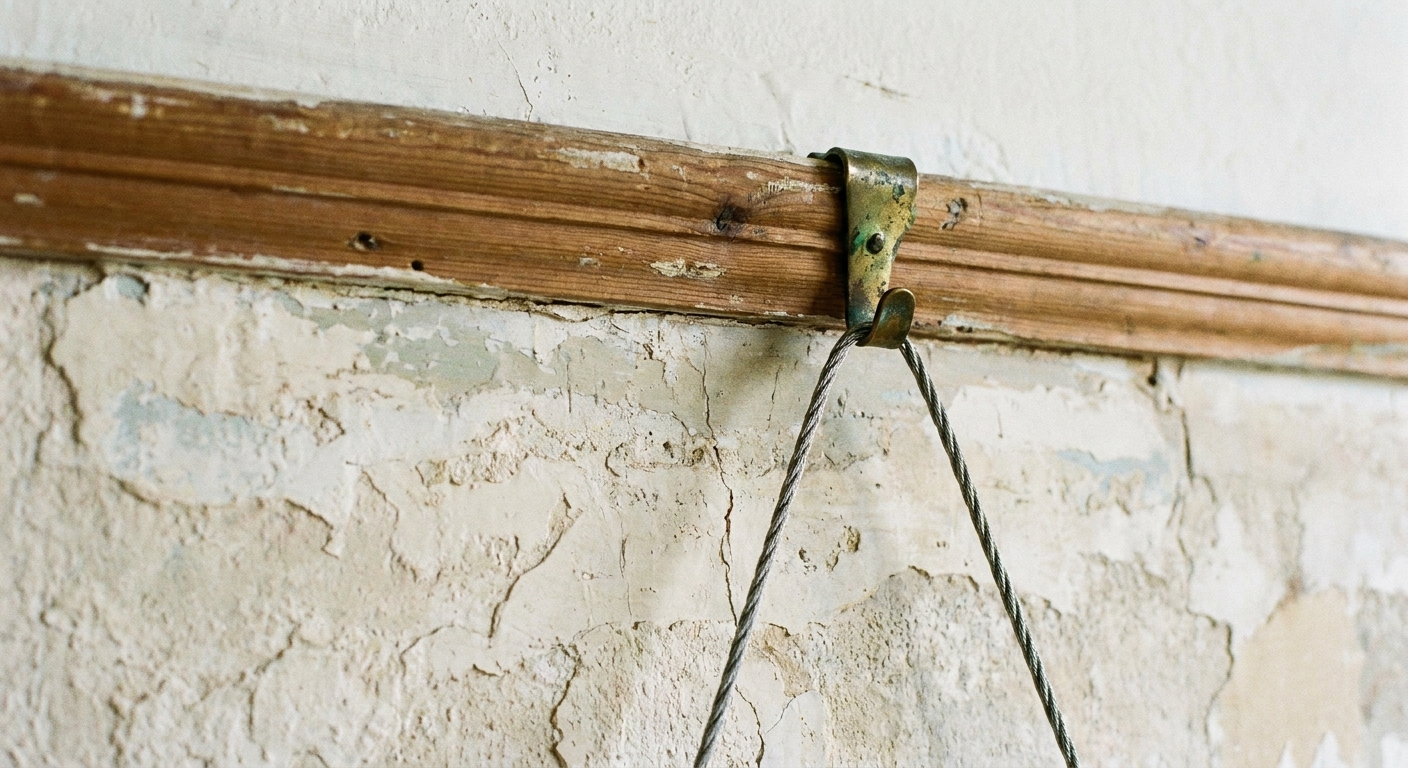
Option 1: Picture rails (the renter’s secret weapon)
If your place has a picture rail, you have basically been gifted a no-drama hanging system. Picture rails are common in older homes and apartments, usually a trim ledge near the top of the wall.
Why I love them
- Near zero wall damage: you hang from the rail, not the plaster.
- Easy adjustments: move art around without new holes.
- Great for heavy pieces: when used with rated hooks and proper hanging wire.
How much can they hold?
It depends on the rail, the hook, and the cord or wire. As a practical starting point:
- Up to 15 lb: typically easy with standard picture rail hooks and quality cord.
- 15 to 30 lb: use heavy-duty picture rail hooks and steel cable or rated cord. Consider two drops for stability.
- 30 lb and up: possible in many cases, but it becomes building-specific. Use multiple hooks, spread the load, and do not guess. When in doubt, consult your landlord or a pro.
Quick setup tips
- Use two hanging points on the frame for mirrors. It keeps the piece from tilting when you walk by.
- Swap thin string for steel picture wire or a rated hanging cord for heavier items.
- Protect the wall with small bumper pads on the bottom corners of the frame so it does not scuff when it swings.
Option 2: Curved wire hooks (tiny holes, big payoff)
If you have drywall and you want a strong hold without a drill, curved wire hooks (often sold as Monkey Hooks or Gorilla Hooks) are a renter favorite for a reason. They install by hand, leave a small pinhole, and can handle surprisingly heavy frames when used correctly.
When they make sense
- You have drywall (not plaster) and you want minimal damage.
- Your mirror or frame has a centered hanger, D-rings, or a wire that sits nicely on a single hook.
- You want a strong option without the larger holes that toggles require.
Weight guidance
- Up to 25 lb: often a great fit for many frames on drywall.
- 25 to 50 lb: possible with the heavy-duty versions, but only if the wall and install are solid. Read the rating and do not exceed it.
- Over 50 lb: I would move to studs, a French cleat into studs, or a pro install.
How to use them well
- Confirm your wall is drywall. These are not ideal for crumbly plaster.
- Follow the package instructions for angle and insertion depth. The “magic” is the hook shape sitting correctly behind the drywall.
- For wide, heavy mirrors, prefer two hanging points (two D-rings and two hooks) when the frame design allows, so the mirror does not swing or slowly tilt.
Option 3: French cleats (strong, tidy, but more holes)
French cleats are two interlocking strips, one on the wall and one on the back of your mirror. They distribute weight beautifully and keep large pieces sitting flat and secure.
When cleats make sense in a rental
- You have a large, heavy mirror that you truly do not want to fall.
- You can hit studs for at least part of the cleat.
- Your lease allows “normal hanging” holes or you have written permission for more substantial hardware.
Weight guidance
- 25 to 50 lb: a cleat into studs is one of the safest options.
- 50 to 100 lb: doable with a cleat, but I consider this a “measure twice, maybe call a pro” zone, especially in plaster.
- Over 100 lb: get professional help and confirm building rules. That is not a casual DIY in a rental.
Damage reality check: cleats often mean multiple screw holes. They patch well in drywall, but in plaster the repair can be fussier and more noticeable.
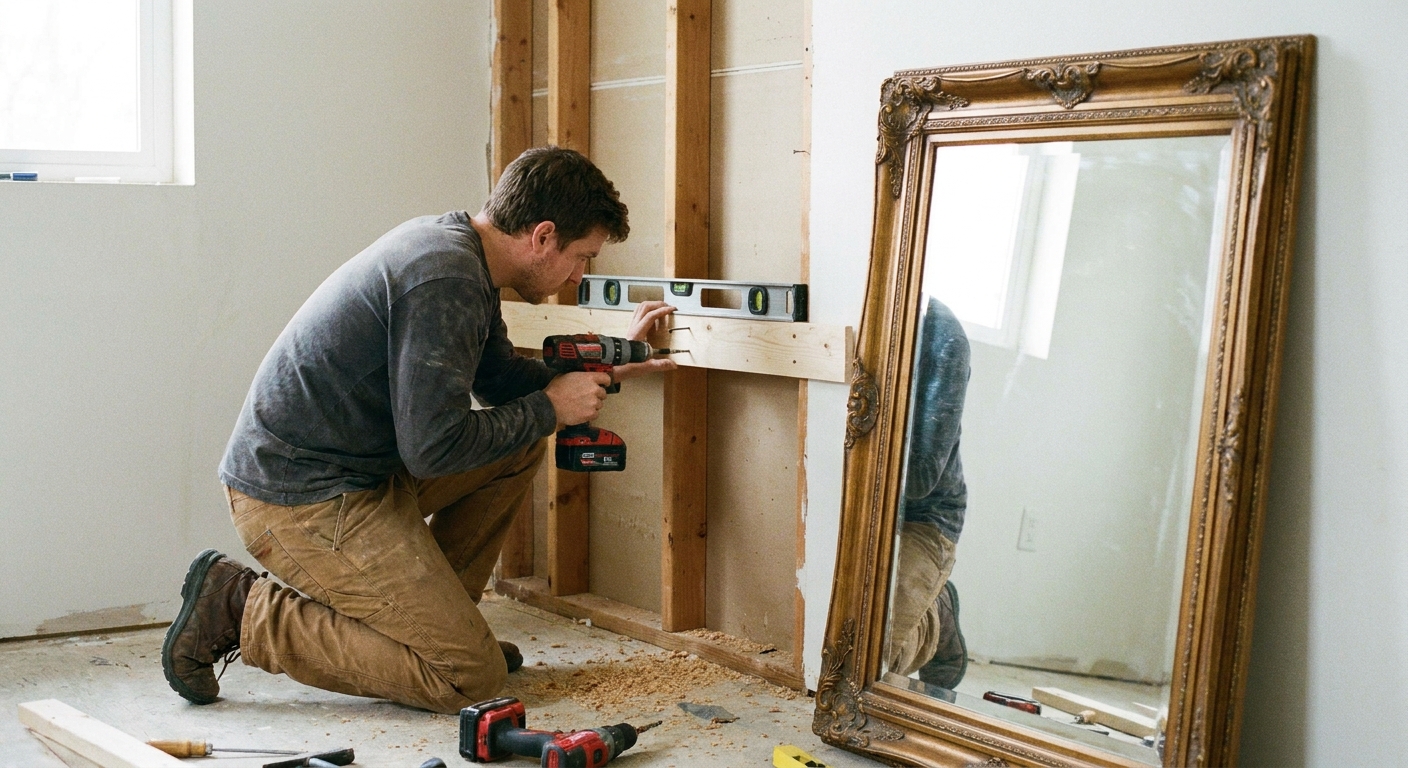
Option 4: Toggle anchors (where allowed) for drywall
If your building allows anchors and you cannot land on a stud, toggle-style anchors are the heavy-duty choice for drywall. They spread the load behind the wall rather than relying on crumbly gypsum.
Types you will see
- Traditional toggle bolts: very strong but require a larger hole. Great holding power, more patching later.
- Strap toggles: easier to install, strong, still a larger hole than a simple screw.
- Self-drilling metal anchors: fine for medium loads, not my first pick for a truly heavy mirror unless rated and installed perfectly.
Drywall weight guidance (practical, not optimistic)
- Up to 20 lb: many quality anchors can handle this, but use two points if the frame allows.
- 20 to 50 lb: toggle-style anchors or studs. Avoid small plastic anchors.
- 50 lb and up: prioritize studs and cleats. Toggles can work when properly rated, but at this weight I want redundancy and the least wobble possible.
Important: anchor ratings vary wildly by brand and wall thickness. Always read the package, and treat the printed number as the maximum under ideal conditions, not a personal challenge.
Damage-minimizing options (when you want the wall to look untouched)
Sometimes the lease is strict, sometimes your anxiety is strict. Either way, here are renter-friendlier ways to get the look without committing to big holes.
Lean, do not hang
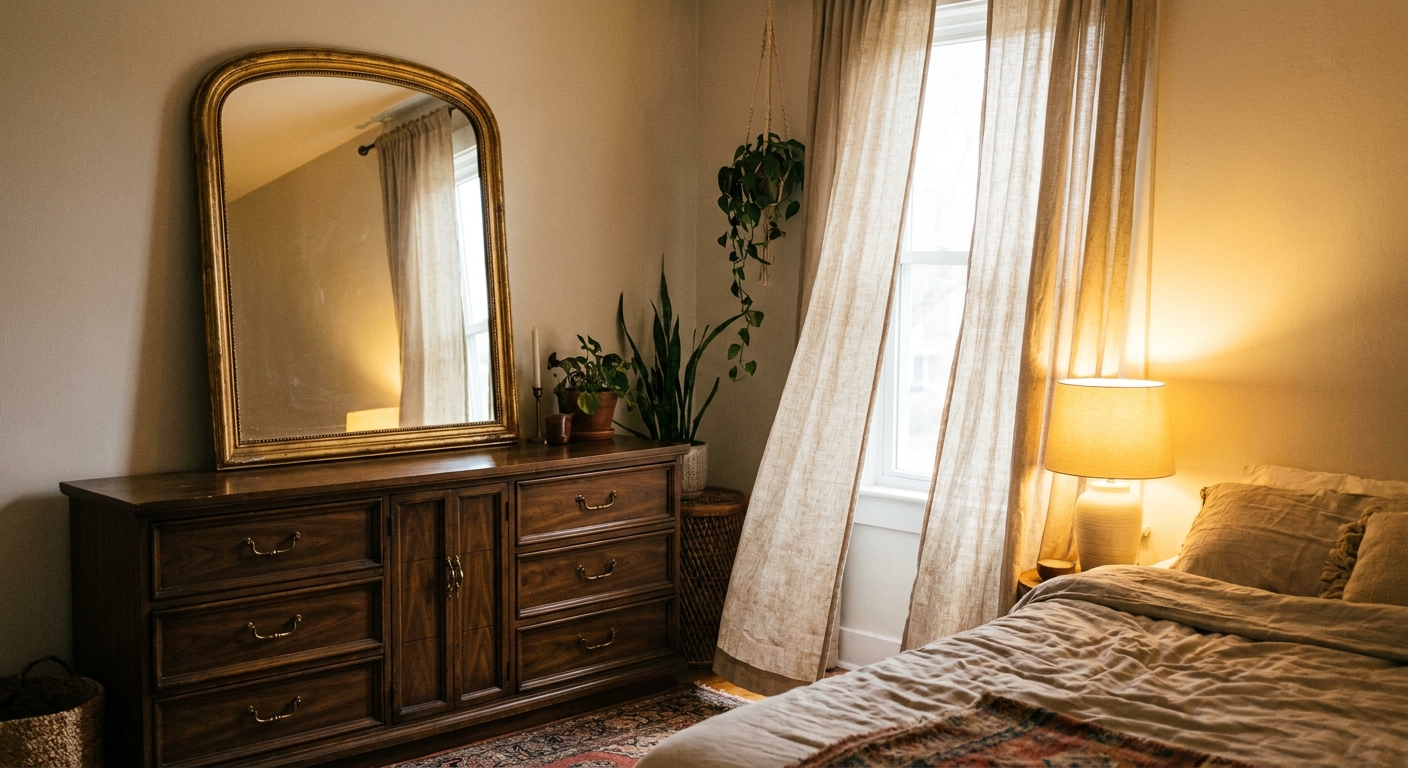
- Floor mirror: lean it on a console or directly on the floor. Add anti-tip straps to furniture if needed.
- Large framed art: lean on a picture ledge or a sturdy dresser for that relaxed, gallery-in-progress feel.
Use furniture as your “wall”
- Mount a mirror to the back of a bookcase or a freestanding panel instead of the wall.
- Create a vignette with a mantel-style shelf that is supported by furniture, not fastened to the wall.
Adhesive solutions (good for light to medium only)
Adhesive strips and hooks can be wonderful, but they are not a safe bet for heavy mirrors. Use them for small frames, then step up to mechanical support when weight increases.
- Under 5 to 10 lb: often fine with rated adhesive products on clean, smooth paint.
- Over 10 lb: I prefer traditional hardware. If it falls, it can damage floors and injure someone, and that is never worth it.
Drywall vs plaster: the gentlest way to make holes
For drywall
- Use painter’s tape where you will drill to reduce paper tear-out.
- Pre-drill when the anchor requires it, and keep the drill straight.
- Stop as soon as the anchor seats. Over-tightening chews up the hole.
For plaster
- Confirm it is plaster. It sounds more solid when you knock, and you may see hairline cracking in old paint.
- Use painter’s tape over the drill spot to help prevent surface chipping on brittle walls.
- Use a sharp masonry bit or a bit suited to plaster, drill slowly, and do not push hard.
- If you hit lath, adjust carefully. Plaster walls vary, and aggressive drilling can crack the keys behind the surface.
- If the wall is crumbling or you see active cracks, stop and consider a picture rail, a different location, or a pro.
When to check building rules or bring in a pro
I love a confident DIY moment, but rentals come with guardrails for a reason. Involve your landlord, superintendent, or a professional installer if any of these are true:
- Your lease prohibits anchors, large holes, or any drilling.
- You are in a historic building with plaster and you are not sure what is behind the wall.
- The mirror is over 50 lb, extra large, or hung in a high-traffic area where a fall would be dangerous.
- You need to drill into tile, brick, concrete, or masonry.
- The wall feels uneven, damp, soft, or is already cracked.
If you do get permission, ask for it in writing and keep a quick email record. Future-you will appreciate it at move-out.
A simple decision guide
- You have a picture rail: use it first, especially in plaster homes.
- Drywall + you want minimal holes: curved wire hooks are a great first try for many heavy frames.
- Drywall + you can hit studs: screws into studs or a French cleat into studs for heavy pieces.
- Drywall + no studs where you need them: toggle-style anchors if allowed, and consider two anchor points.
- Plaster + no picture rail: aim for studs, go slow, and consider hiring help for heavy mirrors.
- Lease is strict: lean large pieces and hang only lightweight art with removable solutions.
My last little styling nudge
Once it is secure, take one extra minute to make it feel intentional. Center a mirror to the furniture below it, not to the entire wall. Add warm lighting nearby so the glass reflects glow instead of glare. And if you are mixing modern and vintage, let the hardware disappear. Black screws on a black frame, brass on brass, quiet choices that let the piece tell its story.