Grandmillennial Style: Patterns, Pieces, Placement

Clara Townsend
Clara Townsend is an interior stylist, vintage furniture enthusiast, and the creative voice behind Velvet Abode. With over a decade of experience transforming both cramped city apartments and sprawling fixer-uppers, she believes that a beautiful home is built on personal stories rather than massive budgets. When she isn't hunting for the perfect brass sconce at a local flea market, she can usually be found rearranging her living room for the third time this month.
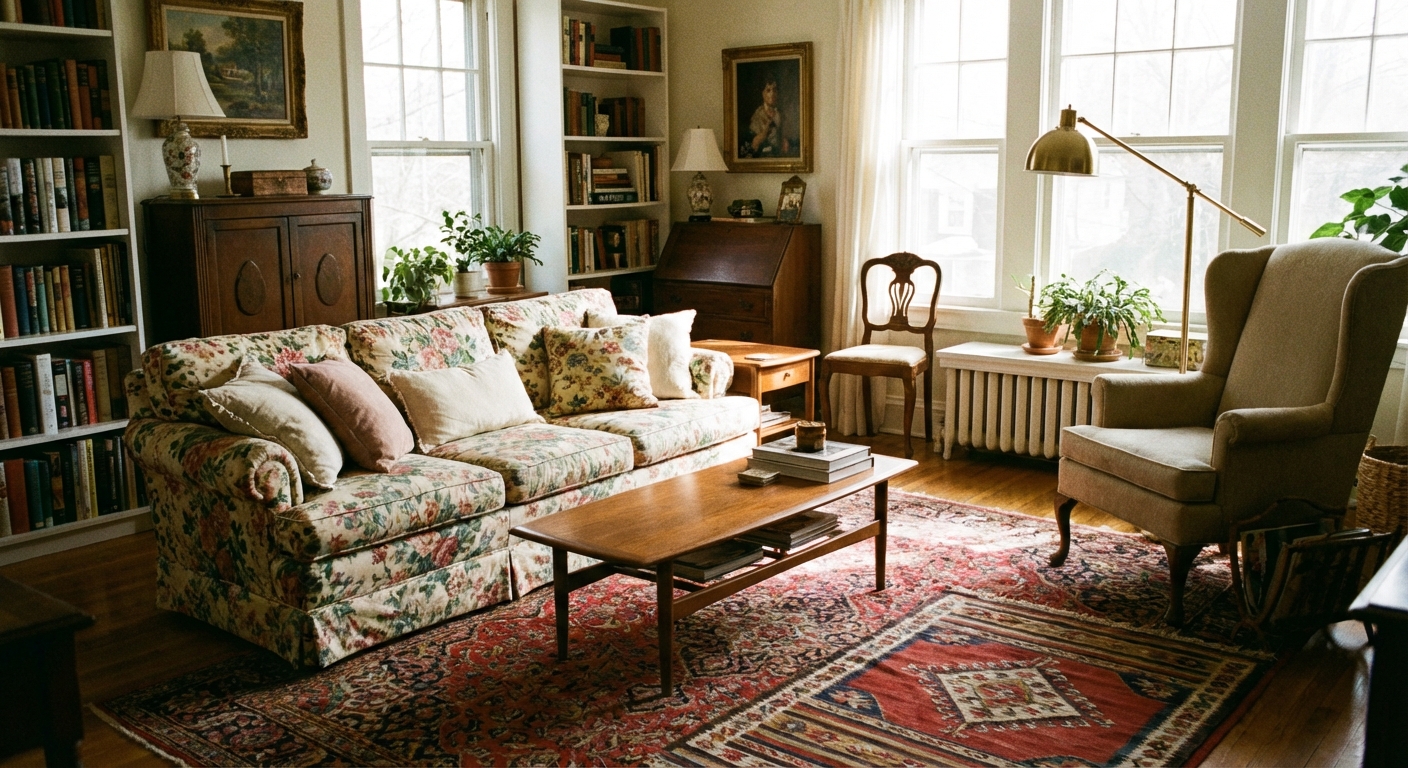
Grandmillennial style is what happens when you fall in love with your grandmother’s chintz sofa and still want your home to feel crisp, current, and like you. It is traditional, yes, but not museum precious. It is playful pattern, a wink of brass, a skirted table, and then something clean lined to keep the whole room breathing.
If you have ever worried that florals automatically equal “dated,” I want you to exhale. The secret is not avoiding classic pieces. It is choosing a few stars, giving them the right supporting cast, and placing them so your eye moves through the room instead of getting stuck on a wall of busy.
What grandmillennial style actually means
Grandmillennial (also called granny chic) is a modern take on traditional decorating. Think inherited pieces, flea market finds, and classic patterns, styled with enough restraint that it feels intentional, not fussy.
The non-negotiables
- Pattern with personality: florals, stripes, gingham, plaids, and petite prints that feel collected over time.
- Traditional shapes: roll-arm sofas, skirted tables, turned legs, pleated shades, and framed art.
- Patina and warmth: aged wood, worn brass, needlepoint, old books, and ceramics with history.
- Modern relief: simpler silhouettes, negative space, and edited color so it reads fresh.
If it feels like a comforting hug and you can still set down a cup of coffee without fear, you are in the right neighborhood.
Patterns: how to mix them without visual chaos
Grandmillennial rooms are pattern-forward, but the best ones have a quiet logic. Here is mine: scale, spacing, and a steady color thread.
Start with one “hero” pattern
Pick the print that makes you a little giddy. It might be a floral sofa, a bold wallpaper, or an oversized rug. Everything else should support it.
- Hero pattern examples: large-scale chintz, English cabbage rose, bold block print, dramatic toile.
- Best places for the hero: sofa, drapery, wallpaper in a dining room or powder bath, or a statement rug.
Use the 60–30–10 pattern rule
This is the easiest way to avoid the “my eyes do not know where to land” feeling.
- 60%: a calm base (solid walls, a neutral rug, or a quiet texture like oatmeal linen)
- 30%: your hero pattern
- 10%: a small accent pattern (gingham pillow, striped lampshade, tiny floral in a frame)
Mix pattern types, not just pattern colors
If everything is floral, it starts to read like one big upholstery department. Aim for variety:
- Floral + stripe (classic and tidy)
- Toile + gingham (storybook, but grounded)
- Block print + plaid (fresh, especially with modern art nearby)
- Small ditsy floral + big botanical (scale contrast does the heavy lifting)
Let one pattern be “quiet”
A subtle stripe, a low-contrast print, or a textured solid counts as pattern in this style. Basketweave, ticking, herringbone, and tone-on-tone damask are your peacekeepers.
Pieces: what to hunt for and what to buy new
The grandmillennial sweet spot is “collected.” You do not need a house full of antiques. You need a few strong traditional shapes, then some modern basics that keep the look from time traveling.
Vintage pieces worth the search
- Solid wood casegoods: a dresser, sideboard, or console with dovetail drawers and real heft.
- Dining chairs with character: ladder backs, balloon backs, cane details, or anything that looks like it has hosted a thousand stories.
- Brass and bronze lighting: swing-arm sconces, pharmacy lamps, petite chandeliers.
- Artwork with frames you love: oils, landscapes, botanicals, or even “not fancy” prints in gorgeous gilded frames.
- Mirrors with patina: foxed glass, carved wood, or a thin antique brass edge.
New pieces that make everything feel current
- A clean-lined sofa or sectional (especially helpful if your vintage pieces are already curvy and ornate).
- Simple, tailored rugs when your upholstery is busy, like a sisal, jute blend, or a low-contrast vintage-style rug.
- Minimal coffee and side tables in wood, stone, or iron to give the eye a break.
- Modern art or photography to cut through sweetness and keep it grown-up.
Materials that read grandmillennial instantly
If you are building from scratch, these textures do a lot of work with minimal effort:
- linen and cotton (especially slipcovers and drapery)
- needlepoint and petit point pillows
- cane, rattan, and wicker (in moderation)
- mahogany, walnut, oak, and painted wood
- brass, bronze, and aged nickel
Placement: the difference between charming and cluttered
Grandmillennial style can tip into “too much of a good thing” faster than almost any other look. Placement is how you keep it airy.
Give every patterned area a resting place
If you have patterned wallpaper, keep at least one of these elements calm: the rug, the sofa upholstery, or the window treatments. If everything is shouting, nothing is singing.
Create a clear focal point
Pick the first thing you want someone to notice when they walk in:
- a fireplace with layered art
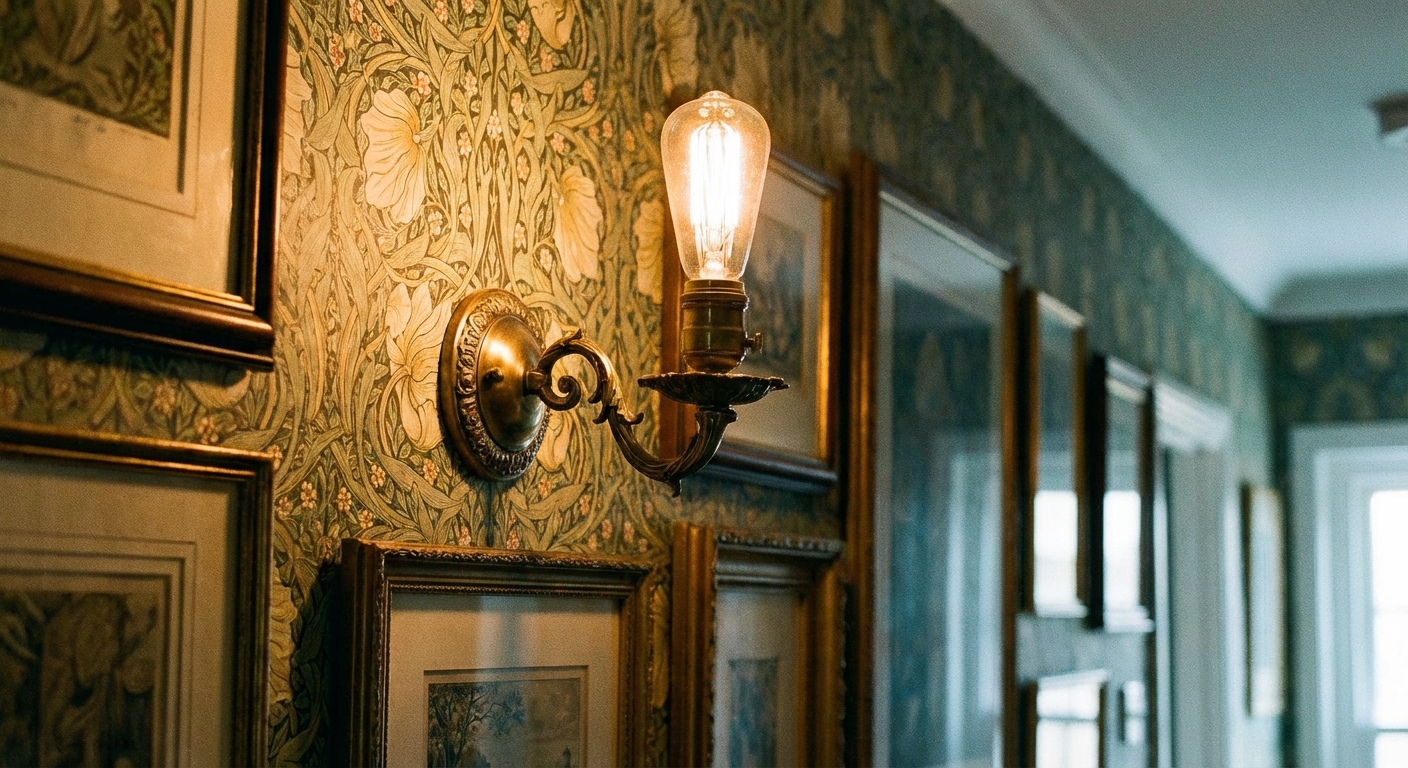
- a statement light fixture
- a bold wallpapered wall
- a vintage sideboard styled simply
Then arrange the room so seating and sightlines subtly point toward it.
Use symmetry as your secret weapon
Traditional style loves balance. When you are mixing patterns, symmetry makes it feel intentional:
- matching lamps on a console
- two chairs flanking a small table
- paired sconces over a bed
- curtains hung evenly and generously
Mind the “tiny stuff” problem
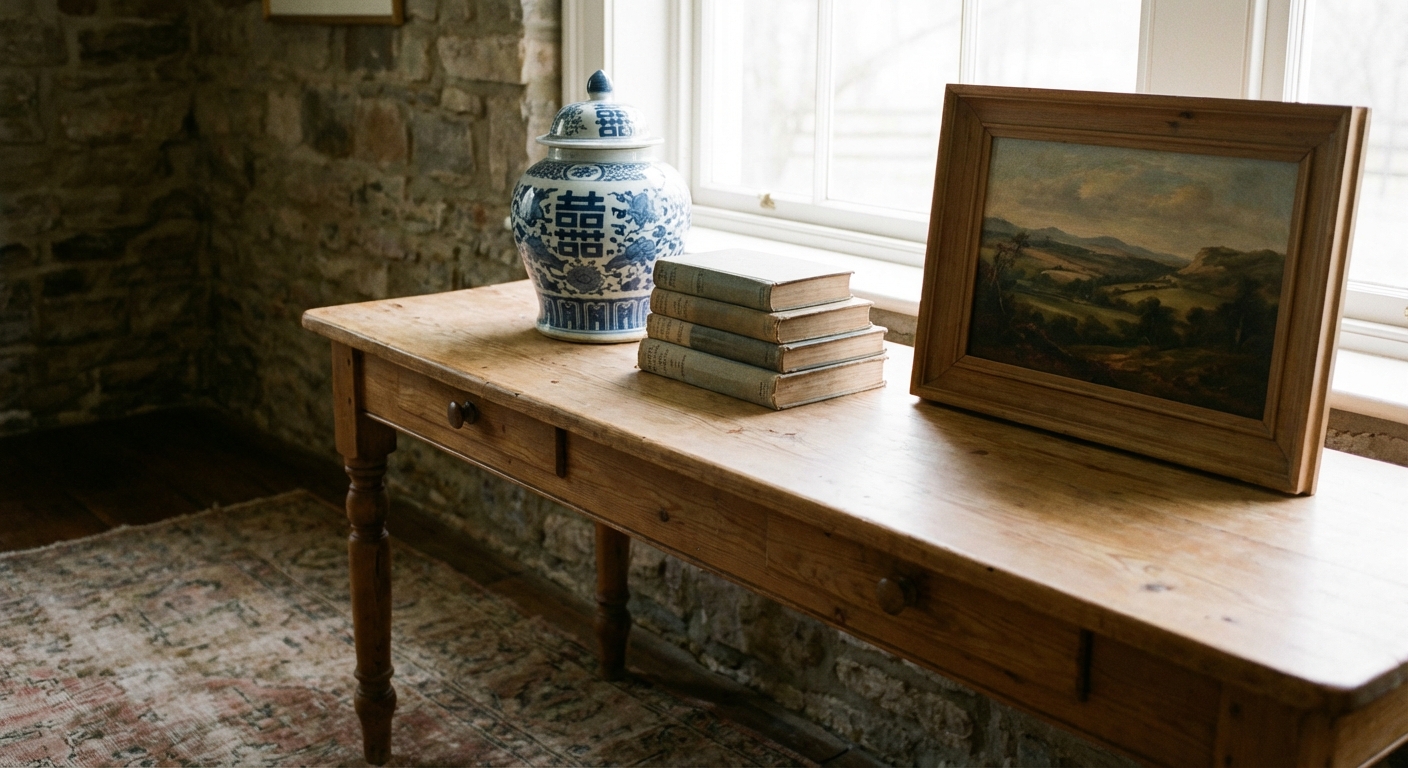
Grandmillennial rooms often include small collectibles, and that is lovely. Just group them. A tray, a bowl, or a stack of books turns scatter into styling.
- Rule of three: group objects in threes or fives.
- Vary height: one tall, one medium, one low.
- Leave space: empty surface area is not wasted space. It is visual calm.
Room-by-room grandmillennial formulas
If you want the look but do not want to overthink it, use these quick “recipes.” They are designed to feel layered, not themed.
Living room
- Anchor: a solid or subtle-texture sofa in a warm neutral
- Pattern moment: one floral chair or patterned drapery
- Old + new: vintage rug with a modern coffee table
- Finishing touch: pleated or scalloped lamp shades for that cozy glow
Bedroom
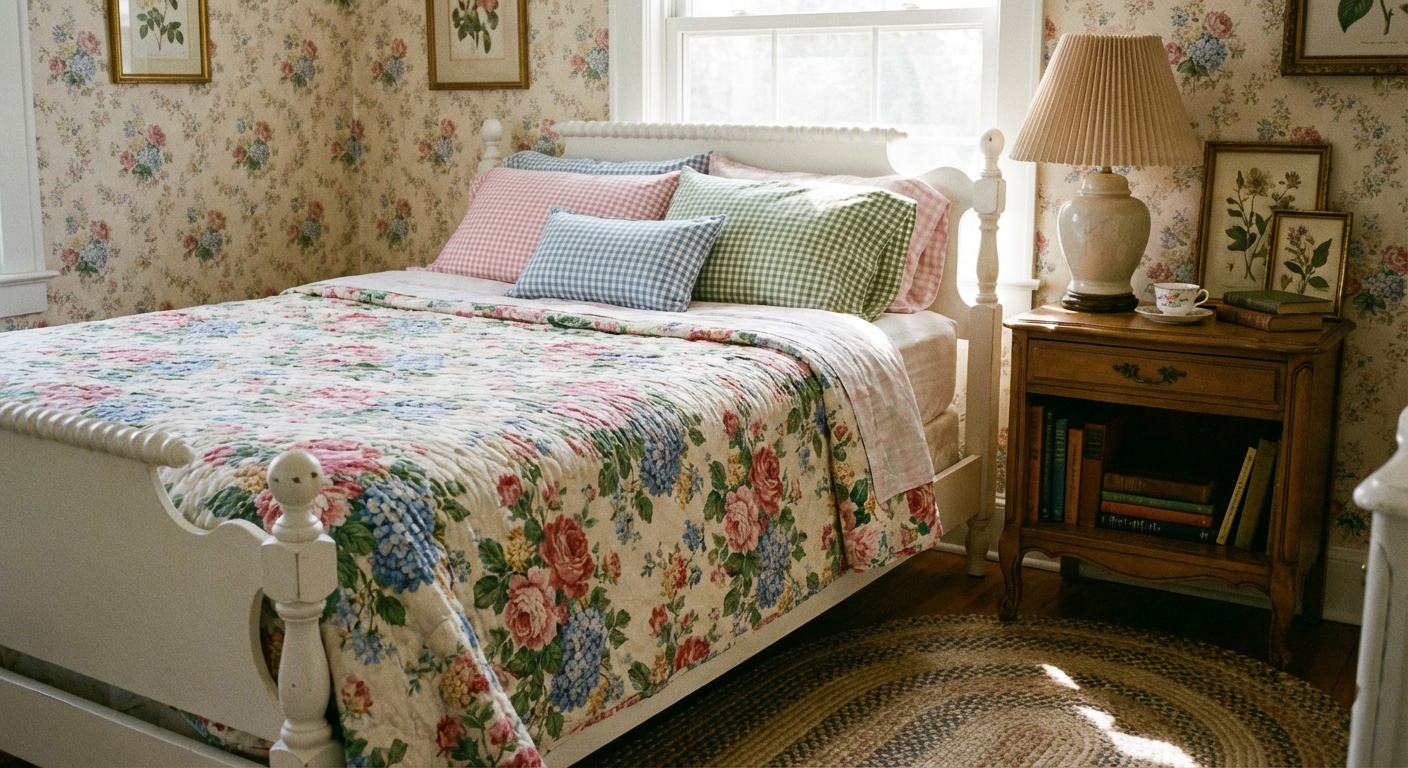
- Anchor: crisp white bedding (it makes everything else feel fresh)
- Pattern moment: floral quilt, block print duvet, or a skirted bed
- Vintage layer: an antique mirror or art above the dresser
- Modern relief: simple curtain panels in linen
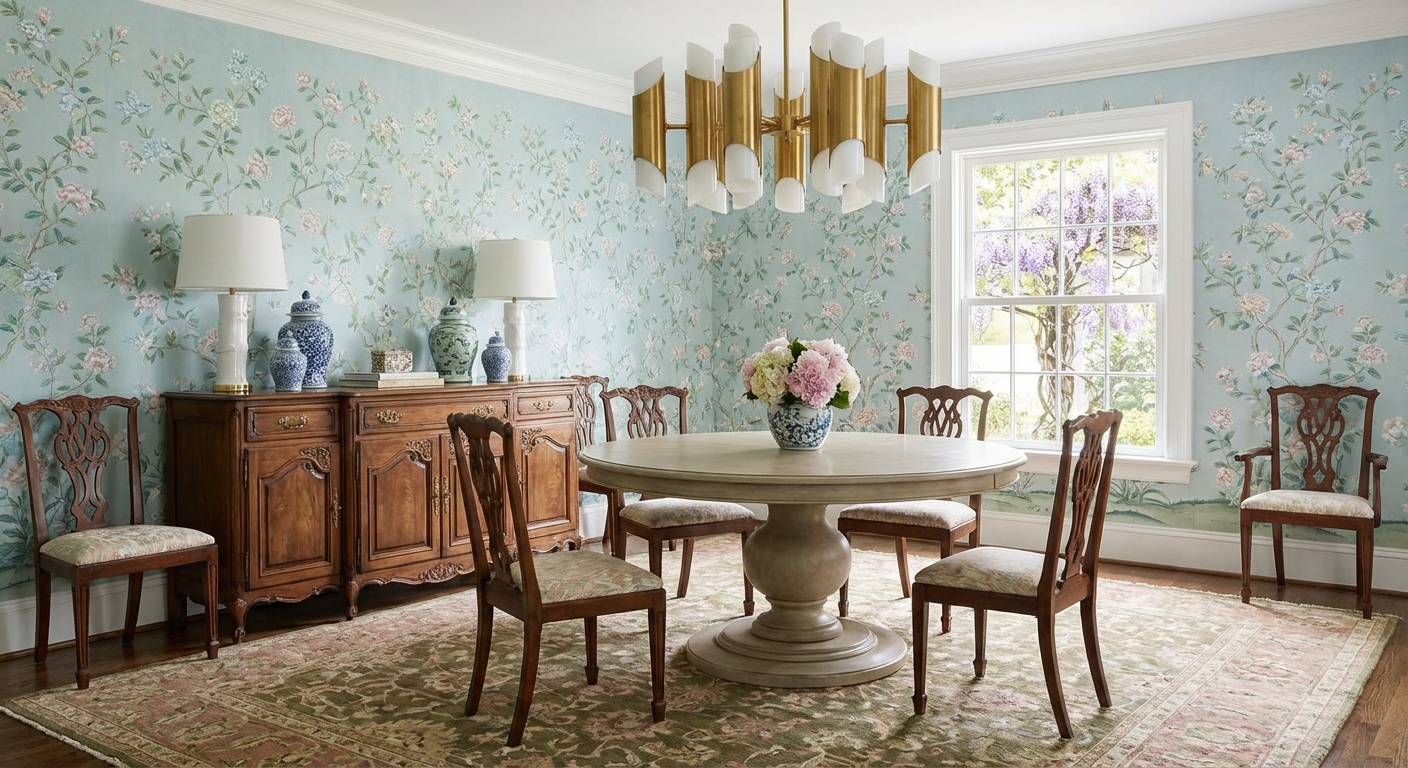
Dining room
- Anchor: a classic wood table (even if the chairs are mixed)
- Pattern moment: wallpaper or a bold rug
- Vintage layer: a china cabinet or sideboard, styled with breathing room
- Modern relief: streamlined dining chairs if the room has heavy millwork
Entryway
- Anchor: a narrow console or chest
- Pattern moment: a small runner or a patterned wallpaper above wainscoting
- Vintage layer: an old mirror for light bounce
- Practical charm: a tray for keys and a small lamp for evening glow
How to keep it from looking outdated
This is the big fear, and it is valid. A few small choices make the whole look feel 2026 instead of 1996.
Edit your color story
Choose a tight palette and repeat it. Grandmillennial loves color, but it looks freshest when it is curated.
- Easy palettes: navy and cream, sage and warm white, dusty rose and chocolate, buttery yellow and tan, oxblood and ivory.
- Tip: repeat one metal finish in a room (often brass) and let everything else be secondary.
Balance sweet with sharp
If you have ruffles, add something crisp. If you have a carved antique, add something sleek.
- floral sofa + black metal floor lamp
- skirted table + modern art
- toile wallpaper + minimal pendant
Keep your lines clean in at least one major item
When everything is ornate, the room gets heavy. Choose one of these to be simple: sofa, rug, curtains, or coffee table.
Avoid the “everything is vintage” trap
A room of all antiques can feel like a set. Mix in contemporary lighting, a modern side table, or a very simple upholstered piece to remind everyone that yes, you live here now.
Grandmillennial shopping list (the realistic version)
If you want to build the look over time, start here. These pieces make the biggest impact per dollar and per square foot.
- 1 patterned accent: pillow covers, a shade, or a small rug
- 1 vintage wood piece: nightstand, console, or dresser
- 1 warm light source: a lamp with an amber bulb and a soft shade
- 1 frame upgrade: thrifted art with a beautiful frame, or a great mat and simple frame for something you already own
- 1 “old soul” accessory: a ginger jar, a small brass box, a stack of books, or an antique mirror
Then pause. Live with it. The grandmillennial look is at its best when it feels like it grew with you.
Quick troubleshooting
“My room feels too busy.”
- Remove one patterned item (often a pillow) and replace it with a solid texture.
- Swap one small decor cluster for a single larger piece, like a lamp or vase.
- Choose curtains that match the wall color closely for instant calm.
“It looks too sweet.”
- Add black, deep walnut, or a crisp white element.
- Bring in modern art or a graphic stripe.
- Replace one frilly accessory with something sculptural, like a ceramic bowl.
“It looks too formal.”
- Add a relaxed textile: rumpled linen, a soft throw, or a woven basket.
- Lower your lighting: more lamps, fewer overheads.
- Style shelves with fewer, bigger items and leave space.
If you take nothing else from this guide, take this: grandmillennial style is not about copying a perfect room. It is about giving your home permission to be sentimental, layered, and still totally livable.