Get Old Cat Urine Smell Out of a Fabric Couch (Foam-Safe Steps)

Clara Townsend
Clara Townsend is an interior stylist, vintage furniture enthusiast, and the creative voice behind Velvet Abode. With over a decade of experience transforming both cramped city apartments and sprawling fixer-uppers, she believes that a beautiful home is built on personal stories rather than massive budgets. When she isn't hunting for the perfect brass sconce at a local flea market, she can usually be found rearranging her living room for the third time this month.
Old cat urine odor has a special talent for resurfacing right when you think you have won. That is not your imagination. Cat urine can dry down into uric acid crystals and salts that stick around, then get re-activated when humidity rises, when you sit and warm the cushion, or when you clean only the fabric while the foam underneath stays soaked in history.
The good news: you can absolutely make a fabric couch livable again, even with older stains. The secret is working in layers, respecting the limits of upholstery foam, and using an enzyme cleaner the way it was designed to work.
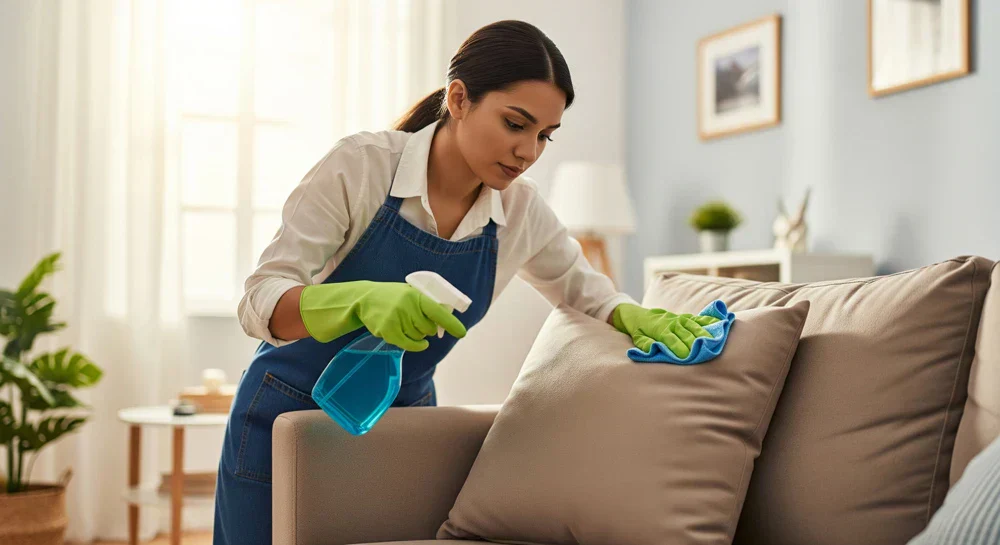
First, check the upholstery care code
Before you spray anything, look for the tag under the cushions or under the couch. Upholstery codes matter more than good intentions.
- W: Water-based cleaners are usually OK
- WS: Water-based or solvent-based cleaners are usually OK
- S: Solvent-based only (skip water and many enzyme sprays unless the label explicitly says it is safe)
- X: Vacuum only (this is a “call a pro” situation)
Regardless of code, spot test any cleaner in a hidden area first, especially on wool, viscose, and heavily textured fabrics.
Find where the smell lives
With old accidents, the fabric may be the least of it. Odor often lives in:
- The cushion cover (especially if it is textured or boucle)
- The cushion foam or batting (this is the usual culprit)
- The couch deck (the platform under the cushions)
- The wood frame (rare, but possible)
Quick detective steps
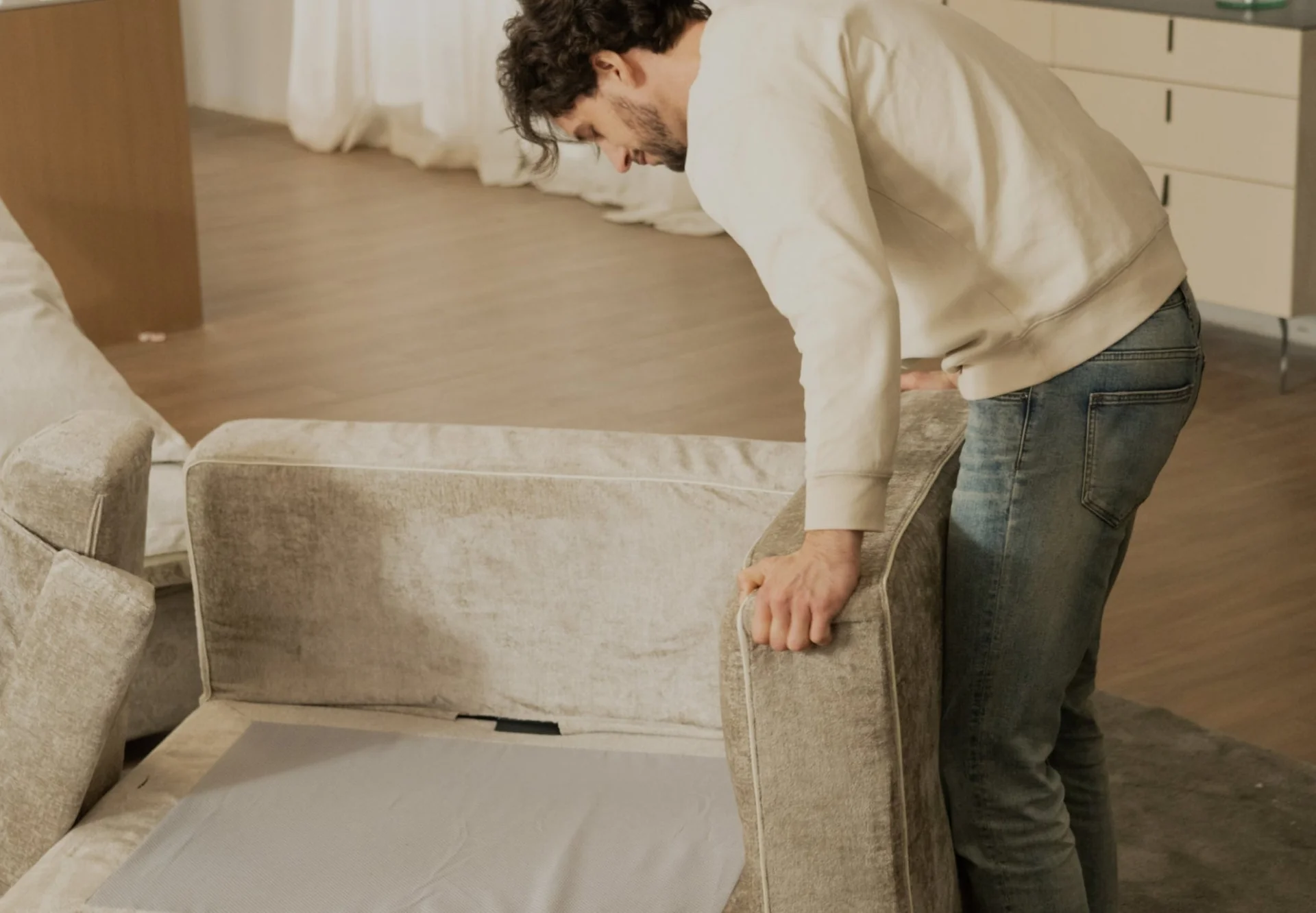
- Do a nose test by piece. Unzip the cushion cover (if possible). Smell the cover alone, then the foam insert alone, then the couch deck.
- Use a UV flashlight at night. Old urine may fluoresce, but so can detergent, drinks, and random life. Use UV as a clue, not proof.
- Check seams and piping. Liquid wicks and then dries where airflow is lowest.
Before you start: what not to do
If you remember nothing else, remember this: old cat urine is not a surface-only problem, but over-wetting is how you turn a manageable smell into a mildew situation.
- Do not blast it with steam. Heat and steam can push moisture deeper and may temporarily intensify odor as compounds warm up and off-gas.
- Do not drown foam with water. Foam acts like a sponge and dries slowly. That is how musty smells join the party.
- Do not use ammonia-based cleaners. Urine can break down into ammonia-smelling compounds over time. Adding ammonia can make the scent sharper and can encourage repeat marking.
- Do not mix cleaners. In particular, do not mix vinegar and bleach. This creates toxic gas. Also avoid combining enzyme cleaners with bleach, disinfectants, or strong oxidizers. They can deactivate enzymes and create unsafe fumes.
Supplies you will actually use
- White paper towels or clean white cotton cloths
- Nitrile gloves
- A spray bottle of plain cool water
- Enzyme cleaner made for cat urine (more on choosing one below)
- Wet-dry vacuum or upholstery extractor (optional but helpful)
- Baking soda (for dry deodorizing only, not as a magic cure)
- A fan and, ideally, a dehumidifier
Pet note: Keep pets and kids away from damp treated areas, and ventilate the room while you work and while everything dries.
Quick renter path
If you are renting and need something that is effective but not likely to strip dye, loosen backing, or spark a “why is the cushion still wet three days later” crisis, do this first.
1) Blot, then lightly rinse the fabric only
Mist the stained area with cool water and blot by pressing firmly, not rubbing. You are trying to lift soluble salts near the surface, not soak through to the foam. If the cushion feels heavy or you see moisture spreading, stop.
2) Use enzyme cleaner in controlled passes
Lightly spray enzyme cleaner over the area and a small margin around it. Blot gently. Let it sit per label directions. Depending on the product, that can be 10 to 30 minutes or longer, and some work best when kept damp for the full dwell time. Then blot again.
Important: Enzymes need time, and they do not love being immediately rinsed away. Follow the bottle.
3) Dry aggressively
Set a fan so air skims across the cushion surface. If you have a dehumidifier, run it nearby. Rotate or stand the cushion on edge to improve airflow.
4) Recheck odor after it is fully dry
Cat urine odor can disappear when wet and come back when dry, or the opposite. Only judge when it is completely dry.
If the smell is still there after two to three controlled enzyme rounds, it is likely in the foam insert or the couch deck. That is when you switch to the deep DIY path below.
Deep DIY path
This is the method I use when I want the problem solved, not just politely covered up for a week.
Step 1: Remove the cushion cover and treat it separately
If the cover unzips, take it off. Treating the cover and foam as one unit often means neither gets truly clean.
- Machine-washable covers: Pre-treat the area with enzyme cleaner, let sit per label, then wash cold on gentle with a mild detergent. Air dry.
- Not machine-washable: Spot treat with enzyme cleaner and blot. Avoid saturating the backing.
Note for wool or viscose blends
Wool: Many enzyme cleaners are safe, but over-wetting can cause shrinkage and texture changes. Always spot test in a hidden area. Use cool water only. Blot, do not rub.
Viscose (rayon): Viscose can water-stain, lose pile direction, and develop permanent rings. If your couch is a wool-viscose blend or a viscose-heavy fabric, use the least moisture possible, blot outward from the center, and consider professional upholstery cleaning if the fabric is already showing water marks.
Step 2: Confirm whether the foam is contaminated
Smell the foam insert directly. If you get that sharp, nose-prickling ammonia smell, the foam needs treatment or replacement.
Look for yellowing, stiff spots, or a crunchy feel. That is often dried urine residue.
Step 3: Enzyme-treat the foam without turning it into a swamp
Here is the balancing act: enzymes need to reach the urine, but foam needs to dry. Do it like this:
- Spot saturate only the affected zone. If you can see the stain on the foam, apply enzyme cleaner to that area and about 1 to 2 inches beyond. Aim for damp-to-wet, not dripping. Follow label guidance for “keep wet” time.
- Work from both sides if possible. If the foam has a clear “top” and “bottom,” treat the side closest to the source, then flip and lightly treat from the other side to reach what wicked through.
- Let dwell time happen. Place the foam in a tub, shower, or on a waterproof mat. Let it sit the full label time. Some products recommend longer dwell times for old stains, so do not rush this part.
- Extract, do not rinse endlessly. Use a wet-dry vac to pull out moisture. If you do not have one, press with clean towels repeatedly. Avoid repeated rinsing cycles unless the label instructs it, because you can flush enzymes out before they finish.
- Dry completely. Stand foam on edge with a fan. If you can, dry in a warm, low-humidity room. Expect 24 to 48 hours.
If cushions do not come apart
Some couches have attached cushions or covers that do not unzip. You can still make progress, you just have fewer angles.
- Work small. Treat only the confirmed area, in light passes, so you do not soak the foam beyond what you can dry.
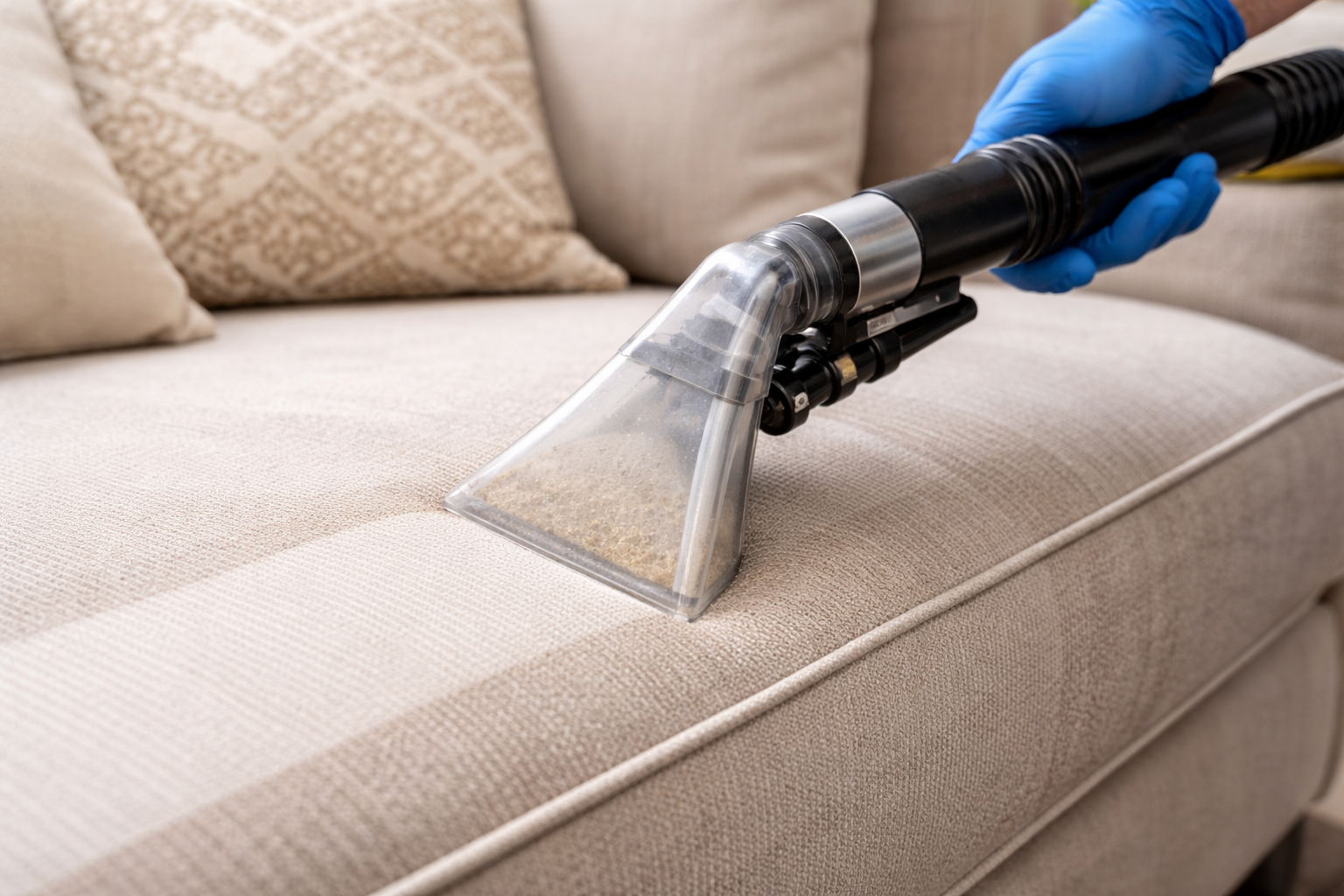
- Use extraction if you can. A wet-dry vac or upholstery extractor helps you pull product and contamination back out instead of pushing it deeper.
- Access from below if possible. Some couches have a thin dust cover stapled underneath that can be carefully opened and re-stapled later. If you are renting or the piece is valuable, consider professional help rather than DIY surgery.
Choosing an enzyme cleaner
Not all “pet odor” sprays are enzyme cleaners. Some are fragrance plus a mild surfactant, and they are basically perfume with good intentions.
What to look for on the label
- Enzymatic formula or mentions of enzymes targeting urine
- Cat-specific formulas can help because cat urine is typically more concentrated
- Fragrance-free or light fragrance if you are sensitive. Heavy fragrance can mask the problem and make it harder to tell if you succeeded.
What to avoid
- Ammonia-based cleaners
- High-alkaline “heavy duty degreasers”
- Disinfectants or bleach used on top of enzyme cleaner
- Anything that instructs hot water use on delicate upholstery
Pro tip: Buy enough product for repeats. Old odor usually needs multiple rounds, and consistency matters.
The ammonia recheck
The tricky thing about cat urine odor is that you can get “clean” and still have that ammonia smell flare when humidity rises. Do this test before declaring victory.
Repeat-testing steps
- Let everything dry fully. No dampness. Not even “slightly cool to the touch.”
- Warm the cushion. Sit on it for 10 minutes or place a warm (not hot) folded towel over the spot. Warmth can re-activate odor.
- Do a humidity check. If the room gets more humid and the odor returns, there is likely still urine residue present somewhere in the cushion, deck, or frame.
- Smell the foam and the deck separately again. This tells you where to focus your next treatment.
When to replace foam
I love a scrappy DIY moment, but I also love sleeping at night. Sometimes, replacing foam is the calmer choice.
Replace the foam if:
- The urine smell is strongest in the foam even after two to three enzyme cycles
- The foam feels crunchy, stiff, or permanently discolored in a large area
- You cannot dry it quickly (high humidity home, no fan, no dehumidifier)
- The cushion has been repeatedly soiled over time
What to replace and what to keep
- Keep: The cushion cover, if it cleans up well and has no lingering odor.
- Replace: The foam insert and any batting wrap that smells even slightly “catty.” Batting holds odor like a grudge.
Most upholstery shops can cut foam to size, or you can order inserts online if you measure carefully. If the couch is a keeper, this is often the best money you can spend.
Do not forget the couch deck
If the cushion smells fine in your hands but the odor blooms when everything is assembled, the couch base is likely the issue.
How to treat the deck
- Remove cushions and vacuum thoroughly.
- Lightly spray enzyme cleaner on the affected zone of the deck fabric and blot.
- If you can access the underside, check for drips that wicked down.
- Dry with a fan aimed across the deck.
If urine reached unfinished wood, wipe with a barely damp cloth, apply enzyme cleaner sparingly, and dry fast. Wood can hold odor, but it also hates being soaked.
Baking soda, vinegar, and other questions
Can I use baking soda?
Baking soda is a helpful dry deodorizer after the area is clean and dry. Sprinkle lightly, let sit a few hours, then vacuum. It will not “eat” old urine in foam, but it can smooth out the last faint mustiness.
What about vinegar?
Vinegar can help on the surface, but it does not replace enzymes for urine proteins and uric acid residue. If you use vinegar, keep it light, spot test for colorfastness, and do not combine it with other cleaners.
Should I shampoo the couch?
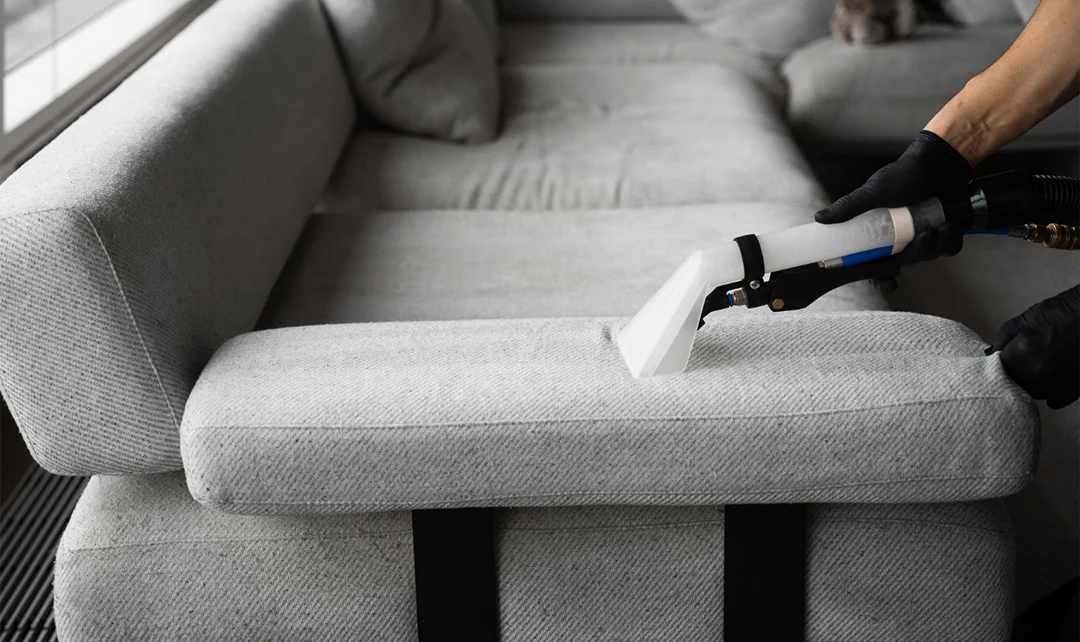
Shampooing can help with general grime, but for urine, it can spread the contamination if you over-wet. If you shampoo, do it after the enzyme treatment and only with careful extraction and thorough drying.
If it still smells after all this
If odor persists after you have treated the cover, the foam, and the deck (or replaced the foam), contamination may be in hidden padding layers, decking fabric, or the subframe. At that point, professional upholstery cleaning, partial reupholstery, or replacing the piece is often the most time-efficient option.
A calm prevention plan
- Use a washable throw on the cat’s favorite cushion. Linen or cotton, something you can launder without drama.
- Add a waterproof cushion protector under the cover if the cushion design allows it.
- Address the reason for accidents. Stress, litter box placement, medical issues, and territorial marking all show up on your upholstery eventually.
If your couch still smells after you have treated the cover, the foam, and the deck, do not keep chasing it with stronger fragrances. That is usually the moment replacement foam beats another weekend of blotting and hoping.
Quick checklist
- Check upholstery care code (W, WS, S, X) and spot test first
- Confirm whether the odor is in the cover, foam, or deck
- Use a real cat urine enzyme cleaner and follow full dwell time
- Control moisture to keep foam from staying wet for days
- Dry completely before judging results
- Repeat-test for odor after warming the cushion and in higher humidity
- Replace foam when odor persists after multiple enzyme rounds