Garbage Disposal Reset Button

Clara Townsend
Clara Townsend is an interior stylist, vintage furniture enthusiast, and the creative voice behind Velvet Abode. With over a decade of experience transforming both cramped city apartments and sprawling fixer-uppers, she believes that a beautiful home is built on personal stories rather than massive budgets. When she isn't hunting for the perfect brass sconce at a local flea market, she can usually be found rearranging her living room for the third time this month.
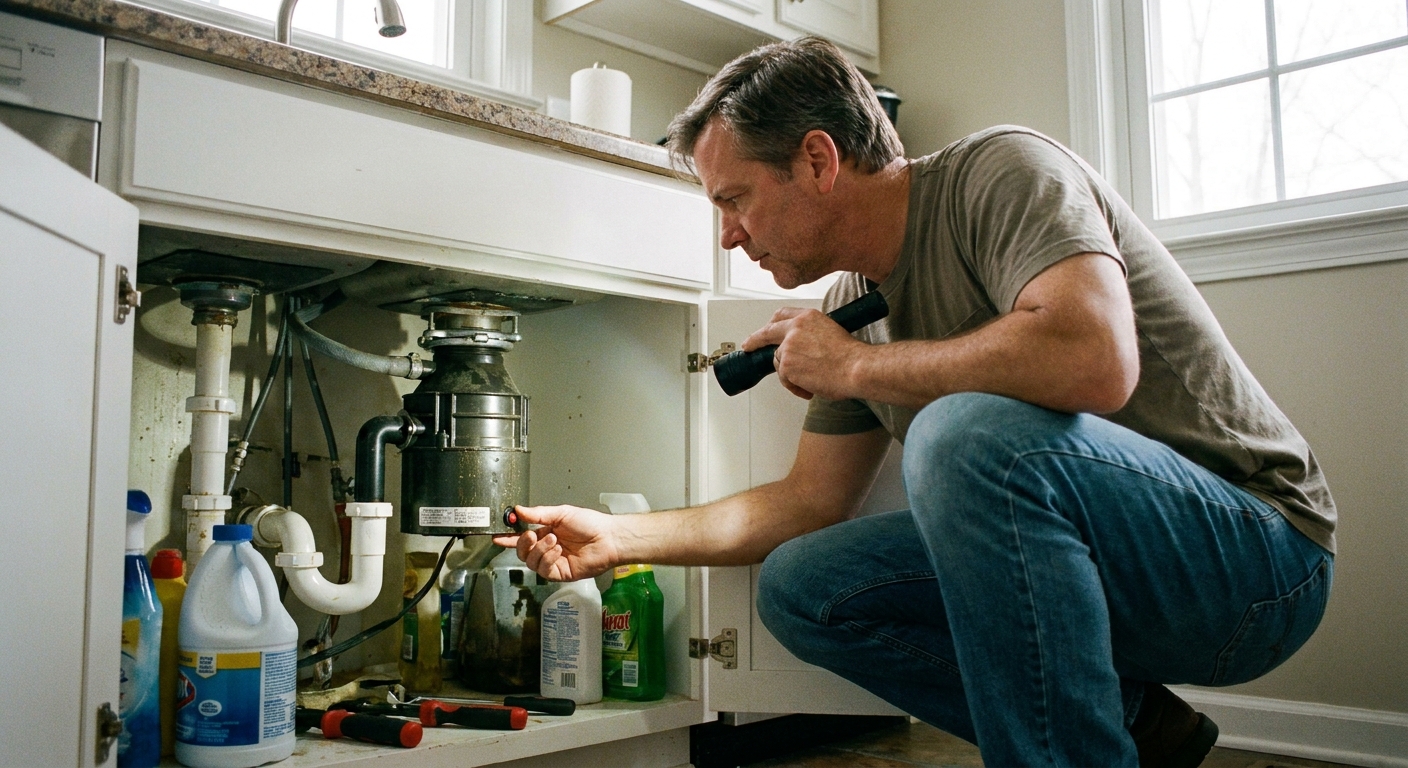
There are few kitchen sounds more unnerving than a garbage disposal that goes from its usual whir to… nothing. Or worse, a low hum like it is trying to work but cannot. The good news: many “dead” disposals are not dead at all. They are simply protecting themselves, and the tiny reset button is often the fastest path back to normal.
Let’s walk through what that button actually does, where it hides, and how to reset your disposal safely without turning your under-sink cabinet into a stress zone.
What the reset button does
The reset button is part of your disposal’s built-in overload protection. If the motor overheats, gets jammed, or draws too much current, an internal breaker trips to prevent damage. When that happens, the disposal may:
- Stop completely (no sound at all)
- Hum but not spin
- Start, then cut out
Pressing the reset button re-engages the unit after the cause of the overload is addressed. Think of it like a little “pause for safety” switch, not a magic fix for a jam.
Where to find the reset button
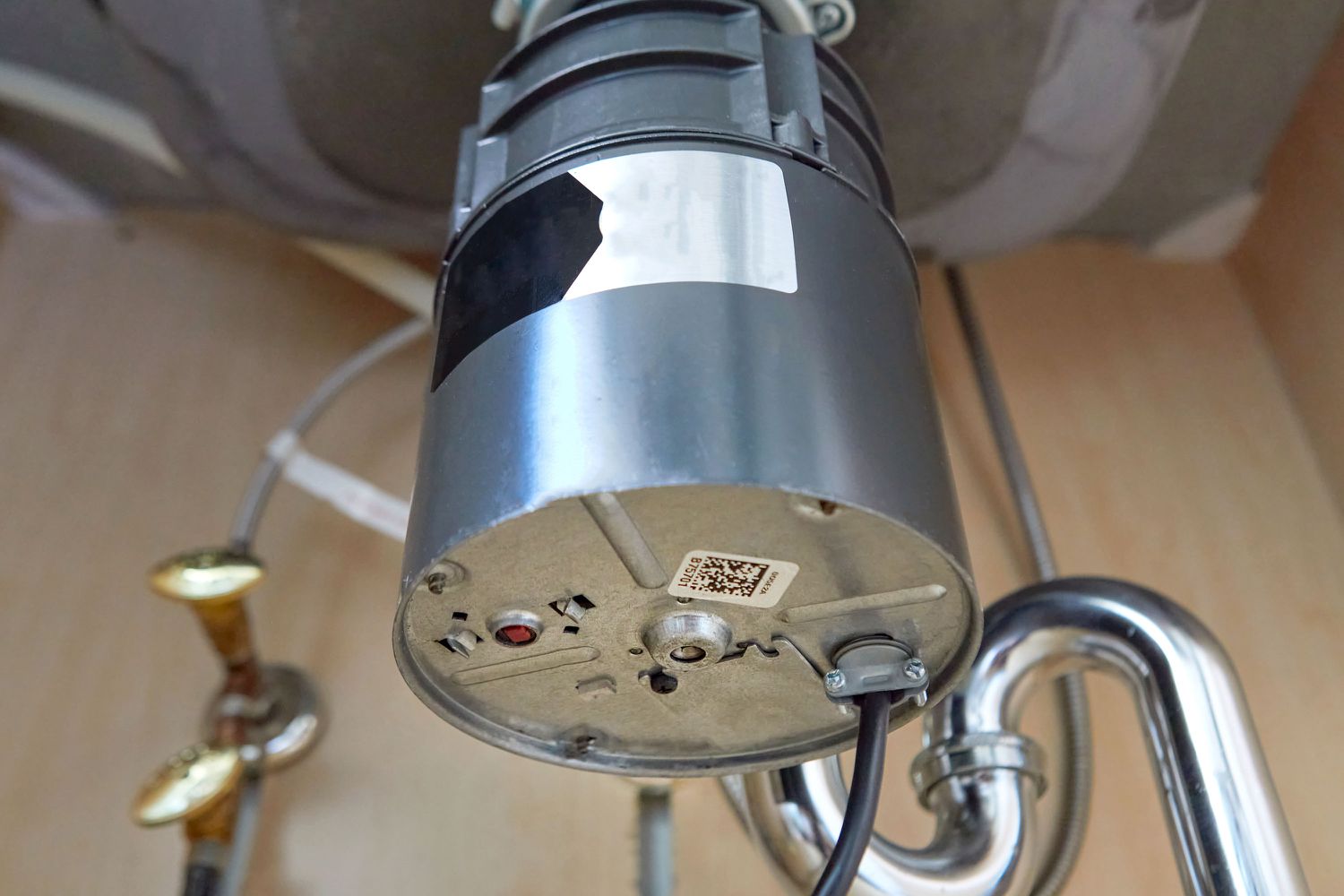
In most homes, the reset button is a small red button on the bottom of the disposal body, facing the floor. You usually have to look up from inside the cabinet to spot it.
A quick way to orient yourself: follow the drain from the sink down to the disposal. The button is typically on the underside, near the center, sometimes slightly off to one side depending on the brand.
Safety first
I am going to be delightfully boring here because fingers and grinding components do not mix.
- Turn the disposal switch off. Confirm it is not running.
- Cut power at the source. Unplug the disposal under the sink if it is plugged in. If it is hardwired, turn off the circuit breaker that feeds it.
- Never put your hand inside the disposal. Use tools and a flashlight instead.
If you are in a rental and things look unfamiliar under the sink, pause and snap a quick photo for your own reference before you move anything around.
How to reset a disposal
1) Let it cool
If the disposal stopped mid-use, it may have overheated. Give it 10 to 20 minutes to cool before you reset it. This is especially common after long grinding sessions or when the unit is older.
2) Check for a jam
Most jams happen when something hard wedges in place. Common culprits include:
- Fruit pits
- Silverware (it happens)
- Small bones
- Thick potato peels clumped together
- Glass shards (if something broke in the sink)
With power off, use a flashlight to look down into the disposal. If you see an object, use tongs or pliers to remove it. Do not use your fingers.
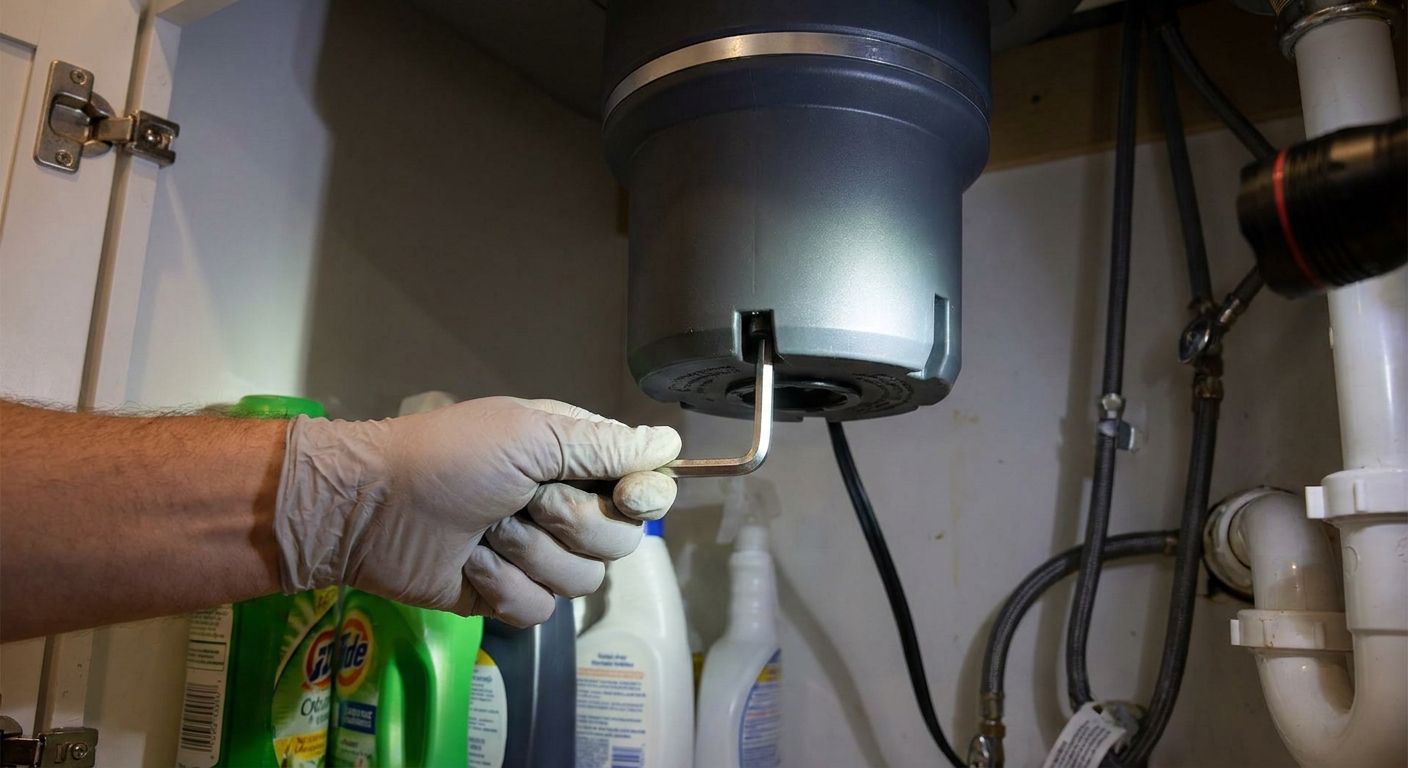
3) Turn the motor from below (hex slot)
Many disposals have a hex-shaped slot on the very bottom. Insert an Allen wrench and turn it back and forth to rotate the motor shaft and flywheel, which can help free the impellers if they are stuck on something.
The wrench size varies by model. It is often 1/4 inch, but some units use 5/16 inch or a brand-specific tool (and some disposals come with the correct wrench clipped to the unit).
4) No hex slot? Try a jam-buster from above
Some models do not have the Allen wrench slot. In that case, a disposal “wrench” or jam-buster tool that fits in the sink opening can sometimes rock the grinding plate back and forth to break a jam loose. If you do not have one, check your manual by model number to confirm the correct method for your unit.
Press the reset button
Once the jam is cleared and the unit has cooled, keep the power off and then:
- Press the reset button firmly.
- You may feel a slight click, or it may move inward and stay in.
- If it was already flush and does not click, it may not have tripped in the first place.
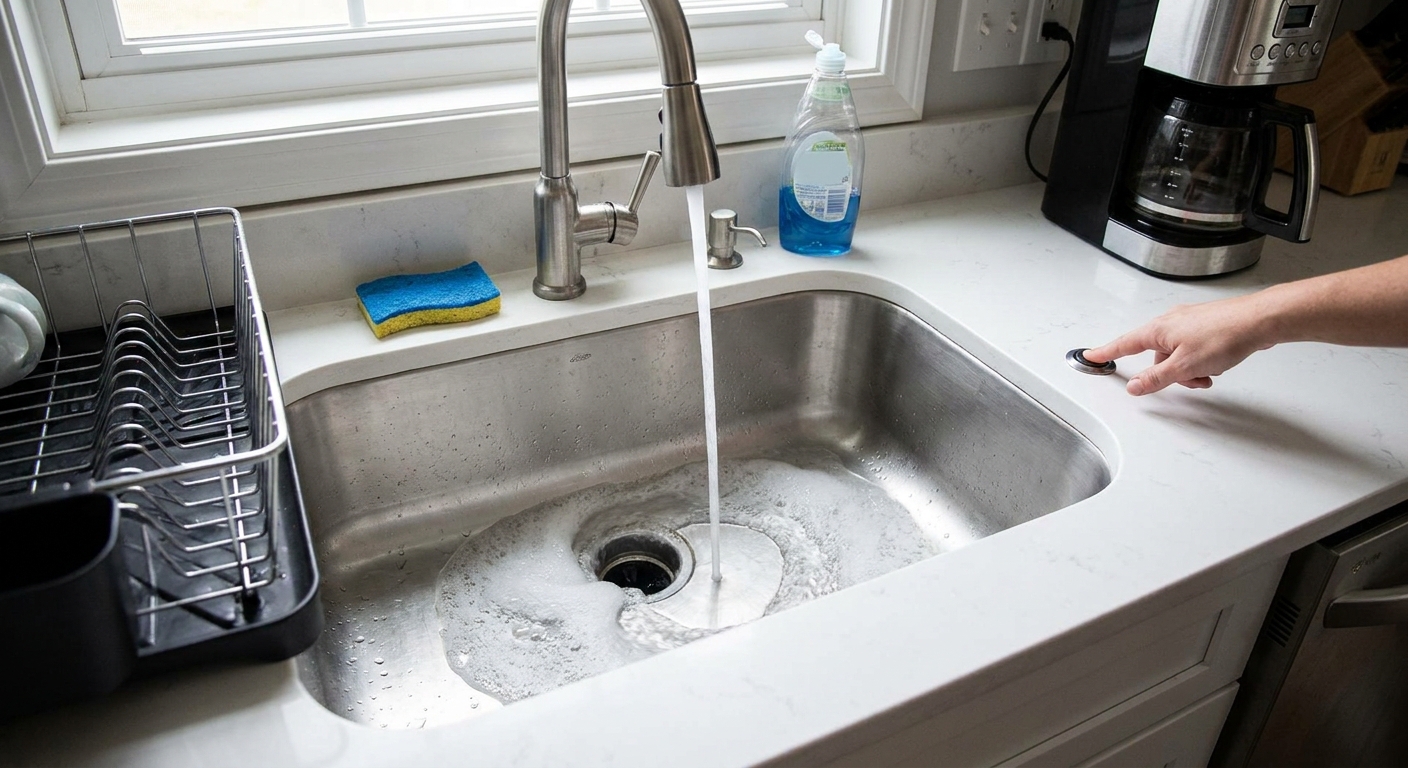
Restore power (plug it back in or flip the breaker on). Run a thin stream of cold water and turn the disposal on for 1 to 2 seconds at first.
If it runs smoothly, let it clear the chamber for 10 to 15 seconds with cold water running.
If it still will not run
It is completely silent
- Confirm the disposal is plugged in (this is surprisingly common).
- Confirm the outlet has power (test with a small lamp or phone charger).
- Check the wall switch (some are controlled by a switch plus a plug under the sink).
- Check your home breaker panel for a tripped breaker.
It hums but does not spin
This often means a jam is still present, even if you cannot see it. Turn power off again and repeat the manual turning step (Allen slot or jam-buster tool). Humming without spinning can overheat the motor quickly, so avoid leaving it humming.
It runs but drains slowly
This is less “reset button” and more “flow problem.” Try:
- Run cold water longer while it is on
- Check the sink stopper and strainer for gunk
- Look at the P-trap for a clog (if you are comfortable, place a bucket underneath before loosening)
If you recently had a dishwasher installed, also check that the dishwasher knockout plug in the disposal inlet was removed during installation.
If slow draining keeps coming back, the clog may be downstream in the branch drain line, not inside the disposal itself. That is a good moment to call a plumber before it turns into a bigger mess.
A note on drain cleaners
Avoid chemical drain cleaners in a disposal or connected drain line unless a professional tells you otherwise. They can be hard on plumbing, seals, and your eyes and skin if they splash back during cleanup.
When to stop resetting
The reset button is not meant to be pressed repeatedly like a stubborn elevator button. Stop troubleshooting and consider calling a plumber or appliance tech if:
- The reset button pops back out immediately after you press it
- The disposal trips the breaker repeatedly
- You smell burning or see smoke
- You hear metal-on-metal scraping
- There is leaking from the disposal body (not just a loose connection)
Repeated trips usually mean the motor is failing, a wire connection is unsafe, or there is a persistent jam that needs a closer look.
Prevention habits
I am not here to scold you about what goes down the sink, but a few small habits keep the disposal happier and your kitchen smelling fresher.
- Use cold water. Cold water can help keep greasy residue from smearing as easily. Best practice is still to keep grease out of the disposal entirely.
- Feed scraps gradually. Think “a little at a time,” not “whole plate swoosh.”
- Avoid fibrous foods. Celery, corn husks, and onion skins love to tangle.
- Skip grease and coffee grounds. They are classic clog starters.
- Freshen gently. A few ice cubes with cold water (and, if you like, a tiny bit of dish soap) can help scour residue and flush it through. It is more of a rinse-and-scrub than a deep clean.
Quick FAQ
Should the reset button be popped out or pushed in?
Normally, it sits in its “set” position (often flush). If it has tripped, it may protrude. After you press it, it should stay in and the unit should run, assuming the jam or overheating issue is resolved.
How long should I wait before pressing reset?
If overheating is likely, wait 10 to 20 minutes. If the disposal simply jammed on a hard object, you can clear the jam first, then reset right away.
Why does my reset button keep tripping?
Common reasons include repeated jams, a dull or struggling motor, electrical issues, or running it without enough water. If it trips frequently, it is worth a professional look, especially if your breaker is also tripping.
Can I press reset without turning the power off?
It is safer to cut power first. You are working under a sink with wiring, water, and moving parts. Taking 20 seconds to unplug it or flip the breaker is the kindest thing you can do for your future self.
Takeaway
Most disposal mishaps are fixable in minutes once you know the rhythm: power off, check for a jam, manually free the motor if needed, then press reset and test with cold water. After that, treat your disposal like a hardworking vintage chair. It can handle everyday life beautifully, but it does not love being pushed past its limits.