Garbage Disposal Not Working

Clara Townsend
Clara Townsend is an interior stylist, vintage furniture enthusiast, and the creative voice behind Velvet Abode. With over a decade of experience transforming both cramped city apartments and sprawling fixer-uppers, she believes that a beautiful home is built on personal stories rather than massive budgets. When she isn't hunting for the perfect brass sconce at a local flea market, she can usually be found rearranging her living room for the third time this month.
A garbage disposal has a funny way of breaking at the exact moment you are trying to get dinner on the table. One minute it is doing its low little growl, the next it is silent, humming, or backing up like a tiny swamp is forming in your sink.
The good news: a “not working” disposal is often a simple reset, a jam, or a power issue. The even better news: you can troubleshoot most of it without fancy tools or a plumbing degree.
One quick note before we start: when in doubt, stop. Electricity plus water plus spinning metal is not forgiving.
Safety first
Before you do anything, take a breath and go slow. This is not the moment to rush.
- Turn the disposal switch off and keep it off.
- Cut power at the breaker if you will be putting hands or tools anywhere near the unit.
- Confirm power is off: after flipping the breaker, try the wall switch once. Nothing should happen.
- Never put your hand inside the disposal, even if it is off. Use tongs, pliers, or a wooden spoon handle.
- If it is plug-in, unplug it under the sink after the breaker is off.
- If it is hardwired, do not open wiring covers unless you are completely sure you have the correct breaker off. When in doubt, call a pro.
If you smell burning, see smoke, or the unit is hot to the touch, stop and move to the “When to call a pro” section below.
Quick diagnosis
Different symptoms point to different fixes. Find the one that sounds like your sink situation:
- Nothing happens at all (no sound): power, switch, outlet, breaker, GFCI, or internal overload.
- It hums but does not grind: likely jammed.
- It runs but drains slowly: clog in the disposal, trap, or branch drain.
- It leaks: loose connections, worn gaskets, or a cracked housing.
- It works intermittently: overheating, failing motor, or electrical issue.
If it is dead
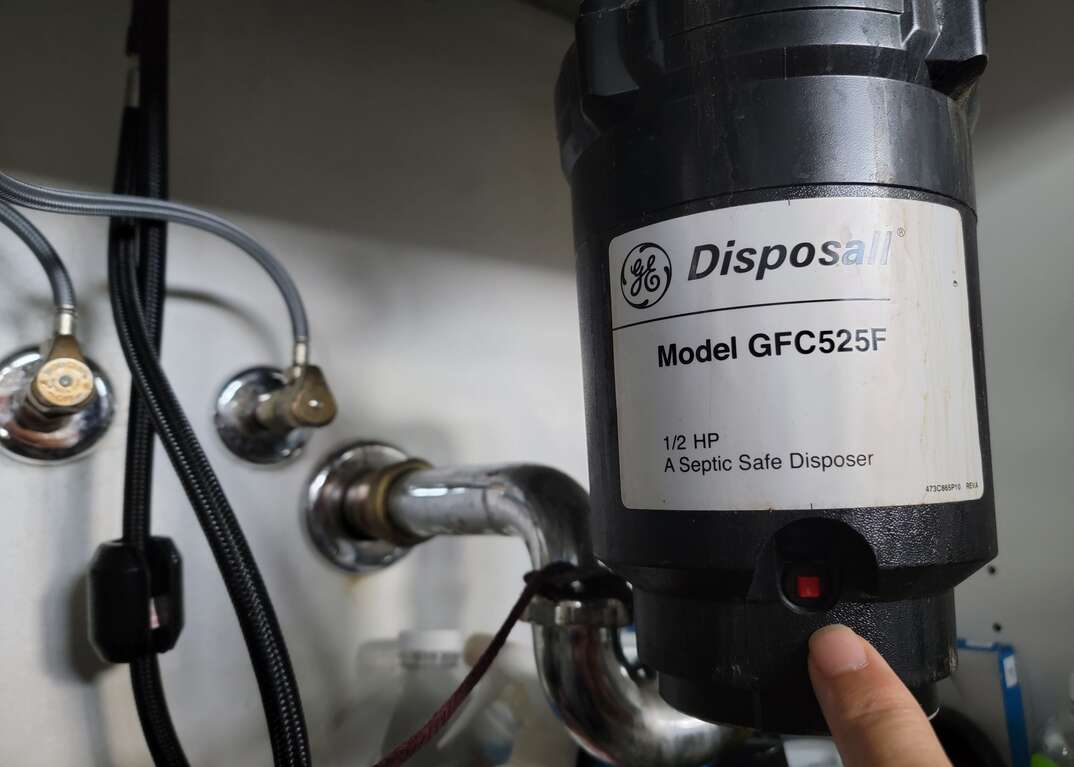
1) Press the reset button
Most modern disposals have a small red (sometimes black) reset button on the bottom. If the unit overloaded, this button may have popped out.
- Turn the unit off.
- Wait 5 to 10 minutes if it was running hard (motors can overheat).
- Press the reset button until it clicks and stays in.
- Restore power and try the switch again.
If it immediately trips again, do not keep resetting it. Something is causing overload.
2) Check the breaker, outlet, and GFCI
Disposals are often on their own circuit, but not always. Look for a tripped breaker and flip it fully off, then on.
- If your disposal plugs into an outlet under the sink, plug in a small lamp or phone charger to see if the outlet has power.
- Some kitchens have a GFCI outlet that controls other outlets downstream. If you have a dead under-sink outlet, look for a tripped GFCI in the kitchen, garage, basement, or nearby bathroom and press “Reset.”
- If the outlet is powered but the disposal is not, the wall switch or its wiring may be the issue. If you suspect a loose switch or wiring, call an electrician.
If it hums
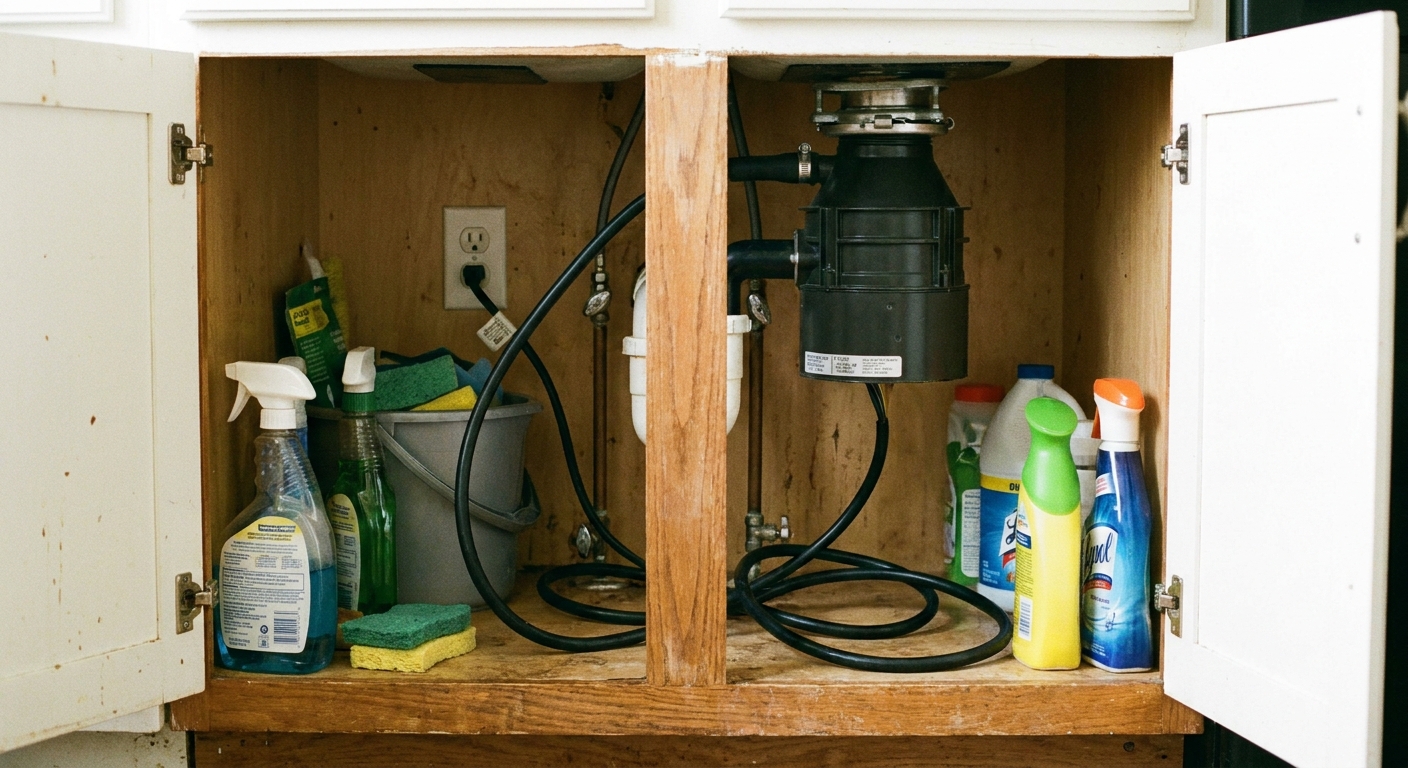
A humming disposal usually means the motor is trying, but the impellers are jammed by something stubborn like a peach pit, a spoon handle, or a shard of glass. Do not keep flipping the switch. You can overheat the motor.
1) Turn it by hand (from below if possible)
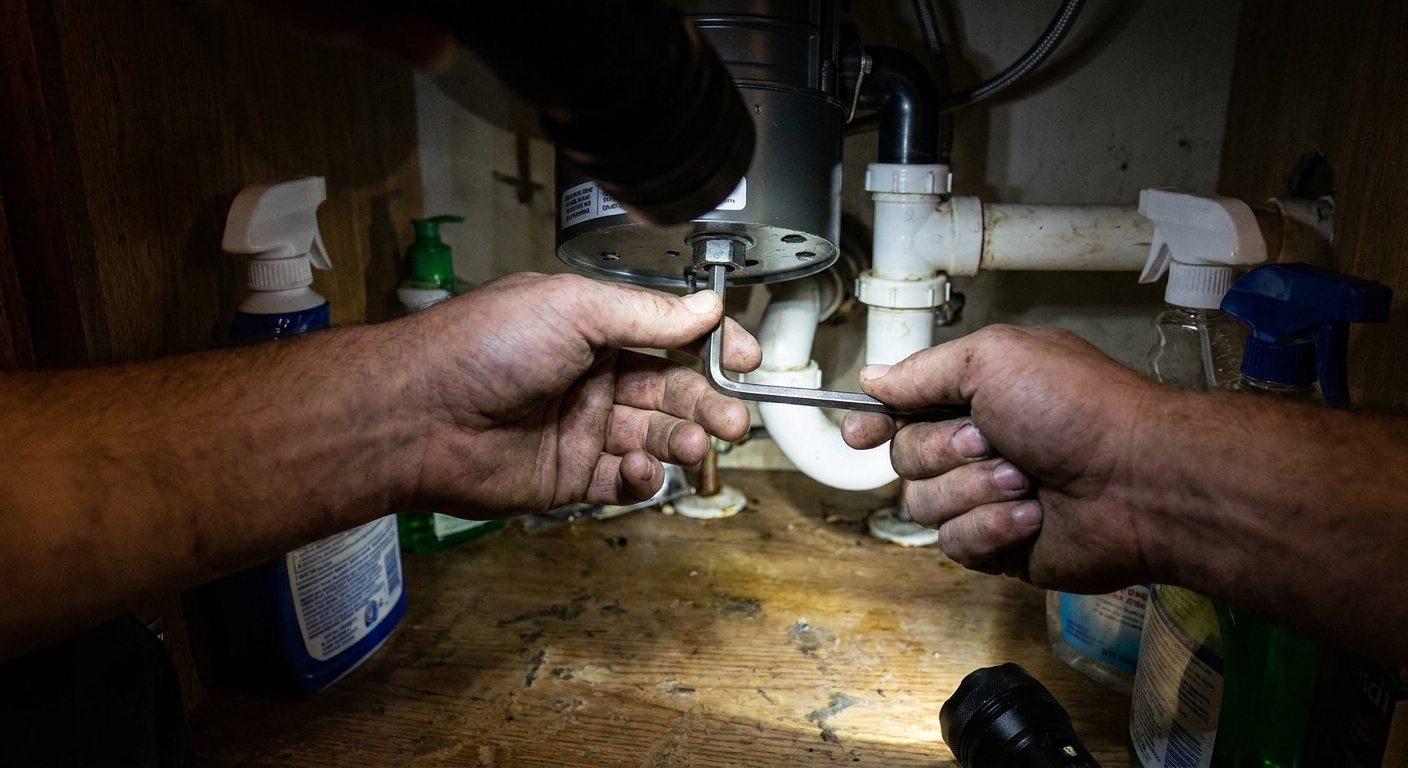
Many disposals have a hex socket on the bottom center. You insert an Allen wrench (commonly 1/4 inch) and manually turn the motor.
- Turn power off at the breaker.
- Insert the hex key into the bottom socket.
- Work it back and forth until it turns freely.
- Remove the hex key, press reset if needed, then restore power and test.
No hex socket? Some popular brands and models (including many Waste King units) do not have a bottom hex port. In that case:
- Power off at the breaker.
- Insert a wooden broom handle down through the sink opening.
- Gently push to rotate the impellers back and forth until the jam frees up.
- Remove the handle, press reset if needed, then restore power and test.
2) Remove the culprit with tongs
Shine a flashlight into the disposal and use tongs or needle-nose pliers to remove any visible obstruction.
- Power off at the breaker.
- Use a flashlight, then tongs or pliers.
- Avoid fishing around blindly.
If you are dealing with glass, be extra cautious. Tiny fragments love to hide around the splash guard.
If it runs but drains slowly
This is the “everything looks fine, but nothing is fine” scenario. Often the disposal is not the problem by itself. The drain line is.
Also, avoid aggressive plunging with a disposal. It can stress seals and connections and create leaks you did not have five minutes ago.
1) Flush the chamber
- Run cold water.
- Turn the disposal on for 15 to 30 seconds.
- Turn it off and let water run for another 20 to 30 seconds to flush.
If water backs up quickly, stop the disposal. You likely have a clog further down.
2) Check the P-trap
The P-trap is the curved section of pipe under the sink. It catches debris and also catches every earring you have ever loved.
- Place a shallow pan or bowl underneath.
- With power off, unscrew the slip nuts (by hand or with channel-lock pliers).
- Clear gunk, rinse the trap, and reassemble snugly.
If you are not comfortable taking apart plumbing, skip this and call a plumber. A small leak inside a cabinet can quietly wreck your day and your flooring.
3) Check the dishwasher and air gap (if you have one)
If your dishwasher drains into the disposal and you have dishwasher water backing up, check the dishwasher hose connection. If you have a countertop air gap, pop the cap and look for debris.
One install detail to know: a disposal that still has the knockout plug intact will usually cause the dishwasher to fail to drain (not the sink). If the plug was knocked out and the loose piece fell into the disposal, it can sometimes contribute to a blockage inside the chamber or near the outlet. If you suspect this and are not sure what you are looking at, it is a fast call for a plumber.
If it leaks
Leaks can be simple or a sign the unit is done. Here is how to narrow down where it is coming from.
Quick trick: Dry everything with a towel, then run water and watch for the first place moisture appears. That first bead is your clue.
Leak from the top
- Likely a seal issue at the sink flange or mounting assembly.
- Tightening the mounting ring can help, but often it needs re-seating with fresh plumber’s putty or a new gasket.
Leak from the side
- Check the hose clamp at the dishwasher inlet (if connected).
- Check the discharge tube connection and gasket.
- Look for cracks in plastic fittings.
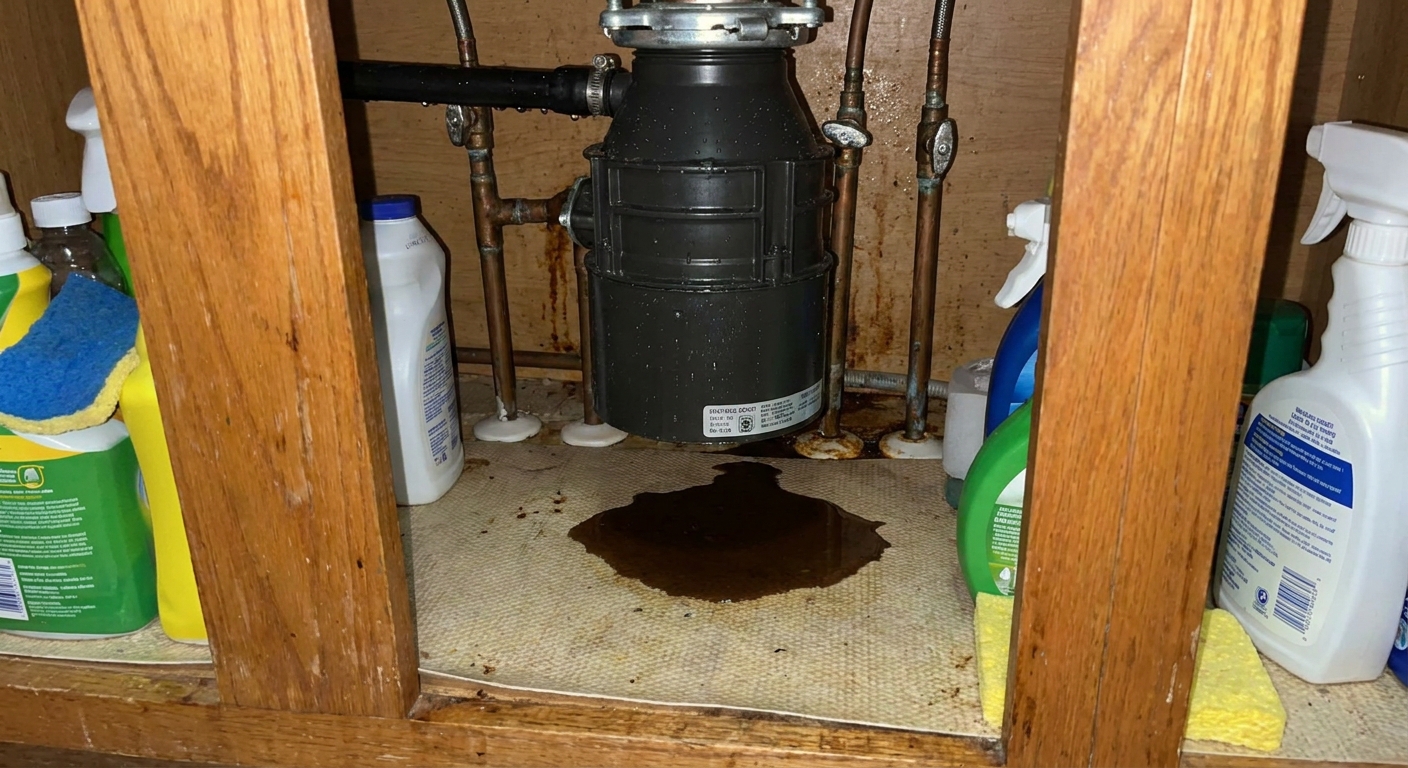
Leak from the bottom
If water is leaking from the very bottom of the disposal, the internal seals are likely failing. In most cases, that means replacement rather than repair.
What not to do
- Do not use chemical drain cleaners in a disposal. They can be hazardous (especially if you need to open the plumbing afterward) and may damage components depending on materials and product strength.
- Do not pour grease or oil down the disposal. Even if it seems to disappear, it can cool and build up downstream.
- Do not grind hard, fibrous foods in large quantities, like corn husks, onion skins, artichoke leaves, celery strings, or big piles of potato peels.
- Do not rely on hot water to “fix” grease. Run cold water while grinding, avoid sending grease at all, and flush thoroughly afterward.
Keep it working
I like maintenance that feels like caring for your space, not battling it.
- Run cold water while the disposal runs, plus 20 to 30 seconds after.
- Feed slowly, not in one big dramatic dump.
- Freshen with citrus peels sparingly. A small piece of lemon peel is fine, but do not pack the chamber with rinds.
- Deodorize safely: a handful of ice cubes and a tablespoon of baking soda, grind briefly with cold water.
When to call a pro
Sometimes the smartest thing you can do is choose peace and let a professional handle the messy part.
- The unit trips the breaker repeatedly after clearing jams and pressing reset.
- You smell burning, see smoke, or the motor seems overheated often.
- There is a leak from the bottom housing.
- The disposal is typically 8 to 12+ years old and failing frequently.
- You have persistent clogs that return after basic cleaning.
Replacement is often straightforward, especially if you buy the same mounting style. But if you are dealing with hardwired electrical or any uncertainty under the sink, a plumber or electrician is worth every penny.
Fast checklist
- Switch off, breaker off
- Confirm power is off
- Press reset button (if your model has one)
- Check breaker, GFCI, outlet
- If humming: unjam with hex key or broom handle, remove debris with tongs
- If slow drain: flush, then check P-trap or call plumber
- If leaking: dry, watch for source, replace if leaking from bottom
If you want, tell me what your disposal is doing (silent, humming, draining slow, leaking) and whether it is plug-in or hardwired, and I will help you pick the most likely fix first.