Garbage Disposal Just Hums

Clara Townsend
Clara Townsend is an interior stylist, vintage furniture enthusiast, and the creative voice behind Velvet Abode. With over a decade of experience transforming both cramped city apartments and sprawling fixer-uppers, she believes that a beautiful home is built on personal stories rather than massive budgets. When she isn't hunting for the perfect brass sconce at a local flea market, she can usually be found rearranging her living room for the third time this month.
A humming garbage disposal is one of those deeply annoying household sounds that instantly kills the cozy kitchen mood. It is basically your disposal saying, “I have power, but I cannot turn.” The good news is that this is often a simple fix you can handle in a few minutes, without special tools or a big repair bill.
Below, I will walk you through the safest, most common solutions in the exact order I would do them in my own kitchen.
First, what the humming means
When a disposal hums, the motor is receiving electricity, but the grinding plate inside is not rotating. That usually points to one of these issues:
- A jam (a bone, fruit pit, utensil, glass fragment, or stubborn fibrous peel).
- A stuck flywheel (the internal turning part gets seized).
- A weak capacitor or failing motor (more common in older units).
- An electrical issue (less common with a hum, but still possible).
Note on the reset button: if your disposal is humming, it usually has not tripped the thermal overload. When the reset trips, most units go silent. (More on that below.)
Safety steps you should not skip
Before you touch anything, do this:
- Turn off the disposal switch and keep it off.
- Cut power by unplugging the unit under the sink, or turning off the circuit breaker.
- Never put your hand inside the disposal, even if it is off. Use tongs or pliers if you need to retrieve something.
If you have a moment, take a quick peek under the sink for leaks. Standing water plus electrical troubleshooting is not the vibe.
Fix it in this order (fastest wins first)
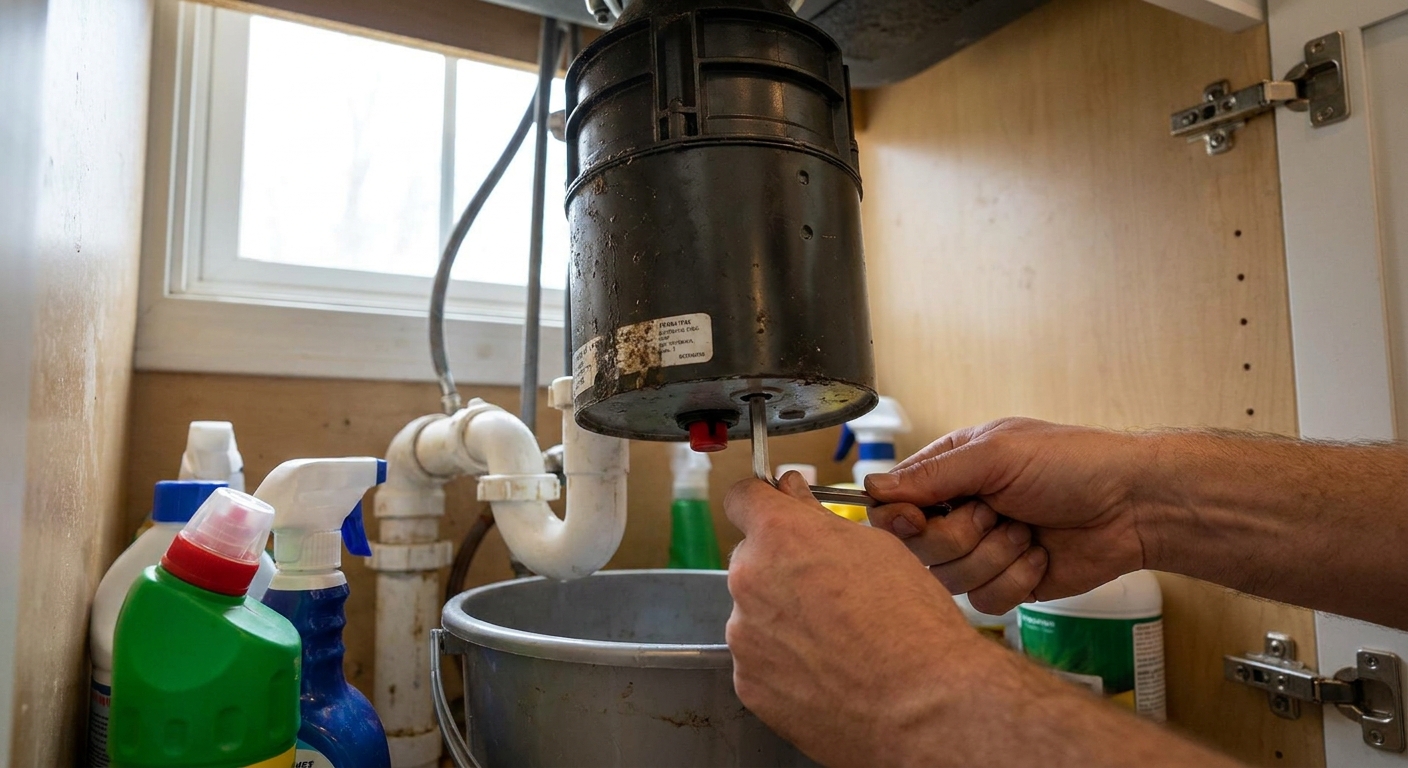
1) Unjam it from below with an Allen wrench
Most humming disposals are simply stuck. Many models have a hex socket at the very bottom center. You insert an Allen wrench (often 1/4 inch) and manually turn the flywheel back and forth to free the jam.
- With power off, insert the Allen wrench into the bottom socket.
- Turn it back and forth until it moves freely.
- Remove the wrench, restore power, and test with cold water.
No hex socket? Use the next method.
2) Nudge it from above with a wooden spoon (power off)
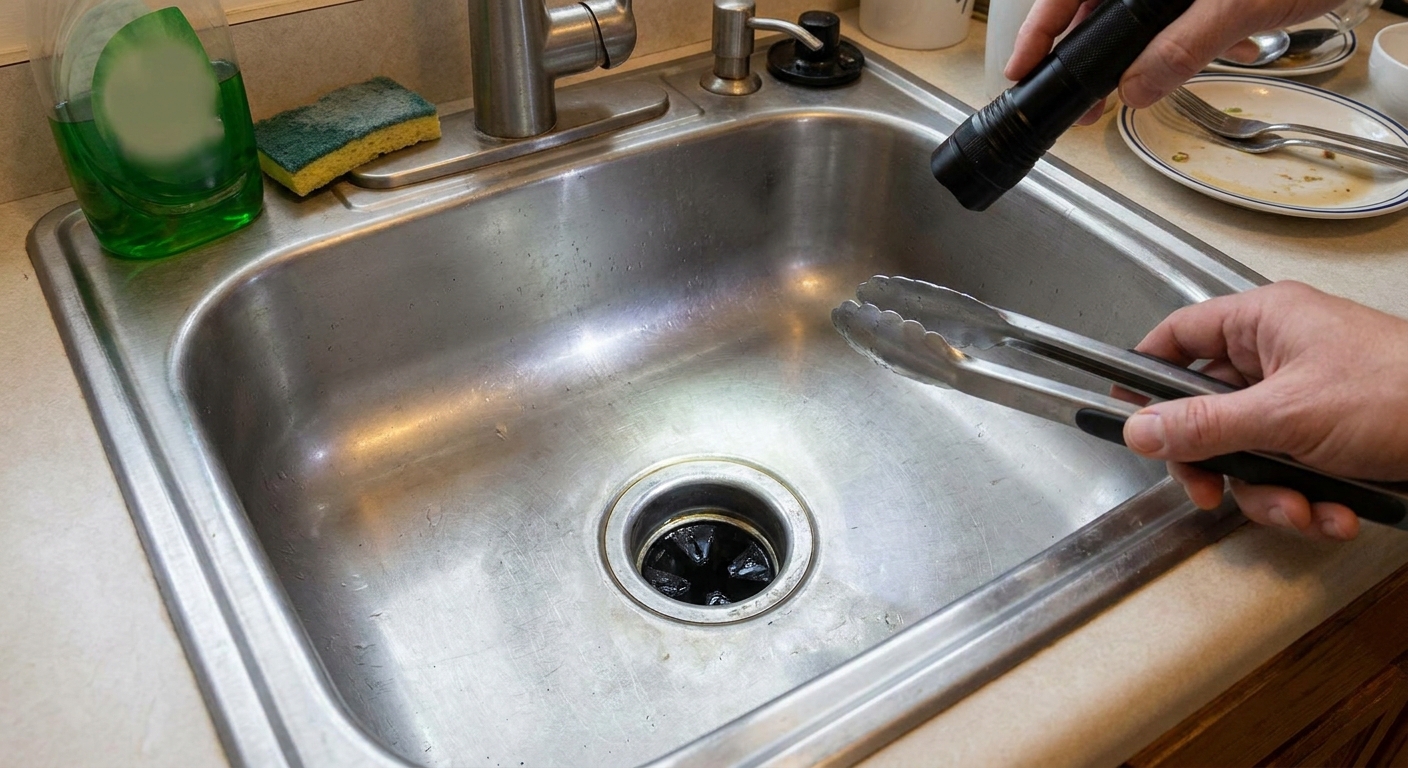
If your model does not have a hex socket, you can often free a jam from above.
- With power off, shine a flashlight into the disposal.
- Use tongs to remove any obvious object you can see.
- Use a wooden spoon handle (or a disposal unjamming tool) to nudge the grinding plate back and forth.
Once it loosens, restore power and test with cold water running.
3) Press the reset button only if it goes silent
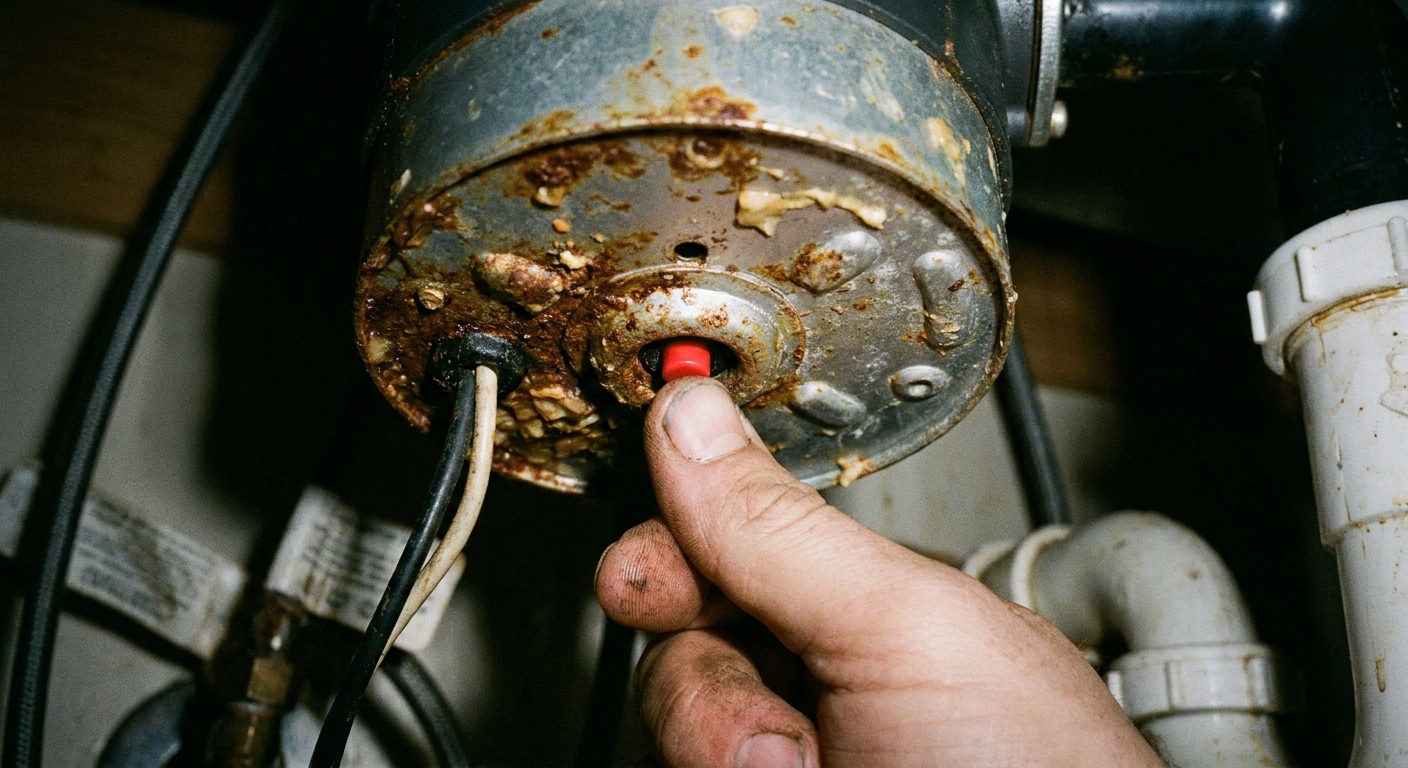
Here is the key detail: the reset button is usually for when the unit stops completely (no hum, no movement) due to overheating or overload. While you are working a jam loose, some disposals will cut out and then need a reset.
- If the unit feels warm, wait 5 to 10 minutes.
- Press the small red reset button on the bottom of the disposal. You may feel a click.
- Restore power and test with cold water.
If it hums after the reset, turn it off immediately and go back to the unjamming steps. Repeated humming can burn out the motor.
4) Clear the trap only if you suspect a clog downstream
If the disposal hums and your sink is also backing up, you may have both a jam and a clog. If you are comfortable with basic plumbing, you can place a bucket under the P-trap and remove it to clear debris. If that makes you nervous, it is a perfectly reasonable time to call a plumber.
What not to do
- Do not keep flipping the switch while it hums. That is how motors die.
- Do not reach inside, even when it is off.
- Do not use chemical drain cleaners. They can damage plumbing and make future repairs more hazardous.
- Do not pour grease, oil, or coffee grounds into the disposal to “help it along.” It will not.
Common causes of a humming disposal
Something hard is lodged inside
Fruit pits, bones, and surprise utensils are classic. Even a small piece of glass can stop the plate from turning. If you recently heard a clink, that is your clue.
Fibrous foods wrapped around the plate
Celery, corn husks, onion skins, artichoke leaves, and potato peels can twist and stall the mechanism. These are better composted or trashed.
A failing motor or capacitor
If you have cleared jams and it still only hums or stalls again immediately, the start capacitor or motor windings could be failing. This is common in older disposals and usually means replacement is the most practical option.
Quick troubleshooting checklist
- Hums, no movement: jam or stuck flywheel, use the Allen wrench method.
- No sound at all: power issue, tripped breaker, bad switch, unplugged unit, or overload reset needed.
- Runs but drains slowly: clog in trap or branch line, not a motor issue.
- Stops mid-grind: overload tripped, let cool and reset, avoid overfilling.
- Hums even after unjamming: possible capacitor or motor failure.
When to call a plumber (or plan a replacement)
Call a pro or consider replacing the unit if:
- You cannot free the flywheel after a few careful attempts.
- The disposal trips the breaker repeatedly.
- You see leaks from the disposal body or corrosion at seams.
- There is a burning smell, smoke, or the unit is hot to the touch.
- It is an older unit and keeps humming even when cleared.
A disposal replacement is often straightforward, but leaks and wiring are where DIY confidence should be honest and gentle with itself.
How to prevent the hum
These small habits keep your disposal happier and your kitchen calmer:
- Run cold water before, during, and 10 to 20 seconds after use.
- Feed scraps slowly, not in one dramatic dump.
- Avoid fibrous and starchy foods like potato peels and corn husks.
- Skip grease. Wipe oily pans with a paper towel first.
- Do a simple rinse routine: grind a few ice cubes occasionally to help knock gunk loose, then flush with cold water.
Your disposal is not a trash can with a motor. Treat it more like a helper with boundaries, and it will stay quieter for longer.
If you want the calmest next step
If your garbage disposal just hums, the most effective path is: power off, unjam with the Allen wrench (or spoon method), then test with cold water. If the unit goes silent mid-troubleshooting, let it cool and press the reset. If it still refuses to spin after you have cleared jams, it may be time to replace the unit or bring in a plumber so you can get back to the good part of being home.