Garbage Disposal Humming

Clara Townsend
Clara Townsend is an interior stylist, vintage furniture enthusiast, and the creative voice behind Velvet Abode. With over a decade of experience transforming both cramped city apartments and sprawling fixer-uppers, she believes that a beautiful home is built on personal stories rather than massive budgets. When she isn't hunting for the perfect brass sconce at a local flea market, she can usually be found rearranging her living room for the third time this month.
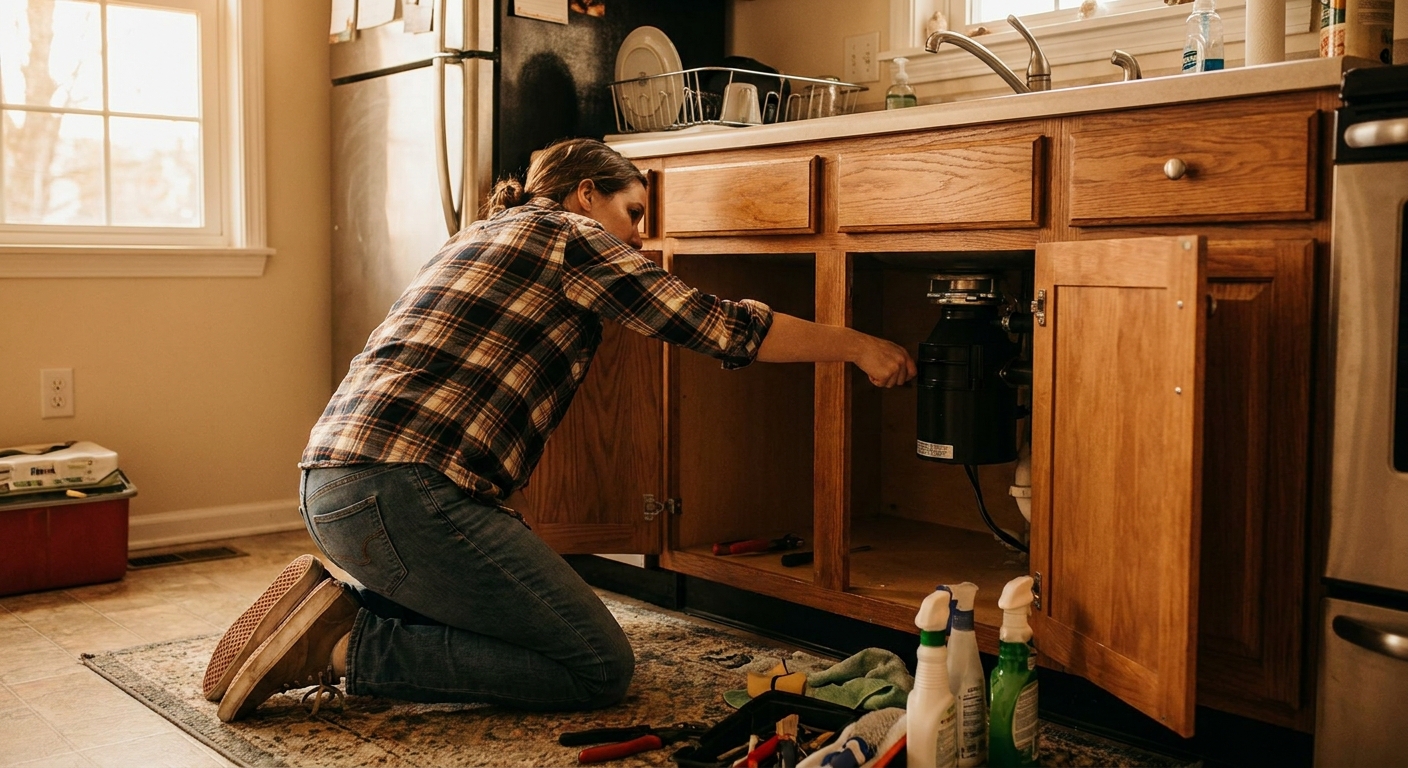
A humming garbage disposal is one of those kitchen sounds that instantly raises your shoulders. It is not nothing, but it also is not always a disaster. In most cases, humming means the motor is getting power, but the grinding plate inside cannot turn. Think of it like a vintage ceiling fan that has electricity but is caught on a pull chain. The good news is that many humming disposals can be fixed in under 15 minutes, with no fancy tools and no panic.
What the humming sound usually means
When a disposal hums, it typically means power is reaching the unit, but the internal parts are not moving. The most common reasons are:
- A jam from a utensil, fruit pit, bone fragment, or fibrous peel.
- Stuck grinding plate from rust, gunk buildup, or sitting unused.
- Electrical issue like a failing switch, loose connection, or weak motor capacitor (less common for DIY fixes).
A quick but important distinction: most disposals also have an overload protector (reset). If that trips, the unit usually goes silent because power is cut. A humming disposal generally means the overload has not tripped yet (or it has already been reset), and the motor is still trying to turn against a blockage.
That hum is basically your disposal saying: “I am trying, but I cannot turn.”
Safety first, before you touch anything
I know it is tempting to just poke around quickly, but this is one of those moments to be a little fussy about safety.
- Turn off the disposal switch.
- Unplug the disposal under the sink if it is plugged in. If it is hardwired, turn off the correct breaker.
- Never put your hand inside the disposal, even if it is off.
If you only do one thing from this article, let it be that last bullet.
Quick fix checklist
1) Look for the obvious jam, without using your hand
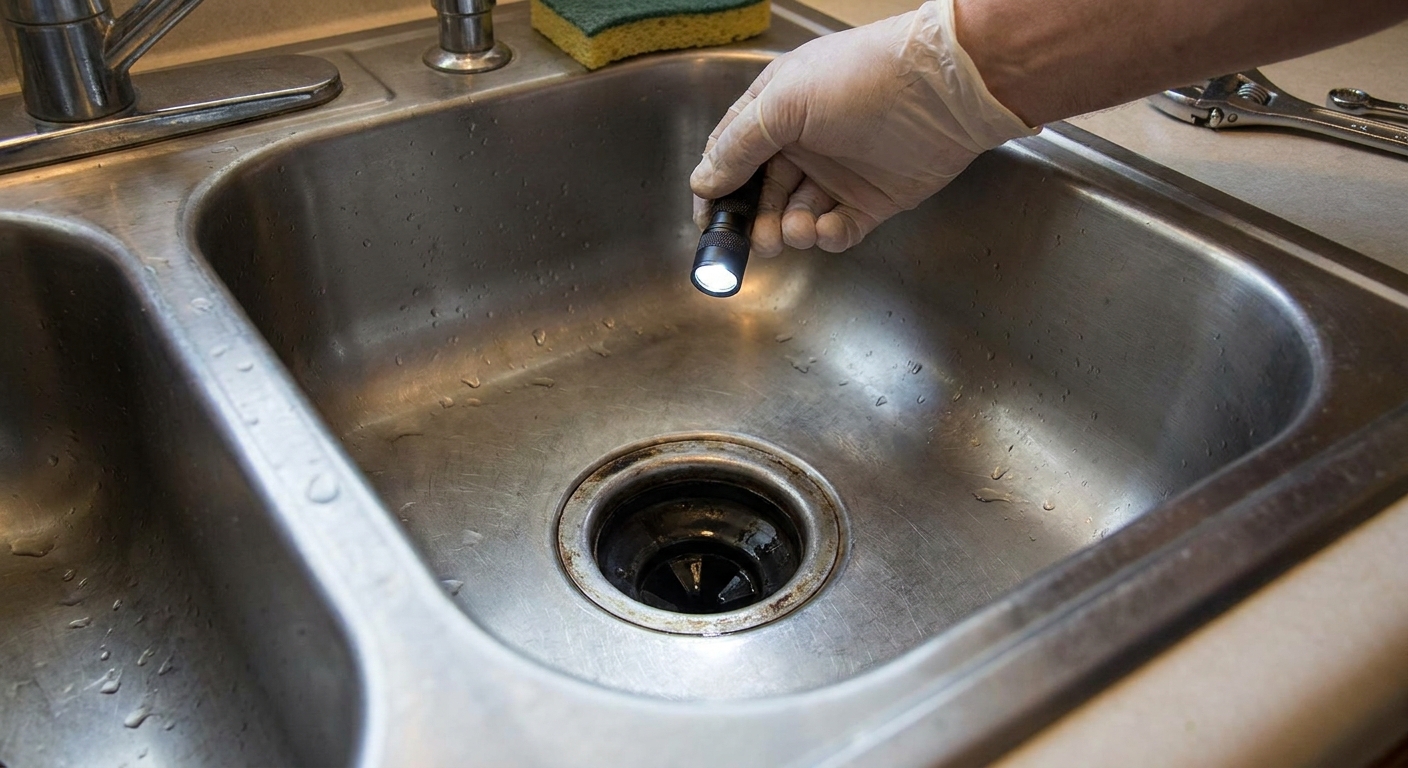
Shine a flashlight down into the drain opening. You are looking for anything wedged between the grinding plate and the ring.
- If you see something, use tongs or needle-nose pliers to remove it.
- If you do not see anything, do not assume it is clear. Jams can hide below the rubber splash guard.
2) Free the disposal from underneath (hex key method)
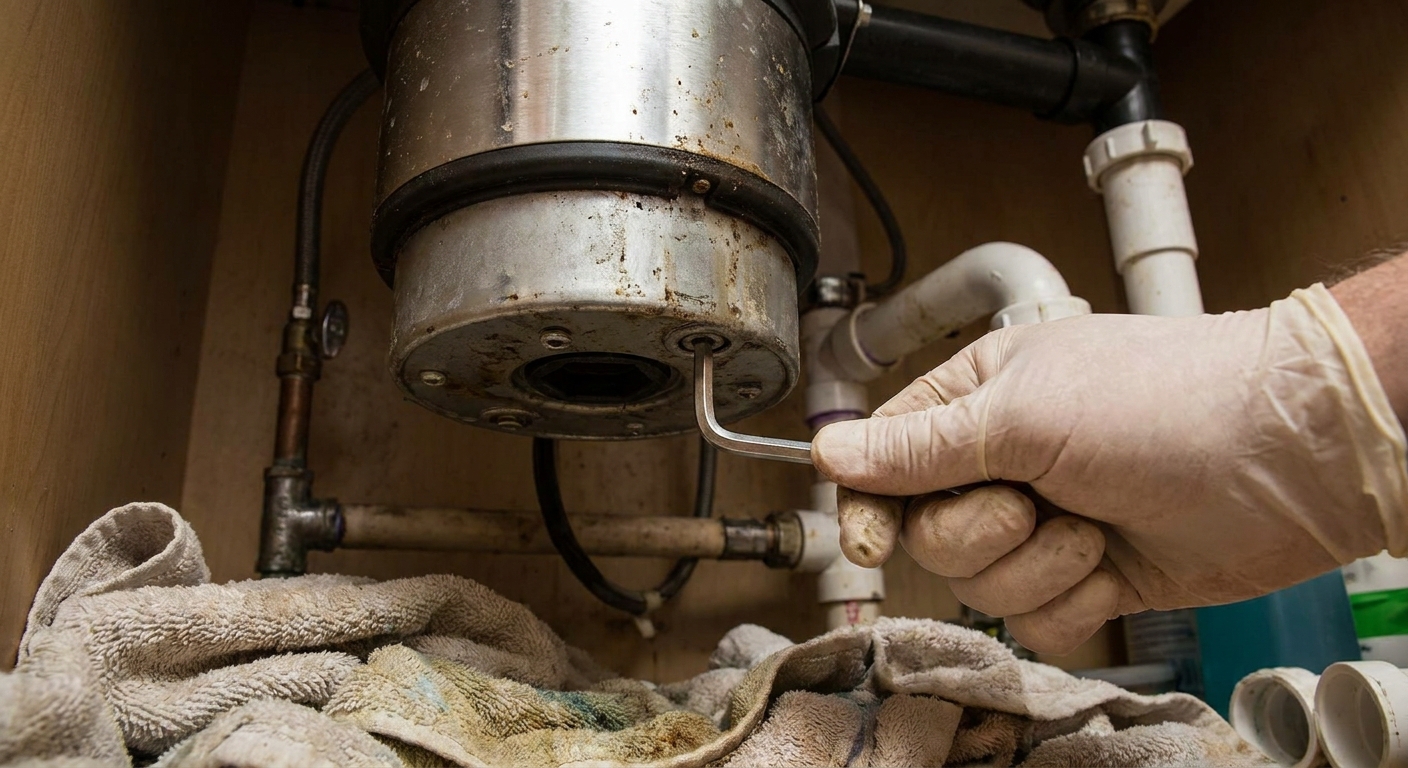
Most disposals have a small hex socket centered on the bottom. Many units came with a little Allen wrench. If yours vanished into the same dimension as missing socks, a standard hex key often works.
- Insert the hex key into the bottom socket.
- Turn it back and forth until you feel the plate loosen.
- You are not trying to spin it like a wheel, just to break the stuck point.
No hex socket? Some models have a different release method, but many still allow you to free movement from below or by rotating the internal plate with a broom handle from above (next step).
3) Free it from above (wooden spoon or broom handle)
With the power still off, place the end of a wooden spoon or broom handle into the disposal opening and gently nudge the grinding plate back and forth. This can help dislodge something stubborn.
- Use steady pressure, not aggressive stabbing.
- If you feel a hard stop, pause and re-check for a trapped object.
4) Press the reset button (if it tripped)
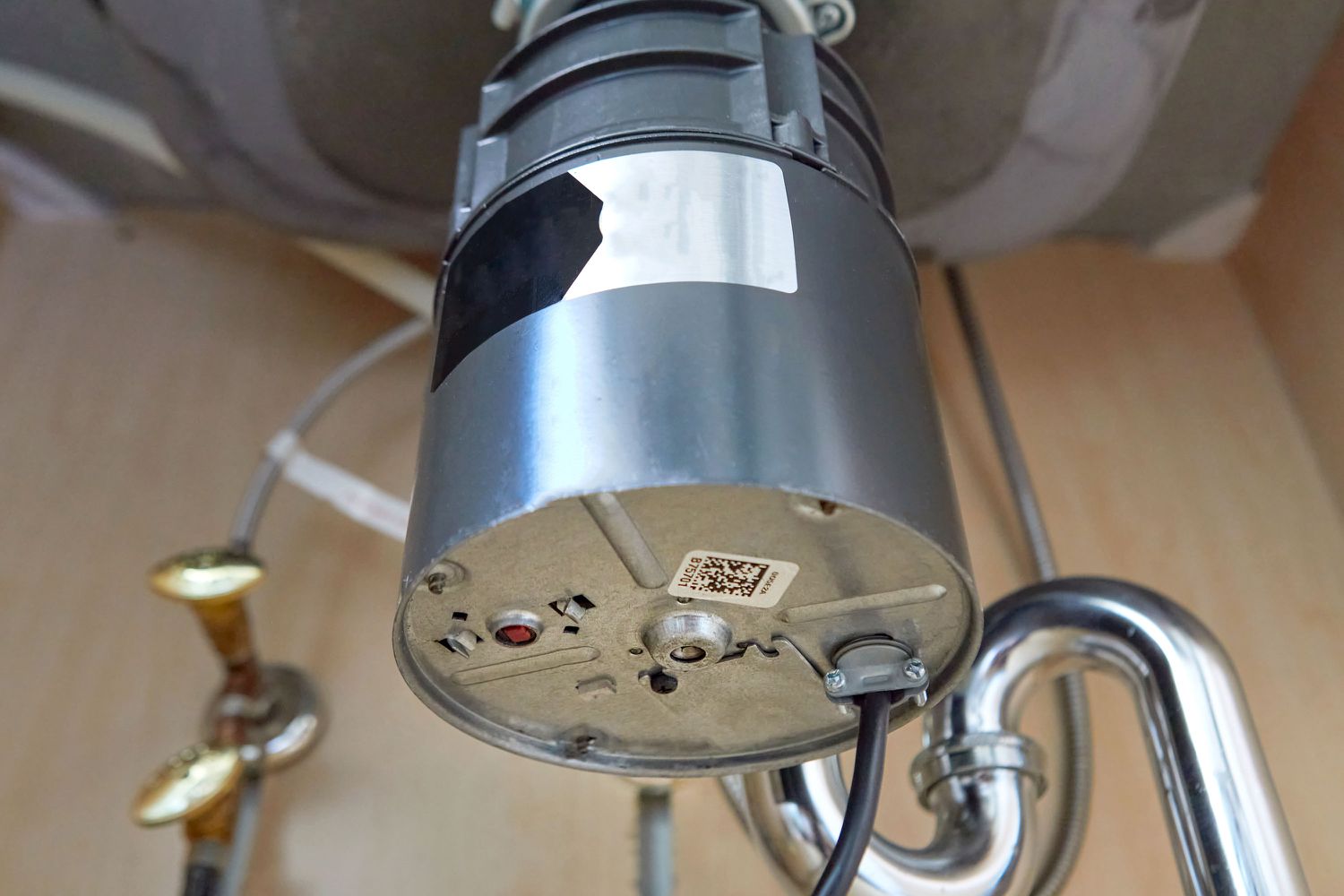
On the bottom of most disposals there is a small reset button, often red. This is the overload protector. If the motor overheated, it can trip and cut power.
- If your disposal is completely silent when you flip the switch, check the reset.
- Press the reset button firmly. You may feel a click.
- Wait 5 to 10 minutes if the unit feels warm, then try again.
If your disposal is humming, do the jam-clearing steps first. Resetting alone rarely solves a true hum, because the motor is still powered and still stuck.
5) Test it the right way
Once you have cleared the jam and reset (if needed):
- Restore power.
- Run cold water in a steady stream.
- Flip the switch for one to two seconds.
If it spins up smoothly, let it run 15 to 30 seconds with water. If it hums again, turn it off immediately and go back to steps 1 to 3.
If it still hums
The jam is still there
This is the most common reason the hum persists. Some jams are sneaky, especially:
- Chicken bones or hard bits lodged in the perimeter
- Fruit pits (peach, avocado, mango)
- Metal tabs from cans
Try the hex key again, then re-check with tongs.
The disposal is seized or worn
If you cannot move the plate at all with a hex key, or it frees up then immediately locks again, the unit may be seized from corrosion or internal wear.
- If it is older and frequently troublesome, replacement can be more cost-effective than repeated repairs.
- If it is newer, a plumber can often diagnose whether it is a simple mechanical failure or something deeper.
Electrical or switch issue
A hum can sometimes point to an electrical problem, especially if the unit is not jammed and you can rotate the plate freely by hand tool (hex key or wooden handle), but it still only hums when powered.
- If the wall switch feels hot, crackly, or inconsistent, stop and call an electrician.
- If the disposal is hardwired and you are not comfortable testing circuits, this is a professional moment.
What not to do
- Do not pour drain cleaner into the disposal to “unstick” it. It can damage parts and create a hazardous mess if you need to disassemble anything.
- Do not keep flipping the switch while it hums. You can overheat the motor.
- Do not reach inside, even when it is unplugged. Use tools like tongs.
- Do not use hot water as your first instinct. Cold water helps keep grease solid so it can be chopped and flushed rather than smeared.
When to call a plumber
Call a pro if:
- The disposal leaks from the body or the bottom (often a sign the housing is compromised).
- You smell burning, see smoke, or the unit gets very hot.
- The grinding plate will not budge at all after you attempt to free it.
- The disposal trips the breaker repeatedly.
Consider replacement if the unit is older, frequently jams, or has developed chronic noise, leaks, and weak performance all at once. Like a thrifted dresser with a warped drawer and wobbly legs, there is a point where you stop fighting it.
How to prevent it next time
These are the small habits that keep your disposal quietly doing its job in the background, which is the best kind of appliance behavior.
- Run cold water before, during, and after using the disposal. Aim for 10 seconds before and 20 to 30 seconds after.
- Feed scraps gradually rather than dumping a whole plate at once.
- Avoid fibrous foods like celery strings, corn husks, artichokes, and onion skins.
- Keep grease out. Pour it into a container, not the drain.
- Use it regularly. A disposal that sits unused can get sticky and stiff.
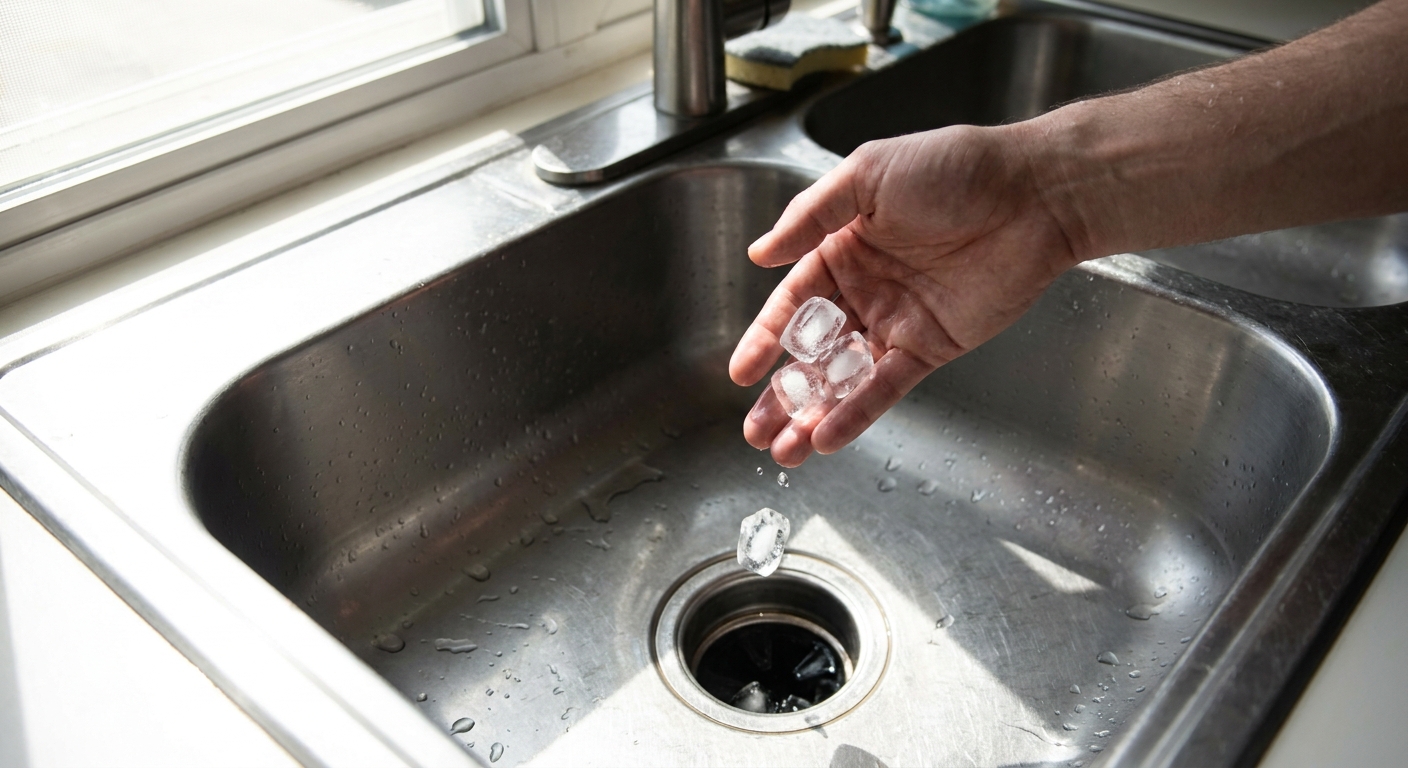
- Freshen gently with a handful of ice cubes and a little dish soap, then rinse well with cold water. (Ice helps knock buildup off the grinding plate.)
Quick recap
- Humming usually means jammed: power is on, movement is blocked.
- Power off, inspect with a flashlight, remove debris with tongs.
- Use the hex key underneath to free the plate.
- Reset is for silent disposals: if it is totally dead, press the red button and let it cool.
- If it still hums or leaks, call a pro.
With a little patience (and a flashlight), most humming disposals turn out to be a simple jam, not a full appliance meltdown.