Garbage Disposal Humming But Won’t Spin

Clara Townsend
Clara Townsend is an interior stylist, vintage furniture enthusiast, and the creative voice behind Velvet Abode. With over a decade of experience transforming both cramped city apartments and sprawling fixer-uppers, she believes that a beautiful home is built on personal stories rather than massive budgets. When she isn't hunting for the perfect brass sconce at a local flea market, she can usually be found rearranging her living room for the third time this month.
There are a few household sounds that instantly raise your shoulders. A garbage disposal that hums but will not spin is one of them. The good news is that in many cases, this is a very fixable problem, and you can often narrow it down in about 15 minutes with a flashlight and a little patience.
Think of the hum as the motor receiving power and trying to turn. Something is physically stopping the turntable (also called the flywheel) from rotating, or the motor is struggling against a jam. A disposal that is silent is a different situation. That is more often power, a tripped GFCI, or an overload reset.
Let’s walk through the safest, most common fixes in the order that makes the most sense.
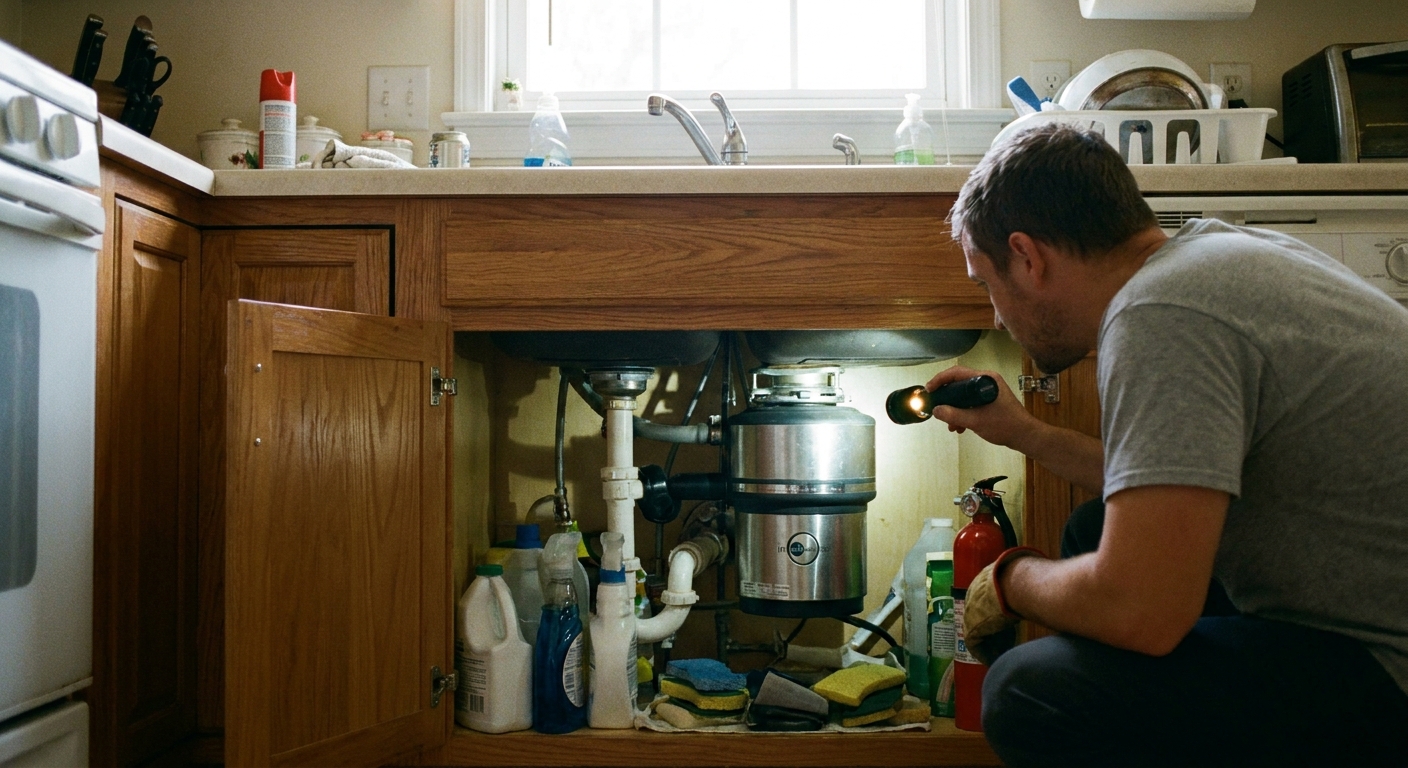
First, make it safe
Before you do anything hands-on, cut power. Disposals are small, but they are strong, and you do not want an unexpected spin.
- Turn off the switch at the wall and keep it off.
- Unplug the disposal under the sink if it has a plug.
- If it is hardwired, turn off the breaker for the disposal.
- Never put your hand inside the disposal opening, even if you think the power is off.
If there is standing water in the sink, bail or scoop most of it out first. Working blind in murky water is how forks go missing and knuckles get bumped.
Humming vs silent
This one distinction saves a lot of time:
- Humming but not spinning usually means a jam or a stuck turntable (flywheel). The motor is getting power, but it cannot rotate.
- Completely silent usually points to power or protection: a tripped GFCI, a tripped breaker, a bad switch, or an overload protector that needs a reset after cooling.
If yours is humming, focus on unjamming first. If yours is silent, jump to the power and reset checks.
Why it hums but will not spin
When a disposal hums, it usually means the motor is receiving power but cannot rotate the turntable. The most common causes are:
- A jam from food, a twist tie, a piece of glass, or a small utensil.
- Something wedged between the impellers and grind ring, like a fruit pit or bottle cap that locks things in place.
- A stuck turntable from sitting unused, corrosion, or a stubborn blockage.
- Electrical issues like a failing start capacitor or weak motor, especially in older units (less common than a jam, but real).
The humming matters because it points us toward a mechanical stop first, not a totally dead power supply.
Step 1: Look for obvious blockages (no hands)
Shine a flashlight down into the disposal from the sink opening. You are looking for anything that does not belong.
- Small bones, fruit pits, or thick potato peels packed tight
- Metal like a spoon, bottle cap, or the end of a straw
- Glass (rare, but it happens)
If you see something, use tongs or needle-nose pliers to remove it. Keep your hands out of the opening.
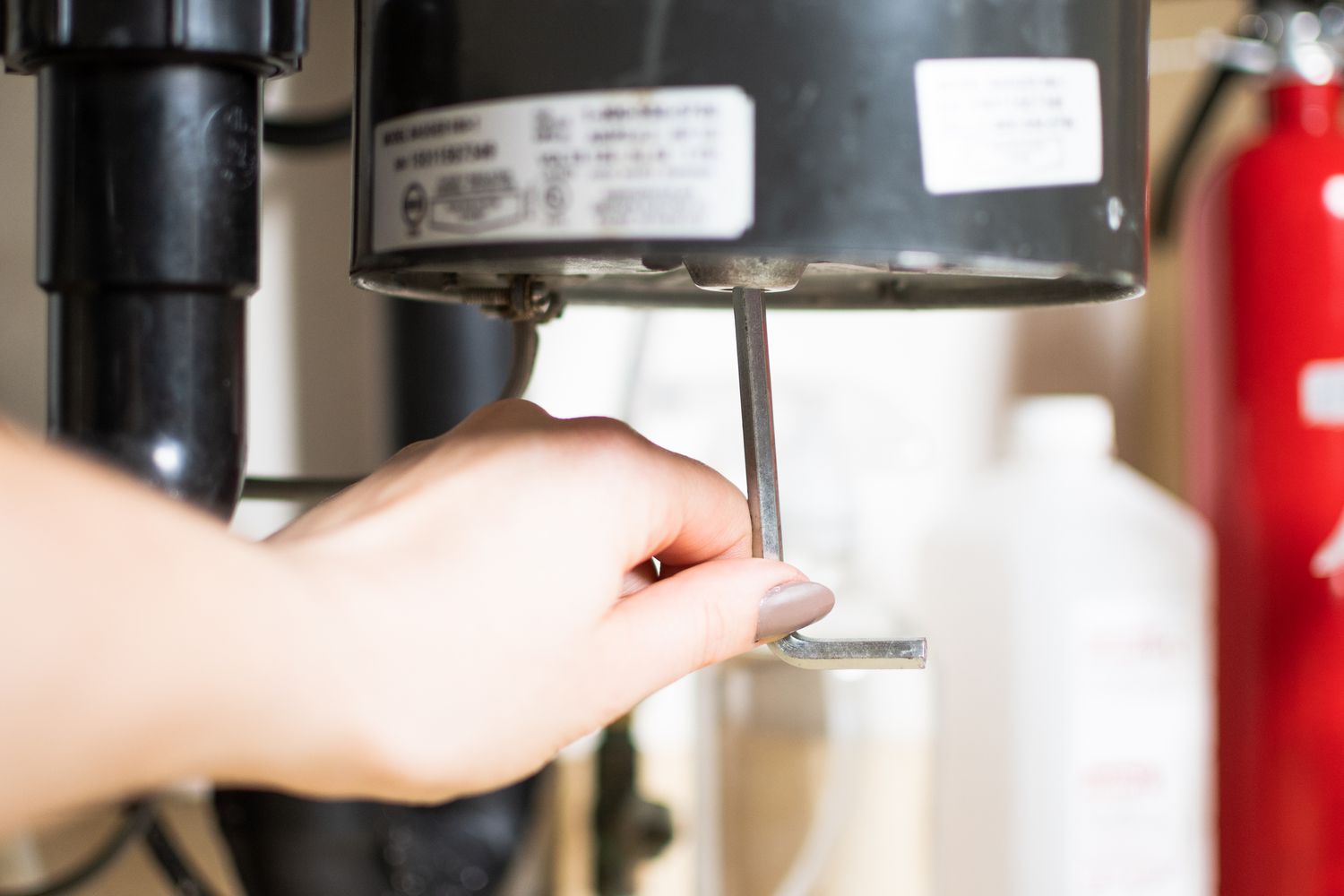
Step 2: Unjam it from underneath with an Allen wrench
Many disposals have a hex socket on the bottom that lets you manually turn the motor shaft. This is one of my favorite “quiet competence” fixes because it feels like you are unlocking the problem, not fighting it.
What you need
- A 1/4-inch Allen wrench (common for many models)
- Flashlight
- Tongs
How to do it
Turn power off at the plug or breaker.
Insert the Allen wrench into the hex socket on the bottom center of the disposal.
Work it back and forth. Start gently. If it is jammed, it may only move a little at first.
Rotate until it spins freely.
Look down from the top again and remove any freed debris with tongs. Hard objects often pop loose after the turntable breaks free.
If your unit does not have a hex socket, you can often unjam from the top using a disposal wrench (jam-buster tool) made for your model.
Step 3: Press the reset button (after unjamming)
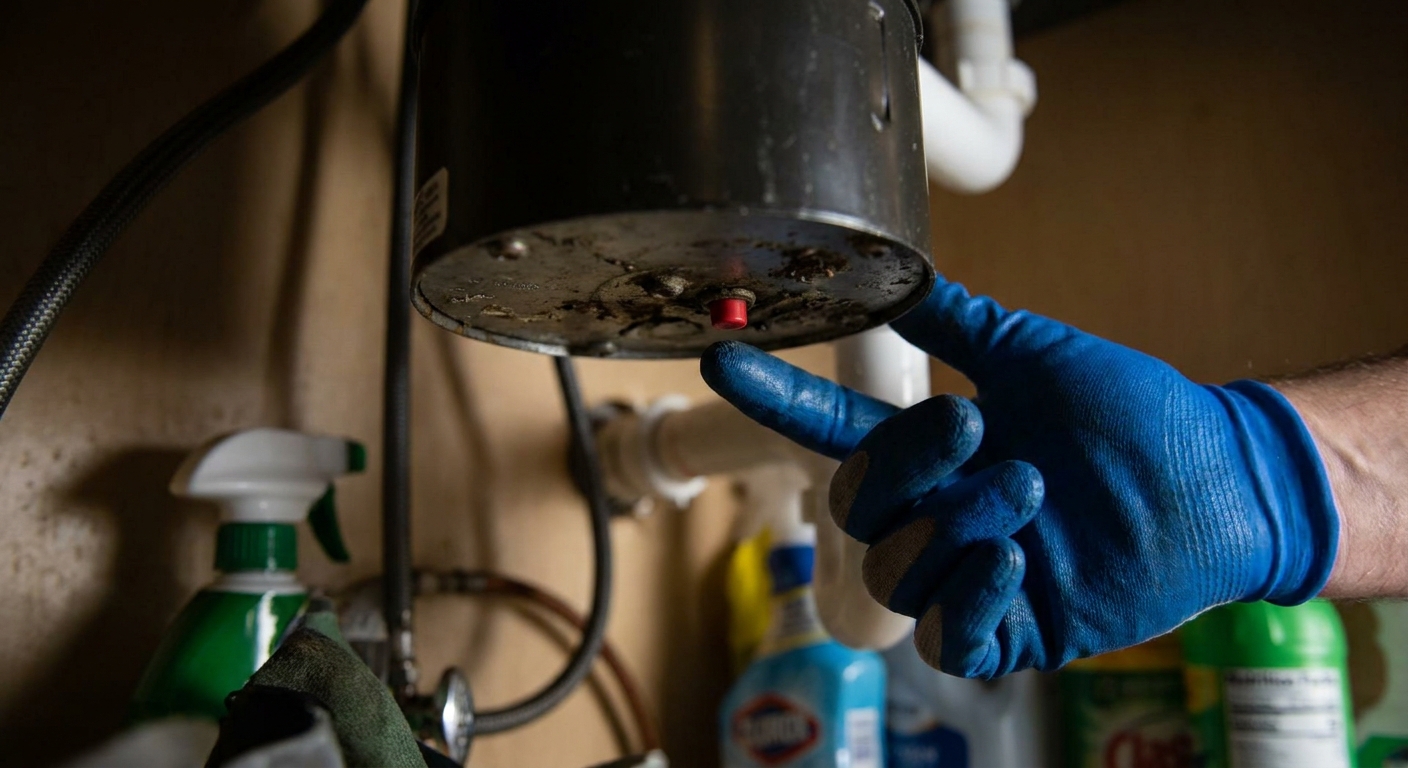
Most disposals have a small red (sometimes black) reset button on the bottom of the unit. This button helps after overheating or overload. On a truly humming disposal, resetting alone typically will not solve the root issue unless the jam is already cleared.
With the power off, find the reset button underneath.
Press it firmly. You may feel a soft click.
Restore power and test briefly with cold water running first, then flip the switch for one short burst.
If it immediately hums again, stop and cut power. That usually means the jam is still there, or the motor is struggling and will overheat again.
Optional: Nudge from above (last resort)
If you cannot access a hex socket and you do not have a model-specific disposal wrench, you can sometimes gently nudge the turntable from above using a wooden spoon handle. This is the most slip-prone DIY move in the lineup, so treat it as optional and slow.
- Power off.
- Use a flashlight so you can see what you are doing.
- Keep your other hand out of the opening.
- Apply gentle pressure to coax rotation. Do not pry hard.
If it will not budge, stop. A stubborn jam can mean something wedged deep, and forcing it can damage internal parts. At that point, a disposal wrench for your model, or a pro, is the safer next step.
If it is silent: check power and reset
If your disposal is not humming at all, tackle the power side first:
- Check the GFCI (the outlet under the sink or a nearby kitchen outlet). If it has popped, reset it.
- Check the breaker and reset if tripped.
- Press the reset button on the bottom of the disposal after it has had a few minutes to cool.
If it is silent and none of these restore life, the issue may be the switch, wiring, or the unit itself.
Drain issues: common companion symptom
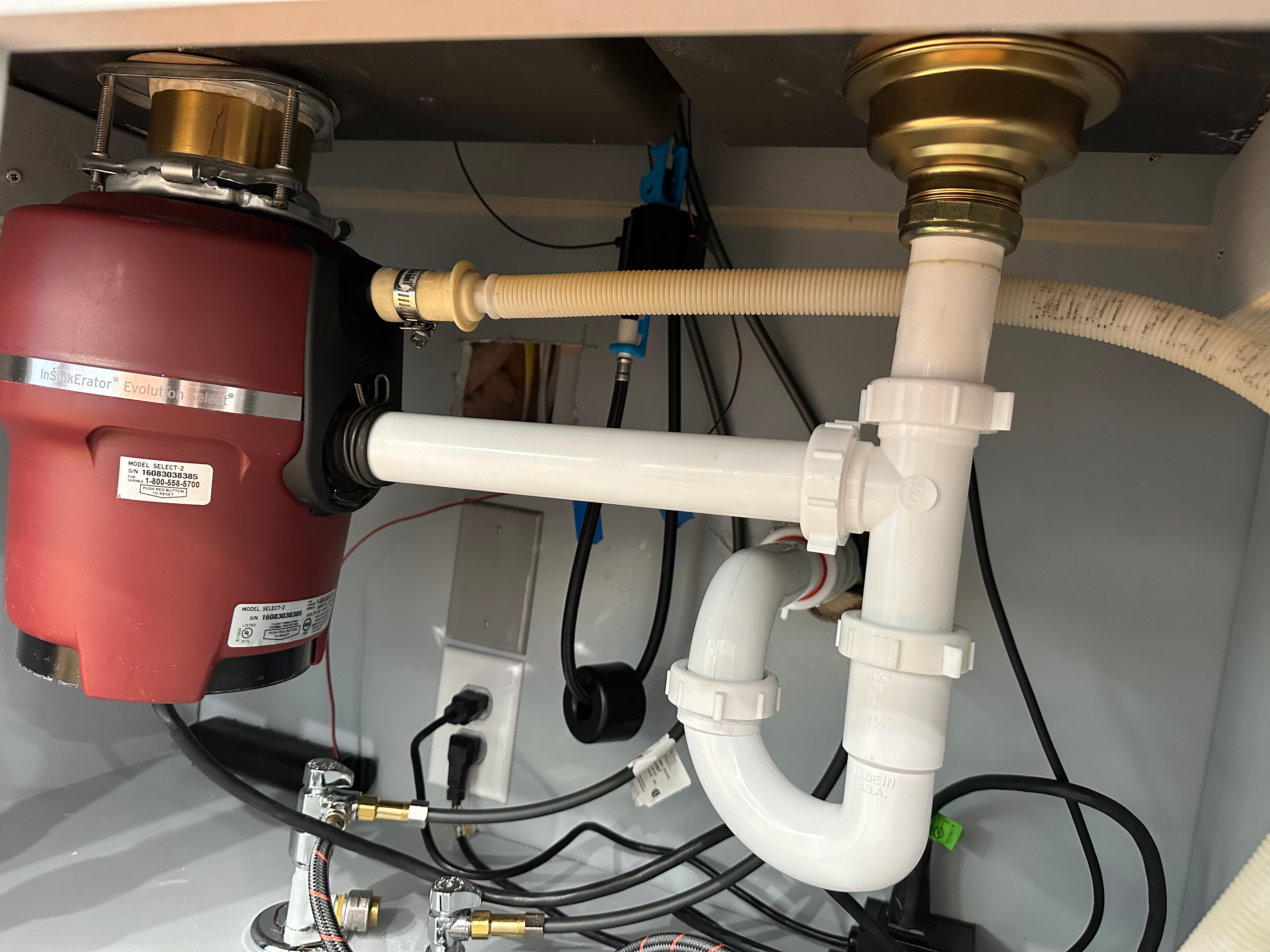
A downstream clog is not the classic cause of a humming disposal, but it often shows up at the same time. If your sink is slow to drain or water rises in the other basin, check these quick culprits:
- P-trap buildup under the sink
- Dishwasher knockout plug still installed (common after new installs)
- Grease and starchy paste in the branch line
If the disposal spins freely by hand but the sink immediately backs up when you run water, the issue is likely in the plumbing, not the motor.
Do not keep flipping the switch
I know the impulse. You want it to “catch” and start. But a humming disposal that cannot turn is drawing current and heating up quickly. Repeated attempts can:
- Trip the overload repeatedly
- Overheat and damage the motor windings
- Shorten the life of the unit over time
Try one short test after each fix. If it still hums, cut power and continue troubleshooting.
What not to do
- Do not put your hand inside the disposal.
- Do not use chemical drain cleaner in a disposal or drain line connected to one.
- Do not jam metal tools down into the chamber (especially not while anyone can accidentally flip the switch).
- Do not force the turntable. Gentle back-and-forth beats brute strength.
When to call a pro
Some situations are better handled by a plumber or electrician, especially if your kitchen is older or you are seeing warning signs beyond a simple jam.
Call for help if:
- The disposal hums even after the turntable spins freely by hand and the reset has been pressed.
- You smell burning or hot plastic.
- The unit leaks from the bottom (often a seal failure, usually replacement time).
- The breaker or GFCI trips repeatedly.
- You see frayed wiring, scorch marks, or a loose switch box.
And if the disposal is around 8 to 12 years old and acting up frequently, replacement is often the most cost-effective, least stressful path. Some units last longer, but repeat symptoms tend to mean the end is near.
Preventing the next hum
Disposals are happiest when you treat them like a helper, not a black hole.
- Run cold water before, during, and 10 to 15 seconds after use.
- Feed slowly instead of dumping a bowl of scraps at once.
- Avoid grease, coffee grounds, fibrous celery, onion skins, and large quantities of starchy peels.
- Use it regularly to keep parts moving.
- Freshen occasionally with a few ice cubes if your manufacturer recommends it. Citrus peel is a common trick, but use it sparingly and skip it if it tends to leave residue in your setup.
My homey rule: if it would make a compost bin sigh, your disposal probably will too.
Quick checklist
- Power off
- If humming: look for blockages and remove with tongs
- Free the turntable with an Allen wrench or a disposal wrench
- Press reset after it moves freely
- Test briefly with cold water running first
- If humming continues, stop and consider professional help
If you want, tell me your disposal brand and what you have already tried. I can help you narrow down the most likely fix based on your model.