Garbage Disposal Humming But Not Turning On

Clara Townsend
Clara Townsend is an interior stylist, vintage furniture enthusiast, and the creative voice behind Velvet Abode. With over a decade of experience transforming both cramped city apartments and sprawling fixer-uppers, she believes that a beautiful home is built on personal stories rather than massive budgets. When she isn't hunting for the perfect brass sconce at a local flea market, she can usually be found rearranging her living room for the third time this month.
There are few kitchen sounds that trigger instant dread quite like this one: you flip the switch, your garbage disposal hums… and nothing moves. No satisfying whirl. No drain clearing. Just that stubborn little buzz that says, “I’m trying,” while your sink quietly fills with questionable water.
The good news is that a humming disposal is usually a simple mechanical issue, not a mysterious electrical failure. Most often, it is a jam, a seized flywheel, or a start capacitor that is struggling to get the motor moving under load. Let’s walk through the safest, most effective fixes in a calm, step-by-step way.
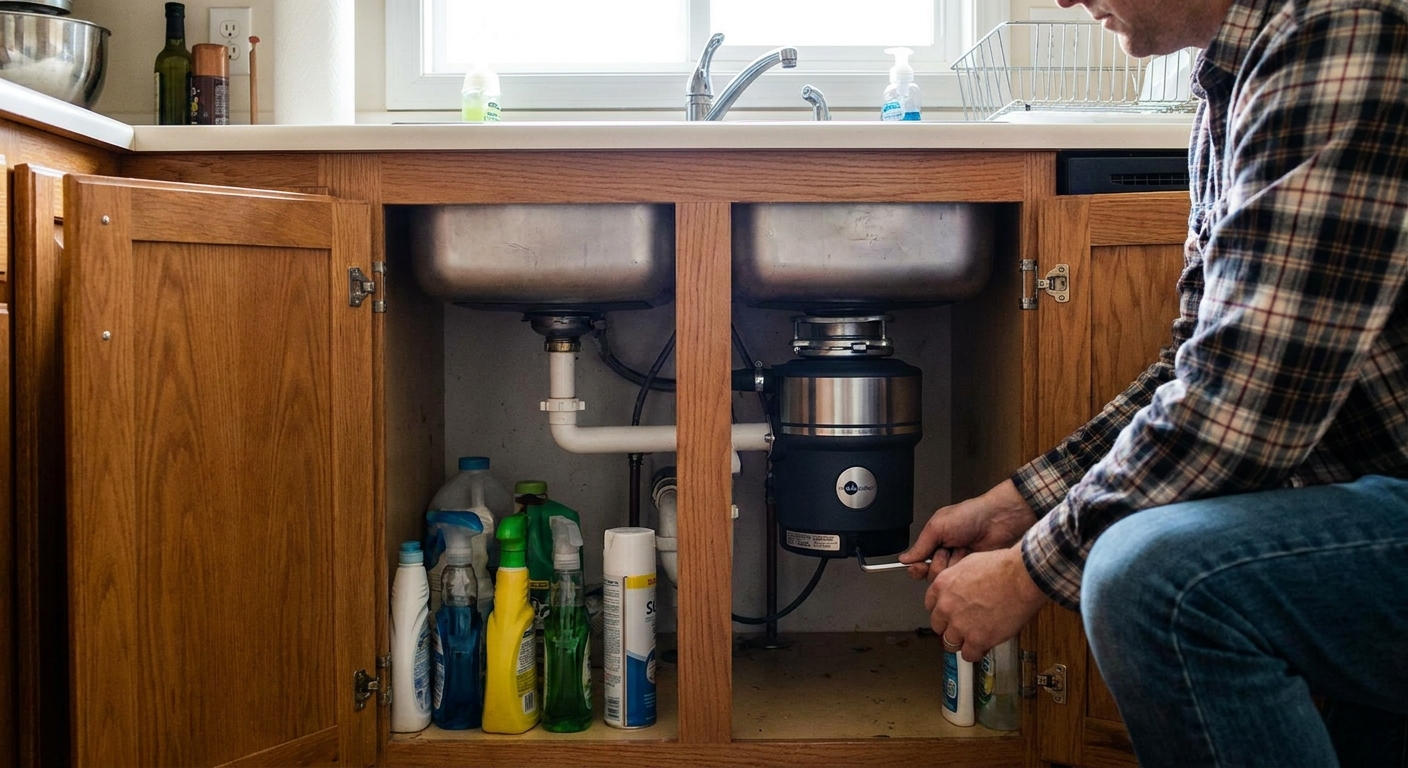
What the humming means
When a garbage disposal hums, the motor is getting power and trying to spin. But something is preventing the grinding plate and flywheel from turning.
- Most common: Something is physically jammed inside (fruit pit, bone, spoon, bottle cap).
- Also common: The flywheel is seized (often after sitting unused), so the motor cannot start.
- Less common: The motor or start components are failing and can no longer start under load.
One important note: if the reset switch has tripped, it cuts power and the unit typically goes silent. A disposal that is actively humming has power, which means it has not tripped yet.
That hum is your cue to stop running it. If you leave it humming, you can overheat the motor and turn a small fix into a replacement.
Safety first
I know, it is tempting to poke around quickly and “just see what’s in there.” Please do these three things first.
- Turn the switch off at the wall.
- Cut power by unplugging the disposal under the sink, or switch off the correct breaker.
- Never put your hand inside the disposal chamber, even if it is off.
If your unit is hardwired and you cannot confidently identify the breaker, this is a good moment to pause and call a plumber or electrician. Safety is always the most beautiful design choice.
Quick fixes
1) Unjam it from the bottom (hex key)
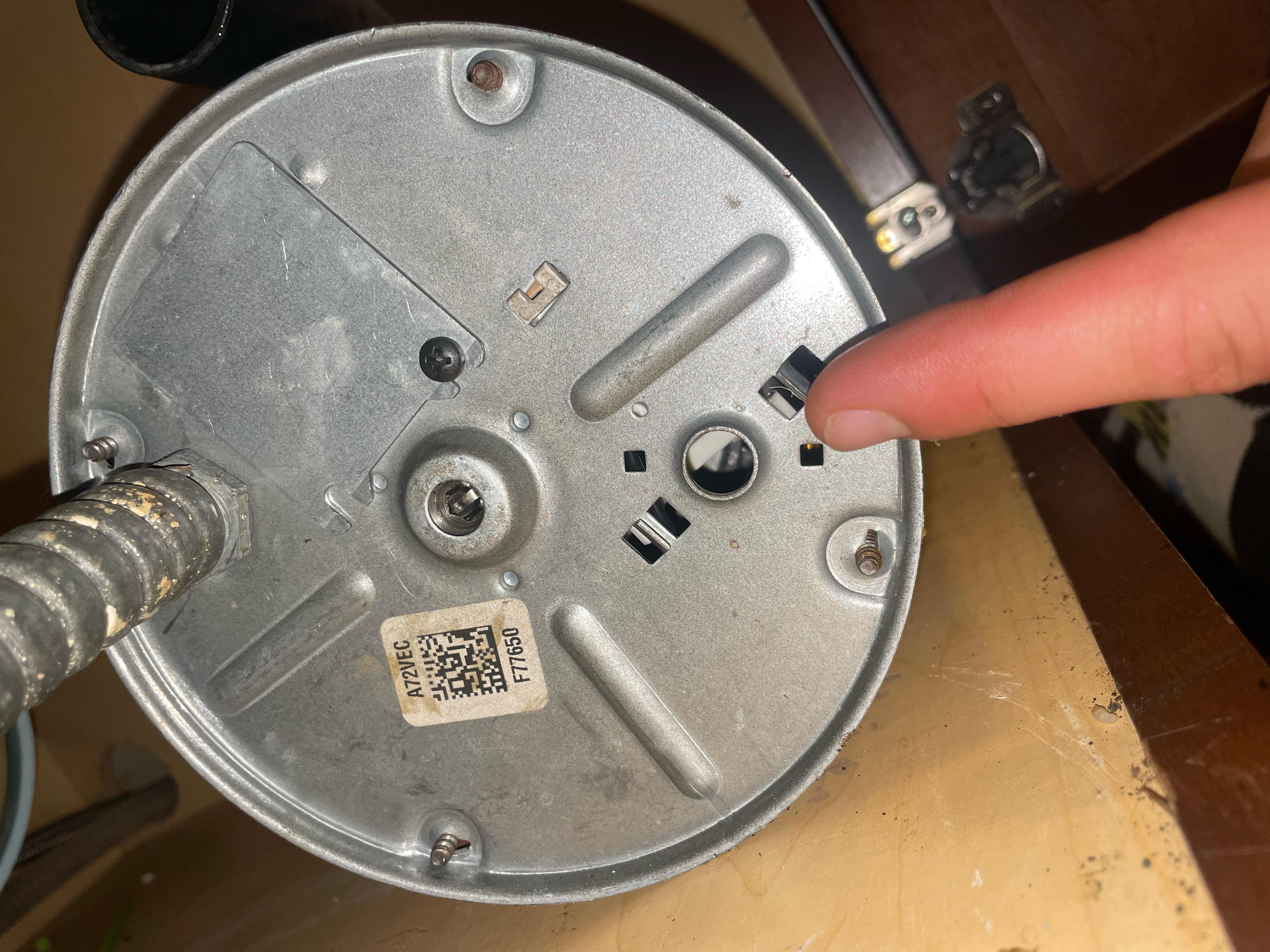
Many disposals have a hex socket on the bottom center. This is your secret weapon, and it is wonderfully low drama.
- With power off, insert the correct Allen wrench (often 1/4 inch, sometimes provided with the unit).
- Turn the wrench back and forth until the flywheel moves freely.
- Remove the wrench, restore power, and run cold water while testing briefly.
If it suddenly frees up, you likely dislodged the culprit.
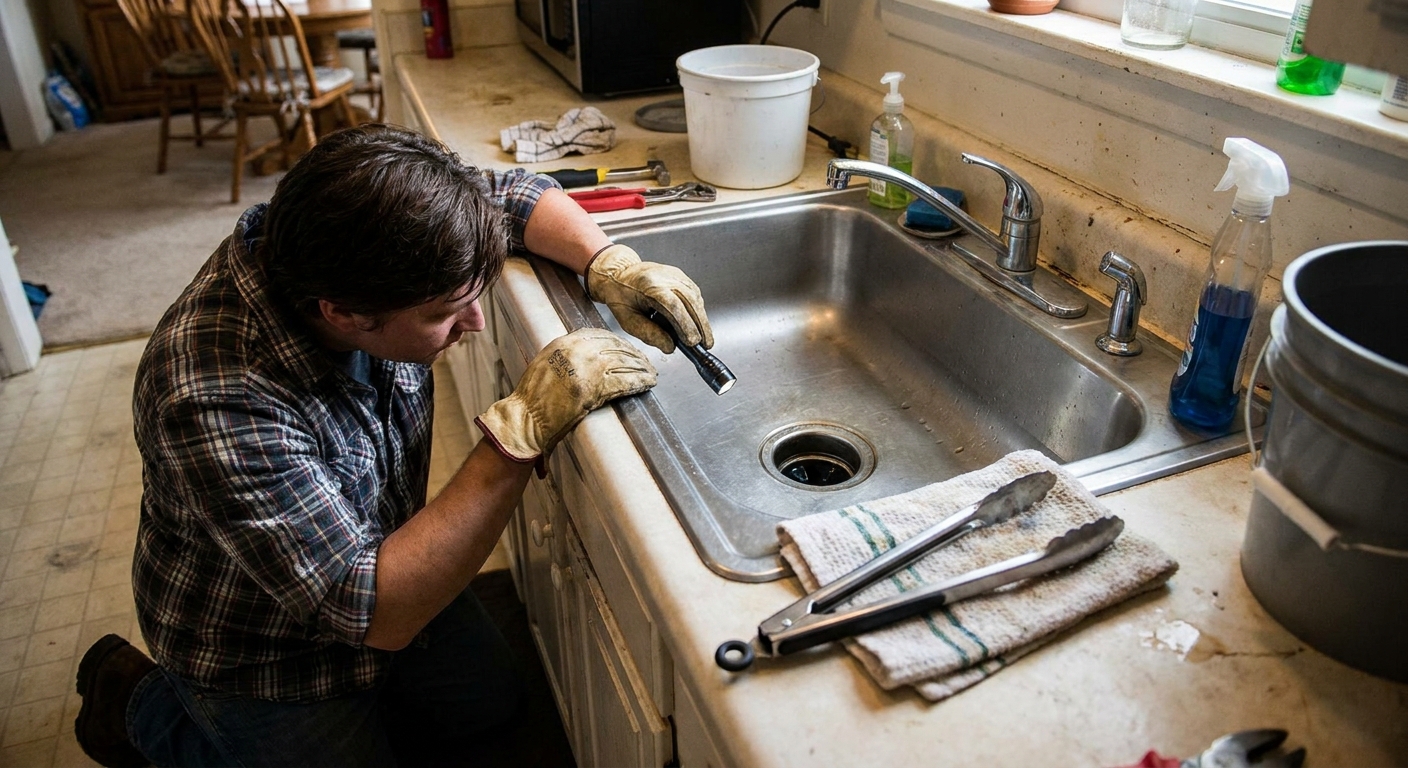
2) Clear the jam from above (tongs, not fingers)
If the hex method does not solve it, something may still be wedged inside.
- Shine a flashlight into the disposal.
- Use tongs or pliers to pull out visible objects.
- Check for common offenders: fruit pits, bones, twist ties, bottle caps, small utensils.
After removing anything you find, try the hex key again to confirm the flywheel turns smoothly.
3) Press the reset button (if it stopped or went silent)
Look under the disposal. You will usually see a small red (sometimes black) button. If the unit overheated, it may have popped out and cut power.
- Wait 5 to 10 minutes if the disposal feels warm.
- Press the reset button firmly. It should click or feel like it seated.
- Restore power and try a short test run with cold water.
If it runs normally after this, you are done. If it still hums, go back to jam checks and confirm the flywheel turns freely.
If it hums and then shuts off
This usually points to overheating. The motor tries, cannot spin, gets hot quickly, and then the reset trips.
Do this:
- Turn it off and cut power.
- Clear the jam using the steps above.
- Let it cool for 10 to 15 minutes.
- Press reset and test again.
If it repeatedly overheats even after you have cleared jams and the flywheel spins freely by hand, the motor may be weakening.
Check under the sink
Confirm power (if there is no sound)
- If it is plugged in, make sure the plug is seated fully.
- If the outlet is controlled by a GFCI, press “Reset” on the GFCI outlet.
- Check your breaker panel for a tripped breaker.
Power issues typically mean no sound at all, but it is worth checking if the disposal is completely silent or inconsistent.
Seized unit (after long inactivity)
If a disposal has not been used in a while, corrosion or a stuck object can keep it from starting. The hex key method is often the fix.
What not to do
- Do not keep flipping the switch hoping it will “catch.” Humming without spinning can burn out the motor.
- Do not use chemical drain cleaners in a sink with a disposal jam. They can damage components and create hazardous splashes.
- Do not reach inside to feel around, even with the power off.
When to call a pro
Sometimes the most budget-friendly move is knowing when to stop troubleshooting.
- The disposal still hums after you have freed the flywheel and removed obstructions.
- You smell burning, see smoke, or the unit trips repeatedly.
- There are leaks from the housing or at the seams.
- The unit is older and has a history of frequent jams and slow draining.
A plumber can confirm whether you have a failing motor, damaged internal components, or an installation issue like a misaligned mount.
Repair or replace?
Here is a cozy rule of thumb that saves a lot of future frustration: if you are dealing with constant jams, frequent resets, or grinding noises that were not there before, replacement often gives you a smoother, quieter kitchen routine.
Replacement makes the most sense when:
- The unit is 8 to 12 years old (varies by brand and use).
- It hums but will not spin even after you have freed the flywheel.
- It leaks from the body or has visible corrosion.
If it is a newer unit and the problem is a single jam, you can usually fix it yourself in under 20 minutes.
Prevent it next time
Think of your disposal like a hardworking little appliance that loves a simple routine.
- Use cold water while running it, and for 10 to 20 seconds after.
- Feed scraps gradually, not all at once.
- Avoid jam-makers: fibrous celery, corn husks, artichoke leaves, bones, fruit pits, grease, and large pasta or rice amounts.
- Keep it moving: running it regularly helps prevent seizing.
Quick recap
- Humming means power is reaching the motor, but the unit cannot spin.
- Cut power first, then free the flywheel with the hex key underneath.
- Remove obstructions with tongs, not your hands.
- If it goes silent or shuts off, let it cool and press reset.
- If it still hums, overheats, smells burned, or leaks, call a pro or consider replacement.
With a little patience and the right first step, most humming disposals are a quick fix, and your sink can go back to doing what it does best: disappearing the mess.