Garbage Disposal Humming But Not Turning On

Clara Townsend
Clara Townsend is an interior stylist, vintage furniture enthusiast, and the creative voice behind Velvet Abode. With over a decade of experience transforming both cramped city apartments and sprawling fixer-uppers, she believes that a beautiful home is built on personal stories rather than massive budgets. When she isn't hunting for the perfect brass sconce at a local flea market, she can usually be found rearranging her living room for the third time this month.
There is a very specific kind of kitchen frustration: you flip the switch, you hear that low hum, and then… nothing. No whirl. No whoosh. Just a stubborn, vibrating sound that makes you picture an expensive repair.
Take a breath. A garbage disposal that hums but will not turn is usually doing you a favor. The motor is getting power and trying to move, which most often points to a jam or a stuck flywheel. Below is my best, safest step-by-step, written the way I would talk you through it while you stand at the sink with a dish towel over your shoulder.
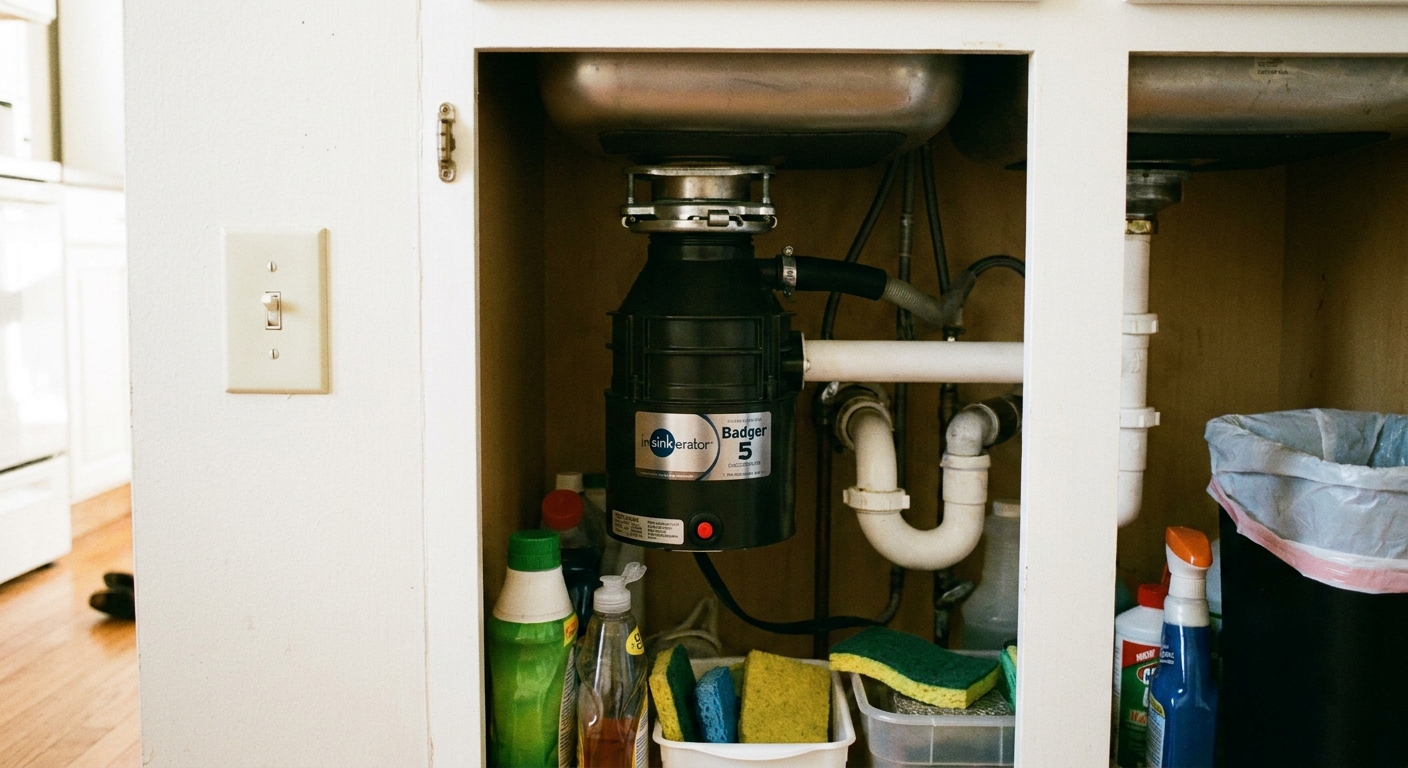
Safety first
Before we do anything else:
- Turn the disposal switch off.
- Unplug the disposal from the outlet under the sink, or switch the circuit breaker off if it is hardwired.
- Never put your hand inside the disposal, even if you swear it is off. We will use tools and leverage instead.
- If you smell burning or see smoke, stop and keep it off. That is a different situation.
Once it is fully powerless, you can work without that anxious feeling that it might spring to life at the worst moment.
What the humming means
A hum means the motor is getting power and trying to turn but cannot. The most common reasons are:
- Something is jammed between the impellers and the grinding ring (think: a spoon, a peach pit, a stubborn shard of glass).
- The flywheel is stuck from sitting unused, mild corrosion, or compacted food debris.
- Electrical problems like a weak capacitor or failing motor can also cause humming, but that is more likely after you have ruled out the simple fixes below.
One important distinction: the reset button (overload protector) usually comes into play when the disposal goes silent and will not do anything at all. If you are humming right now, you are typically dealing with a jam, not an overload trip.
Step-by-step: fix a humming disposal
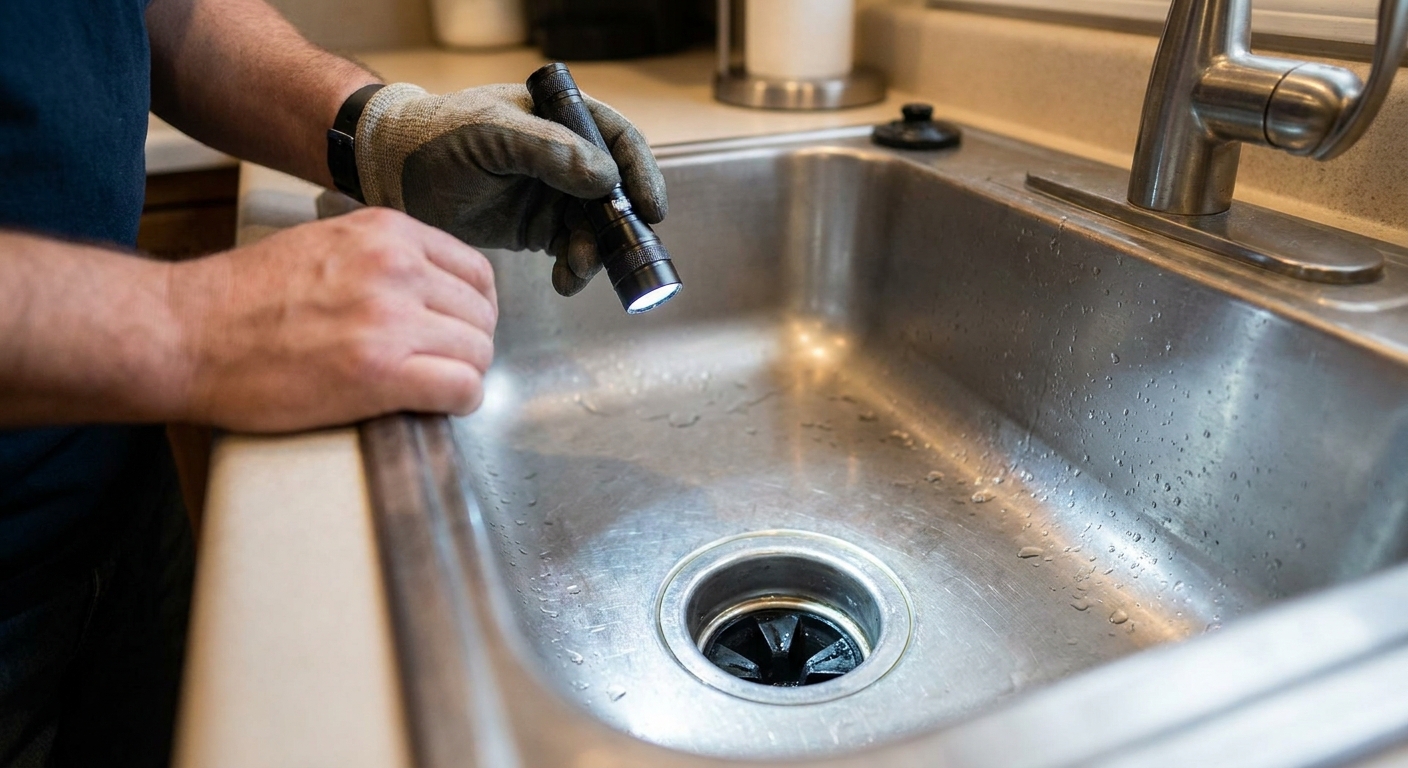
1) Check for an obvious jam (no hands)
Shine a flashlight down into the disposal. You are looking for any visible culprit.
- If you see an object, use tongs or needle-nose pliers to grab it.
- If you cannot see anything, do not worry. Jams can hide under the impeller plate.
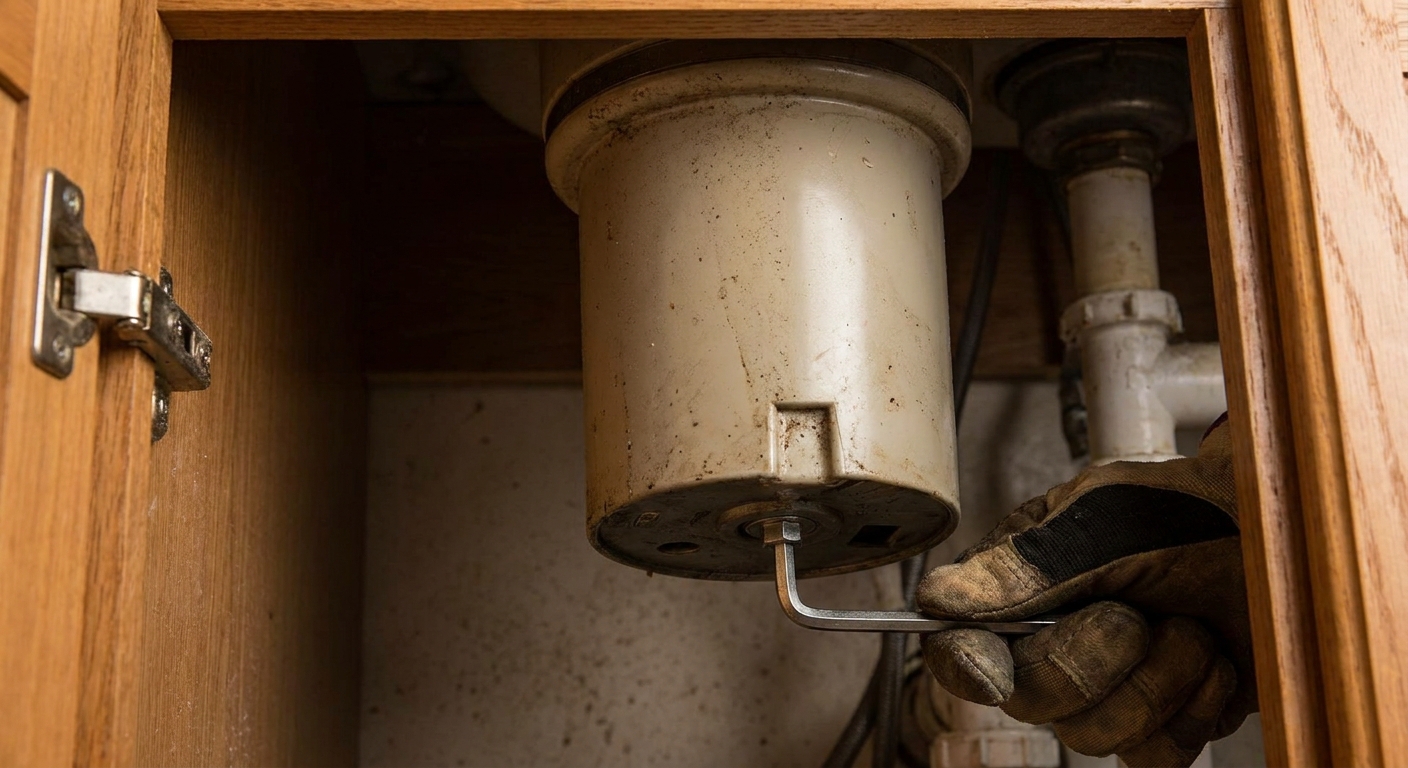
2) Unjam from underneath with an Allen key
This is the classic fix, and it works more often than not.
- Find the hex socket at the very bottom center of the disposal.
- Insert the correct Allen (hex) key, often 1/4 inch (many disposals include one when new).
- Turn it back and forth until it moves freely. You might feel the jam “give.”
After it spins smoothly, remove the Allen key, restore power, and test with cold running water.
3) No Allen key? Use a wooden spoon handle from above
Some models do not have an easy hex socket, and sometimes you just cannot find the right key. You can still try to free the impeller plate safely.
- Keep power off.
- Insert the handle of a wooden spoon down into the disposal opening.
- Gently nudge the impeller plate back and forth to encourage movement.
This is slower than the Allen key method, but it can break up compacted debris without risking your fingers.
4) Clear, flush, and test the right way
Once it turns freely:
- Run cold water at a steady stream.
- Turn the disposal on for 5 to 10 seconds.
- Let the water run for 15 to 20 seconds after switching it off to clear the drain line.
If you hear smooth spinning, you are back in business. If it still hums, keep it off and review the troubleshooting section below.
If it still hums
The reset button will not help (usually)
- If the disposal is humming, it is already getting power. That means the main problem is still most likely a jam or a stuck flywheel.
- Try the Allen key method again, turning farther in both directions, and re-check for an object from above with a flashlight and tongs.
- If it hums but will not free up and you are sure nothing is stuck, you may be looking at a failing motor or capacitor.
It hums, then goes silent
- That is commonly overload protection kicking in after the motor strains.
- Turn it off and let it cool for 10 to 15 minutes.
- Then press the reset button on the bottom until it clicks back in, restore power, and try again.
- Do not keep cycling the switch. Repeated humming can overheat the motor fast.
No hum at all (completely dead)
- Check the plug under the sink.
- Check your GFCI outlet and press “reset.”
- Check your breaker.
- Press the disposal’s reset button on the bottom. If it popped out, it should click back in.
- If you have power elsewhere but not at the disposal, the switch or wiring could be the culprit.
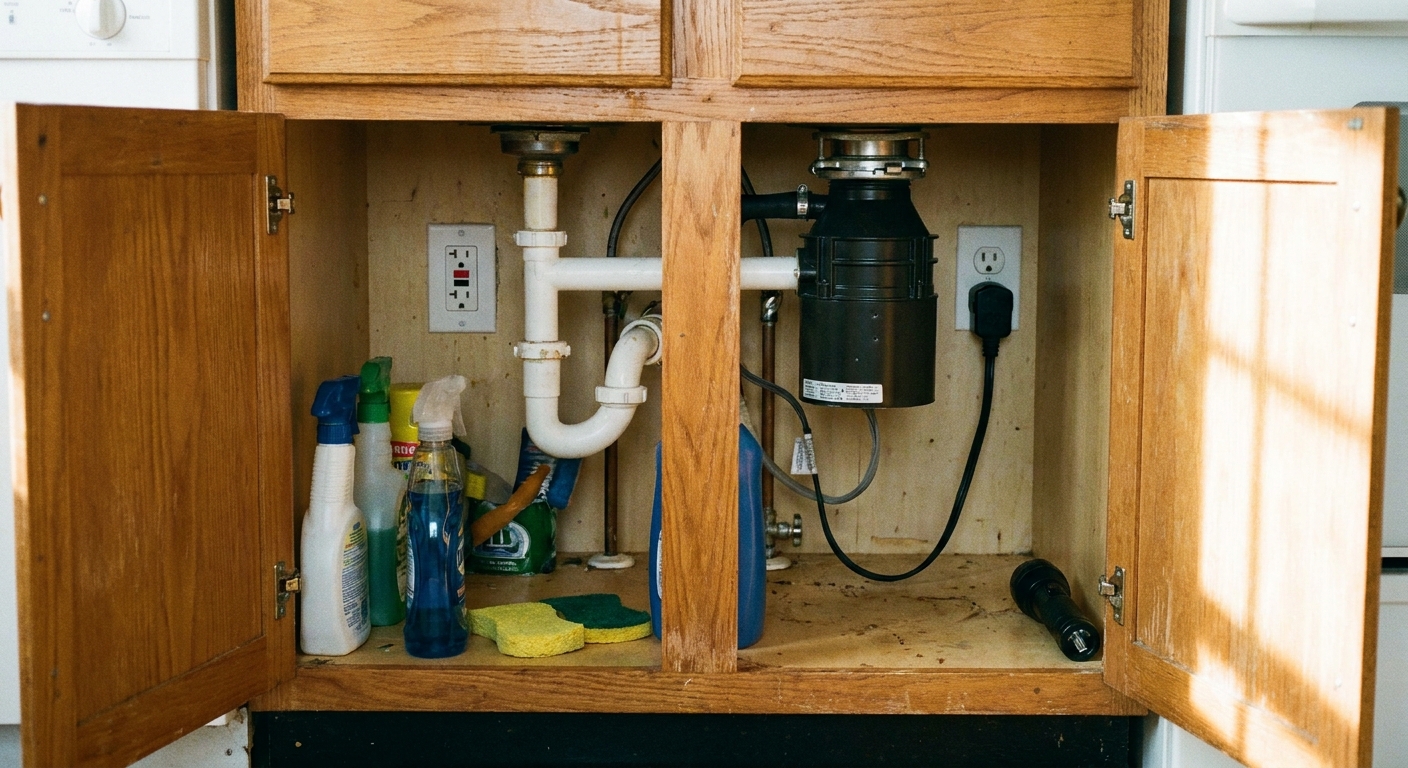
What not to do
- Do not use chemical drain cleaners in a disposal. They can damage components and create unsafe fumes if you end up disassembling anything.
- Do not keep flipping the switch while it hums. That is how motors burn out.
- Do not stick your hand inside, even to “just move something.” Use tools only.
- Do not pour boiling water down to “melt” things free. Some plumbing setups and disposal internals do not love that, and it can soften fats that later re-solidify downstream.
When to call a pro
Call an electrician or plumber if:
- The disposal hums but will not free up after unjamming attempts.
- You see leaks from the housing, seams, or bottom.
- You smell burning or the unit gets hot quickly.
- The breaker trips repeatedly or the unit trips the GFCI every time.
Consider replacing the unit if it is 8 to 12+ years old and showing multiple issues (humming, leaking, frequent resets). Sometimes the most budget-friendly choice is not another afternoon of troubleshooting. It is a quiet new unit that lets your kitchen feel calm again.
Prevent it next time
A disposal is not a magic hole. Treat it like a hardworking little helper and it will stay happy.
- Use cold water when running it, especially with greasy foods.
- Feed scraps slowly, not in one heavy dump.
- Avoid common jam-makers: bones, fruit pits, corn husks, celery strings, onion skins, potato peels, and large amounts of rice or pasta.
- Once a week, grind a few ice cubes (optional) and rinse well. It can help knock off buildup.
- If odor is the issue, use citrus peels sparingly. A little is lovely, too much can gum things up.
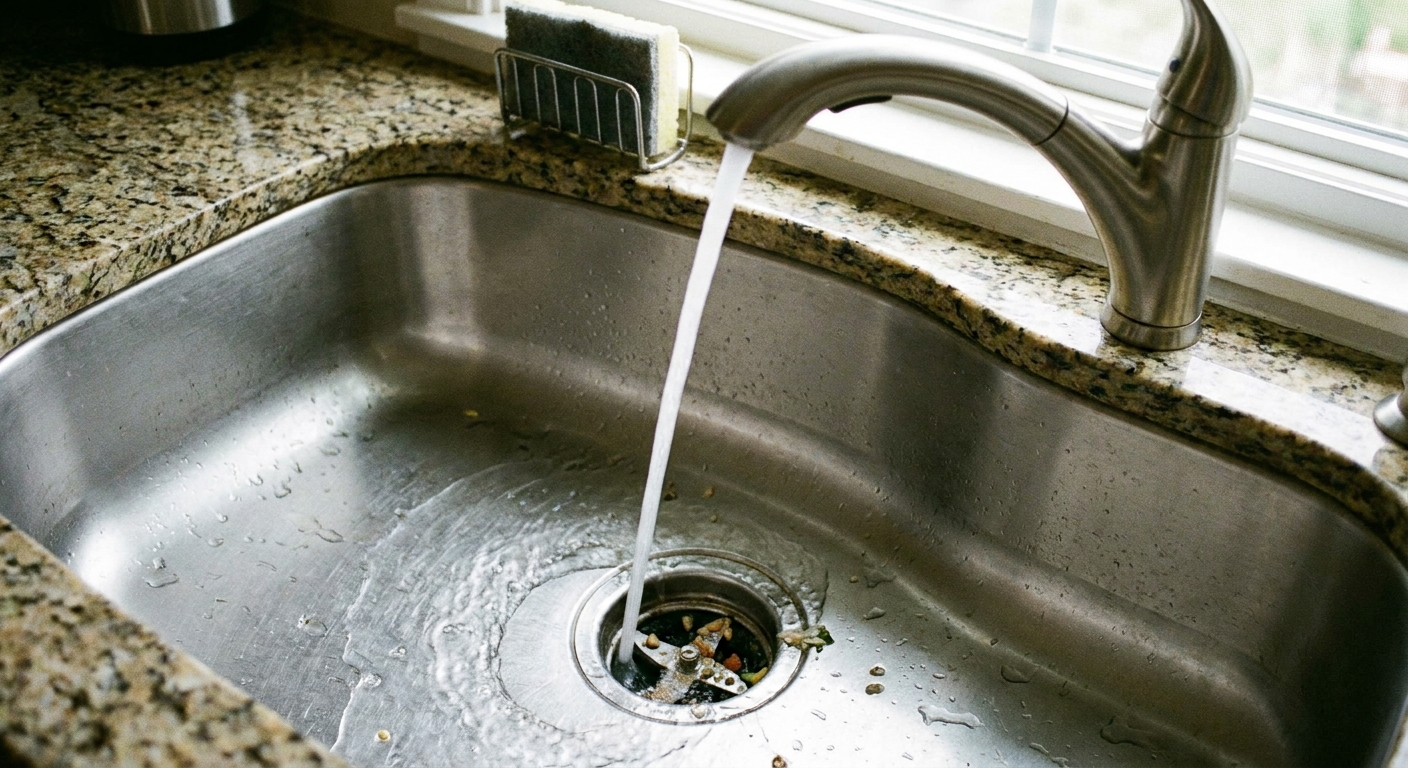
One-minute checklist
- Switch off, unplug or flip breaker.
- Look inside with flashlight, remove objects with tongs.
- Free the flywheel with an Allen key underneath (or a wooden spoon handle from above).
- Test with cold running water.
- If it went silent, let it cool and press the reset button.
- If it keeps humming, overheating, leaking, or tripping power, call a pro or replace.
If you want, tell me your disposal brand and about how old it is, plus whether it hums or is silent when you flip the switch. I can help you narrow down whether this is a simple jam or the start of a bigger issue.